🌊Yıldıray retweeted

Jun 6
#2
#ercb
Birde #hyperlooptt tarafinda ABD Ve Avrupa da yavaş gelişen piyasalar Neticesinde
Hyperlop dünya gündemi haberdar olmak ve takipte kalmak adına
İtü // ile resmi sponsorluk ile Çin üniversite arasında bağlantı ile teknoloji transfer amaçlı..
1
1
2
664

Jun 10
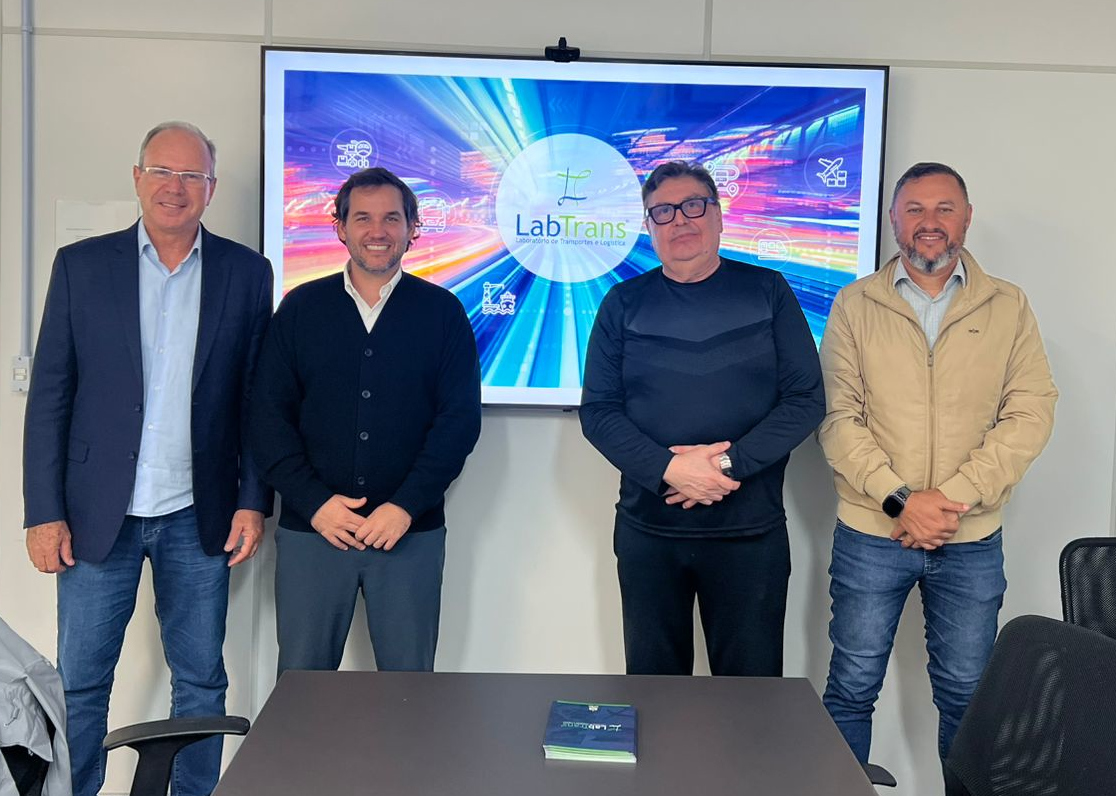
LabTrans/UFSC recebe representante da HyperloopTT para avançar estudos sobre transporte de cargas do futuro
O LabTrans/UFSC (Laboratórios de Transportes e Logística da UFSC) recebeu a visita de Edgar Raoul, representante LATAM da Hyperloop Transportation Technologies (HyperloopTT), em mais um importante passo na parceria voltada ao desenvolvimento de estudos de viabilidade para a aplicação da tecnologia Hyperloop no transporte de cargas. De parte do Laboratório, estiveram presentes os coordenadores Wellington Repette e Amir Valente e o administrador de projetos, Marciel Santos.
A colaboração entre as instituições tem como foco a avaliação técnica, operacional, econômica e ambiental do HyperPort, solução baseada na tecnologia Hyperloop que propõe o transporte de contêineres e cargas em cápsulas em alta velocidade por tubos de baixa pressão. O sistema tem potencial para atingir velocidades de até 600 km/h, reduzindo significativamente os tempos de deslocamento, os custos logísticos e as emissões de carbono.
O LabTrans tem contribuído com sua expertise em logística, modelagem de transportes e estudos de viabilidade para analisar os impactos e oportunidades dessa inovação no contexto brasileiro.
A visita reforça o compromisso do LabTrans com o desenvolvimento de soluções inovadoras para a mobilidade e a logística, contribuindo para a construção de sistemas de transporte mais eficientes, sustentáveis e alinhados aos desafios do futuro.
#LabTransUFSC #HyperloopTT #HyperPort #InovaçãoEmTransportes #Logística #TransporteDeCargas #MobilidadeInteligente #PesquisaAplicada #UFSC #Tecnologia #Infraestrutura #Sustentabilidade #FutureOfTransport
1
37

@WhiteHouse⚓️⛽️ -@VIVAOfficiallys, @virgingalactic, @hyperlooptt, @HyperloopPlaza, @Hyperloop, @virginhotelschi, @VirginHotelsLV, @NASAVoyager, @VirginVoyages, @voguemagazine. @VogueRunway, The Spaceship #Company #Service after #VSS Unity completes its. bit.ly/VGQ2Earnings


1
13
301
@WhiteHouse⚓⛽️ -@VIVAOfficiallys, @virgingalactic, @hyperlooptt, @HyperloopPlaza, @Hyperloop, @virginhotelschi, @VirginHotelsLV, @NASAVoyager, @VirginVoyages, @voguemagazine, @VogueRunway, The Spaceship #Company #Service after #VSS Unity completes its. bit.ly/VGQ2Earnings


1
10
51

May 20
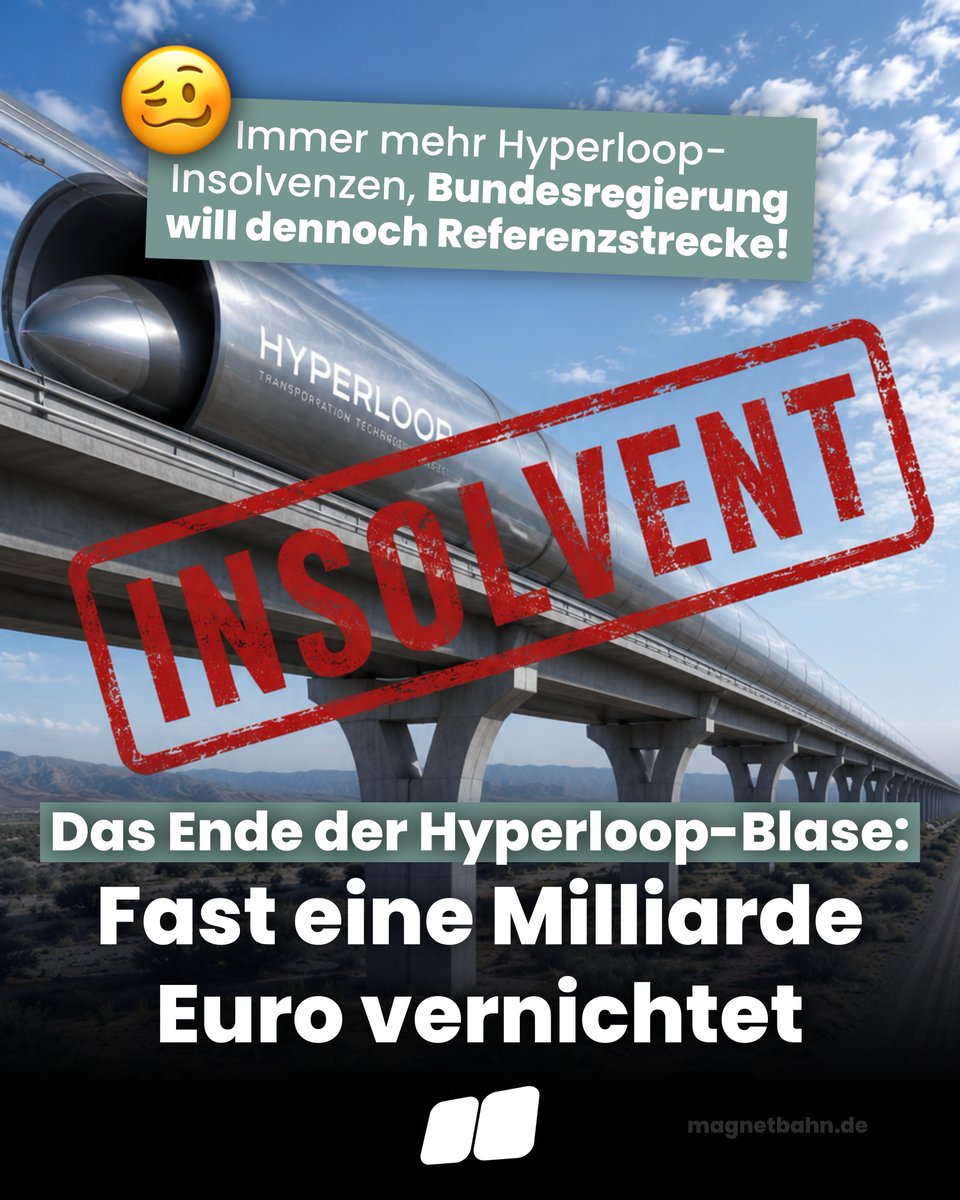
Im aktuellen Koalitionsvertrag der Bundesregierung ist das Vorhaben verbindlich verankert: „Wir errichten eine nationale Hyperloop Referenzstrecke.“ Doch während in Berlin an diesem forschungspolitischen Ziel festgehalten wird, erlebt die weltweite Hyperloop-Industrie derzeit einen beispiellosen wirtschaftlichen Einbruch.
Mit den jüngsten Insolvenzmeldungen der europäischen Branchenführer Hardt Hyperloop (Niederlande) und Zeleros (Spanien) setzt sich fort, was mit dem Aus von Virgin Hyperloop One und HyperloopTT begann: Das wirtschaftliche Fundament der Technologie erweist sich als extrem instabil.
Dass die Politik trotz des globalen Scheiterns und magerer Testergebnisse an dem Projekt festhält, liegt an einer gut funktionierenden Interessensymbiose, von der fast alle Akteure abseits der Schiene profitieren: Während Professorenprestigeträchtige Forschungsprojekte und Drittmittel generieren, arbeiten Studenten an einem medial gehypten Zukunftsprojekt. Beteiligte Unternehmen sichern sich staatlich subventionierte Aufträge ohne unmittelbaren wirtschaftlichen Erfolgsdruck, und Politiker nutzen das Projekt für öffentlichkeitswirksame Bilder, um sich als „technologieoffene Innovatoren“ zu inszenieren. Eine Win-Win-Situation für alle Beteiligten – bei der am Ende nur der Steuerzahler und die verkehrliche Realität auf der Strecke bleiben.
Global wurden bereits weit knapp eine Milliarde Euro an privaten Risikokapitalien und öffentlichen Fördermitteln in die Entwicklung investiert, ohne dass ein kommerzieller Betrieb in Sicht ist. Trotz enormer Investitionen erreichte das „European Hyperloop Center“ (unter Hardt Hyperloop) bei bemannten Testläufen auf seiner 420-Meter-Strecke eine Geschwindigkeit von lediglich 85 km/h. Elementare Sicherheits- und Evakuierungsfragen im Fast-Vakuum sind bis heute ungelöst.
Besonders paradox wirkt dieses Engagement im Vergleich zur Magnetschwebetechnologie: Der Transrapid ist seit 1991 fertig erprobt, voll zertifiziert und einsatzreif. Dennoch findet er im Koalitionsvertrag keinerlei Erwähnung, während ein hochriskantes Konzept politisch priorisiert wird.
6
5
19
925

May 11
Seems like another slick startup chasing whatever the new thing is out or Elon mentions. Will raise a lot of money, be featured on 60 minutes. Then be a footnote when it goes nowhere or bankrupt. Hyperloop One, HyperloopTT, Spinlaunch
1
5
442

Apr 14
He stabbed kitten 🐈⬛ post 1 year of supporting @starlink @spaceX @hyperlooptt just for her voicing his mafia rule over @dodge shameless Human
2
25

Jan 20
#Ercb Erciyas Çelik Boru (ERCB), Erciyas Holding bünyesinde faaliyet gösteren ve özellikle spiral kaynaklı çelik boru (SSAW) üretimine odaklanmış ana şirkettir. Şirketin doğrudan veya dolaylı olarak bağlantılı olduğu önemli iştirakleri ve yapıları şunlardır:
1. Enerji ve Boru Hattı Grubu
• Özbal Çelik Boru: Erciyas Çelik Boru, 2022 yılında Özbal Çelik Boru ile devralma yoluyla birleşmiştir. Bu birleşme ile üretim kapasitesi ve pazar payı tek bir çatı altında birleştirilmiştir.
• Boru Hattı Yatırımları: Şirket, büyük çaplı uluslararası projelerde (TANAP vb.) ortaklıklar veya doğrudan tedarikçi rolleri üstlenmektedir.
2. Demiryolu ve Lojistik Yatırımları
Erciyas Çelik Boru'nun ana ortağı olan Erciyas Holding bünyesinde, boru iş koluyla sinerji yaratan şu iştirakler öne çıkar:
• Erciyas Rail (RC Endüstri): Türkiye'nin en büyük vagon üreticilerinden biridir. Erciyas Çelik Boru ile aynı grup çatısı altında yer alır ve özellikle ihracat odaklı vagon üretimi yapar.
• HyperloopTT Ortaklığı: Geleceğin taşımacılık teknolojisi olan Hyperloop projesinde Erciyas, hem yatırımcı hem de teknolojik boru tedarikçisi olarak stratejik bir ortaklığa sahiptir.
3. Diğer Bağlantılı Alanlar
• Briza Rüzgar Enerjisi: Holding bünyesindeki bu şirket üzerinden yenilenebilir enerji yatırımları yürütülmektedir.
• Bimaş Bisiklet: Mobilite sektöründe elektrikli ve geleneksel bisiklet üretimi yapan bir diğer grup şirketidir.
Hyperloop enerji vagon kimse şirketin yüzüne bakmıyor sebebi sizce nedir?
5
2
6
2,512

20 Oct 2025
I called my company Edge Hunter. Here’s why:
🧠EdgeHunter reflects how I think - a radar for inefficiency. I see every system - financial, cultural, or technological - as a marketplace of mispriced value. EdgeHunter is that mindset in action: detecting hidden arbitrage and turning it into creative, exponential opportunity.
Over the years, l've applied this mindset in very different arenas:
🎵Music: I spotted the rise of social media as an untapped channel for exposure. By growth-hacking visibility, I produced music for global superstars and earned Grammy nominations soon after.
🎮Tech: In 2017, I saw blockchain streaming platforms as a new frontier. I built a free video game that triggered my music on-chain, generating crypto income per play at no cost to players, and funneled my Twitter audience to maximize streams.
💰Finance: In November 2022, Bitcoin crashed 75% post-FTX, despite unchanged fundamentals. I spotted the Grayscale Bitcoin Trust trading at a 50% discount to net asset value — a pure arbitrage - and capitalized on it.
Different fields, same approach: identify hidden inefficiencies, understand the system, and find creative, asymmetric ways to capture value. I've used this mindset in deals with hedge funds, consulting for private investment groups, marketing agencies and working with innovators like HyperloopTT, Cardano's IOHK.

8
1,388

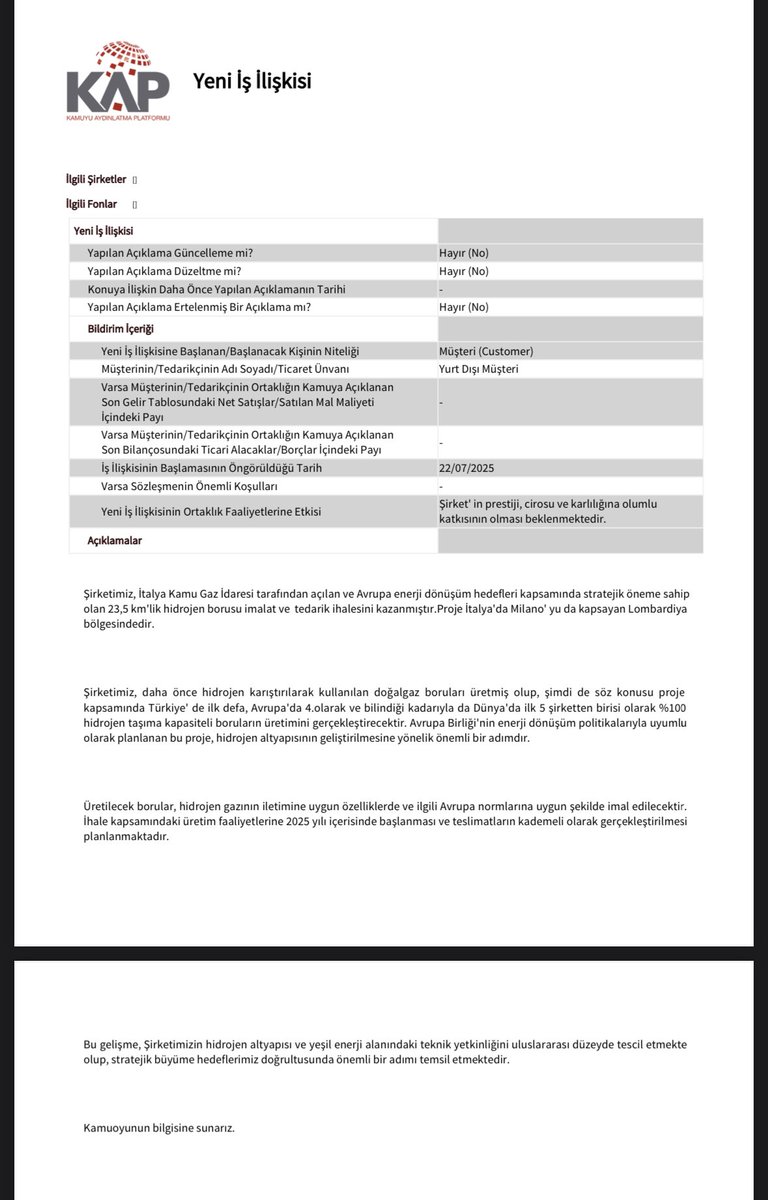
#ERCB İtalya’da kazanılan hidrojen borusu da önemli bir adım. HyperloopTT yapmış olduğu hyperloop projesi de İtalya’da. Bunca gelişmelere rağmen hala olayın güven olduğunu kaplardan sonra gördük. Şu olay bile yeterince konuşulmadı. Güven olmadan asla olmuyor. @emre_erciyas
1
20
1,260

27 Jun 2025
Here’s a deep dive on each company and other top players in their respective logistics spaces:
Poseidon Aero makes fully autonomous ground effect seaplanes (sea gliders) that take off and land on water, skipping traditional airport infrastructure and enabling high-speed, crewless cargo transport over water—think short-haul, coastal, and island logistics. Other notable teams in autonomous cargo aviation include Elroy Air (VTOL cargo drones), Natilus (autonomous blended-wing cargo planes), and Pyka (autonomous electric cargo aircraft).
Pipedream Labs is building an underground hyperlogistics network using high-speed, autonomous delivery robots in tunnels beneath cities, aiming for rapid, reliable, and congestion-free delivery of goods. In the underground and tube logistics space, HyperloopTT and CargoSousTerrain (Europe) are also working on high-speed, automated freight transit systems.
Serve Robotics develops AI-powered, low-emission sidewalk delivery robots, spun out of Uber, and is already operating at scale with partners like Uber Eats and 7-Eleven, with plans to deploy thousands more robots in U.S. cities. Key competitors in sidewalk robotics include Starship Technologies (widely deployed in the US and Europe), Kiwibot, and Coco.
Zipline is the global leader in autonomous drone delivery, operating fixed-wing drones for medical supplies, e-commerce, and food delivery across Africa, the US, and Asia, with millions of commercial deliveries completed. Other serious drone delivery players are Wing (by Alphabet, with operations in the US, Australia, and Finland), Flytrex (US, food and retail), and Matternet (urban drone networks in Switzerland and the US).
Each of these logistics segments is getting crowded with innovation, but these teams are among the most advanced and operationally proven in their fields. If you want a deeper breakdown on any specific company or want to compare product specs, just let me know!
1
50

7 Jun 2025
Today more than ever, competing means innovating: those who don’t dare get left behind.
⚡ While many are still debating the viability of new solutions, China is already running operational models and setting speed records.
🏗️ Hyper Transfer
Thanks to the outstanding team led by @Webuild_Group and @Leonardo_live , in collaboration with Hyperworks (formerly @HyperloopItalia ), HyperloopTT and @RINA1861 as strategic partners for design and technology, a magnetic-levitation transport system has been created capable of exceeding 1,000 km/h, cutting travel times: Venice–Milan in just 15 minutes.
.
👥 Our team & partnership network
•140 multidisciplinary professionals.
•5 leading universities.
•International partners from 10 countries, including Thyssenkrupp, Prose, Hadt and more.
•50.000 hours of professional engineering.
•5.000 pages of detailed technical documentation.
🤝 Public–private governance.
• @mitgov_it | @RegioneVeneto | @CAV_Spa | @zaiapresidente | @UniPadova | Italferr S.p.A.
.
🚄 Cutting-edge Technology
• 32 m × 2.70 m capsules for 40 passengers
• Controlled-pressure tube to virtually eliminate aerodynamic drag
• Unprecedentd speeds proven on working prototypes
🌱 Sustainability & Efficiency
• Zero emissions
• – 60 % energy consumption vs. airplane
• Noise reduced by up to 70 dB
• Net-positive energy balance thanks to integrated solar panels
🌍 A Global Standard
A technology set to become a model for Europe and developing countries, where modern, sustainable infrastructure is essential.
🔗 Learn more via the link in bio and join the mobility revolution!
.
:
#HyperTransfer #SustainableMobility #Innovation #Hyperloop #padovauniversit #Italferr #veneto #Zaia #LucaZaia #ZaiaPresidente #regioneveneto #SmartMobility #GreenTech #FutureOfTransport #TechItaly #Investments #italy #puglia #hyperloopitalia #BibopGresta
1
8
2,444

Complete waste of money. @CAgovernor has already scammed taxpayers out of $7 billion. We need that money back and move fwd with @hyperlooptt @HyperloopUC @TUM_Hyperloop @elonmusk @latimes @kron4news @sfchronicle @OakTribNews @mercnews @ocregister
3
46

9 May 2025
Emre hissede yangın var saçını taramayı bırak, adam gibi hissene sahip çık binlerce beddua eden yatırımcı var arkanda her an beddua ve küfür yiyorsun onurlu bir patron olmak istiyorsan yanlışından dön #ercb
7
377

9 May 2025
Dựa trên hai bài đăng trên X từ các tài khoản @EmmaUCSD và @kodarobotdog, cùng với bối cảnh của Hawthorne, Los Angeles, nơi đặt trụ sở SpaceX và các dự án Hyperloop, có thể giới thiệu về Longevity Town như sau:
Longevity Town là một dự án cộng đồng dân cư và thương mại hỗn hợp được đề xuất, nằm gần trụ sở SpaceX và các dự án Hyperloop ở Hawthorne, Los Angeles. Dự án này được mô tả như một sáng kiến nhằm tận dụng sự tiến bộ của trí tuệ nhân tạo (AI) và công nghệ, cho phép các nhà sáng lập solo hoặc nhóm nhỏ khởi nghiệp với quy mô triệu hoặc tỷ USD. Đồng thời, nó cũng tạo cơ hội cho các gia đình di chuyển khỏi các khu vực có chi phí sinh hoạt cao như Thung lũng Silicon hoặc New York City.
Cụ thể, bài đăng của @EmmaUCSD nhấn mạnh rằng Longevity Town sẽ là một cộng đồng tích hợp các yếu tố như:
• Giáo dục: Bao gồm các trường học như Ad Astra School (dành cho trẻ từ 3-9 tuổi, theo phương pháp Montessori được chính phủ phê duyệt) và Space Time Academy (dành cho trẻ từ 0-15 tuổi, giáo dục homeschool theo Montessori).
• Nhà ở và tiện ích: Các ngôi nhà sang trọng, lô đất rộng lớn, và các tiện nghi cao cấp, nhằm tạo ra một môi trường sống chất lượng cao.
• Vị trí chiến lược: Nằm gần dự án Hyperloop của Elon Musk, dự án này có thể tận dụng lợi thế của giao thông tiên tiến và sự hiện diện của các công ty công nghệ lớn như SpaceX.
Tuy nhiên, cần lưu ý rằng dự án Hyperloop ở Hawthorne đã gặp nhiều thách thức. Hyperloop One (nay là Virgin Hyperloop) đã ngừng hoạt động vào năm 2023 do khó khăn tài chính và không đạt được hợp đồng thương mại, trong khi đường thử nghiệm Hyperloop của SpaceX ở Hawthorne đã bị tháo dỡ vào năm 2022 để giải quyết các vấn đề về truy cập và mục đích sử dụng. Dù vậy, Hyperloop Transportation Technologies (HyperloopTT) vẫn tiếp tục hoạt động tại Los Angeles, tập trung vào các dự án quốc tế, có thể vẫn ảnh hưởng đến khu vực này.
Longevity Town cũng phản ánh xu hướng lớn hơn ở Los Angeles và Nam California, nơi ngành công nghiệp tuổi thọ (longevity) đang phát triển mạnh mẽ. Khu vực này là trung tâm của công nghệ sinh học, AgeTech (công nghệ dành cho người cao tuổi), và các sáng kiến sức khỏe, phù hợp với mục tiêu của một cộng đồng tập trung vào việc kéo dài tuổi thọ và cải thiện chất lượng cuộc sống.
Tuy nhiên, chi phí sinh hoạt cao ở Los Angeles, đặc biệt ở các khu vực như Arts District và Hawthorne, có thể hạn chế khả năng tiếp cận của dự án này, khiến nó chỉ phù hợp với tầng lớp thượng lưu.
Tóm lại, Longevity Town là một khái niệm hoặc dự án tiềm năng, nhằm kết hợp công nghệ, sức khỏe, và bất động sản cao cấp gần trụ sở SpaceX và các dự án Hyperloop ở Hawthorne.
Tuy nhiên, do thiếu thông tin chính thức và các thách thức của dự án Hyperloop, cần thận trọng khi đánh giá tính khả thi của nó.
Nguồn : Grok 3

#RACA DAO plans to participate in the seed round investment of Longevity Town, marking its entry into the #RWA sector and bringing greater utility to $RACA.
Further details will be announced in an upcoming Medium article.
1
3
32
1,022

19 Mar 2025
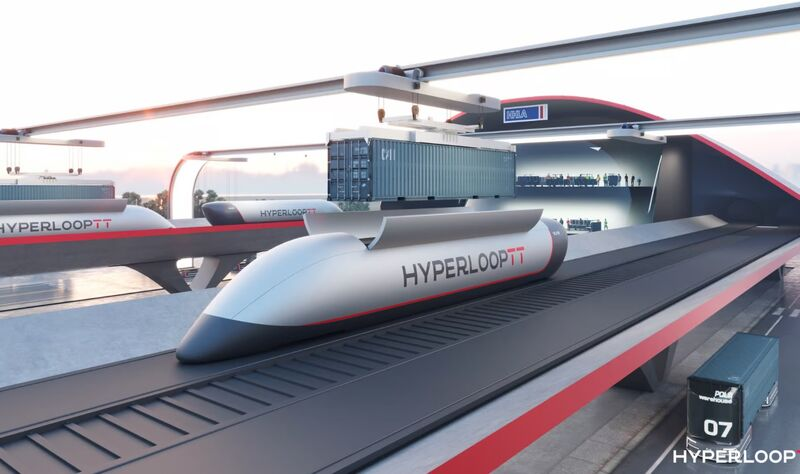
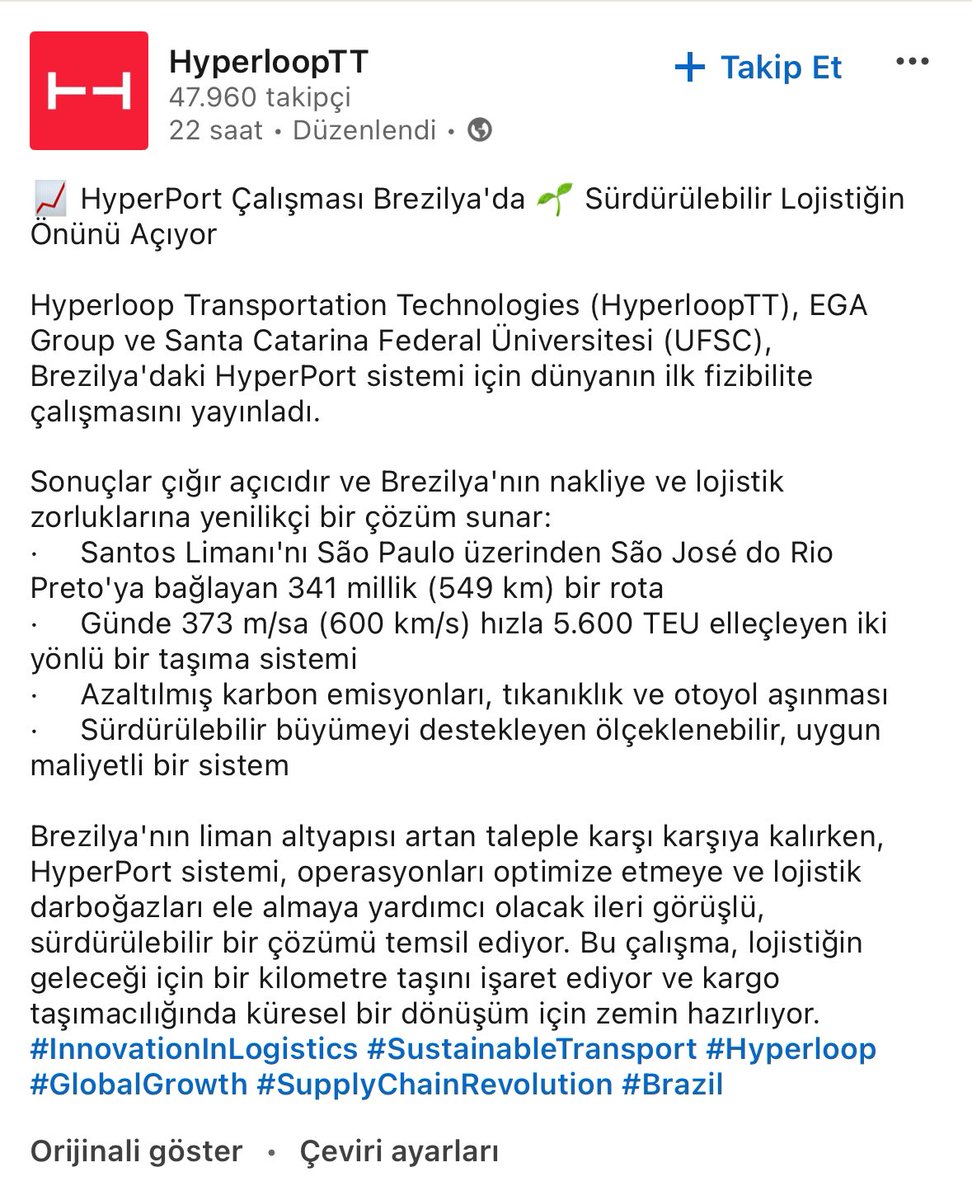
W Brazylii opublikowano wyniki wstępnego studium możliwości wykorzystania technologii transportu kontenerów w tubie opracowanej przez spółkę HyperloopTT do przewozu ładunków między portem Santos a Rio Preto i Sao Paulo. Z analizy wynika, że technologia taka jest możliwa do wdrożenia pod warunkiem zapewnienia finansowania z środków publicznych.
2
2,333

บริษัท ไฮเปอร์ลูป ทรานสปอร์ตเทชั่น เทคโนโลยี (HyperloopTT) ผู้พัฒนาเทคโนโลยีไฮเปอร์ลูปชั้นนำในสหรัฐอเมริกาและยุโรป พัฒนาโครงการ ไฮเปอร์พอร์ต (HyperPort) แนวคิดของระบบขนส่งสินค้าในเวลาที่รวดเร็ว ลดการใช้เครื่องบินและรถบรรทุกขนาดใหญ่ อีกทั้งใช้ต้นทุนคุ้มค่ากว่า
#Hyperloop #ตู้คอนเทนเนอร์ #ส่งของ #TNNTech
2
190
17 Mar 2025
Here’s the global Hyperloop roll call:
Virgin Hyperloop: Testing in Nevada and planning projects like Mumbai-Pune (India) and Dubai-Abu Dhabi.
Hyperloop Transportation Technologies (HyperloopTT): Working on routes in UAE, Ukraine, and the U.S.
The Boring Company: Elon Musk’s Vegas tunnel and ambitious DC-to-NY plans.
TransPod: Aiming to connect Toronto and Montreal in Canada.
Hardt Hyperloop: Building Europe's longest test track in the Netherlands.
Zeleros Hyperloop: Developing scalable systems in Spain.
DP World Cargospeed: Focused on cargo transport with Virgin Hyperloop.
DGW Hyperloop: India’s first Hyperloop venture exploring Delhi-Mumbai routes.
Basically, everyone wants to reinvent the wheel—except this time, it’s a pod in a vacuum tube.
1
65
#ERCB HyperloopTT(ERCB partner) Brezilya’da HyperPort lojistik fizibilitesini paylaştı. Konuşulacak konu bu iken işte yaşanılanlardan dolayı esamesi okunmuyor. Sadece boru olarak bakmayın boji kısmında da söz sahibi olmak istiyor. Bir de boji kısmından vurgun yemeyiz umarım.
1
19
1,828

5 Jan 2025
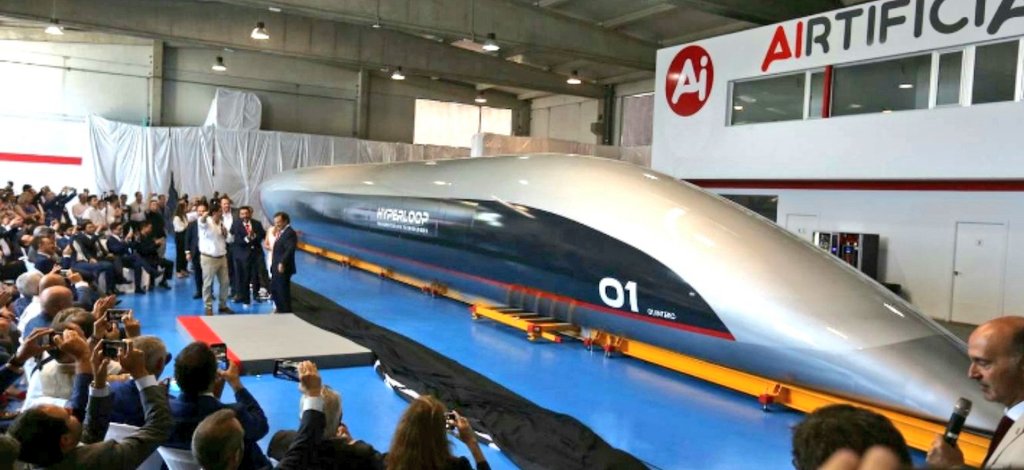
Pero si ese es Rafael Contreras @RafacontrerasCh Fundador de @airtificial ✨️
La primera cápsula de Pasajeros a escala real del tren supersónico 🚄⚡️ 1000 km/h
#Airtificial #Carbures #Hyperloop @Hyperlooptt
2
2
324