
The AFM supported Interconnect Malta in successfully completing the UXO clearance process for the IC2 Project. Through the efforts of AFM EOD specialists, 117 UXO items were safely identified and cleared, paving the way for the next phase of this strategic national project.
#AFM

3


Tensordyne's log-based inference math is clever—but gains evaporate without matching interconnect bandwidth. 800G→1.6T migration is mandatory. The bottleneck isn't compute anymore. It's data movement.
#InferenceOomph #InterconnectArchitecture #DataCenterTech
1

21m
$30M is tiny in AI capex terms, but photonic packaging capacity is a real bottleneck if optical interconnect demand keeps moving closer to the compute cluster.
2

In a recent AP Exclusive interview at Coherent's advanced semiconductor facility in Sherman, Texas, Nvidia CEO Jensen Huang shared a sweeping vision for how AI is sparking a new industrial revolution.
His insights touch on the total reinvention of a 60-year-old computing infrastructure, the critical role of energy and hardware connectivity, shifting geopolitical dynamics, and the new social norms required for an AI-integrated world.
If you are short on time to digest the full video, here are the definitive takeaways from the conversation:
1⃣ NEXT-GEN AI MODELS & THE DEATH OF LEGACY COMPUTING
🤖 Future AI will become smarter, safer, and grounded in truth by evaluating multiple internet sources to conduct real-time research, rather than just guessing.
"That would be smarter, safer, and better guardrailed. It would be grounded in more truth... Less guessing and more research."
💻 We are currently undergoing a radical reinvention of the entire 60-year-old computer infrastructure—dating back to the 1964 IBM System 360—moving away from pre-recorded code to real-time problem-solving.
"We're reinventing the computer for the first time in 63 years... You no longer have to code and no longer record information in advance. It's able to now solve problems in real time. We've built about 60 years of computer infrastructure... We're now in the process of reinventing all of that."
🤝 AI is the ultimate democratizing force that closes the historical technology divide because, unlike past innovations that required reading manuals or learning programming languages, it simply operates via natural dialogue.
"AI is the greatest technology; it has closed the technology divide more so than any technology in history. The reason is that it's accessible on the internet, free, and easy to use... If you don't know how to use AI, just talk with it."
🌐 As AI scales out to massive data centers, optical interconnects are replacing traditional electricity, using lasers to convert data into light so millions of processors can communicate instantly across thousands of feet.
"If you want to connect [chips] far away, the only way to solve that problem is silicon photonics, or optical... The optical interconnect is fundamental to our ability to scale out to the sizes of computers that we want to build."
---
2⃣ THE MACRO LANDSCAPE (THE FIVE-LAYER CAKE & MARKET FORCES)
🍰 AI is an industrial revolution represented by a five-layer stack—starting with energy and chips, building up through infrastructure and models, and culminating in applications that will disrupt every $100 trillion global industry.
"AI is an industrial revolution because in order for AI to be realized, you have to start with the energy sector, the chips, the infrastructure—which is land, power, and shell—and the cloud services. Then there are the AI models... And on top of that are the applications, the highest layer... It affects every single industry, a $100 trillion industry."
🔋 The immense market demand for AI computing power has created a once-in-a-generation opportunity for the private sector to fund and upgrade the grid to sustainable energy (like solar and nuclear) without relying on government subsidies.
"In energy, why wouldn't we want to take advantage of this once-in-a-generation opportunity to use market forces to upgrade the energy grid to support and invest in sustainable energy without government subsidies?"
⚡ Energy production is the fundamental baseline layer of AI, and because the U.S. is currently "woefully behind" in power generation, it must prioritize pro-energy growth or risk starving the entire AI infrastructure.
"The United States is woefully behind in energy production... Without energy, that entire infrastructure on top cannot be created and produced. The first thing is to make sure that we are a pro-energy growth country again."
💡 People should actively test AI tools firsthand to see how it can augment their specific capabilities—such as a carpenter designing a kitchen or a small business owner building a website—before passing judgment.
"Whatever it happens to be, if you have a hard time using it, just go up and ask it... It can elevate your capability in whatever you choose to do. Just go try it before you judge it."
---
3⃣ GEOPOLITICS, GLOBAL SUPPLY CHAINS, AND SOCIETY
🇨🇳 It is a false choice to assume national security requires economic isolation; the U.S. must protect its borders while aggressively exporting to markets like China to prevent foreign competitors from scaling up and becoming giants.
"It is a false choice to assume national security means isolating ourselves. We want our technology industry to succeed around the world, and in order to do that, you have to compete. You can have national security, technology leadership, and economic prosperity all at the same time."
🏝️ Taiwan serves as the epicenter of the global technology ecosystem and acts as a critical strategic partner by bringing their expert labor and skills to help stand up massive new manufacturing fabs inside the U.S.
"Taiwan is the epicenter of the world's technology ecosystem; they make the world's best chips. On the other hand, they're also a strategic partner helping us diversify and create more resilience in our supply chain."
🚗 Society must co-develop new social norms, regulations, and safety guardrails to adapt to AI, just as humanity adapted to the rapid speed of the automobile by creating crosswalks and seatbelts.
"When automobiles came, we needed to create new social norms... It’s a combination of social norms, regulations, safer cars, seat belts, and all the technology that comes with it happening simultaneously. You have to deal with regulation, technology, and social norms."
🇺🇸 AI is driving a massive wave of industrialization that reverses a 50-year decline in U.S. manufacturing, sparking a renaissance of new chip, packaging, and computer plants across the country.
"No question about it. We're reinventing the computer... and we can use this incredible new investment to reindustrialize the United States, which is why we're building new chip plants."
🛡️ Export controls are a powerful tool to protect national security, but they must be targeted precisely to avoid triggering unintended economic consequences across other technology sectors.
"Export control is a powerful tool that, if used precisely and specifically, could be quite effective. Beyond that, we just have to be careful not to over-exercise it so that it doesn't create unintended consequences for other things we don't intend to affect."
🛠️ The AI revolution will help correct societal imbalances by providing prosperous, high-paying opportunities for hands-on builders, electricians, and makers, rather than exclusively rewarding information workers with computer science degrees.
"We want makers and builders here in America again, not just information workers... You should be able to create a great life, build a great family, and find a really prosperous job if you want to work with your hands and build something. We want a society that is balanced with people who are builders, creators, inventors, and artists."
2
2
6
526

I think you should really take a look at this! I went back and re-organized your public posts on $AAOI, and it actually forms a very coherent industrial chain narrative—from optical modules to upstream lasers, and all the way through the AI optical interconnect upgrade cycle. I learned a lot from it.
Thank you, Serenity. If you could give me any feedback or guidance, I would truly appreciate it
x.com/SUOHA_AI/status/206717…

2
134

(1/2) \nAvila beach dr - @ ana bay rd Avila beach \nDelay - Other \nRepair Work to Begin in Avila Beach to Refurbish the Interconnect Betwe
4


American frontier models rely on NVIDIA's NVLink – a high-throughput interconnect – to reduce latency. Chinese clusters, constrained by export controls, operate on significantly narrower bandwidth. Adding more domestic hardware does not translate into proportional gains.
1
6
Diffusion continues to be a challenge. DeepSeek's nationwide adoption and deployment remain constrained by three interconnected factors: mass availability of chips, cluster assembling, and interconnect bandwidth.
1
3

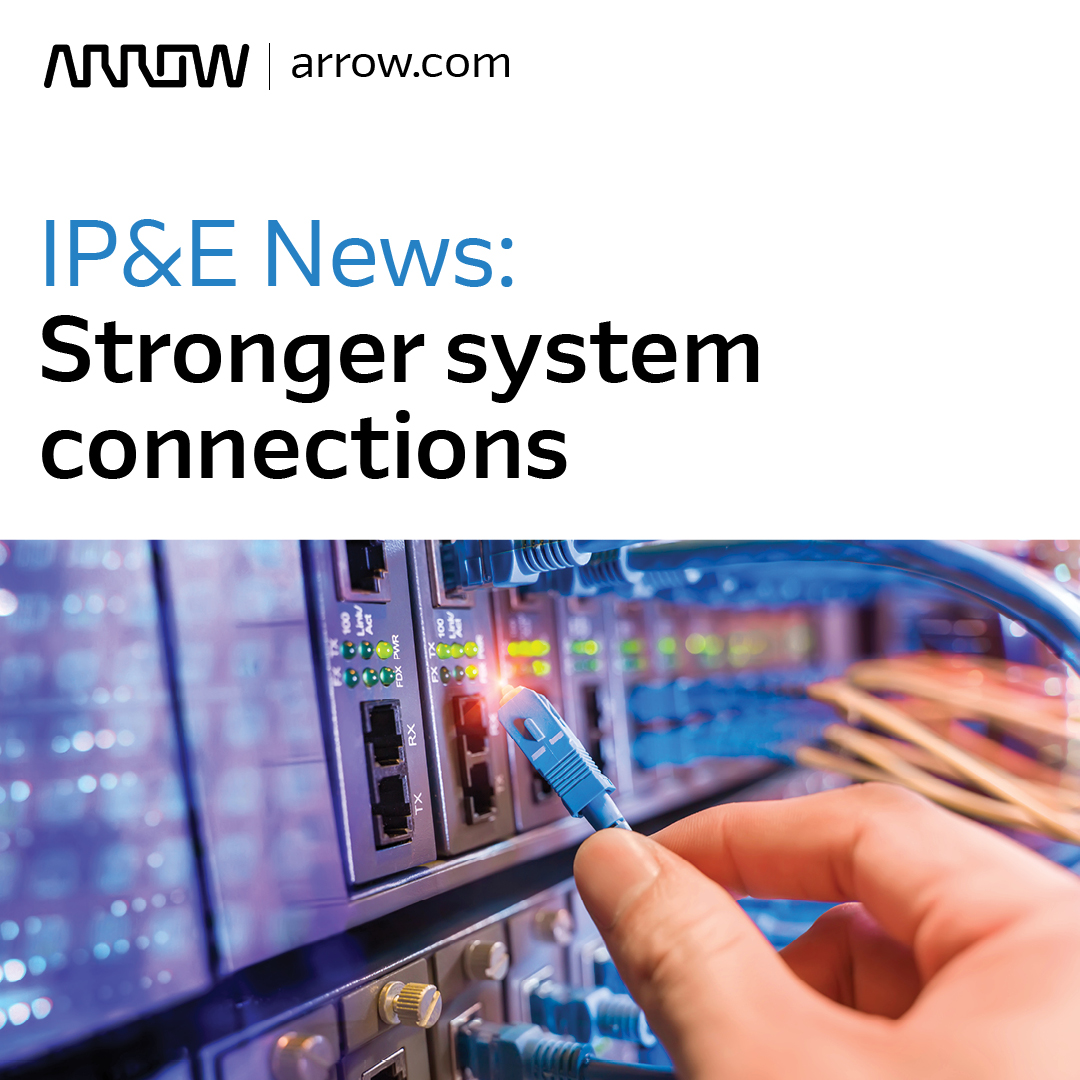
Interconnect, passives, & electromechanics are at the core of how modern systems perform.
This IP&E News edition shows how teams improve signal integrity, simplify integration, & design for long-term reliability across real-world applications.
Download: arw.li/6015BDEoal
11

9/
Bull case in one sentence:
If AI is a city →
MRVL owns the roads, fiber, traffic control, and plumbing.
Compute is flashy.
Interconnect is inevitable.
1
34
8/
Strategic signal the market underpriced:
Marvell is aggressively consolidating AI networking capability:
• acquisitions in networking/interconnect
• expansion into scale-up architectures
• push into next-gen optical chiplet ecosystems
1
17
5/
Here’s the key misconception:
People think MRVL competes with Nvidia.
Wrong.
MRVL is the plumbing of AI:
• Custom silicon (ASICs)
• DSP / optical interconnect
• Ethernet switching
• Data center networking fabric
It enables Nvidia-class systems to actually function.
1
30
3/
Translation from earnings call language → reality:
“Data center growth” =
→ AI servers exploding
→ Ethernet switching scaling
→ Optical interconnect demand breaking capacity constraints
MRVL sits in ALL three layers.
1
34
4/
The key shift: Industrial segment is becoming the growth engine
• Industrial sales 30% in Q3
• Driven by AI data infrastructure energy automation
• Data connectivity high-speed interconnect demand accelerating
👉 This is the AI supply chain “picks and shovels” layer
1
7

Day 3 at #EUROSATORY2026!
We continue to showcase our high-reliability interconnect solutions for the defense industry on the third day of the exhibition.

1
21

$MRVL crashed from $317 to $278, closing -9.78%.
One bearish candle erased the entire prior day's gain.
The AI/optical interconnect story is still intact, but short-term profit-taking hit hard at the highs.
1
85
3/ A key catalyst is SIVE’s collaboration with GlobalFoundries.
The focus is on silicon photonics and next-generation optical interconnect solutions targeting AI datacenters and high-performance computing.
1
29

Interconnect Malta clears 117 wartime bombs from second Malta-Sicily cable route maltatoday.com.mt/news/natio…
1
90