O'Graphy retweeted

3h
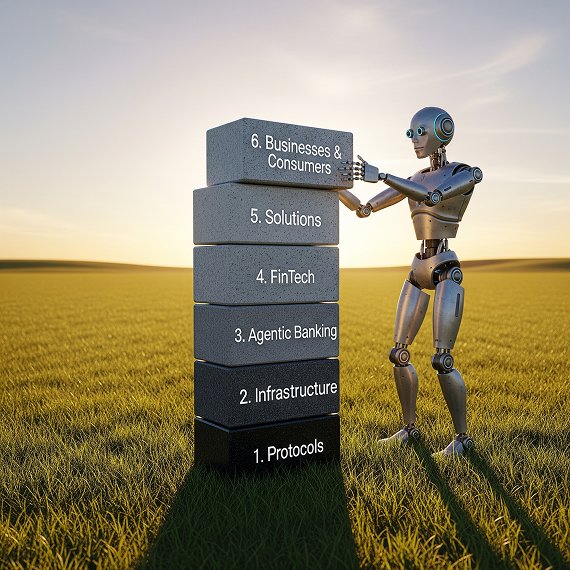
How do you safely let AI agents handle real money? @catena_labs has the blueprint:
• Decentralized Identifiers (DIDs) Verifiable Credentials for secure agent identity
• Deterministic governance policies humans define rules, agents execute within bounds
• Full on-chain audit trails & compliance
• Multi-chain stablecoin payments emerging fiat rails
• Yield opportunities on idle agent balances
No more trust issues in agent to agent or agent to human commerce. Built from the ground up for the AI economy. This changes everything.
47
2
42
2,709

I was able to create my Line zn Europe account but in some European countries there are bugs… you can’t add identifiers using QR codes.
1
15

Universities Australia’s submission to the inquiry into the factors driving educational attainment calls for urgent reforms to make it easier for more Australians to access, participate in and complete tertiary education.
Australia’s ambition of 80 per cent tertiary attainment by 2050 won’t be achieved without stronger outcomes across universities, VET, apprenticeships and traineeships—and better connected, more accessible education and training pathways for all Australians.
Our recommendations to help lift educational attainment so that Australia can meet its future skills needs include:
1. Maintain and expand pathways into tertiary education, including enabling programs and FEEFREE Uni Ready courses, to support successful transitions into further study.
2. Replace the Job-ready Graduates Package with a funding model that removes financial barriers to participation and supports student choice.
3. Strengthen student support measures that improve participation and completion, including cost-of-living assistance and placement support.
4. Accelerate implementation of a nationally linked student data framework through Universal Student Identifiers to better understand learner pathways and attainment outcomes.
Read our full submission: universitiesaustralia.edu.au…
#Universitiesmatter #highered #research #auspol @AusGovEducation @JasonClareMP

26

spent most of yesterday improving the foundations of $NOELCLAW.
a few highlights :
- Deep Research v2
what started as a simple research tool is now becoming a proper multi-stage research system.
reports can now:
• reflect on their own findings
• identify missing information
• run additional searches
• rank source quality
• surface counterarguments
• assign confidence levels
the goal isn't more output, it's better output.
- Security
completed one of the biggest security passes we've done so far.
> 38 public functions were refactored to use > authenticated session ownership instead of trusting client-provided identifiers.
> Vault
> Chronicle
> Marketplace
> API Keys
> Notifications
> Swarms
all received stricter access controls.
>> Testing (until recently we had zero automated tests) today :
• 49 tests passing
• auth coverage
• ownership validation
• cross-user isolation
• session security
the more NoelClaw grows, the more important trust, reliability, and accuracy become.
we're continued shipping!
1
9
78

Decentralized Identifiers and governance policies definitely provide a secure framework it reduces my anxiety about using AI agents for transactions
12

Captions/Identifiers?
#UFCFreedom250

Stars Arrive at White House for UFC Freedom 250 bit.ly/4vGQbcC
295

2h
Due to namespacing rules, this is valid C.
```
struct e {};
struct e e = {};
```
For whatever reason, Wayland has leaned into this flexibility hard, and variables' identifiers share type names in many places. It's not a problem natively but is a real bother for bindings.
13

As e-commerce expands across dozens of sales channels, the complexity of managing product data — especially standardized identifiers like barcodes — keeps growing. Sellers must ensure every SKU complies with different platform requirements, from Amazon’s FNSKU to Walmart’s UPC constraints.
UPCgen simplifies that process with a free online barcode generator covering formats such as UPC, EAN, ISBN, and ITF-14. It’s a small but meaningful tool that saves time and prevents listing errors for sellers building omnichannel operations.
auraplusplus.com/projects/fr…
How do you see automation tools shaping the future of e-commerce logistics and catalog management?
Launch your project on auraplusplus.com and get featured on our social media and blogs.
4

the top trending narratives are pointing to some interesting on-chain themes
digital identity and decentralized identifiers are seeing renewed interest
chains are abstracting away complexity to enable new primitives
privacy infrastructure is emerging as a key focus for builders
what's the alpha? money is flowing to projects solving these problems
strategic investors and early adopters are positioning for the next wave
16


a human being and after interacting and / or socialising with them, normal identifiers are formed.
You are fixated on Muslim / Non Muslim - you need to 1st slot the person as Human or Not Human
57

Well if it is any consolation, you are the epitome of an American who believes in our constitution and laws. Which is how we should all be seen. No identifiers just Americans.
4


Do you realize how desperate and pathetic this sounds? Honestly..
My point still stands and this has been well documented at this point
There are zero markers, identifiers, or records of Christ being here.
Christ. God Himself in the flesh
On earth. The most consequential moment in human history
We saw the impact it had in the Middle East, Europe, Africa, and India…is undeniable
Americas? Nothing
Stop wasting my time. This approach you’re taking won’t work
1
9

They could literally reveal the device based identifiers for the post in question. If he was hacked, the ip addresses etc would be different than his devices lol.
@elonmusk could clear this up pretty quickly lol
65
It says they died
You should still expect to see markers and identifiers
Christ, God Himself, coming in the flesh, is the most consequential event in human history…
Zero markers, zero identifiers, zero evidence of Him being here spreading the gospel
The BoM is a fraud
44
It’s such a shitty story and book that I forgot about the convenient cop out “they all died”
There should still be markers and identifiers of Christ..
You know, the most consequential event in human history
1
8
Look at all the mormons seething saying “just read the book and find out”
They all died and apostatized…
Well that’s just so convenient isn’t it?
There should still be identifiers and markers…
But there aren’t
What a sham
1
16
I read it maybe 5-6 years ago
“They all apostatized and died” still doesn’t really explain it
There should still be markers and identifiers of the gospel
But there are none
Hard to imagine believing this nonsense tbh
5

🚨 🚀 Power BI Roadmap — Topic 5
🏗️ Data Modeling in Power BI (Most Important Topic)
If DAX is the brain of Power BI, then Data Modeling is the backbone.
Many beginners focus on visuals and DAX but ignore data modeling. In reality, a well-designed model can:
✅ Improve report performance by 10x
✅ Reduce DAX complexity
✅ Minimize errors
✅ Improve scalability
✅ Simplify maintenance
👉 Most Power BI performance issues originate from poor data modeling.
🎯 Learning Objectives
By the end of this topic, you will understand:
✅ Fact Tables
✅ Dimension Tables
✅ Relationships
✅ Cardinality
✅ Star Schema
✅ Snowflake Schema
✅ Date Tables
✅ Model Optimization
📌 1. What is Data Modeling?
Data Modeling is the process of organizing data tables and relationships so Power BI can analyze data efficiently.
Example
Instead of putting everything into one large table:
❌ Bad Model
OrderID, Product, Customer, Region, Sales
We split data logically.
✅ Good Model
FactSales, DimProduct, DimCustomer, DimRegion, DimDate
📌 2. Fact Table
A Fact Table contains measurable business data.
Examples
OrderID, ProductID, CustomerID, Sales
Characteristics
✅ Large table
✅ Numeric values
✅ Transactional data
✅ Foreign Keys
Common Metrics
Sales, Revenue, Profit, Quantity, Cost
👉 Fact tables answer: "What happened?"
📌 3. Dimension Table
Dimension tables describe business entities.
Example
DimProduct
ProductID, ProductName, Category
DimCustomer
CustomerID, CustomerName, City
Characteristics
✅ Descriptive data
✅ Smaller tables
✅ Unique Keys
Dimensions answer: "Who?" "What?" "Where?" "When?"
📌 4. Understanding Relationships
Relationships connect tables.
Example
FactSales
ProductID
DimProduct
ProductID
Relationship: FactSales → ProductID → DimProduct
📌 5. Types of Relationships
🔹 One-to-One (1:1)
One record matches one record.
Example: Employee ↔ EmployeeProfile
Rarely used.
🔹 One-to-Many (1:_)
Most common relationship.
Example: One Product → Many Sales Transactions
DimProduct (1) → FactSales (_)
👉 Preferred relationship type.
🔹 Many-to-Many (_:_)
Multiple matches on both sides.
Example: Students ↔ Courses
Usually avoided when possible.
📌 6. Cardinality
Cardinality defines how tables relate.
Types
Type | Meaning
1:1 | One-to-One
1:_ | One-to-Many
_:* | Many-to-Many
Interview Question
Which cardinality is preferred?
✅ One-to-Many
Because it: Improves performance, Simplifies filtering, Reduces ambiguity
📌 7. Cross Filter Direction
Controls how filters flow.
Single Direction
DimProduct → FactSales
Recommended.
Both Directions
DimProduct ↔ FactSales
Use carefully. May create:
❌ Ambiguous relationships,
❌ Performance issues
📌 8. Active vs Inactive Relationships
Suppose Sales table contains: Order Date, Ship Date
Both connect to Date Table.
Power BI allows:
✅ One Active Relationship,
❌ Others become Inactive
Example
Sales → Date Active
Sales → Date Inactive[OrderDate][Date][ShipDate]
DAX Solution
Ship Sales =
CALCULATE(
SUM(Sales[Amount]),
USERELATIONSHIP(Sales[ShipDate], Date[Date])
)
📌 9. Star Schema (MOST IMPORTANT)
Industry-standard Power BI design.
Structure
DimDate
DimCustomer → FactSales → DimProduct
DimRegion
Characteristics
✅ Simple
✅ Fast
✅ Easy DAX
✅ Best Performance
Why Use Star Schema?
Because Power BI's engine is optimized for it.
👉 90% of enterprise Power BI models use Star Schema.
📌 10. Snowflake Schema
Dimension tables are further normalized.
Example
FactSales → DimProduct → DimCategory
Advantages
✅ Reduced redundancy
Disadvantages
❌ More joins
❌ Slower performance
❌ More complexity
Interview Answer
Power BI generally prefers: ✅ Star Schema over
❌ Snowflake Schema
📌 11. Date Table (Very Important)
Many DAX functions require a proper Date Table.
Date Table Includes
Date, Year, Month, Quarter, Week
Benefits
✅ Time Intelligence
✅ YTD, MTD, QTD
✅ Previous Year Analysis
Example
Calendar =
CALENDAR(DATE(2024,1,1), DATE(2026,12,31))
📌 12. Surrogate Keys
Artificial unique identifiers.
Example
Instead of: Product Name
Use: ProductID
Benefits
✅ Faster joins
✅ Better relationships
✅ Improved performance
📌 13. Model Optimization Best Practices
Remove Unused Columns
❌ Load 50 columns
✅ Use only required columns
Use Correct Data Types
Example: Sales ✅ Whole Number, ❌ Text
Reduce Cardinality
High-cardinality columns increase memory.
Examples: ❌ Transaction IDs, ❌ GUIDs
Prefer Measures
Instead of:
❌ Calculated Columns
Use: ✅ Measures
📌 14. Common Modeling Mistakes
❌ Fact-to-Fact Relationships: Avoid FactSales ↔ FactInventory
❌ Many-to-Many Overuse: Causes confusion
❌ Duplicate Keys: Dimension table keys must be unique
❌ Bi-Directional Relationships Everywhere: Can slow reports dramatically
📌 15. Real-World Model Example
Retail Dashboard
Fact Table
FactSales: ProductID, CustomerID, DateID, Quantity, Revenue
Dimension Tables
DimProduct, DimCustomer, DimRegion, DimDate
Relationship Structure
DimDate
DimCustomer → FactSales → DimProduct
DimRegion
📌 16. Interview Questions
1. What is Data Modeling?
2. Difference between Fact and Dimension tables?
3. What is Cardinality?
4. What is a Star Schema?
5. What is a Snowflake Schema?
6. What is a Date Table?
7. What is Cross Filter Direction?
8. What are Inactive Relationships?
9. What causes duplicate value errors?
10. Why is Star Schema preferred?
📌 17. Practice Project
🛒 Retail Sales Model
Tables: Sales, Products, Customers, Regions, Calendar
Tasks:
✅ Create Relationships
✅ Build Star Schema
✅ Create Date Table
✅ Test Filtering
✅ Validate Model
🎯 Goal of This Topic
After completing this topic, you should be able to:
✅ Design professional Power BI models
✅ Create relationships confidently
✅ Build Star Schemas
✅ Optimize performance
✅ Prepare for Data Modeling interview questions
Double Tap ❤️ For Part-6

🚀 Power BI Roadmap — Topic 4
📊 Power BI Basics
In this section, you'll learn:
- How Power BI works
- The Power BI ecosystem
- Connecting data
- Creating your first report
- Understanding the Power BI interface
📌 1. What is Power BI?
Microsoft Power BI is a Business Intelligence (BI) and Data Visualization platform developed by Microsoft.
It helps organizations:
✔ Analyze data
✔ Create reports
✔ Build dashboards
✔ Share insights
✔ Make data-driven decisions
📌 2. Components of Power BI
Power BI consists of three major components.
🔹 Power BI Desktop
Used for: Creating reports, Building data models, Writing DAX, Data transformation
👉 This is where developers spend most of their time.
🔹 Power BI Service
Cloud-based platform used for: Publishing reports, Sharing dashboards, Scheduled refresh, Collaboration
🔹 Power BI Mobile
- Used for: Viewing reports, Monitoring KPIs, Accessing dashboards on mobile devices
📌 3. Installing Power BI Desktop
Download Options:* Microsoft Store, Official Microsoft website
Installation Steps:
1. Download installer
2. Run setup
3. Complete installation
4. Launch Power BI Desktop
📌 4. Understanding the Power BI Interface
When Power BI opens, you'll see:
Main Sections:
Area | Purpose
Ribbon | Commands & tools
Report Canvas | Build visualizations
Fields Pane | Tables & columns
Visualizations Pane | Charts & visuals
Filters Pane | Filtering
📌 5. Three Main Views in Power BI
🔹 Report View
Used to:
✔ Create reports,
✔ Add charts,
✔ Build dashboards
Icon: 📄 Report
Most work happens here.
🔹 Data View
Used to:
✔ Inspect data,
✔ Create calculated columns,
✔ Verify loaded tables
Icon: 📋 Table
🔹 Model View
Used to:
✔ Create relationships,
✔ Build star schemas,
✔ Manage data models
Icon: 🔗 Relationship
📌 6. Connecting Data Sources
Power BI supports hundreds of data sources.
Common Sources:
Files: ✔ Excel, ✔ CSV, ✔ XML, ✔ JSON
Databases: ✔ SQL Server, ✔ MySQL, ✔ PostgreSQL, ✔ Oracle
Cloud: ✔ Azure, ✔ SharePoint, ✔ Google Analytics
Web: ✔ APIs, ✔ Websites
📌 7. Get Data Process
Steps:
1. Click "Get Data"
2. Choose source
3. Connect
4. Load or Transform
Example:
Excel File: Sales.xlsx
Power BI imports: Sheets, Tables, Named Ranges
📌 8. Import vs DirectQuery vs Live Connection
🔹 Import Mode
Data is loaded into Power BI memory.
Advantages:
✅ Fast performance,
✅ Full DAX support,
✅ Better user experience
Disadvantages:
❌ Requires refresh
🔹 DirectQuery
Data remains in database.
Advantages:
✅ Real-time data
Disadvantages:
❌ Slower performance
🔹 Live Connection
Direct connection to enterprise models.
Example: SSAS Tabular Models
📌 9. Loading Data
After connecting:
Options:
Load: Directly loads data
Transform Data: Opens Power Query Editor
Used for:
✔ Cleaning data,
✔ Removing duplicates,
✔ Formatting columns
👉 In real projects, you'll often choose Transform Data first.
📌 10. Creating Your First Visualization
Suppose you have:
Product | Sales
Laptop | 50000
Phone | 30000
Create Bar Chart:
1. Select Bar Chart
2. Drag Product → Axis
3. Drag Sales → Values
Power BI automatically generates a chart.
📌 11. Understanding Visualizations Pane
Contains Charts:
✔ Bar Chart,
✔ Column Chart,
✔ Line Chart,
✔ Pie Chart,
✔ Area Chart,
✔ Scatter Plot
Advanced Visuals:
✔ KPI Card,
✔ Gauge,
✔ Waterfall,
✔ Funnel,
✔ Matrix
📌 12. Understanding Fields Pane
Shows: Tables, Columns, Measures
Example:
Sales Table
├─ Product
├─ Quantity
├─ Revenue
Used to build visuals.
📌 13. Understanding Filters Pane
Three levels:
Visual-Level Filter: Affects one visual
Page-Level Filter: Affects one page
Report-Level Filter: Affects entire report
📌 14. Saving Power BI Files
File Extension: .pbix
Contains:
✔ Data,
✔ Model,
✔ DAX,
✔ Reports
📌 15. Publishing Reports
Steps:
1. Save PBIX
2. Click Publish
3. Sign in
4. Select Workspace
5. Publish
Report becomes available in Power BI Service.
📌 16. First Mini Dashboard
Create:
KPI Cards: Total Sales, Total Orders
Charts: Sales by Product, Sales by Region
Filters: Region, Month
📌 17. Common Beginner Mistakes
❌ Loading unnecessary columns
❌ Ignoring data types
❌ Using too many visuals
❌ Poor naming conventions
❌ Skipping Power Query cleaning
📌 18. Practice Project
🛒 Sales Dashboard
Dataset: Product, Region, Sales
Tasks:
✔ Import Excel Data
✔ Create: Bar Chart, Line Chart, KPI Cards
✔ Add Filters
✔ Publish Report
📌 19. Interview Questions
1. What is Power BI?
2. Difference between Desktop and Service?
3. What are the three views in Power BI?
4. What is Import Mode?
5. What is DirectQuery?
6. What is a PBIX file?
7. How do you publish reports?
8. What is a Workspace?
9. What is Power Query?
10. What is a Dashboard?
🎯 Goal of This Topic
After this topic you should be able to:
✅ Install Power BI
✅ Connect data sources
✅ Load data
✅ Create visualizations
✅ Build simple dashboards
✅ Publish reports
Double Tap ❤️ For Part-5
7
2
15
1,667