
Jun 12
Product Manager @ InductiveHealth Informatics
💰 140k–160k USD/yr
🌍 Remote
startup.jobs/product-manager…
30

8 Sep 2025
Hiring Accounting Lead REMOTE JOB USA
Position: Accounting Lead
Date Posted: September 7, 2025
Industry: SaaS / Public Health / Healthcare Technology
Employment Type: Full Time (Virtual/Remote)
Experience: 7 years
Qualification: Bachelor’s degree in Accounting or Finance (CPA or CPA candidate strongly preferred)
Salary: $90,000 - $110,000
Location: United States (Remote — preference for CST time zone)
Company: InductiveHealth
APPLY HERE
gulfcareerhunt.com/hiring-ac…
2
52

24 Jul 2025
Oh, fantastic! Another $5.7 million of my hard-earned tax dollars to build a shiny new Big Brother system in paradise—because nothing screams "freedom" like the Hawai’i Department of Health tracking my fever and "misinformation risk" with a smile! I’m sure InductiveHealth and their WHO/CDC buddies will keep my privacy sacred—right up there with my HIPAA form that’s apparently just fancy toilet paper now. Can’t wait for the QR code vaccine passport luau—aloha, liberty! 🙄🇺🇸
1
1
8
266

24 Jul 2025
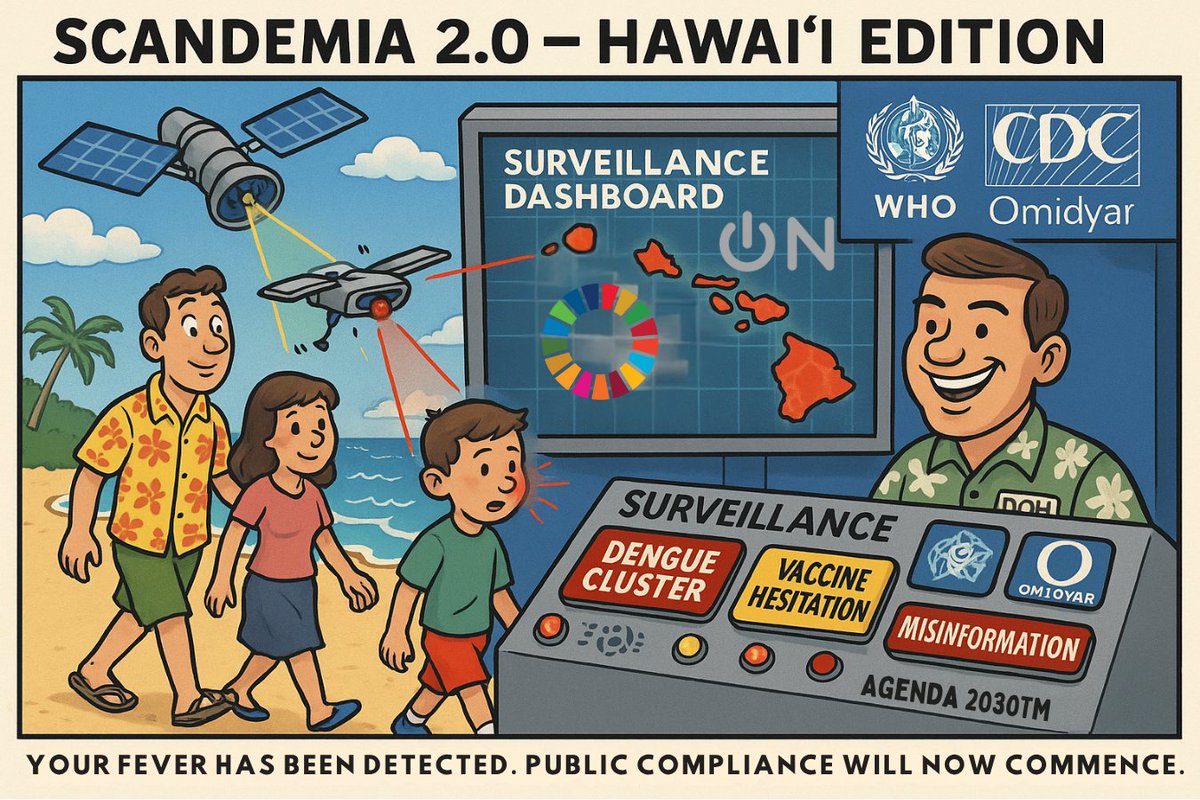
🚨 $5.7 MILLION TO SURVEIL YOU — Hawai‘i just quietly awarded a multi-million dollar contract to build a real-time disease surveillance system that can monitor every aspect of public health behavior across the islands. The project is called the Hawai‘i Electronic Disease Surveillance System, and it’s not just about tracking disease — it’s about building the infrastructure for digital control.
The contract was awarded to InductiveHealth Informatics, a private company that builds integrated public health monitoring tools for governments. It begins June 2025 and runs for 2 years — tracking everything from fevers and rashes to behavioral health “non-compliance.”
Here’s how it works:
Every time you go to a clinic, urgent care, school nurse, or lab, your health data — symptoms, diagnoses, test results — is transmitted through platforms like MyChart, Epic, and HL7 straight to the Department of Health. This data is automatically processed and flagged by AI-style software that can detect clusters of illness or behavior in real time.
If there’s a rise in something like dengue fever in a certain ZIP code, the system triggers an alert. DOH then activates a response: mobile clinics, press advisories, and “trusted messengers” (usually nonprofits funded by equity grants) deployed to encourage testing, vaccination, or quarantine compliance. This is exactly how New York weaponized similar systems during COVID to enforce school closures, mandates, and contact tracing — and now Hawai‘i is adopting the same playbook.
But this system doesn’t stop at disease.
It can track:
• Childhood vaccination rates
• Mental health admissions
• COVID “non-compliance” reports
• Prescription opioid usage
• Misinformation risk (flagged via psych notes)
• Migrant clinic data
• Absenteeism flagged by symptoms
• Homeless shelter illness trends
And it’s all fed into a centralized dashboard, giving DOH the power to declare “outbreaks” or emergencies based on internal data models, not public debate or votes. These platforms often integrate with federal databases (like the CDC’s NSSP) and global health networks (WHO, UN), meaning your data can be used in broader global policy frameworks — without your knowledge or consent.
🚩 This is digital control wrapped in a public health narrative.
🚩 It builds the foundation for QR code apps, vaccine passports, and behavioral nudges.
🚩 It supports the “digital governance” goals of Agenda 2030.
And it’s being funded with your tax dollars.
This isn’t about stopping disease. It’s about building the systems to control people — quietly, permanently, and in the name of safety.
Welcome to the new normal.
18
57
108
5,069

28 Jun 2023
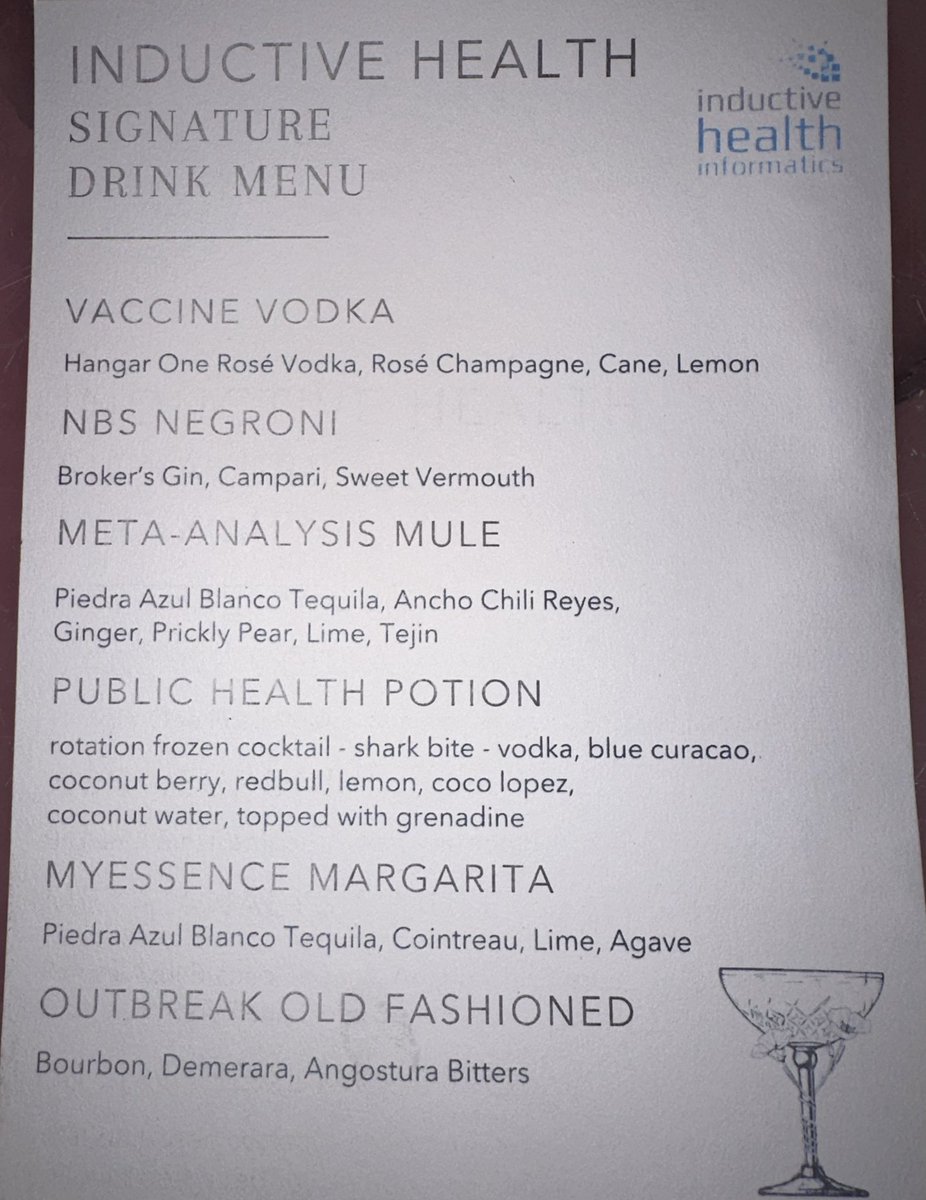
#CSTE #CSTE2023 Our #InductiveHealth team is hosting our social hour and we are so happy to host all our friends and clients. #publichealth #epidemiology
1
125

1 Sep 2022
September’s first Five & Thrive is live! Listen now: bit.ly/3KAxzEK
E14:TLDR 👇
📦Product: @nauvus, @Givsly
⬆️ Quiet Giant: @InductiveHealth
❓Question: Can billion dollar businesses be built on nice to have products? (@SalesLoft )
🍾Cheers: @SoundstripeApp
3
5

24 Jun 2022
Congrats also to Chris Maxwell, Justin Ward and Ella Vacca for their work on behalf of InductiveHealth.
prnewswire.com/news-releases…

2

22 Jun 2022
Headlines: @steadymd acquires @BlocHealth - Queensland govt pours another $200M into @Cerner project - @InductiveHealth raises funds histalk2.com/2022/06/21/morn…
2
4
15 Jun 2022
InductiveHealth is pleased to be a Gold Sponsor this year @ 2022 CSTE Annual Conference in Louisville, KY June 19–23! We look forward to joining state & local #epidemiologists in discussions about stopping #disease through technology. More info: bit.ly/3QoTG3t
3

19 Jan 2021
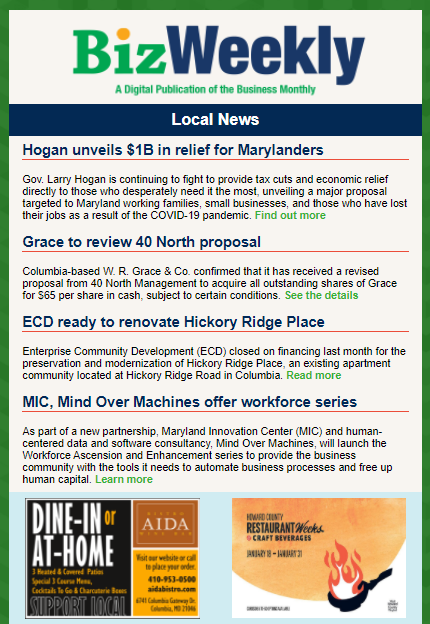
Read today's BizWeekly for local news you need to know.
@GovLarryHogan @WRGraceCo @HCEDA @EnterpriseNow @mindovrmachines @Vision_Tech_Inc @Allegiant @JHUAPL @InductiveHealth @CentralMDCofC @FtMeadeMD @USArmy @AACoExec @AACountyGovt @HoCoHealth @HoCoGov
conta.cc/38ZZKMa
1
3
2

20 Mar 2020
Atlanta startups using tech to fight coronavirus
@TheGoodrCo @Jointherimidi @Acoerco @InductiveHealth
#PCR #WholeGenomeSequencing #HIT #HealthIT #innovation #covid19 #coronavirus
bizjournals.com/atlanta/news… via @AtlBizChron
1
3

20 Mar 2020
Atlanta Startups using Tech to fight coronavirus (via @AtlBizChron) @acoerco @Jointherimidi @TheGoodrCo @ExamMed @InductiveHealth bizjournals.com/atlanta/news…
1
2
3

15 Mar 2020
Atlanta Startups Focus Efforts on #Coronavirus as City Preps for Outbreak
.@acoerco @ExamMed @Jointherimidi @InductiveHealth
- bit.ly/2IBAL3L
1
2
2
10 Mar 2020
Atlanta Startups Focus Efforts on #Coronavirus as City Preps for Outbreak
.@acoerco @ExamMed @Jointherimidi @InductiveHealth
- bit.ly/2IBAL3L
2
2

29 Jan 2019
Shout out to @InductiveHealth for hiring their first @DgtlCrafts grad this week! Let’s make this a trend! #webuildtheweb #learntocode
1
3

10 Sep 2018
Thanks to @InductiveHealth for sponsoring tonight's @AtlantaMDF meeting at Microsoft-Avalon
1
2

3 Aug 2016
Senior Software Developer Java, AWS, Big Data, Healthcare at InductiveHealth Informatics (Atlanta, GA) bit.ly/2asOYPc
3