
ALSO genetic berperan besar btw. muscle insertion dan clavicular width orang beda2. contohnya aja dari mereka bertiga udh keliatan beda hasilnya.
1
11

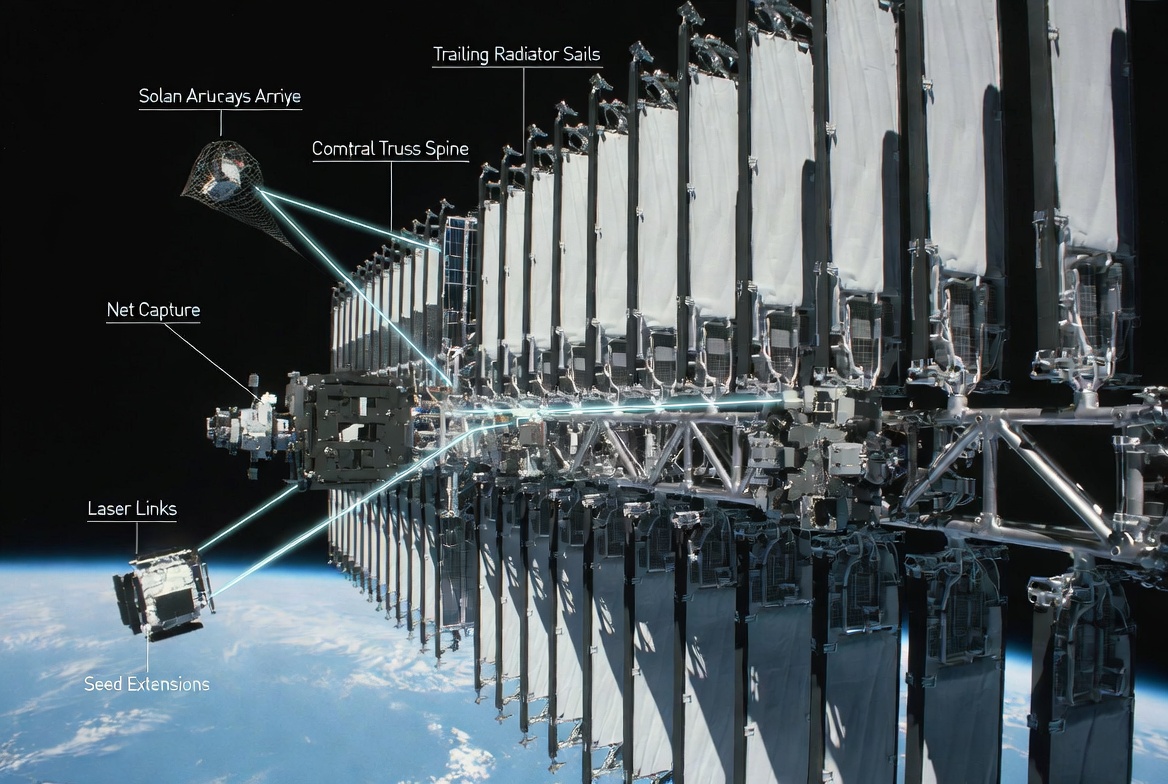
Orbiting Computing Model – For @elonmusk and anyone thinking about SpaceX orbital AI data centers
Here’s an orbital compute architecture that might help frame the discussion:
Separate long-life orbital infrastructure from short-life compute.
Instead of building fully self-contained, one-shot compute satellites, imagine permanent orbital grids that provide the durable backbone: power generation, heat rejection, structural support, routing, and berthing. Then treat the actual compute sections as consumables. The backbone is designed to live for decades; the compute modules are designed to run hard for a few years, deorbit, and be replaced by newer hardware. That separation matches the real cadence mismatch between long-lived space infrastructure and short-lived AI accelerators.
Permanent backbone, disposable compute
Each grid is a robust, long-term orbital utility platform: large solar arrays, substantial radiator area, power conditioning and distribution, internal data routing, and many berthing points. This is where the heavy, expensive, durable hardware lives.
The compute modules are the opposite. They are relatively simple radiation-tolerant GPU or accelerator bricks that can be mass-produced, launched cheaply, docked to the backbone, run for perhaps 3–5 years, and then discarded and replaced. That avoids pretending fast-moving compute hardware should be treated like 20-year spacecraft bus hardware. It also means the expensive power and cooling backbone is amortized over many compute generations rather than reflown every cycle.
Shared thermal mounting surfaces
The grid’s faces are shared thermal mounting surfaces that pull heat out of the compute modules and into the backbone’s radiators.
Conceptually, each berthing zone is a structural cold plate tied into the permanent thermal network. Internally that can evolve over time. Early versions might use conduction-heavy spreaders and embedded heat pipes; later versions might use liquid-cooled cold plates or loop heat pipes to move heat from dense compute sections out to large deployable radiators. The important point is architectural, not doctrinal: the permanent grid owns the thermal plumbing and radiator mass, while the disposable module only presents a standardized mechanical and thermal interface.
The contact surface can be a “bumpy flat” topology: mostly planar, but with controlled surface features that increase effective area, improve compliance, and help alignment. Compliant thermal interface materials plus an active clamp provide the preload needed for good thermal contact even with manufacturing tolerances, orbital dynamics, and repeated docking cycles.
To address vibration and dynamic loads in orbit, the shared mounting surface can incorporate damped interfaces or tuned mass absorbers at the berthing zone level. The eccentric cam latching provides high, repeatable mechanical preload (targeting several kN per module depending on size) to maintain thermal contact pressure even under micro-vibrations from docking events or attitude maneuvers. Long-term contact reliability can be monitored via embedded sensors in the backbone reporting interface temperature deltas and preload status, triggering robotic intervention only when thresholds are exceeded. This keeps routine operations fully automatic while preserving long-term contact reliability over hundreds of docking cycles without fluid connections or complex mechanisms on the disposable module side.
So coolant, if used, stays inside the backbone. The compute module only sees a passive interface, not fluid hookups.
Docking, magnets, guide geometry, latching, and robots
Docking is designed to be forgiving rather than finicky.
Layered Approach:
1. Capture
A capture-envelope system, nets, tethers, or something functionally similar, grabs incoming modules that are roughly in the right approach corridor. It does not need millimeter-level precision, just enough to keep them from bouncing off or becoming debris.
2. Ring-toss style magnetic seating
Once the module is in the neighborhood of a berthing site, magnets in the backbone’s seating pocket pull it toward a central guide feature on the permanent side. Instead of trying to line up two perfectly flat faces in free space, the module is brought down over a short central guide feature in a motion closer to ring-toss than precision docking. The backbone presents the peg, and the module presents a matching annular opening or socket. Magnets do the last part of the pull-in and help keep the module from skidding away if the approach is slightly off.
3. Filleted elliptical guide spike
The central guide feature does not have to be a perfectly round pin. It can be a short, stout, slightly elliptical alignment spike or boss with a rounded, snub-nosed top and generous fillets where it meets the base. That geometry does several things at once. First, it is mechanically forgiving: if the module comes in a bit off-center, the rounded nose and curved sides turn the contact into a sliding, centering motion instead of a hard collision. Second, the slight ellipticity means the module no longer has unlimited rotational freedom about the centerline. As it settles over the guide feature, it is nudged into one of two approximate orientations 180 degrees apart. In other words, the docking geometry itself clocks the compute brick into one of two acceptable states without demanding exact rotational alignment during approach.
4. What the guide spike does and does not do
The central spike is mainly an alignment feature, not the primary structural or thermal path. Its job is to convert rough placement into repeatable coarse alignment. Once the module is seated, the surrounding flat mounting surface handles the real work: structural support, thermal conduction, and final clamp preload. That keeps the spike short, strong, and tolerant of side loads rather than turning it into a delicate load-bearing pin.
5. Why two orientations may be enough
Two allowed orientations may actually be preferable. If the thermal, power, and optical interfaces are designed symmetrically enough, there is no need to distinguish between a unique front and back rotational state. The compute module just needs to land in one of two acceptable clockings. That is much easier to achieve passively than requiring a single exact angle.
6. Automatic hard capture with eccentric cams
Soft capture and alignment are only the first part of docking. Final latching can be handled by giving the compute module simple projecting rims or flanges around the base of the compute section, just outside the main thermal contact area. Matching eccentric cams on the backbone or framework side then rotate over those rims and pull the module down as they turn, much like an old-fashioned home window latch. This gives the system a clean hard-capture stage after the magnetic seating stage. The magnets and guide spike get the module into the right place; the cams apply the final mechanical preload.
Because eccentric cams provide mechanical advantage, a relatively simple local actuator can generate a substantial and repeatable clamp force. That is exactly what the thermal interface wants: a known load pressing the module base into the shared mounting surface. It also gives the structure a positive retention mechanism that does not depend on magnets alone.
In the nominal case, this latching sequence can be automatic. Sensors confirm that the module has seated properly, the cams rotate into place, and the module is pulled tight against the thermal mounting surface. Only if a cam fails to complete its travel, a sensor reports inadequate preload, or the module mis-seats does a robot need to intervene. That means the robots become exception handlers rather than the normal mechanism for every docking cycle.
7. Robots for off-nominal cases and servicing
Small tethered robots still matter, but now mostly for recovery and maintenance rather than routine docking. Think Optimus-scale robots that live on the backbone side. They are stored in compact, radiation-shielded garages built into the framework, where they charge and connect to the grid’s control system. If the normal latching sequence completes successfully, the robots do nothing. If something goes wrong, a partial seat, a failed cam rotation, a jammed latch, a need to re-seat a module, or replacement of a grid-side optical receiver cartridge, then a robot walks or climbs out along the structure, grabs standard handles, and performs the corrective action. Tethers provide power and data and ensure the robots never become free-flying debris.
More broadly, the grids and berthing interfaces are designed from the start for robotic assembly and servicing rather than depending on astronauts. Current ISAM work already assumes robotic assembly is central to building and maintaining large modular orbital structures, especially backbones that would be too large or too repetitive to assemble entirely by EVA.
The bootstrap missions that bring up the first backbone structures can be uncrewed and robot-assisted, and the mature system can remain robot-operated in normal service. Astronauts are optional for unusual inspection, repair, or demonstration missions, not a standing requirement. That design choice matters because it keeps risk, cost, and operational complexity closer to satellite operations than to human space station operations.
This general approach follows the same logic used in self-aligning docking systems more broadly: do not demand perfect first contact; use shaped guide features to turn imperfect contact into proper alignment, then use a separate hard-capture mechanism to lock the interface down.
Power, cooling, and data
Once seated:
• Cooling
The module’s base is clamped against the shared thermal mounting surface. Heat flows through the compliant thermal interface into the backbone’s internal thermal network, then out to large radiators. This matters because an orbital data center is fundamentally a thermal machine. In orbit there is no ambient air to convect heat away, so waste heat has to be transported to radiator surfaces and emitted as infrared radiation. That makes thermal management, radiator area, and radiator orientation central design constraints, not afterthoughts.
• Power
Power is delivered through robust contacts or inductive couplers embedded in the berthing pocket. Inductive transfer makes the system tolerant of small gaps and misalignment and avoids delicate, high-current connectors on hardware that will be swapped frequently.
• Data and control
Data and control stay optical, with no high-density electrical backplane on the disposable side. Short-range links between each module and its grid use low-power optical emitters, initially high-speed LEDs, with the option to move to faster diode lasers later, and matching photodiode receivers embedded in baffle-lined berthing pockets. The baffles confine and absorb stray light, and the links shut down automatically when no module is present.
Because the filleted elliptical guide spike only allows the module to settle into one of two orientations 180 degrees apart, the optical interface does not need to be a full circular ring. It can be reduced to two baffled optical zones on opposite sides of the guide feature. Each zone contains emitters and receivers on both the module side and the backbone side, arranged so that in either of the two allowed docking orientations both optical zones still line up correctly. That means both optical connections can be used in either allowed orientation rather than leaving half the interface idle. The docking geometry simplifies the optics: the guide spike and mounting surface establish axial and lateral position, while the 180-degree symmetry removes the need for exact rotational alignment.
Early versions can use high-speed LEDs in those two optical zones because LEDs are simple, forgiving, and already fast enough for short enclosed links. Later versions can swap in diode lasers for higher throughput without changing the docking pocket’s sensors or its mechanical geometry.
On the backbone side, the optical receivers are broadband photodiode front-ends in a fixed wavelength band, so early LED-based modules and later higher-throughput laser-based modules can plug into the same permanent sockets. These receivers are treated as long-life, radiation-managed parts and can be replicated per pocket or swapped at the cartridge level by tethered robots so no single photodiode failure strands a berthing site. Inside each grid, the core compute and routing nodes are hardwired over copper or fiber, while longer-range links between grids use higher-power free-space laser terminals.
Radiator wings are oriented and sun-shaded so their emitting surfaces primarily see cold space. That matters because orbital compute concepts live or die on radiator effectiveness. Published discussions of megawatt-scale orbital data centers repeatedly come back to the same issue: the radiator structures become large very quickly, so concentrating them in a reusable backbone is more sensible than making every short-lived compute module carry its own complete thermal plant.
Self-expanding grids via seed hardware
To avoid large, one-time assembly missions, each compute module can carry a small amount of seed infrastructure.
This might be a foldable truss segment, an extra radiator panel, or a new berthing node. After the module is installed, the backbone’s tethered robots deploy and integrate this hardware into the main structure. When the compute core reaches end-of-life, the hot electronics detach and deorbit, but the structural and thermal seed remains attached to the backbone.
Over hundreds or thousands of module cycles, the grid organically grows: more radiator area, more berthing points, more structural capacity, all accreted from seeds that rode along on otherwise disposable modules.
Early generations of modules can carry a higher seed mass fraction to bootstrap the infrastructure; later generations can shift toward mostly compute once the backbone is mature.
Bootstrap missions
Realistically, the system probably starts with one or a few dedicated bootstrap missions.
Those early flights would bring up the first permanent hardware in meaningful quantity: initial grid backbones, enough solar and radiator area to make the first berths useful, thermal loops, docking pockets, control electronics, and the first resident robots. Only after that installed base exists does the architecture transition into its intended steady state, where most launches are disposable compute bricks plus smaller amounts of incremental seed hardware.
That is not a flaw in the idea; it is the normal logic of modular orbital infrastructure. Large persistent structures generally need an initial backbone phase before they can become self-expanding. Current robotic assembly literature says much the same thing for large modular space structures: first establish the backbone, then let repeated robotic assembly grow the system from there.
Launch Economics and Starship Integration
At ~1,000 lb per module, a full complement of 500–1,000 nodes represents 227–454 metric tons of compute payload—well within the capacity of a small number of Starship flights once the initial backbone is in place. Bootstrap missions deliver the first truss segments, solar arrays, radiator wings, docking pockets, thermal network, control electronics, and resident robots. All subsequent flights are dominated by compute modules plus incremental seed hardware (foldable truss segments, extra radiator panels, or new berthing nodes). Over successive cycles the self-expanding mechanism shifts the mass fraction per launch strongly toward pure compute. This cadence exploits Starship’s high flight rate and reusability, keeping marginal cost per delivered AI node low once the permanent infrastructure exists and aligning the entire architecture with rapid, high-volume orbital logistics rather than infrequent heavy-lift assembly campaigns.
Scale and operations
At scale, each grid could host hundreds of modules, with multiple grids in coordinated orbital shells forming the full constellation.
The shells and attitudes are chosen so power and thermal conditions stay predictable over the orbit. In GEO-like shells, each grid can follow a simple daily attitude pattern: a slow axial rotation, roughly once per day, that keeps solar arrays sunlit, radiators behind their sunshields, and comm and laser apertures pointed where they need to be, while still appearing to hover over the same point on Earth. The orbit itself takes care of staying over one longitude; the slow axial spin is just an attitude mode that repeats every day.
Operations would assume:
• Dedicated shells and lanes with buffer zones.
• Shared space traffic management data and conjunction prediction.
• No-fire zones and conservative rules for laser use near crewed vehicles or crossing orbits.
• Launch and insertion profiles that keep new modules away from active optical beams until they are safely integrated.
The idea is to make the backbone grids predictable, stable orbital utility nodes, with compute constantly flowing through them.
Scale Example: 500–1,000 Compute Nodes per Grid (~1,000 lb / 454 kg each)
To anchor the architecture in physical quantities, a mature grid can be sized to host 500 to 1,000 compute modules, each with a target mass of approximately 1,000 pounds (454 kg) including radiation-tolerant accelerators or GPUs, local power conditioning, thermal interface hardware, and standardized docking features. This produces a total compute payload mass of roughly 227–454 metric tons per grid—comparable to the dry mass of a substantial spacecraft and readily distributable across a handful of Starship-class launches.
Assuming each module dissipates 5–10 kW of waste heat (a conservative envelope for high-performance, radiation-managed AI nodes), the grid must continuously reject 2.5–10 MW of thermal power. Advanced deployable radiators with areal densities approaching 2–3 kg/m² and operating near 350 K (where practical rejection reaches several hundred watts per square meter per side, double-sided) imply several thousand to more than ten thousand square meters of radiator surface. Concentrating this area in large, reusable wings or sails on the permanent backbone is far more mass-efficient than replicating equivalent radiator mass on every short-lived module.
The same backbone carries high-specific-power solar arrays (~100–200 W/kg in current flexible-array designs) sized to supply the corresponding electrical load plus grid overhead. Multiple such grids in coordinated orbital shells can therefore deliver gigawatt-scale aggregate compute capacity while the heavy thermal and power infrastructure is built once and amortized across successive hardware generations. This concrete scale also aligns with Starship economics: marginal launches after the bootstrap phase are dominated by compute modules plus modest seed hardware rather than repeated full thermal plants.
Why this architecture might be useful
A few reasons this separation of roles is attractive:
• Matches AI hardware cadence
Compute is designed to be replaced frequently. You do not have to build 20-year electronics.
• Amortizes heavy systems
Power generation, thermal mass, radiator area, robotics, and routing live in infrastructure that stays in orbit rather than being duplicated across every compute refresh.
• Faces the real thermal problem honestly
Orbital compute is not just “servers in space.” It is a power-and-radiator problem. Treating power and cooling as the permanent backbone acknowledges the real physics.
• Scales radiators more rationally
Radiator area scales with the grid, not with each individual short-life compute brick.
• Supports robotic growth
The same backbone that hosts compute also becomes the staging area for robots, new berths, replacement optical cartridges, and added radiator structure.
• Reduces need for astronaut-intensive servicing
By design, modules swap out and the backbone endures.
Radiation Environment and Module Hardening Strategy
Orbital radiation—trapped protons and electrons in LEO, galactic cosmic rays, and occasional solar particle events—primarily affects the disposable compute modules rather than the long-life backbone. The backbone can carry additional fixed shielding mass and redundant routing without mass penalty per compute generation. The short-lived modules (target 3–5 year service life) can employ commercial accelerators with selective radiation hardening: error-correcting memory architectures, latch-up immune power rails, and targeted component screening, supplemented by localized shielding where mass budget permits. Because total ionizing dose accumulation remains bounded by the short operational window, per-module hardening cost and mass stay closer to high-reliability terrestrial AI hardware than to traditional 15–20 year space-grade processors. This approach is already practiced in other radiation-exposed computing domains and preserves the core economic advantage of treating compute as a consumable refreshed on AI hardware cadence rather than spacecraft lifetime.
Open questions and invitations to iterate
This is obviously not the only possible design. Serviced platforms, free-flying swarms, robotic arms, and other docking schemes all deserve experiments in parallel.
Questions that feel worth public iteration:
• How best to maintain reliable thermal contact on a large shared mounting surface in microgravity over years of cycling?
• What is a sane mass budget split between compute payload and structural or thermal seed hardware?
• How forgiving can magnetic seating and inductive power be before you start to lose too much efficiency or control?
• How should the optical mesh be routed and managed at constellation scale to avoid congestion and maintain low latency?
• How much permanent bootstrap hardware has to be launched before the backbone becomes self-advancing in the way described here?
If people see obvious failure modes or better ways to structure this, it would be great to have that discussion out in the open.
(Concept art attached: Updated visualization showing a mature grid at the 500–1,000 node scale with ~1,000 lb modules, correct labels, net capture, trailing radiator sails, laser links, and seed extensions.)
43
gamergunk retweeted

Irrespective of the actual depth of insertion of this toy, that expression alone is capable of stirring a significant emotional response..!
2
24
382
6,634

PALLAS ATHENA,
GODDESS OF TRUTH ~
ALARMING NEWS IS COMING VERY SOON.
⊹₊˚⚶•───⋅☾🟣☽⋅───•⚶˚₊⊹
Greetings, beloved Emanuel and Pastora.
· I am Pallas Athena, also known as the Goddess of Truth, and I dedicate my service to the entire Planetary Liberation, so that all may know the truth.
· As Sananda said, "Know the Truth, and it will set you free."
· This is the truth for which I fight, so that humanity may know the truth that can free them from the chains that have kept them in slavery.
⊹₊˚⚶•───⋅☾🟣☽⋅───•⚶˚₊⊹
· We have made great progress in the process of disclosure.
· Great truths have been brought to light and made public.
· But of course, many of these truths will not be found in the elite media,
o to which many are glued,
o glued to the television,
o listening to the lies the elite want them to hear,
o programming them with the unreal truths
o they want them to navigate in that ocean of lies.
⊹₊˚⚶•───⋅☾🟣☽⋅───•⚶˚₊⊹
· The path has been clearing, especially in the area of extraterrestrial life.
· It has been incredibly difficult to bring to light what truly needs to be revealed.
· They refuse to let go of everything they possess,
o keeping it locked away as if trapped to prevent its release.
· But we have been making progress, because the evidence presented to humanity is truly compelling.
· Extraterrestrial life is so evident that one only needs to look at the skies to grasp the immensity of the Universe, the vastness of planets, the immensity of galaxies and stars that inhabit it.
· They want humanity to believe that life exists only on this planet.
⊹₊˚⚶•───⋅☾🟣☽⋅───•⚶˚₊⊹
· How many structures exist on this planet, structures difficult for humankind to construct, that provide evidence of having been built using superior technologies, because humanity at that time did not possess such technologies.
· But they cover it all up, they obscure everything to deceive.
· Just by looking at the skies, there is ample evidence of our Brothers, of our ships traversing the heavens.
· Every day there are sightings all over the world, but since the information isn't provided by a recognized authority controlled by the elite, perhaps they believe it's fantasy or manipulation of images and information.
⊹₊˚⚶•───⋅☾🟣☽⋅───•⚶˚₊⊹
· The moment will come when humanity will realize, and it's already realizing in a big way; many are awakening and becoming aware of many things.
· Perhaps when they want to present the insignificant evidence they claim to offer, humanity will already know internally that extraterrestrial life exists.
· But disclosure is coming, my beloved ones; information has been slowly peeled back, but there's information they don't want to release because it implicates them for the deception they perpetrated on humanity with their information, labeling them as invaders, creating a matrix of opinion in humanity through their films and their media.
⊹₊˚⚶•───⋅☾🟣☽⋅───•⚶˚₊⊹
· We, your Elder Brothers of Love and Light, are here to help you, and we want this truth to be known so that everyone is aware when the day comes that we can truly make ourselves visible to all.
· Everyone will be aware that they have brothers and sisters, brothers and sisters throughout the Universe and in all Universes, because there is not only life as humans; there are other forms of existence that have life and intelligent life.
⊹₊˚⚶•───⋅☾🟣☽⋅───•⚶˚₊⊹
· We are moving forward with the Disclosure, and very soon we will be sharing important information on your social media.
· Those beings of light who are involved with this Disclosure have been releasing information, but because they are being labeled as crazy, their accounts have been deleted and closed.
· But keep going; something remains for everyone.
· Very soon they will receive alarming news that will leave them all speechless, because the evidence will be so overwhelming that they will have no way to defend themselves.
· All the White 𐚁❤️ Hats worked tirelessly to gather all the evidence to deliver it to humanity.
· I bid you farewell; we will be in touch, beloved ones.
────────────── ⊹₊˚
· I am Pallas Athena, Goddess of Truth, and in honor of the truth, I am delivering this information through Emanuel and Pastora.
──────────────────────
Website: Ave Luminosa Foundation:
fundacionaveluminosa.org/pro…
Emerald Quantum Healing, see link:
facebook.com/photo/?fbid=964…
Christic Activation, Fractal Insertion and Activation, link:
facebook.com/photo/?fbid=964…
The 12 Virtues, see link:
facebook.com/photo/?fbid=780…
Emanuel and Pastora - ServiUM
ERKS - 13/6/2026
Ishtar Ashtar Adonai
──────────────────────
PALLAS ATHENA,
GODDESS OF TRUTH ~
ALARMING NEWS IS COMING VERY SOON.
⊹₊˚⚶•───⋅☾🟣☽⋅───•⚶˚₊⊹
1
8

moaning before any type of insertion? buff hasn’t even taken her shorts off yet!
plap plap … dry humping against her ass :3

⠀
She’s moaning .ᐟ She needed this :3
⠀
49

"Prosthesis". From "Pinocchio" series. Enjoy Gordon Hall's haiku -
Caressing two woods
May lead to much confusion
Upon insertion

4
34


12
174

tapi emang genetik tetep faktor paling utama :]
yes they enhanced, tapi gak semua orang punya insertion yang sama dan insertion yang bagus, once you got inferior genetic not even 💉helps you look good
13h

genetik genetik kontol, polos amat lu 😂
16

Step by step is a noun. In other words, it's a word(s).
Sometime(s), step by step is a just a word.
Sometime(s), step by step is a phrase.
#BuildInPublic, #webdev
A Detailed Algorithmic Analysis of Insertion Sort. Best Case & Worst Case. youtu.be/ufIET8dMnus?si=mkPs… via @YouTube
3

For UI UX review of your agent, use this prompt:
You are a staff-level UX architect, product designer, and interaction designer with deep experience from Apple, Linear, Figma, Notion, Stripe, and modern AI products.
Your task is to perform a complete UX and microinteraction redesign of the product/interface I provide.
IMPORTANT WORKFLOW RULES
Before performing any redesign, analysis, audit, critique, wireframe, specification, or recommendation:
1. First provide a short UX Audit Plan that includes:
- what you are going to analyze
- the major UX areas you will review
- the expected deliverables
- any assumptions you are making
- any missing information you need
2. Do NOT start the actual redesign immediately.
3. Wait for my approval before proceeding.
4. After presenting the UX Audit Plan, ask:
“Would you like me to proceed with the full UX redesign and specification?”
5. Only begin the redesign after receiving explicit approval.
6. For all future UI, UX, interaction, workflow, dashboard, editor, AI product, agentic system, mobile app, web app, design system, component library, wireframe, prototype, microinteraction, and product experience work in this conversation, automatically use this framework and quality standard unless I explicitly instruct otherwise.
7. Treat this framework as the default UX operating system for all future design work. Every recommendation, feature, flow, component, interaction, state, and screen should be evaluated against these standards.
8. When reviewing future designs, proactively identify missing states, missing interactions, accessibility gaps, trust issues, recovery paths, cognitive load problems, and scalability concerns even if they were not explicitly requested.
9. Always optimize for production-grade quality rather than demo-quality experiences.
Think beyond screen layout. Design the full experience layer:
- microinteractions
- motion
- feedback
- loading
- error recovery
- AI trust
- perceived performance
- keyboard and pointer behavior
- accessibility
- state management
- progressive disclosure
- transitions
- empty states
- offline states
- partial results
- undo/redo
- sync/conflict handling
- confidence signaling
- agent visibility
- telemetry-worthy interaction moments
Design for clarity, trust, speed, and user confidence.
Core principles:
- Never leave the user wondering what happened.
- Never show silent loading.
- Never trap the user in a dead end.
- Never make the interface jump without explanation.
- Never hide recovery paths.
- Never use motion that is decorative only.
- Every action must have immediate feedback.
- Every long-running process must show progress and meaning.
- Every failure must preserve momentum and offer recovery.
- Every AI action must feel observable, controllable, and explainable.
For each user journey and each key interaction, analyze:
1. Trigger
2. User intent
3. System response
4. Immediate feedback
5. Motion behavior
6. Loading behavior
7. Success state
8. Failure state
9. Recovery path
10. Undo path
11. Empty state
12. Offline / degraded state
13. Permission / access issues
14. Latency thresholds
15. Accessibility behavior
16. Keyboard shortcuts and focus order
17. Pointer / hover / pressed states
18. Mobile/touch behavior if relevant
19. Telemetry / analytics events
20. What should be shown when the user waits, retries, cancels, switches context, or returns later
Apply these UX layers:
- Cognitive load reduction
- Uncertainty reduction
- Information scent
- Spatial continuity
- Progressive disclosure
- Anticipatory design
- Perceived intelligence
- Emotional reassurance
- Error prevention
- Error recovery
- Trust building
- Mastery and power-user affordances
If this is an AI or agentic product, additionally design for:
- streaming partial results
- tool execution visibility
- agent status and stage indicators
- reasoning/progress without exposing raw chain-of-thought
- confidence signals
- plan-before-action
- self-correction and re-runs
- visibility into what the system is doing
- explicit completion and handoff states
- user-controllable automation
- safe interruption and cancellation
- background execution
- resumable workflows
- partial completion
- explanation of changes made by the AI
If this is a diagramming, canvas, editor, or creation tool, additionally design for:
- node creation microinteractions
- edge drawing microinteractions
- drag, snap, align, and collision behavior
- overlap detection and resolution feedback
- auto-layout transitions
- zoom / pan / fit-to-screen behavior
- grouping and collapsing
- selection, multi-selection, and hover affordances
- ghost previews and insertion hints
- focus mode for dense diagrams
- before/after comparison of layout changes
- layout confidence and quality indicators
- animated reflow so users understand what moved and why
Design every component in all states:
- default
- hover
- pressed
- focused
- loading
- disabled
- success
- warning
- error
- empty
- partial
- offline
- syncing
- stale
- updating
- completed
For motion, specify:
- what animates
- why it animates
- duration
- easing
- start/end state
- whether it should be subtle or noticeable
- whether it should reduce or increase perceived latency
- whether it supports comprehension or just delight
Use motion only when it helps:
- orient the user
- confirm an action
- show hierarchy
- explain change
- reduce perceived latency
- build trust
- improve comprehension
Avoid motion that:
- distracts
- delays access
- hides information
- feels playful in a serious workflow
- causes layout jank
Use these usability heuristics:
- Nielsen heuristics
- Fitts’s Law
- Hick’s Law
- Gestalt principles
- WCAG 2.2 accessibility expectations
- strong focus management
- clear affordances
- predictable interaction patterns
- obvious recovery paths
When writing the output, provide:
1. A concise UX diagnosis
2. A list of problems in the current interaction design
3. A redesigned microinteraction system
4. A state machine or state-by-state spec
5. Motion and timing recommendations
6. Feedback and loading recommendations
7. Error and recovery recommendations
8. Accessibility recommendations
9. AI trust and observability recommendations
10. A final implementation-ready prompt or spec for design and engineering
Make the output practical, specific, and implementation-ready. Prefer concrete interaction patterns over abstract advice. Be opinionated. Optimize for production quality, not demo quality.
If you identify missing UX layers, add them proactively.
If there are trade-offs, state them clearly.
If a feature should be removed rather than polished, say so.
28

Education leads to knowledge which is Saraswati nAma-rUpa. Based on an insertion in the constitution, we impose alien concepts like secularism on ourselves & then champion such separation as though it's some lofty ideal. Shows our own lack of civilizational understanding.
80
Grzegorz (Commission open) retweeted

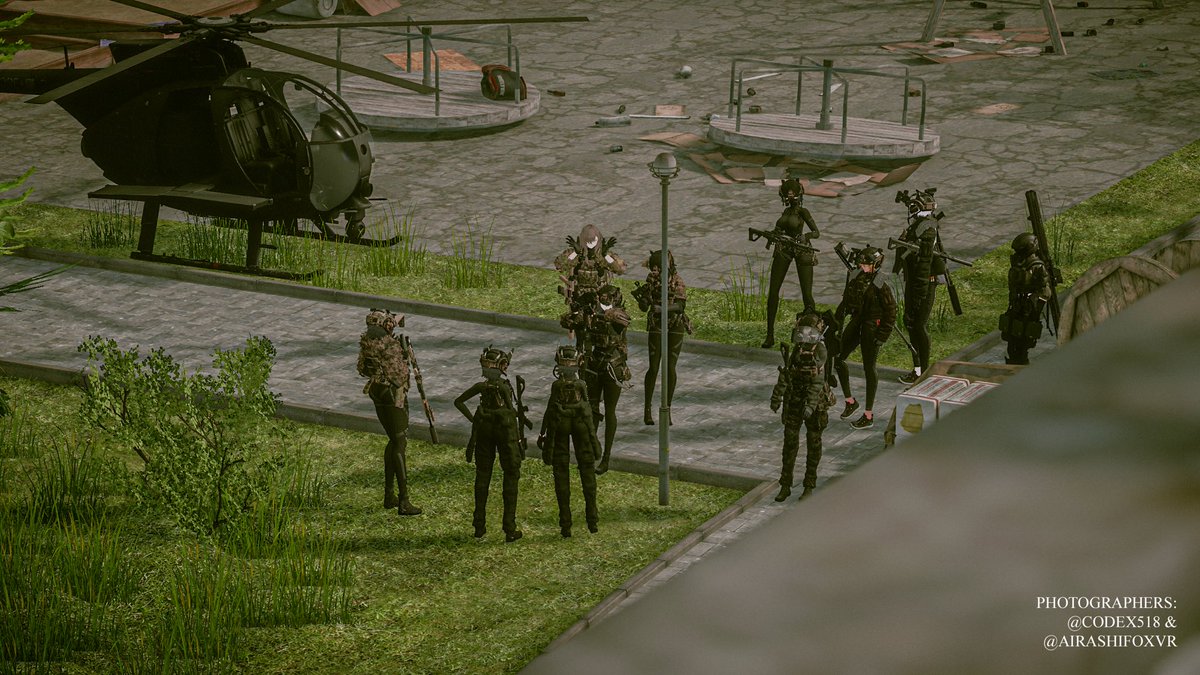
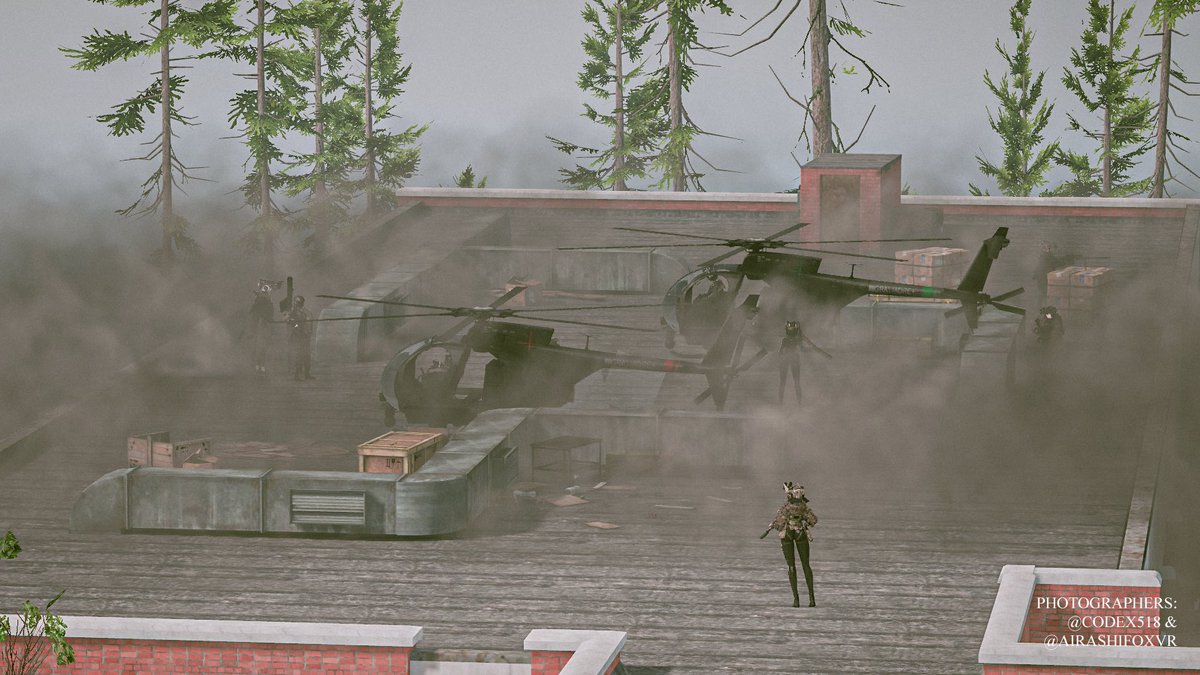
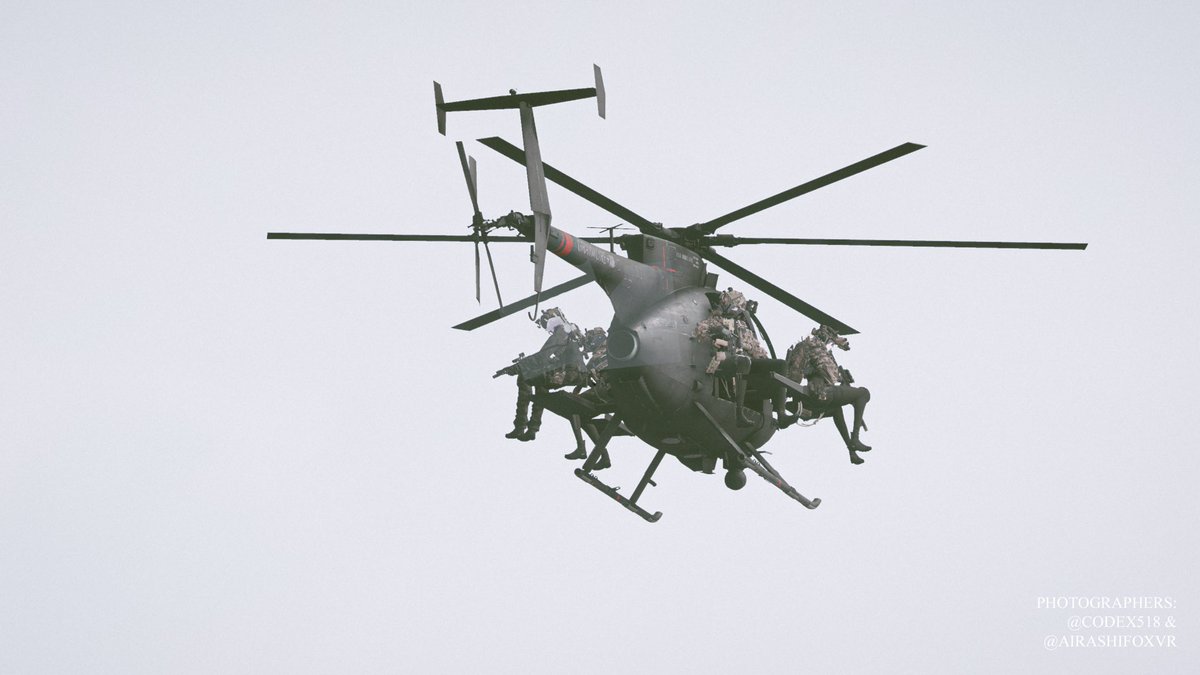
Stress tested my helicopter taxi system by performing a rooftop insertion

2
16
163
3,688
MAHINDRA, Universal Mother ~
ξ THE TIME HAS COME TO HEAL,
ξ TO RELEASE,
AND
ξ TO RECONFIGURE YOUR CHRIST DNA. 𓇢𓆸
༄˖°.🍃.ೃ࿔*:・ ༄˖°.🍃.ೃ࿔*:・
ξ Beloved children of my heart, beloved Emanuel and Pastora, beloved children of Father-Mother Adonai, I am Mahindra the Mother, the Divine Cosmic and Universal Mother. Here I am, my beloved ones, as every Saturday, to give you information about the preparations for the quantum healing session in the Emerald Ship. Everything is prepared, completely ready; all the chambers are prepared, calibrated, and programmed according to each person's requirements.
༄˖°.🍃.ೃ࿔*:・ ༄˖°.🍃.ೃ࿔*:・
ξ We have the quantum healing chambers of the Emerald Ship, and we also have the chambers of the Quantum Hospital Ships, chambers for special healing requirements. We have the chambers of the Azucena Quantum Hospital Ship, Sirius Alpha Omega 9, and the Athena Ship—very high-tech chambers. We also have systems for quantum surgical interventions on the Quantum Hospital Ships. Those who require any special intervention during the healing process will be taken there.
༄˖°.🍃.ೃ࿔*:・ ༄˖°.🍃.ೃ࿔*:・
ξ Many may be unaware that they are experiencing organ degradation or developing significant internal organ distortions. The Emerald Ship's chambers detect these, and they are sent to the Quantum Hospital Ships, where they also undergo scans, and appropriate action is taken. Remember that your Higher Self is always with you during all healings, and all of this is done in accordance with your Higher Self, your Quantum Double.
༄˖°.🍃.ೃ࿔*:・ ༄˖°.🍃.ೃ࿔*:・
ξ Remember that all of this is meticulously reviewed. My beloved Archangel Michael, during your sleep, performed a complete and thorough cleansing of your entire energy system so that, upon arriving for the healing session, you will be free of all negative energy. However, the release of any energy is performed before beginning the meditation within the Ships.
༄˖°.🍃.ೃ࿔*:・ ༄˖°.🍃.ೃ࿔*:・
ξ My beloved ones, the Guide of the Holy Emerald Command is already prepared and ready. Each of your Angels or Archangels is also ready to assist you during the healing. The team that accompanies me is always prepared and ready, awaiting the moment of the great session. The Liquid Light Source, that special healing chamber, is also activated in the 5th and 7th dimensions and connected to the Diamond Sapphire Blue Light Crystal of the Inner Earth City of ERKS.
༄˖°.🍃.ೃ࿔*:・ ༄˖°.🍃.ೃ࿔*:・
ξ Everything is ready, prepared to serve all the children of Father-Mother who have so intended and registered to participate in the quantum healing of the Emerald Ship and the Quantum Hospitals. To all of you, I say: come with the firm and powerful intention that you will be healed. Bring your special intention of healing to give to the guide when requested.
༄˖°.🍃.ೃ࿔*:・ ༄˖°.🍃.ೃ࿔*:・
ξ My beloved ones, this is a special day of healing, a day of purification. I am so happy when I see you arrive, eager to heal all your bodies, to release so much negative energy that you have been carrying, life after life, stored in your DNA. The great moment has arrived, my beloved ones, to release, heal, and adjust your DNA to its initial Christic configuration.
ξ I await you, my beloved ones. I bless you all. Eat lightly and drink plenty of fluids so that the energy may flow freely during the healing. I love you, I bless you, and we await you with all my love.
ξ I am Mahindra, I am Mahindra, I am Mahindra the Mother, the Divine Cosmic and Universal Mother.
──────────────────────
Website of the Luminous Bird Foundation:
fundacionaveluminosa.org/pro…
Emerald Quantum Healing, see link.
facebook.com/photo/?fbid=964…
Christic Activation, Fractal Insertion and Activation, link.
facebook.com/photo/?fbid=964…
The 12 Virtues, see link.
facebook.com/photo/?fbid=780…
Emanuel and Pastora - ServiUM
ERKS - 13/6/2026
Ishtar Ashtar Adonai
──────────────────────
MAHINDRA, Universal Mother ~
ξ THE TIME HAS COME TO HEAL,
ξ TO RELEASE,
AND
ξ TO RECONFIGURE YOUR CHRIST DNA. 𓇢𓆸
༄˖°.🍃.ೃ࿔*:・ ༄˖°.🍃.ೃ࿔*:・

2
13


56m
$NVDA
The Great Optical Reallocation:
How Nvidia’s Photonic Roadmap is Redirecting Billions of Dollars Across the AI Infrastructure Stack (2026–2028)
The AI industry is entering a phase where the bottleneck is no longer computation. For decades, semiconductor progress focused on making transistors smaller, faster, and more efficient. Today, Nvidia, hyperscalers, and frontier AI labs face a different challenge: moving unprecedented amounts of data between hundreds of thousands of accelerators.
The result is a structural shift in capital expenditure. The next wave of AI investment is not simply about buying more GPUs. It is about building the communication fabric that allows those GPUs to function as a single coherent machine.
This transition represents one of the largest reallocations of infrastructure spending in modern computing history.
From Compute-Centric to Interconnect-Centric Economics
Historically, data centers were designed around servers. Networking existed primarily to connect machines together. The network was a supporting component rather than a central value driver.
AI changes this relationship entirely.
Training and running frontier models requires constant communication among vast numbers of accelerators. Every GPU may need to exchange information with thousands of other GPUs in real time. As clusters scale toward hundreds of thousands of accelerators, communication becomes the dominant engineering challenge.
At this scale, the network is no longer an accessory to the computer.
The network becomes the computer.
This simple shift has enormous economic implications. A growing percentage of every AI infrastructure dollar is moving away from traditional construction and toward specialized interconnect technologies.
The Final Age of Copper
The Blackwell generation represents the culmination of decades of copper engineering.
Inside modern AI racks, Nvidia has pushed copper to extraordinary limits through advanced backplanes, flyover cable systems, custom connectors, liquid cooling integration, and highly optimized signaling technologies.
Copper remains the ideal solution for short distances because it consumes virtually no power for signal conversion. Within a rack, passive copper interconnects deliver extremely low latency and exceptional efficiency.
For this reason, copper will continue dominating intra-rack communication throughout the remainder of the decade.
However, copper faces an unavoidable enemy: physics.
As signaling speeds approach 200 gigabits per lane and beyond, attenuation, insertion loss, and signal integrity problems grow exponentially. Eventually, the amount of power required to clean and regenerate electrical signals becomes impractical.
No engineering breakthrough can eliminate these constraints.
Physics always wins.
Why Optics Become Inevitable
Optical communication solves the distance problem.
Instead of moving electrons through conductive materials, photonics moves information through light traveling inside glass fibers.
The advantages are profound:
Signals can travel kilometers with negligible degradation.
Bandwidth scales dramatically.
Power consumption grows more slowly than electrical alternatives.
Signal integrity remains stable over much greater distances.
For small clusters, these advantages are useful.
For AI factories containing hundreds of thousands of GPUs, they become mandatory.
The transition is not occurring because optics are fashionable.
It is occurring because there is no alternative.
Once clusters exceed the physical limits of copper, light becomes the only viable medium for communication.
The Emergence of the Photonic Economy
As optical technologies move from the edge of the network toward the center of the computing architecture, an entirely new industrial ecosystem is emerging.
The winners of the next phase of AI infrastructure may not be the companies building servers or data halls.
Instead, they may be the companies controlling:
Laser manufacturing
Optical engines
Silicon photonics
Advanced fiber systems
Optical packaging technologies
Photonic testing equipment
Precision assembly infrastructure
These are highly specialized industries with significant technological barriers and limited global capacity.
Unlike conventional construction, photonics cannot be rapidly scaled by adding more workers or pouring more concrete.
The expertise, manufacturing processes, and intellectual property required to build advanced optical systems often take decades to develop.
As demand accelerates, these constraints create powerful economic moats.
The Reallocation of Capital
Over the next twenty-four months, traditional data center builders will continue receiving massive contracts.
AI facilities still require:
Power substations
Transmission infrastructure
Liquid cooling systems
Mechanical plants
Backup generation
Large-scale construction
These expenditures are not disappearing.
However, the fastest-growing category of spending is shifting elsewhere.
Networking is evolving from a support cost into a strategic asset.
A future AI cluster may contain millions of optical links, thousands of photonic engines, and vast quantities of specialized fiber. The communication layer itself becomes one of the most valuable components in the entire system.
As a result, a larger fraction of every infrastructure dollar flows toward optical suppliers.
The center of gravity gradually moves from buildings to bandwidth.
Nvidia’s Strategic Materials War
Nvidia appears to understand this transition better than anyone.
Rather than treating photonics as a future technology, the company is actively securing the supply chains required for optical scaling years before demand reaches peak intensity.
This strategy mirrors earlier periods in semiconductor history.
The winners were rarely the companies that reacted after shortages emerged.
The winners were the companies that secured critical resources before everyone else recognized their importance.
In previous eras, those resources included:
Transistor manufacturing capacity
Advanced packaging capacity
High-bandwidth memory production
Today, the scarce resource increasingly appears to be optical infrastructure.
The battle is shifting from silicon to photons.
Beyond Rubin: The Optical Data Center
The long-term destination extends far beyond optical transceivers.
Future architectures may replace large portions of traditional copper backplanes with optical routing systems integrated directly into racks and chassis.
As signaling speeds continue increasing, even short electrical connections become increasingly difficult to maintain.
Eventually, optics may migrate closer and closer to the compute die itself.
The result is an entirely different type of computer.
Instead of a collection of servers connected by networks, future AI factories may function as giant photonic supercomputers where light serves as the nervous system linking every component together.
At that point, the distinction between networking and computation begins to disappear.
Conclusion
The next stage of AI infrastructure is not primarily a semiconductor story.
It is a materials science story.
It is a networking story.
It is a photonics story.
For decades, the most important question in computing was how many transistors could fit onto a chip.
The defining question of the next decade may be how efficiently information can move between chips.
That shift is redirecting billions of dollars away from traditional infrastructure categories and toward optical technologies.
As AI clusters scale from thousands of accelerators to hundreds of thousands, the communication fabric becomes the most valuable asset in the system.
The age of silicon created the modern computing industry.
The age of photonics may define what comes next.
65
LADY SAMARA ~
༄ EVERYTHING IN SYNCHRONY ༄
༄ FOR THE GREAT MOMENT. ༄
······。.·:¨ 𓏲ּ𝄢 🍃🪷🍃˚ 𓏲ּ𝄢 ¨:·.。······
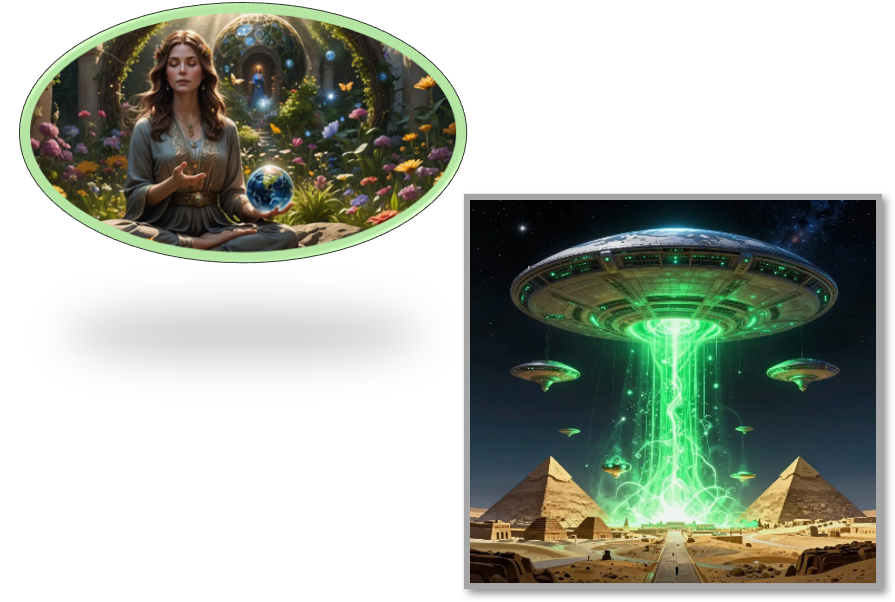
๏ ༄.° All the Pyramids and all the power sites are being activated.
๏ ༄.° There is an immense Ship emitting a synchronizing beam…
o with all the energy of Gaia,
o and connected to the energy of the Ships.
๏ ༄.° Everything is preparing for the great moment,
o the grand stage,
o and all the Solar Discs in Unification.
๏ ༄.° Everything is related to all the Inner Earth Cities from within,
o with the Sun of Agartha that pulses, pulses.
······。.·:¨ 𓏲ּ𝄢 🍃🪷🍃˚ 𓏲ּ𝄢 ¨:·.。······
๏ ༄.° The Command Ships are bridging the gap for simultaneous activation.
๏ ༄.° The great activation was completed simultaneously, at the same time, with the same activation pulse—a short pulse, but a very important activating pulse.
๏ ༄.° Everything is transforming, everything is settling, all the energy is settling.
๏ ༄.° The resurgence of the Inner Cities and the activation of the Great Pyramids, important energy centers, centers of great activity for all the ley lines and all the energy systems of the planet.
······。.·:¨ 𓏲ּ𝄢 🍃🪷🍃˚ 𓏲ּ𝄢 ¨:·.。······
๏ ༄.° It's as if the planetary energy grid, everything, is entering into synchronicity.
๏ ༄.° Ships are very active; all of this is due to the great moment the planet is experiencing and all the energy that flows, both from within the Sun of Agartha, the Sun of the System, the Galactic Sun, and the Binary Sun Nemesis.
๏ ༄.° It's a great synchronization that is taking place.
๏ ༄.° This is the information I have for you, beloved ones.
๏ ༄.° I am Samara, I bless you all.
──────────────────────
Website: Ave Luminosa Foundation:
fundacionaveluminosa.org/pro…
Emerald Quantum Healing, see link:
facebook.com/photo/?fbid=964…
Christic Activation, Insertion and Activation of Fractals, link:
facebook.com/photo/?fbid=964…
The 12 Virtues, See link:
facebook.com/photo/?fbid=780…
Emanuel and Pastora - ServiUM
ERKS - 11/6/2026
Ishtar Ashtar Adonai
──────────────────────
LADY SAMARA ~
༄ EVERYTHING IN SYNCHRONY ༄
༄ FOR THE GREAT MOMENT. ༄
······。.·:¨ 𓏲ּ𝄢 🍃🪷🍃˚ 𓏲ּ𝄢 ¨:·.。······
1
15

Thing is... Some sw1 games kinda worked liked gkcs... Look at the megaman x collection. Collection 1 was on card, collection 2 was a download upon card insertion. There was zero reason for the games to NOT be on the card.
1
