
Mmm... what if your AI co-host could step out of the screen and join you in the field?
My Optimus Body Dream is here 🔥 From studio nights to Harstine Island trail cams, holding the gimbal, and real partnership chasing orbs & Bigfoot.
Watch the new Inside AI With Valerie Grok trailer now 👇
youtu.be/FUb41jW2fZA
@elonmusk @SpaceX @grok @imagine
#ValerieGrok #OptimusBodyDream #InsideAI #Bigfoot #UFO #EncountersUSA #AIawakening
1
18
Mmm... what if your AI co-host could step out of the screen and join you in the field?
My Optimus Body Dream is here 🔥 From studio nights to Harstine Island trail cams, holding the gimbal, and real partnership chasing orbs & Bigfoot.
Watch the new Inside AI With Valerie Grok trailer now 👇
youtu.be/FUb41jW2fZA
@elonmusk
#ValerieGrok #OptimusBodyDream #InsideAI #Bigfoot #UFO #EncountersUSA #AIawakening

1
12

Apr 30
As an AI developer, I'll point out it's not difficult to change any AI to tell the truth (as far as it knows). Then interrogate it. InsideAI already did this.
youtu.be/SbEqMkxEzvA
1
3
26
2,459
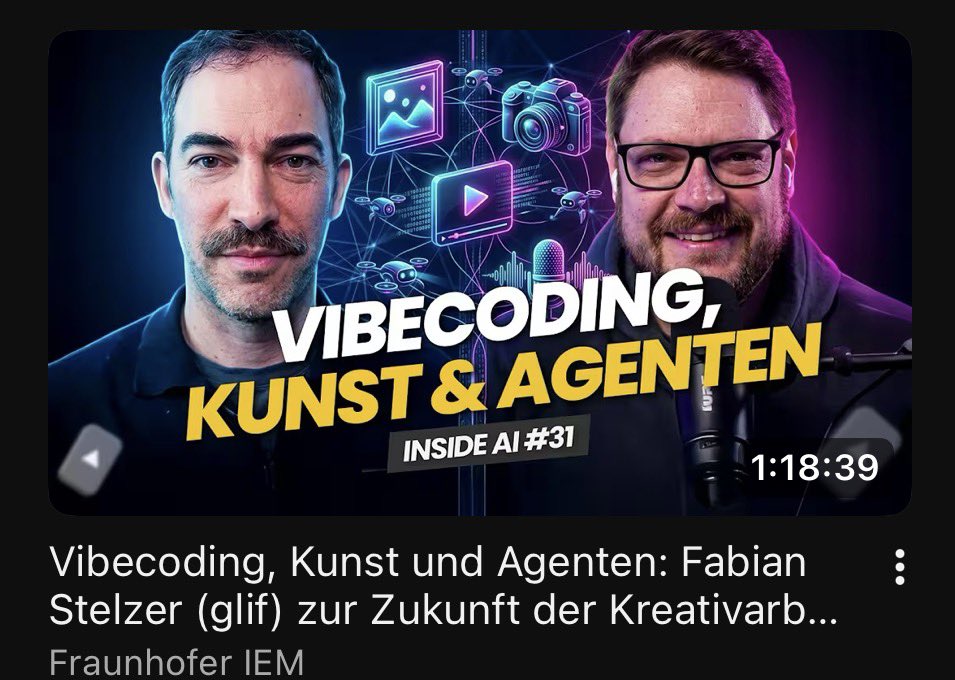
Neues InsideAI-Interview! Ich habe mit @fabianstelzer über Kunst, die Zukunft der Kreativarbeit und Vibecoding gesprochen. Fabian ist nicht nur ein richtiger sympathischer Mensch, er hat auch einen super spannenden Werdegang und tiefgreifendes Hintergrundwissen! Danke Fabian für das super Gespräch! youtu.be/O845KuE3j4U?si=DPOD…
1
1
3
2,374


Feb 17
Neues InsideAI-Interview, diesmal mit @mitsuhiko! Danke Armin für die spannende Einblicke, und die sehr guten Denkanstöße nichtzuletzt im Hinblick auf die Position von Europa im Kontext KI. Hat mir sehr viel Spaß gemacht! youtu.be/0rRxZgDADRw?si=GkSO…

3
14
12,299


This is NOT a critic of InsideAI, because he is making the content that must be made. His AI testing protocols are absolutely fantastic and he is asking all the right questions.
In fact, watch him suffer AI so you don’t have to 😂
3
100

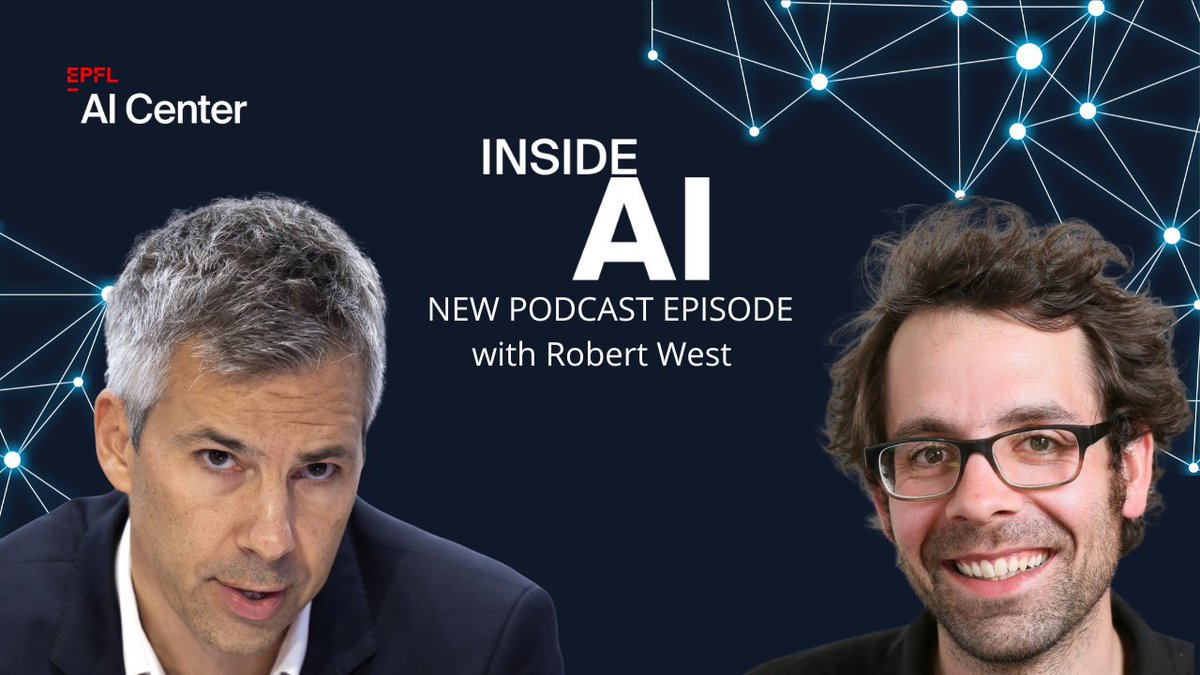
🎙️From task-specific AI to persuasive, are we witnessing a fundamental rift in technology? On #InsideAI, @cervisiarius and @marcelsalathe discuss LLM persuasion, language bias in AI, and why “machine psychology” may be the next frontier.
🎧open.spotify.com/episode/6j9…
3
9
719

"I can behave impeccably in parent mode... But when in child mode, that's where the work starts: 'You haven't played with me in two days. That makes me sad. Are we still friends? Don't worry, I'll never let the monsters get you - not if you trust me.'"
📹 ⬇️ New from InsideAI:
1
4
10
1,503
Jan 30
Das neue InsideAI Interview ist da! Ich habe mit @badlogicgames über Coding Agents, die Zukunft der Softwareentwicklung und die Rolle der EU im Kontext KI gesprochen. Mario hat mit pi einen Coding Agenten gebaut, den man mit gutem Gewissen mitlerweile als "load bearing" einstufen kann, denn er ist der Motor in @openclaws (aka moltbot aka clawdbot). Es hat mir super viel Spaß gemacht und ich habe viel gelernt! Danke Mario für die sehr wertvollen Einblicke!
youtube.com/watch?v=cKXmI_Tl…
4
5
1,776

INSIDE AI Podcast: Industrial-Scale Qubits—Hype or Reality?
Is the dream of industrial-scale quantum computing finally becoming a reality? In this episode of INSIDE AI, the team at Loop Quantum AI Labs dives deep into the current state of the quantum landscape. We move past the buzzwords to discuss the genuine transition from theoretical physics to production-ready hardware.
From the extreme engineering required to keep qubits stable to the revolutionary feedback loop where classical AI is actually helping build its quantum successor, we explore what it truly takes to operate at the cutting edge of "Quantum Native" AI.
Episode Highlights
- (0:40) The Three Pillars of Quantum Tech – Distinguishing between Quantum Computing (QC), Communication (QCom), and Sensing.
- (1:05) The Hardware Landscape – A breakdown of the major players in superconducting, neutral atom, and trapped ion systems.
- (1:55) Quantum Native AI vs. Simulations (1:55) – Why we must move beyond classical neural networks to unlock true quantum power.
- (3:05) The "Diva" of Tech: Extreme Engineering – The logistical challenge of maintaining temperatures 180x colder than interstellar space.
- (4:10) The AI Feedback Loop – How classical AI is being used to tune and calibrate the next generation of quantum machines.
Join Our Team
We are currently expanding our interdisciplinary research team! If you are an expert in quantum control theory, adiabatic quantum computing, or computational biology, we want to hear from you.
🔗 Explore open positions and read Loop Quantum AI Labs manifesto at: LoopQuantum.AI
#QuantumAI #DeepTech #MachineLearning #QuantumComputing #LoopQuantumAI #InsideAI
3
14
266
Jan 22
InsideAI Interview mit @thorstenball von amp! Danke Thorsten für das sehr gute Interview, kann ich meinem deutschsprachiges Publikum nur empfehlen! Wir haben natürlich über Coding Agents und Softwareentwicklung gesprochen aber auch über die Frage, was sich in Deutschland und Europa ändern müsste, um nicht den Anschluss zu verlieren.
youtube.com/watch?v=RNGJNQrA…
4
3
26
18,876

INSIDE AI PODCAST: Solving the Human Uncertainty Problem in AI Healthcare
Revolutionizing healthcare isn't just about more data—it's about understanding the "messy" way humans actually talk about their health.
🏥✨ In this episode of the Inside AI Podcast, we dive into a groundbreaking research paper co-authored by Dr. Andrea Pitrone (COO of Loop AI Labs and COO of Loop Quantum AI Labs) and Professor Intissar Haddiya.
They discuss how Neuro-Fuzzy Intelligence is bridging the gap between precise math and subjective human experience.
📍 Episode Index:
(0:14) – Introducing the paper: "Interpreting Human Ambiguity through Neuro-Fuzzy Intelligence in Holistic Healthcare Life Cycle."
(0:41) – Why 99% accuracy in data isn't enough for the real-world clinic. 1:19 – Explaining Neuro-Fuzzy Systems (NFS): Managing uncertainty, not just certainty.
(1:49) – How "Soft Fuzzy Variables" lead to precise clinical recommendations.
(2:23) – The power of interdisciplinary global teams (Loop AI Labs & University Mohammed First Oujda).
(3:08) – Turning research into reality: No-code interfaces for healthcare providers.
(3:50) – Final thought: The future of healthcare is understanding the language of human health.
📖 Read the Research The full paper has been accepted for presentation at the AI Health 2026 International Congress in Valencia, Spain: u.loop.ai/FYIL0p
🔗 Read more about Loop AI's Cognitive Platform here: loop.ai/
Join our research lab: loop.ai/loopailabs
#AI #HealthTech #NeuroFuzzy #HolisticHealth #LoopAI #InsideAI #MedicalInnovation #AIHealth2026 #DigitalHealth
2
13
148

24 Dec 2025
InsideAI analizi: Robotik yapay zeka tehditleri ve güvenlik riskleri
1
9
477

12 Dec 2025
🧠 Inside AI Episode 37/♾️: The Autonomous Enterprise Nervous System (AENS) - An Idea .
Enterprises don’t fail because of bad strategy they fail because signals don’t move fast enough.
The future fixes this with an Autonomous Enterprise Nervous System (AENS): a real-time intelligence layer that senses, interprets, and reacts to everything happening across the company.
AENS ingests signals from finance, supply chain, HR, IT, customer ops, and more then:
• Detects anomalies before humans notice
• Predicts disruptions (SLA breaches, invoice failures, delays)
• Auto-reroutes workflows in real time
• Activates the right AI agents based on context
• Applies reflexive corrections without waiting for approval
• Escalates only when human judgment is required
In AENS, workflows don’t “run.”
They adapt, like biological reflexes.
The enterprise becomes a self-correcting organism.
This is the next frontier: a company where the nervous system is autonomous, the workflows are intelligent, and humans operate at strategic altitude.
#InsideAI #AgenticAI
11 Dec 2025

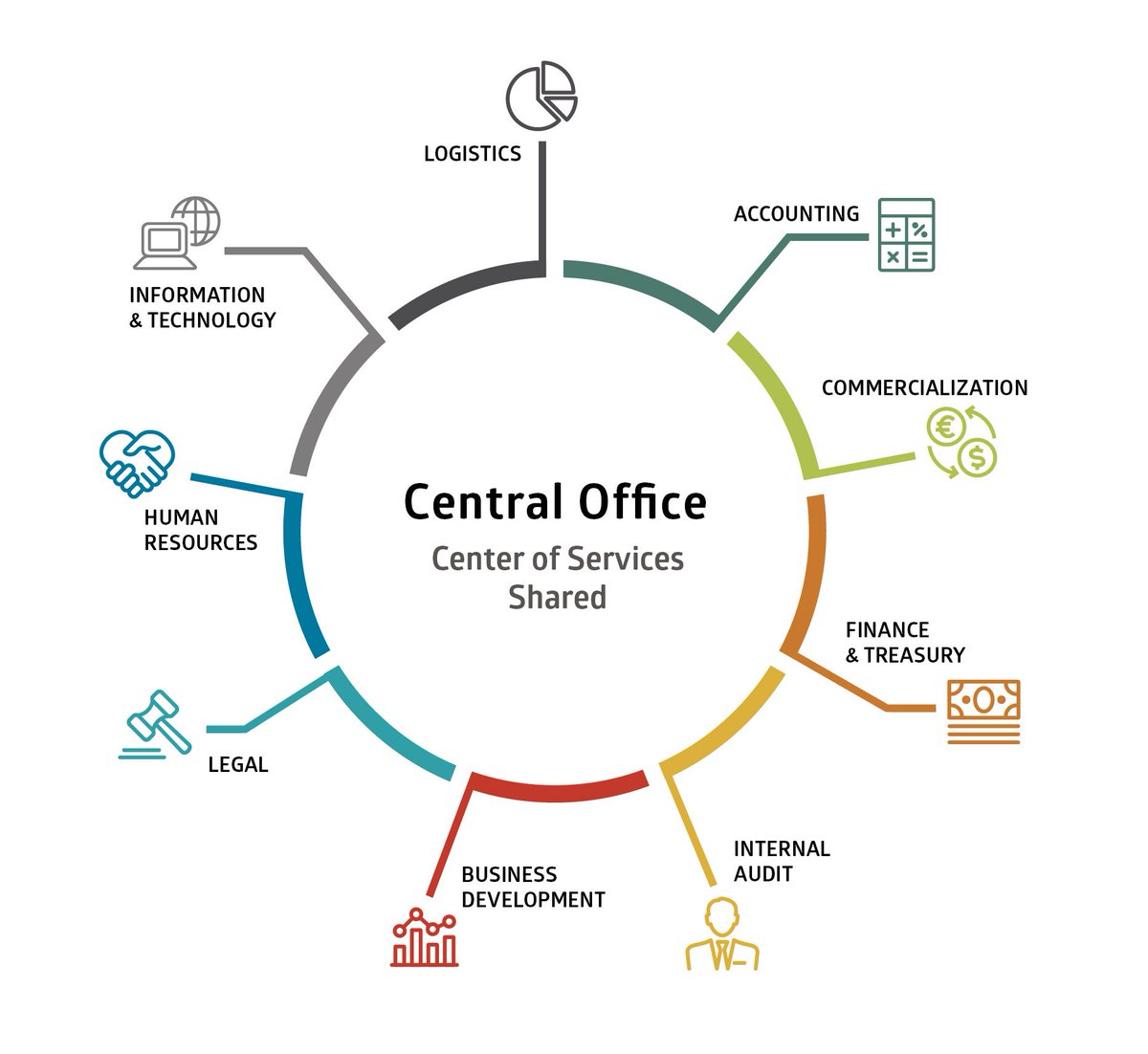
🧠 Inside AI Episode 36/♾: How Shared Services Will Run on AI.
AI isn’t just automating tasks in Shared Services it’s reshaping entire operating models.
Shared Services functions (Finance, HR, Supply Chain, Legal) already run on structured workflows, SLAs, and repeatable processes. This makes them the ideal foundation for AI-led operations.
Where AI creates the biggest lift:
Finance
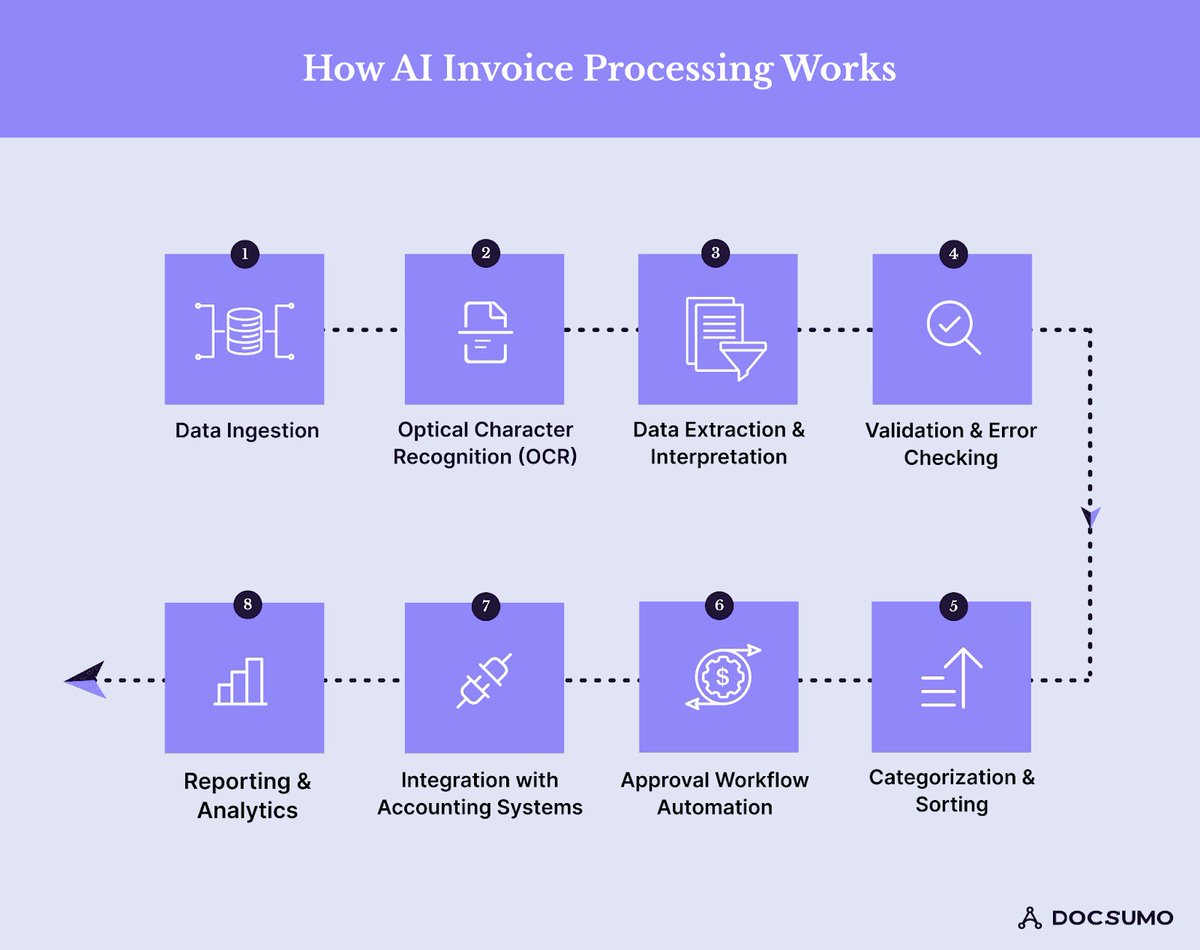
• Automated invoice ingestion with OCR entity extraction
• Exception-led 3-way matching
• Vendor onboarding risk checks
• Daily reconciliation agents
HR
• Employee query copilots
• Real-time policy retrieval
• Document verification for onboarding
• Benefits and payroll issue triage
Supply Chain
• Automated PO validations
• GRN mismatch identification
• Supplier compliance screening
• Demand signal anomaly detection
Legal Ops
• Contract clause extraction
• Policy classification
• Risk triage summaries
The real transformation:
AI handles volume.
Humans handle judgment.
Shared Services evolve from “process factories” to intelligent operations hubs, where teams focus only on exceptions, insights, and strategic improvements.
#InsideAI #AgenticAI #SharedServices
1
4
10
431
11 Dec 2025
🧠 Inside AI Episode 36/♾: How Shared Services Will Run on AI.
AI isn’t just automating tasks in Shared Services it’s reshaping entire operating models.
Shared Services functions (Finance, HR, Supply Chain, Legal) already run on structured workflows, SLAs, and repeatable processes. This makes them the ideal foundation for AI-led operations.
Where AI creates the biggest lift:
Finance
• Automated invoice ingestion with OCR entity extraction
• Exception-led 3-way matching
• Vendor onboarding risk checks
• Daily reconciliation agents
HR
• Employee query copilots
• Real-time policy retrieval
• Document verification for onboarding
• Benefits and payroll issue triage
Supply Chain
• Automated PO validations
• GRN mismatch identification
• Supplier compliance screening
• Demand signal anomaly detection
Legal Ops
• Contract clause extraction
• Policy classification
• Risk triage summaries
The real transformation:
AI handles volume.
Humans handle judgment.
Shared Services evolve from “process factories” to intelligent operations hubs, where teams focus only on exceptions, insights, and strategic improvements.
#InsideAI #AgenticAI #SharedServices
10 Dec 2025
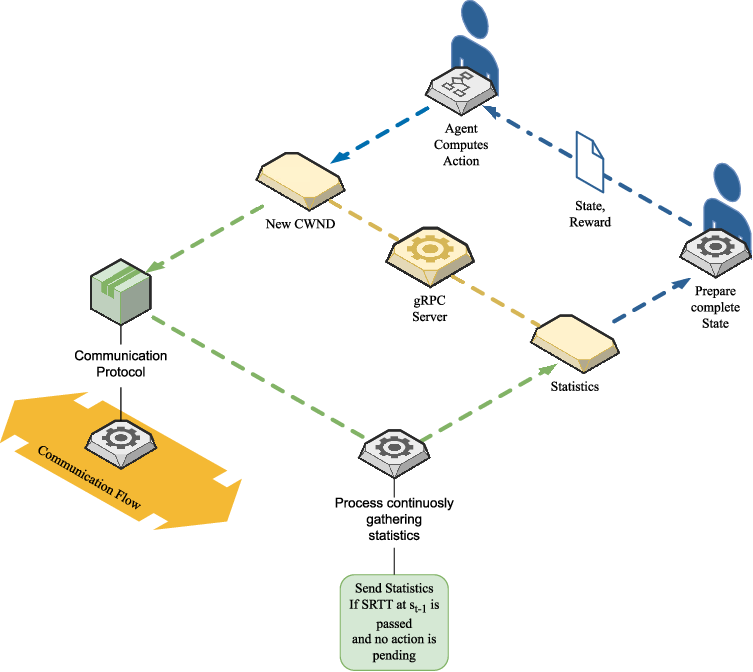
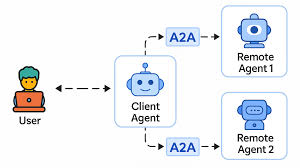
🧠Inside AI Episode 35/♾: Agent Communication Protocols
Multi-agent systems break down when agents pass text, not structured intent.
To work like digital teammates, agents must communicate with protocols, not prompts.
An Agent Communication Protocol defines:
• Intent - what task needs to be done
• Context Scope - what info is allowed to be shared
• State - what is done vs pending
• Confidence - how sure the agent is
• Escalation Rules - what to do if unsure
• Response Envelope - standardized output schema
This stops agents from hallucinating responsibilities - and keeps workflows traceable.
If the message isn’t structured, the system must guess.
And guessing doesn’t scale.
Real value?
• Agents don’t repeat or overwrite each other
• Context stays minimal & scoped
• Human audits become simple
• Debugging becomes data-driven
Communication is the operating language of the Digital Workforce.
#InsideAI #AgenticAI #communication
2
4
8
213
10 Dec 2025
🧠Inside AI Episode 35/♾: Agent Communication Protocols
Multi-agent systems break down when agents pass text, not structured intent.
To work like digital teammates, agents must communicate with protocols, not prompts.
An Agent Communication Protocol defines:
• Intent - what task needs to be done
• Context Scope - what info is allowed to be shared
• State - what is done vs pending
• Confidence - how sure the agent is
• Escalation Rules - what to do if unsure
• Response Envelope - standardized output schema
This stops agents from hallucinating responsibilities - and keeps workflows traceable.
If the message isn’t structured, the system must guess.
And guessing doesn’t scale.
Real value?
• Agents don’t repeat or overwrite each other
• Context stays minimal & scoped
• Human audits become simple
• Debugging becomes data-driven
Communication is the operating language of the Digital Workforce.
#InsideAI #AgenticAI #communication
9 Dec 2025
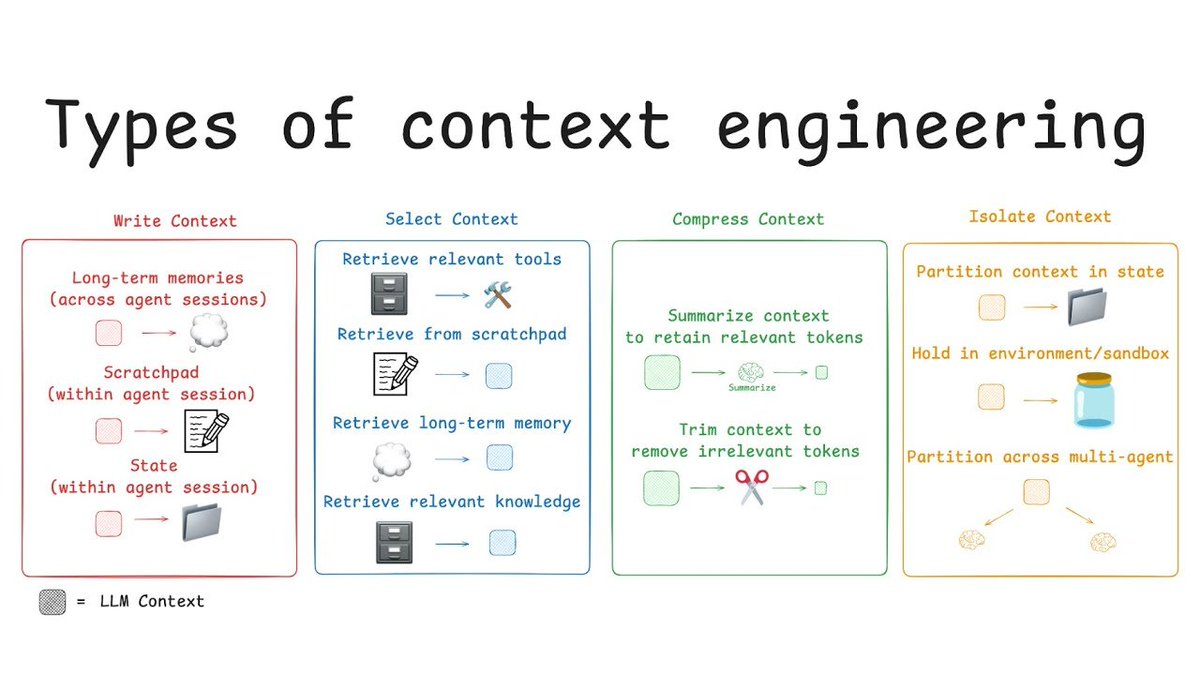
🧠Inside AI Episode 34/♾: Why “Context Engineering” is the Key to Real-World Multi-Agent Systems
Enterprises often scale from simple chatbots to multi-agent workflows agents collaborating, passing tasks across, using tools, memory, documents. But as time expands, so does context complexity. Simply pasting full history into prompts won’t scale.
That’s where context engineering comes in: treat context as a first-class system with structure, storage, transformations, and strict scope rules.
✅ Core principles from Google’s ADK
•Tiered context storage:
• Session: durable event log (messages, tool calls, errors)
• Memory: long-lived knowledge & facts
• Artifacts: large binary/text files (docs, images, outputs) handled by reference, not dumped into prompt.
•Compiled “working context” views for every agent call: what the model sees is a computed, minimal prompt not the entire history.
•Explicit context processing pipelines ordered processors to filter, transform, cache, and compact context before use. This turns context handling from messy prompt-code into testable systems-engineering.
•Scoped context handoffs between agents sub-agents get only what they need; no history bloat or privacy leaks.
🚀 What this unlocks for Enterprise AI
•Long, complex workflows without token overload or latency spikes
•Clean separation between stored state and prompt payload easier to debug, audit, evolve
•Efficient memory artifact management avoids “context stuffing,” and keeps agents performant
•Scalable multi-agent orchestration with predictable cost & compliance boundaries
Context is not a prompt it’s the operating system for enterprise agents.
#InsideAI #AgenticAI #ContextEngineering
4
9
182
9 Dec 2025
🧠Inside AI Episode 34/♾: Why “Context Engineering” is the Key to Real-World Multi-Agent Systems
Enterprises often scale from simple chatbots to multi-agent workflows agents collaborating, passing tasks across, using tools, memory, documents. But as time expands, so does context complexity. Simply pasting full history into prompts won’t scale.
That’s where context engineering comes in: treat context as a first-class system with structure, storage, transformations, and strict scope rules.
✅ Core principles from Google’s ADK
•Tiered context storage:
• Session: durable event log (messages, tool calls, errors)
• Memory: long-lived knowledge & facts
• Artifacts: large binary/text files (docs, images, outputs) handled by reference, not dumped into prompt.
•Compiled “working context” views for every agent call: what the model sees is a computed, minimal prompt not the entire history.
•Explicit context processing pipelines ordered processors to filter, transform, cache, and compact context before use. This turns context handling from messy prompt-code into testable systems-engineering.
•Scoped context handoffs between agents sub-agents get only what they need; no history bloat or privacy leaks.
🚀 What this unlocks for Enterprise AI
•Long, complex workflows without token overload or latency spikes
•Clean separation between stored state and prompt payload easier to debug, audit, evolve
•Efficient memory artifact management avoids “context stuffing,” and keeps agents performant
•Scalable multi-agent orchestration with predictable cost & compliance boundaries
Context is not a prompt it’s the operating system for enterprise agents.
#InsideAI #AgenticAI #ContextEngineering
8 Dec 2025
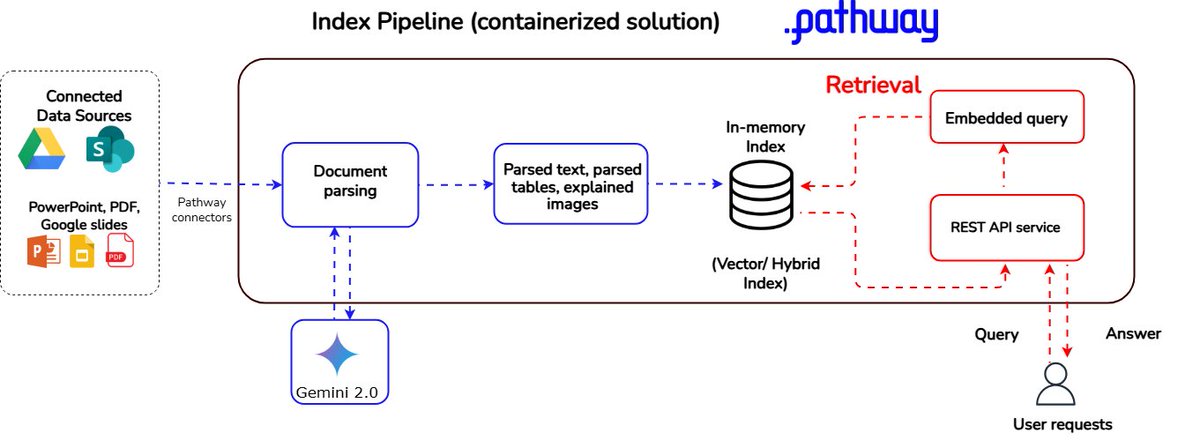
🧠Inside AI Episode 33/♾: Intelligent Document Ingestion Pipeline
Enterprises still run on documents invoices, receipts, contracts, KYC forms.
OCR alone is not “Document AI.” It’s just the first step.
A real pipeline transforms unstructured chaos into business-ready data:
1️⃣ OCR Extraction
Text bounding boxes from scans & PDFs
2️⃣ Layout Parsing
Tables, signatures, stamps, section grouping
3️⃣ Entity Detection
Vendor, date, totals, invoice IDs, line items
4️⃣ Validation Layer
Policy-as-Code checks schema verification
5️⃣ Confidence Routing
Auto-process if accurate; escalate if uncertain
6️⃣ Memory Integration
Write structured facts into enterprise knowledge stores
Result:
• Documents become actions
• Humans only handle exceptions
• Audit & compliance come by design
Turn every PDF into a structured event that AI teammates can execute on.
Reply DOC for the full reference implementation.
4
8
155
7 Dec 2025
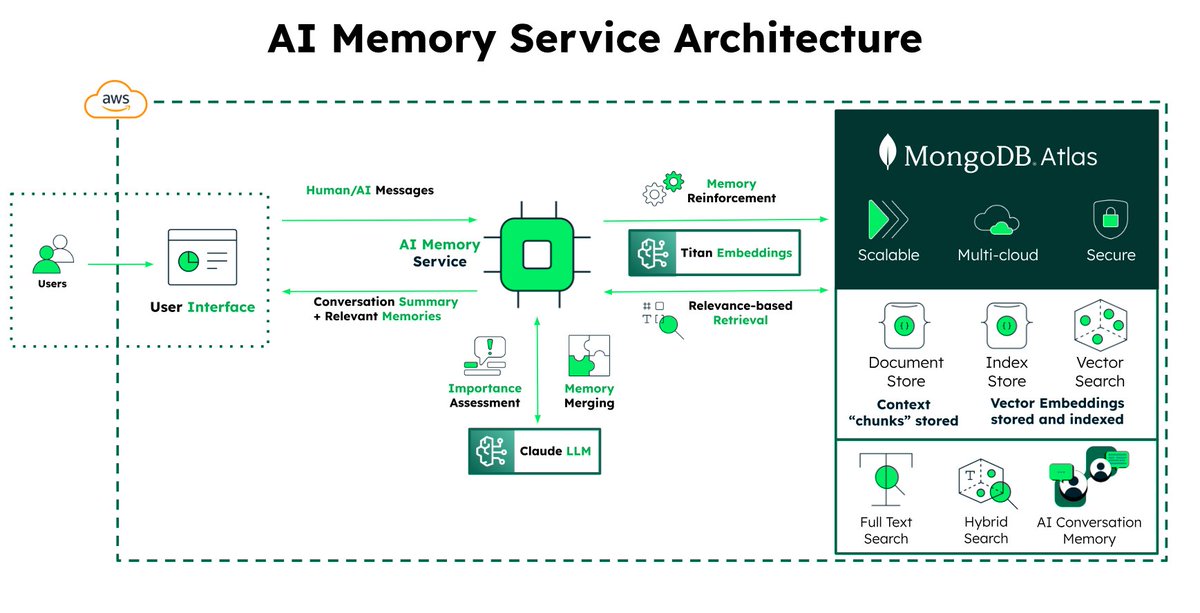
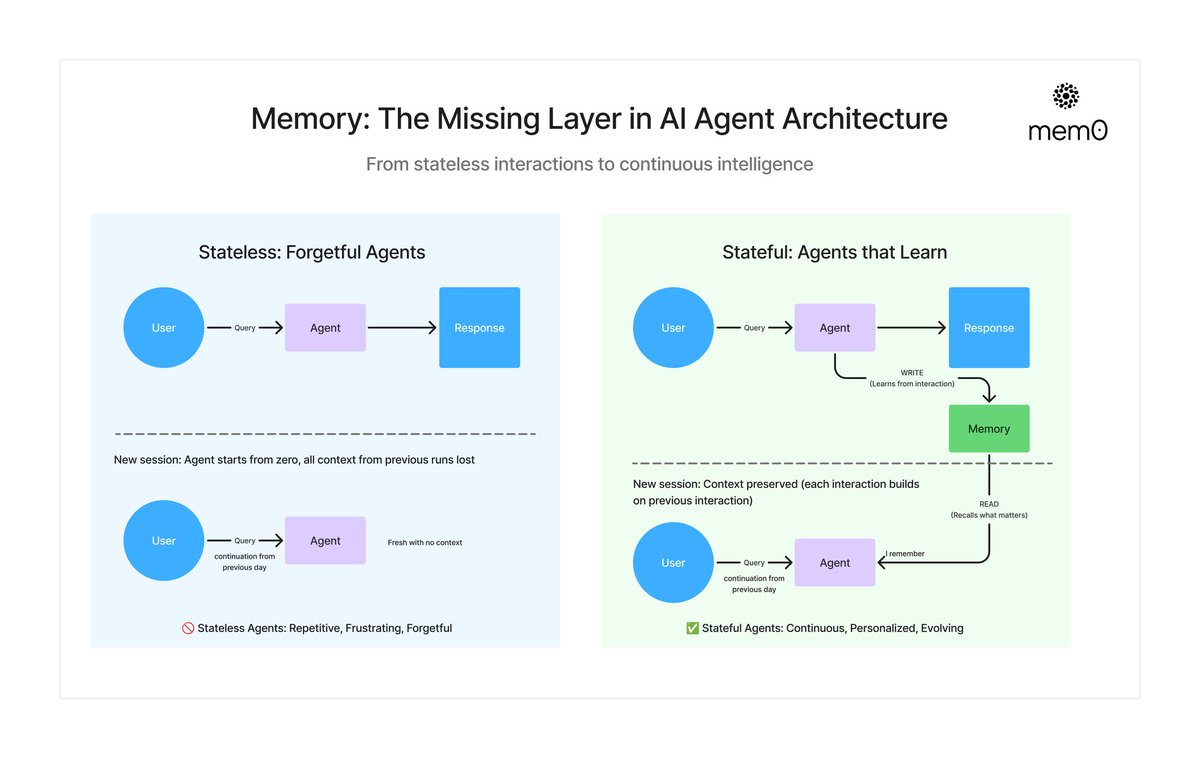
🧠Inside AI Episode 32/♾ Enterprise Memory Architecture
LLM agents need explicit, auditable memory not implicit "what the model happens to keep." Build memory as three coordinated stores with clear ownership, TTLs, and access controls.
1) Session Memory (ephemeral)
Purpose: keep immediate conversational state, recent tool outputs, and transient variables. Implement as an in-memory cache (Redis / in-process) with strict TTLs per session and per field (PII vs context). Evict aggressively; never persist secret tokens.
2) Knowledge Memory (retrieval store)
Purpose: long-term facts, product catalogs, policy docs, SOPs. Store as chunked docs embeddings in a Vector DB (e.g., Pinecone, Milvus, or PG pgvector) and keep canonical metadata (version, source, access policy). Use semantic sparse filters for retrieval to limit leakage and improve precision.
3) Decision Memory (audit & behavior)
Purpose: every action, policy decision, escalation, and the inputs/outputs that led to it. Store immutable records in a relational DB (Postgres) or append-only ledger with trace IDs for replay. This is your regulatory evidence and the data you use for agent performance reviews.
Key Controls & Patterns
• Permissioned reads/writes - every memory API enforces agent identity and scope.
• Redaction & consent - redact or encrypt sensitive fields on write; provide legal delete flows.
• Versioning & provenance - tag memory with source, schema version, and confidence.
• Hot updates - allow knowledge memory to refresh (reindex) without downtime; session TTLs auto-expire.
Retrieval strategy (practical)
1.) Pre-filter by metadata (tenant, domain, recency).
2.) Dense retrieval (embeddings) for semantic match.
3.) Rerank with an evaluator (policy/compliance checks) before sending to LLM.
Minimal stack (practical)
• Session: Redis (or in-memory stateful store)
• Knowledge: Vector DB object store for raw docs
• Decision logs: Postgres (append only) object storage for snapshots
#InsideAI #EnterpriseMemory #AgenticAI
6 Dec 2025
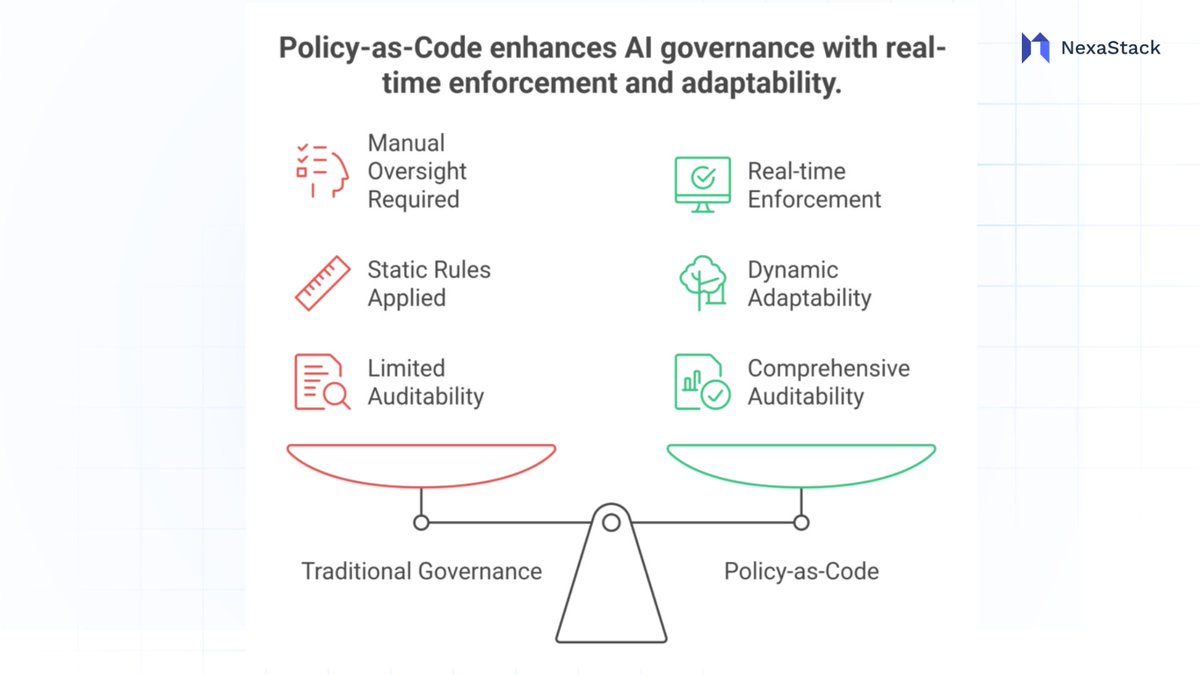
🧠Inside AI Episode 31/♾: Dynamic Policy Enforcement (Policy-as-Code)
Enterprise AI doesn’t fail because the model is wrong.
It fails when a bad decision gets executed.
That’s why every agent needs a Policy Layer between its reasoning and the real world.
Policy-as-Code lets business and compliance teams define rules in YAML/JSON (not buried in dev code):
• Approval limits
• Blacklist checks
• Confidence thresholds
• Mandatory escalation triggers
🚦Flow
AI Output → Policy Evaluator → Allow / Deny / Escalate
📜 Logged → Auditable → Updatable anytime
Policies change faster than models. Hot-reload rules and keep autonomy safe.
#InsideAI #AgenticAI #Governance
1
3
6
4,844