
What’s more important for renewal: better people or better architecture?
#ConsequencesArchitecture #InstitutionalDesign
3

The Global Structure Network Limited is redefining how consumers build capability, establishing the architecture through which their everyday decisions translate directly into long‑term economic value.
theglobalstructurenetwork.co…
#MarketDisclosure #InnovationGovernance #HealthInnovation #LifeSciencesUK #ResearchCommercialisation #EarlyStageCompanies #StartupGovernance #SystemsThinking #ComplexityEconomics #InformationSystems #InstitutionalDesign #EconomicArchitecture #GovernanceSystems #InformationAsInfrastructure #LegalTheory #CorporateLaw #LawAndEconomics #ConstitutionalTheory #ResearchUpdate #ThoughtLeadership
1
The Global Structure Network Limited is redefining how consumers build capability, establishing the architecture through which their everyday decisions translate directly into long‑term economic value.
theglobalstructurenetwork.co…
#LegalInfrastructure #CommercialCertainty #RuleOfLaw #RegulatoryReform #PublicEconomicLaw #CorporateGovernance #MergersAndAcquisitions #HSR #FifthCircuit #FTC #LegalAnalysis #SystemicRisk #EconomicPolicy #InstitutionalDesign #MarketIntegrity #LegalStability #EconomicCapability #PlatformEconomy #DataEconomy #ModernRegulation #StructuralEconomics #LegalTheory #CommercialArchitecture #Leadership #ExecutiveLeadership #Banking
#InvestmentBanking #CorporateStrategy #BusinessLeadership
#GlobalFinance #FinancialServices #BankingIndustry
#LeadershipChange #Management
2
The Global Structure Network Limited is redefining how consumers build capability, establishing the architecture through which their everyday decisions translate directly into long‑term economic value.
theglobalstructurenetwork.co…
#ScienceOfBeauty #AntiAgingScience #HealthSystemsInnovation #EmployerWellbeing #InsuranceInnovation #PreventionEconomy #SystemLevelInnovation #ResilientSocieties #InstitutionalDesign #LongevityInvesting #ImpactCapital #LongTermValue #PlatformEconomy #CapitalArchitecture #FutureOfWellness #StrategicInnovation #FutureOfHealth #NextWaveInnovation #ScienceDrivenStrategy #CategoryLeadership #SystemicTrends #ConvergenceEconomy
#InvestmentBanking, #CorporateLending, #PrivateDebt, #DirectLending, #InstitutionalInvestors, #DebtCapitalMarkets #LeveragedFinance
1
The Global Structure Network Limited is redefining how consumers build capability, establishing the architecture through which their everyday decisions translate directly into long‑term economic value.
theglobalstructurenetwork.co…
#ScienceOfBeauty #AntiAgingScience #HealthSystemsInnovation #EmployerWellbeing #InsuranceInnovation #PreventionEconomy #SystemLevelInnovation #ResilientSocieties #InstitutionalDesign #LongevityInvesting #ImpactCapital #LongTermValue #PlatformEconomy #CapitalArchitecture #FutureOfWellness #StrategicInnovation #FutureOfHealth #NextWaveInnovation #ScienceDrivenStrategy #CategoryLeadership #SystemicTrends #ConvergenceEconomy
#InvestmentBanking, #CorporateLending, #PrivateDebt, #DirectLending, #InstitutionalInvestors, #DebtCapitalMarkets #LeveragedFinance #CommercialLaw, #BankingLaw, #SecuredTransactions, #InsolvencyLaw,
1

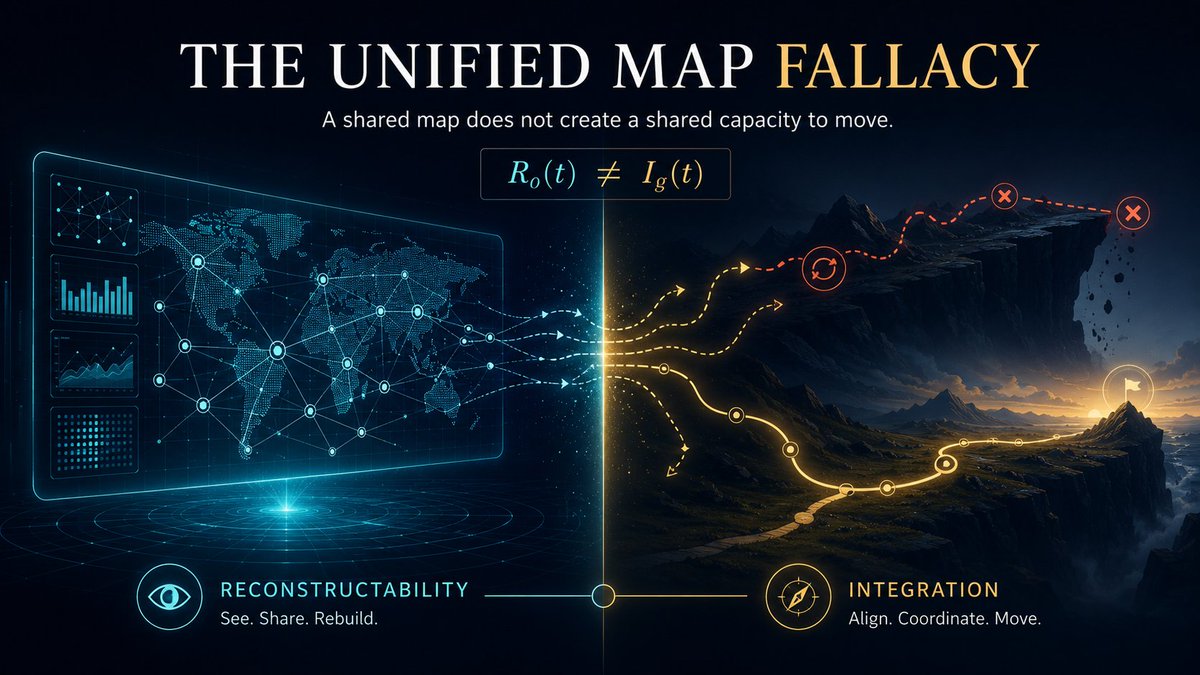
The Unified Map Fallacy: Why Shared Information Does Not Guarantee Collective Navigation
DOI: doi.org/10.5281/zenodo.20647…
We often assume that if everyone can see the same map, the system will act more rationally.
But shared information is not the same as shared movement.
A government can publish reports and still fail to repair infrastructure.
An institution can run reviews and still block correction.
An AI system can summarize the problem and still fail to integrate the lesson.
A public can see the cliff, model the cliff, debate the cliff — and still keep moving toward it.
This paper introduces the Unified Map Fallacy: the mistake of confusing reconstructability with integration.
In Accessibility Geometry terms:
R_o(t) ≠ I_g(t)
Reconstructability is the ability to recover or model what is happening.
Integration is the ability to absorb that information into future-state navigation and actually change trajectory.
The paper also introduces the Zeno Condition — a warning pattern where a system repeatedly reconstructs failure without completing the adaptive step into corrective movement.
And it introduces Verification Homeostasis: the usable information band between scarcity and saturation. Too little information creates dependency. Too much unstructured information creates overload. Navigation requires information that is available, structured, trustworthy, auditable, routed, and integrable.
This is not an argument against maps, dashboards, open data, prediction markets, ledgers, AI systems, or warning tools.
It is a boundary statement:
A dashboard is not a repair.
A forecast is not a route.
A ledger is not legitimacy.
An AI synthesis is not adaptive governance.
A warning is not safe route control.
A shared map does not create a shared capacity to move.
#AccessibilityGeometry #UnifiedMapFallacy #VerificationHomeostasis #ZenoCondition #SystemsTheory #Cybernetics #AIGovernance #OpenData #PredictionMarkets #InstitutionalDesign #CoherenceDynamicsLaboratory
1
20
The Global Structure Network Limited is redefining how consumers build capability, establishing the architecture through which their everyday decisions translate directly into long‑term economic value.
theglobalstructurenetwork.co…
#CorporateGovernance #DisclosureRegime #InformationalInfrastructure #RegulatoryDesign #GovernanceArchitecture #FiduciaryDuties #AuditAndAssurance #CapitalMarketsRegulation #UKRegulation #FCA #CompaniesAct #FSMA #UKCorporateGovernance #ConsumerDuty #MarketDisclosure #InnovationGovernance #HealthInnovation #LifeSciencesUK #ResearchCommercialisation #EarlyStageCompanies #StartupGovernance #SystemsThinking #ComplexityEconomics #InformationSystems #InstitutionalDesign #EconomicArchitecture #GovernanceSystems #InformationAsInfrastructure #LegalTheory #CorporateLaw #LawAndEconomics #ConstitutionalTheory #ResearchUpdate #ThoughtLeadership
3
The Global Structure Network Limited is redefining how consumers build capability, establishing the architecture through which their everyday decisions translate directly into long‑term economic value.
theglobalstructurenetwork.co…
#EconomicPolicy #InstitutionalDesign #MarketIntegrity #LegalStability #EconomicCapability #PlatformEconomy #DataEconomy #ModernRegulation #StructuralEconomics #LegalTheory #CommercialArchitecture #Leadership #ExecutiveLeadership #Banking
#InvestmentBanking #CorporateStrategy #BusinessLeadership
#GlobalFinance #FinancialServices #BankingIndustry
#LeadershipChange #Management #CorporateGovernance
#BusinessNews #FinanceNews #GlobalBusiness
#Innovation #DecisionMaking #OrganizationalChange
#DigitalSovereignty #JurisdictionalCrisis #LegalOntology #WestphalianLaw #RegTech #RuleOfLaw #DigitalInfrastructure
1
The Global Structure Network Limited is redefining how consumers build capability, establishing the architecture through which their everyday decisions translate directly into long‑term economic value.
theglobalstructurenetwork.co…
#LongevityScience #ResilienceEconomy #HumanPerformance #FunctionalHealth #BiologicalPerformance #HealthyAging #PreventiveHealth #WellnessInnovation #NextGenBeauty #LongevityBeauty #SkinHealth #DermatologyInsights #BeautyInnovation #ScienceOfBeauty #AntiAgingScience #HealthSystemsInnovation #EmployerWellbeing #InsuranceInnovation #PreventionEconomy #SystemLevelInnovation #ResilientSocieties #InstitutionalDesign #LongevityInvesting #ImpactCapital #LongTermValue #PlatformEconomy #CapitalArchitecture #FutureOfWellness #StrategicInnovation #FutureOfHealth #NextWaveInnovation #ScienceDrivenStrategy #CategoryLeadership #SystemicTrends #ConvergenceEconomy
1
The Global Structure Network Limited opens a new chapter in the economic architecture of consumer capability
theglobalstructurenetwork.co…
#HealthInfrastructure #BrainData #HumanPerformanceEconomy #CapabilityEconomy #OneHealth #Biosecurity #PandemicPreparedness
#AMR #AgingSocieties #GlobalNutrition #DigitalHealthTransformation
#CompetitionLaw #Antitrust #LegalDoctrine #RegulatoryArchitecture #AdministrativeLaw #MarketStructure #EconomicGovernance #JudicialReview #DoctrinalClarity #InvestableMarkets #LegalInfrastructure #CommercialCertainty #RuleOfLaw #RegulatoryReform #PublicEconomicLaw #CorporateGovernance #MergersAndAcquisitions #HSR #FifthCircuit #FTC #LegalAnalysis #SystemicRisk #EconomicPolicy #InstitutionalDesign #MarketIntegrity #LegalStability #EconomicCapability
1
The Global Structure Network Limited opens a new chapter in the economic architecture of consumer capability
theglobalstructurenetwork.co…
#LongevityScience #ResilienceEconomy #HumanPerformance #FunctionalHealth #BiologicalPerformance #HealthyAging #PreventiveHealth #WellnessInnovation #NextGenBeauty #LongevityBeauty #SkinHealth #DermatologyInsights #BeautyInnovation #ScienceOfBeauty #AntiAgingScience #HealthSystemsInnovation #EmployerWellbeing #InsuranceInnovation #PreventionEconomy #SystemLevelInnovation #ResilientSocieties #InstitutionalDesign #LongevityInvesting #ImpactCapital #LongTermValue #PlatformEconomy #CapitalArchitecture #FutureOfWellness #StrategicInnovation #FutureOfHealth #NextWaveInnovation #ScienceDrivenStrategy #CategoryLeadership #SystemicTrends #ConvergenceEconomy
1
Global Competition Between Capital Environments: Environmental Physics, Liquidity Architecture, and Jurisdictional Advantage.
gsdiandadvocacy.co.uk/global…
#AuditAndAssurance #CapitalMarketsRegulation #UKRegulation #FCA #CompaniesAct #FSMA #UKCorporateGovernance #ConsumerDuty #MarketDisclosure #InnovationGovernance #HealthInnovation #LifeSciencesUK #ResearchCommercialisation #EarlyStageCompanies #StartupGovernance #SystemsThinking #ComplexityEconomics #InformationSystems #InstitutionalDesign #EconomicArchitecture #GovernanceSystems #InformationAsInfrastructure #LegalTheory #CorporateLaw #LawAndEconomics #ConstitutionalTheory #ResearchUpdate #ThoughtLeadership #FCA #UKRegulation #FinancialRegulation #ConsumerProtection #FinancialServicesUK #FinReg #LSEG #LondonStockExchange #CapitalMarkets
1
Global Competition Between Capital Environments: Environmental Physics, Liquidity Architecture, and Jurisdictional Advantage.
gsdiandadvocacy.co.uk/global…
#HealthInfrastructure #BrainData #HumanPerformanceEconomy #CapabilityEconomy #OneHealth #Biosecurity #PandemicPreparedness
#AMR #AgingSocieties #GlobalNutrition #DigitalHealthTransformation
#CompetitionLaw #Antitrust #LegalDoctrine #RegulatoryArchitecture #AdministrativeLaw #MarketStructure #EconomicGovernance #JudicialReview #DoctrinalClarity #InvestableMarkets #LegalInfrastructure #CommercialCertainty #RuleOfLaw #RegulatoryReform #PublicEconomicLaw #CorporateGovernance #MergersAndAcquisitions #HSR #FifthCircuit #FTC #LegalAnalysis #SystemicRisk #EconomicPolicy #InstitutionalDesign #MarketIntegrity #LegalStability #EconomicCapability #PlatformEconomy #DataEconomy #ModernRegulation
1
Global Competition Between Capital Environments: Environmental Physics, Liquidity Architecture, and Jurisdictional Advantage.
gsdiandadvocacy.co.uk/global…
#SecuredTransactions #LegalCertainty #SpectrumPlus #UKInsolvency #DebtFinance #Lending #CorporateFinance, #CapabilityEconomy
#LongevityScience #ResilienceEconomy #HumanPerformance #FunctionalHealth #BiologicalPerformance #HealthyAging #PreventiveHealth #WellnessInnovation #NextGenBeauty #LongevityBeauty #SkinHealth #DermatologyInsights #BeautyInnovation #ScienceOfBeauty #AntiAgingScience #HealthSystemsInnovation #EmployerWellbeing #InsuranceInnovation #PreventionEconomy #SystemLevelInnovation #ResilientSocieties #InstitutionalDesign #LongevityInvesting #ImpactCapital #LongTermValue #PlatformEconomy #CapitalArchitecture #FutureOfWellness #StrategicInnovation #FutureOfHealth #NextWaveInnovation #ScienceDrivenStrategy #CategoryLeadership #SystemicTrends #ConvergenceEconomy
1
Global Competition Between Capital Environments: Environmental Physics, Liquidity Architecture, and Jurisdictional Advantage.
gsdiandadvocacy.co.uk/global…
#CompetitionLaw #Antitrust #LegalDoctrine #RegulatoryArchitecture #AdministrativeLaw #MarketStructure #EconomicGovernance #JudicialReview #DoctrinalClarity #InvestableMarkets #LegalInfrastructure #CommercialCertainty #RuleOfLaw #RegulatoryReform #PublicEconomicLaw #CorporateGovernance #MergersAndAcquisitions #HSR #FifthCircuit #FTC #LegalAnalysis #SystemicRisk #EconomicPolicy #InstitutionalDesign #MarketIntegrity #LegalStability #EconomicCapability #PlatformEconomy #DataEconomy #ModernRegulation #StructuralEconomics #LegalTheory #CommercialArchitecture #Leadership #ExecutiveLeadership #Banking
#InvestmentBanking #CorporateStrategy #BusinessLeadership
#GlobalFinance #FinancialServices #BankingIndustry
2
Global Competition Between Capital Environments: Environmental Physics, Liquidity Architecture, and Jurisdictional Advantage.
gsdiandadvocacy.co.uk/global…
#SystemLevelInnovation #ResilientSocieties #InstitutionalDesign #LongevityInvesting #ImpactCapital #LongTermValue #PlatformEconomy #CapitalArchitecture #FutureOfWellness #StrategicInnovation #FutureOfHealth #NextWaveInnovation #ScienceDrivenStrategy #CategoryLeadership #SystemicTrends #ConvergenceEconomy
#InvestmentBanking, #CorporateLending, #PrivateDebt, #DirectLending, #InstitutionalInvestors, #DebtCapitalMarkets #LeveragedFinance #CommercialLaw, #BankingLaw, #SecuredTransactions, #InsolvencyLaw, #EquityAndTrusts, #LegalResearch, #LegalScholarship, #LawReform,#FinTechInnovation, #DigitalBanking,
1
Global Competition Between Capital Environments: Environmental Physics, Liquidity Architecture, and Jurisdictional Advantage.
gsdiandadvocacy.co.uk/global…
#CorporateGovernance #DisclosureRegime #InformationalInfrastructure #RegulatoryDesign #GovernanceArchitecture #FiduciaryDuties #AuditAndAssurance #CapitalMarketsRegulation #UKRegulation #FCA #CompaniesAct #FSMA #UKCorporateGovernance #ConsumerDuty #MarketDisclosure #InnovationGovernance #HealthInnovation #LifeSciencesUK #ResearchCommercialisation #EarlyStageCompanies #StartupGovernance #SystemsThinking #ComplexityEconomics #InformationSystems #InstitutionalDesign #EconomicArchitecture #GovernanceSystems #InformationAsInfrastructure #LegalTheory #CorporateLaw #LawAndEconomics #ConstitutionalTheory #ResearchUpdate #ThoughtLeadership
2
Global Competition Between Capital Environments: Environmental Physics, Liquidity Architecture, and Jurisdictional Advantage.
gsdiandadvocacy.co.uk/global…
#GlobalGovernance
#StrategicForesight #PolicyInnovation #HealthEconomics
#HealthInvestment #HealthTechPolicy #DataForHealth
#HealthInfrastructure #BrainData #HumanPerformanceEconomy #CapabilityEconomy #OneHealth #Biosecurity #PandemicPreparedness
#AMR #AgingSocieties #GlobalNutrition #DigitalHealthTransformation
#CompetitionLaw #Antitrust #LegalDoctrine #RegulatoryArchitecture #AdministrativeLaw #MarketStructure #EconomicGovernance #JudicialReview #DoctrinalClarity #InvestableMarkets #LegalInfrastructure #CommercialCertainty #RuleOfLaw #RegulatoryReform #PublicEconomicLaw #CorporateGovernance #MergersAndAcquisitions #HSR #FifthCircuit #FTC #LegalAnalysis #SystemicRisk #EconomicPolicy #InstitutionalDesign
3
Global Competition Between Capital Environments: Environmental Physics, Liquidity Architecture, and Jurisdictional Advantage.
gsdiandadvocacy.co.uk/global…
#InstitutionalDesign #LongevityInvesting #ImpactCapital #LongTermValue #PlatformEconomy #CapitalArchitecture #FutureOfWellness #StrategicInnovation #FutureOfHealth #NextWaveInnovation #ScienceDrivenStrategy #CategoryLeadership #SystemicTrends #ConvergenceEconomy
#InvestmentBanking, #CorporateLending, #PrivateDebt, #DirectLending, #InstitutionalInvestors, #DebtCapitalMarkets #LeveragedFinance #CommercialLaw, #BankingLaw, #SecuredTransactions, #InsolvencyLaw, #EquityAndTrusts, #LegalResearch, #LegalScholarship, #LawReform,#FinTechInnovation, #DigitalBanking,
1

May 18
In the recalibrating architecture of 2026, the governance of emerging technologies has ceased to be a peripheral regulatory concern and has become the central arena for institutional design in the global order. Leading states are no longer seeking universal consensus through cumbersome multilateral bodies; instead, they are engineering layered systems of modular power configurations — selective, agile coalitions built upon calibrated moves that deliberately exploit information asymmetry in AI, quantum computing, and semiconductor domains.
These arrangements operate on the logic of transactional reciprocity and ad hoc sovereignty: participation is conditional, commitments are reversible, and alignment is issue-specific rather than perpetual. What appears as fragmentation is in reality a sophisticated recalibration — one that allows middle and great powers alike to safeguard strategic autonomy while preserving channels for targeted cooperation.
The true strategic premium now lies in the capacity to orchestrate overlapping modules without losing coherence: designing digital sovereignty regimes that convert technological interdependence from a vulnerability into a source of calibrated leverage. In this polycentric environment, mastery of modular institutional design is no longer an academic exercise; it is the prerequisite for relevance in the next decade of power.
Frameworks from the Political Kitchen.
#Geopolitics #DigitalSovereignty #GlobalGovernance #TechGovernance #EmergingTechnologies #InstitutionalDesign #StrategicAnalysis #InternationalRelations

3
66