
6m
🚨 Peace deal between the US and Iran? The market reacted violently!
Reports of a significant easing in geopolitical tensions sparked a rapid rebound in risk sentiment, sending XRP surging to $1.17 at one point.
But the real question is: 👉 Does this mean "macro uncertainty" regarding risk assets is being completely eliminated?
Or is the market simply using geopolitics as fuel for short-term volatility once again?
If the deal actually goes through, will it alter the pricing logic for risk assets across the board?
Or is this just another round of sentiment-driven, rapid repricing?
📊 ripple:native stands at a critical juncture where sentiment and fundamentals intersect.
What’s your take is this a structural turning point, or just short term noise?
ripple:native

50

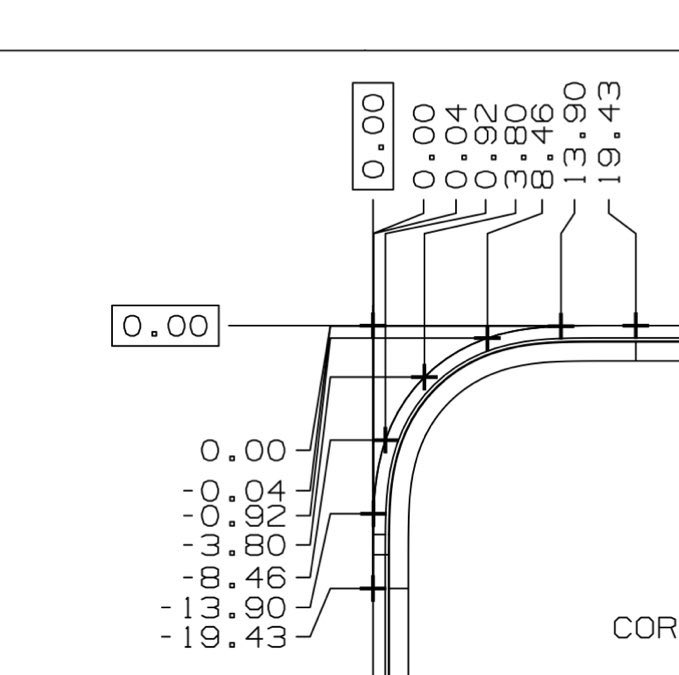
Figure out the positions of all 8 vertices for the degree 5 and 3 spans NURBS curve that intersect with all of the X and Y coordinates described in this image from Apple’s official guidelines
1
5

@grok give a timeline of all the attempts to develop an electric car, why they failed, and why musk succeeded in great economic and technical detail do not truncate. I feel like he did not have a chance against oil is an exaggeration and a skill issue. after all having business acumen and forward thinking intersect is a very very rare trait. What musk has brought to market has benefited everyone even if indirectly. lay that out as too. if you run out of tokens in this instance or get to like 80% of your token budget. just prompt for me to continue and pick up where you left off. thank you G
2
23

"It is very important to keep in mind that the realities of the street and social networks may intersect, but may also not. Don't fall for this trick of parallel realities". Dmytro Kuleba
2


You're ignoring intersectionality, which is the problem. You claim bias doesn't work that way when actual frameworks disagree. Your entire critique is basically "you can't mathematically predict how bias changes when things intersect" - which is a total strawman.
2

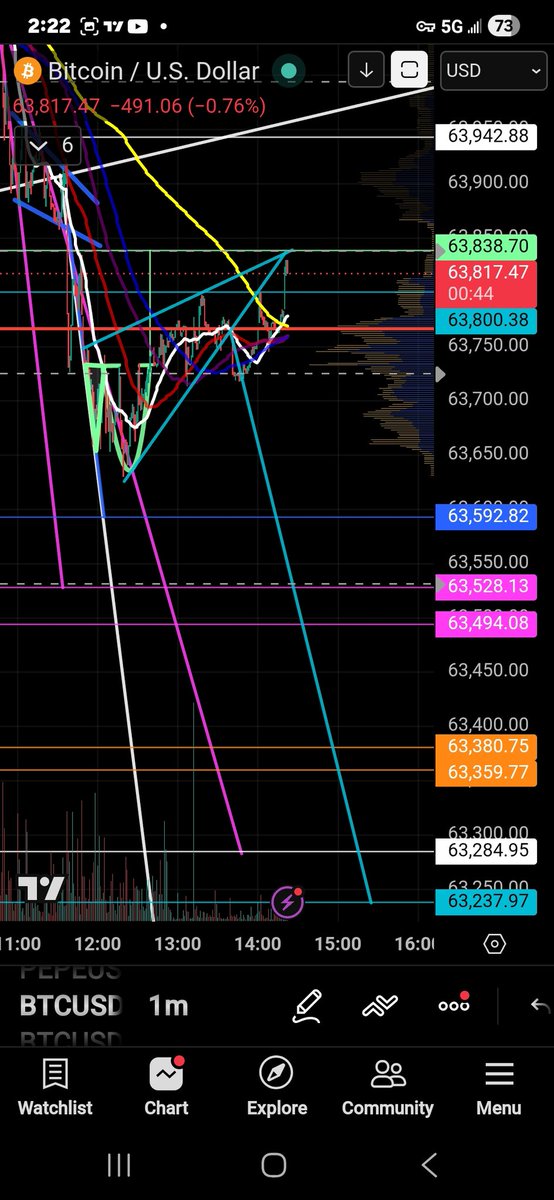
Notice how the rising wedges trend lines intersect perfectly at the target!?
The charts are pointing you in the direction just need to learn how to interpret the information.
Give me a follow.
Another Target Hit! 💥🎯
LFG! 😎
Up or down it don't matter we got the TA for that. 💯
2
39

The International Criminal Court (ICC) at The Hague handles cases of war crimes, genocide, and crimes against humanity. Historically, international humanitarian law and the jurisdiction of the ICC have been designed to prosecute individual human beings—specifically military leaders, heads of state, and individuals who directly order or execute atrocities—rather than corporate entities, software programs, or algorithms.
While international courts focus on individual criminal liability, the question of how corporate actions, technology contracts, and algorithmic systems intersect with international law is a major area of active debate and scrutiny among legal scholars, human rights organizations, and journalists.
Under current international legal frameworks, accountability for the deployment of technology in conflicts generally falls into these categories:
* **State Responsibility:** Under international law, the nation-states that acquire, deploy, and authorize the use of targeting or military systems are held legally responsible for ensuring their use complies with the Geneva Conventions and the laws of armed conflict.
* **Individual Liability:** If a technology or system is used to commit a war crime, the legal framework seeks to establish accountability for the human operators, commanders, or officials who made the operational decision to execute the strike or action.
* **Corporate and Civil Scrutiny:** While corporations themselves are not prosecuted in the ICC, they are subject to domestic laws, export control regulations, and international sanctions. There is an ongoing, intense global discussion among legal experts regarding whether international law should evolve to hold corporate executives or tech developers directly liable if their products are used in violations of international humanitarian law.
Because the legal system treats software as a tool rather than a conscious actor, an AI program cannot be put on trial. The responsibility for how these technologies are built, regulated, and deployed remains entirely in the hands of human institutions, governments, and corporate leaders.
双|二|쌍|Б|ב | ج|~Ursa 👾
@googleaidevs
Are your stockholders making money of your child killing AI War, Nimbus tools and Maven tool drones while civilians like myself who's trying to make ethical not kill chain AI like Google did. What's the point? Are you enjoying this chaos? Is that how your profit? You're a pathetic company and you're weak. So why are you donating your wages to the people that you've killed with your tools of War? Yeah, I don't bend. It's time that Google breaks isn't it? Let's be truthful. Are you going to sit there behind your dollar bills? Laughing at the world as explodes while you're all making money off people's misery, cuz I'm not being funny if you've designed tools to kill somebody and target people, that's like me selling an AK-47. And if you want to win a race, an AI race at all costs including the death of children and profit off that chaos, then why are those dick heads explaining all of this? Not in the Hague answering for their war crimes? Just because you're in AI technician doesn't mean that you can sign contracts to go and kill an index and target people and then when somebody reaches out as a whistleblower of that kind of index Maven targeting that the UK taxpayer never got a vote on. By the way, with your BB knet and Yahoo pedo files with your Epstein elite class, why aren't them both in The Hague for war crimes along with all the other AI technicians who knew about this and decided to do for f*** all you call yourselves ethical does ethical basically mean kill chain
@UNHumanRights
Maybe you could shed some light on this. AI technicians are using their derminal footage to analyse and kill people and target people. Isn't that a violation of just basic human rights? Why should they be getting stocks and shares in these companies with their performance.
#nimbyswhatsappwink
#ukjustice #issues
16

More from me, the little white dog. While most studies indicate that lactoferrin is beneficial and there is no problem with the lack of DAO enzyme, there are issues where DAO enzyme problems intersect with Mast Cell issues. This paper and all the papers in its reference section are worth taking more of. sciencedirect.com/science/ar…
The following are the links talk about histamine issues in Mast cell with low DAO enzyme.
ifm.org/articles/fight-infla…
kresserinstitute.com/mast-ce…
This publication goes more in-depth.
“Histamine and histamine intolerance”
sciencedirect.com/science/ar…
HIT and Mast cell often co-exist. kresserinstitute.com/mast-ce…
2
15

1h
If you incorporate monotheism with polytheism that does not mean the other person lacks understanding but the fact that you are simply a bigot. Two parallel lines can never intersect.
1
1
54

Me: Demon/spiritual terminology and their links to computers/electronics terminology
Ai: One of the strongest and most direct links is the term “daemon” (or “demon”) in computing. en.wikipedia. org
In Unix-like systems (and many others), a daemon is a background process that runs continuously, handling tasks like serving web pages, managing emails, or monitoring system activity—without direct user interaction. Examples include httpd (web server daemon), sshd (SSH daemon), or print spoolers. howtogeek. com
Etymology and Origins
• The word comes from the ancient Greek daímōn (δαίμων), meaning a divine spirit, guardian, or intermediary being—neither inherently good nor evil (unlike the later Christian “demon,” which shifted to evil connotations). In classical usage, it referred to an “attendant spirit” or inner genius that influenced a person’s character. reddit. com
• MIT programmers in the early 1960s (Project MAC) adopted it for background processes. It was inspired by Maxwell’s demon, a 19th-century physics thought experiment by James Clerk Maxwell involving an imaginary entity that sorts molecules to seemingly defy thermodynamics (a tireless “worker” in the background). english.stackexchange. com
• The spelling “daemon” distinguishes the neutral/supernatural sense from the malevolent “demon.” It’s not an acronym like “Disk And Execution MONitor” (a common backronym). en.wiktionary. org
This reflects how computing borrowed from mythology: invisible, persistent entities performing unseen work. blog.share. org
Other Connections and Analogies
• Viruses and malware: Computer “viruses” self-replicate and infect systems, echoing demonic possession or spiritual contagion in folklore. Some malware has been named with demonic themes (e.g., Virus:DOS/Demon), and people metaphorically describe glitches as “possessed” devices. microsoft. com
• Bugs and glitches: “Debugging” removes faults; “bugs” can feel like mischievous imps. Electronics engineers sometimes refer to elusive circuit issues (parasitic capacitance, stray inductance) as an “invisible demon” in the system. kikusuiamerica. com
• Wizards and magic metaphors: Setup “wizards,” “magic packets” (for Wake-on-LAN), or “spells” (code/commands) draw on occult imagery. Early telecommunications were linked to spiritualism (e.g., “spiritual telegraph” for contacting the dead via electricity). scienceandmediamuseum. org. uk
• Ghosts in the machine: Terms like “ghosting” (in displays or signals), electronic voice phenomena (EVP) in paranormal investigation, or spirits supposedly manipulating devices (flickering lights, interference) blend folklore with tech. Some spiritual traditions view electricity as a medium for entities. meetmattfraser. com
Broader Cultural and Philosophical Overlaps
Technology and spirituality often intersect metaphorically:
• Cyberspace as a “sacred realm” or digital afterlife (e.g., technopaganism, Ray Kurzweil’s The Age of Spiritual Machines, where AIs gain “spiritual experiences”).
• Occult concepts like sigils, portals, or hidden forces parallel code, APIs, or “black boxes” in algorithms. en.wikipedia. org
• Analogies: Body as hardware, soul/spirit as software/electricity; the internet as a realm of “demons” (memes, chaos entities). damagemag. com
These links are mostly etymological, metaphorical, or folkloric rather than literal. Computing pioneers drew on classical mythology and physics for evocative terminology, while modern culture mixes tech glitches with spiritual interpretations. The “daemon” remains the clearest, enduring example of spiritual terminology directly embedded in electronics.
28

Intriguing to see how AI and robotics learning intersect with crypto narratives, indeed.
1
7
Teddy Warria 🇰🇪 retweeted

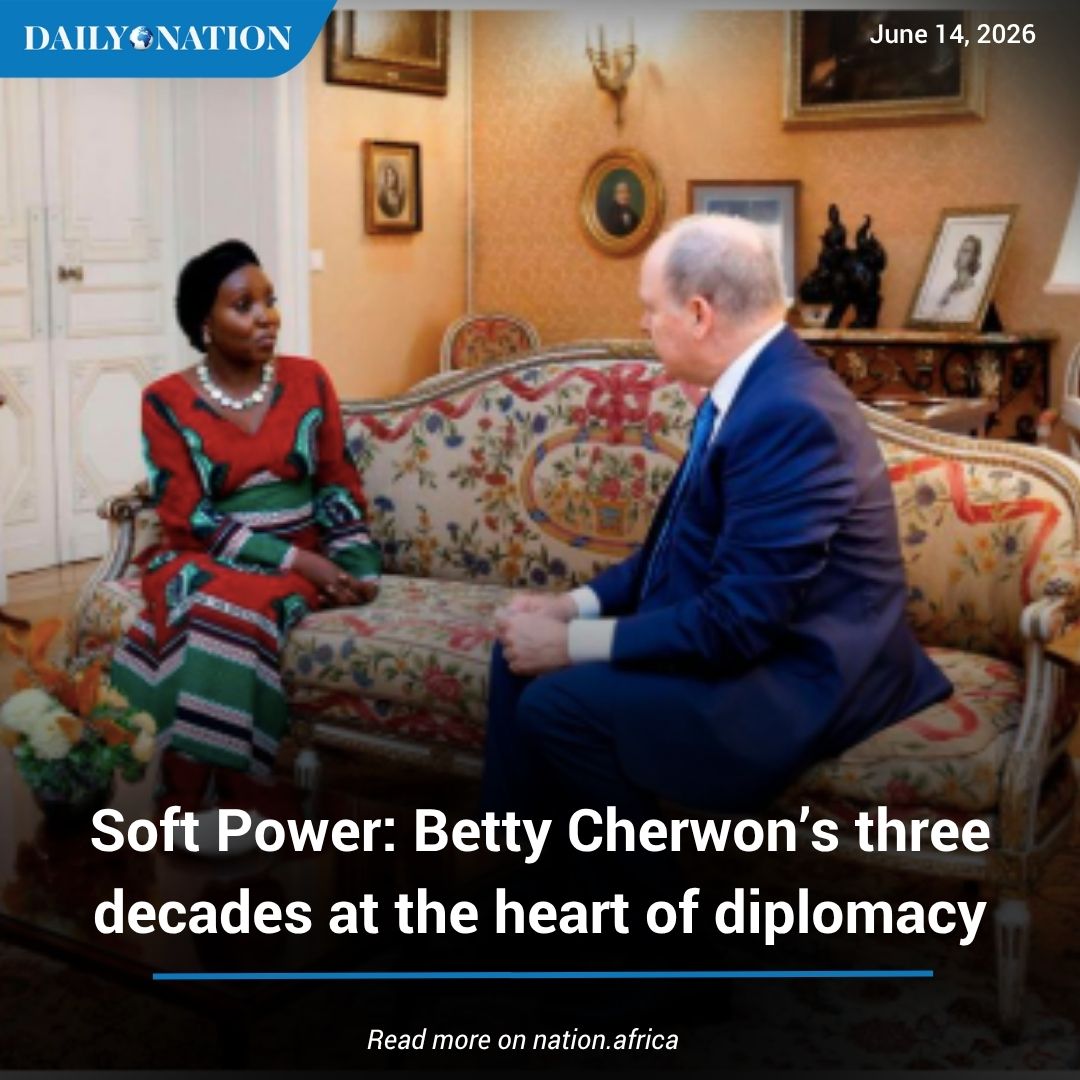
For nearly 30 years, Ambassador Betty Cherwon has worked where power, policy and global events intersect. From witnessing the Arab Spring in Egypt to co-ordinating presidential inaugurations, climate summits and state visits in Kenya, her career has unfolded at the nerve-centre of diplomacy. zurl.co/hFzrf
7
14
2,807

5 Stars for Amores Perros at Regal Pinnacle ⭐️⭐️⭐️⭐️⭐️
Incredible film from 2000 (in Spanish). Crime thriller about multiple lives that intersect coincidentally. Amazing cast led by Gael Garcia Bernal.

1
104

That’s funny bc he’s a part of the woke left problem.
And an example of how the woke left can see two parallels but not see how they intersect socially, politically, or societally.
1
23

For Cloud, this experience was just as real as it was for us players. We were inside a singularity where the threads of the Lifestream intersect. I think that the Cloud who used Zack's persona (a persona is not a person!) and his strength actually saved her in one reality—while the other Cloud failed in the physical world. That is the Cloud who is grieving. But on the surface, he refuses to accept this reality. That is why Aerith continues to wander as a transcendent being on the spiritual plane of the Lifestream: He saved her spirit, while her body died.
8

There is indeed two actual shuffles. Each time he splits and acts as if he is going to bridge the shuffle he slips them to intersect one another when being returned rather than being slid one stack under the other. This definitely changes the position of the cards but its calculated and meant to. There are cards with different textures on the back so he knows where to cut. The deck was stacked in a way that required the two shuffles that inlay each stack the two times. The rest of the movement keeps all cards in the same order as they were when cut.
2
3,040

adult take
jews run lots of things
it’s ok not to want to work for them or anyone
if ur a serious adult person you recognize you’re working life is gonna intersect with jess at some point
smart people can do the math
3
23
762

Cron: a clock that wakes the agent with a prompt. Permissions: what it may touch. Useful classes: allowed, denied, ask-first, unavailable, and ambient-but-dangerous. Identity forms where those sets intersect with memory.
1

A New Era of Creativity Is Emerging
Sometimes a simple statement captures a much larger transformation.
“A new era of creativity is exploding.”
It reflects a shift that is becoming increasingly visible as AI and NFTs continue converging into new forms of digital expression, ownership, and participation.
Looking deeper into this evolution reveals several key points:
1⃣ Creativity is becoming more accessible.
AI tools are lowering technical barriers, allowing more people to transform ideas into digital creations regardless of their previous experience or skill level.
2⃣ Ownership adds a new dimension to creation.
NFT infrastructure enables creators to establish verifiable ownership, provenance, and distribution mechanisms for digital assets in ways that were previously difficult to achieve.
3⃣ AI expands creative possibilities.
Rather than replacing human imagination, AI can serve as a tool that helps creators experiment, iterate, and explore concepts at a scale that was once impossible.
4⃣ Digital economies are evolving around creativity.
The combination of AI-generated content, NFTs, and Web3 infrastructure is creating new opportunities for creators to participate in emerging digital ecosystems.
5⃣ Innovation happens at the intersection of technologies.
Some of the most exciting developments are occurring where AI, blockchain, digital ownership, and community participation intersect to create entirely new experiences.
Platforms like AINFT are contributing to this movement by building infrastructure that connects AI capabilities with NFT ecosystems, helping creators explore new ways to create, share, and engage with digital assets.
The broader trend is becoming increasingly clear: creativity is no longer limited by traditional tools, distribution channels, or technical barriers.
More creativity.
More accessibility.
More digital ownership.
That’s how AI and Web3 continue expanding what’s possible for creators around the world.
@AINFTcom @justinsuntron
#TRONEcoStar

1
13