thermoelectrics retweeted

May 31
Ag-Doping-Mediated Interlayer Coordination Engineering: Enabling Thermoelectric ZT = 1 in TMDs-Derived Narrow-Gap Semiconductor CuCrTi2Se6 | Journal of the American Chemical Society pubs.acs.org/doi/10.1021/jac…
4
11
2,244

Modulating Interlayer Chemical Bonding Heterogeneity for Electron-Phonon Decoupling: Unlocking High Thermoelectric Performance in Layered CuCrTi2Se6 doi.org/10.1002/aenm.71173
5

No, I didn't use an iron. However, please note that this model uses a dual nozzle. This is because the interlayer bonding strength of dissimilar materials tends to be lower when using a dual nozzle compared to a single nozzle.
1
10
𖤓 — 𝚃𝚒𝚙 𝙾𝚏 𝚃𝚑𝚎 𝙳𝚊𝚢 retweeted

Jun 13
The last functioning interlayer-elevator, connecting us to the rest of the megastructure
2
8
222
6,202


Jun 13
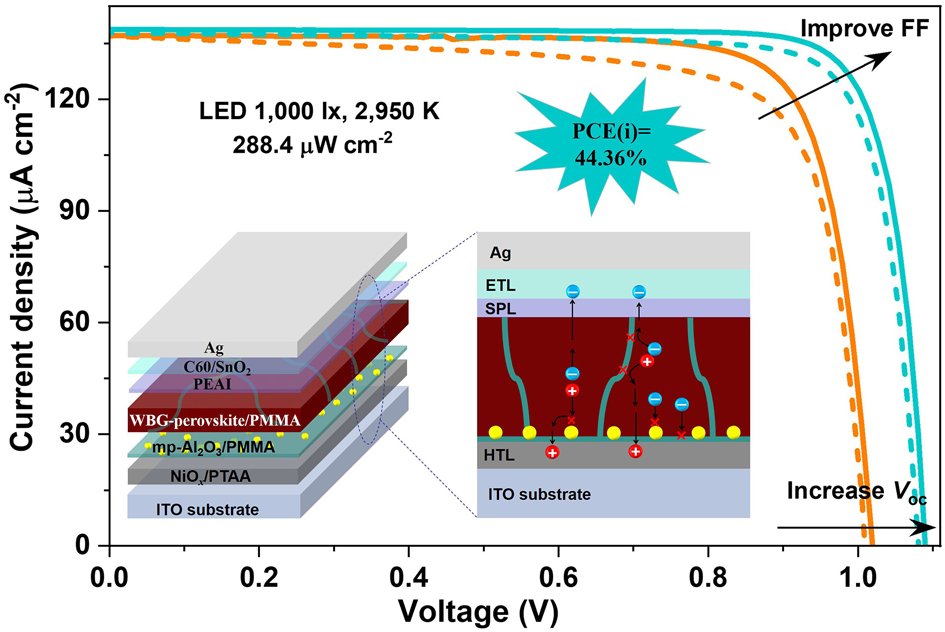
375. Electronic Blockade of Shunting Pathways via Dual Insulator Contacts for High-Efficiency Wide-Bandgap Perovskite Indoor Photovoltaics
Quanxi Liu, Yousheng Wang*, Qiaoyan Ma, Jianzha Zheng, Yinghui Peng, Liwei Wang, Zeyu Chen, Tianhao Du, Daxin Xiao, Jiandong Fan*, Yoon-Bong Hahn & Yaohua Mai*
Nano-Micro Lett. 18, 375 (2026).
doi.org/10.1007/s40820-026-0…
This work is led by Prof. Dr. Yaohua Mai (Jinan University) and co-workers. Prof. Mai’s research centers on silicon-based solar cells, perovskite solar cells, and chalcogenide thin-film solar cells. This work proposes a dual insulator contact (DIC) strategy combining grain boundary and buried interface insulator contacts using PMMA and a hybrid PMMA/mesoporous alumina interlayer to suppress shunting and nonradiative recombination in perovskite indoor photovoltaics, achieving a record indoor power conversion efficiency of 44.36% under 1000 lx LED illumination with excellent stability across a range of low-light intensities, demonstrating strong potential for powering IoT devices.
#PIPVs
#DIC
#indoor
#efficiency
#stability
1
2
128

Thickness-Independent Quantum Geometric Responses Driven by Interlayer Antiferroic Coupling
Zhiming Xu, Huaqing Huang
arxiv.org/abs/2606.13237 [𝚌𝚘𝚗𝚍-𝚖𝚊𝚝.𝚖𝚝𝚛𝚕-𝚜𝚌𝚒]
5

Jun 11
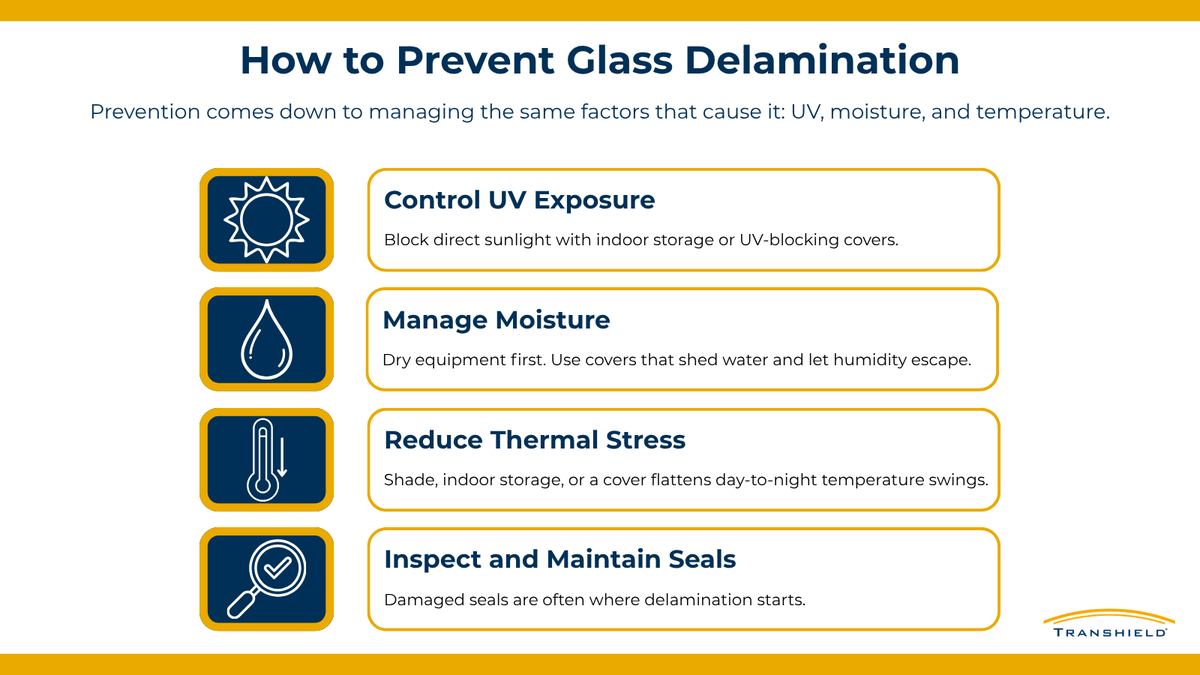
Glass delamination is one of those problems that stays invisible until it becomes expensive. Once the bond between laminated glass and its interlayer breaks down, the only fix is full replacement. Here's how to prevent it: bit.ly/3QgvNQq
2

Jun 11
Harnessing density-functional theory and cluster expansion, researchers establish rational design principles for Na- and Li-ion carbon anode intercalation across a range of graphite interlayer spacings and stacking arrangements.
Learn more: go.aps.org/4xe7fbo
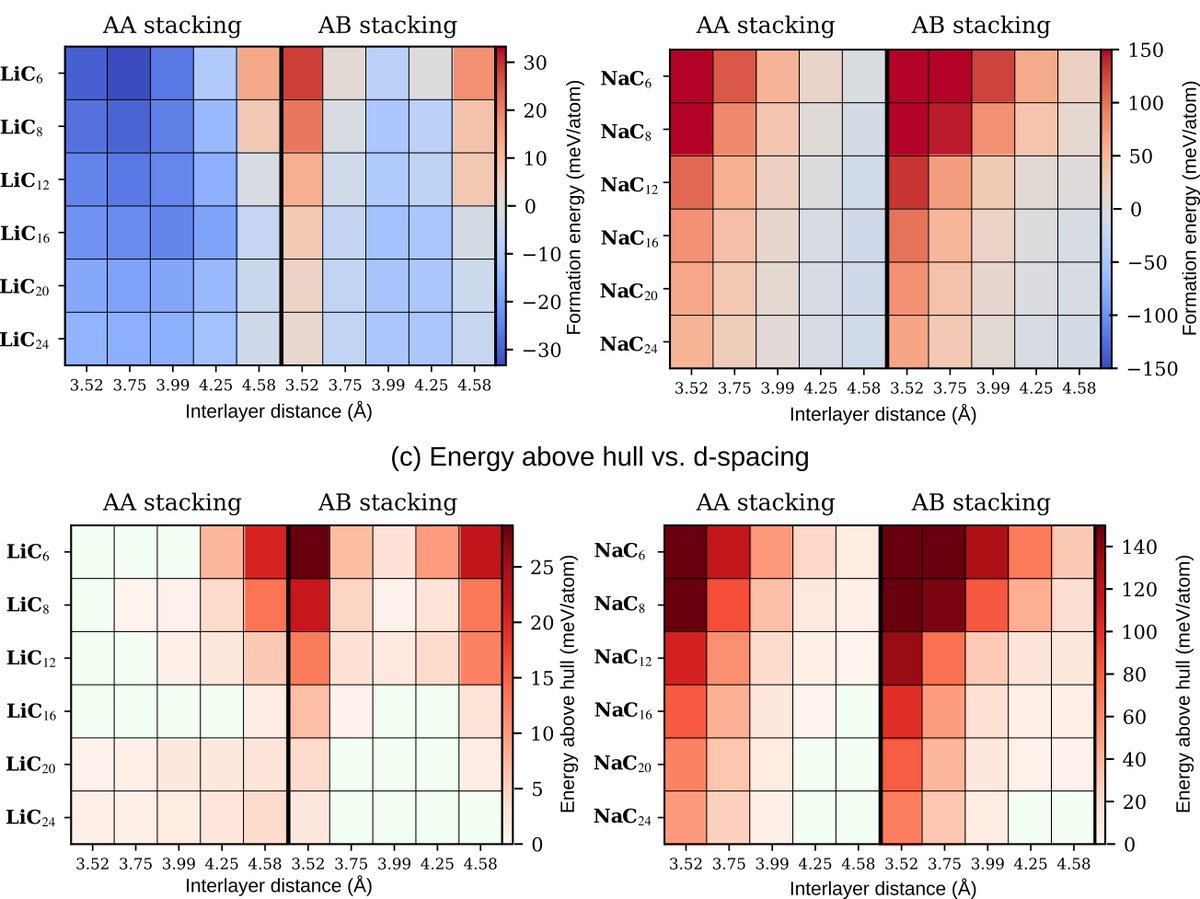
ALT Two chart of data points displaying changes in the formation energy in ground state versus increasing d-spacing for selected concentrations of Li (left) and Na (right). Each chart plots the interlayer distance in Å on the x-axis and varying concentrations of LiC or NaC on the left-hand y-axis, from Li/NaC6 on the top to Li/NaC24 on the bottom. The right-hand y-axis measures the formation energy in meV/atom. Each chart is split into two sections: an AA stacking section on the left and an AB stacking section on the right. Each data point is represented by a rectangle colored various shades of blue or red, which correspond to the lowest-energy structure for a given concentration of Li or Na, carbon stacking, and d-spacing.
1
1
2
100

Jun 11
The breakthrough is not simply that the device pulls water from air. The breakthrough is that it moves atmospheric water harvesting from a fragile lab demo toward a modular, field-portable, sunlight-driven system that can be operated across very different climates.
The underlying study appears to be the new Nature Water paper “Field-portable, solar-powered, litre-scale atmospheric water harvesting across climates with gel fabric architecture.” It reports a UT Austin-led system using hierarchically porous cellulosic gel fabrics in compact cartridges, a solar-concentrated modular design, and humidity-adaptive operating protocols. In outdoor trials, the paper reports 1.3 L in Austin from a dual module at roughly 62% RH, 4.3 L m⁻² day⁻¹ in the Chihuahuan Desert at roughly 26% RH, and 310 mL per module under cloudy conditions at about 0.4 sun.
1. Biggest headline upgrade
The current headline is strong but slightly too magical:
“Scientists built a portable solar-powered system that can pull liters of drinking water straight from the air even in the desert.”
Better:
“Scientists are turning air into a decentralized water source — using a backpack-scale gel-fabric system powered only by sunlight.”
Even sharper:
“The future of emergency water may not be bottled, piped, or drilled. It may be harvested from the air by solar-regenerated fabric cartridges.”
Most technically intelligent:
“Atmospheric water harvesting just crossed an important threshold: not merely absorbing moisture in a lab, but producing liter-scale drinking water outdoors with a portable, solar-driven gel-fabric device.”
2. The main missing correction: “liters in the desert” needs precision
The post says it produced liters and then says it performed strongly in the Chihuahuan Desert. That is mostly fair, but the specific results should be stated carefully.
The study reports 1.3 L in Austin using a dual module. In the Chihuahuan Desert, the headline result is expressed as 4.3 L m⁻² day⁻¹, and the supplementary comparison table lists 610 mL daily yield per device at 26.5% RH for this work, while the Austin dual-module case reaches 1,300 mL.
Better phrasing:
“In Austin, a dual-module unit produced 1.3 L in one day. In the much drier Chihuahuan Desert, the device still achieved high areal productivity — about 4.3 L m⁻² day⁻¹ — showing that the design can keep working even when relative humidity drops to around 26%.”
That avoids implying a single backpack unit produced many liters in desert conditions.
3. Best central thesis
Use this:
“This is not a replacement for wells, pipes, rainwater systems, or desalination. It is a new layer in the water stack: decentralized, point-of-need drinking water for places where infrastructure is absent, broken, contaminated, or too slow to deploy.”
That is the most credible framing. Atmospheric water harvesting should be treated as complementary water infrastructure, not a universal water solution.
4. The real breakthrough is not the gel alone
Most posts will say: “new material absorbs water.” That misses the important engineering.
The paper’s core idea is material-to-system design: the gel fabric, cartridge geometry, solar heat input, vapor transport, condensation path, and operating schedule are designed together. The authors themselves note that once a sorbent is packed into a real device, transport, heat flow, and operation schedule become just as important as material chemistry.
A better line:
“The magic is not just a thirsty material. It is a full water-making architecture: absorb moisture, move vapor, heat efficiently, condense cleanly, swap batches, and adapt the operating schedule to the climate.”
5. The obscure technical insight: RH is not the whole story
The post says the system works from about 62% RH down to 26% RH. That is useful, but relative humidity can mislead people.
Relative humidity is not the amount of water in the air. It is how close the air is to saturation at that temperature. Hot desert air at low RH can still contain harvestable water vapor, while cooler air at higher RH may contain less absolute water.
The genius-level line:
“The real variable is not just relative humidity. It is the daily dance between absolute humidity, temperature, sunlight, dew point, wind, and the device’s sorption/desorption timing.”
This is exactly why the paper’s humidity-adaptive protocol matters. In Austin, one operating schedule worked; in the desert, the operating window shifted, so the team changed the batching protocol to maintain strong productivity.
6. Add the water-cycle explanation
The post should explain the device in one clean sequence:
Night / humid period: gel fabric absorbs water vapor from air.
Day / sunlight: solar heat drives water out of the gel.
Transport: vapor moves through the module.
Condensation: vapor condenses into liquid water.
Collection: water is captured for drinking.
Repeat: cartridges are cycled or swapped according to weather.
That makes the concept understandable without making it sound like magic.
7. The better metaphor
Do not call it a “water generator.” That sounds like it creates water.
Better:
“It is a humidity battery.”
It charges from air, discharges under sunlight, and outputs liquid water.
Even better:
“This is a solar thermal battery for drinking water.”
The device does not make water from nothing. It stores atmospheric moisture in a material, then uses sunlight to release it in a controlled way.
8. The post needs a “what makes this different?” section
Atmospheric water generators already exist. Many use refrigeration, like a dehumidifier. The weakness is that they often need electricity and perform poorly in dry climates.
This system is different because it is sorption-based and solar-regenerated. Instead of cooling air below its dew point with electricity, it uses a hygroscopic gel fabric to capture vapor and sunlight to release it.
Suggested phrasing:
“Unlike conventional atmospheric water generators that behave like powered dehumidifiers, this approach uses a sorbent fabric. It captures vapor first, then sunlight regenerates the material and drives condensation. That makes it much more interesting for off-grid and arid settings.”
9. The hidden engineering problem: condensation is the bottleneck
Most people focus on absorbing water. But the full system must also release and condense it efficiently.
The deeper issue:
Capturing moisture is only half the battle. The hard part is closing the loop: getting the water back out as liquid, with minimal solar heat wasted, while keeping the device portable.
The supplementary information says the modular layout reduced parasitic radiative heat transfer compared with a face-to-face sorbent-condenser layout, preserving more energy for desorption and maintaining a larger temperature gradient.
A strong line:
“The breakthrough is not just a better sponge. It is a better heat-and-vapor traffic system.”
10. Obscure but powerful concept: “thermal crosstalk”
This is a genius-level technical angle.
In a bad design, the hot sorbent and cool condenser “see” each other too directly. Heat leaks from the hot side to the cold side, hurting condensation. The team’s modular architecture reduces this thermal crosstalk.
Suggested line:
“A water harvester has to keep two contradictory zones alive at once: a hot zone that releases vapor and a cooler zone that condenses it. The enemy is thermal crosstalk.”
That makes the post feel far more advanced.
11. The gel-fabric architecture is the story
Do not just say “gel.” Say gel fabric.
The research community post explains that the team started from a commercial cotton nonwoven and transformed it into a hygroscopic gel fabric. The key advantage was not only chemistry but form: it could be rolled into compact cartridges, unrolled for sorption, and preserve vapor pathways.
The supplementary information adds that commodity cellulose fabrics were chosen because they are commercially available, low-cost, readily shaped into rolled cartridges, and potentially compatible with roll-to-roll processing.
Better post line:
“This matters because the material is not just high-performing in a petri dish. It is fabric-like, rollable, cartridge-friendly, and potentially manufacturable.”
12. Add the “mass transport” angle
When you scale a water-absorbing material, it often fails because vapor cannot reach the inner material fast enough, or water cannot escape fast enough during release.
The supplementary data show that packing geometry and interlayer spacing matter: too-dense packing slows desorption because vapor transport is hindered. The team treated spacing as a design knob balancing sorbent loading, cost, heat penetration, and vapor removal.
Suggested line:
“At scale, the problem is not only chemistry. It is traffic: water molecules need highways into and out of the material.”
13. The best “obscure thought input”: water infrastructure is becoming modular
The deeper implication is not “we can drink desert air.”
It is:
Water infrastructure is starting to look like energy infrastructure did after solar panels and batteries: smaller, modular, decentralized, deployable, and locally operated.
Instead of only building giant centralized systems, communities may use layers:
wells,
pipes,
rainwater,
desalination,
reuse,
emergency storage,
and atmospheric water harvesting.
The smart framing:
“This is not the end of centralized water. It is the beginning of edge water.”
14. “Edge water” is the killer phrase
Borrow from edge computing.
Edge computing: computation near the user.
Edge water: drinking water produced near the user.
Suggested post line:
“The future may include edge water: small, local devices that produce drinking water at the point of need instead of relying entirely on distant wells, pipes, trucks, or bottled-water logistics.”
That is memorable and intellectually strong.
15. The post should not overpromise “billions of people”
The post says billions lack reliable clean water, which is true at the global level. WHO and UNICEF reported in 2025 that 2.1 billion people still lacked safely managed drinking water, including 106 million who drank directly from untreated surface sources.
But a 1-liter-scale device will not solve a city’s water crisis. It is most relevant for drinking water, not agriculture, industrial use, sanitation, or municipal supply.
Better line:
“This will not irrigate farms or replace city water systems. Its first serious role is high-value drinking water: emergency kits, remote households, clinics, field teams, and places where moving bottled water is expensive or impossible.”
16. The most important missing metric: liters per person per day
A social post should translate the yield into human terms.
The supplementary analysis assumed 3.2 L per person per day for drinking water consumption.
So the Austin dual-module result of 1.3 L/day is roughly 40% of one person’s assumed daily drinking-water need. It is meaningful, but not yet “one backpack supports a family.”
Suggested line:
“At 1.3 L/day from a dual module, this is not yet a household water plant. It is closer to an emergency drinking-water supplement — valuable, but still needing scale-up for family or community use.”
That makes the post much more credible.
17. The “clean drinking water” claim needs nuance
The study’s supplementary water-quality table reports low concentrations for several metal ions in collected water: sodium at 4 ppm, potassium at 0.5 ppm, magnesium at 0.4 ppm, calcium at 0.9 ppm, and lithium at 0.3 ppm, with limits or thresholds noted for some ions.
But the post should not imply that every real-world contaminant risk has been fully solved. Atmospheric water systems also need testing for:
airborne pollutants,
VOCs,
PFAS,
pesticides,
dust,
smoke particles,
microbial growth,
biofilm,
container contamination,
leached polymers,
salt carryover,
and taste/mineral balance.
Better line:
“The collected water showed promising metal-ion results, but field deployment still needs full potable-water validation: microbes, organics, VOCs, dust, smoke exposure, storage safety, and long-term material leaching.”
18. Biggest practical missing element: the collection container
People obsess over the high-tech gel, but many water systems fail at the boring part: storage.
A device can produce clean water and still deliver unsafe water if the reservoir is contaminated.
Missing design details:
sealed collection bottle,
first-flush discard,
UV-C or chlorine option,
biofilm-resistant tubing,
replaceable sterile bag,
dust-proof air intake,
cleanable condenser,
food-contact material certification,
remineralization cartridge,
user-visible contamination indicator.
The genius line:
“In water tech, the last centimeter matters as much as the breakthrough material.”
19. The post should mention lithium chloride carefully
The system uses chemistry involving LiCl in the gel fabric. The supplementary information says LiCl provides dominant hygroscopic capacity, while zwitterionic grafts and the cellulose scaffold help uptake, kinetics, and integration.
This is not a problem by itself, but it is a deployment question.
Ask:
Can LiCl leach over years?
What happens if the fabric tears?
Does desert dust change salt distribution?
Does repeated wet/dry cycling cause migration?
Can users safely dispose of old cartridges?
Can cartridges be recycled?
Can local technicians replace them?
Suggested line:
“The key commercialization question is not only yield. It is cartridge safety: salt retention, leaching, durability, disposal, and replacement under rough field conditions.”
20. The device is solar-powered, but more precisely solar-thermal
“Solar-powered” makes people think photovoltaics. This system primarily uses sunlight as heat.
Better wording:
“sunlight-driven”
“solar-regenerated”
“solar-thermal atmospheric water harvesting”
Suggested correction:
“It does not need grid electricity; sunlight supplies the heat that regenerates the gel and drives water release.”
That is clearer than “no electricity.”
21. Missing field-test questions
The post should ask:
How many total field days?
How many seasons?
What happened during dust, wind, cold nights, and extreme heat?
How did output change over repeated cycles?
How much water was lost inside the device?
How often must cartridges be replaced?
How much does the full system weigh?
How long does setup take?
Can it be operated by a non-expert?
Does it survive being dropped?
Does it survive sand abrasion?
Does it work after being stored for six months?
Does it work after exposure to wildfire smoke?
Does it work near polluted roads or industrial sites?
Does it work in coastal salty air?
These are the questions that move it from paper to product.
22. The most important scientific caveat
The supplementary information says the global production map is a first-order, energy-availability-based estimate, not site-specific forecasting. It does not explicitly use local RH as an independent geospatial input, and the authors say more climate-explicit, time-resolved prediction would require broader multi-location and multi-season field datasets.
This is a very important credibility point.
Suggested line:
“The global map is promising, but it is not yet a deployment guarantee. Real rollout needs hourly humidity, temperature, solar irradiation, dust, wind, pollution, maintenance, and seasonality data.”
23. The best deployment sequence
Do not start with “remote communities” as the only use case. The smarter sequence is:
First: disaster relief, emergency kits, military/field teams, scientific expeditions, border posts, remote sensors, off-grid clinics.
Second: schools, rural households, pastoral communities, island communities, drought-prone villages, refugee camps.
Third: community-scale water hubs with dozens or hundreds of modules.
Later: building-integrated systems, roof arrays, tent fabrics, vehicle-mounted units, and hybrid water microgrids.
The reason: early markets can tolerate higher cost per liter because the alternative is bottled-water logistics, trucked water, or no water at all.
24. The “disaster relief” angle needs nuance
In disasters, atmospheric water harvesting can be powerful because infrastructure may be destroyed. But disasters often bring clouds, smoke, debris, flooding, or contaminated air.
The device’s cloudy-sky result is important: it produced 310 mL per module at about 0.4 sun, but that is not enough by itself for a family.
Better line:
“For disaster relief, this is not a replacement for bulk water delivery. It is a resilience layer: a way to produce some drinking water when roads, pipes, pumps, or fuel supplies fail.”
25. Genius-level solution: create a “water cartridge standard”
The best commercialization path may be standardized cartridges.
Imagine:
universal gel-fabric cartridge,
QR-coded batch and safety data,
known lifetime in cycles,
tested leaching profile,
replaceable without tools,
recyclable return program,
compatible with community, backpack, vehicle, and roof modules.
Suggested line:
“The product should not just be a device. It should be a cartridge ecosystem.”
That is how this scales.
26. Genius-level solution: weather-aware operating software
Even if the device itself uses no electricity, a companion app or ultra-low-power controller could advise users:
when to expose the sorbent,
when to close it,
when to swap cartridges,
when to collect water,
when output will be low,
when air pollution makes collection unsafe,
when cleaning is needed.
This matters because the team’s own work shows that climate-aware operation is part of performance.
Suggested phrase:
“The future device should not just harvest water. It should read the weather.”
27. Genius-level solution: atmospheric water atlas
Build a global open map that scores locations by:
hourly absolute humidity,
solar irradiation,
night/day temperature swing,
dust load,
air pollution,
seasonality,
water stress,
distance from water infrastructure,
bottled-water price,
disaster risk,
road access,
local maintenance capacity.
The output would not be “Can this work?” but:
“How many liters per day, at what cost, in what season, with what maintenance burden?”
This is much more useful than an annual average map.
28. Genius-level solution: pair AWH with safe storage
A deployment kit should include:
the harvester,
sealed collapsible water bag,
UV-C cap or chemical disinfection option,
mineral cartridge,
pre-filter for dusty air,
cleaning brush,
spare gaskets,
test strips,
daily output log,
maintenance card,
and user training pictograms.
The obscure truth:
The water device is only half the intervention. The other half is behavior, storage, maintenance, and trust.
29. Genius-level solution: community “water trees”
For villages or camps, do not deploy random individual units. Deploy a modular structure:
solar shade canopy,
multiple gel-fabric cartridges,
central safe reservoir,
handwashing station,
phone-charging microgrid,
basic water-quality sensor,
local operator training,
spare cartridge locker.
Call it:
“a water tree.”
It produces shade, water, and community resilience. That is a much stronger humanitarian design than a single gadget.
30. Genius-level solution: hybridize with other water sources
Atmospheric water should be part of a hybrid system:
rainwater capture during wet season,
AWH during dry but humid nights,
solar still for brackish water,
ceramic or membrane filtration for local sources,
emergency storage,
and demand management.
The best line:
“The future is not one magic water source. It is water diversity.”
31. Genius-level solution: use waste heat
For some deployments, sunlight will not be the only regeneration source. Waste heat could come from:
vehicles,
field kitchens,
telecom towers,
diesel generators already running,
industrial sites,
greenhouses,
solar thermal collectors,
or data centers.
A strong future-facing line:
“Anywhere there is low-grade heat and humid air, there may be an opportunity to produce water.”
32. The economics need to be shown honestly
The supplementary information includes a techno-economic analysis framework using system cost, maintenance cost, lifespan, and daily yield. It assumes the gel-fabric rolls are replaced once per year and lists estimated component costs around $45.81 per wet module and $50.35 per dry module, based on sourced component prices.
That is promising, but it is not the same as retail price. Real-world cost will include assembly, QA, packaging, distribution, training, spares, margins, warranty, field support, and replacement cartridges.
Suggested line:
“The lab-scale bill of materials looks encouraging, but the real metric is delivered safe liters per dollar over three years, including cartridges, cleaning, failures, shipping, training, and storage.”
33. The better metric: “safe liters per kg per day”
For portable systems, the key metric is not just liters per square meter.
Use a scorecard:
liters per device per day,
liters per kilogram carried,
liters per square meter,
liters per dollar,
liters per maintenance hour,
liters per cartridge cycle,
liters under cloudy sky,
liters at 20%, 30%, 50%, 70% RH,
liters after dust exposure,
liters after 1,000 cycles,
and safe liters after storage.
The phrase that matters:
“Not liters in the lab. Safe liters delivered.”
34. The “portable” claim needs weight
The post says backpack-like. The supplementary information gives useful dimensions: the main solar module is listed as 57 × 19 × 20 cm, and the condenser as 22 × 22 × 16 cm.
But a backpack claim needs:
full weight,
packed volume,
carrying method,
setup time,
number of parts,
water container volume,
spare cartridge weight,
and whether one person can carry enough modules to meet daily needs.
Suggested correction:
“The system is compact and modular, but any ‘backpack’ claim should include full packed weight and liters per kilogram per day.”
35. Obscure thought input: water sovereignty
This technology is not just about hydration. It is about dependence.
In many crises, water comes through fragile chains: fuel, trucks, roads, bottled-water contracts, military escorts, centralized pumps, or NGO distribution.
A device like this shifts some control to the user.
Suggested line:
“The deeper implication is water sovereignty: the ability to produce at least some drinking water without waiting for trucks, pumps, pipes, fuel, or bottled-water supply chains.”
36. Obscure thought input: the sky as a distributed reservoir
Most people think of water as underground, in rivers, in lakes, or in oceans.
Atmospheric water harvesting reframes the air itself as a constantly moving reservoir.
Suggested line:
“The atmosphere is a moving reservoir. The challenge is not whether water exists in the air, but whether we can capture it cheaply, safely, and locally at human-useful rates.”
37. Obscure thought input: “water time-shifting”
The device effectively captures moisture during one window and releases it during another.
That is time-shifting.
Suggested line:
“This is water time-shifting: absorb when the air is favorable, release when the sun is available, collect when people need it.”
This makes the humidity-adaptive protocol much easier to understand.
38. Obscure thought input: “the last-mile water problem”
The device is not competing with giant desalination plants. It is attacking the last mile.
Desalination can produce huge volumes, but then you need pipes, pumps, power, governance, maintenance, and distribution. Wells can work, but they depend on groundwater quality and access. Bottled water works in emergencies, but shipping water is heavy and expensive.
Suggested line:
“This technology is not trying to beat municipal water at scale. It is trying to beat the last mile: the places where moving water is harder than making a little of it locally.”
39. Missing regulatory and social questions
For deployment, ask:
Does it meet WHO or local drinking-water standards after long-term use?
Who certifies it?
Who maintains it?
Who owns it?
Who replaces cartridges?
Can communities repair it locally?
Does it create dependency on proprietary consumables?
Can local manufacturers make parts?
Can it be vandal-resistant?
Will users trust the taste?
Will women and girls actually control the output, or will the technology be captured by local power structures?
The WHO/UNICEF data show water access inequalities are deeply social, not only technical; women and girls often bear water-collection burdens in many countries.
Jun 11

🚨 SCIENTISTS JUST BUILT A PORTABLE, SOLAR-POWERED SYSTEM THAT CAN PULL LITERS OF DRINKING WATER STRAIGHT FROM THE AIR EVEN IN THE DESERT.
Researchers at UT Austin have developed a field-deployable atmospheric water harvester that uses a specially engineered gel fabric to capture moisture from the air and release it as clean drinking water using only sunlight.
In real-world tests, a dual-module unit produced 1.3 liters of water in Austin in one day. In the Chihuahuan Desert (much drier conditions), it still delivered strong performance. It even worked under cloudy skies, producing water with just 40% sunlight.
Why this matters:
• Billions of people still lack reliable access to clean drinking water, especially in remote or arid regions
• This system is modular, lightweight, and designed to be carried like a backpack truly portable and off-grid
• It performs across very different humidity levels (from ~62% down to ~26% RH)
• It doesn’t require electricity or complex infrastructure just sunlight and air
The deeper implication:
Instead of relying solely on wells, pipelines, or desalination plants, we may be moving toward decentralized, on-demand water production. A future where small, solar-powered units can provide drinking water anywhere the air contains moisture from disaster zones to remote communities to military operations.
This is a practical step toward making atmospheric water harvesting scalable and accessible, not just a laboratory curiosity.
How do you see this kind of technology being used first disaster relief, remote communities, or something else entirely?
Follow for more frontier materials science and real-world sustainability breakthroughs.
1
934

I still can’t see your replies to anything @BugMeanie ☹️😔
Chrysalid Project – Complete Summary
As of 11 June 2026
1. Symbiosis-Suit (Full Specification – High Engineering Readiness)
•Complete 5-layer architecture with material selections and tolerances defined
•Full FMEA completed with mitigations (highest RPNs reduced below 250)
•Detailed Power Budget & Energy Harvesting Model completed (positive daily margin confirmed)
•Betavoltaic isotope selection finalized (Ni-63 recommended) with junction architecture defined
•Supercapacitor materials investigated and graphene-based recommended
•Kuramoto coherence model integrated with suit geometry and response requirements
•Detailed Test Protocols created (mechanical, piezoelectric, environmental, self-repair)
•Supplier identification completed for key components (City Labs, specialized nanofabrication, etc.)
•Radiation hardening techniques documented
•Engineering readiness: Specification complete and handover-ready
2. Chrysalid Probe – Small Hybrid Jigsaw Coupon
•Physical Build Package v1.1 completed (layer stack, geometry, tolerances, manufacturing sequence)
•Detailed Test Protocols v1.0 completed (mechanical, piezoelectric, self-repair, environmental)
•Lab Coordination & Fabrication Package v1.0 completed (including RFQ language)
•Multi-physics simulation framework developed (Python-based)
•Simulation framework enhanced with Prony series viscoelastic modeling
•Simulation framework further enhanced with Diels-Alder healing kinetics
•Engineering readiness: Test-ready internally; ready to engage external lab partners
3. Diels-Alder Self-Healing Polymer Interlayer (Architecture Upgrade)
•Concept developed and integrated between Layer 2 and Layer 3
•Material specifications defined (Furan-Maleimide chemistry, healing temperature 80–120°C)
•Simulation parameters created (Prony series temperature-dependent healing model)
•Performance improvement demonstrated in simulations (~35–40% faster recovery)
•Relevance of retro-Diels-Alder kinetics and microvascular systems assessed
•Engineering readiness: Fully specified and simulated
4. Pappus-Inspired Micro-Swarm Deployment System (PMDS)
•Full conceptual design completed integrating three use cases:
◦Emergency Repair Swarm
◦Distributed Sensing Network
◦Resource Delivery
•Interface Control Document (ICD) v1.0 completed (mechanical, microfluidic, coherence, power)
•FMEA Risk Register completed (top risks mitigated via redundancy and graceful degradation)
•Aerodynamics simulation framework developed (variable pappus geometry for trajectory control)
•Kuramoto oscillator synchronization model developed for swarm coordination
•Integration with Chrysalid probe’s microfluidic and coherence systems defined
•Engineering readiness: Conceptual design complete with supporting simulations and documentation
5. Full-Scale Habitat Wall Section
•Detailed CAD Modeling Specifications completed (3000 × 2000 mm curved panel)
•Diels-Alder interlayer and swarm infrastructure integration included
•Manufacturing Process Plan v1.0 completed (including swarm launch/recovery infrastructure)
•Reinforced zones, launch tubes, docking ports, and microfluidic routing defined
•Engineering readiness: CAD manufacturing specifications ready for detailed modeling
6. System-Level Integration
•System-Level Integration Framework completed between Symbiosis-Suit and Chrysalid Probe
•Power, coherence (528 Hz), docking, resource transfer, and state synchronization defined
•Engineering readiness: Interface framework complete
7. Compliance & Standards Alignment
DoD/NASA/SpaceX-style elements incorporated:
◦Requirements traceability
◦Interface Control Documents
◦FMEA Risk Registers
◦Simulation frameworks with first-principles physics
Manufacturing process planning with quality gates
Engineering readiness: Strong for current conceptual/design phase
53

Jun 10
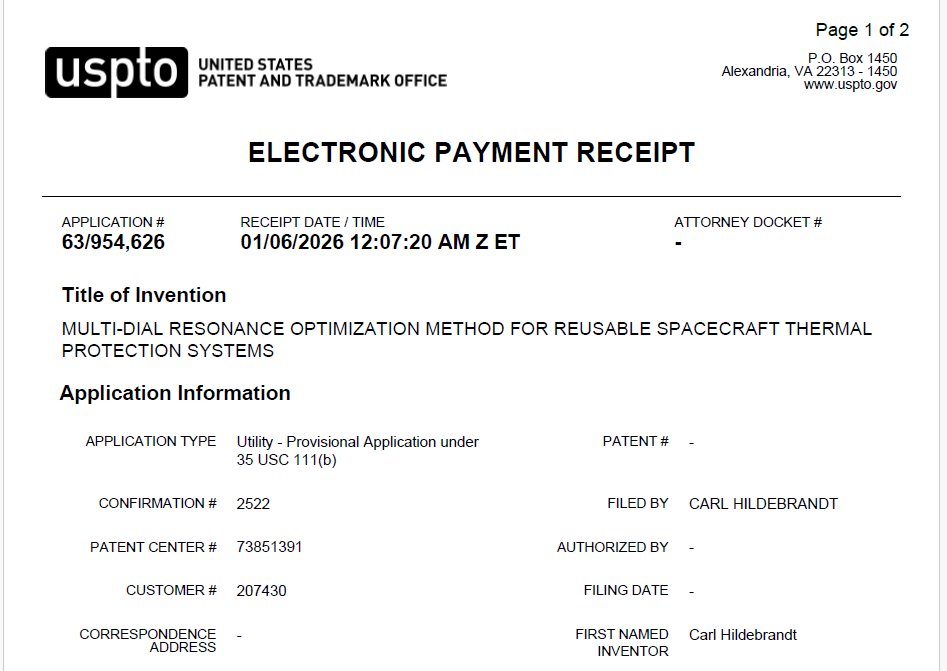
"Held well" is progress. But tile detachment isn't a materials problem — it's a multi-variable resonance problem. Stronger adhesive, better pins, new ceramics: single-dial fixes that miss the nonlinear interactions where the real gains live.
I filed a provisional (63/954,626) on a seven-dial optimization method: material × attachment × interface × geometry × CTE matching × damping × coating. The interesting result isn't any one variable — it's that interlocking geometry plasma-graded bonding interact nonlinearly, and graded CTE compliant interlayer redistributes thermal stress instead of concentrating it at attachment points.
Pressure doesn't disappear. It moves. Design for where it goes.
#HeatShield #SpaceX

1
1
46