
May 17
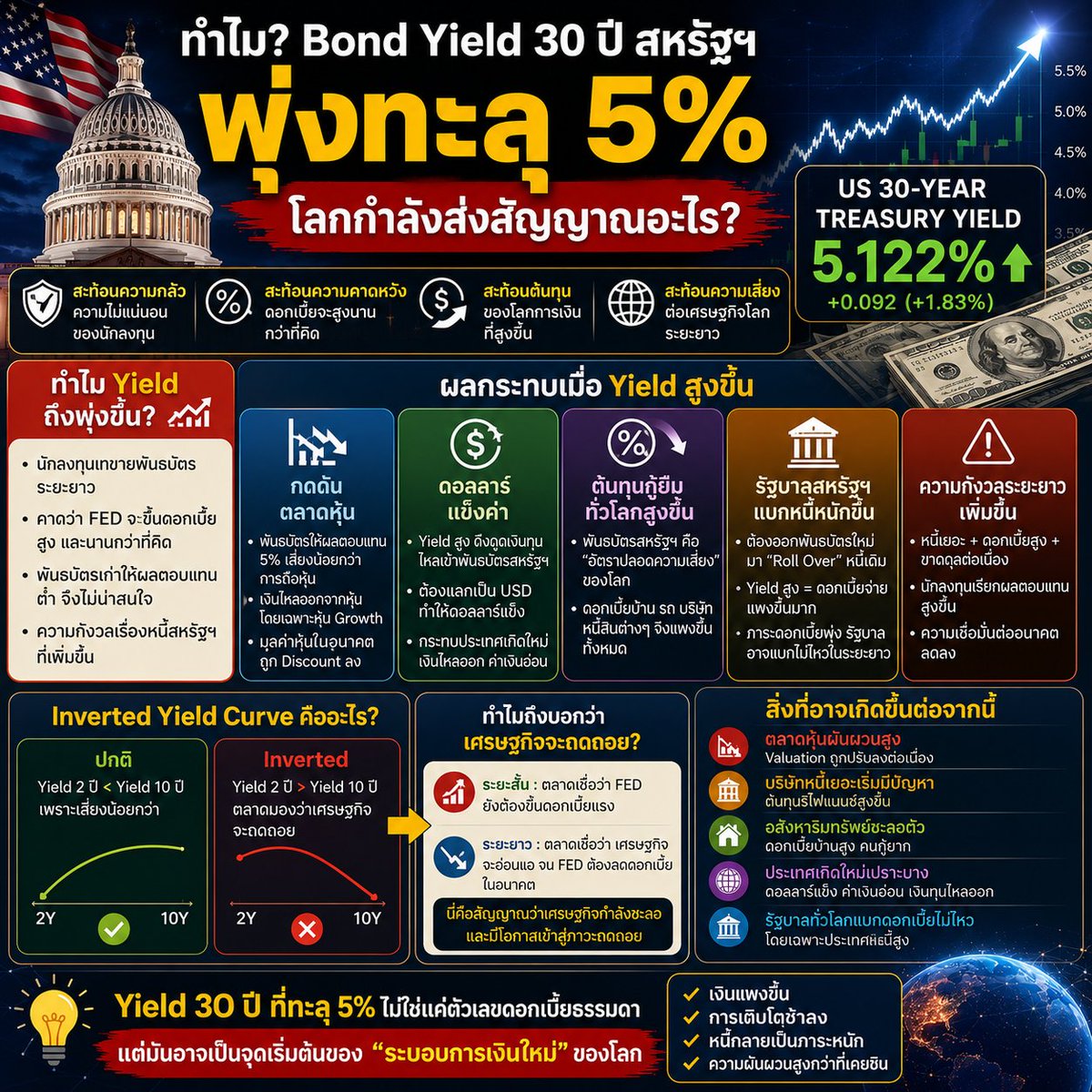
📉 เมื่อ Bond Yield 30 ปีของสหรัฐฯ พุ่งทะลุ 5% โลกกำลังส่งสัญญาณอะไร ? 🇺🇸🌍
ตอนนี้อัตราผลตอบแทนพันธบัตรรัฐบาลสหรัฐอายุ 30 ปี (US 30Y Treasury Yield) พุ่งขึ้นแตะระดับ 5.122% ซึ่งถือว่าสูงมากในรอบหลายปี และนี่ไม่ใช่แค่ “ตัวเลขดอกเบี้ย” ธรรมดา แต่มันกำลังสะท้อนความเปลี่ยนแปลงครั้งใหญ่ของระบบการเงินโลก
📌 Yield สูง = นักลงทุนกำลังขายพันธบัตร
เพราะตลาดเริ่มเชื่อว่า FED อาจคงดอกเบี้ยสูงไว้นานกว่าที่คิด (Higher for Longer)
เมื่อดอกเบี้ยใหม่สูงขึ้น
พันธบัตรเก่าที่ให้ดอกเบี้ยต่ำจึงไม่น่าสนใจ → ถูกเทขาย → ราคาพันธบัตรร่วง → Yield พุ่ง
สิ่งที่กำลังเกิดขึ้นตอนนี้ 👇
▪️ ตลาดหุ้นถูกกดดัน
เพราะพันธบัตรรัฐบาลให้ผลตอบแทนสูงถึง 5% นักลงทุนบางส่วนเริ่มย้ายเงินออกจากหุ้น โดยเฉพาะหุ้น Growth และหุ้นเทค
▪️ ดอลลาร์แข็งค่า
นักลงทุนทั่วโลกต้องซื้อ USD เพื่อซื้อพันธบัตรสหรัฐ → เงินไหลเข้าดอลลาร์ → ค่าเงินแข็ง
▪️ ต้นทุนกู้ยืมทั่วโลกสูงขึ้น
Yield สหรัฐถือเป็น “Risk-Free Rate” ของโลก
เมื่อ Yield สูง → ดอกเบี้ยบ้าน รถ บริษัท และต้นทุนการเงินทั้งหมดจะแพงขึ้น
▪️ รัฐบาลสหรัฐเริ่มแบกดอกเบี้ยหนักขึ้น
เพราะหนี้เก่าจำนวนมากต้อง “Roll Over” หรือออกพันธบัตรใหม่มาใช้หนี้เดิม
แต่ปัจจุบัน Yield สูงขึ้นมาก → รัฐต้องจ่ายดอกเบี้ยแพงกว่าเดิมมหาศาล
📌 สิ่งที่ตลาดเริ่มกังวลคือ…
โลกอาจกำลังเข้าสู่ยุคใหม่ที่
“ดอกเบี้ยสูง หนี้สูง เงินเฟ้อยังไม่ลง”
หรือยุคที่ “เงินแพง” จะอยู่กับเราอีกนาน
และนี่อาจเป็นจุดเปลี่ยนสำคัญของเศรษฐกิจโลกในอนาคต
#BondYield #US30Y #TreasuryYield #FED #ดอกเบี้ย #เศรษฐกิจโลก #พันธบัตรรัฐบาล #ลงทุน #ตลาดหุ้น #Dollar #YieldCurve #InvertedYieldCurve #MacroEconomics #Finance #Economic #USBond #WallStreet #ตลาดการเงิน #การลงทุน #เศรษฐกิจสหรัฐ
18
32
3,002

25 Nov 2024
Interesting day to release this episode of One on One with MisterBond - in conversation with #MrPrateekAgrawal - CEO & MD of @MotilalOswalAMC
1. #GlobalMacros
2. #DollarIndex
3. #InvertedYieldCurve
4. #10YrUST
5. #GeoPolitics
6. #IndiaImpact
youtube.com/watch?v=Uwd2lLge…
@akhilchat
@riteshpathak16
3
7
623

Did you know that four presidents—Hoover, Nixon, Bush, and now Trump—were elected with an inverted yield curve, a recession soon followed.. #recession #invertedyieldcurve #trump2024
1
3
148

16 Sep 2024
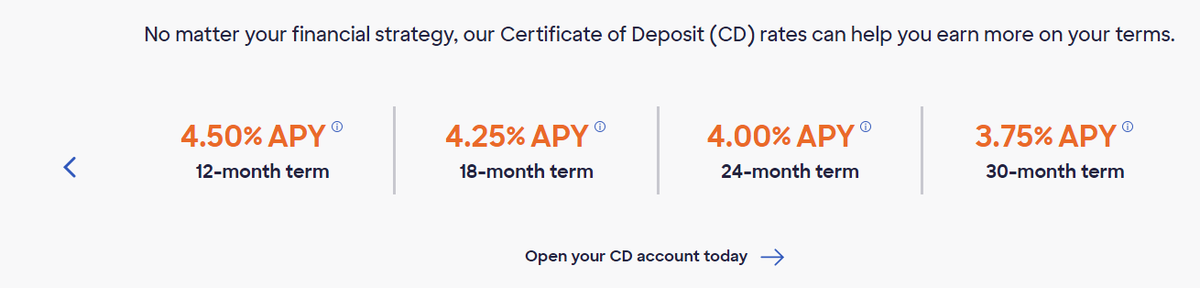
I guess everyone believes #Inflation is solved, and rates can ONLY go down from here:
#InvertedYieldCurve
@StealthQE4 @FixTheFed @RealStockCats @RudyHavenstein @GregCrennan @LawrenceLepard
1
2
291
6 Sep 2024
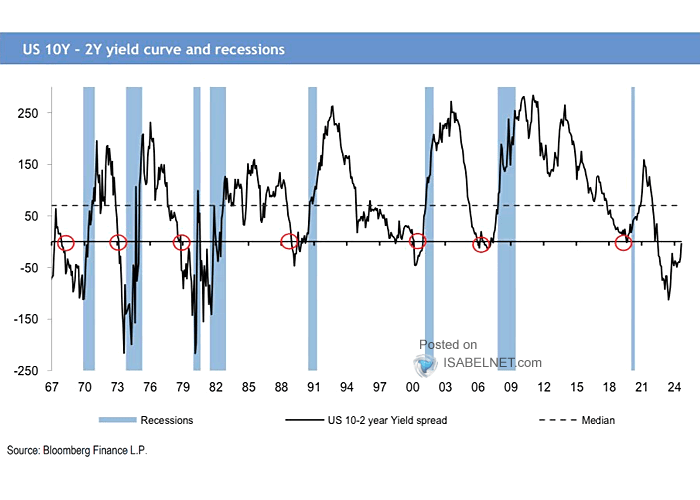
**ภาวะกลับหัวของเส้นผลตอบแทนพันธบัตรสหรัฐฯ 10Y-2Y เป็นสัญญาณเตือนเศรษฐกิจถดถอย: จะมีข้อยกเว้นหรือไม่? 🤔**
ในประวัติศาสตร์ที่ผ่านมา ภาวะกลับหัวของเส้นผลตอบแทนระหว่างพันธบัตรสหรัฐฯ อายุ 10 ปี (10Y) และ 2 ปี (2Y) หรือที่เรียกกันว่า "Inverted Yield Curve" มักจะเป็นสัญญาณล่วงหน้าที่แม่นยำต่อการเกิดภาวะเศรษฐกิจถดถอยของสหรัฐฯ โดยเฉพาะในช่วงที่เศรษฐกิจเริ่มชะลอตัวก่อนการถดถอยในทุกครั้งที่เคยเกิดขึ้น อย่างไรก็ตาม ในรอบนี้การกลับหัวของเส้นผลตอบแทนเกิดขึ้นมานานแล้ว ทำให้นักเศรษฐศาสตร์หลายคนตั้งคำถามว่าสถานการณ์นี้จะเป็นข้อยกเว้นหรือไม่ 🤨
จากข้อมูลในอดีต ภาวะกลับหัวของเส้นผลตอบแทน 10Y-2Y นั้นมักเกิดขึ้นก่อนภาวะเศรษฐกิจถดถอยในช่วงประมาณ 6 ถึง 24 เดือน ซึ่งในรอบนี้กลับหัวตั้งแต่ช่วงกลางปี 2022 ทำให้มีความกังวลเพิ่มขึ้นว่าเศรษฐกิจสหรัฐฯ อาจเข้าสู่ภาวะถดถอยในอีกไม่นานนี้ ⏳ ทั้งนี้ บางส่วนมองว่าการชะลอตัวของเศรษฐกิจอาจเป็นเพียงการฟื้นตัวที่ช้า และอาจไม่รุนแรงเหมือนที่เคยเกิดขึ้นในอดีต ✨
แม้ว่าเส้นผลตอบแทน 10Y-2Y จะมีประสิทธิภาพในการคาดการณ์ภาวะถดถอย แต่การใช้ตัวชี้วัดอื่นๆ เช่น เส้นผลตอบแทนระหว่างพันธบัตรอายุ 10 ปีและ 3 เดือน (10Y-3M) นั้นมีความแม่นยำมากกว่าเล็กน้อยในการพยากรณ์ โดยให้ช่วงเวลานำมากกว่าประมาณ 2 ถึง 6 ไตรมาส ซึ่งสัญญาณดังกล่าวก็กลับหัวมาแล้วเช่นกัน 📉
การกลับหัวของเส้นผลตอบแทนครั้งนี้สร้างความกังวลต่อนักลงทุน และเป็นที่น่าสนใจว่าจะมีผลกระทบอย่างไรในอนาคต แต่หลายคนยังคงเชื่อว่าภาวะถดถอยครั้งนี้อาจจะไม่รุนแรงเท่าครั้งก่อน 😅
#ภาวะเศรษฐกิจถดถอย #พันธบัตรสหรัฐ #การลงทุน #การเงิน #สัญญาณเศรษฐกิจ #InvertedYieldCurve #เศรษฐกิจ
10
1,351

4 Aug 2024
"This Time is Different" #neehoor #zeepbel #everythingbubble #ThisTimeisDifferent #invertedyieldcurve
#LeendeLeenkneus
#zitjeoplenen? #recession
#niemandzaghetaankomen #hardlanding #aex #kuddegedrag #herdmentality
2
2
1,206

25 Jul 2024
1
9
1,998

17 Jul 2024
#InvertedYieldCurve
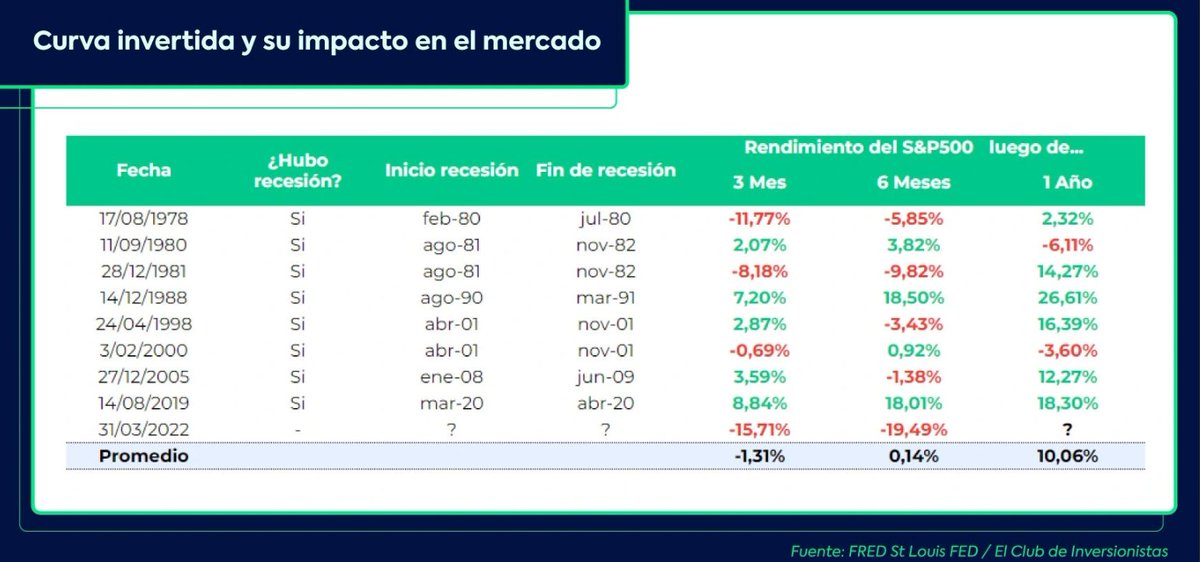
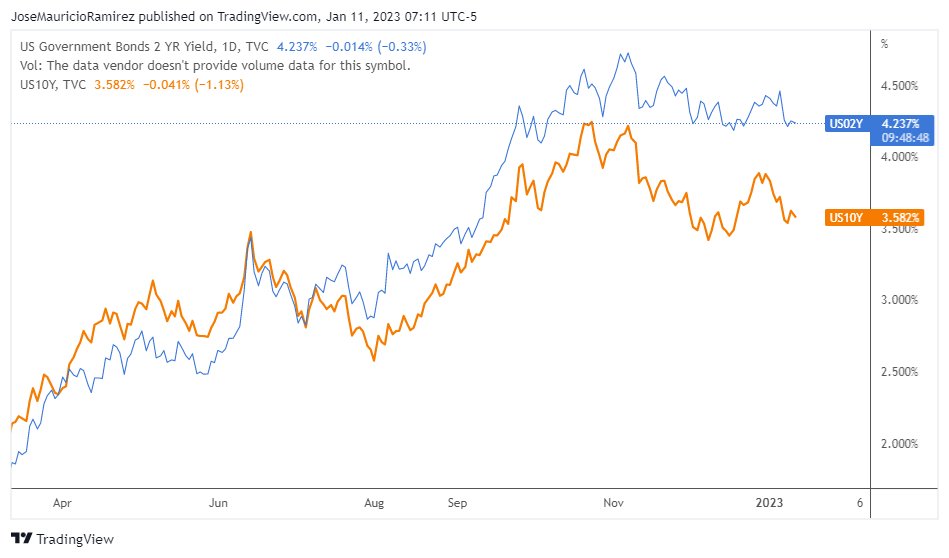
La curva de rendimiento es un indicador crucial.
En este caso, la curva de rendimiento de 🇺🇸 ha estado invertida durante 742 días consecutivos, la racha más larga de la historia
Inicio la curva Invertida el 6 de julio de 2022 📝

1
23
1,104

1 Jul 2024
You know my saying:
OUTLIERS REVERT WITH VELOCITY™️
#Correlation
#InvertedYieldCurve
27 Jun 2024

#Correlation has never been lower, and with the yield curve inverted, it has no historical precedence. 0th %tile
2
17
5,874

11 Jun 2024
It is not when the #yieldcurve inverts that you need to worry. It is when an #invertedyieldcurve reverts to "normal"--that is when a #recession hits and #stocks crash! gannanalysis.net # #gann, #timing, #trading, #ganntheory, #bonds,
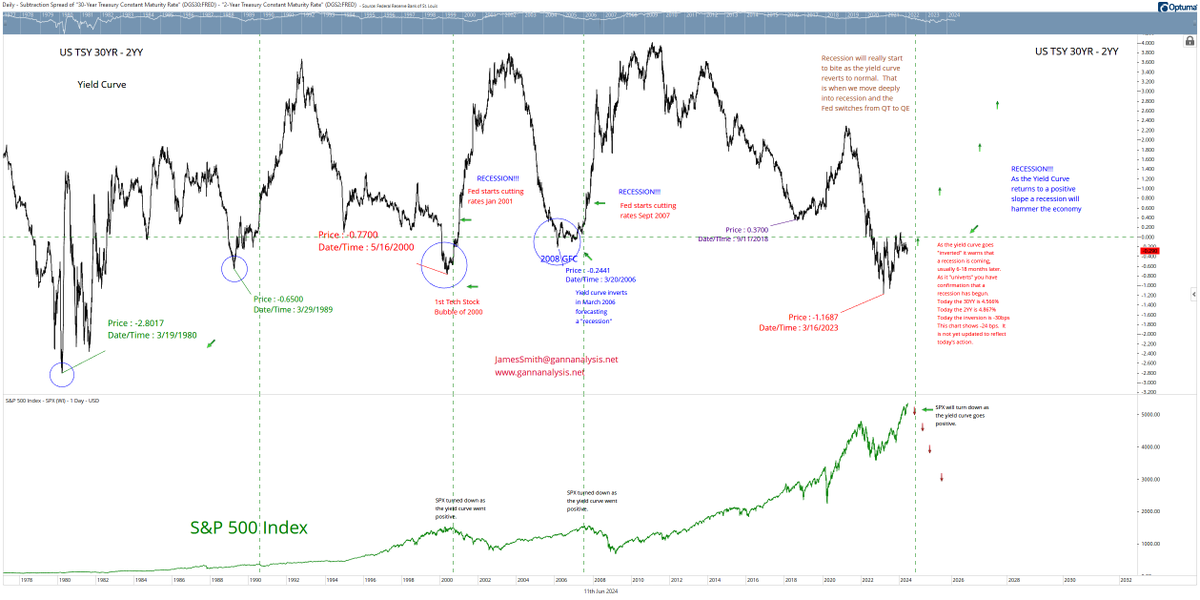
ALT As the Yield Curve reverts to "normal" we get a recession!
6
937

5 Jun 2024
An interesting statistic regarding short term vs long term yields and the inverted yield curve - the long in history.
#interestrates #invertedyieldcurve
5 Jun 2024

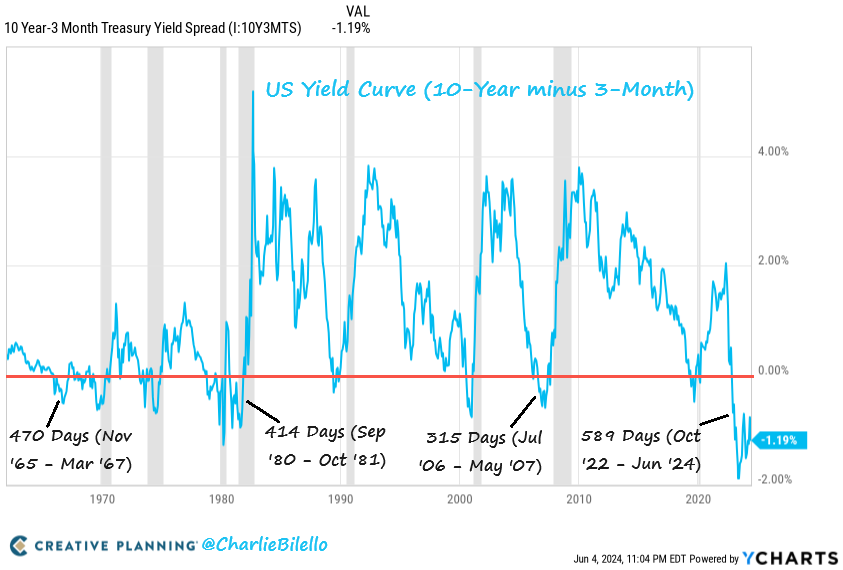
The US Yield Curve (10-year minus 3-month) has now been inverted for 589 consecutive days, the longest inversion in history.
creativeplanning.com/charlie
5
627

29 May 2024
#InvertedYieldCurve
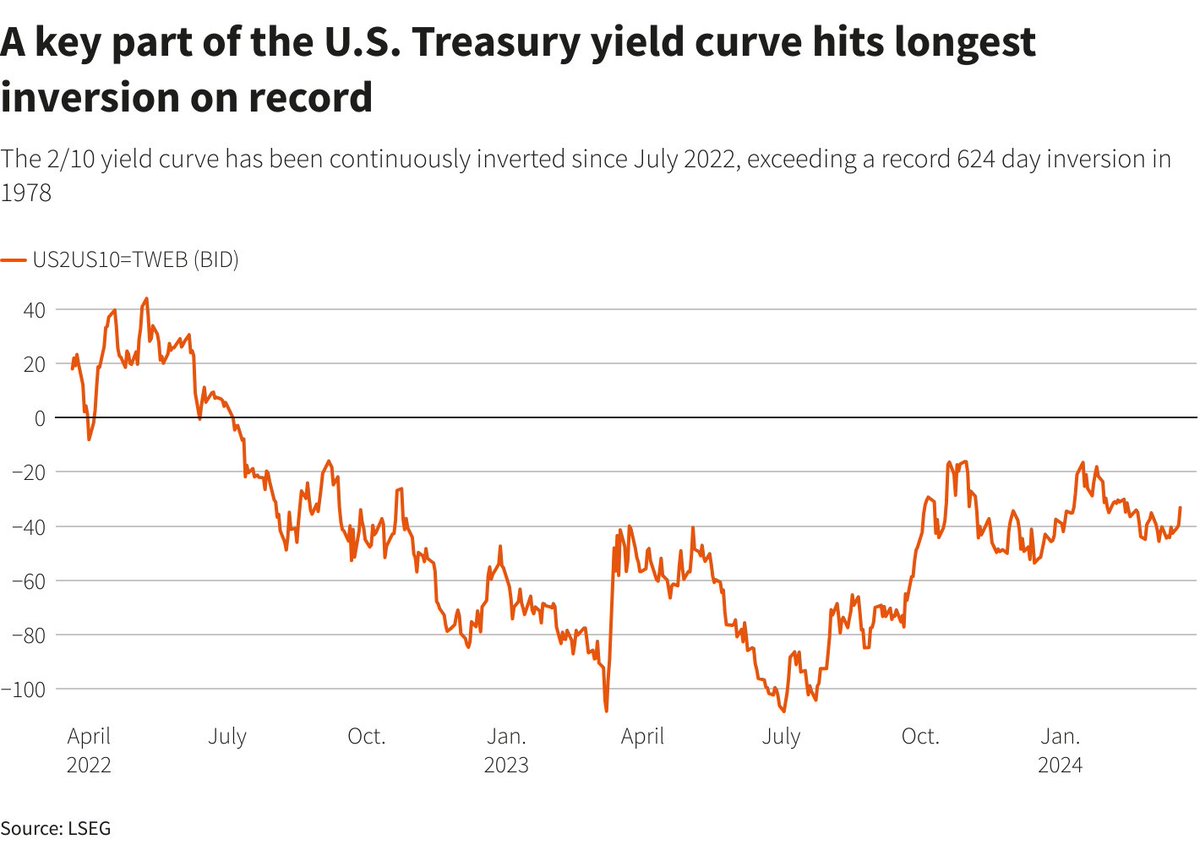
Wall Street’s favorite recession indicator is in a slump of its own.
An inverted yield curve is when yields on short-term Treasurys exceed those of longer-term government debt. In each of the previous eight U.S. downturns, that has happened before the economy sputtered. The yield curve has been inverted for a record stretch—around 400 trading sessions or more by some measures—with no signs of a major slowdown. If a recession doesn’t materialize soon, it could do lasting damage to the yield curve’s status as a warning system. Meanwhile, bullish investors are piling into stock and bond funds.
1
2
670

23 Oct 2023
The recent surge in the 10-year Treasury yield, crossing the 5% mark for the first time in 16 years, is sending ripples through the economy.
This development could impact various sectors, from mortgages to credit cards, and influence investment strategies. Let's discuss the implications:
1. Recession Indicator Intensified: The prolonged inversion of the 10-year and 3-month yield curve, coupled with this surge, further emphasizes the potential for an impending recession. Investors should exercise caution and explore recession-resistant strategies.
2. Heightened Equity Market Volatility: With the 10-year Treasury yield surpassing 5%, heightened volatility in the stock market is anticipated. Investors may experience increased fluctuations in equity values. It's crucial to be prepared for short-term market turbulence.
3. Portfolio Realignment Urgency: Given the new yield curve dynamics, a reassessment of portfolio allocation is prudent. Some may shift towards defensive assets like bonds, gold, or dividend-paying stocks to hedge against potential recession-related losses.
4. Interest Rate Sensitivity Amplified: The spike in the 10-year Treasury yield may significantly impact interest-sensitive assets. Long-term bonds may experience price appreciation, benefiting holders, while short-term interest rates could influence loans and borrowing costs.
5. Challenges for Financial Institutions: Banks and financial institutions may face challenges as the yield curve's shift affects their lending profitability. This could result in adjustments to the products and services they offer to the public.
6. Reinforced Diversification Imperative: Diversification becomes even more critical in light of these developments. A well-diversified portfolio can serve as a buffer against specific market risks associated with the evolving yield curve.
7. Maintain a Long-Term Perspective: While the 10-year Treasury yield's ascent is significant, it's important to remember that it's not a definitive indicator of an imminent recession. Staying invested and remaining committed to long-term financial objectives remains paramount.
In this environment, consider diversifying into sectors that may respond differently to the evolving yield curve. Defensive sectors like utilities and healthcare might offer stability in contrast to more cyclical sectors.
Continue to monitor economic indicators and market trends alongside the yield curve. A holistic approach to investment strategy adjustments is essential.
Stay informed by following @jjsfinclub and make timely adaptations to navigate these changing financial landscapes.
#InvestmentInsights #EconomicTrends #invertedyieldcurve #recession
2
3
769

1 Oct 2023
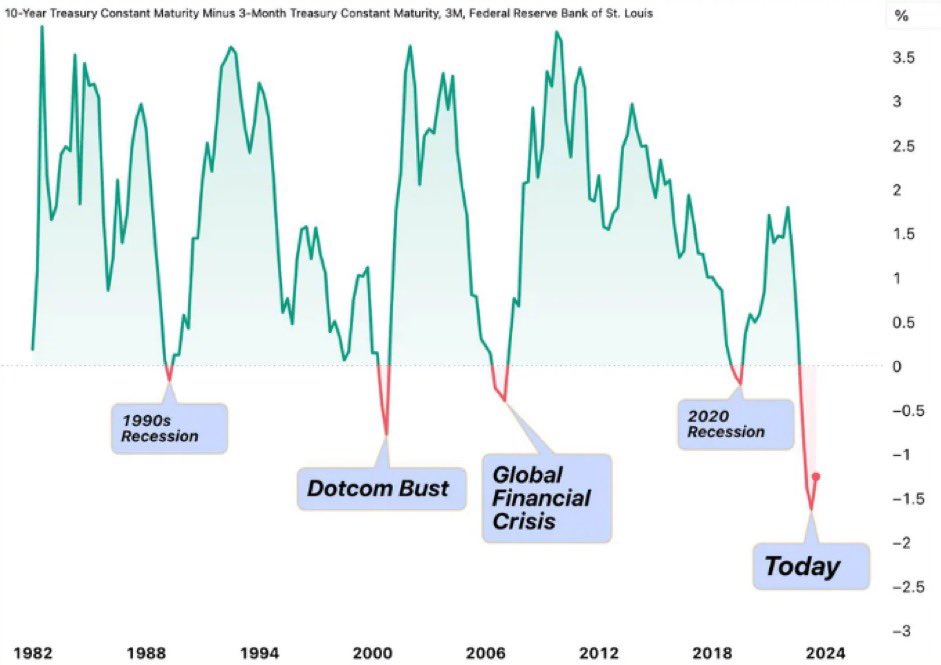
过去 4 次 当10 年期减去3个月 国债收益率曲线倒挂时导致了 90 年代经济衰退、互联网泡沫破灭、全球金融危机和 2020 年经济衰退。 历史不一定会重演,但往往会押韵。#recession,#invertedyieldcurve

The last 4 times the 10Y Minus 3M Treasury Yield Curve inverted, it led to the 1990s recession, the Dotcom Bust, the Global Financial Crisis, and the 2020 Recession. History doesn’t repeat itself but it often rhymes.
2
2,302
28 Sep 2023
The 10-year and 3-month yield curve has been inverted for over 200 days!
How does this might impact your investments? Let's discuss these economic topic today!
1. Potential Recession Indicator: The Inverted Yield Curve is closely watched because it has historically signaled an impending recession. When this happens it is time for investors to approach markets with caution and consider strategies that are recession-resistant.
2. Equity Market Volatility: Inverted Yield Curves can lead to increased volatility in the stock market. Investors may experience fluctuations in the value of their equities, and it's important to be prepared and understand short term market turbulence.
3. Adjustment of Investment Mix: Investors might want to reassess their portfolio allocation. Some may shift towards defensive assets like bonds, gold, or dividend-paying stocks, aiming to mitigate potential losses in the event of a recession.
4. Interest Rate Sensitivity: The curve's inversion can influence interest-sensitive assets. Long-term bonds may see price appreciation, benefiting those holding them, while short-term interest rates could impact loans and borrowing costs.
5. Impact on Financial Institutions: Banks and financial institutions may face challenges as the yield curve impacts their lending profitability. This could potentially lead to shifts in what they offer to the public.
6. Diversification Importance: Diversification becomes even more crucial in this scenario. A well-diversified portfolio may provide a cushion against specific market risks associated with the yield curve inversion.
7. Remember Long-Term Perspective: It's important for investors to maintain a long-term perspective. While an inverted yield curve is a notable signal, it's not a guarantee of an imminent recession. Staying invested and committed to long-term financial goals is key.
As mentioned you can adjust what you have invested in but staying invested is key. You can diversify to certain sectors that may be affected differently by an inverted yield curve. For example, defensive sectors like utilities and healthcare might be favored over cyclical sectors like consumer discretionary.
Keep monitoring the situation, other economic indicators and market trends. Do not solely rely on inverted yield curve. This allows for timely adjustments to investment strategies as needed.
#InvestmentInsights #EconomicTrends #invertedyieldcurve #recession
6
1
10
514

23 Aug 2023
Uncertainty can cause anxiety for investors, and the #invertedyieldcurve (often used as a recession indicator), can increase it. ndvr.com/blog/what-does-an-i…
1
3
108

14 Aug 2023
📚🔍 An essential read for those seeking insight into the inverted yield curve phenomenon.
📉📈 Exploring Bonds and Yields in depth.
#FinancialEducation #InvertedYieldCurve
#Bonds ig.ft.com/the-yield-curve-ex…
2
34
2 Aug 2023
Inverted yield curves have often been used by economists to forecast recessions and subsequent monetary policy – but why should investors care? Our latest blog explores the implications of the #invertedyieldcurve bond investors should consider.
hubs.ly/Q01YvK490
3
49

30 Jun 2023
This episode sets the stage for tomorrow’s episode on what inverted yield curves mater most. #invertedyieldcurve
28 Jun 2023

Why do things take so long to unravel? What will happen next? Don't miss the latest episode of @DrMarkThornton's #MinorIssues podcast. promocards.byspotify.com/sha…
1
5
3,163

29 Jun 2023
1
32