
Mar 17
St. Patrick’s Day has grown into a global celebration of heritage, tradition, and community.
Today, we celebrate the spirit of community and the traditions that continue to unite people around the world.
Happy St. Patrick’s Day!
#IrishBlessings #LuckOfTheIrish #StPatricksDay #IrishMagic #CheersToCelebration
2
1
5
165

The Dead Hand: Corpses, Butter-Witches, and Fairies in Irish Folklore.
While following up another subject I came across interesting accounts of corpse’s hand being used for magical purposes in the Irish folklore archives.
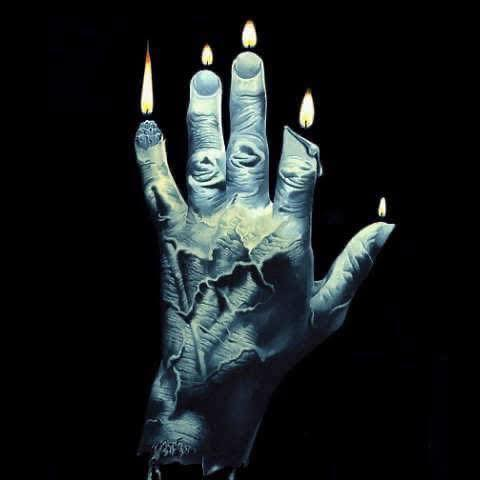
Now, many here will undoubtedly have heard of a 'Hand of Glory' but in case you haven't I will give a quick explanation before coming back to the Irish folklore.
The 'Hand of Glory' is a name given to the severed hand of a corpse, usually a criminal.
The hand was believed to allow the possessor to open any unlocked door, and to render a person immobile if they were presented with a lit candle within, or upon, the hand.
The candle was said to have been fashioned with the wax of the corpse.
The hand was believed to have the power to lead a person to hidden treasure and was even reputed to bestow invisibility.
These particular attributes are associated with grimoires (magical books) written in the 18th and 19th centuries but it should be stressed that folklore has given us stories relating to body parts including severed hands for much longer than this.
Some writers believe the origins of the hand of glory may be linked to The Code of Hammurabi, a Babylonian code of laws from ancient Mesopotamia.
This is where we find ideas such as 'an eye for an eye' or amputating a body part associated with a crime. This ancient set of laws dates to about 1770 BCE.
Other writers believe that there is no way to date body parts being used in magic as the practice would have been part of most native and indigenous traditions.
I would fall into this category, myself.
In the Irish folklore archives, the uses for a corpse’s hand are less associated with serious criminality, although some darker magical powers are certainly attested to.
It was also a custom that in certain circumstances, in order to protect against fairies, for example, a corpse’s hand was a powerful tool.
The use of a 'dead hand' seems to have been quite widespread but generally people felt that it brought bad luck down upon its owner in the end.
“Those that use the "dead hand" are cursed, and though they succeed in taking their neighbours' crops and stock, and maybe breaking them out of house and home, and there are those who died broken-hearted because of their losses, those who do that don't have the better luck for it.”
In this next example the 'dead hand' was a way to ensure a steady supply of butter.
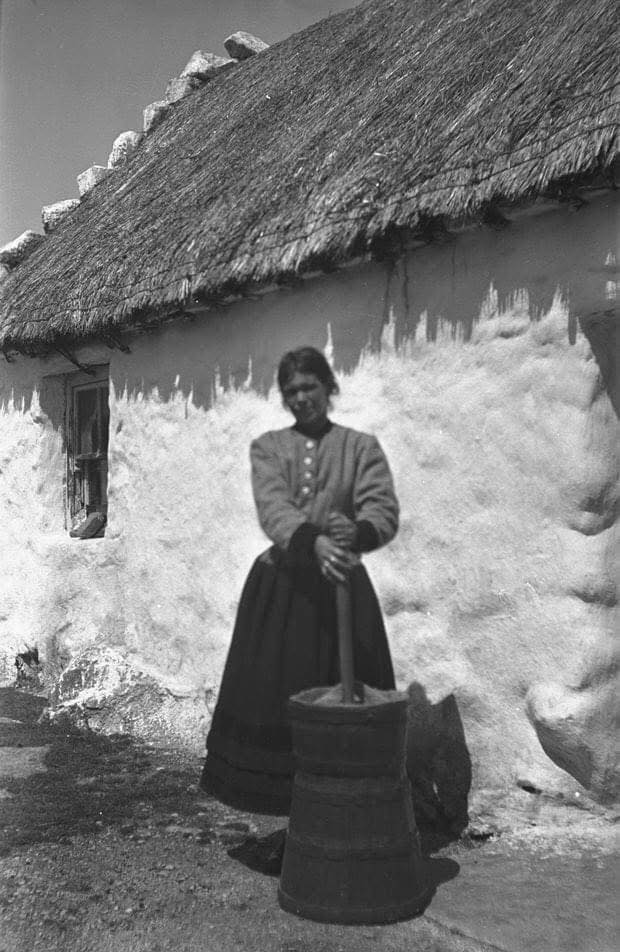
"It was commonly believed when people had a large supply of milk and butter, and a few cows - that these people had what was commonly termed as "the dead hand". In the parish of Eyrecourt a certain woman was able to supply all the shops with butter, and had only one cow.
People said this woman had "the dead hand". This term meant she, or some member of her household dug up a dead hand from some grave, and while this was in the house the churn was always full, and the supply of butter very large. In some instances, as in this parish the Priests were beseeched to pray for people whose milk and butter was being stolen from them and who thus were reduced to a state of poverty."
A similar belief occurs in this account although in this case we can notice links between fairies and the 'dead hand'.
A woman asks a fairy how to increase her butter and the fairy digs up a grave and gives the woman the bones of the hand to use.
(As writers such as Ronald Hutton have argued, certain nefarious powers which were attributed to witches in mainland Europe were instead believed to be the result of fairy attacks in early-modern Ireland.)
We find another association between the 'dead hand' and butter in this example from Roscommon.
"A dead hand (hand of a dead person) was kept in the house and the milk was stirred in the churn before churning by this dead hand; the user at the same time demanding the butter of any cows she knew of or wished to get.
This method was not practised in Ballinacree but was the general belief in my home area South Roscommon."
As well as being used for ill-good, the 'dead hand' was also believed to cure tooth-ache.
" Any person who was suffering from toothache could be cured by rubbing a dead hand to it, and by not shaving on Sunday."
This is an intriguing example from Co. Cavan because we *may* have links to similar magical powers attributed to the 'Hand of Glory' within the grimoires.
There are a number of similar accounts in the archives involving magically sending household occupants to sleep in order to steal their belongings.
" This woman had a dead hand which she found in a grave and at night she carried it about with her. When she approached a house she left the hand in on a window. As soon as the hand was left in the house everyone became as if they were dead. This is how she got doing what she liked in the houses."
Although these accounts tend to focus on butter churning and cures, it should be noted that the examples come from the schools collection and were recorded and transcribed by children in the company of older people from their communities.
Because of this, we are probably missing some of the darker aspects of such magical practices which we see in other European traditions.
(The folklore of the dead hand in Northern Europe is not for the faint of heart!)
It is highly likely, for example, that adults would not have spoken of taboo rituals to children and so would have left certain information out of their accounts.
Although the subject can be gruesome for many, the fact is that various body parts were used in cursing magic, sex magic, fertility and pregnancy rituals, as well as in spells considered demonic in many cultures.
Because of this, they simply would not appear in the Irish School's Collection even if they had been widespread.
Dr. Andrew Sneddon's book, Witchcraft and Magic in Ireland, is a great resource for understanding the background regarding the evolution of both the laws and attitudes during this time.
(C.) David Halpin.
Photos.
1. A Hand of Glory image I found online. There is no artist credit on the image but I will be only to glad to add one if anybody can give me a name
2. A woman churning butter from the Duchas(dot)ie archives.
#irishmagic #folklore #handofglory #irishwitch #pagan #paganism #animism #witchcraft #fairies #deadhand #duchas #wicca #occult #traditional #theinvisibles #hellboy #tuatha #druid #holywell #mythology #celt #celticmythology #irish #ireland #irishheritage #goddess #bealtaine #curses #ancestors #WyrdWednesday #WitchyWednesday
4
8
292

29 Aug 2025
☘️✨ Dublin = memories made!
Comedy club laughs 😂, vintage tea bus 🫖🚌, Robbie Williams 🎶, River Liffey cruise 🚤 & a spooky ghost bus 👻💚
So much fun, so many giggles! 🥂
#DublinVibes #IrishMagic
3
240

2 Apr 2025
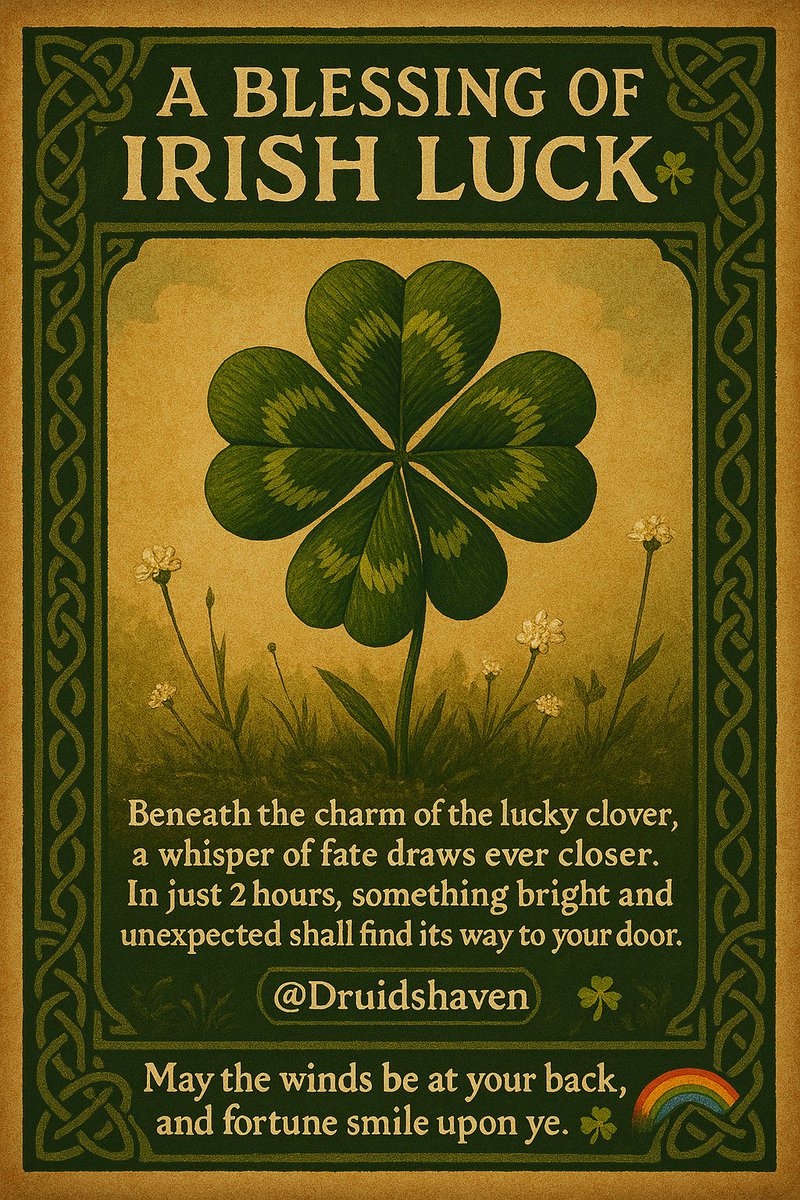
🌿✨ A Blessing of Irish Luck 🍀
In 2 hours, fate may knock at your door... Are you ready to receive it?
✨ Something bright and unexpected is coming your way.
🔮 Trust the magic.
#GoodLuck #LawOfAttraction #IrishMagic #Manifestation #CelticWisdom #SpiritualVibes #BlessedEnergy
1
21
110
1,350

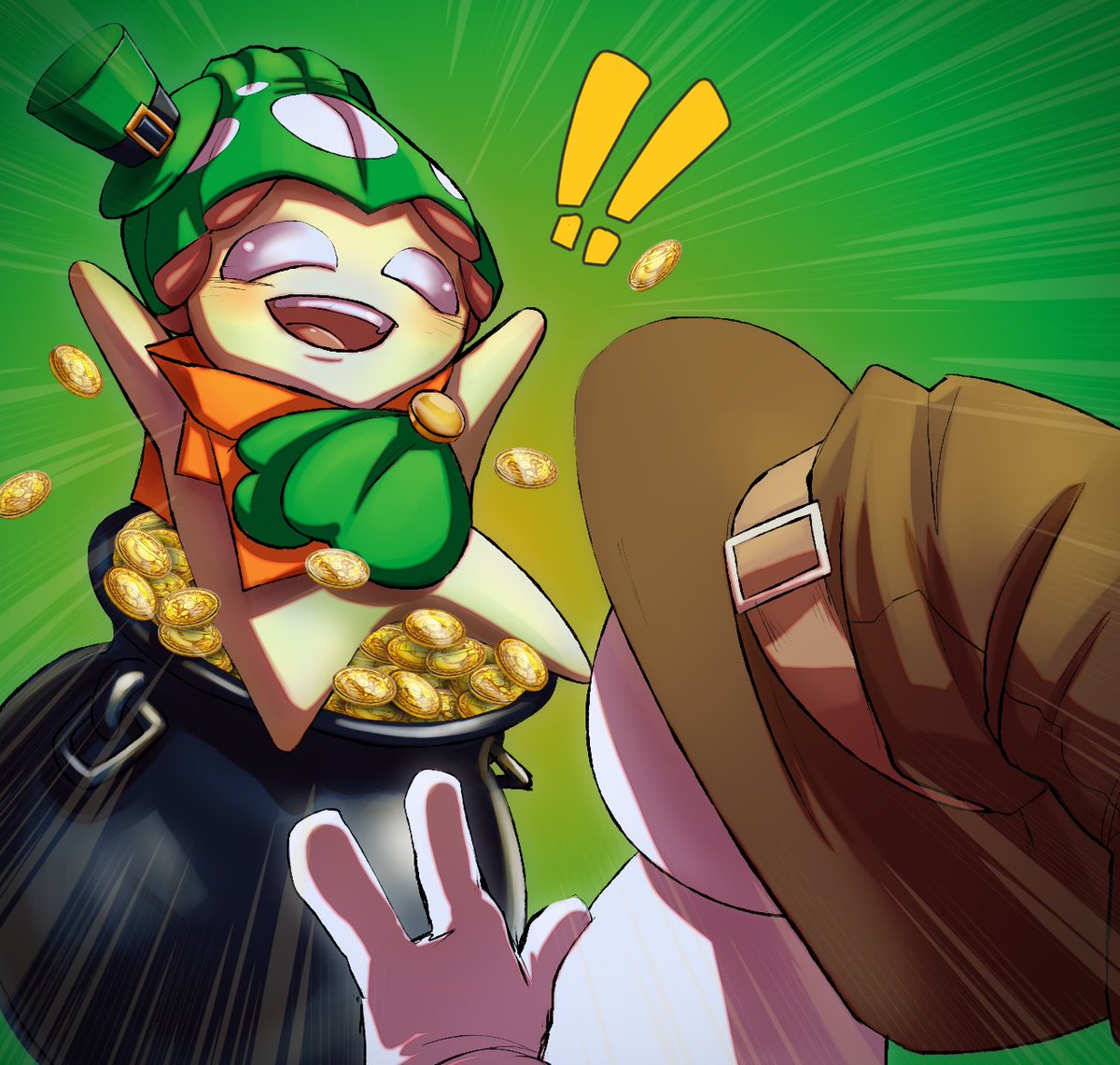
The leprechauns have blessed us today! 🍀✨ Who else wishes they could dive into a pot of gold like this? 💰😆 #LuckyFind #IrishMagic
2
2
8
94

17 Mar 2025
🌟 Wishing you a pot of gold and all the joy your heart can hold! 🌈💰 #IrishMagic #GoodVibesOnly
1
3
155

17 Mar 2025
May your day be filled with shamrocks, sunshine, and a little bit of magic. ✨🍻
Happy Saint Patrick's Day! Have fun and be safe!
#IrishMagic #LuckIsInTheAir #SarpyScanner
3
1,667

8 Oct 2024
🍀🌐 Celtic Hexes to Modern Day: The Surprising Transformation of Irish Curses
#IrishCurses #CelticHexes #ModernMagic #IrishTraditions #MagicalEvolution #CelticSpells #ModernHexes #IrishMagic #HistoricalCurses #CelticMagic #ModernIreland #IrishHexes #CelticTraditions
1
34

17 Mar 2024
🍀✨ Happy St. Patrick's Day, Everyone! 🌈🎉
Wishing you all a day filled with Irish cheer, good luck, and a touch of green magic! 🍀💚 Here's to the luck of the Irish shining on you! 🌟🇮🇪
#StPatricksDay #LuckOfTheIrish #CheersToGreen #IrishMagic #asheville #physicaltherapy #avl

36

21 Feb 2024
I cant wait to read your running commentary on this sure to become classic Irish cinema event 😂#wildmountainthyme #Irishmagic #irishwish
5
930

7 Sep 2023
I’m irish & I’m off to #newyork … we have a box of #irishmadefairydoors & #horseshoegifts on their way …isn’t that fantastic #irishmagic & #goodluck @LEOKilkenny @DCCIreland @BITAIntl @IrishBusinessNY @NYIrishCenter @Network_Ireland @NetIrlKilkenny
2
2
4
189

6 Sep 2022
Here it is with the gang on my @QuiverTime. Thanks again @InklinCustoms and @TheRealBarenzia.
#irishmagic #MagicTheGathering #mtg #cedh
3
2
12

5 Aug 2022
With the joy of the sea as it rushes home to shore...
I'm wishing you the most beautiful of dreamtimes, safely 'home' in Peace.
Night 💙😇✨️🙏
#adventure #irishmagic #Celtic #beauty #healing #friendship #irishsea #nomad #freelife #unshakled #freesoul #eire #Wexford #courtown

2
16 May 2022
#Scott4CAG would be a fantastic include. The work he has done for the community with his articles, podcasts and in person interactions along with the support he has offered the members of the IrishMagic discord means I couldn’t recommend him enough!
3

4 Dec 2021
Well done to players and coaches of the @FelstedRugby 2nd XV who completed an unbeaten season 2021 today. #irishmagic

1
5
45

25 Sep 2021
Brilliant @ShaneLowryGolf delivering some #IrishMagic at the final hole. Got to be a special day tomorrow @rydercup @RyderCupEurope fingers crossed 🤞 Miracle required 🏆

1
7

17 Mar 2021
The Liebherr factory in Killarney, Ireland delivered its first crane in 1958. Today, Liebherr container cranes can be found throughout the world spreading that little bit of Irish magic
Wishing you all a very Happy St. Patrick’s Day.
#madeinireland #irishmagic #liebherr

ALT Happy St. Patricks Day from Liebherr Container Cranes
1
10
13 Oct 2020
Keep doing what you are doing, getting the message out there, the effect of #buyingirish #multipliereffect etc , great info that we can then share !! Let’s all keep trying to make magic !!! #irishmagic
2

25 Sep 2020
☆●♡Good Night my Witches & Friends. May the gods & goddesses protect over you while you sleep and the dark bring you light. Until the morrow🖤🧙♀️ #blessings #witchesoftwitter #irishmagic #irishwitchcraft #godsandgoddesses #nanaswitchcraft
1
1
7

12 May 2020
Created a piece of #Magic for a #Tarot Themed Virtual Burlesque show. Hope you Enjoy it.
youtu.be/BeG9ewaEvss
#MagicTrick #CoinTrick #IrishMagic #Celtic #Ginger #FireMagic
1
2