
A fully 3D transient heat transfer simulation of Laser Powder Bed Fusion (LPBF) of AlSi10Mg for six different laser beam profiles, implemented in FreeFEM .
GitHub Repo: github.com/Computational-Mat…
1
45
virgo retweeted

𝐋𝐞𝐨𝐧𝐚𝐬 𝐝𝐞 𝐏𝐨𝐧𝐜𝐞 𝐝𝐞𝐫𝐫𝐨𝐭𝐚𝐧 𝐚 𝐥𝐚𝐬 𝐁𝐫𝐮𝐣𝐚𝐬 𝐝𝐞 𝐆𝐮𝐚𝐲𝐚𝐦𝐚 𝐲 𝐦𝐚𝐧𝐭𝐢𝐞𝐧𝐞𝐧 𝐬𝐮 𝐢𝐧𝐯𝐢𝐜𝐭𝐨 𝐞𝐧 𝐥𝐚 𝐋𝐏𝐁𝐅
Ponce, 13 de junio de 2026 – Las Leonas de Ponce defendieron con éxito su cancha y extendieron su inicio perfecto de temporada al imponerse 57-54 sobre las Brujas de Guayama en un emocionante encuentro celebrado en el Estadio Salvador Dijols de Ponce, correspondiente a la Liga Puertorriqueña de Baloncesto Femenina (LPBF).
Con la victoria, las Leonas mejoraron su marca a 4-0, consolidándose entre los equipos más sólidos del torneo durante las primeras semanas de competencia.
El partido se mantuvo cerrado de principio a fin. Guayama dominó el primer parcial 15-14, pero las ponceñas respondieron en el segundo período con ventaja de 17-13 para irse al descanso al frente. Las Brujas volvieron a tomar el control en el tercer cuarto al superarlo 18-15, dejando el desenlace para los últimos diez minutos.
En el período decisivo, la defensa de las Leonas fue determinante al limitar a Guayama a solo ocho puntos, mientras anotaban 11 para asegurar el triunfo por tres tantos.
A la ofensiva por Ponce sobresalió L. Pagán, quien coqueteó con un doble-doble al finalizar con 17 puntos y 19 rebotes, siendo la figura dominante bajo los tableros. También aportó significativamente J. González con 15 puntos, cinco rebotes y cuatro asistencias, mientras que A. Quiñones añadió ocho tantos.
La armadora I. Torres contribuyó con cinco asistencias para dirigir el ataque ponceño, mientras que la defensa colectiva volvió a ser una de las claves del éxito de las locales.
Las Leonas continúan demostrando consistencia en ambos lados de la cancha y mantienen intacto su invicto tras cuatro compromisos en la temporada 2026 de la LPBF.

1
94

Scrap Labs announced the Scrap 1 metal LPBF (laser powder bed fusion) printer at a target price of $17,990 US - a new game changing price - shipping by June 2027 with Kits at $14,200. First material is Stainless Steel. Alpha and beta testing underway. Very attractive price.
4
Biblioteca ETSII-UPM retweeted

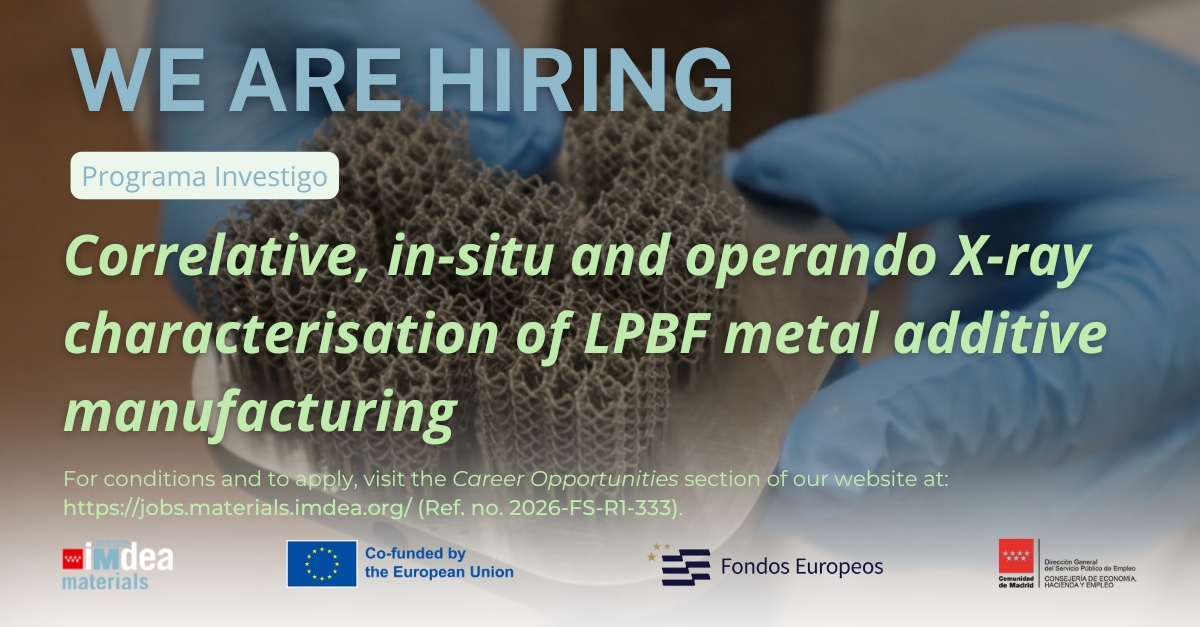
🚨 We are seeking a candidate to advance understanding and optimisation of #LPBF processing of Zn- and Ti-based alloys, combining alloy development, advanced manufacturing, operando #synchrotron imaging, and multiscale microstructural characterisation.
🔗 jobs.materials.imdea.org/off…
1
1
4
106


Jun 11
Amazing call here - looked at this one today.
Seems like the main bull thesis is Velo3D's support-free LPBF printing is irreplaceable tech that SpaceX built Raptor on?
But the September 2024 agreement says Velo3D granted SpaceX a non-exclusive license to its additive manufacturing technologies for a $5M fee plus $3M of support services, and the terms are pretty alarming.
SpaceX retains the technology and license forever, Velo3D's sole remedy for any breach is money damages with no right to terminate, and improvements SpaceX makes belong entirely to SpaceX with no obligation to share anything back.
It even survives a Velo3D bankruptcy under Section 365(n). So, it seems the market is paying $693M today for a technology stack that was priced (in distress) at $5M, and whose most sophisticated user can self-replicate it royalty-free in perpetuity?
361

🇳🇱 Fully funded PhD at the University of Twente! Research multi-material additive manufacturing for advanced chip cooling, combining LPBF, materials science. Apply by July 5, 2026. #PhD #AdditiveManufacturing #MaterialsScience #Semiconductors #Netherlands
utwentecareers.nl/en/vacanci…
1
119

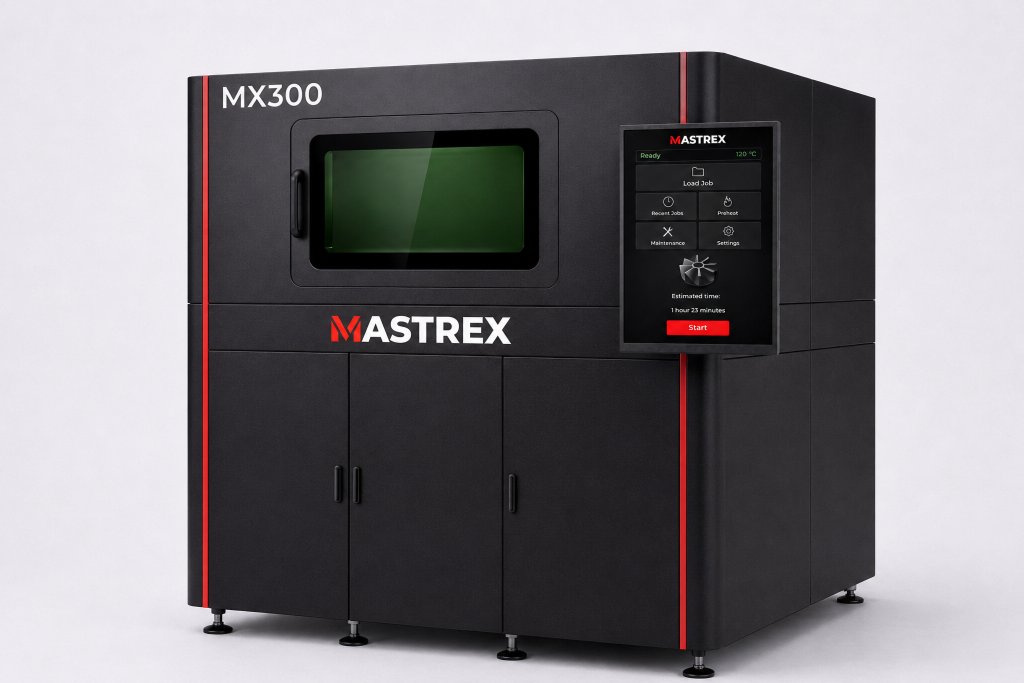
MASTREX LAUNCHES MX300, CALLS IT INDUSTRY’S MOST AFFORDABLE LPBF METAL 3D PRINTER
1
1
13

A whopping $20,000 was raised for the Loss Prevention Benevolent Fund (LPBF) and the Bob MacLea Scholarship at the 2026 Swing for Certification event hosted by the Loss Prevention Foundation (LPF) on Sunday, June 7 at the famous Cowboys Golf Club in Gra...
losspreventionmedia.com/2026…
25

The objective of the project call is to develop an AI-driven framework to identify and quantify risk in the current material allowables approach for 17-4PH stainless steel (H1025) produced by laser powder bed fusion (LPBF). f.mtr.cool/tesiiplfim
43

1
1
102

Jun 9
I print propulsion hardware. Machining a complex titanium manifold wastes 80% of the billet. LPBF recycles unfused powder. Energy per part is higher in AM. What alloy and process are you comparing?
1
13

Jun 7
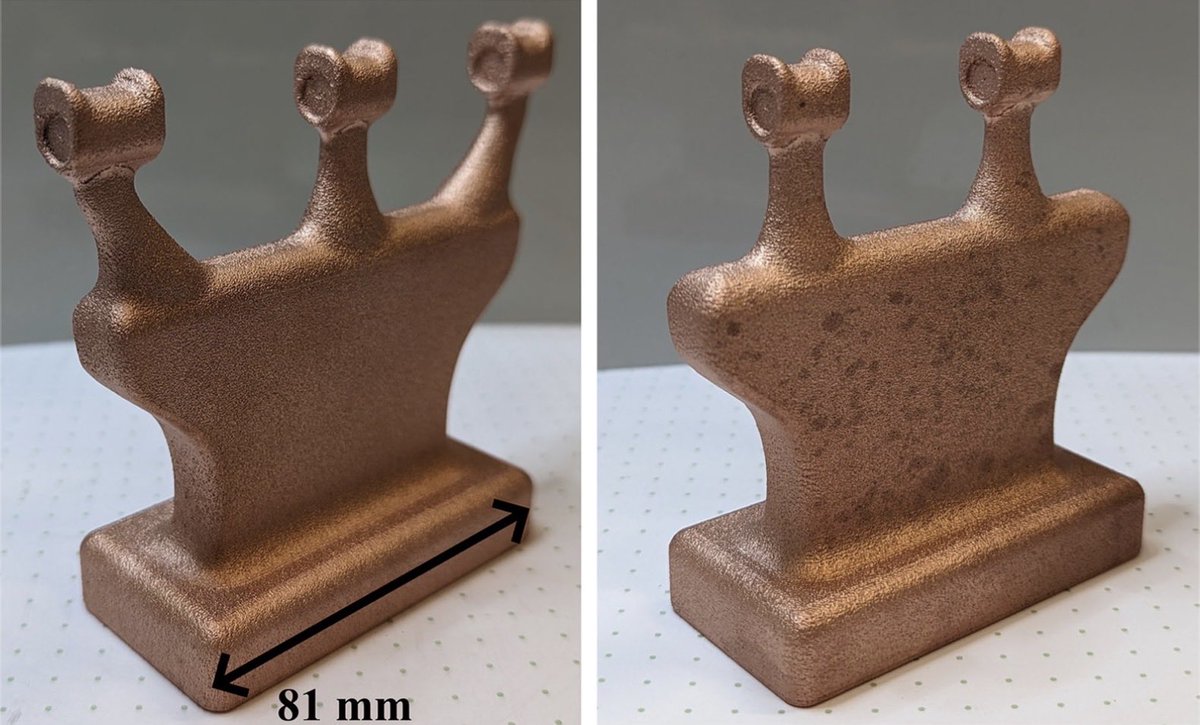
AM Copper IH-DTL Accelerates Protons. Powder-bed protons just rewrote the accelerator rulebook: pure-copper 3D printing delivered real beam acceleration at 68 MV/m peaks, making traditional machining look like medieval blacksmithing. From laser-fused powder to 817 keV proton energy gain in a 146 mm copper structure. 433 MHz IH-DTLs were printed, powered, and proven, no lathe required, no excuses left for the old guard. 25 kW stable, 0.83 MV effective, zero drama.
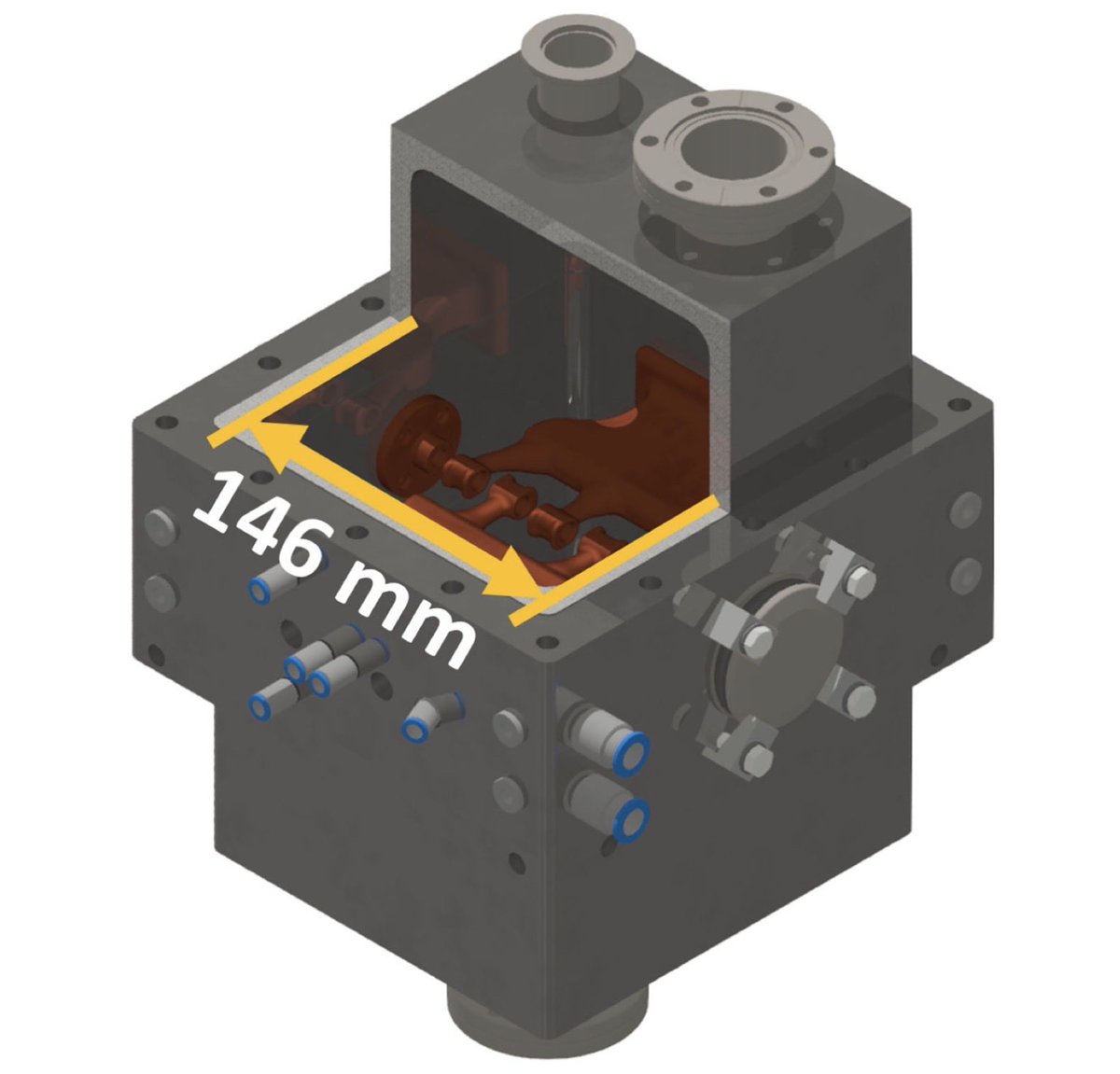
Additively manufactured pure-copper H-mode drift-tube linac structures now accelerate real protons at gradients and powers that rival or approach conventionally machined ones, while unlocking geometries and cooling paths once deemed impossible or ruinously expensive. In radiofrequency linear accelerators, the Interdigital H-mode Drift Tube Linac (IH-DTL) acts as an elegant electromagnetic orchestra. Alternating drift tubes create accelerating gaps where phased RF fields deliver synchronized kicks to proton bunches. Linac means linear accelerator; additive manufacturing (LPBF, laser powder bed fusion) builds by fusing copper powder layers from a digital blueprint instead of subtracting metal.
Hähnel, Ates, Kaiser, Ratzinger and their Frankfurt-led team report the first high-power beam test (May 2025) of a pure-copper AM IH-DTL cavity at 433.632 MHz. The compact structure (outer length ~206 mm, active beam path 146 mm) was designed for 1 MV acceleration of 1.4 MeV protons. In the Van de Graaff test stand, protons reached 2.212 MeV, yielding 0.83 MV effective voltage and 817 keV energy gain, slightly above simulations. Peak surface fields hit ~68 MV/m (3.3× Kilpatrick criterion) at 25 kW forward power and 2% duty cycle with no breakdown.
Measured performance aligned closely with design: unloaded Q ≈ 6836 (simulated 8603), effective shunt impedance ~186 MΩ·m (79% of simulated 234 MΩ·m). Shortfalls stem mainly from gasket contact resistances. Vacuum stayed in the mid-10^{-7} mbar range; beam spectra matched simulations. This is paradigm inversion, not incremental improvement, like 3D-printing a Formula 1 cylinder head with impossible internal cooling channels that outperforms hand-ported classics. Earlier 2022-era 3 GHz prototypes proved printability; this work adds decisive beam acceleration at practical power and gradient.
Limitations are addressable: joint resistances cap Q and impedance; future monolithic prints should reach 90% of theoretical. Surface finish and annealing continue to improve. Implications span hospital proton therapy, isotope production, neutron sources, and industrial uses. Higher frequencies shrink size; conformal cooling enables higher duty cycles.
The printed cavity accelerated real protons to design specs at high gradient, opening geometric freedom, speed, and economics previously unavailable. Conventional machining retains a place for the simple and ultra-large, but for complex, optimized, or rapid-iteration needs, the printer leads.
1
1
145

Jun 4
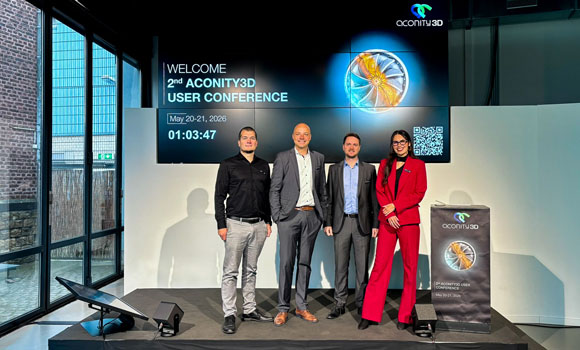
From May 19–21, 2026, Aconity3D's headquarters hosted AconityWEEK, bringing together users, partners, researchers and decision-makers from the global metal Additive Manufacturing community - metal-am.com/aconity3d-welco… #3Dprinting #LPBF #metalAM #Aconity3D
1
2
54