
Jun 11
Dock Service, Lsct: “Ricollocazione per tutti i lavoratori, nessun impatto occupazionale” ift.tt/sLZfWrd
1
52

17 Mar 2025
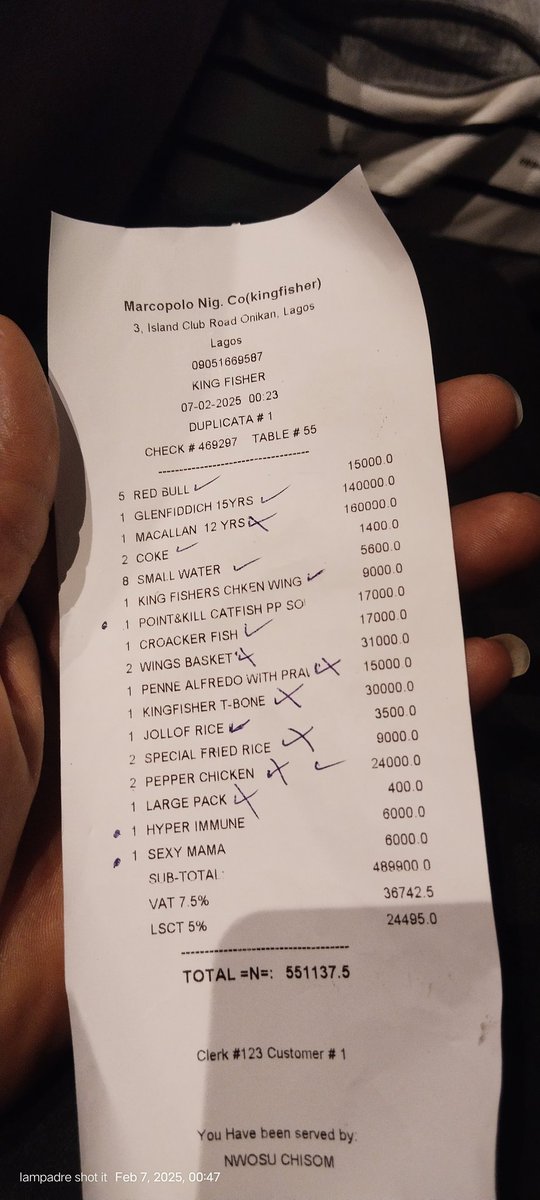
So now all the clubs she visited are no longer relevant? You don't know that even the bottle waters sold there are taxed abi?
This is Vat and LSCT standing at over 60k
All of una mind no go touch ground
4
38

10 Feb 2025
Pedreguer, castanyoles i fulles mortes 3cat.cat/3cat/pedreguer-cast… Som vinguts a ballar convocats pel mestre de cerimònies @MiquiPuig: #LagoLungo (#AlbertoMelloni) #ShakingThingsUp (@niminomusic) #QQQQ (@ela_minus) #pistadefusta #siguemfeliçosiballem #jotambéballopistadefusta #lsct
1
2
112

8 Feb 2025
Thanks Aitor. Can we use change in HR at a target workload similarly?
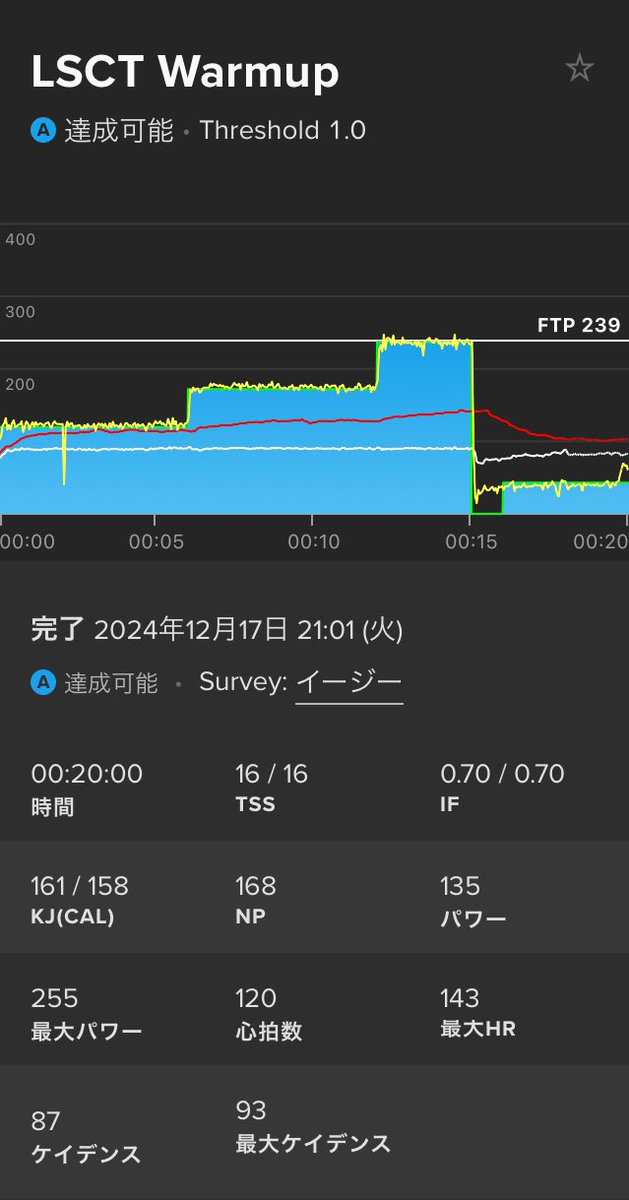
Basically like the Lamberts and Lambert submax cycle test LSCT
I find monitoring sensations & HR during a standardised warm-up very useful for estimating fatigue and regulating the day's session
2
205

15 Jan 2025
As part of Less Survivable Cancers Awareness Week Anna Jewell, Chair of LSCT, spoke with The Sun to discuss the 6 'most deadly' cancers including pancreatic cancer and the early signs and symptoms.
bit.ly/3DT0Yef
1
5
366

15 Jan 2025
Marking #LessSurvivableCancersAwarenessWeek another podcast recommendation, with @LessSurvivable Cancers Taskforce & @BrainTumourOrg
@ActionHeartburn @GutsCharityUK @LiverTrust @Roy_Castle_Lung @PancreaticCanUK
👉 buff.ly/4hi1u3A
#CloseTheDeadlyCancerGap #LSCT

2
9
165

13 Jan 2025
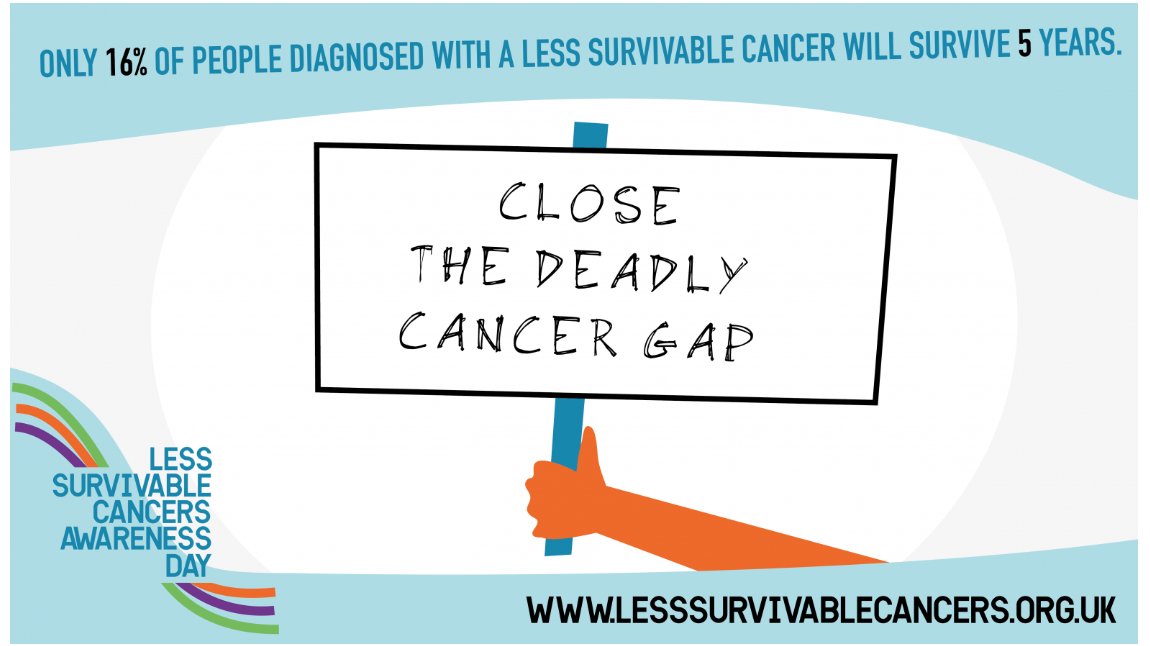
Today marks the beginning of Less Survivable Cancer Week. The LSCT use this day to highlight these 6 cancers, their signs and symptoms, and to raise awareness of the need for action on these cancers.
More information can be found here👇🏼lesssurvivablecancers.org.uk
3
5
127


16 Dec 2024
🚨 Our LinkedIn page is now live!
Give our page a follow for updates as we countdown to Less Survivable Cancers Awareness Week (13th-20th Jan) 2025 💫
linkedin.com/company/less-su…
#ClosingTheDeadlyCancerGap #LSCT #CancerAwareness

1
6
155


20 Nov 2024
Yesterday, as part of the @LessSurvivable Cancers Taskforce, we hosted a parliamentary drop-in at the House of Commons. The event brought together six charities to connect with MPs and amplify the voices of those affected by less survivable cancers. 💙 #LSCT
3
4
22
958

30 Oct 2024
In that case, I personally would prefer a step-protocol (eg. 5min steps) to better match physiological responses (with time delay) to external power. And maybe execute it at a submaximal intensity. Maybe something along the lines of the LSCT test: scienceandcycling.com/lsct/h…
1
1
109

27 Aug 2024
Bloquear es el acto más troll, cobarde y pelotudo que puede existir en cualquier red social.
Marca la intolerancia, hipocresía e inmadurez necesaria para dar respuesta a una serie de cuestionamientos y/o críticas respecto a un problema que afecta a un grupo social.
Que LSCT
2
3
26
2,047

5 Jul 2024
【イタリア港湾ストライキ実施・カナダ鉄道ストライキ再承認】
イタリア全国の港で大規模ストライキ実施
イタリアでは、港湾労働者の全国労働協約の更新交渉が不調に終わったことを受け2024年7月4日~5日にかけて、イタリア全土の港で大規模なストライキが実施されています。これにより、同国の全ての港の運営が中断する可能性があります。
ストライキの期間が通知されているイタリアのターミナル
・Genoa PSA Sech: 7月4日木曜日午前0時30分から7月6日土曜日午前0時30分まで
・Genoa PSA Prà: 7月4日木曜日午前0時01分から7月5日金曜日午後11時59分まで
・Livorno - Lorenzini Terminal: 7月4日木曜日午前1時30分から7月6日土曜日午前1時30分まで
・Venice: 7月4日木曜日午前0時00分から7月5日金曜日午後11時59分まで
・Trieste: 火曜日午前5時30分から土曜日午前7時00分まで
・RavennaLa: 7月4日木曜日午前0時00分から7月5日金曜日午後11時59分まで
・Spezia LSCT: 7月4日木曜日午前0時00分から7月5日金曜日午後11時59分まで
このストライキにより、輸送の中断、港の運営の混乱、コンテナの積み下ろしの遅延およびキャンセルが発生する見込みです。また、影響は他の港に影響する可能性もあります。
ジェノヴァ港では、建設工事のため、7月から8月にかけて鉄道交通が全面的または部分的に閉鎖される予定であり、イタリア国内へのトラック・ドレージ輸送への影響も懸念されます。
カナダ鉄道労働者のストライキ再承認
カナダ2大鉄道、カナディアン・ナショナル鉄道(CN)およびカナディアン・パシフィック・カンザスシティ・リミテッド(CPKC)の鉄道労働者10万人を代表する労働組合が、ストライキの再承認に向けた投票を行い労働者のほぼ99%が再承認に賛成票を投じました。
これにより直ちにストライキが実行されるわけではありませんが、労働交渉が決裂した場合、今後60日以内に労働組合がストライキを呼びかける権限を得たことになります。
カナダ2大鉄道のストライキは、カナダはもとより、北米全体のサプライチェーンに広範な影響を与える可能性があります。
11 Jun 2024

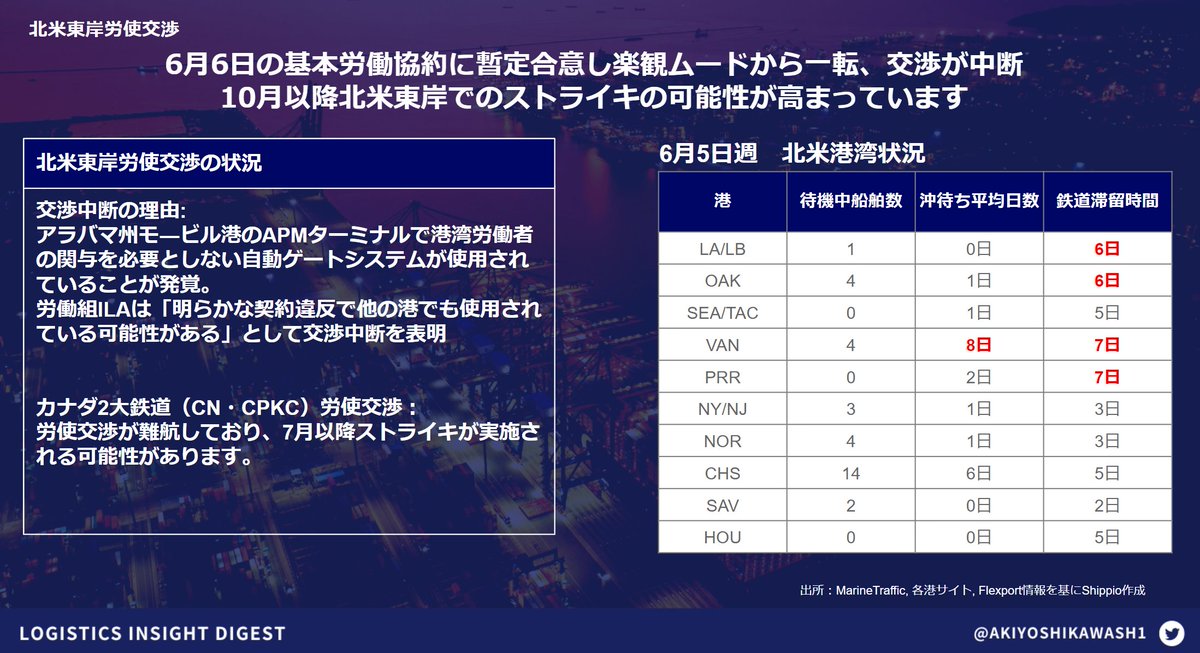
【北米・欧州主要港でのストライキ情報まとめ】
1. 北米東岸の港湾労使交渉の中断
アラバマ州モービル港のAPMターミナルで自動ゲートシステムが発見されたことをILA(国際港湾労働者協会)が問題視し、6月10日にこれが協約違反であると主張しました。その結果、交渉が中止され、10月以降の北米東岸でのストライキのリスクが高まっています。
2. カナダ2大鉄道労使交渉の難航
カナディアン・ナショナル鉄道(CN)およびカナディアン・パシフィック・カンザスシティ(CPKC)の労使交渉も難航しています。5月22日に予定されていたストライキは政府の介入により一時回避されましたが、組合側は依然としてストライキの可能性を示唆しており、予断を許さない状況です。
3. フランス主要港でのストライキ
労働組合は、フランス政府による年金改革に抗議し、ル・アーヴルやマルセイユ=フォスなどの港で、6月13日、21日、25日に24時間ストライキを予定しています。さらに、6月中の毎週3日間には4時間の仕事停止も行われます。既に多くの船舶の寄港がキャンセルまたは遅延しており、物流の大幅な混乱が予想されます。
4. ドイツ主要港でのストライキ
6月7日、ドイツのハンブルク港では労働組合Verdiとドイツ海港雇用者中央協会(ZDS)との交渉が妥結せず、コンテナターミナル労働者がストライキを開始しました。一時的にターミナルの作業が停止され、5隻の大型コンテナ船が取り残されましたが、深夜には荷役が再開されました。第3次労使交渉は6月17日と18日にハンブルクで行われる予定であり、今後の動向に注視する必要があります。
世界的なインフレにより賃上げを求めるストライキが各国で起こりやすくなっています。サプライチェーンが混乱している中でのストライキは事態をさらに悪化させる可能性があり今後の動向に注視していく必要があります。
サプライチェーンが不安定な時こそ、サプライチェーンの可視化ツールを導入するなどし、不足の事態が発生した際いち早く現状復帰させる力(サプライチェーンレジリエンス)を高めておくことが重要です。
19
54
8,329

18 Jun 2024
🐢 created tag issue when Yb were getting high luxury brand Lsct and after Lsct their were so many endorsement came but they don't showed any problem but suddenly when Yb is getting again a high luxury brand 🐢 started this issue.
Anyone can see what they are trying to do.
18 Jun 2024

This will be the last time we will make a statement about x and _
We are not here to follow what other kpop accounts use for their trending parties. We made a poll years ago and _ wins, and so we will respect that.
16
60
2,224

9 Jun 2024
I'd say “fair enough” some people don't ha e tge capacity to walk with someone inthsir sfruggles. O had ot even worse when i hadmy stroke. Lsct alone by a woman so it seems to be normal human behaviour 🤷♂️
1
2
123
24 May 2024
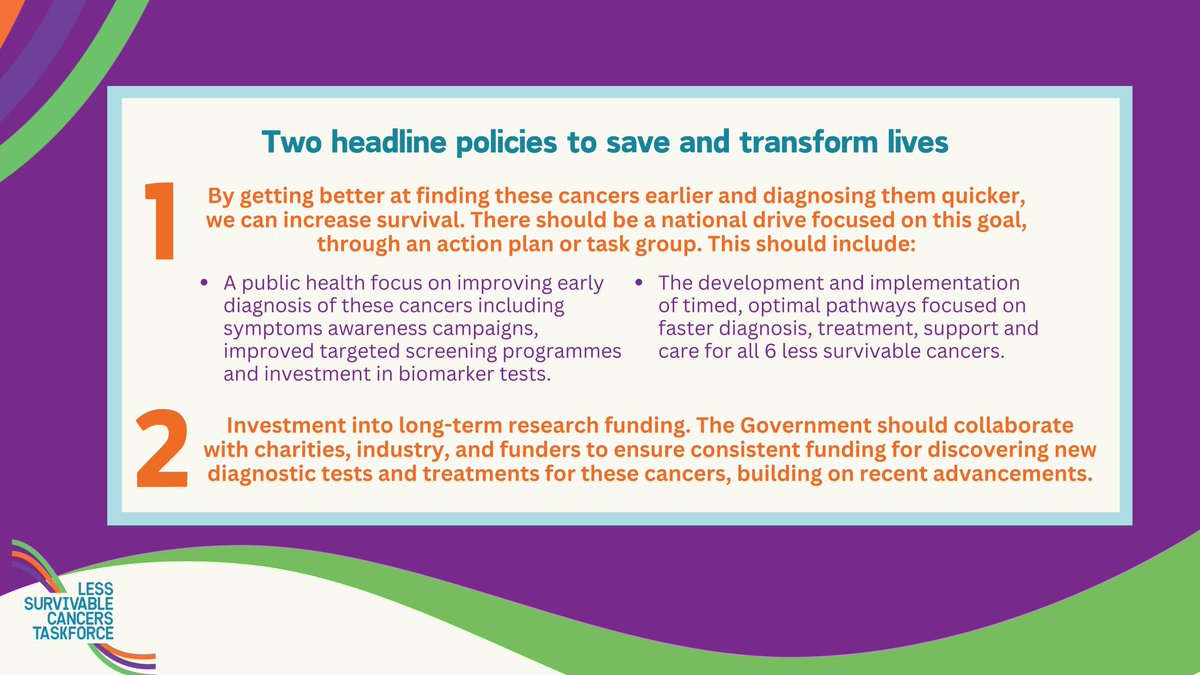
How do we get there? The LSCT is calling on parties to commit to doubling survival rates for these cancers, implemented through:
1⃣ A national drive in early and faster diagnosis
2⃣ Increased research funding
You can read our full calls here: lesssurvivablecancers.org.uk…
1
3
135

19 Apr 2024
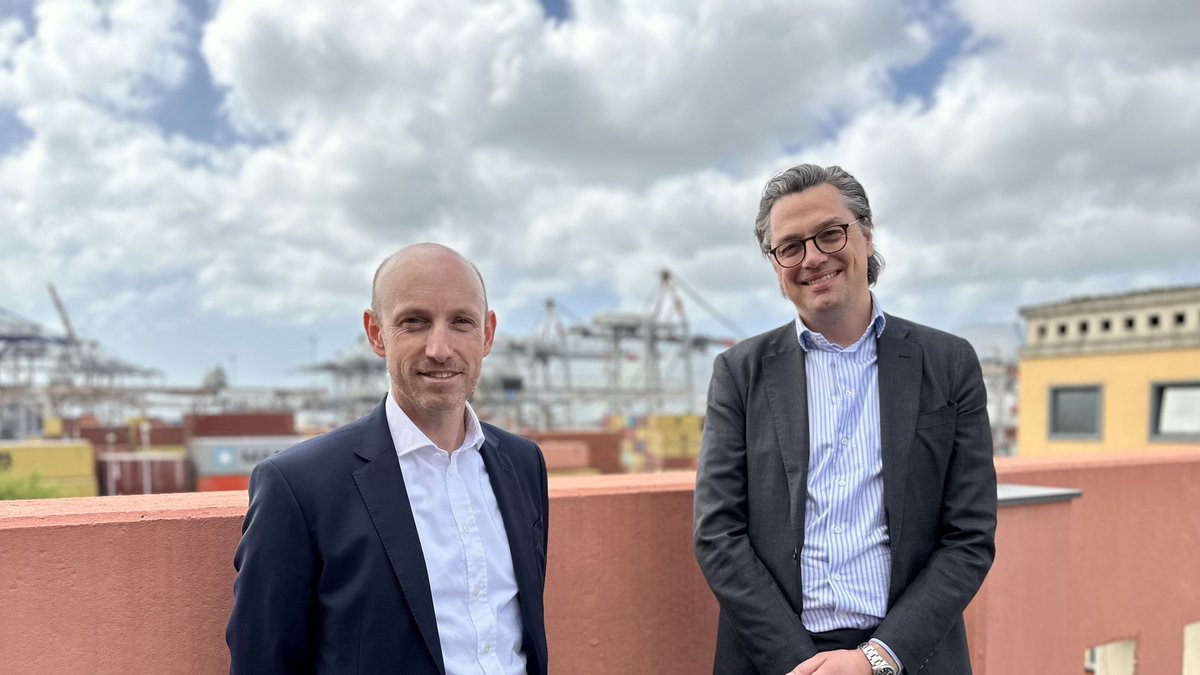
💰 Contship Italia Group assigns €50 million for upgrades in La Spezia Container Terminal (LSCT) to bolster its competitiveness tinyurl.com/4ab4pw76
#WorldCargoNews #containershipping #ports #investment
1
103


12 Feb 2024
#dcvax $nwbo #gbm
"Every year Less Survivable Cancers Awareness Day (LSCAD) occurs on 11 January. It provides a time to reflect on those who are affected by these six deadly cancers (brain, pancreatic, lung, stomach, oesophageal and liver) but it is also about action.
Unfortunately, we know that progress to improve outcomes in these cancers has been slower than desired over the past few decades. This must change.
We’re a founding member of the Less Survivable Cancers Taskforce (LSCT) which is made up of charities that represent the six cancer types. This year, the Taskforce held events in three parliaments (England, Scotland and Wales). These events highlighted the shocking five-year survival rates of these cancers across the UK compared to other countries of similar wealth and income levels"
UK has some of worst cancer survival rates in developed world, report says
Rates for lung, liver, brain, oesophageal, pancreatic and stomach cancers worse than in most comparable nations
Similarly, in England only 65% of people with a cancerous brain tumour are treated by surgery, radiotherapy and/or chemotherapy – the main potential treatments – in comparison with 85% of breast cancer patients.
Owen added “I was encouraged by the level of care and compassion that exists amongst MSPs seeking to improve diagnoses and outcomes for those with less survivable cancers, including brain tumours.”
Similarly, Annabel, our advocate in Wales, said, “It was really encouraging to see so many Members of the Senedd (MSs) at the drop-in event. By engaging politicians in this way, we were able to highlight the key issues in brain tumour care with real data and personal experiences.”
Debi, our advocate at Westminster, said “It was amazing meeting so many politicians, from all political parties, who were so interested in hearing about brain tumours. In particular, my personal experience when my daughter was diagnosed with an aggressive brain tumour in 2018 and her personal brave campaign to find a cure before her death aged 21. It was an incredibly emotional experience but also a positive one too.”
Sharing her reasons for speaking, Victoria said, “The event at Holyrood was a positive and inspiring evening. I chose to speak at the event to highlight my experience of having a family member diagnosed with a brain tumour and spoke about the barriers we faced before diagnosis.
“The aim was to highlight the challenges many patients with a less survivable cancer and their families encounter and to give ideas on how we can change this. I truly hope that such events catalyse positive changes and highlight the need for funding for education and research.”
Meanwhile, Heather said, “I hope that we can make positive steps toward continuing a dialogue with the government about what needs to change to improve brain tumour diagnosis experiences for future patients.”
theguardian.com/society/2024…
thebraintumourcharity.org/ne…
2
18
771