
May 21
#DubbingInKannada campaign is one of the biggest #LanguagePlanning campaigns in Kannada.
2
26
156
1,688

14 May 2025
14 May 2025

I agree with you, so, we'll oppose both.
I respect Kannadigas on this who even made BharatPe apologize. We will take a page from their book on this.
1
1
45

21 Apr 2025
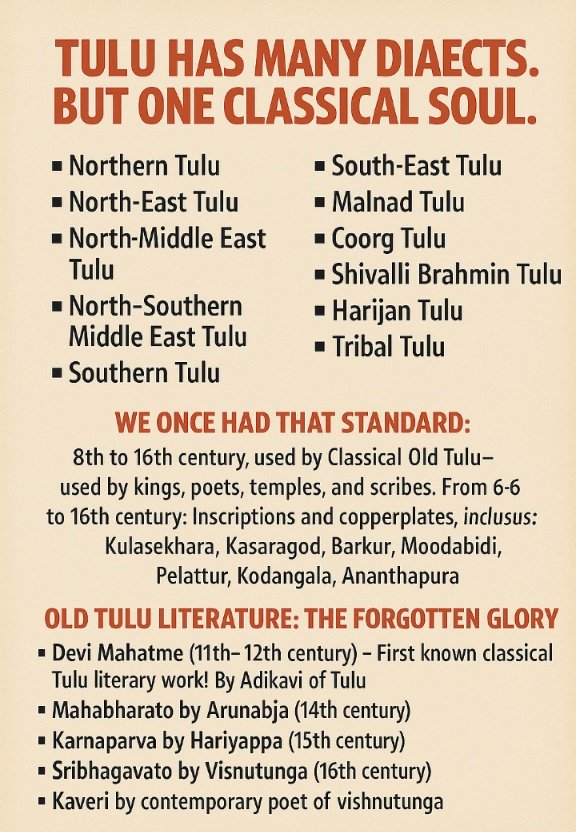
Tulu Has Many Dialects. But One Classical Soul.
Tulu is not one language—it is a world of voices.
Across Tulunadu and beyond, Tulu is spoken in a stunning variety of dialects:
Northern Tulu
North-East Tulu
North Middle East Tulu
North-Southern Middle East Tulu
Southern Tulu
South-West Tulu
South-East Tulu
Malnad Tulu
Coorg Tulu
Shivalli Brahmin Tulu
Harijan Tulu
Tribal Tulu
Each dialect is a unique treasure—shaped by landscape, caste, history, and livelihood.
But today, Tulu lacks one thing:
A standardized literary form that connects all its speakers.
---
We Once Had That Standard: Classical Old Tulu
From the 8th to 16th century, Tulu had an official, shared, and refined form—used by kings, poets, temples, and scribes. We find it in inscriptions and copperplates from:
Kulashekhara rule
Kasaragod temples
Barkur and Moodabidri courts
Pelattur, Kodangala, and Gosada villages
Ananthapura inscriptional archives and many more
This Classical Tulu unified people across Tulunadu, long before modern media existed.
---
Old Tulu Literature: The Forgotten Glory
Tulu’s classical literature proves its maturity and depth.
Devi Mahatme (11th–12th century)
The first known literary work in Tulu, written by the Adikavi (First Poet) of Tulu. A temple drama rich in poetics, devotion, and structure.
Mahabharato by Arunabja (14th century)
A powerful poetic retelling with a distinct Tulu voice.
Karnaparva by Hariyappa (15th century)
A classical rendering of a Mahabharata episode, showing literary refinement.
Sribhagavato by Visnutunga (16th century)
A Tulu Vaishnava classic combining deep devotion and ornate poetry.
Kaveri (contemporary of Visnutunga)
A lesser-known but profound work that uses elevated Tulu expressions like Pulanja (wisdom), Ast (chapter), Varaṇo (elephant), etc.
This literary tradition shows that Tulu had grammar, metaphor, structure, and status.
---
But That Standard Is Now Lost
Today:
Tulu films mostly reflect Kudla dialect, unintentionally leaving others behind.
Tulu journalism struggles without linguistic consistency.
Tulu education has no unified grammar or textbook model.
AI, translations, and keyboards can’t work efficiently without standard input.
Recognition demands structure.
---
Time to Revive Classical Tulu as Standard Tulu
This is not about killing dialects.
This is about uniting them under a respectful literary umbrella—a standardized Tulu rooted in its own ancient greatness.
Just like:
Tamil balances spoken and classical
Malayalam reclaims Sanskritized literary legacy
Hindi has Khariboli as a base
Tulu too must:
Undergo Language Planning:
1. Corpus Planning — Rebuild script, grammar, vocabulary from classical models
2. Status Planning — Elevate Tulu in media, education, official use
3. Acquisition Planning — Teach a common standard in schools, apps, and journalism
---
Let This Be Our Call
Let the dialects live—as vibrant speech.
Let Classical Tulu rise again—as our literary and administrative spine.
Let every Tuluva—from coastal to Coorg, from forest to folk, from market to monastery—feel included in a shared Tulu identity.
Let us build a language that our poets once wrote in, our kings once ruled with, and our temples once chanted in.
---
Tulunadu Has Many Tongues. But One Literary Heart.
That heart is Classical Tulu.
Let it beat again. In schools. In media. In apps. In cinema. In law. In the world.
Let this post be the beginning of that revival.
#Tulu #ClassicalTulu #StandardTulu #LanguagePlanning #Tulunadu #ReviveTulu #TulutoclassicalLanguage
1
19
53
1,806

5 Apr 2025
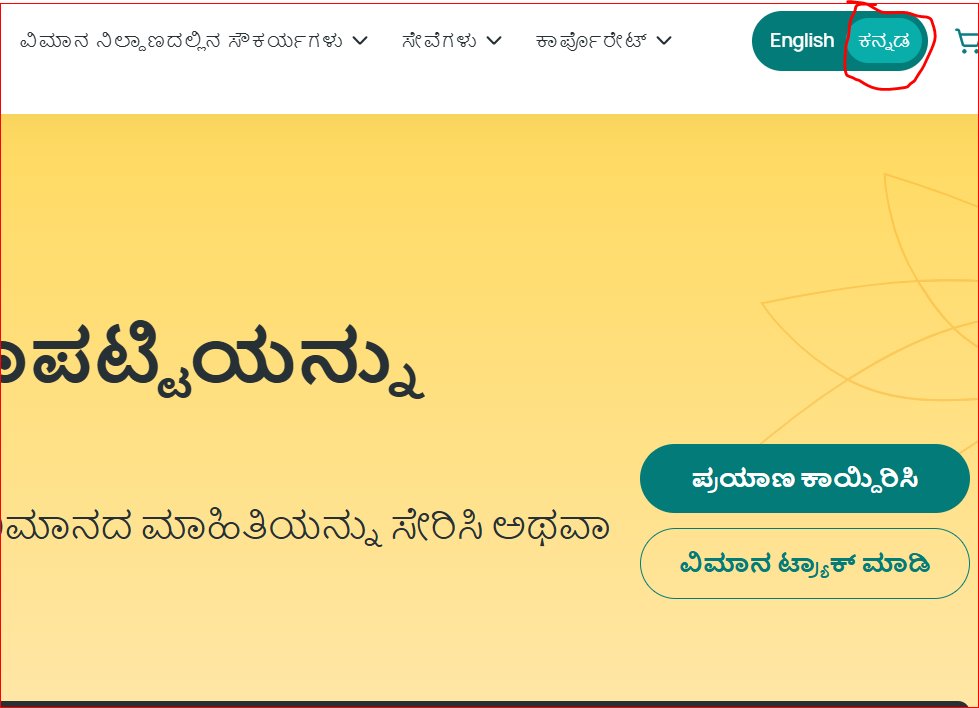
ಕನ್ನಡ ಪದಕಟ್ಟಣೆ ಹೆಚ್ಚಬೇಕಿದೆ
ನನ್ನಂತವರು kannada-ಇಂಗ್ಲಿಷ್ ನಡುವೆ stuck ಆಗಿದ್ದೇವೆ ಅಂತಲೇ ಹೇಳಬಹುದು
ಇಂಗ್ಲಿಷ್ ಗಟ್ಟಿಗೊಳಿಸಲು ತಾಯಿನುಡಿ ಯಲ್ಲಿ ಕಲಿಕೆ ಗಟ್ಟಿಗೊಳಿಸಿಕೊಳ್ಳಬೇಕು
Aadre ಕನ್ನಡ ದಲ್ಲಿ ಕಲಿಕೆ ಗಟ್ಟಿಗೊಳಿಸಿಕೊಳ್ಳುವ ಅಂದ್ರೆ ಬೇಡದ ಸಂಸ್ಕೃತ ಪದಗಳ ಗೋಳು ಜಾಸ್ತಿ ಇದೆ
#LanguagePlanning
1
2
11
150

1 Apr 2025
2
3
186

12 Jan 2025
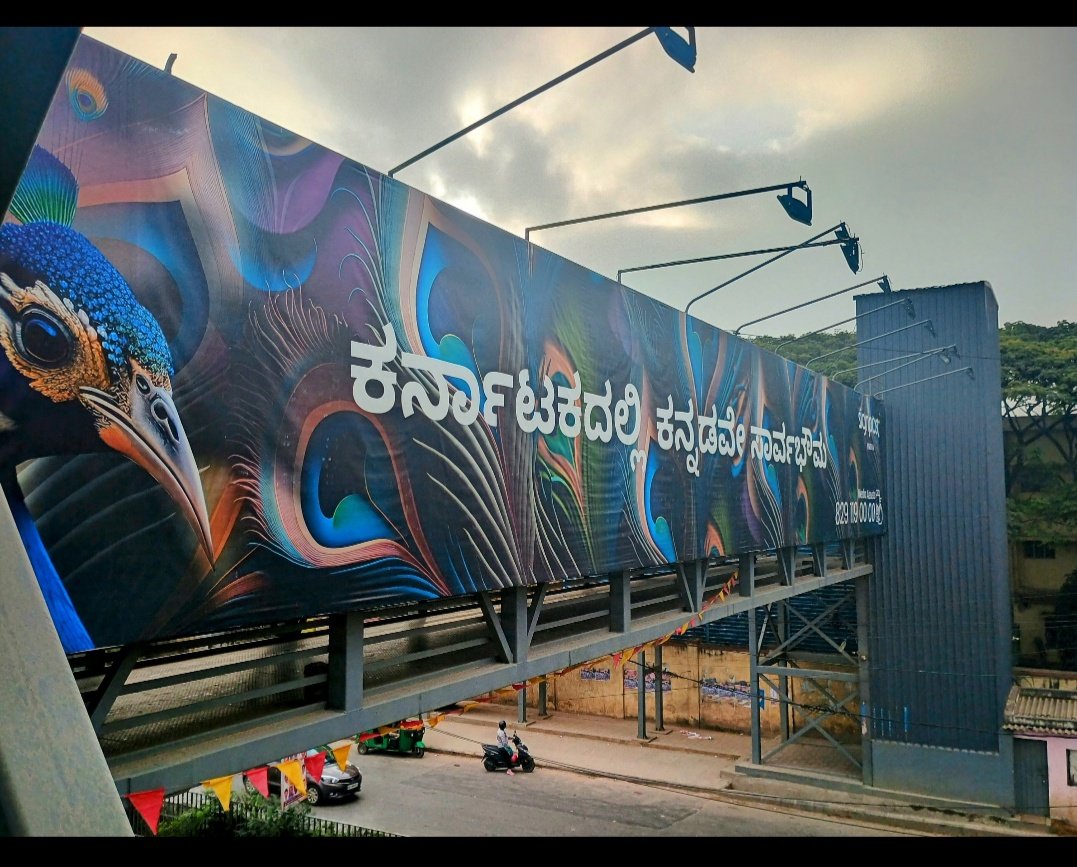
Include Kannada subject PU marks in CET and NEET rankings to encourage everyone to learn Kannada. It's a straightforward solution.
#Kannada
#LanguagePlanning
📍 Baiyappanahalli Metro Station.
13
66
740
13,580

13 Dec 2024
13 Dec 2024

ಬೆಳಗಾವಿಯಿಂದ ಬೆಂಗಳೂರಿಗೆ ಹೋಗುವ ಇಂಡಿಗೊ ವಿಮಾನದಲ್ಲಿ ಕನ್ನಡದಲ್ಲೆ ಮಾತನಾಡಿದ ನಮ್ಮ ಬೈಲಹೊಂಗಲಿನ ಫೈಲಟ್ ಅಕ್ಷಯ ಪಾಟೀಲ್ ಅವರು 😍😍
ಎಷ್ಟ್ ಭಾರಿ ಮಾತಾಡಿದಾರು ನೋಡ್ರಿ 😍💛❤
#belagavika #belagavi
3
41
12 Nov 2024
*Tulu Language Planning: A Comprehensive Approach*
The Tulu language, spoken by approximately 2-3 million people in India's coastal regions of Karnataka and Kerala, is a Dravidian language with a rich cultural heritage. To promote and preserve Tulu, a comprehensive language planning strategy is essential.
*Objectives:*
1. Preserve Tulu's linguistic and cultural identity.
2. Promote Tulu as a viable medium for communication.
3. Enhance Tulu's official status.
4. Develop Tulu language education.
5. Foster literary and cultural activities.
*Short-term goals (5 years):*
1. *Standardize Tulu script*: Finalize and popularize a unified script.
2. *Language documentation*: Record and analyze Tulu dialects, vocabulary, and grammar.
3. *Tulu language courses*: Develop and implement courses in schools, colleges, and online platforms.
4. *Literary publications*: Encourage Tulu literature, including novels, poetry, and short stories.
5. *Cultural events*: Organize festivals, workshops, and seminars showcasing Tulu culture.
*Mid-term goals (10 years):*
1. *Official language status*: Advocate for Tulu's recognition as an official language in Karnataka and Kerala.
2. *Tulu language media*: Establish Tulu-language newspapers, radio, and television channels.
3. *Language technology*: Develop Tulu language fonts, keyboards, and speech recognition software.
4. *Education and research*: Establish Tulu language departments in universities.
5. *Community engagement*: Foster community involvement through language clubs and cultural organizations.
*Long-term goals (20 years):*
1. *Tulu language academy*: Establish a centralized institution for language planning, research, and promotion.
2. *Language preservation*: Document and preserve endangered Tulu dialects.
3. *International recognition*: Promote Tulu globally, seeking recognition from linguistic and cultural organizations.
4. *Tulu-language cinema*: Encourage film production in Tulu.
5. *Economic empowerment*: Utilize Tulu language skills for economic development.
*Implementation strategies:*
1. Collaborate with government agencies, educational institutions, and community organizations.
2. Engage language experts, scholars, and cultural leaders.
3. Conduct workshops, seminars, and conferences.
4. Utilize social media and digital platforms.
5. Develop public-private partnerships.
*Challenges:*
1. Competition from dominant languages (Kannada, Malayalam).
2. Limited resources and infrastructure.
3. Brain drain and urbanization.
4. Preserving cultural identity amidst globalization.
*Conclusion:*
Tulu language planning requires a multi-faceted approach, addressing linguistic, cultural, educational, and economic aspects. Collective efforts from governments, organizations, and individuals will ensure the preservation and promotion of Tulu, enriching India's linguistic diversity.
*Call to action:*
Join hands to:
1. Support Tulu language initiatives.
2. Learn and teach Tulu.
3. Promote Tulu culture and literature.
4. Advocate for official language status.
Together, let's empower the Tulu language and community!
#TuluLanguage #LanguagePlanning #CulturalPreservation #LinguisticDiversity #India
@CaptBrijesh
@KotasBJP @siddaramaiah @SahityaTulu @PMadhwaraj
8
15
50
7,433

27 Oct 2024
Mother tongue-based society is the way to uplift the people. Few can temporarily gain from foreign languages, but the majority will fail, and in turn, their society will fail to progress. Kannada for Kannadigas is the base for progress. Rest, all are temporary. #languageplanning
3
4
223

18 Oct 2024
Download google crowdsource app. There you can translations, identifications etc.
This help @GoogleIndia @Google to make Kannada better.
@hegde_vikas can give you more information.
#languageplanning
1
5
91


27 Jun 2024
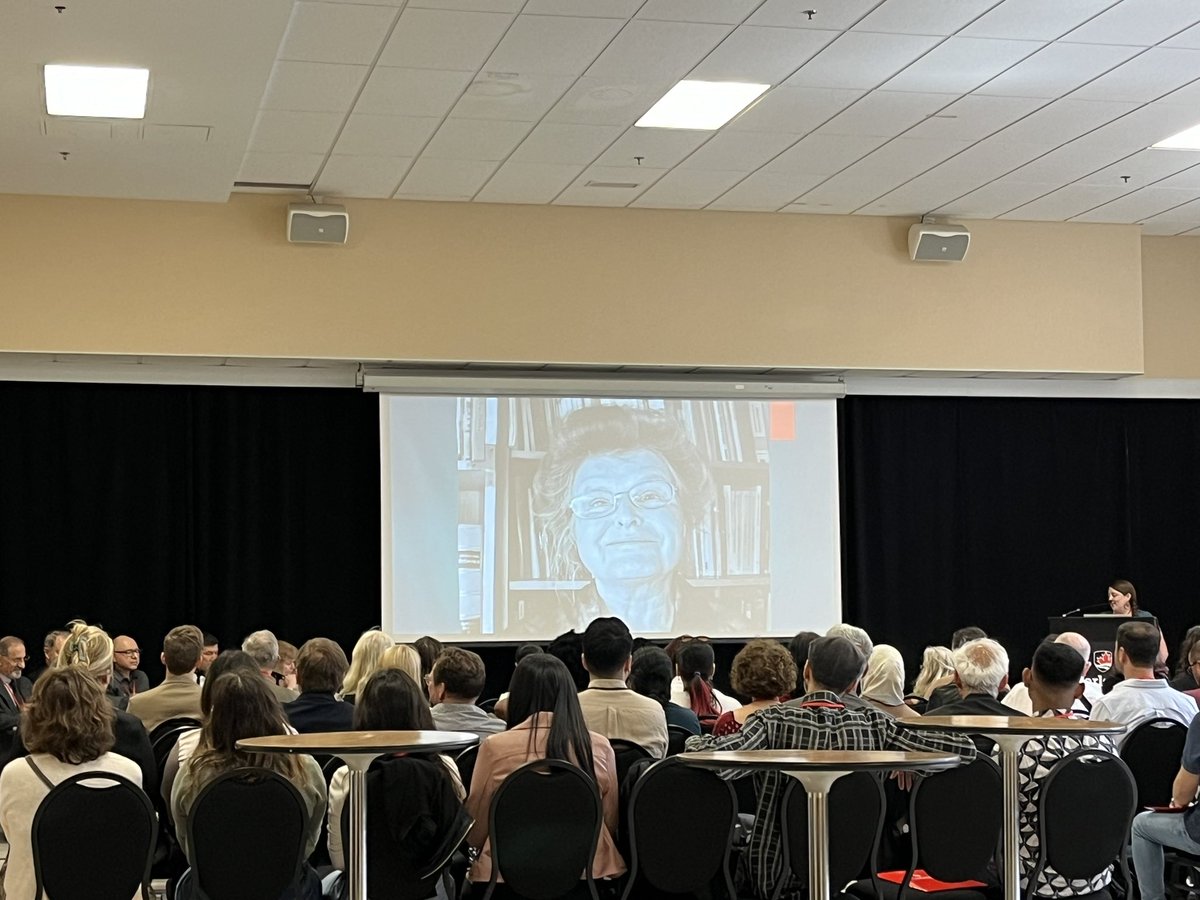
Kicking off the @LPPConference with a round table in honour of the life & work of Tove Skutnabb-Kangas #LPP #LanguagePolicy #LanguagePlanning #MinorityLanguages #HeritageLanguages #LanguageRights
2
18
510
4 Jun 2024
What a relief!
#Federalism #Centralisation #HindiHegemony #Demography
#Migration #LanguageRights
#LanguagePlanning #RegionalParties
#MisuseOfAgencies #MediaBuyout
#CompromisedInstitutions
3
23
100
2,520
30 May 2024
⏰ There are only a few hours left to submit your abstract for this conference on policy for #MinorityLanguages and #Multilingualism, which will take place in lovely Leeuwarden this November! #CfP #LanguagePolicy #LanguagePlanning #LPP @MercatorCentre @FryskeAkademy
15 May 2024

📢 𝗗𝗲𝗮𝗱𝗹𝗶𝗻𝗲 𝗲𝘅𝘁𝗲𝗻𝗱𝗲𝗱 𝘁𝗼 𝟯𝟬 𝗠𝗮𝘆 𝟮𝟬𝟮𝟰!
Deadline Call for Papers for 1st Mercator Int. Conference extended to 30 May 2024! Join us in #Leeuwarden (NL) on 7-8 Nov. 2024!
ℹ️ mercator-research.eu/en/conf…
#MinorityLanguages #multilingualism #LanguagePolicy
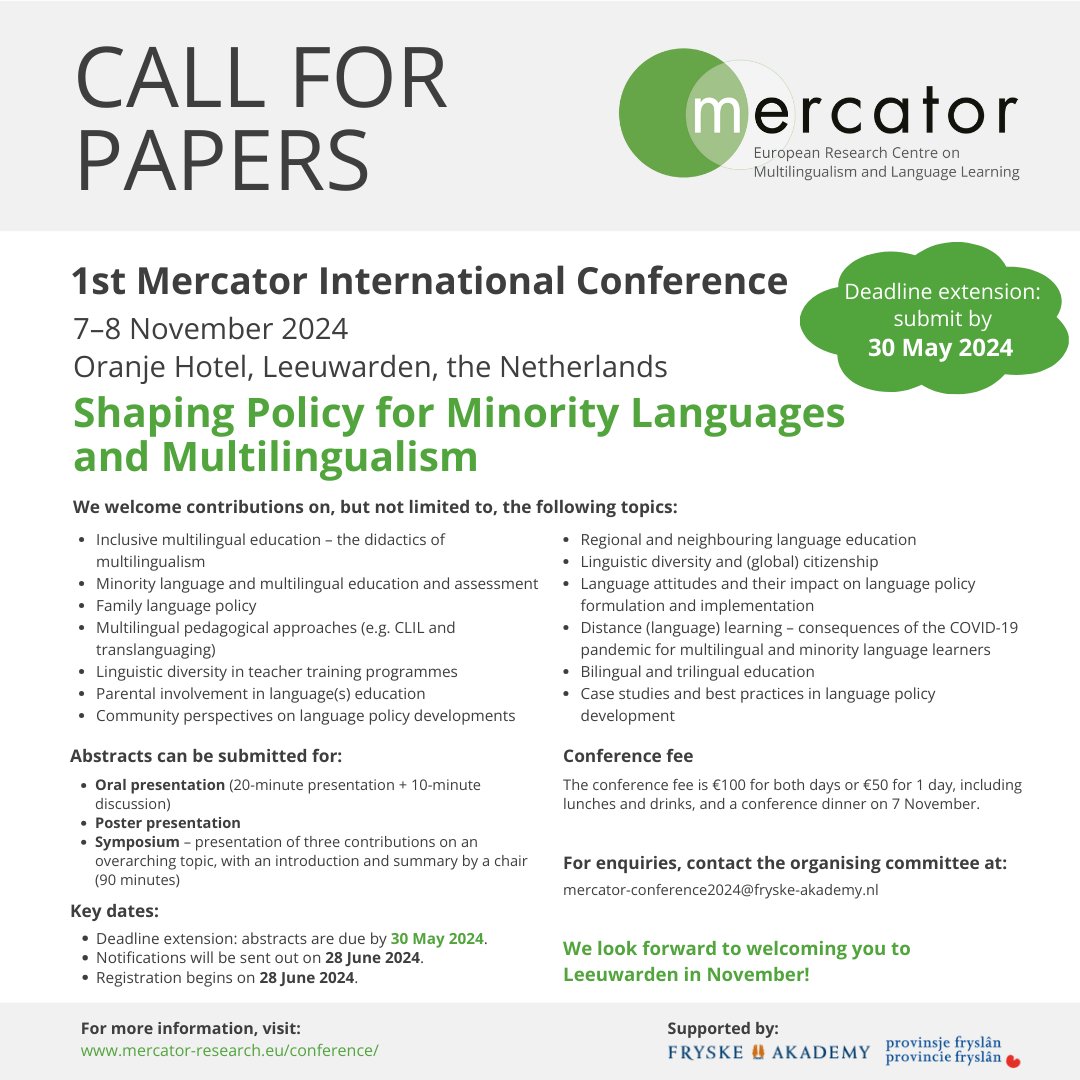
ALT The Call for Papers for the upcoming 1st Mercator International Conference has been extended to 30 May 2024! The theme of this conference is Shaping Policy for Minority Languages and Multilingualism.
2
525

10 May 2024
"However, I feel that we are marginalised and that #languageplanning is not counted as an important area of Irish language life. I feel that the language planning officers do not have an appropriate degree or status and that we are not given enough support or the process itself.
1
1
171
10 May 2024
#LanguagePlanning Officer for Galway City East #Gaeltacht said that the language planning process would be "very successful" if "the right support" were provided.
1
1
1
126
10 May 2024
The #languageplanning officer wears "many caps".
"You must be a manager, accountant, facilitator, translator, contact point, tutor, community development officer, marketing and publicity officer, linguist, sociolinguist, psychologist...
1
1
2
72

17 Apr 2024
Here's one for our #LanguagePlanning & #LanguagePolicy students!
In this post for @CambridgeUP, Prof. Katherine S. Flowers talks about her life working in #LanguagePolicy & how her ideas about this topic have changed throughout this work: tinyurl.com/5ahfey63
#Linguistics
1
2
168
3 Apr 2024
#Alabama only has a few hundred native speakers but researchers like Ava E. Silva are trying to raise awareness of it in order to preserve it.
This article might be of interesting to our #LanguagePlanning & #LanguagePolicy students: tinyurl.com/3w3yhykf
1
2
145

18 Jan 2024
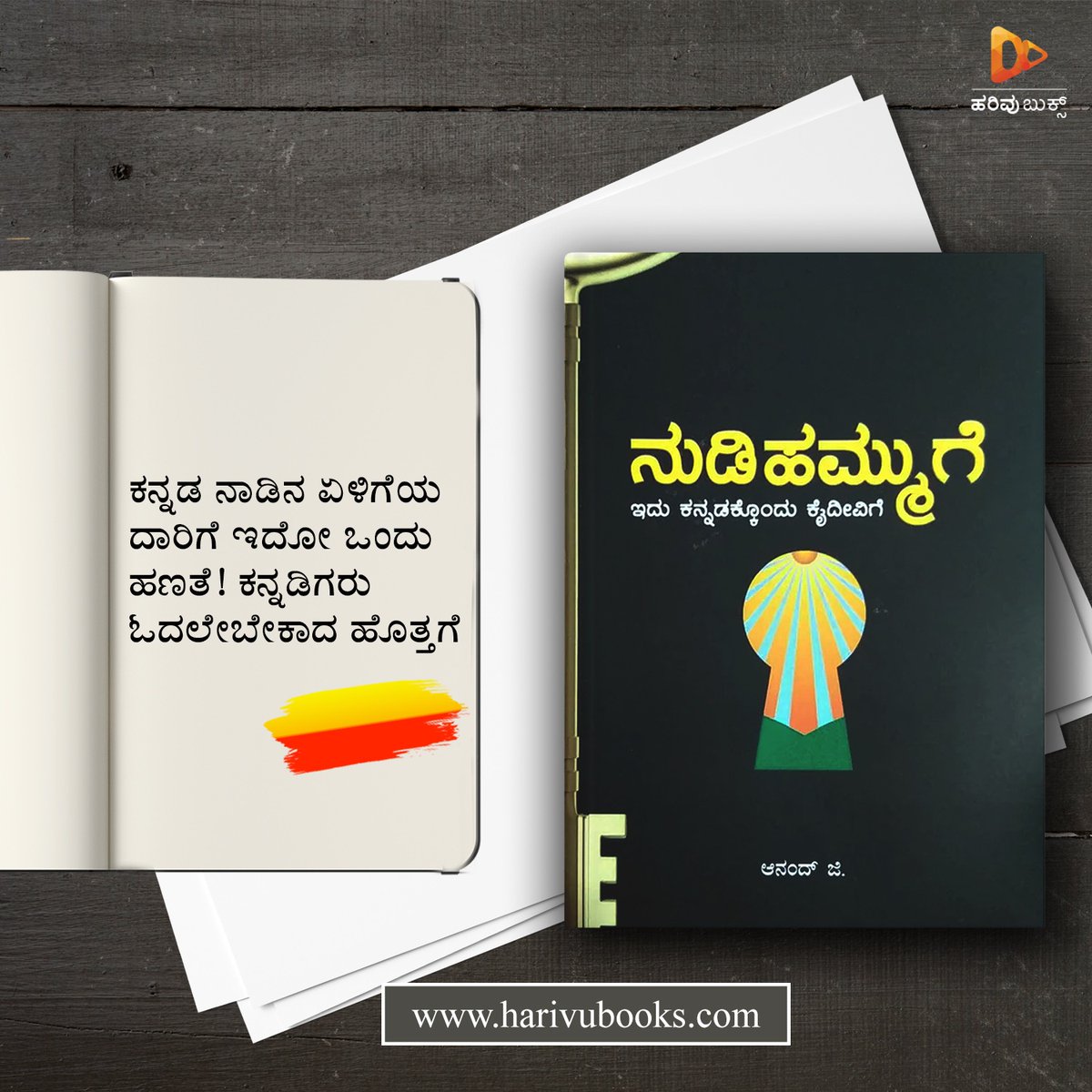
ಕನ್ನಡಿಗರು ಓದಲೇಬೇಕಾದ ಹೊತ್ತಗೆ ಆನಂದ್ ಜಿ. ಅವರ “ನುಡಿಹಮ್ಮುಗೆ”ಯನ್ನು ಕೊಳ್ಳಲು ಭೇಟಿ ನೀಡಿ 👇🏻
harivubooks.com/products/nud…
#kannada #languageplanning #CaseStudies #nudihammuge #AnandG #harivubooks
8
13
16
657