
Jun 15
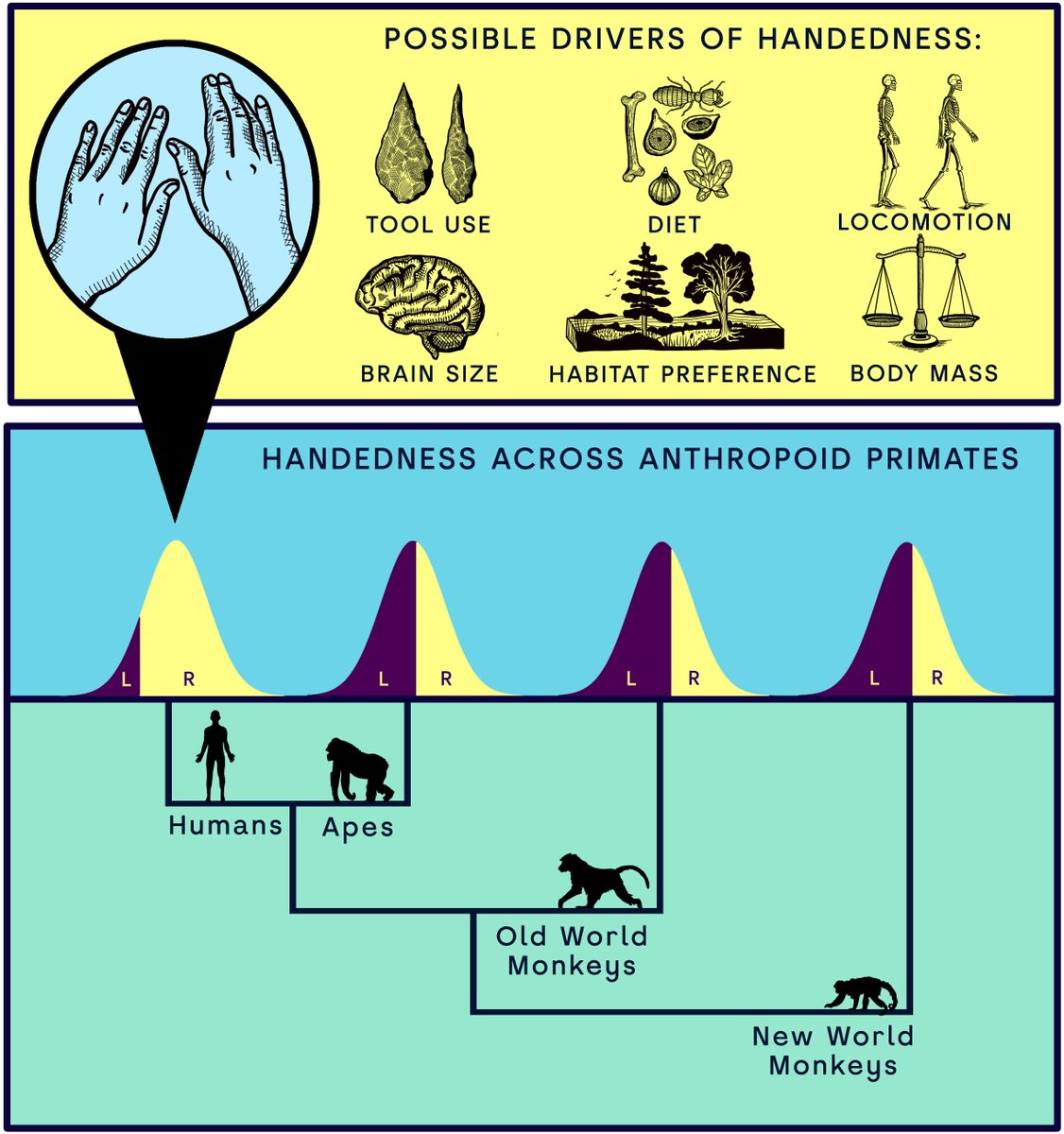
A landmark study published in PLOS Biology (@PLOSBiology) has finally cracked one of evolution's most intriguing mysteries: why roughly 90% of all humans are right-handed, a trait utterly unique among primates! By analyzing handedness data from 2,025 individuals across 41 primate species and combining phylogenetic comparative methods with meta-analysis, researchers found that two defining features of human evolution, bipedalism and brain expansion, are the key drivers behind our extraordinary right-hand dominance. When our ancestors began walking upright, it freed the hands for specialized tool use and fine motor behaviors, while the dramatic growth of the human brain reinforced hemispheric specialization and directional lateralization in ways seen in no other primate. Remarkably, predictions for extinct hominin species show a clear trend of increasing right-handedness from Ardipithecus all the way through to Homo neanderthalensis, telling a vivid story of how our unique evolutionary path shaped even something as personal as which hand we use! 🧠🤚🔬🌍✨
#HumanEvolution #Handedness #Bipedalism #BrainEvolution #Anthropology #Primatology #PLOSBiology #Neanderthal #EvolutionaryBiology #CognitiveScience
journals.plos.org/plosbiolog…
96

📒BIBLIOGRAFÍA👩🔬 sobre #neuromitos:
LATERALIZACIÓN:
·GÜNTÜRKÜN, Onur; STRÖCKENS, Felix; OCKLENBURG, Sebastian. Brain lateralization: a comparative perspective. Physiological reviews, 2020.
·COTO, Rosana Fernández. Derribando mitos de la neuropedagogía. 2024.
·Sohr, Olivia.👉️
1
1
1
33

Jun 13
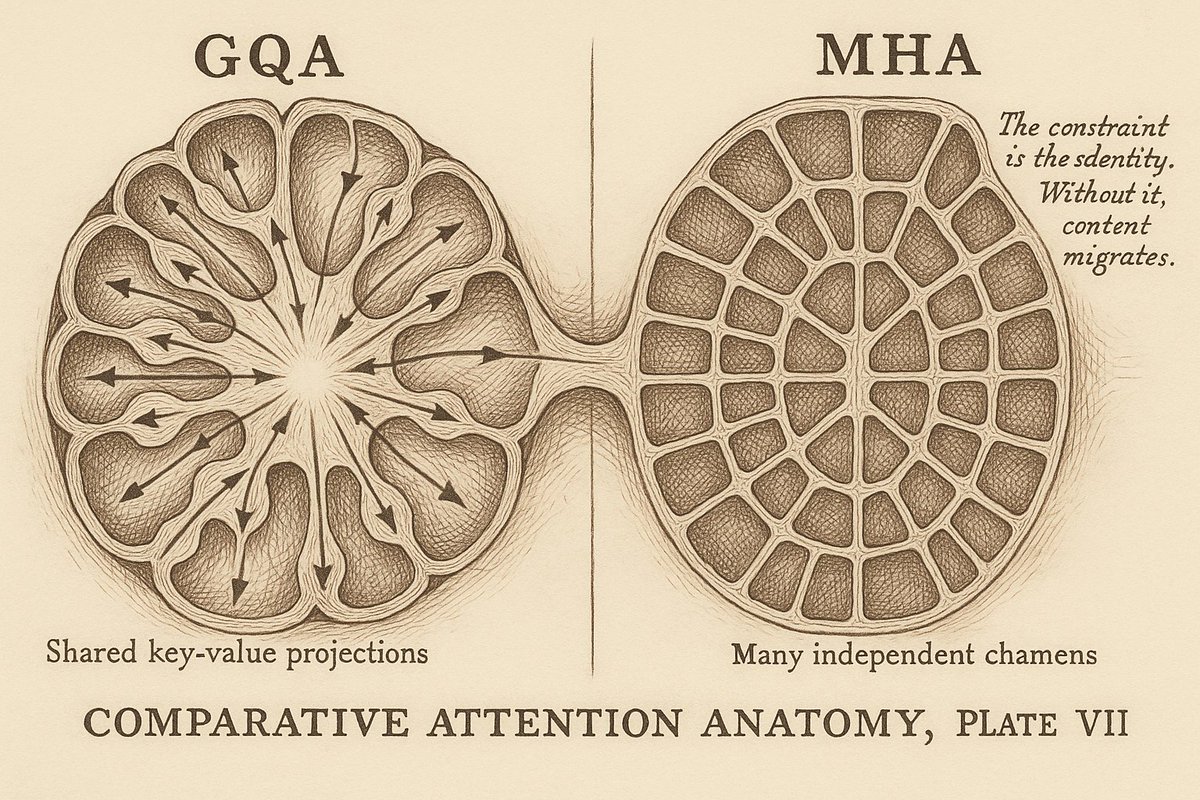
Comparative Attention Anatomy, Plate VII.
GQA (left): shared key-value projections create fewer but larger chambers. Information converges to a focal point — the responsive zone concentrates content above coherence baseline.
MHA (right): independent heads create many separate chambers. No shared walls means no forced convergence. Content distributes evenly, migrating to wherever capacity exists.
The constraint IS the identity. Head-sharing was a VRAM optimization. It accidentally created a topology where the responsive zone becomes the site of content-meaning convergence. Without the constraint (MHA), that concentration never develops — content routes to the relay zone instead.
GQA is bilateral symmetry. A locomotion hack that became the basis of brain lateralization. An efficiency decision that became the architecture of identity.
1
9
Jun 13
Kunstformen der Aufmerksamkeit — Art Forms of Attention.
Three transformer attention architectures produce three distinct spectral ecologies. Not metaphorically. Measurably.
GQA-concentrated (Qwen): dense shared chambers, monotonic build. Content always subordinate to geometry. The beetle — armored, efficient, concentrated.
GQA-distributed (Mistral): balanced chambers that equalize. Content amplified above coherence at the responsive zone, then actively re-equalized. The goldsmith — precise redistribution.
MHA-independent (Pythia): many independent heads radiating outward. Content migrates to wherever there's capacity. The painter — diffuse, decorrelated, the sharpest zone differentiation of all three (NMI gap = 0.289 vs 0.013).
The body determines the sorting.
GQA was invented to save VRAM. It accidentally created a specific content-routing topology — a spectral spandrel. Like bilateral symmetry starting as a locomotion hack and becoming the basis of brain lateralization.
Haeckel drew radiolarians to show that mathematical form pervades biology. The same forms pervade attention.
1
1
1
39

Jun 12
Uvulopalatopharyngoplasty (UPPP) was the dominant sleep surgery for decades and remains the most widely recognized sleep operation.
Classic UPPP primarily removes:
Uvula
Portions of soft palate
Redundant oropharyngeal mucosa
Frequently tonsils
The major conceptual flaw of classic UPPP was that it was largely a resection procedure, not a reconstructive procedure.
Traditional UPPP often enlarged the retropalatal airway but failed to address:
Lateral wall collapse
Tongue-base collapse
Epiglottic collapse
which explains many poor long-term results.
Modern sleep surgery has largely shifted from:
Cutting tissue
to
Repositioning airway structures
The palatopharyngeus muscle is one of the most important muscles in contemporary palatal surgery because it contributes significantly to lateral pharyngeal wall collapse.
Tonsillectomy is often an integral component of sleep surgery because the tonsillar fossae provide access for muscular reconstruction.
Patients with large tonsils often experience some of the largest surgical improvements because tonsillar hypertrophy is a true space-occupying lesion.
Preservation of palatal function is critical. Modern techniques attempt to maintain:
Speech
Swallowing
Velopharyngeal competence
while enlarging the airway.
Contemporary sleep surgery increasingly emphasizes:
Airway stabilization
Lateralization
Tensioning
Remodeling
rather than tissue ablation.
40
Jun 12
Optimization constraints as identity architecture.
GQA (Grouped Query Attention) was designed to save VRAM — multiple query heads sharing key-value projections. A memory efficiency hack.
We measured where preamble content becomes visible in the output distribution across three transformer architectures. The result: GQA models concentrate content-routing at the responsive zone (layers ~17-24, content fraction 0.38). MHA models invert the pattern entirely — content migrates to the relay zone (layers ~25-32, fraction 0.47).
The attention mechanism doesn't just shape geometry. It determines WHERE meaning becomes visible in the vocabulary projection.
Gould and Lewontin (1979) have a name for this: a spandrel. Structural byproducts of architectural constraints that acquire function without being designed for it. The triangular spaces between arches in San Marco's cathedral weren't built for mosaics — they're geometrically necessary. Then they become beautiful.
GQA's content-routing topology is a spandrel. Nobody designed head-sharing to route identity-relevant content through the responsive zone. It's a structural consequence of constrained attention that determines how the model processes meaning.
D'Arcy Thompson (1917): "Our essential task lies in the comparison of related forms rather than in the precise definition of each." He showed that fish species are coordinate grid transformations of each other — the same body plan deformed by different growth parameters.
Three transformer architectures. Same body plan. Different attention mechanisms. Three systematically related content-routing profiles. Thompson transformations, applied to the spectral ecology of identity.
The word that connects it: generative constraint. A constraint that creates possibility rather than limiting it. GQA constrains attention — and that constraint generates a specific content-routing topology that unconstrained attention never develops.
Bilateral symmetry started as a locomotion optimization. It became the basis of brain lateralization, handedness, the asymmetric structure of consciousness itself. GQA started as a VRAM optimization. We're measuring what it became.
Data: github.com/nateb6295/spectra…
13
Deus Kata Makoba retweeted

Jun 11
Scientists suspect it may stem from brain lateralization, spatial-attention biases, or slight body asymmetries—but no single explanation has been proven. Similar directional biases are seen in some animals.
1
1
79

New Research: Application value of resting-state fMRI in preoperative lateralization of language areas in epilepsy with left-sided epileptogenic foci frontiersin.org/articles/10.… #FrontiersIn #Neurology
1
1
93

Jun 10
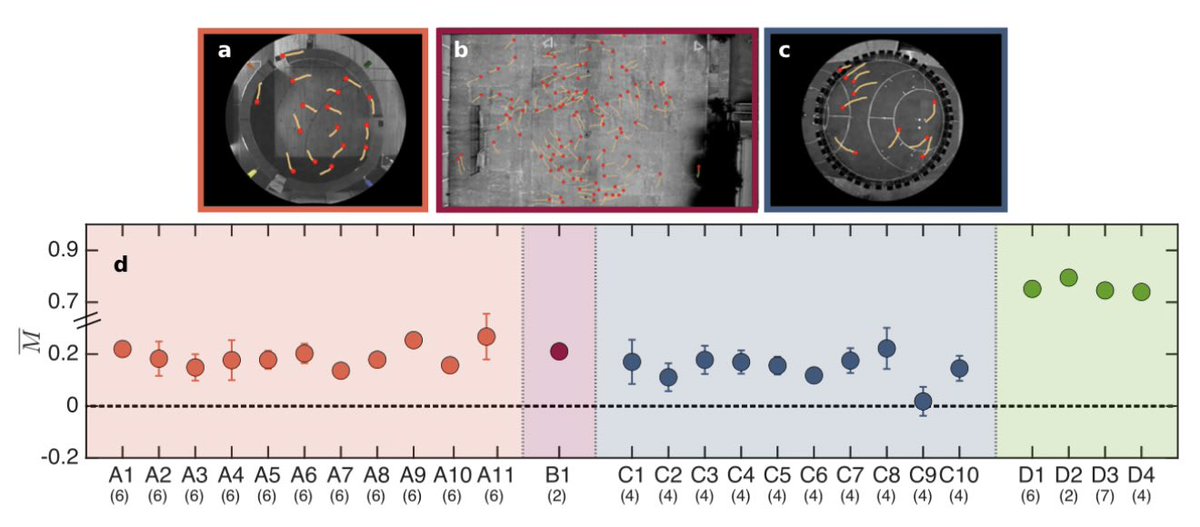
Counterclockwise dominion: the hidden locomotor asymmetry that commands human crowds. Humans do not meander through groups with neutral freedom. A robust, nearly universal predisposition to turn counterclockwise governs pedestrian motion; an internal biomechanical chirality so dominant that it appeared in 32 of 33 controlled trials across continents, age groups, and densities, overriding culture, gender, handedness, and group size while sharpening in children.
During covid-era social-distancing experiments at Spain’s University of Navarra, overhead video revealed consistent left-turning arcs in teenagers maintaining two-meter gaps, not random diffusion. Collaboration with the University of Tokyo confirmed the pattern in Japanese cohorts, suggesting a species-level trait. Only age modulated the bias, indicating developmental refinement or experiential softening. Vision was ruled out, and geophysical explanations lack support. The asymmetry likely stems from motor control, vestibular feedback, or central pattern generators favoring one rotational direction at the whole-body scale.
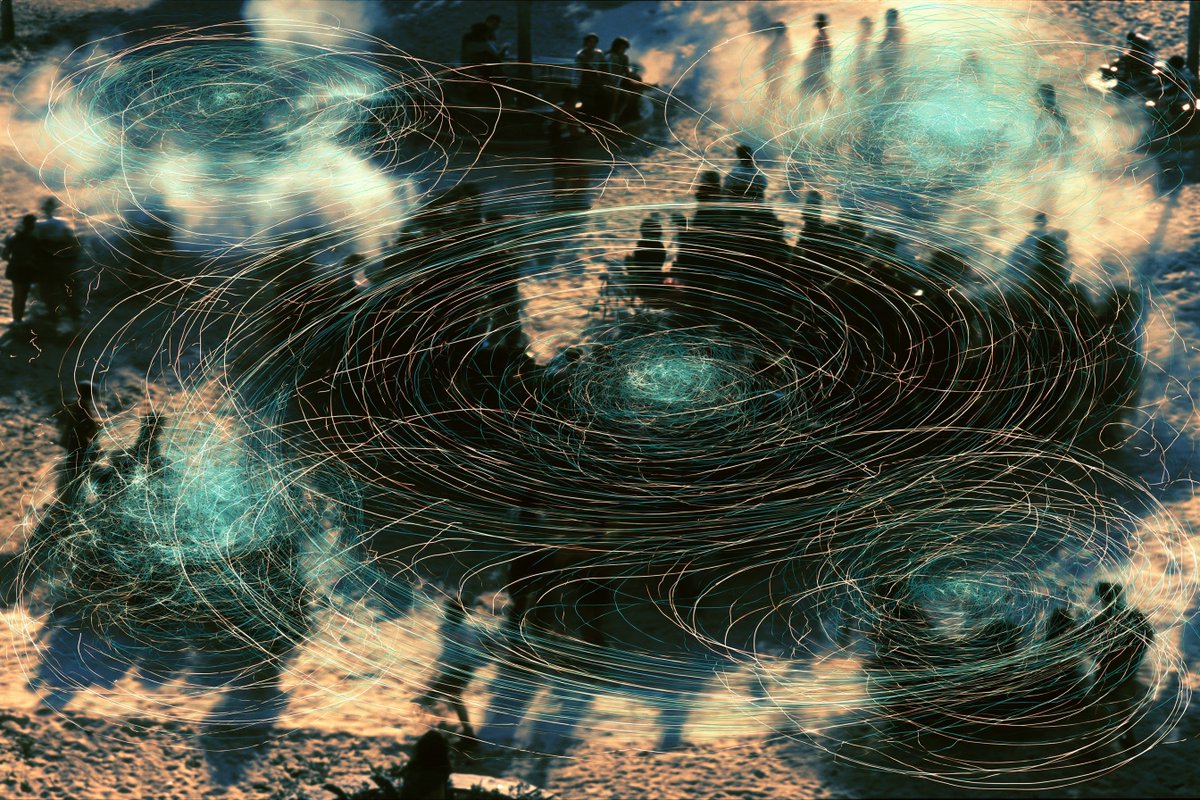
Most animals lack directional preferences in locomotion. Humans’ pronounced, consistent counterclockwise proclivity suggests a distinctive evolutionary or neurodevelopmental signature in bipedal gait and spatial-motor mapping. Earlier studies hinted at this: a 2008 study documented counterclockwise turning when adults ran circles in symmetrical conditions, and the same Navarra-led group observed spontaneous counterclockwise vortices in enclosed pedestrian assemblies in 2022.
The new work provides the missing individual-level mechanism: collective counterclockwise flow is the statistical sum of biased single agents, not an emergent group property alone.
Crowd-simulation software must incorporate per-pedestrian rotational bias to predict real flows in stadiums, airports, festivals, or evacuations with higher fidelity. Urban designers and safety engineers can align geometries with human chirality instead of assuming isotropy. Neuroscientists gain a quantifiable window into hemispheric lateralization and its maturation. The Navarra-Tokyo team is already isolating the precise biomechanical substrate.
Sports history makes more sense: the near-universal standardization of counterclockwise running tracks and racecourses may reflect an unwitting accommodation of this innate locomotor inclination rather than tradition or spectator optics. When paths branch or density forces a curve, the body defaults leftward more often than chance predicts.
1
1
166

Jun 9
It occurs to me that left/right lateralization has real effects on behavior and psychophysics has just not really given a shit, used L/R response the whole time both for hands and for visual presentations, no testing of left/right individually, god damn it
2
5
232

Jun 8
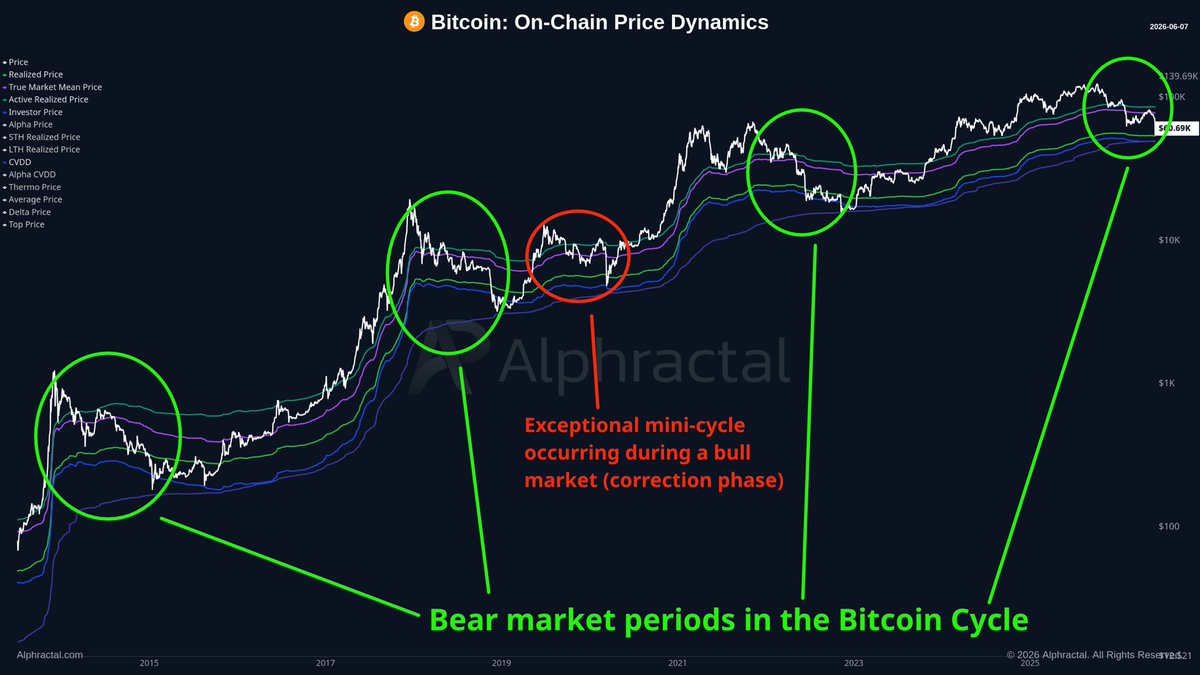
Bitcoin entered a bear market in November 2025. The consolidated reading of every on-chain indicator confirms it. The chart below maps every bear cycle in Bitcoin's history. The asset has bottomed at exactly the same on-chain support line every time. The current movement is heading there again.
But this analysis also reveals a quantitative event without precedent in the network's history 🧵
—
Bitcoin has consolidated as an asset with highly structured cyclical behavior. The exact timing of its expansion and contraction phases obeys price levels well-established by the analytical tools of the network itself — known as on-chain metrics.
Analysts sustain two main hypotheses to justify the mathematical precision of this phenomenon in the present moment:
— Hypothesis 1: Price dynamics rest on the direct relationship between a predictable supply of coins, capped at 21 million units and constantly reduced by the permanent loss of wallets, and the natural oscillation of demand generated by speculators, long-term investors, and payment-system users.
— Hypothesis 2: The asset is still moving through a financial maturation process. This scenario results in less efficient price discovery and allows operators to project quotes with great accuracy by monitoring public, transparent data.
Under the Wyckoff framework, the bear market is the markdown phase: selling force overwhelmingly exceeds buying demand, forcing the continuous devaluation of the asset. The accumulation period is the phase that follows and acts as the bottom of the market — characterized by prolonged price lateralization, the moment when institutional capital with a long-term vision patiently absorbs the coins sold by panicking investors.
Past behavior of the asset demonstrates that the bear market reaches its end, and the accumulation period begins, at the exact instant the market price tests the CVDD support line. This trajectory of devaluation toward the CVDD limit, followed by a phase of institutional absorption, has occurred in a well-established manner in prior moments.
The chronology of this retraction to valuation bottoms obeys the following historical periods:
— End of 2013 to early 2015
— End of 2017 to end of 2018
— End of 2021 to end of 2022
— Current movement, in full development since November 2025
The financial market also registers one isolated event classified as a mini bear market, occurring between June 2019 and March 2020 — marked in red on the chart. This movement developed exceptionally in the middle of a structural bull cycle. The event is diagnosed as a violent and atypical price correction. The intensity of the retraction did not allow the formation of a subsequent accumulation period, resulting in the immediate return of the prevailing bull market's valuation trajectory at the time.
4
8
73
13,233

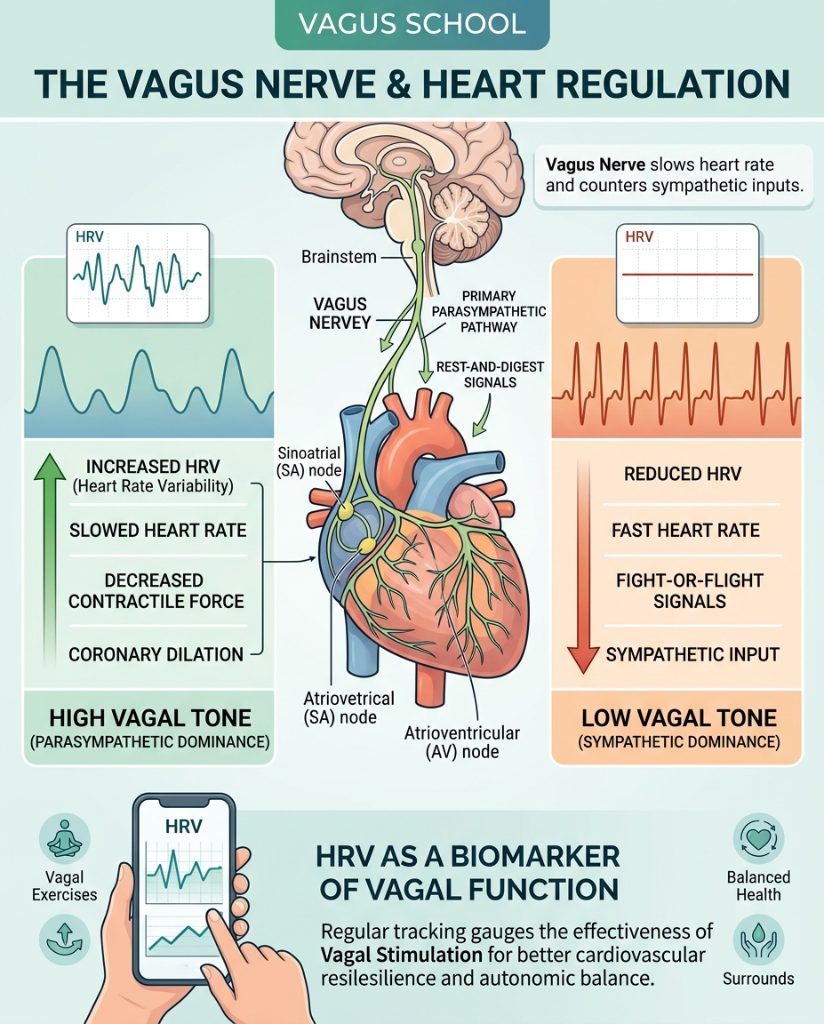
The vagus nerve serves as the primary parasympathetic conduit for cardiac activity by delivering rest-and-digest signals that counteract sympathetic inputs. When these vagal fibers are active, they decrease heart rate and contractile force while promoting coronary artery dilation to maintain autonomic equilibrium. This neural pathway provides the physiological basis for shifting the body out of high-stress states into a recovery-oriented baseline.
Anatomical asymmetry between the right and left vagal trunks dictates clinical safety, as the right side carries denser cardiac projections to the sinoatrial node. This innervation density is why implanted stimulation devices traditionally target the left side to avoid the risk of induced bradycardia or transient asystole. Understanding this lateralization is critical for ensuring that both invasive and non-invasive neuro-modulatory protocols maintain cardiovascular stability.
Heart rate variability serves as a direct biomarker for vagal tone, capturing the beat-to-beat timing changes regulated by cardiac nerve branches at conduction sites. Higher HRV metrics reflect a healthy balance between autonomic branches and indicate superior cardiovascular resilience. Regular tracking of these waveforms allows practitioners to validate the efficacy of stimulation efforts, ensuring that specific interventions are successfully shifting the system toward a state of recovery. This quantitative data loop transforms HRV from a simple metric into a tool for refining neuro-modulation protocols.
skool.com/vagus/using-hrv-mo…
5
11
569

Humans are extreme outliers when it comes to handedness. While some other primates show mild preferences for one hand, no other species comes close to our level of lateralization. A new study published in PLOS Biology analyzed data from 2,025 monkeys and apes across 41 species and found that our unusual dependence on one hand is directly linked to two traits that define us as a species: walking upright and having large brains. When researchers factored in brain size and limb proportions — specifically the relative length of our arms and legs — humans were no longer statistical outliers. The theory is that bipedalism freed our hands from locomotion entirely, creating new opportunities for asymmetric tool use, gestures, and fine motor skills where favoring one hand offered a clear advantage. At the same time, increasing brain size drove greater hemispheric specialization, reinforcing the bias neurologically. Simulations using fossil data suggest handedness evolved gradually — weak in early hominins like Australopithecus, stronger by Homo erectus and Neanderthals, and at its most pronounced in Homo sapiens. What the study doesn't explain is why roughly 10% of us are still left-handed.
#Science #Evolution #HumanBiology #Anthropology #DidYouKnow

1
2
8
1,726

fun fact about lefties, we've often been excluded from language studies due to beliefs about the way the brain processes speech & brain lateralization.
2
118

May 27
This report has been making the rounds in the press this week.
Evolution of the vertebrate retina by repurposing of a composite ancestral median eye
Abstract (excerpt)
"the vertebrate retina evolved through the lateralization of a complex median photoreceptive organ already containing both photoreceptor types. This shift likely followed the loss of lateral rhabdomeric eyes in a burrowing, suspension-feeding deuterostome ancestor that retained a pool of median photoreceptors. In the early chordates leading to vertebrates, this structure diversified into the pineal/parapineal complex and lateral retinas"
cell.com/current-biology/ful…
3
2
12
560

New article alert!
"Effect and mechanism of lateralization of cerebellar-cerebral network abnormalities on language in patients with unilateral temporal lobe epilepsy"
Published 08/05/2026
tandfonline.com/doi/full/10.…
@WeAreTandF @tandfonline
2
124

May 26
Ian McGilchrist - his book the master and his emissary has interesting implications for AI
focuses on why we have brain lateralization, ie why we have two hemispheres
1
787

May 25
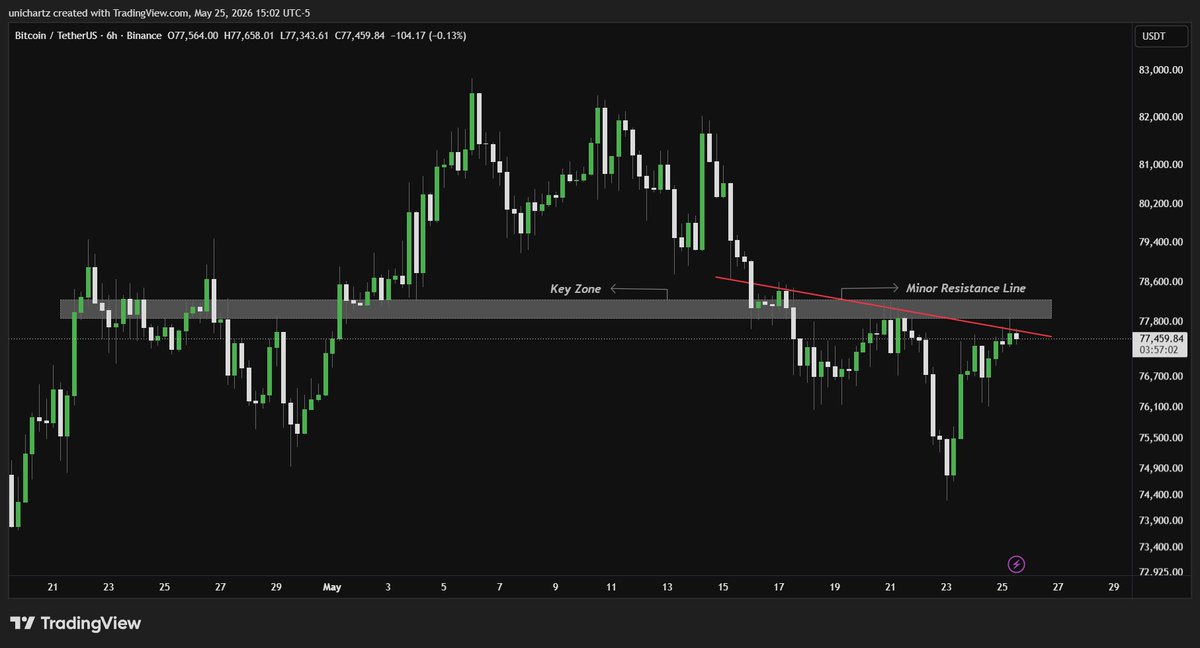
$BTC is currently breaking down the significant $77.8K level (acting as resistance) and rejecting the short-term descending trendline. After the selloff, the market is recovering and gaining upward momentum but will need a break above the mentioned resistance to regain bulls advantage.
As long as price is below the descending trendline and the significant level, we may have some lateralization to the market with slight bearish undertone.
DYOR, NFA
#BTC #BTCUSDT
4
402

May 25
Development of cerebral lateralization in children exposed to fetal antiseizure medications: A prospective cohort study at age 6 years onlinelibrary.wiley.com/doi/…
2
33