
*Qui Facit Per Alium Facit Per Se** means *He who acts through another does the act himself*
In law, a person can be held responsible for acts carried out by an agent or representative on their behalf.
#LegalPrinciples
click on:
ilms.academy/blog/qui-facit-…
1

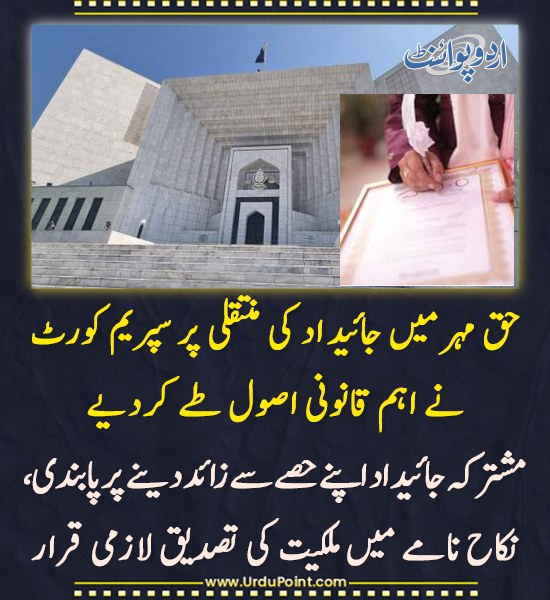
خبر کی مزید تفصیل جانئیے
urdupoint.com/n/4806526
#SupremeCourt #LegalPrinciples #HaqMehr #PakistanLaw
8
525

May 11
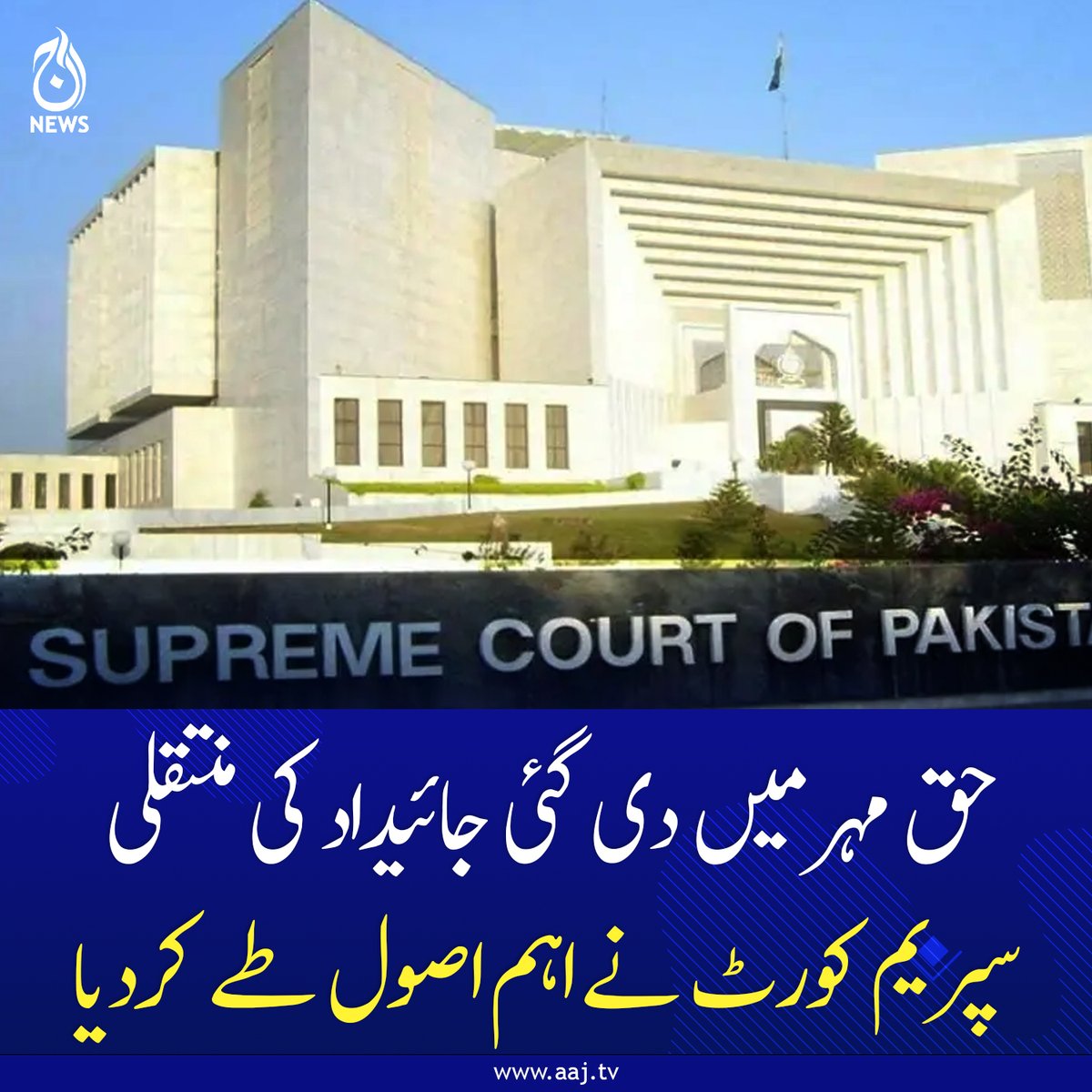
شوہر مشترکہ جائیداد میں سے صرف اپنے حصے کی حد تک حق مہر دے سکتا ہے، سپریم کورٹ
aaj.tv/news/30505185/supreme…
#SupremeCourt #Mahr #PropertyLaw #LegalPrinciples #AajNews
423

Apr 29
#SupremeCourt holds courts must assess all parties’ conduct in head-on collisions; failure to decide key issues like licence validity makes awards legally infirm.
Read full article here
shorturl.at/RY4AX
@isaketsourav #MotorAccidentCase #RoadAccidents #NegligenceLaw #MACT #JudicialRuling #LegalPrinciples

1
2
176

Apr 23
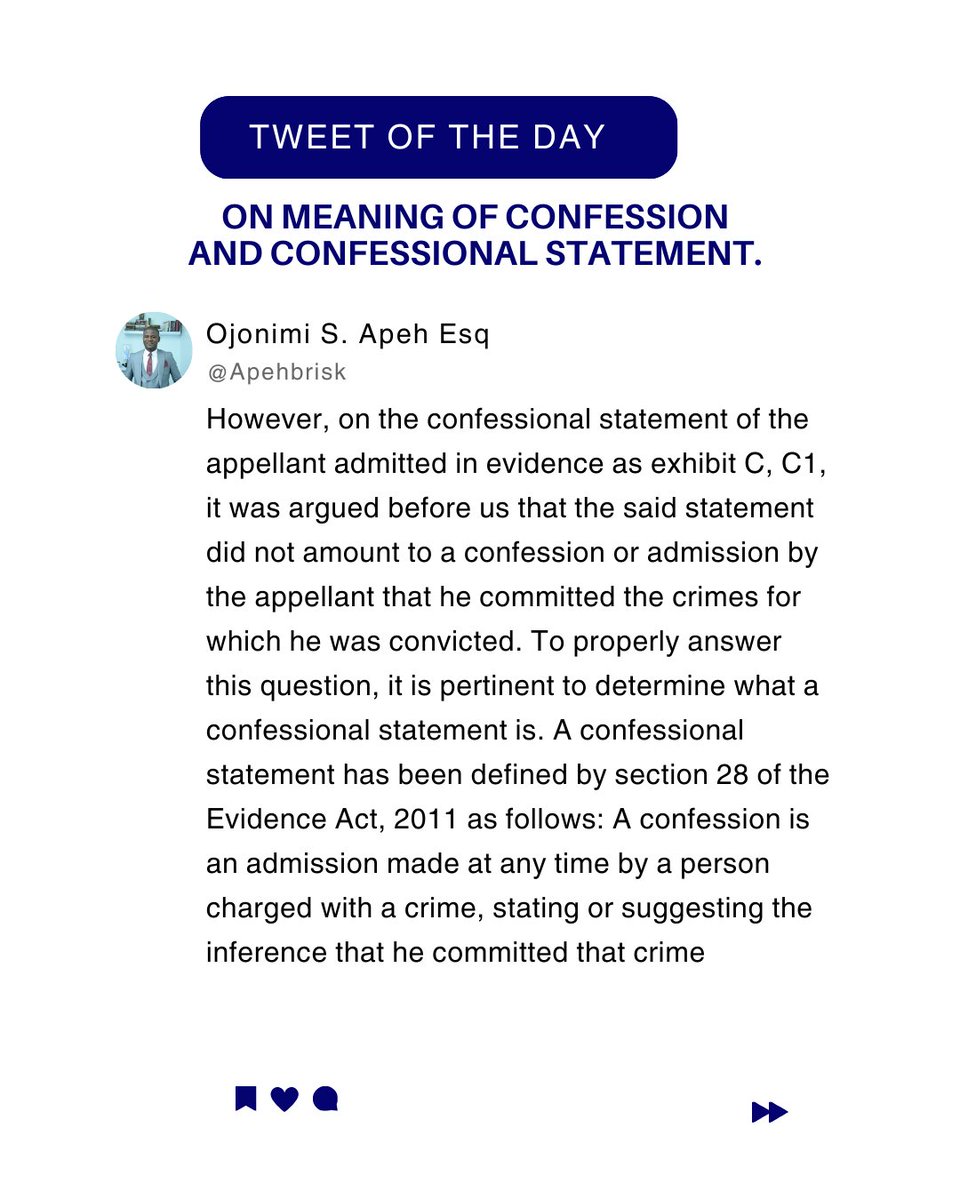
"In Ugandan law, the Evidence Act is built on 3 ingredients: prove the crime was committed, prove it was the same person, and prove how it happened, once these stand, the case is clear." Commissioner Fred Bamwine.
#UgandanLaw #EvidenceAct #LegalPrinciples #JusticeSystem #arktvug
2
8
27

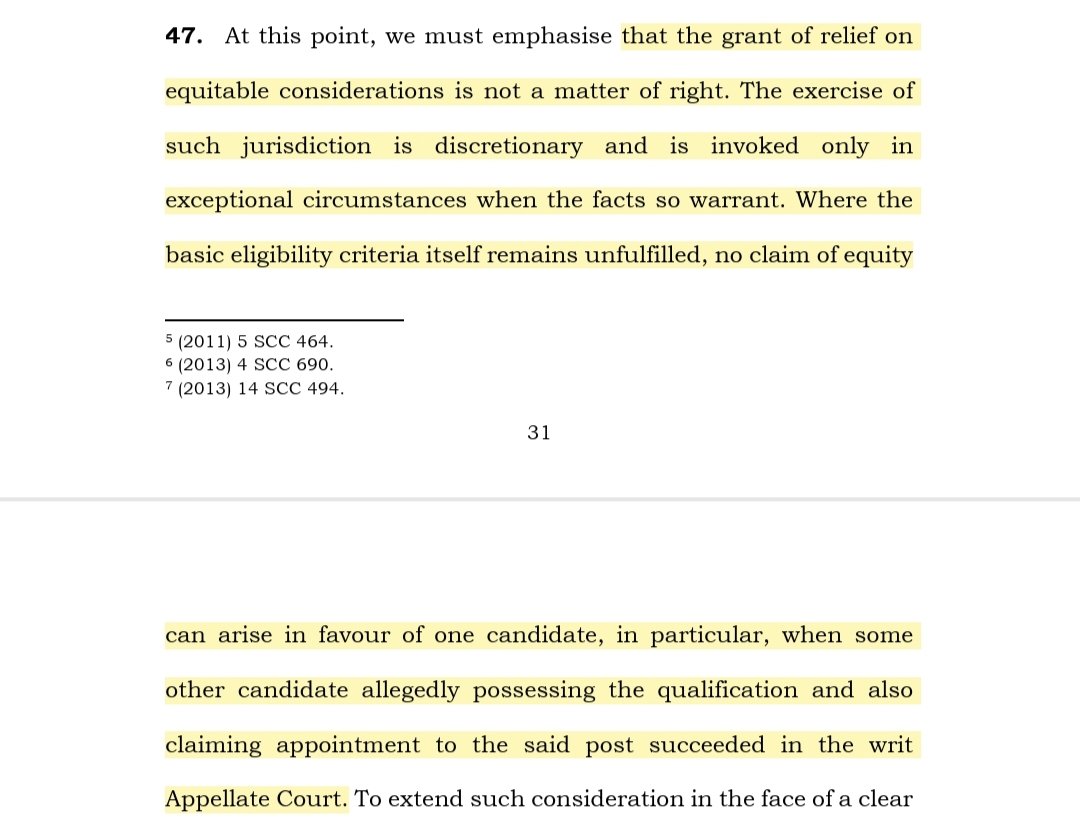
• Equitable Relief Not Available When Eligibility Criteria Unfulfilled
#SupremeCourt has held that the grant of relief on equitable considerations is not a matter of right. Such discretionary jurisdiction is invoked only in exceptional circumstances when the facts genuinely warrant it.
Where the basic eligibility criteria itself remains unfulfilled, no claim of equity can be entertained. Equity cannot override express requirements or supply what the law mandates as a precondition.
Key takeaway: Equity follows the law. It does not bypass eligibility.
No relief in equity where eligibility is absent.
Judgement link:- lawcurb.in/judgements/himaks…
#SupremeCourt #EquitableRelief #EligibilityCriteria #ServiceLaw #LegalPrinciples
3
20

Governments Waive Sovereign Immunity When in Commerce
See the full show that this clip comes from at: youtu.be/jVoALosQV4g
Sign up for the entire free Contract Killer Course at: onestupidfuck.com/contractki…
When a government partners in business, it sheds its sovereign status for that of a private citizen. States in banks aren't suable in their own courts, yet corporations aren't exempt. Georgia's bank capacity strips its sovereign character for bank transactions. #Government #BusinessLaw #Sovereignty #CorporateLaw #LegalPrinciples #StateInterests #PublicPolicy
1
15
41
1,048

Governments Waive Sovereign Immunity When in Commerce
See the full show that this clip comes from at: youtu.be/jVoALosQV4g
Sign up for the entire free Contract Killer Course at: onestupidfuck.com/contractki…
When a government partners in business, it sheds its sovereign status for that of a private citizen. States in banks aren't suable in their own courts, yet corporations aren't exempt. Georgia's bank capacity strips its sovereign character for bank transactions. #Government #BusinessLaw #Sovereignty #CorporateLaw #LegalPrinciples #StateInterests #PublicPolicy
1
5
10
168


Feb 4
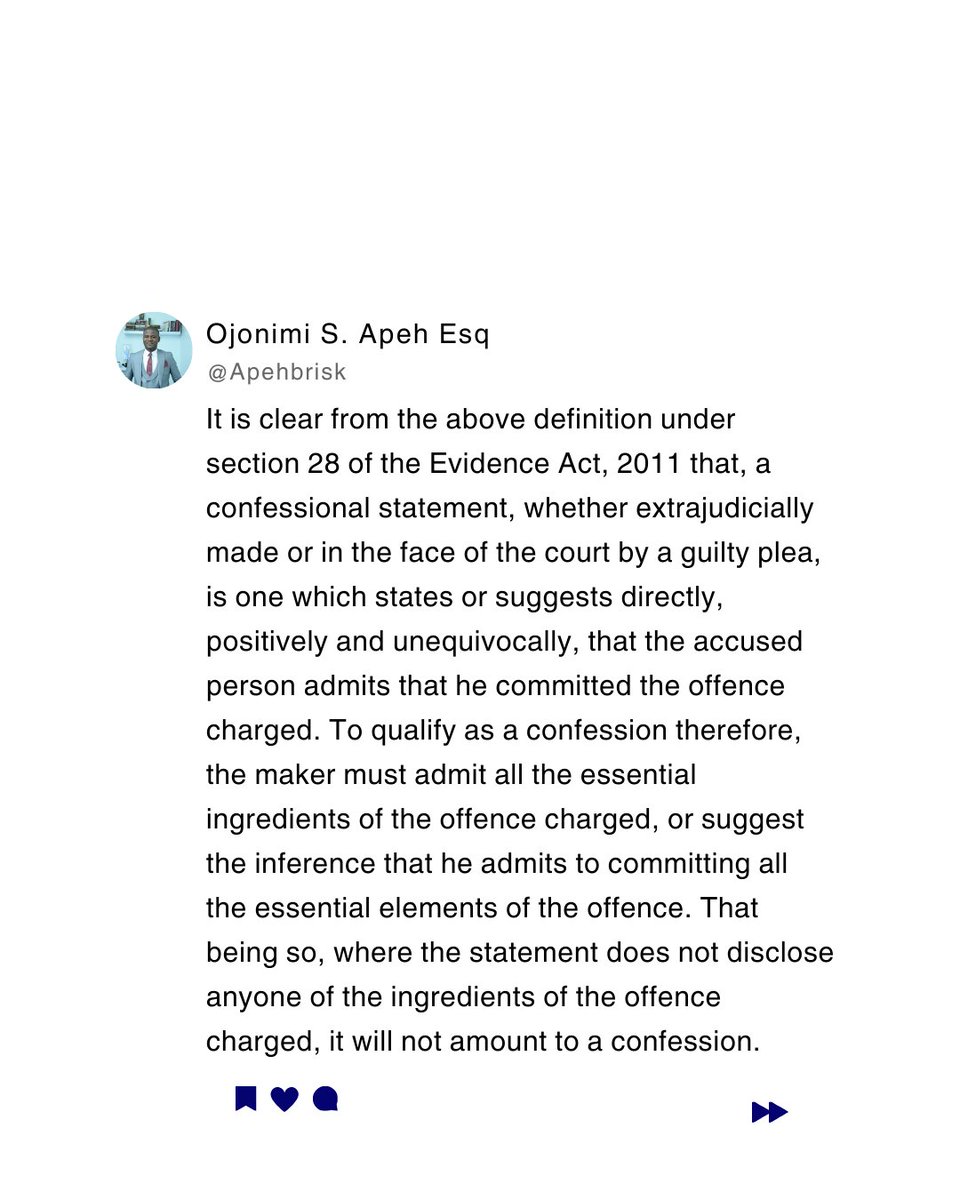
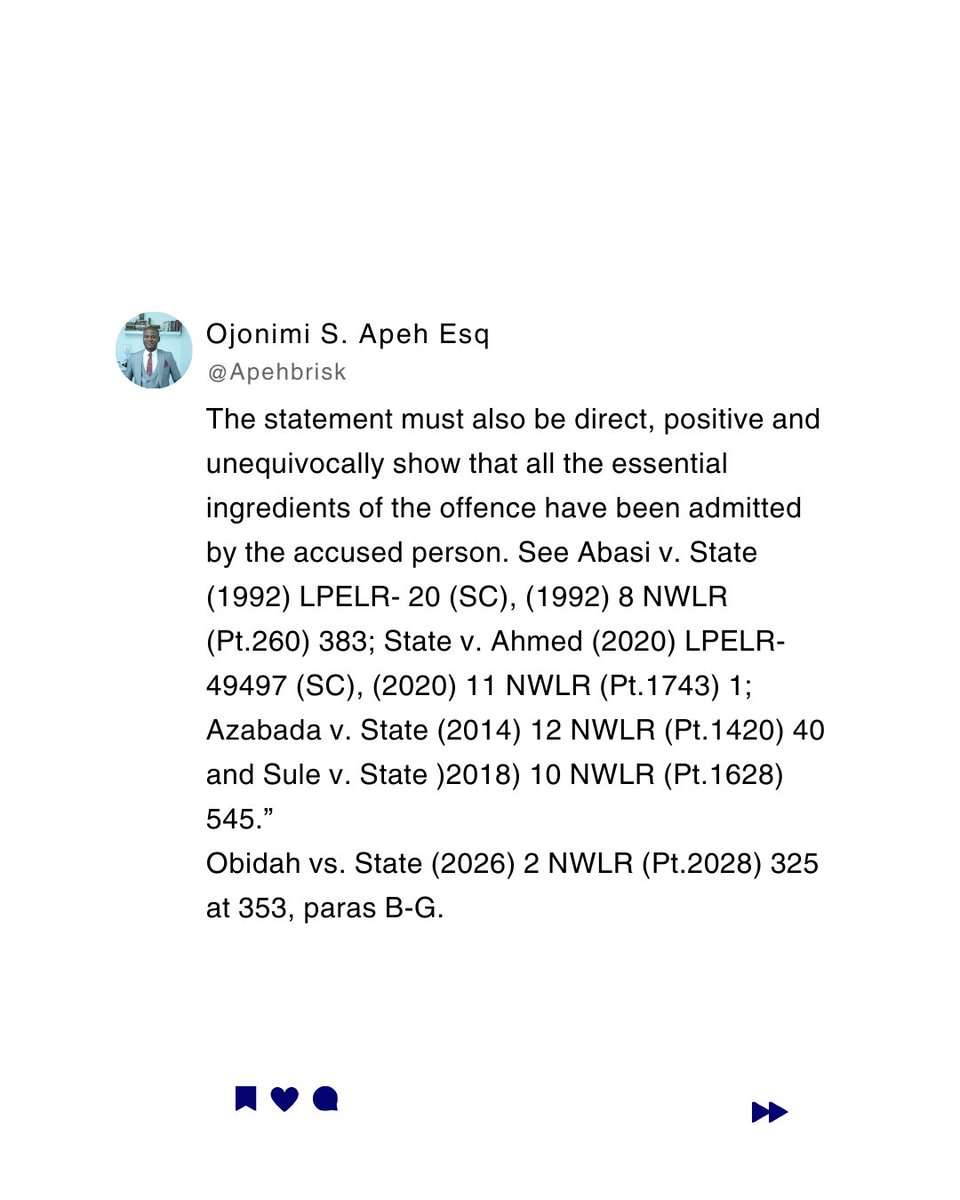
Arbitration
These videos cover decisions related to arbitration. Explore the basics of arbitration laws, from the process of resolving disputes outside of court to understanding key legal principles. These videos break down the role of arbitration in modern legal systems.
#ArbitrationLaw #DisputeResolution #AlternativeDisputeResolution #LegalPrinciples #ArbitrationProcess #LegalSystems #LitigationAlternatives #ArbitrationBasics #LegalEducation #InternationalArbitration #DisputeSettlement #LawExplained
1
3
3,177

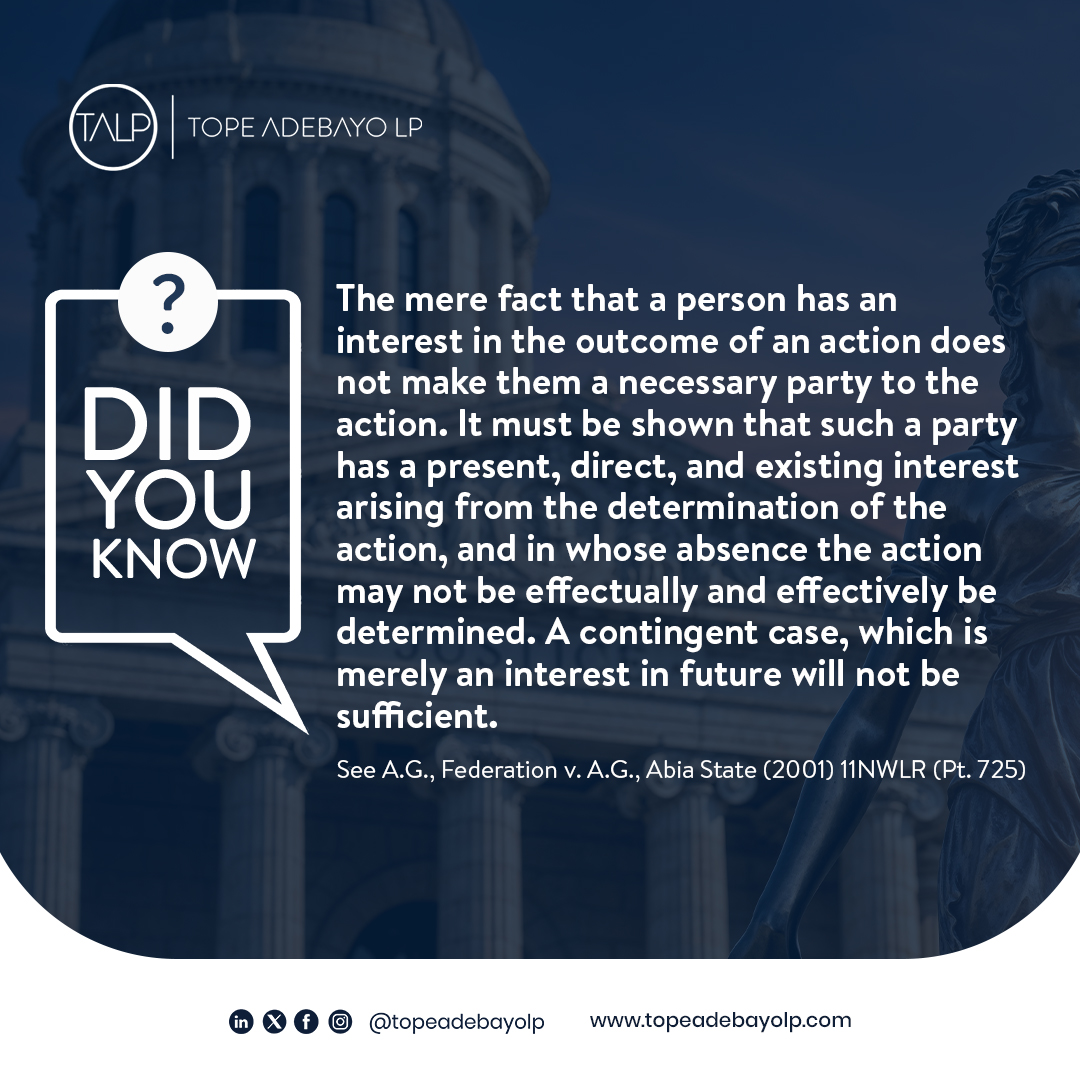
TALP DID YOU KNOW – Dispute Resolution Series
#DidYouKnow #LegalInsight #LegalEducation #LawAndJustice #CaseLaw #NigerianLaw #LegalPrinciples #TopeAdebayoLP #LawfirminIkeja
1
5
57

Jan 13
4/10 The HC invoked the "doctrine of estoppel" - basically saying you can't participate in an exam, accept all the rules, then challenge them after failing. You knew the game before you played it.
#LegalPrinciples #DoctrineOfEstoppel #CompetitiveExamRules #LawExplained
Jan 13

Cut off missed by 1.9 marks, civil judge aspirant moved court over ‘eloquent’ answer. Why HC refused plea
#Haryana #Judiciary #PunjabHaryanaHighCourt
theprint.in/judiciary/cut-of… via @theprintindia
2
2
25

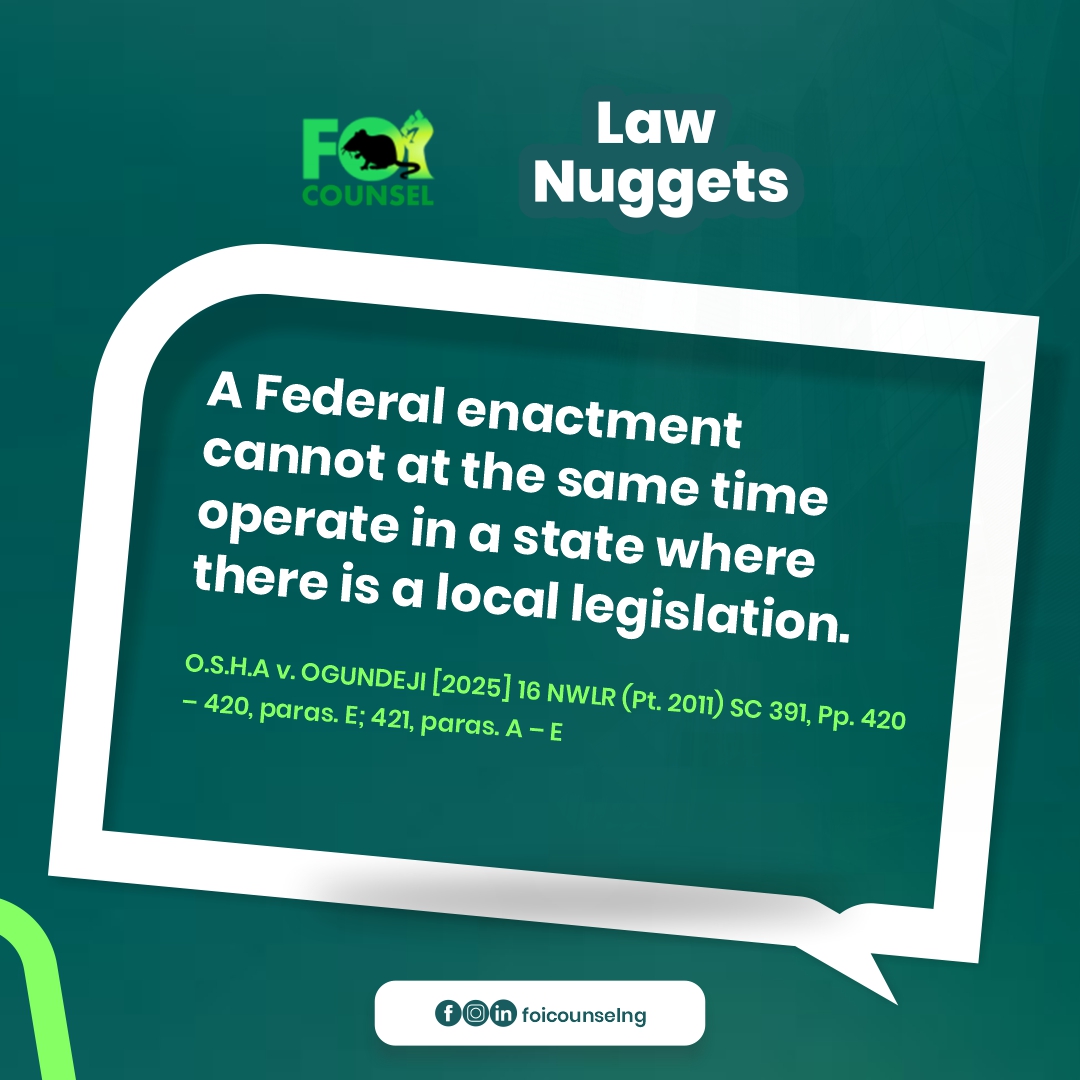
Law Nugget ⚖️
A Federal enactment cannot operate concurrently in a State where there is an existing local legislation.
📚 O.S.H.A v. Ogundeji [2025] 16 NWLR (Pt. 2011) SC 391
#LawTwitter #NigerianLaw #LegalPrinciples #FOICounsel #SupremeCourt
1
2
26

19 Oct 2025
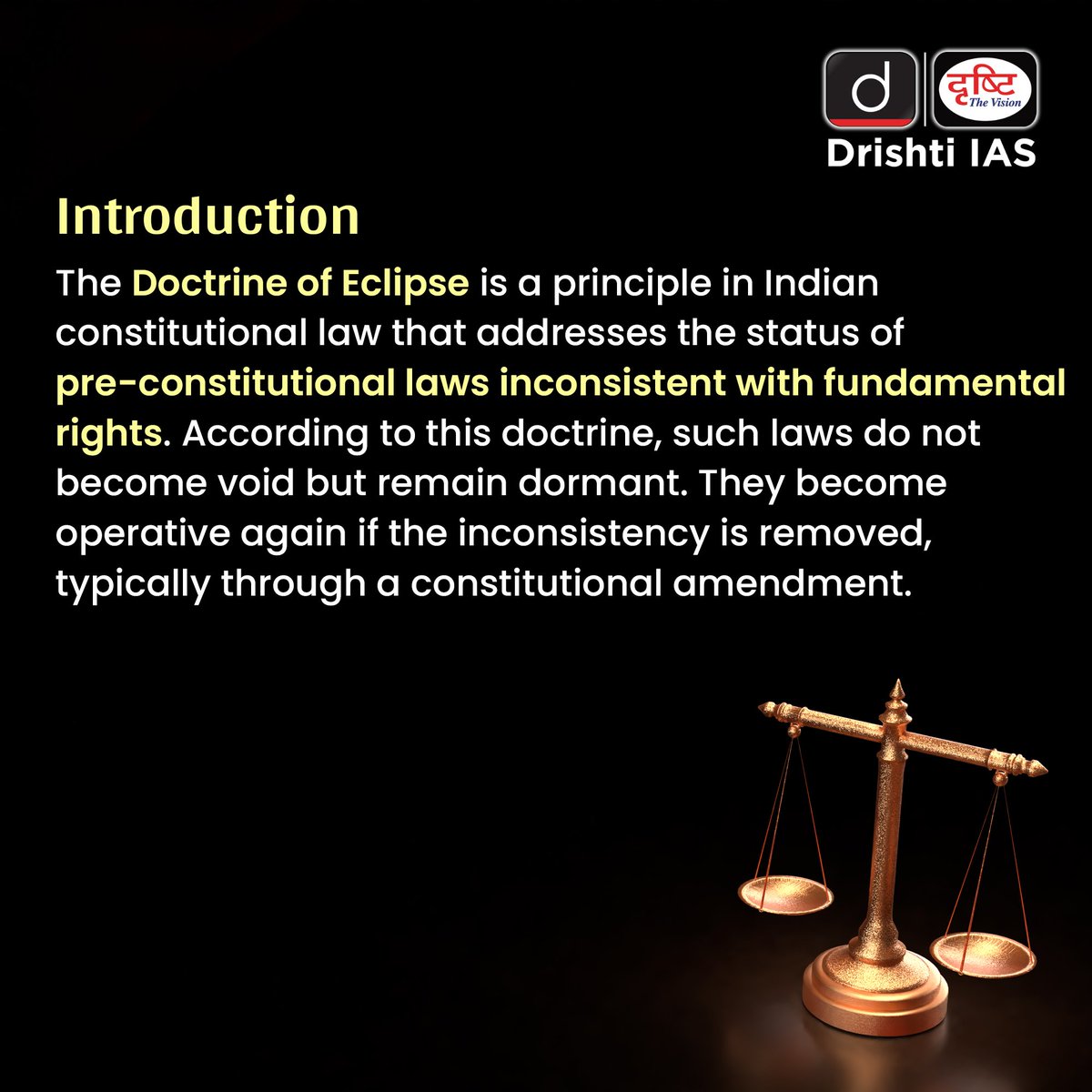
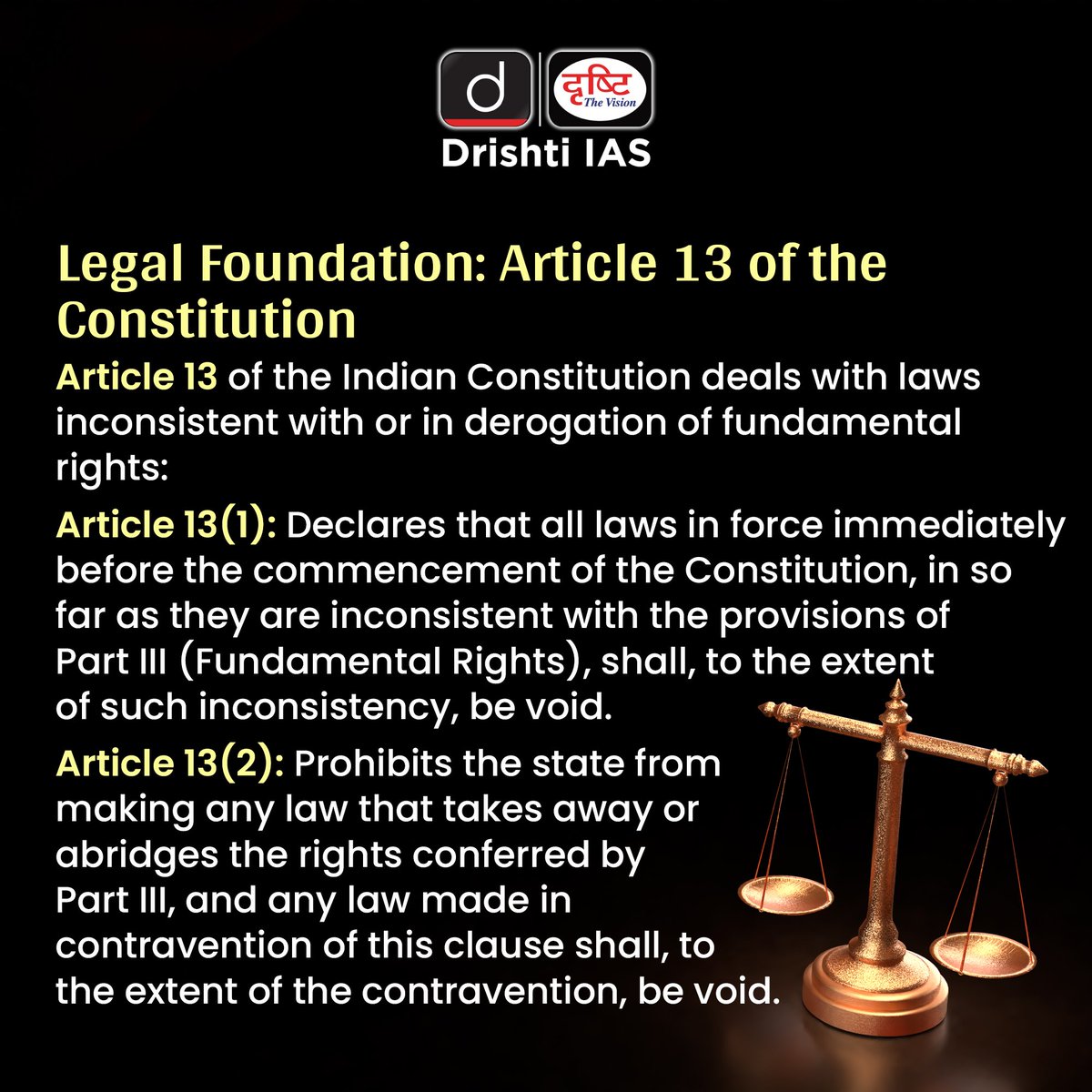
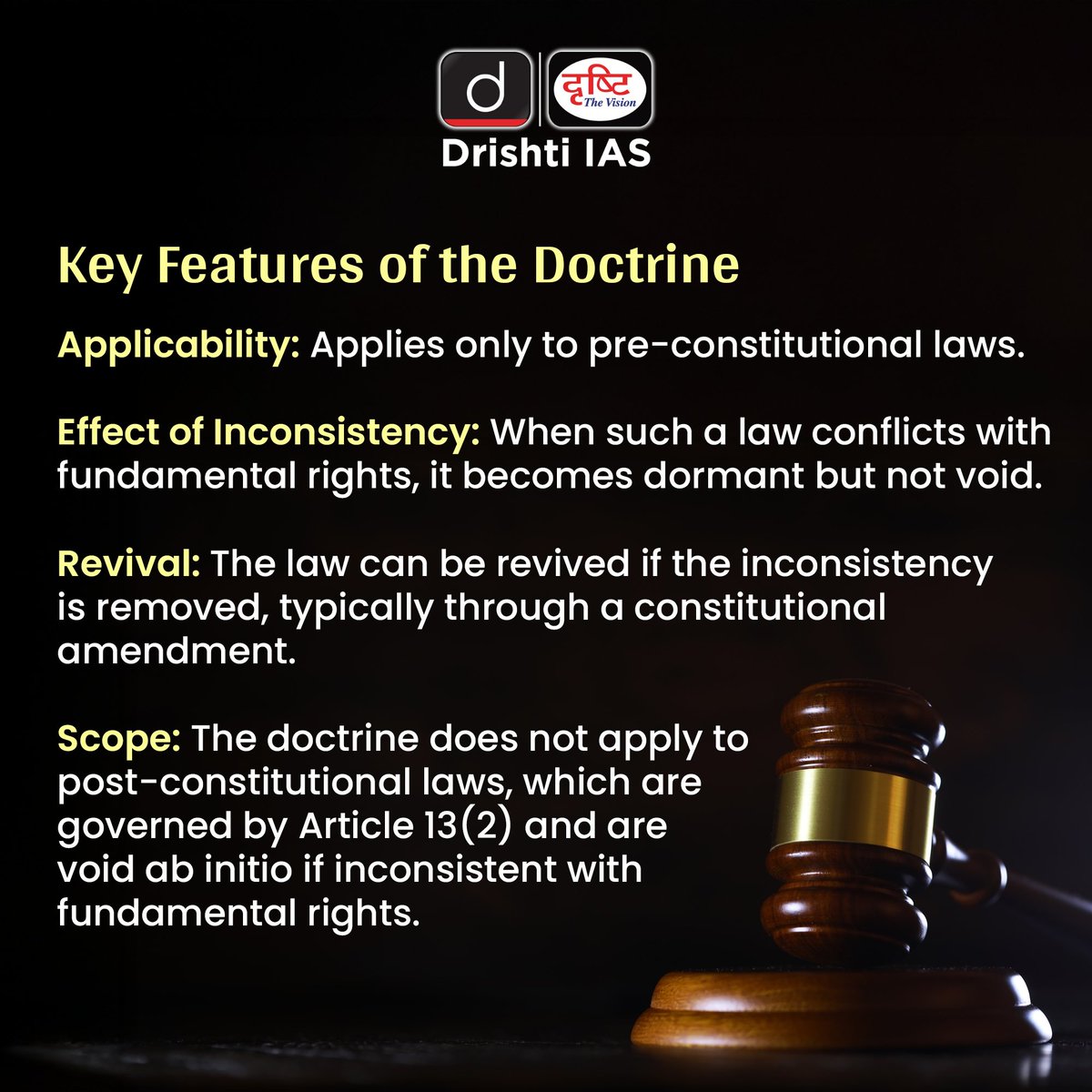
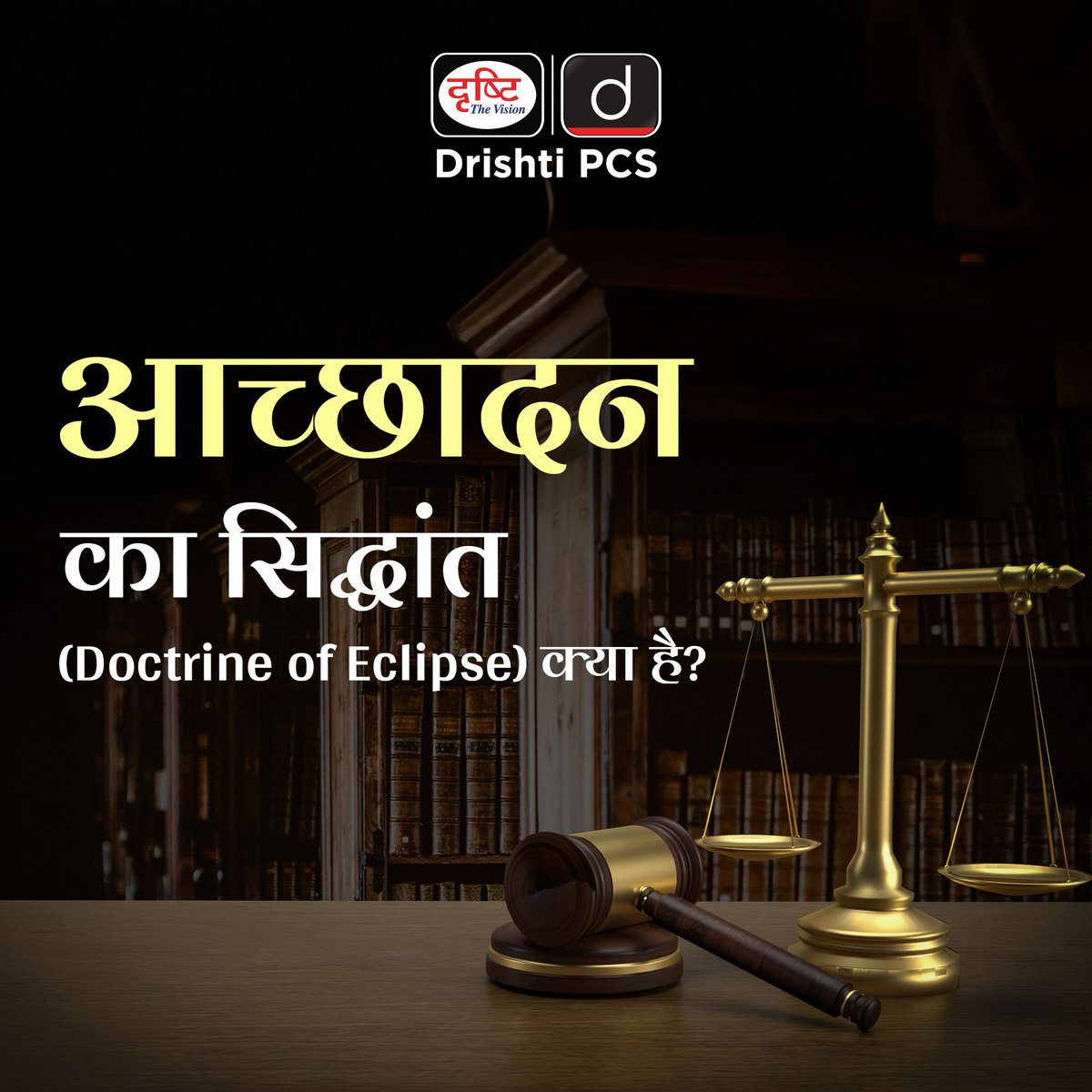
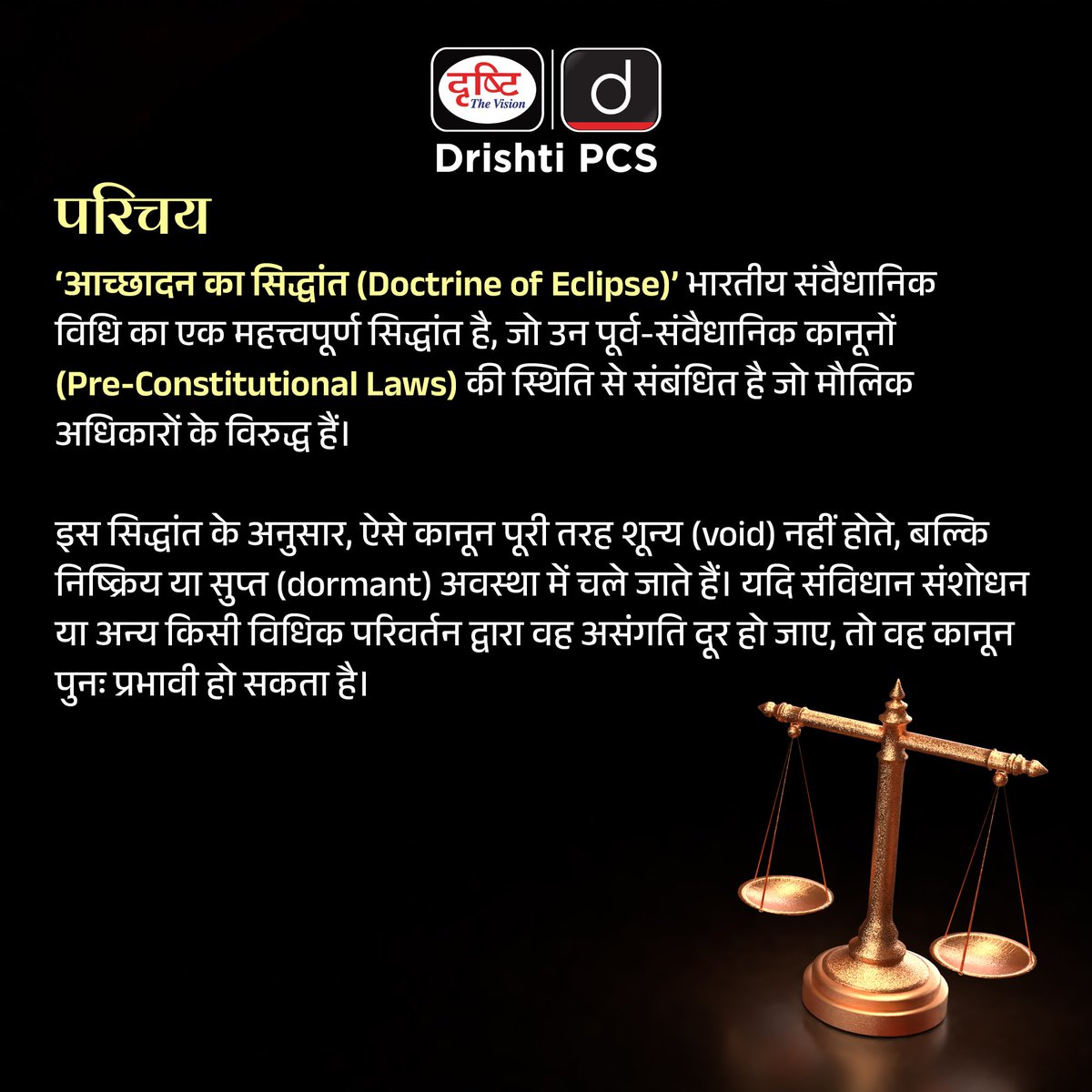
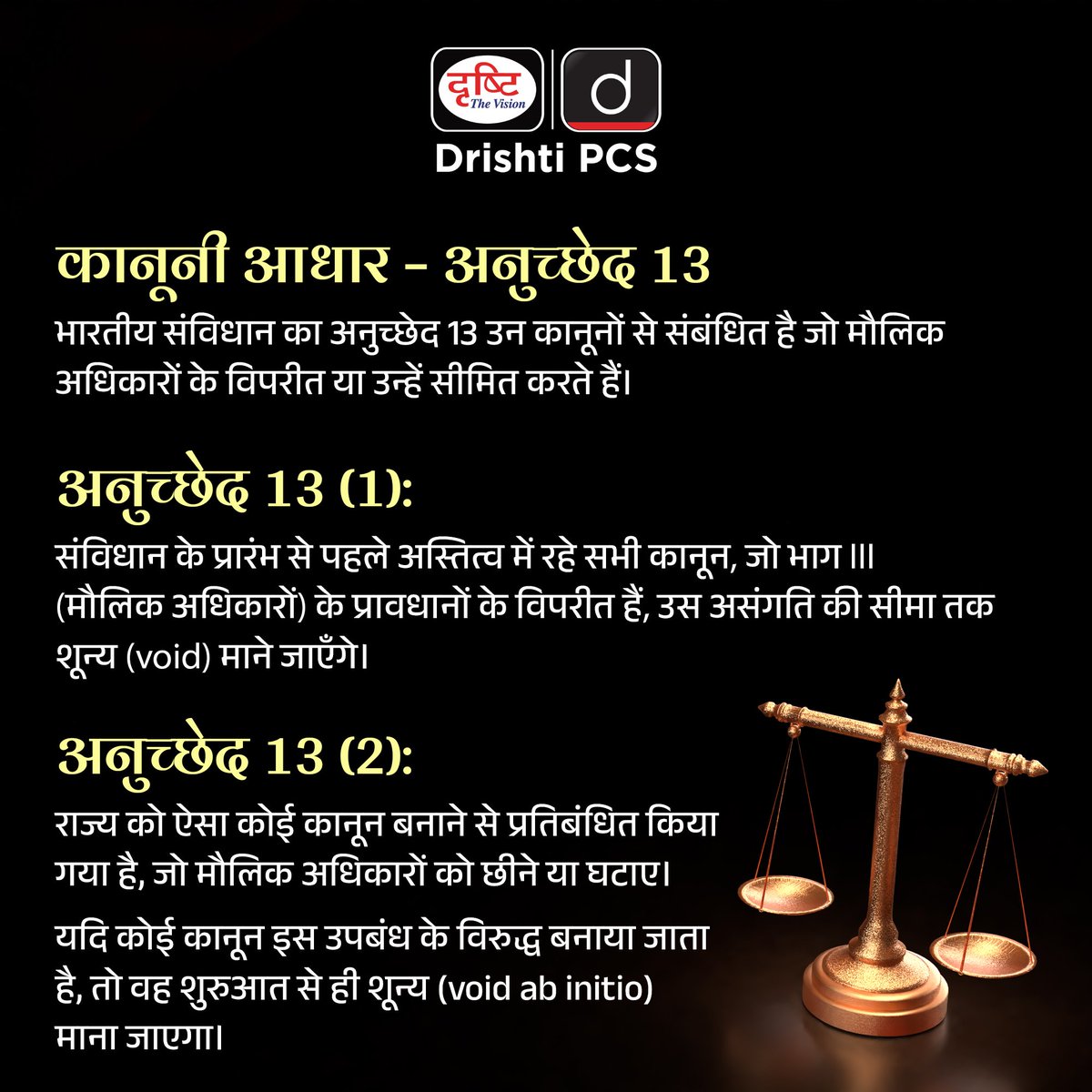
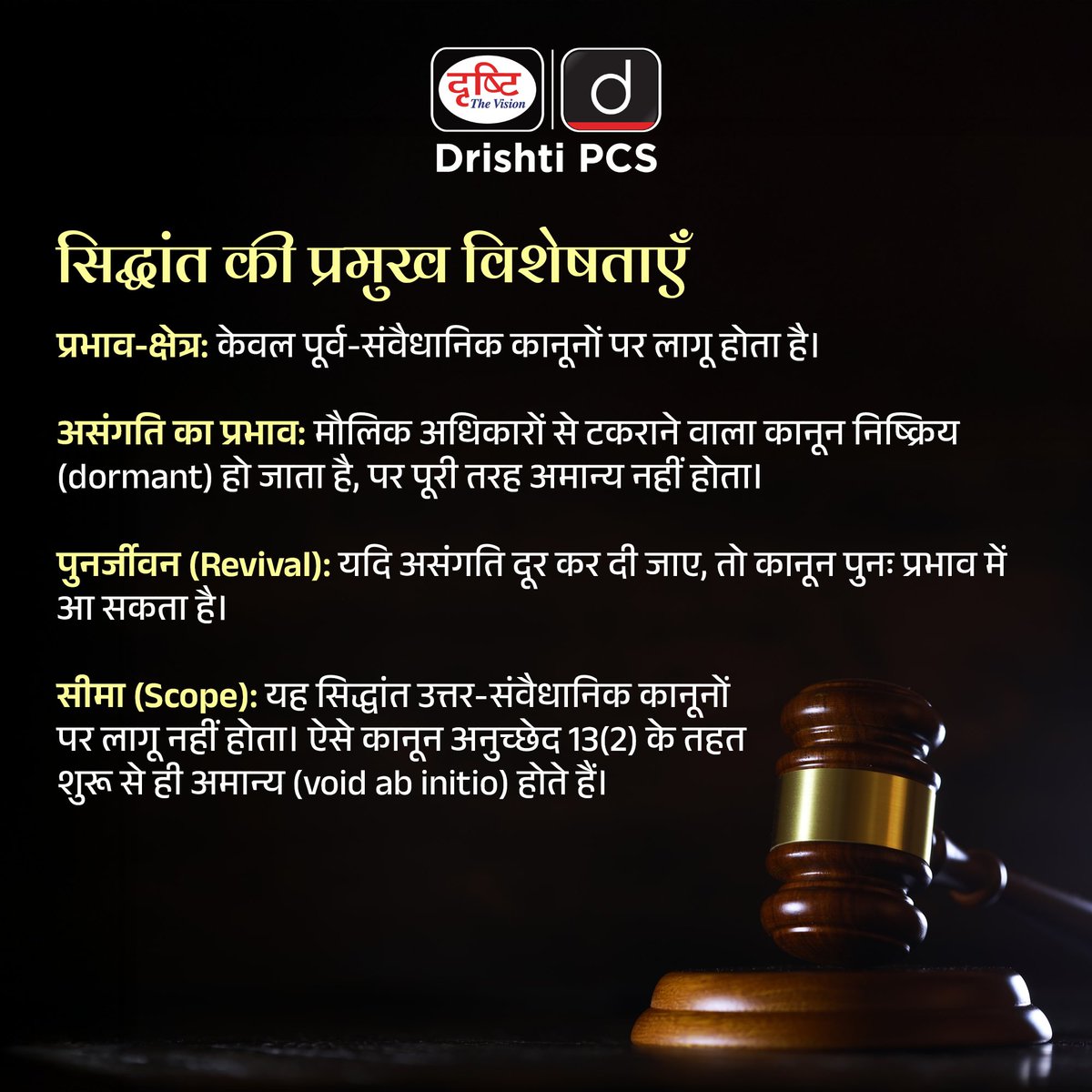
Doctrine of Eclipse: A unique constitutional principle where pre-constitutional laws inconsistent with fundamental rights remain dormant, not void, and can revive once the inconsistency is removed. Key to balancing legal continuity and fundamental rights.
#DrishtiStaticBytes #DoctrineOfEclipse #IndianConstitution #FundamentalRights #Polity #LegalPrinciples #Polity #UPSC #DrishtiIAS #DrishtiIASEnglish
2
251

19 Oct 2025
आच्छादन का सिद्धांत: संवैधानिक अधिकारों के साथ असंगत
पूर्व-संवैधानिक कानून असंगत होने पर निष्क्रिय रहते हैं, लेकिन रद्द नहीं होते, और असंगति दूर होने पर पुनः प्रभावी हो सकते हैं।
कानूनी निरंतरता और मौलिक अधिकारों का संतुलन सुनिश्चित करने में महत्त्वपूर्ण।
#DoctrineOfEclipse #IndianConstitution #FundamentalRights #Polity #LegalPrinciples #Polity #UPSC #DrishtiIAS #DrishtiStaticBytes #DrishtiPCS
4
11
589

19 Oct 2025
आच्छादन का सिद्धांत: संवैधानिक अधिकारों के साथ असंगत
पूर्व-संवैधानिक कानून असंगत होने पर निष्क्रिय रहते हैं, लेकिन रद्द नहीं होते, और असंगति दूर होने पर पुनः प्रभावी हो सकते हैं।
कानूनी निरंतरता और मौलिक अधिकारों का संतुलन सुनिश्चित करने में महत्त्वपूर्ण।
#DoctrineOfEclipse #IndianConstitution #FundamentalRights #Polity #LegalPrinciples #Polity #UPSC #DrishtiIAS #DrishtiStaticBytes
2
2
3
723

2 Jun 2025
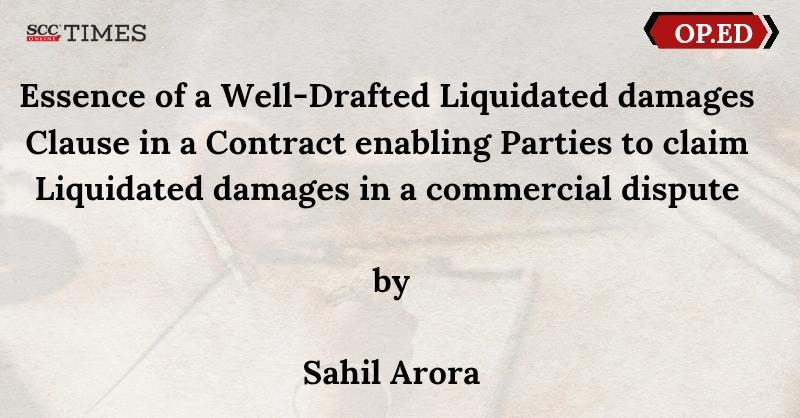
[Op Eds] Essence of a Well-Drafted Liquidated damages Clause in a Contract enabling Parties to claim Liquidated damages in a commercial dispute
by Sahil Arora
#OpEd #commercialdispute #ContractAct #ContractenablingParties #LegalPrinciples #WellDraftedLiquidated #scconline
2
226

13 Mar 2025
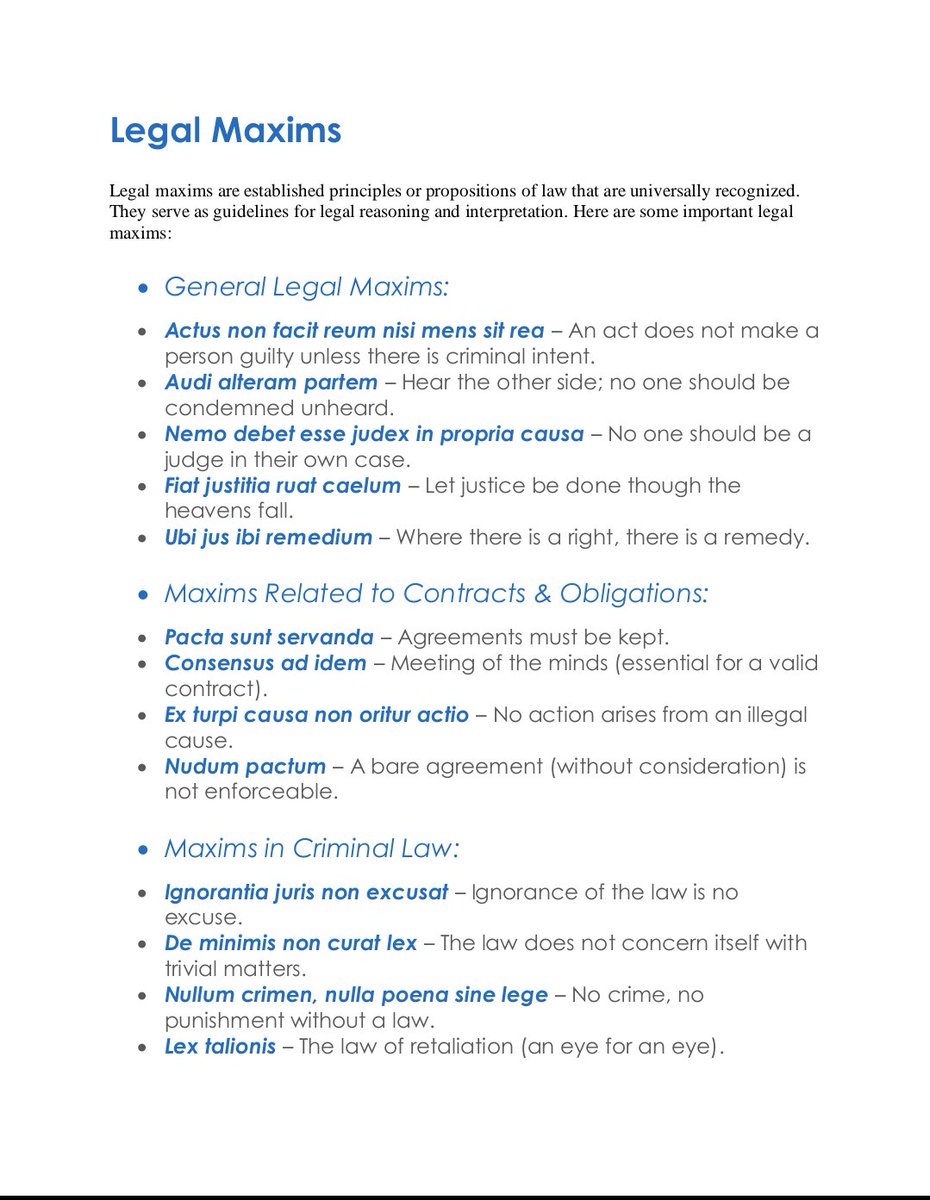
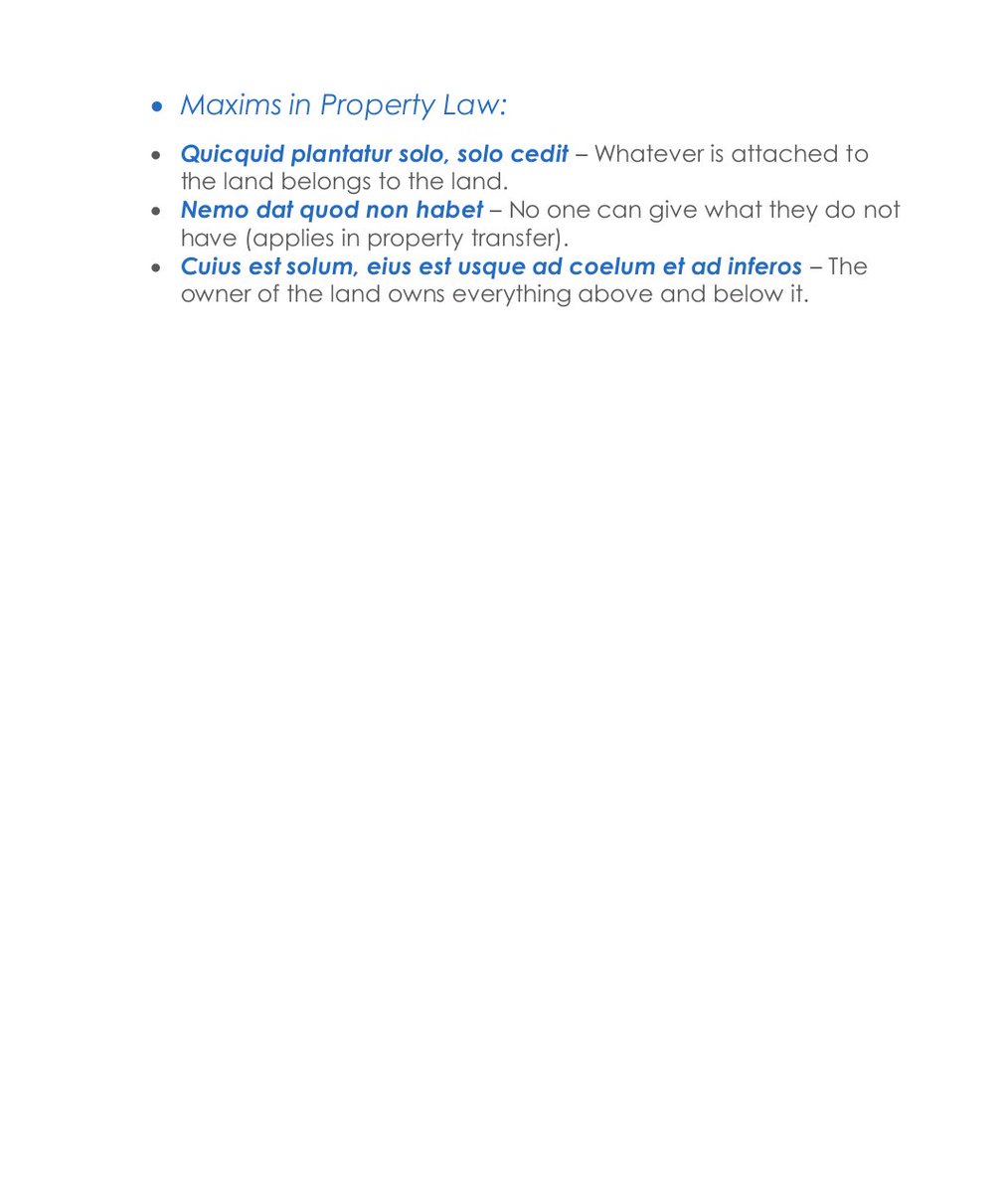
Legal wisdom in a nutshell! ⚖️ These timeless maxims guide legal reasoning and interpretation across various domains of law. #LegalMaxims #LawAndJustice #legalprinciples #legaleducation #legalupdates
1
3
69

QUIC QUID PLANTATUR SOLO SOLO CEDIT
The legal maxim "Quic quid plantatur solo solo cedit" is a Latin phrase that translates to "whatever is affixed to the soil belongs to the soil." This principle is fundamental in property law and relates to the ownership of things that are permanently attached to land.
In simple terms, this doctrine means that anything that is permanently attached to land whether it's a building, a tree, or any other structure becomes part of the land itself. If the land is sold or transferred, the attachment or fixture generally stays with it, unless there's an agreement to the contrary.
Key Elements of the Doctrine
Attachment to the Land: The core idea of this maxim is that if something is physically attached to land in such a way that it becomes part of the land, it cannot be separated or removed without causing damage to the land. This attachment makes the object part of the property, and it will transfer with the sale or transfer of the land.
Types of Attachments
Natural Attachments: These include trees, plants, and other vegetation. When these are planted in the soil, they belong to the land, and ownership of the land carries with it the ownership of these plants.
Artificial Attachments: These include buildings, fences, and other structures built on or affixed to the land. For example, if someone builds a house on a piece of land, the house is considered part of the land due to its permanent attachment.
Fixtures vs. Personal Property: The doctrine is important when distinguishing between fixtures (things that are attached to the land and part of it) and personal property (things that are movable and not attached). The general rule is that anything fixed to the land is considered a fixture and is transferred with the land unless there's a specific agreement to remove it. For example, a chandelier in a house would generally be considered a fixture, whereas furniture would not, as it is not attached to the land.
Historical Background
The maxim "Quic quid plantatur solo solo cedit"is rooted in ancient Roman law. Roman property law, particularly as codified in the Corpus Juris Civilis (a body of work that formed the foundation of civil law systems), included principles that dealt with ownership of land and anything attached to it. This principle reflected the idea that land, being a fundamental form of property, should have everything attached to it automatically pass to the landowner.
Over time, as European legal systems evolved, especially with the development of common law in England, the concept was adopted and became a part of English law, where it played an important role in the development of land and property rights.
Roman Law Influence: Roman legal scholars first formalized the concept that anything affixed to the soil is part of the soil. Roman law was influential throughout Europe during the Middle Ages, and many legal principles from Roman times were incorporated into emerging legal systems.
Medieval England: The maxim found its place in English law as the country developed its system of landownership. As feudalism became the dominant system of land tenure, land and everything attached to it were considered the property of the monarch or noble, and this principle helped regulate who could own and transfer land and its contents.
Modern Law: Over time, the doctrine became part of modern property law in most legal systems, particularly in countries that follow common law traditions (like the U.S. and the U.K.). It is still a foundational concept in determining ownership rights to land and the things attached to it.
Practical Application of the Doctrine
The doctrine has several important applications in property law today:
Real Estate Transactions: When land is sold, anything permanently attached to it such as buildings, trees, and fences is automatically transferred with the land unless the contract specifically states otherwise. This is important for both buyers and sellers to understand, as the status of fixtures and attachments can impact the value of the property.
Disputes Over Fixtures: A common issue arises when a tenant installs something on leased property (e.g., an air conditioning unit or a shelf) and later seeks to remove it when moving out. The landlord may argue that the item has become a fixture and is part of the property, while the tenant may argue that it’s personal property. The maxim "Quic quid plantatur solo solo cedit" helps resolve these disputes by considering whether the item was permanently attached to the land.
Adverse Possession: This doctrine also ties into the concept of adverse possession, where someone may acquire ownership of land through continuous use over a long period of time. Anything planted or attached to the land over time (e.g., crops, buildings) could become part of the property in the eyes of the law, strengthening the claim of the person who has been using it.
Exceptions and Limitations
While "Quic quid plantatur solo solo cedit"is a strong legal maxim, there are a few exceptions and nuances:
Severance: If something attached to the land can be removed without damaging the property, it may not be considered a fixture.
For example, a shed built on a foundation might be considered a fixture, but a modular home that is affixed to a trailer base may not be, depending on local laws.
Chattel Doctrine: Items that are not attached permanently to land, such as furniture or personal belongings, do not fall under this principle. These items remain personal property and can be moved or sold separately.
Agreements: Property owners can make agreements that alter the normal operation of this doctrine. For example, a seller of land might agree to remove certain items (like fixtures) before the sale, or a lease agreement might specify that a tenant can take certain items with them when they move out.
#PropertyLaw #QuicQuidPlantaturSoloSoloCedit #RealEstateLaw #LandOwnership #LegalMaxim #Fixtures #LandAndProperty #PropertyRights #LegalPrinciples #PropertyTransactions #RomanLaw #CommonLaw #PropertyDisputes #RealEstateTips #LandlordTenantLaw #LawOfLand #RealEstateInvesting #LandLaw #LegalHistory #PropertyFixtures #LegalDoctrines
1
4
79

8 Nov 2024
Unilateral appointment of arbitrators in public-private contract violates Article 14: SC yespunjab.com/?p=58124
#SupremeCourt #Arbitration #PublicPrivateContract #UnilateralAppointment #CJIChandrachud #ConstitutionalLaw #Article14 #EqualityBeforeLaw #ImpartialArbitration #LegalPrinciples #JudicialIndependence #PublicSector #ArbitrationLaw #DisputeResolution #GovernmentContracts
30