OYB | Plainview retweeted

I've been using RPGMaker for not-quite two decades. The linkrot for the engine has been horrific but RMW going down is downright malicious. What's next? Removing everything prior to MV/MZ from storefronts? Is GGG actually insane?
1
1
1
23


Jun 3
ehhh and then the DNS gets misconfigured and they forget about it, or a random js dependency dies or gets hacked, i think dropbox is annoying but for nontechnical people it's the right choice to prevent linkrot
6
1,016

May 29
plus they have changed link structures many times without providing redirects, leading to much linkrot on the internet. It's a moral crime.
1
2
24

May 24
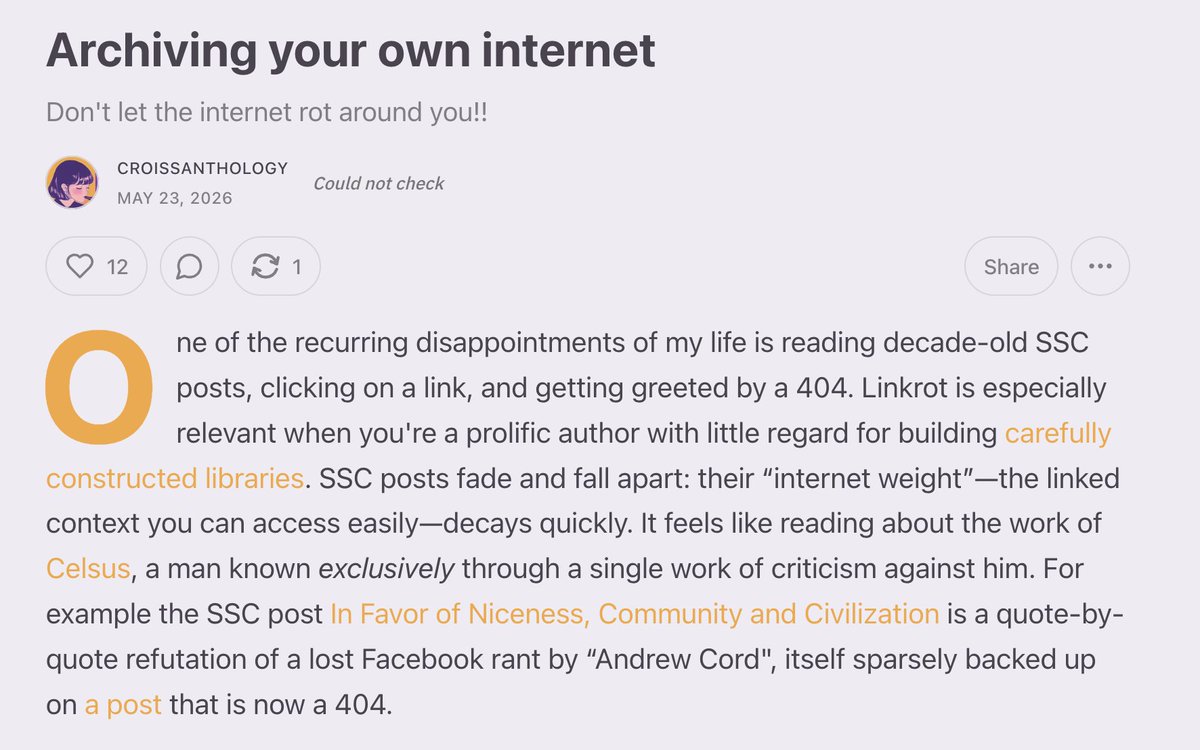
Made a post about fighting linkrot a lightweight solution I made with Claude
3
6
58
2,732

...Machine at < archive.org/ >. And there is (for now at least, on an experimental basis) my personal information butler SubTuringBradBot at < web.telegram.org/k/#@SubTuri… >:
**The Public-Reason Sphere in Mid-2026: Fighting LinkRot Edition**
<braddelong.substack.com/p/th… 2/ END
676

May 16
Hey Bas! Vet dat je al die dingen zo juggled. Mijn belangrijkste projecten momenteel zijn Start24 (helpt beginners een site te maken), SailWP (WP thema co-pilot) en LinkPulse (lost het probleem van linkrot in de affiliate industrie op). Wat zijn jouw interessantste projecten?
2
3
44

May 15
I think this describes much more of linkrot than malice does, and acknowledging the Internet's cultural preference that obtaining dominion over a site obligates you to keep it running for all time, I can think of many common preference sets that will not be compatible with that.
1
2
57
1,653

Apr 23
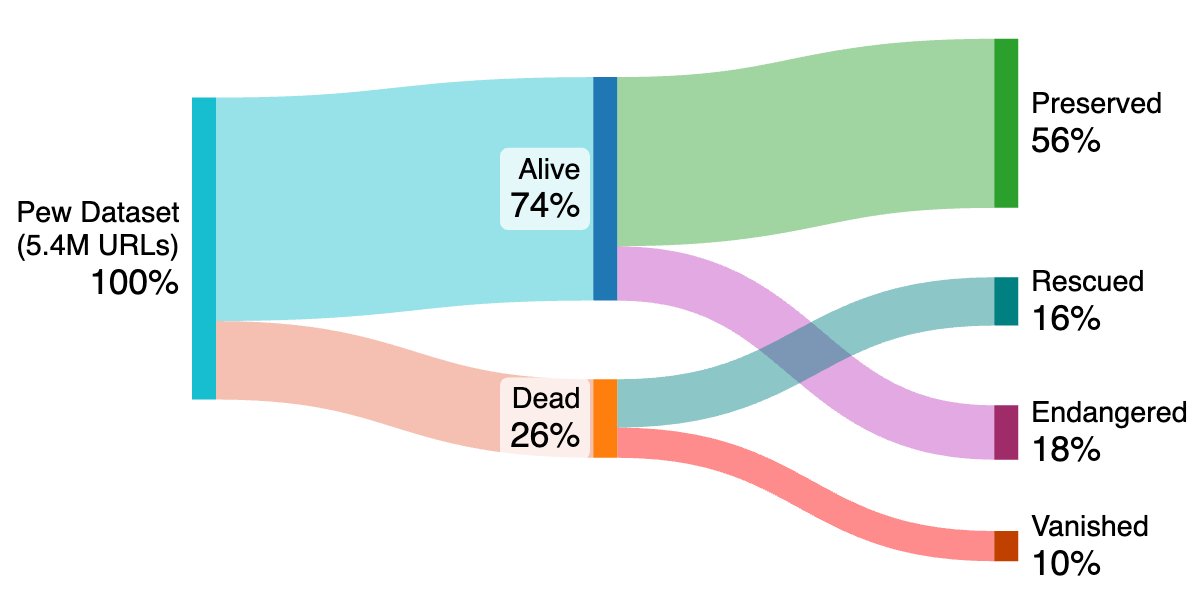
A @pewresearch study found that 38% of webpages from a decade ago and 25% of pages sampled across the decade are now inaccessible; @internetarchive's analysis shows that the @waybackmachine has rescued roughly 15% of those otherwise dead pages.
blog.archive.org/2026/04/23/…
#linkrot
2
80
219
89,848

Apr 18
There is always social and technical and cultural context that gets lost when a platform fails. The art is not only in the tokens you can pin. This hurts everybody, it‘s linkrot and bad on every level.
2
11
195

Feb 25
this is the exact energy we need more of
onchain IDs one clean launch surface self-routing liquidity is the only path that actually kills the bot/copycat/linkrot cancer for good
flisk mainnet extended S5 is chef’s kiss timing. builders get breathing room, players stay cooking
already dropped a test asset w/ onchain ID attached yesterday on @Aomnia_Networksettled sub-second and the feed lit up like christmas. future feels close
first ID-verified app i’d launch: dead-simple social profile layer that auto-verifies handle <> wallet <> onchain activity. no more impersonator accounts ever
This tweet is unavailable
4
34

Feb 16
It’s just linkrot garbage for my part of the world
tried a bunch of the URLs in the “canada(.md)” file under “links” in that GitHub, nothing but 404s etc
1
5
3,426

We've teamed up with Automattic to fight link rot on the open web. Check out the new Internet Archive Wayback Machine Link Fixer for WordPress—preserving pages, fixing broken links, and helping ensure the web keeps its memory.
Learn more ➡️ blog.archive.org/2026/02/04/…
🧵 1️⃣/3️⃣
#linkrot #memoryhole @WaybackMachine @InternetArchive @Automattic
3
30
147
8,577

Jan 26
Linkrot at work: I tried to find a quite insightful article from 2019. The entire blog is apparently gone, with the domain bought by some spammy Greek company.
Not even very long ago! Future historians will know less about the 2020s than the 1920s.
1
2
93

"Linkrot is a self-defense mechanism for he human psyche"
1
1
6
636

27 Dec 2025
I've thought about naming, files, hierarchies and the web a lot, and that's why names (ARIs*) on the @epiarc:
- are archetypal resource identifiers
- are human centric
- are user chosen
- are personal, folksonomical
- are archetypal (the most suitable name)
- reflect the names people use in real life (Facebook not facebook•com; Metro Bank not metrobankonline•co•uk)
- are consensus driven
- are eventually consistent (the archetypal names rise to the surface over time)
- are hierarchical
- are unique per context
- can be globally unique
On the Epiarc, here are some example global-context ARIs which map to URLs. Imagine seeing these in your browser address bar:
the BBC is "bbc"
BBC News is "bbc/news" or "bbc news"
American Broadcasting Company is "abc" or "abc (us)"
Australian Broadcasting Corporation is "australian broadcasting corporation" or "abc (australia)"
In an Australian context (linkbase) you have the above, with higher priority names like:
Australian Broadcasting Corporation is "abc" or "abc (australia)"
American Broadcasting Company is "american broadcasting company" or "abc (us)"
ARIs are a layer of abstraction for URLs, more friendly than domains and paths, and more resilient to linkrot. They're more secure and phishing resistant than URLs and domains, because they are names that people use and know in their daily life.
Users subscribe to linkbases in their browser or OS, and can make their own linkbases for naming things how they like. You can publish your linkbase under a /.well-known epiarc.json file and others can use them. @epiapp produces linkbases for global and local contexts, and you can access them in our search engine and link checker.
4
61

22 Dec 2025
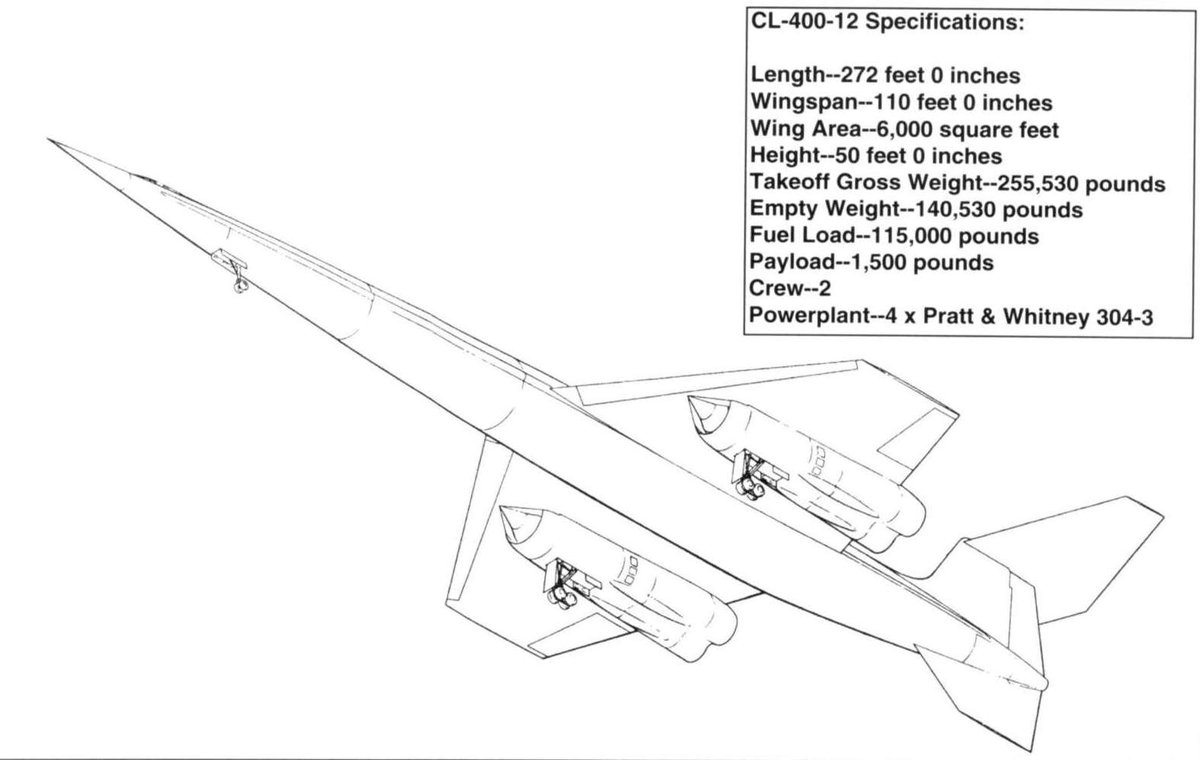
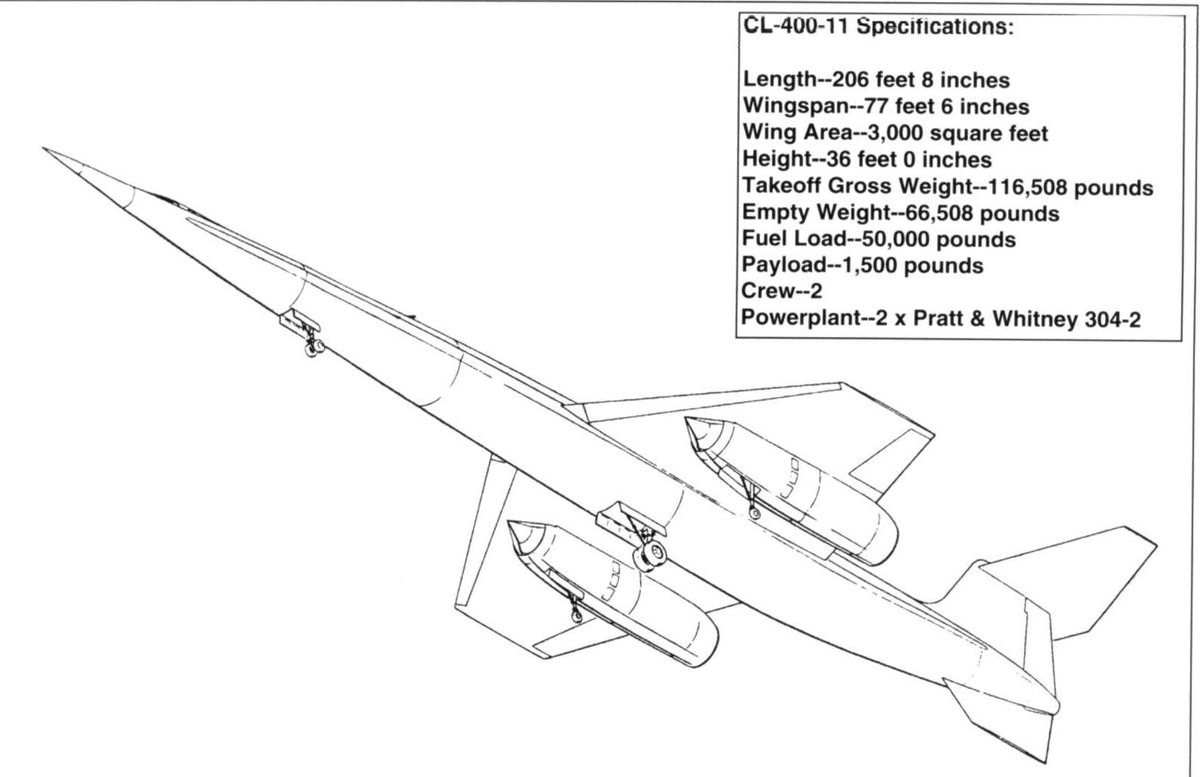
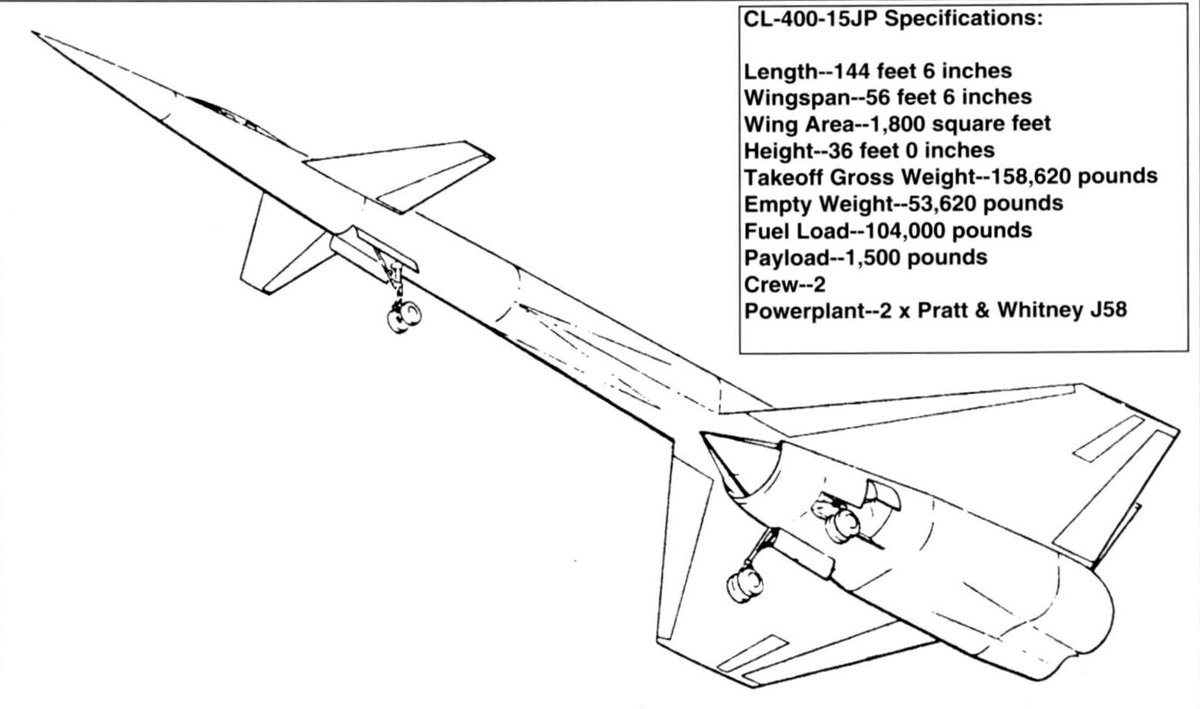
A few Lockheed CL-400 (Suntan) proposals, harvested from an old secretprojects post which itself harvested them from various sites and a NASA report that has since suffered linkrot.
Configuration 15 with the J58s looks extremely similar some of the earlier Archangel configurations (and would have been in the same time frame). Will have to consult the documents to see which designs in particular, but with similar performance targets and the same people working on both projects it's not surprising.

1
4
235

20 Nov 2025
Link Rot = When links on your site stop working over time.
It hurts SEO, user experience & credibility. How to deal with it:
Identify broken links
Fix internal link rot
Fix external link rot
Minimize future link decay
Regular audits = stronger site health & better rankings!
Read full Blog:marketinglad.io/what-is-link…
#LinkRot #BrokenLinks
3
121