
Jun 15
As Nepal enters the monsoon season, proactive coordination is our best defense to protect vulnerable communities. 🌧️
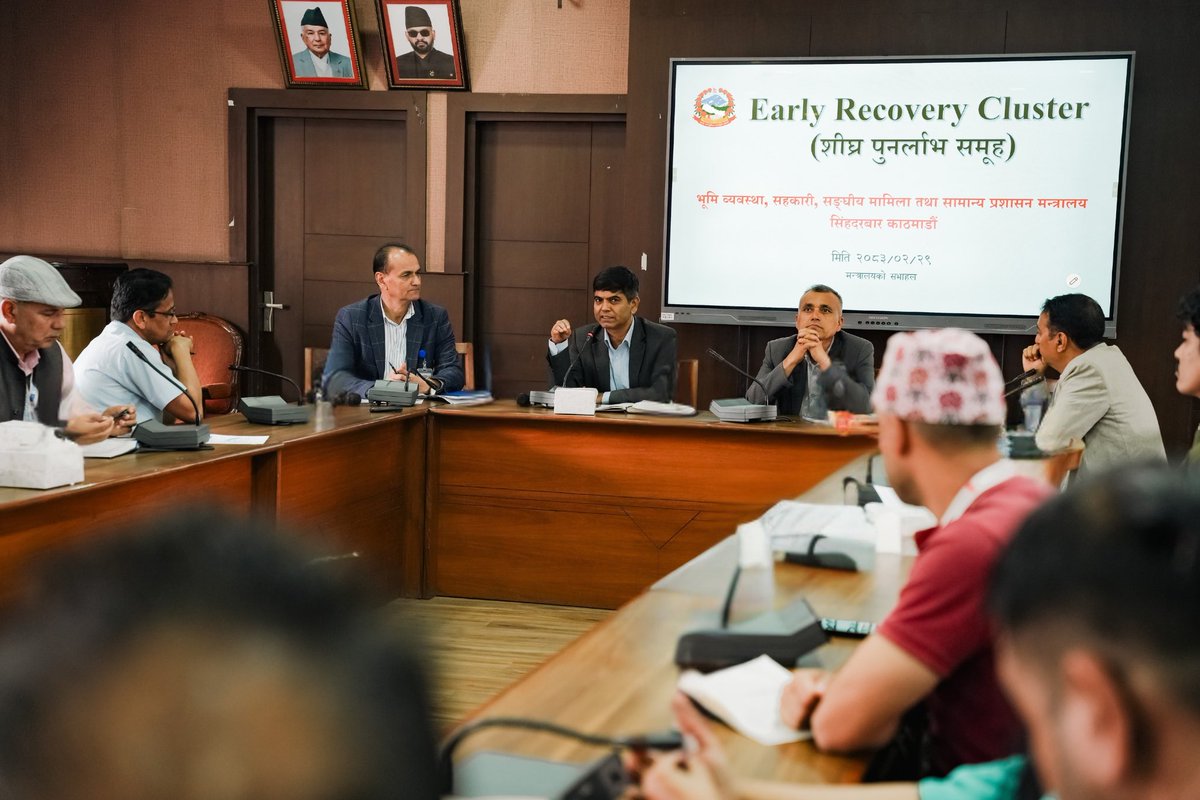
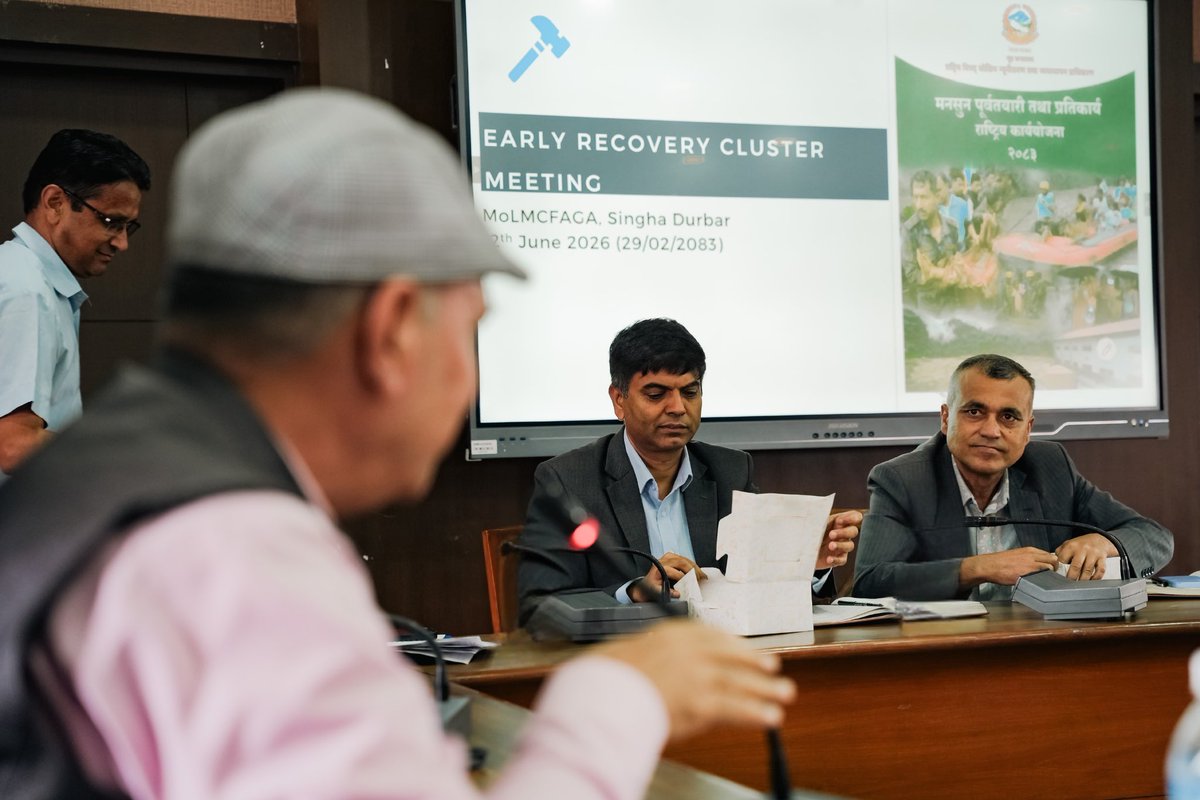
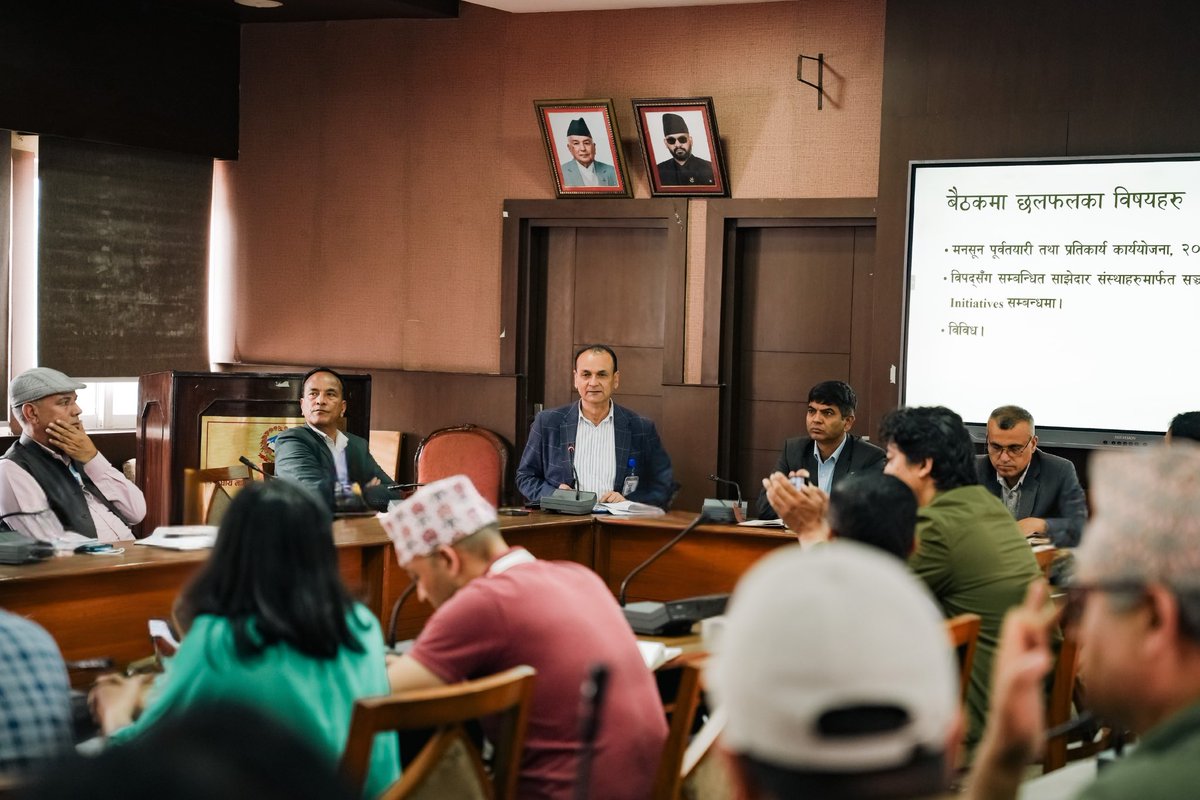
The Early Recovery Cluster co-led by the Ministry of Land Management, Cooperatives, Federal Affairs and General Administration (@mofaganepal) and @UNDP #Nepal convened its members to discuss the implementation of the Monsoon Preparedness and Response Plan (MPRP) 2083 and ongoing early recovery initiatives being supported by development partners across the country.
⛑️From stockpiling essential health and WASH kits to supporting local municipalities with shelter logistics and disseminating risk communication messages, the goal is simple: reduce risks and stand ready to support communities the moment they need it.
Through collective action and strong partnerships, we can help communities prepare for and respond to monsoon-related disasters more effectively.

2
142

Same can be said about the MPRP project and other PJM high voltage transmission projects and MD’s energy policies.
Jun 12

TJ Meadows continues to champion the Mid-Atlantic Resiliency Link (MARL) while attacking opponents for supposedly misunderstanding the grid or rejecting economic progress.
His arguments overlook the core reality of this project: it is primarily a transmission corridor allowing Pennsylvania energy producers to sell power directly into Northern Virginia’s data center market, with West Virginia serving as nothing more than a geographic and financial pass-through.
The line begins at a substation in Dunkard Township, Pennsylvania, near the West Virginia border. It then cuts through roughly 59 miles of West Virginia counties before reaching Virginia. While it is technically bi-directional, its selection and design address the massive electricity demand surge in Northern Virginia driven by data centers. Pennsylvania generators gain improved access to that high-demand market. West Virginia gains the costs, the land seizures, and the ratepayer burden—with minimal offsetting economic returns.
Meadows claims MARL will help West Virginia generators reach broader markets and relieve congestion for the good of the regional grid.
In practice, the urgent need driving this line is Virginia’s inability to meet its own exploding load with local resources. Virginia’s energy policies over recent years—including aggressive clean energy mandates, restrictions on traditional generation, and heavy tax incentives to lure data centers—have created a supply-demand imbalance. Rather than build adequate in-state generation or pay for their own transmission upgrades, Virginia now relies on neighboring states to wheel power across their territory to feed those data centers.
Why should West Virginians sacrifice for that?
We are being asked to:
• Accept hundreds of millions in added costs to our electric rates over decades, as PJM socializes the expense across the region.
• Endure eminent domain takings across private farms, homes, and land in our state so a high-voltage corridor can be built for power flowing from Pennsylvania producers to Virginia consumers.
• Absorb permanent impacts to property values, landscapes, and communities with only modest, temporary construction jobs and scattered local tax revenue in return.
West Virginia already produces far more power than it uses. Our coal and natural gas resources are valuable exports. We do not need this particular line to sell our generation. The project’s main function is to open a more efficient pathway for Pennsylvania power to reach Northern Virginia while shifting part of the infrastructure cost and all of the physical footprint onto West Virginia.
Meadows suggests opponents want grid benefits without obligations. The real imbalance is that Virginia gets the data center economic development and the imported power, Pennsylvania generators get expanded market access, and West Virginia gets the bill and the bulldozers. That is not fair participation in a regional grid—it is one state’s policy choices being subsidized by its neighbors.
West Virginians should not be required to subsidize Virginia’s decades of energy policy decisions through higher rates, lost property rights, and land disruption. If Northern Virginia data centers need more power, the logical and fair approach is for Virginia to either generate it locally, pay the full cost of any necessary transmission, or compensate pass-through states like West Virginia directly and substantially. Passing the costs and burdens onto us while calling it “regional progress” simply does not add up.
Opposition to MARL is not anti-grid or anti-development. It is a defense of West Virginia’s ratepayers, landowners, and long-term interests against a project that treats our state as a convenient corridor rather than a partner with equal standing.
1
13

Jun 12
欧洲四大传统投资移民申请周期对比
1. #葡萄牙黄金居留签证 :
整体全程:24 个月
2. #马耳他MPRP 永久居留:
标准全程:8–10 个月(一步到位永居,无临居)
3. #希腊黄金居留 :
完整流程(看房过户 申请 拿卡):12 个月左右吧白纸2个月
4. #匈牙利长期居留 :
标准审批周期:3–6 个月

1
73

Jun 11
Please help in Maryland John.
Stop MPRP, Inc.
please help soon. 🙏🏼💪
11
Jun 9
Please contact in Maryland.
Stop MPRP, Inc.
We need your help in MD. I asked you a long time ago. Landowners are being screwed.
1
1
27

May 16
马耳他政府吃透了中文推特两大流量密码:
移民 AI 白嫖
马耳他公民 部分居民身份持有者 修完 University of Malta 的「AI for All」课程 → 免费送 1 年 ChatGPT Plus
白嫖路径拆解:
1. 拿到马耳他身份(永居 MPRP ~€15-30 万,护照投资入籍 ~€60-100 万)
2. 上完一门线上 AI 通识课
3. 收 $240 / 年的 Plus 订阅
用几十万欧元换 240 刀。但顺便拿了个欧盟身份。你干还是不干?
50
7
128
55,811

May 14
Please look into the Maryland Piedmont Reliability Project (MPRP). Its a massive high voltage power line project that is cutting through HUNDREDS of Maryland farms! AND the power wont even be used in Maryland but will be used for data centers in VIRGINIA! We need help!
1
3
90

May 14
Grateful to receive 2 Emmy nominations. But more importantly, for those with high energy bills or worried about losing land to the MPRP, thank you for trusting me with your stories. It’s a privilege I don’t take lightly.

1
2
5
862

May 14
What about the Maryland land owners, including many farmers, who are being threatened with eminent domain land grabs because of the proposed MPRP? Please look into this too @johnrich @POTUS
May 13

I was tasked by President Trump to protect land owners from egregious behavior, including eminent domain. I'm calling on @GeorgiaPower to connect me with CEO Kim Greene tomorrow. I've just received screen shots of your "condemnation threat" letters, and will be posting them on X.
1
1
7
69

May 13
This is happening in MD too. Farmers are fighting it with a group called Stop MPRP. They would love your assistance I’m sure.
2
18
May 8
You could preserve HUNDREDS of farms if you would just publicly oppose and speak against MPRP but you wont! When will you finally stand up for Marylanders!
2
24
Apr 15
And yet YOU are letting MPRP go through unchallenged destroying HUNDREDS of Maryland farms! But this one or two building set up is a real environmental hazard?? You're a joke! cc @baltimoresun @FOXBaltimore @BaltimoreBanner
1
7
131

Apr 9
The Malta 🇲🇹 golden visa (MPRP)
Offers EU residency for up to 4 generations.
One of the best programs for big families
2
19
2,514

We need to recreate the MPRP bro (I'm the CPSU)
1
3
49

Apr 6
While the proposed Maryland Piedmont Reliability Project (MPRP) goes through the state regulatory process, an agency participating in the review of the proposed high-voltage transmission line called the current procedural schedule "untenable." bit.ly/41MtmqW
1
1
462

Im pretending im The Mprp and im gonna kill you
Hashtag kills you
1
3
23

@WoweeTheNotable pretend ur the mprp and kill this guy
2
12

YURIEL STONE TOSSING COMPETITION BEFORE THE MPRP GETS ME HOSTING IT IN 10 MINS BE THERE OR BE SQUARE
2
2
19

Bullying is how I show I care ❤️
Also I’m a dick.
Also also what the hell’s an mprp
1
2
21
All my oomfs bully and throw bricks at me I hope the mprp come for u too
2
2
17