
27 Nov 2025
TURN CORN WASTE INTO LIVESTOCK WEALTH: THE POWER OF MAIZE STOVER
Most farmers harvest maize cobs and abandon the stalks, leaves, and stems in the field. What they don't realize is that this "waste"—called maize stover or corn fodder—is one of the most cost-effective, nutritious livestock feeds available for cattle, goats, sheep, and rabbits.
WHAT IS CORN FODDER?
Corn fodder consists of the leaves, stems, and husks left after harvesting maize. When properly chopped, dried, or ensiled, these plant parts become high-quality roughage that significantly reduces feed costs while maintaining animal health and productivity.
NUTRITIONAL VALUE:
Rich in fiber essential for rumen health and proper digestion, corn fodder provides the bulk animals need to feel satisfied while supporting steady growth and weight maintenance. Though not protein-rich, it's an excellent energy source when combined with concentrates or legume forages.
KEY BENEFITS:
1. Cost Savings – Free or extremely cheap since it's a byproduct of grain production. Why buy expensive hay when you're already growing the solution?
2. Readily Available – Maize is cultivated across Rwanda and Africa, making fodder accessible to virtually every livestock farmer during harvest season.
3. Dry Season Security – Properly stored as silage or dried fodder, maize stover provides reliable nutrition when pastures fail and commercial feeds become expensive.
4. Waste Reduction – Transforms agricultural residue into valuable livestock feed instead of burning it or leaving it to decompose unproductively.
5. Improved Palatability – When chopped into small pieces (3-5 cm), animals consume it eagerly with minimal rejection, especially when mixed with molasses or salt.
6. Digestive Health – The fiber content promotes healthy rumen function, prevents bloating, and maintains optimal gut motility in ruminants.
HOW TO USE CORN FODDER:
Fresh Feeding: Chop green stalks immediately after grain harvest and feed fresh. Animals love the moisture and sweetness.
Dried Storage: Chop and sun-dry thoroughly, then store in a dry place for up to 6 months. Rehydrate slightly before feeding for better intake.
Silage Production: Chop fresh stalks, compact tightly in airtight containers or pits, and allow fermentation. This preserves nutrients for 12 months and improves digestibility.
PRACTICAL FEEDING TIPS:
✓ Chop into 3-5 cm pieces for easy consumption
✓ Mix with protein supplements (beans, groundnut cake) for balanced nutrition
✓ Combine with salt or molasses to increase palatability
✓ Introduce gradually to avoid digestive upset
✓ Store properly to prevent mold and nutrient loss.
THE ECONOMICS:
A farmer with 1 hectare of maize can harvest:
Grain: 2-4 tons (primary income)
Fodder: 4-6 tons of dry matter (bonus feed value).
That fodder can feed 5-10 goats or 2-3 cattle for 3-4 months, saving thousands in commercial feed costs. It's income you're currently leaving in the field.
BOTTOM LINE:
Corn fodder is smart, sustainable, and profitable livestock management. It reduces feeding costs, ensures year-round nutrition security, maintains animal condition during difficult seasons, and transforms waste into wealth.
Stop burning or abandoning your maize stalks. Chop them, store them, and watch your livestock thrive while your feed costs plummet. This is how resourceful farmers #FeedTheCommunity sustainably.
#LivestockFarming #MaizeFodder #CattleFeeding #GoatFarming #SheepFarming #Silage #FeedManagement #SustainableAgriculture #FarmingTech #CostEffectiveFarming #FeedTheCommunity

2
2
67

24 Jul 2025
Ever heard of cultivating maize fodder in a cupboard?
This farmer from Tamil Nadu gets around 5 kgs of fodder in just eight days through this method. Here's how he does it. #HydroponicMaize #SoillessFarming #MaizeFodder #CupboardCultivation #OrganicFarmer #SustainableAgriculture #NamakkalInnovator
thebetterindia.com/web-stori…
1
3
1,471

14 Jun 2025
मक्के की इस किस्म के चारे से पशुओं का बढ़ेगा दूध
#MaizeFodder #NationalSeedCorporation
kisantak.in/animal-husbandry…
2
13

Nashik News : २० ट्रॉली मका चारा जळून खाक
deshdoot.com/nashik-news-20-…
#Nashik #NashikNews #Burn #Maize #MaizeFodder
1
3
216

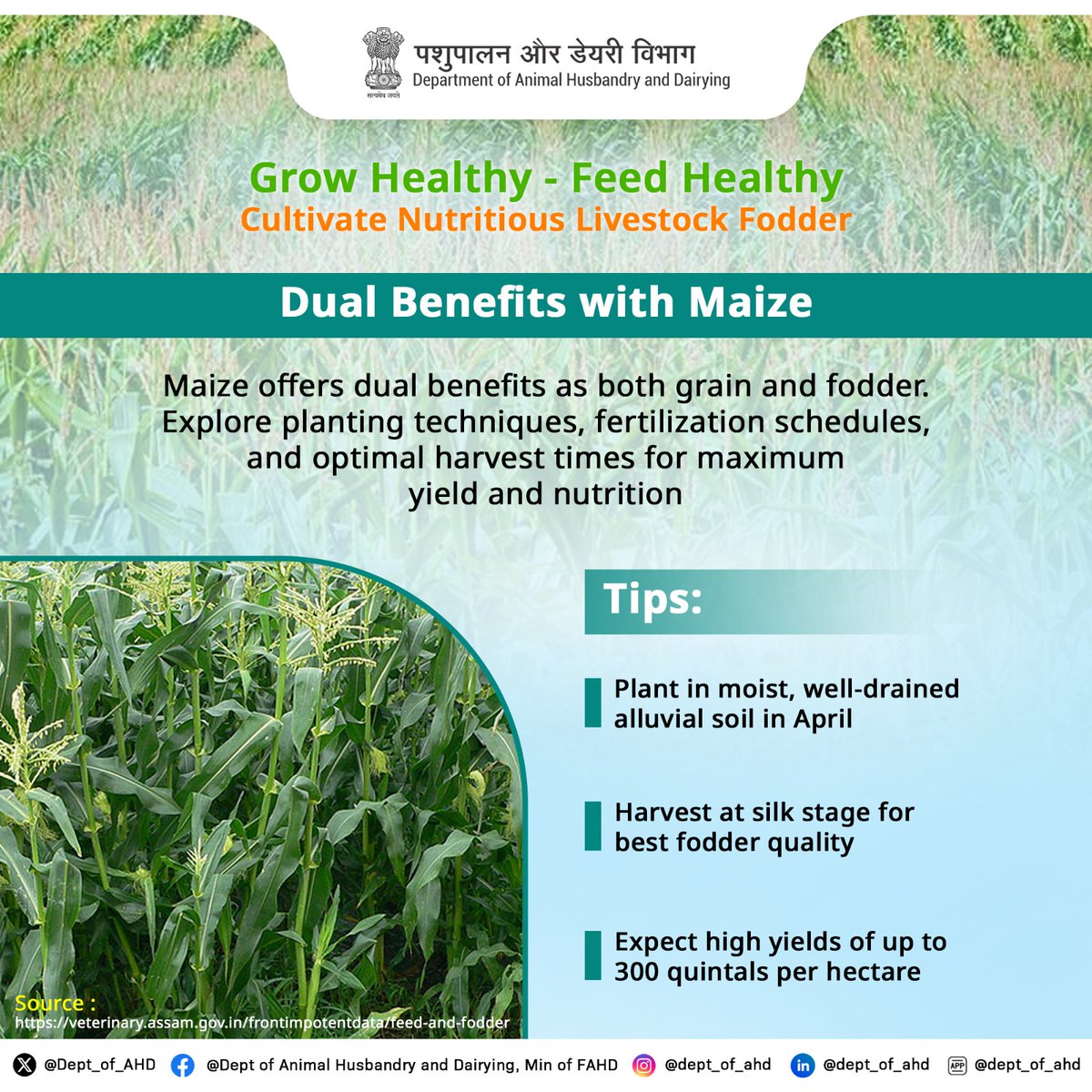
Maize: loved by farmers and livestock alike!
Learn when and how to grow this versatile crop for grain and fodder. #MaizeFodder #LivestockFavorite @LalanSingh_1 @spsinghbaghelpr @mygovindia @PIB_India @MIB_India @NDDB_Coop
6
20
994