
17 Mar 2025
CELL-FREE SYNTHETIC BIOLOGY
On biochemical constructors and synthetic cells
“Is it possible to build life? More specifically, is it possible to create a living synthetic cell from inanimate building blocks? This question precipitated into one of the most significant grand challenges in biochemistry and synthetic biology, with several large research consortia forming around this endeavour in Europe (European Synthetic Cell Initiative), the USA (Build-a-Cell Initiative) and Japan (Japanese Society for Cell Synthesis Research).”
royalsocietypublishing.org/d…
SYNTHETIC BIOLOGY - SEVERAL LARGE RESEARCH CONSORTIA
🔺Europe
European Synthetic Cell Initiative (SynCellEU)
The European Synthetic Cell Initiative is a formal partnership between research institutions from the Netherlands, Germany, France, and Spain.
SynCellEU consists of a network of excellent European research laboratories, institutions and companies, coordinated by Delft University of Technology (TU Delft) in the Netherlands, that have joined forces to collaborate on synthetic cell research and accelerate its translation into technology.
syntheticcell.eu/
🔸Signing of a Memorandum of Understanding (MOU) between the partners of the European Synthetic Cell Initiative
syntheticcell.eu/signing-of-…
CONTRIBUTING PARTNERS
▪️Delft University of Technology (TU Delft) in the Netherlands, which coordinates the initiative
tudelft.nl/
— DUTCH HUB of SynCellEU
BaSyC (Building a Synthetic Cell) is a research programme aimed at creating an autonomous, self-reproducing synthetic cell with a bottom-up approach, that is, through integration of molecular building blocks. The project is a joint effort of 17 team-leaders with backgrounds in physics, chemistry and biology. They work for 6 Dutch research institutions: Delft University of Technology, Groningen University, Radboud University Nijmegen, Vrije Universiteit Amsterdam, Wageningen University and the AMOLF Institute.
basyc.nl/
— Evolving life from non life (EVOLF)
The EVOLF consortium of 31 scientist leaders with over a 100 PhD students and postdocs is unique worldwide in its top quality and high diversity. EVOLF involves the next generation of top scientists to ensure a continued leading role of the Netherlands in the rapidly developing global field of synthetic cell research & technology.
evolf.life/
▪️The Max Planck Society (MPG) in Germany
mpg.de/en
— MaxSynBio - Max Planck Research Network in Synthetic Biology
maxsynbio.mpg.de/13480/maxsy…
▪️The French Alternative Energies and Atomic Energy Commission (CEA)
The CEA boasts 9 research centres across France. It has built strong partnerships with many other research organisations, regional authorities and universities.
The CEA features four operational divisions tasked with carrying out its research:
Energy Division
Military Applications Division
Technological Research Division
Fundamental Research Division
cea.fr/english/Pages/Welcome…
▪️The Spanish National Research Council (CSIC)
A State Agency for scientific research and technological development, with a special legal status, its own assets and treasury, functional and managerial autonomy, full legal capacity and of unlimited duration (art. 1 Statutes – Articles of Association).
csic.es/en/csic
ASSOCIATE PARTNERS
▪️The University of Oxford in the UK
ox.ac.uk/
— SIGSYNCELL
Part of the broader European synthetic cells consortium SynCellEU
The SIGSYNCELL doctoral network, which is under CNRS coordination, brings together a dozen European academic partners, with twelve PhDs. Together they will explore topics relating to communication within synthetic cells.
cnrs.fr/en/update/sigsyncell…
10
33
59
3,276


10 Jul 2024
great! Let me assemble a cool gang and we'll come back to you.
2
212

10 Jul 2024
@ManuelTHERY I can bring your proposal to the EMBL/EMBO symposium committee in December - just let me know
1
3
311
10 Jul 2024
Still no EMBO workshop/symposium on artificial cells ...
Let us make this happen ! Who's interested?
@SynCellEU @BaSyCresearch @MaxSynBio
10 Jul 2024

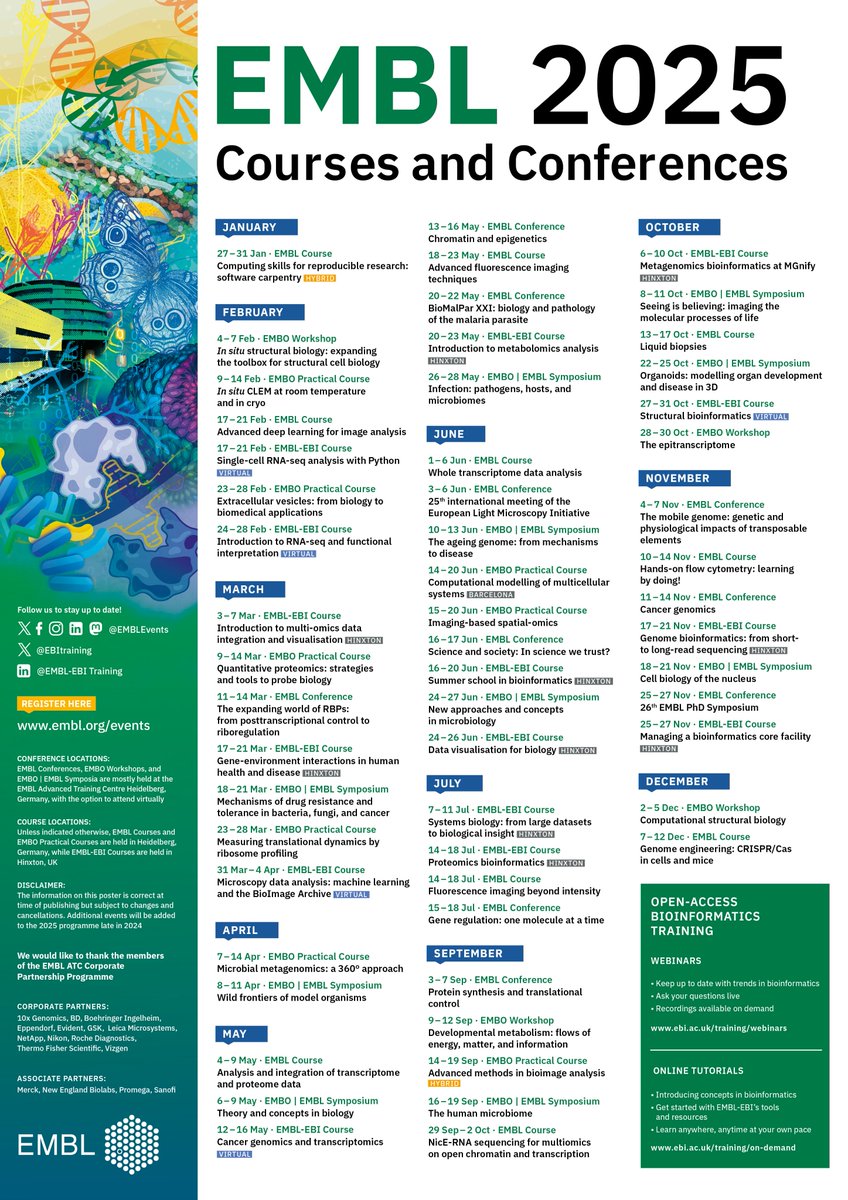
New science awaits! ✨ We are excited to introduce you to our brand-new 2025 EMBL Annual Poster ➡️ embl.org/about/info/course-a…
In 2025, you can look forward to novel meetings such as the EMBO | EMBO Symposium 'Mechanisms of drug resistance and tolerance in bacteria, fungi, and cancer', as well as tried and true classics like #EMBLCanGen 🙌
#molecularbiology #lifesciencetraining #lifesciences
4
5
31
5,132

18 Dec 2023
Pleased to have contributed to this @NatRevMCB paper: Present and future of synthetic cell development. nature.com/articles/s41580-0…
with @DoraTang5 @MarileenD @KateAdamala @TakinoueLab & Petra Schwille.
@fabriCELL_UK @buildacell @MaxSynBio @BaSyCresearch @ImperialChemEng
1
7
28
2,013

30 Nov 2023
Deadlines: To submit an abstract: 1 March 2024 To register: 31 March 2024
2
388

16 Aug 2023
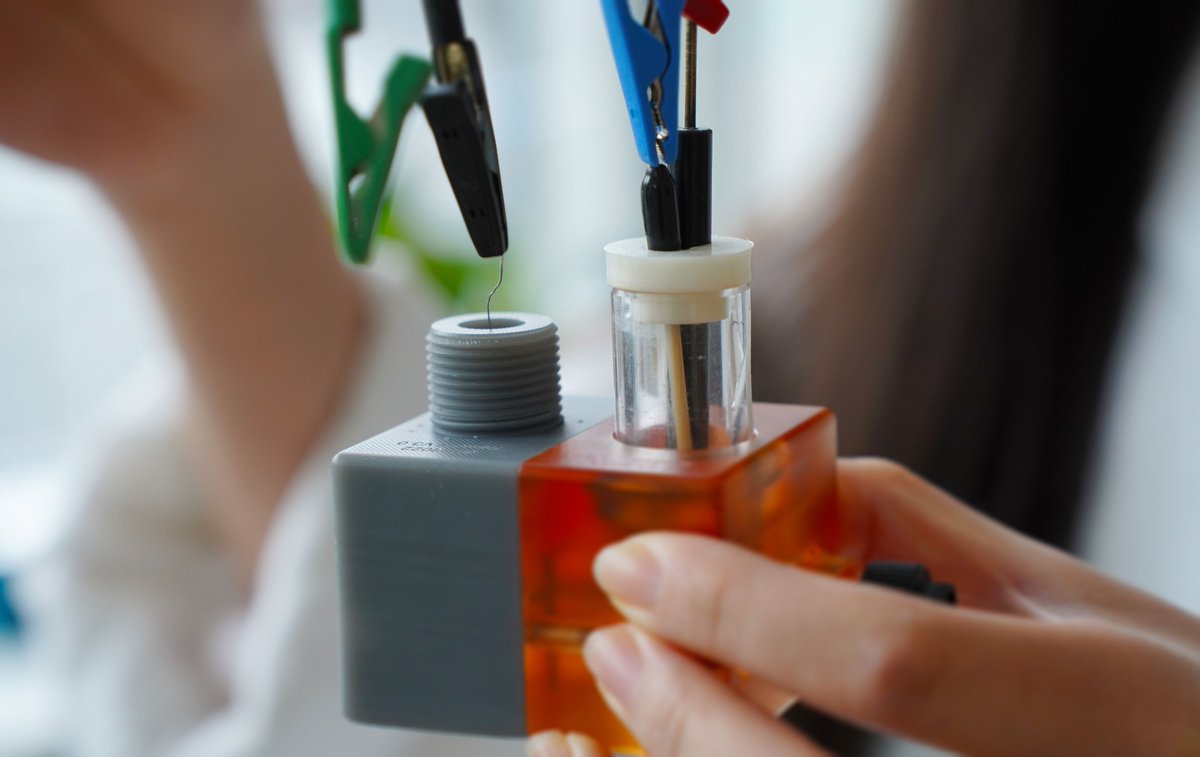
Electricity driving life: researchers @erblabs @mpi_marburg develop an artificial metabolic pathway that uses #electricity to produce ATP: a complete novel approach towards a sustainable, climate-neutral bioeconomy!🔌🌿mpg.de/20733252/0809-terr-el… @Uni_MR @SYNMIKRO | @MaxSynBio
10
44
8,357

16 Aug 2023
Based on the research in MaxSynBio! 🤩
16 Aug 2023

Elektroantrieb für das Leben: ein Forschungsteam am @mpi_marburg hat einen künstlichen Stoffwechselweg entwickelt, der aus elektrischem Strom biochemische Energie gewinnt. 💡🔌🌿 In diesem Video erklärt @DoktorWhatson, warum das so spannend ist! 🎞️
2
636

27 Mar 2023
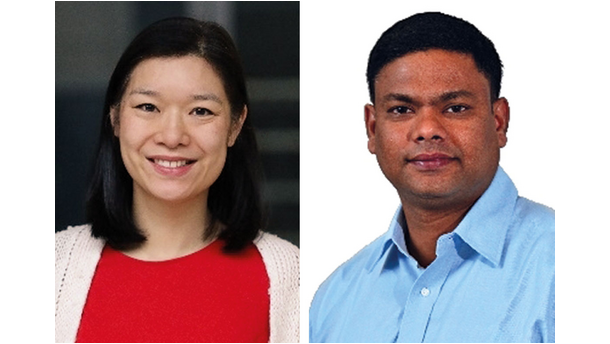
RT BristolChem "RT @ChemSystemsChem: Guest Editors @DoraTang5 (@mpicbg, @MaxSynBio) and Avinash J. Patil (@BristolChem) introduce our special collection on Protocells and Prebiotic Systems onlinelibrary.wiley.com/doi/… x.com/ChemSystemsChem/status…"
2
198

27 Mar 2023
Guest Editors @DoraTang5 (@mpicbg, @MaxSynBio) and Avinash J. Patil (@BristolChem) introduce our special collection on Protocells and Prebiotic Systems onlinelibrary.wiley.com/doi/…
5
13
4,519

Congratulations dear Kerstin - it was great pleasure working with you in @MaxSynBio! 💃
1

10 Oct 2022
Over the past years the group has been involved in collaborative projects in the field, within @MaxSynBio and we are partners of the european Synthetic Cell community @SynCellEU .
1
1
3
21 Sep 2022
1
2
2 Sep 2022
Congratulations to our former colleague Anthony Hyman in the #MaxSynBio Network - it was great honour working with you! @HymanLab @maxplanckpress @mpicbg
2 Sep 2022

Research transforming our knowledge of dementia wins science prize. Article in @DeutscheWelle on Anthony Hyman @mpicbg @HymanLab receiving the Körber Prize today. @KoerberScience. dw.com/en/research-transform…
1
3
5 Aug 2022
Interested in Synthetic Cells? Then check out this Discussion Meeting we are organising at @royalsociety. We have some fantastic speakers and the venue has capped numbers so early registration is advised! @fabriCELL_UK @buildacell @SynCellEU @MaxSynBio
royalsociety.org/science-eve…
2
31
61

22 Jun 2022
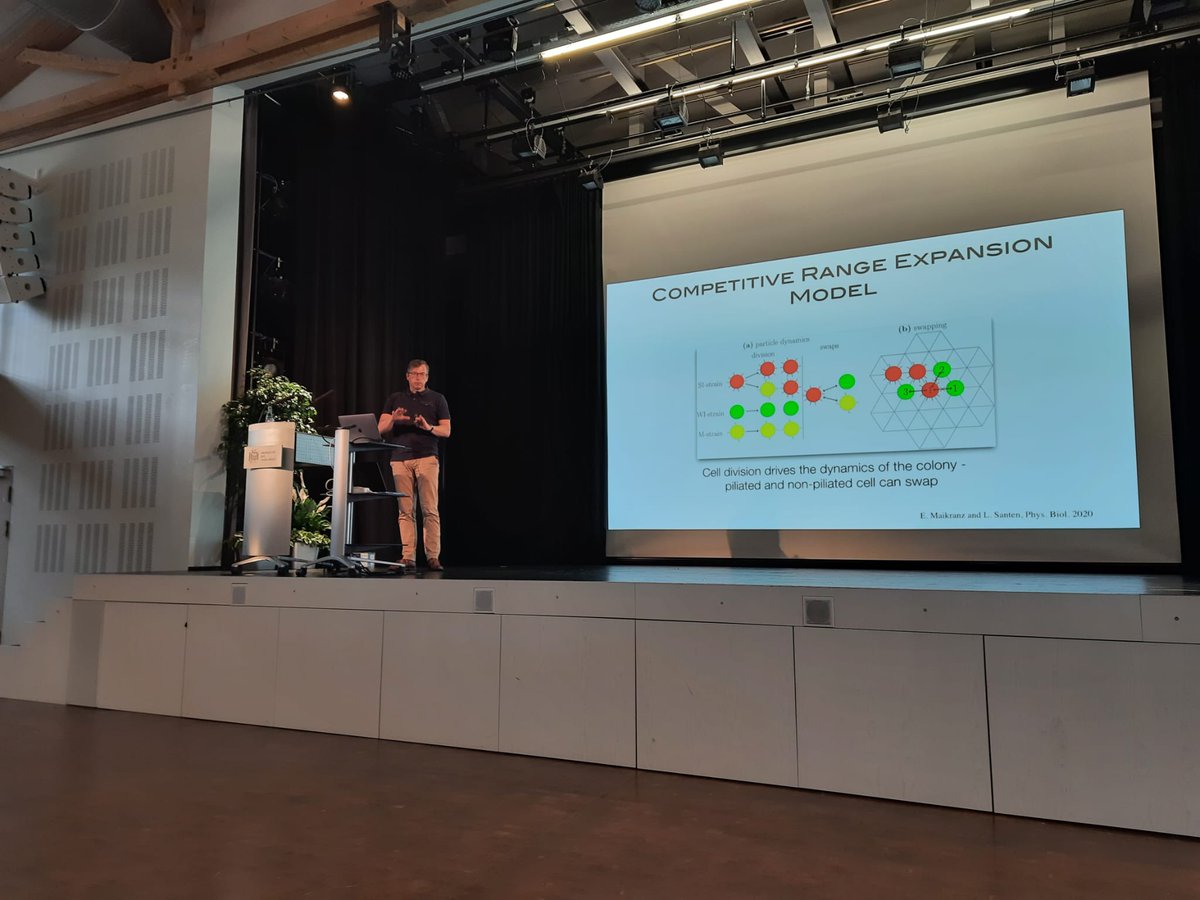
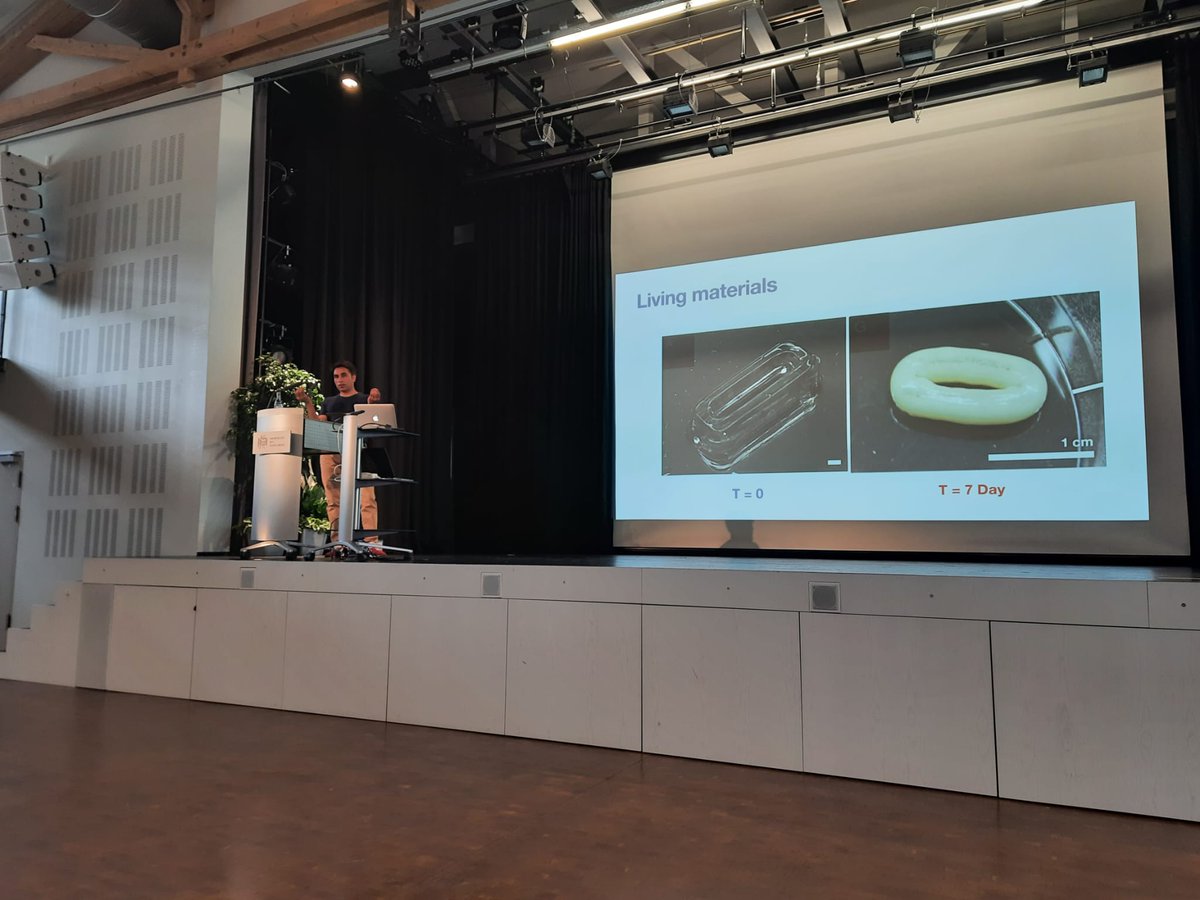
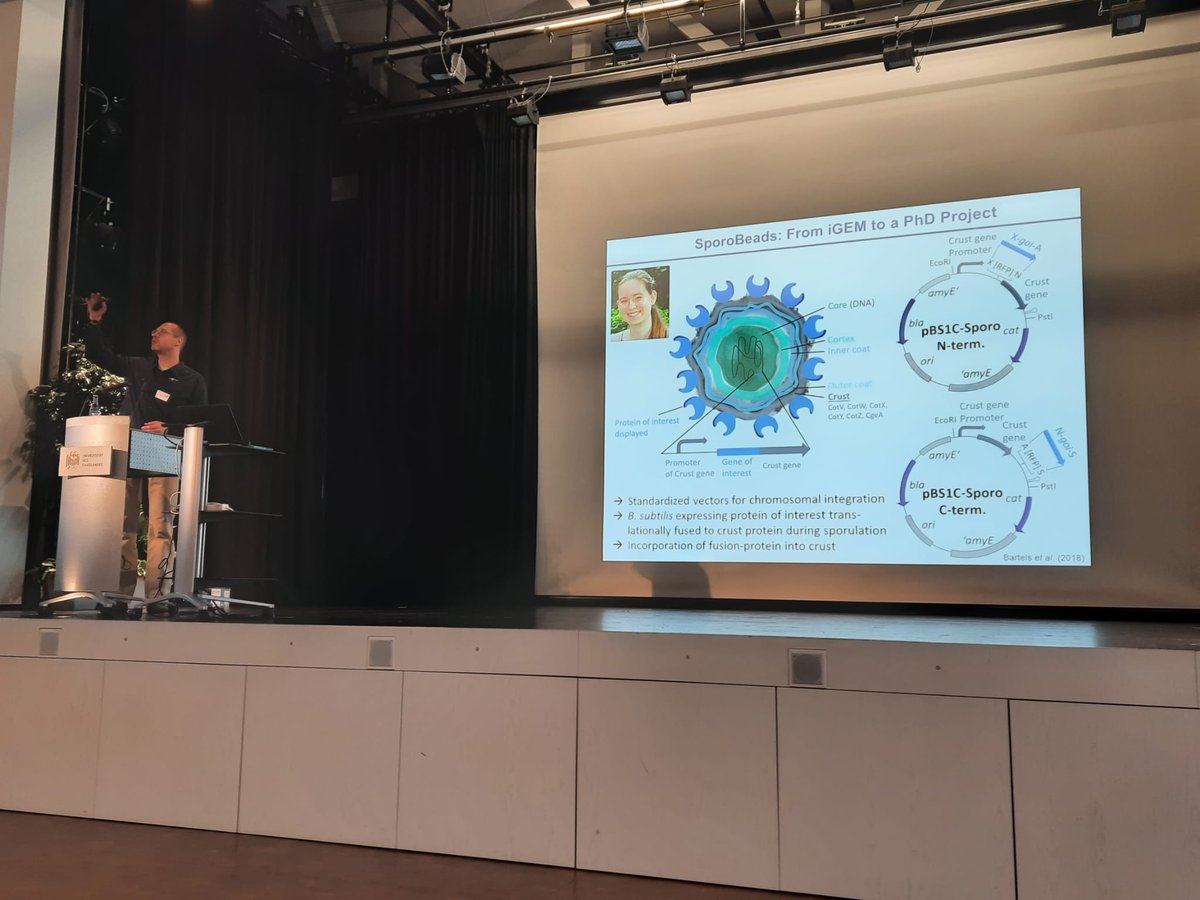
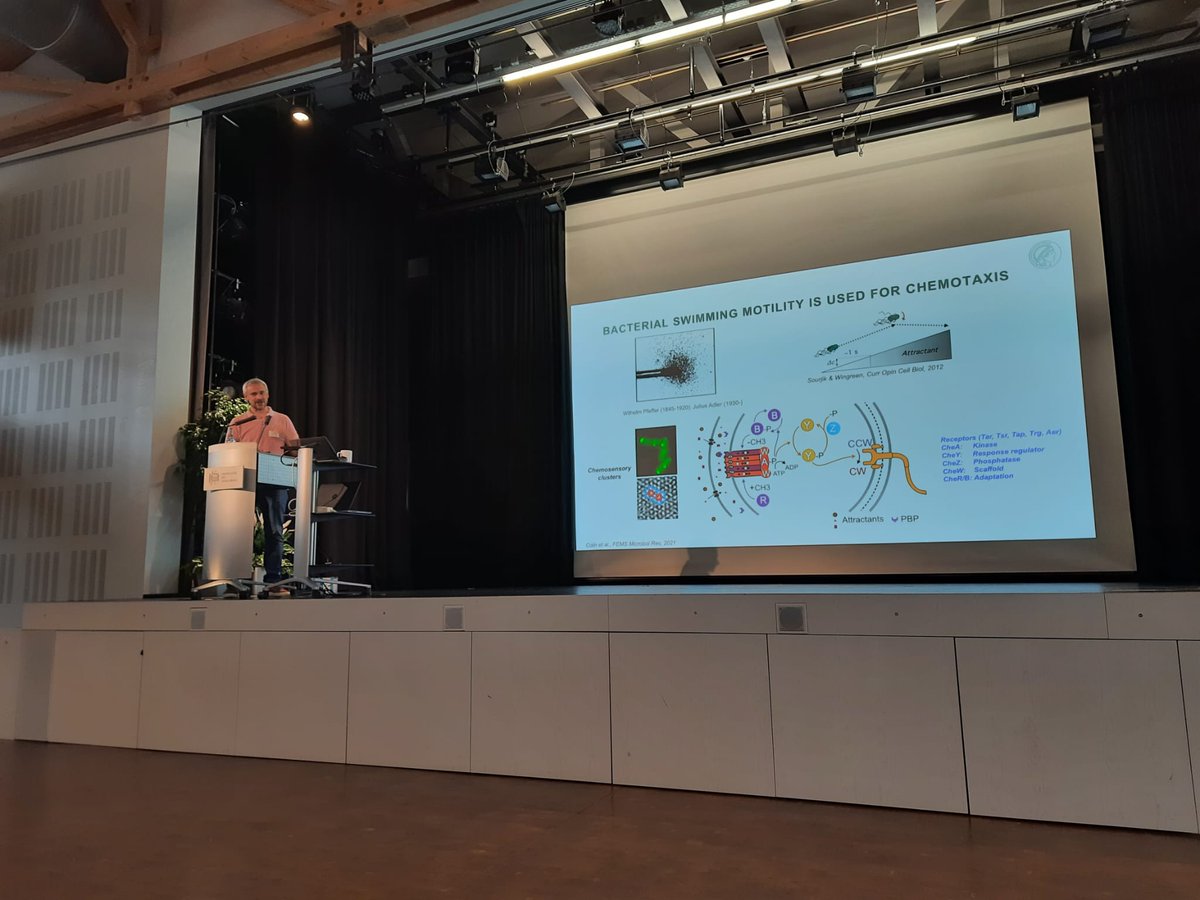
Talks by Victor Sourjik @MaxSynBio, Thorsten Mascher @tudresden_de, Prof. Ludger Santen, and @theresearch gave a unique perspective on bacterial motility and chemotaxis, functionalized Bacillus Sporobeads, bacterial growth modeling, and growth of yeasts in ELMs. #ELM2022 #synbio
3
6

22 Jun 2022
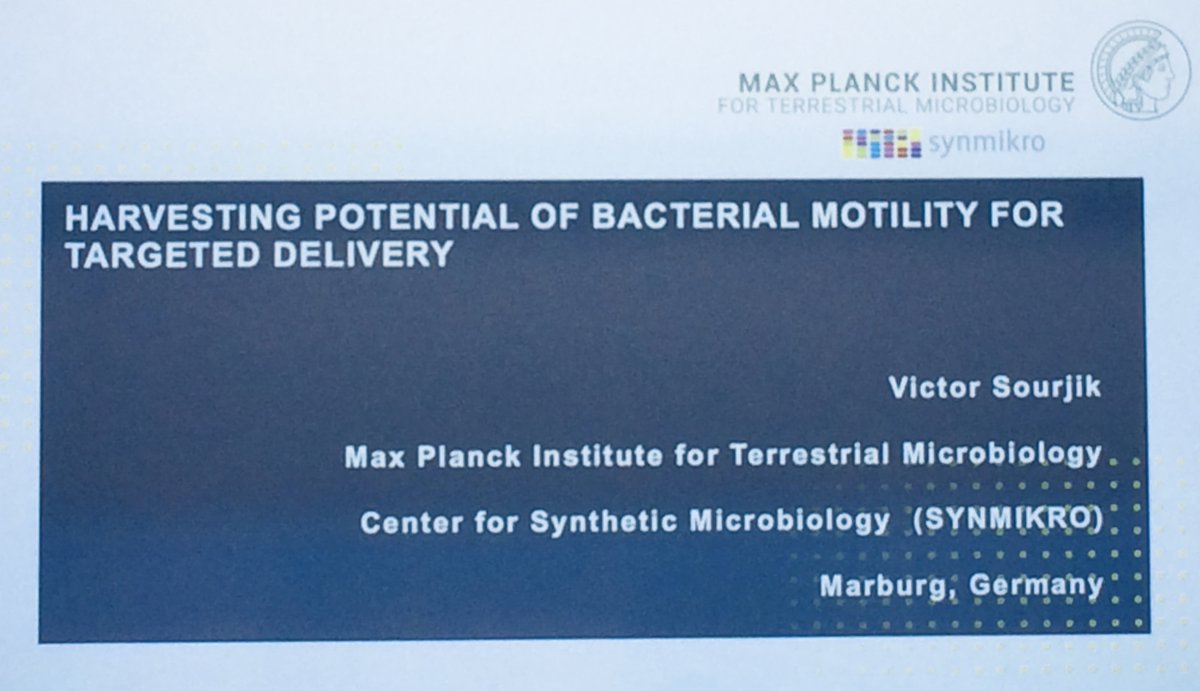
Victor Sourjik of @MaxSynBio on the potential of bacterial mobility for targeted drug delivery #ELM2022 #ELM
#syntheticbiology #engineeredlivingmaterials @LSCLifeMat
1
3
29 Mar 2022
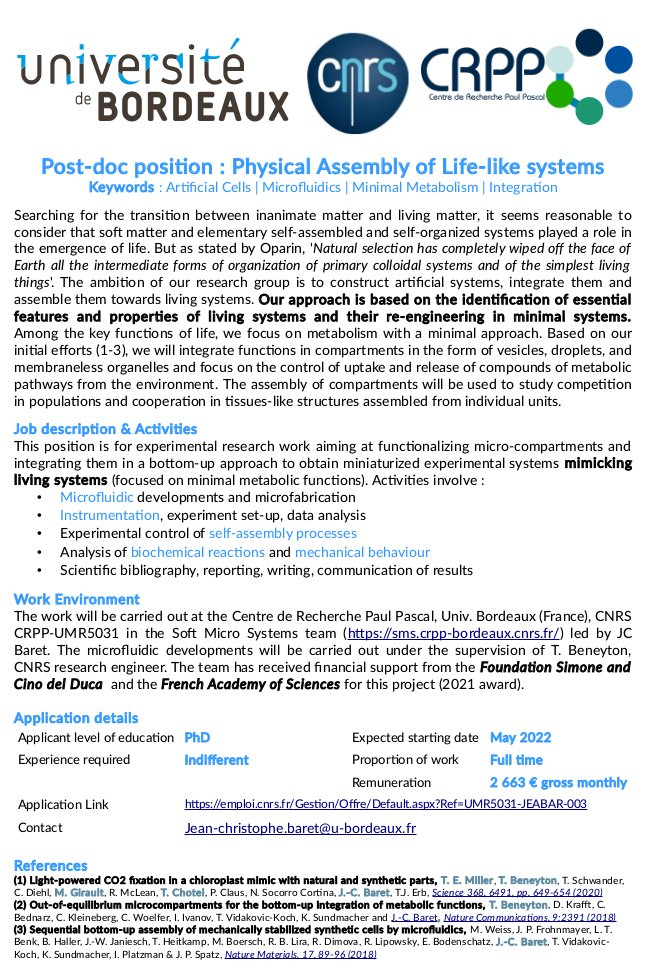
Open Post-doc position in our group in Bordeaux !
Physical Assembly of Life-like systems
Apply here: bit.ly/3BvrHrL #Emploi via @EmploiCnrs
@SynCellEU @MaxSynBio @univbordeaux @CNRSAquitaine @BxFrontiers
26
40

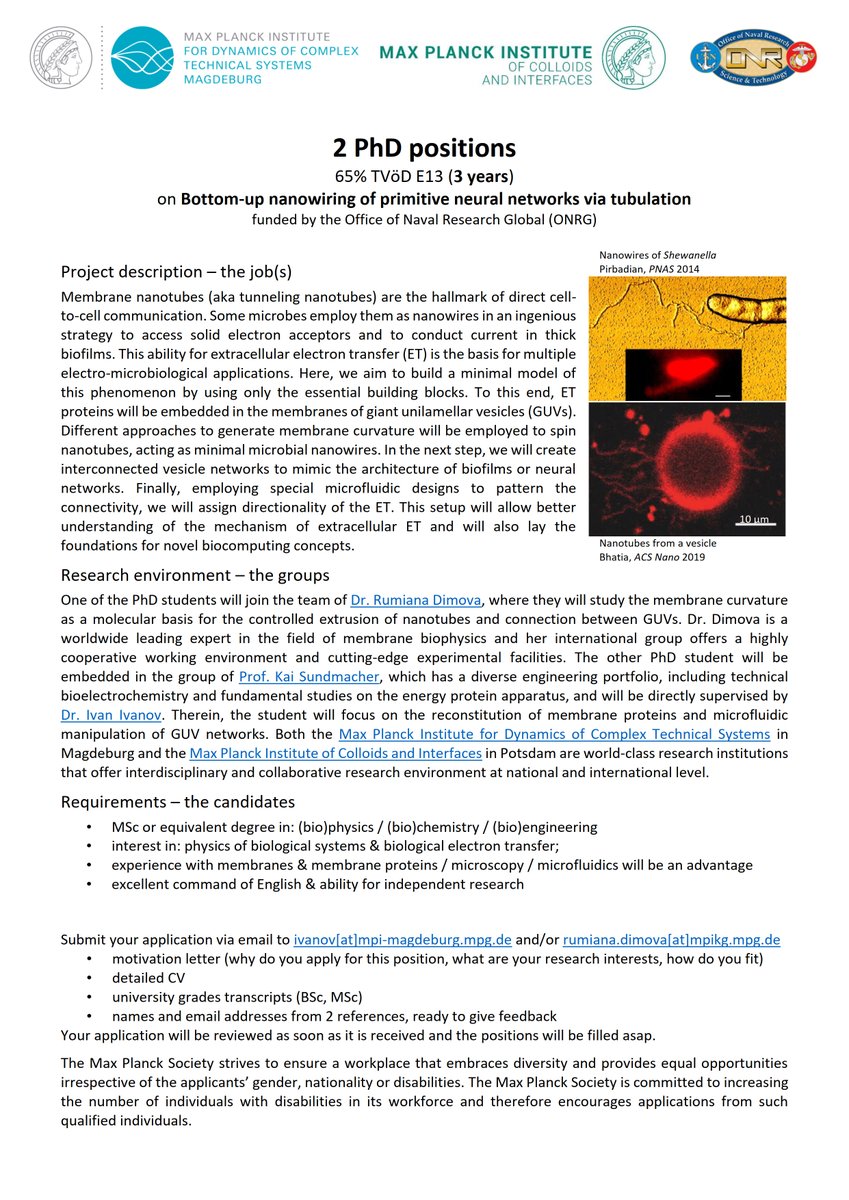
WANTED: 2 PhD students in (bio)physics/(bio)engineering to build a minimal neural network at @MpiciPotsdam & MPI Magdeburg
Joint project with I.Ivanov @sundmacherkai lab
Apply at bit.ly/3tr3Kj7
RT = nice
@ResearchGermany
@dfg_public @DAAD_Germany
@Chemjobber
@MaxSynBio
1
42
84