
Privy sediments yield intact helminth eggs and host/pathogen DNA. Shotgun metagenomics plus targeted PCR reconstruct bacterial genomes and resistance markers, letting archaeologists and microbiologists place pathogens and genes in time and environment.
1

Join me, Aaron Comeault and @AmyEllison_UK at Bangor to explore how species-specific skin microbiomes shape variation in amphibian responses to chytrid.
Looking for experience in microbial ecology / host–microbe interactions / metagenomics / bioinformatics.
1
8

Don't miss the JGI's Microbial Genomics & Metagenomics Workshop at the Fisabio Summer School in Spain July 20–24.
Register here (Module 4): redcap.fisabio.san.gva.es/su…

1
93
Michael Stiehl retweeted

We released our latest metagenomics preprint. I’m really excited about this study.
The unofficial title is ‘conquer the dark matter, volume 1’
1/
medrxiv.org/content/10.64898…
5
28
140
4,985


Same action sequence → same outcome. Published non-goals: no pharmacokinetics, no metagenomics, no diagnosis. Full lab: playground.omid.dev/labs/mic…
26
Robin-Ann #WearAnN95 Klotsky, PhD 🇺🇦🌻 retweeted
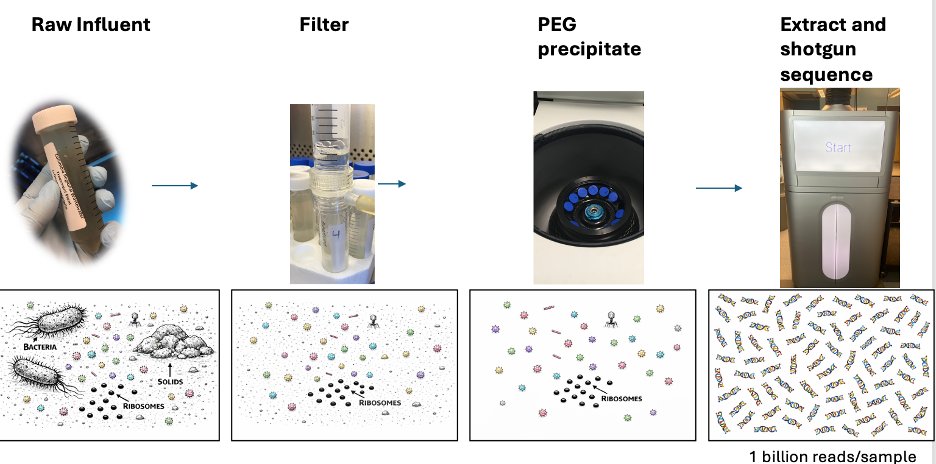
When we do metagenomics we filter to remove bacteria and solids, concentrate, and sequence using a method that favors RNA, but still captures DNA.
What we are left with is basically viruses, ribosomes (from the hosts), and plasmids.
2/
1
2
38
787

@microbeminded2 , I think you just connected the dots! If @SolidEvidence can afford the equipment to do metagenomics on wastewater from many cities in near real time, and "sequence the crap out of it", why can we do that on stool samples from large numbers of chronically sick?
10