
17m
Accurate diagnosis of line-to-ground and line-to-line-to-ground faults in AC microgrid with ... sciencedirect.com/science/ar… #MachineLearning
4

Microgrid company ERock Inc., formerly known as Enchanted Rock, has started trading on the New York Stock Exchange. The CEO talked to the Houston Business Journal about the company's next chapter. bizjournals.com/houston/news…
108

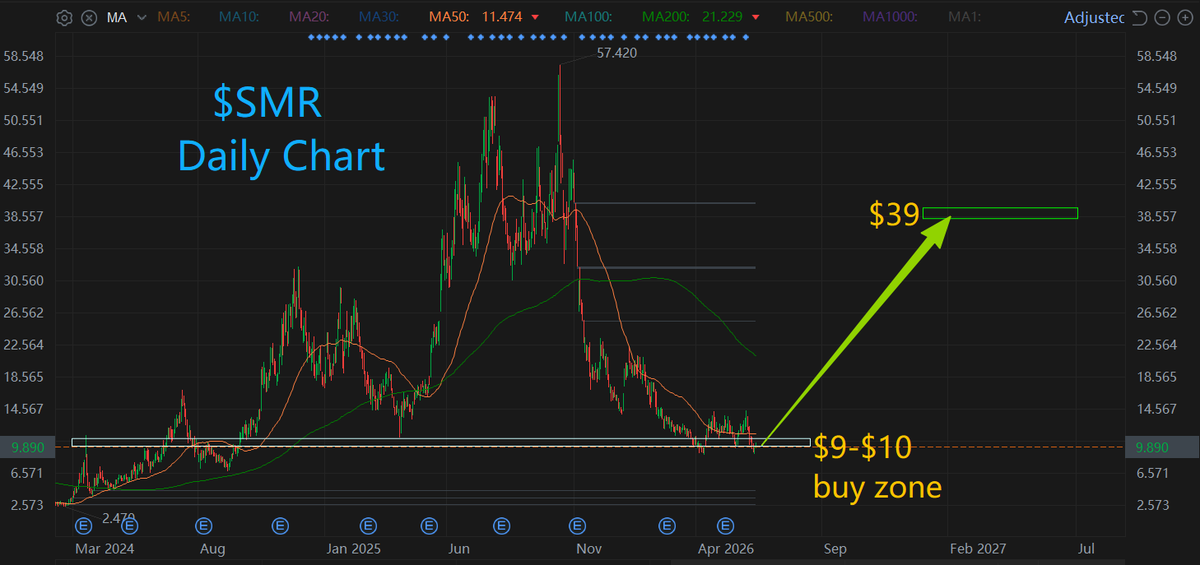
$SMR --- On June 2, 2026, $SMR announced Dr. Dale Klein, former Chairman of the U.S. Nuclear Regulatory Commission (NRC), and a senior former U.S. Department of Energy official are joining its Board of Directors. For an industry critically dependent on government relations and licensing, adding the former top regulator represents the ultimate regulatory "green light" – dramatically enhancing credibility for large-scale project execution and capital raising.
During May's Q1 earnings call, $SMR confirmed shareholders of Romania's SN Nuclearelectrica formally approved advancing the Doicesti RoPower SMR plant to the next phase. This validates the project is not stalled and making tangible progress toward becoming Europe's first commercial SMR deployment.
Through core commercial partner ENTRA1 Energy, NuScale is advancing a landmark 6-GW SMR deployment program with the Tennessee Valley Authority (TVA) – one of America's largest public power providers – to deliver long-term, behind-the-meter clean baseload power across seven states.
1.The Regulatory Moat – America's Only Licensed SMR Technology
The deepest moat in nuclear isn't technology – it's regulatory approval. NuScale's light water reactor module is currently the first and only SMR technology to receive NRC Design Certification in the United States. While competitors like OKLO and NANO Nuclear (NNE) generate hype, they remain years behind NuScale in the regulatory approval queue.
2.The Only Solution for AI Data Center 24/7 Zero-Carbon Power Crunch
NVIDIA's latest AI chips are creating exponential power demand, while Microsoft, Amazon, and Google have committed to net-zero carbon emissions. Solar and wind are intermittent and cannot deliver 24/7 baseload power. Small Modular Reactors – with their tiny footprint, modular scalability, and behind-the-meter capability – represent the perfect standalone microgrid core for hyperscale AI data centers.
3. Business Model Pivot – From Product Sales to Licensing Recurring Services
NuScale, through partnerships with ENTRA1 and other entities, is strategically lightening its balance sheet to become a "technology licensing and core module vendor." As factory-built modules begin mass delivery in 2027-2029, the revenue mix will shift toward high-margin IP licensing, core nuclear component sales, and long-term operations and maintenance services.
1
9
859
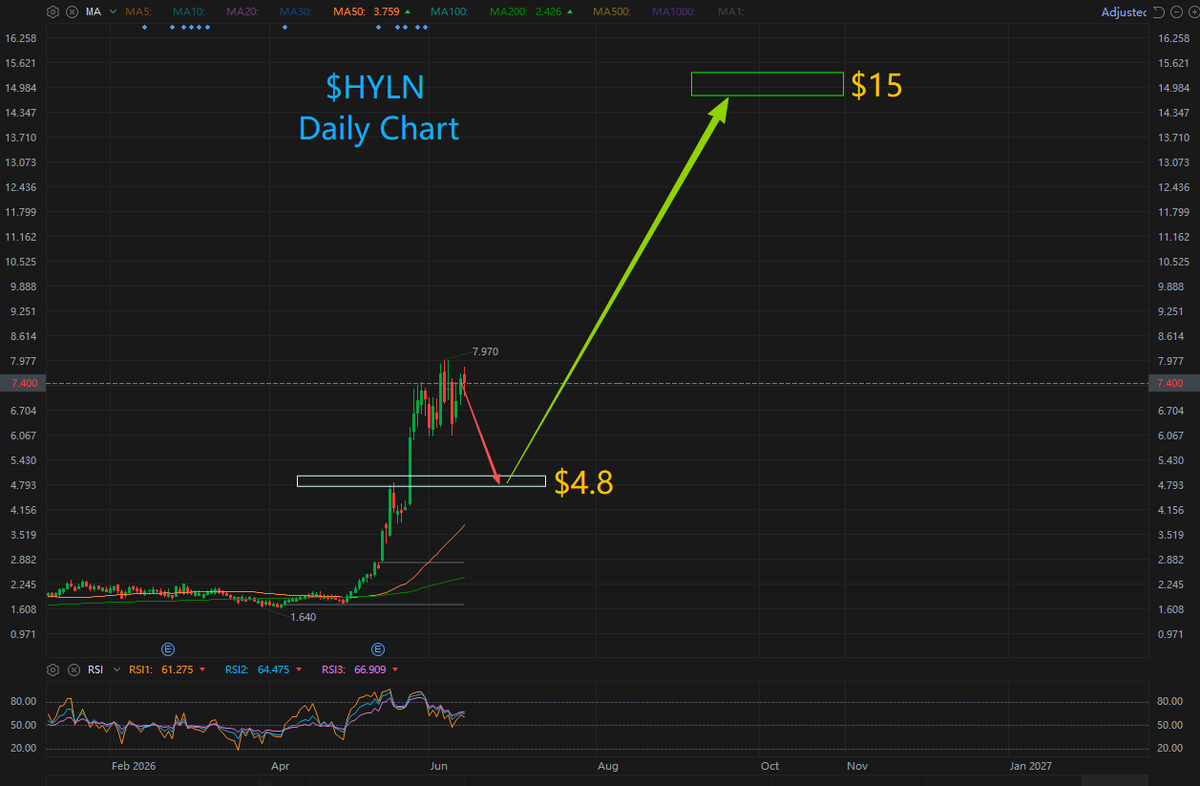
$HYLN --- $HYLN has fully pivoted to become an innovative clean energy technology company focused on distributed power generation, built around its flagship KARNO™ power generator modules. On June 10, Needham analyst Sean Milligan officially initiated coverage on $HYLN with a $9.00 forward price target. Needham emphasized the extremely broad commercialization runway for KARNO modules across both AI infrastructure and defense verticals — a catalyst that directly sparked a breakout rally on heavy volume in recent trading sessions.
The KARNO generator module has successfully passed UL non-recurring certification testing. This was the single biggest go-to-market roadblock, and clearing the milestone means Hyliion can now begin on-site equipment deliveries to its first wave of early adopter customers.
On June 1, the module was officially named the 2026 Most Valuable Product (MVP) by leading industry publication Consulting-Specifying Engineer.
1. Riding 2026's Hottest Macro Trend: Mission-Critical Distributed Power for AI Data Centers
The global AI boom has triggered an unprecedented, crippling power shortage for data centers — particularly across North America. Data centers don't just need massive volumes of electricity; they require stable, 24/7 local microgrid resiliency.
Built on linear generator technology, the KARNO module natively outputs 800V DC power — a perfect match for the native architecture of today's cutting-edge AI compute racks and next-generation data centers. It eliminates costly, inefficient AC/DC conversion losses, directly boosting overall data center energy efficiency.
The company recently signed a landmark multi-megawatt partnership with VFG Holdings focused exclusively on data center deployments.
2. U.S. Department of Defense Contract Validation (Office of Naval Research)
Q1's explosive top-line growth was driven primarily by contracts from the U.S. Office of Naval Research (ONR), including an 800kW reaction system currently in production for the Navy. The military's core interest in KARNO extends far beyond its fuel-agnostic design: the module also features extremely low acoustic and thermal signatures — a non-negotiable requirement for stealth operations and autonomous unmanned systems. Management expects to win an additional $40-$50 million in follow-on military contracts this year.
3. Unprecedented Margin of Safety: Net Cash Exceeds Market Capitalization
As of Q1 end, Hyliion remains completely debt-free, with $139 million in cash and short-term investments on its balance sheet. The company projects it will still hold $100 million in cash by year-end 2026. When shares dipped to the $1-$2 range earlier this year, its book net cash value even exceeded the company's total market capitalization. This provides extreme downside protection for early institutional investors, while also giving Hyliion ample dry powder to fund initial commercial scale-up.
1
11
1,052

Navigating the AI Power Revolution: Why Bloom Energy ($BE) and Oracle’s ($ORCL) Partnership Stands Out
Over the past few months, I’ve been closely following developments in the energy sector, particularly how hyperscalers are powering the explosive growth of AI data centers. One name that keeps rising to the top is Bloom Energy (NYSE: BE), especially after its deepened partnership with Oracle (NYSE: ORCL). What started as an interesting collaboration has evolved into a major strategic deployment that addresses some of the biggest challenges in AI infrastructure: reliable, scalable, and relatively cleaner power.
I wanted to share a detailed breakdown of this partnership, the recent developments around Project Jupiter, and why it matters for investors, technologists, and anyone tracking the AI boom.
The Bloom Energy–Oracle Partnership: From Initial Collaboration to Multi-Gigawatt Scale
In July 2025, Bloom Energy and Oracle began working together to deploy solid oxide fuel cell (SOFC) systems for Oracle’s data centers. These fuel cells convert natural gas, reformed into hydrogen, into electricity through an electrochemical process, offering higher efficiency and lower emissions compared to traditional combustion-based generation.
The partnership took a major leap forward in April 2026. On April 13, the companies announced an expanded master services agreement under which Oracle committed to procuring up to 2.8 GW of Bloom’s fuel cell systems. An initial 1.2 GW has already been contracted, with deployments actively underway across multiple U.S. Oracle sites and continuing into 2027.
As part of the deal, Oracle also received a warrant to purchase up to approximately 3.53 million shares of Bloom Energy at $113.28 per share, representing a potential investment of around $400 million. This equity alignment signals strong confidence from Oracle in Bloom’s technology.
Project Jupiter: A Flagship Deployment in New Mexico
One of the most exciting elements is Project Jupiter, Oracle’s large-scale AI data center campus in Doña Ana County, New Mexico, developed in partnership with BorderPlex Digital Assets.
Initially, plans included a dedicated natural gas plant with turbines and diesel backups. However, the project faced significant local pushback over concerns about water usage, air quality, noise, and broader community impacts. This led to regulatory hurdles, including denials for a proposed gas pipeline and over 7,000 public comments during permitting.
In response, Oracle pivoted. As reported in a detailed Business Insider article published on May 7, 2026, the company canceled the traditional gas plant plans. Instead, it is moving forward with Bloom Energy’s solid oxide fuel cells to fully power the campus, with up to 2.45 GW on a single microgrid.
This switch is noteworthy for several reasons:
Emissions Reduction: Bloom’s systems are reported to produce approximately 92% lower NOx emissions compared to conventional gas turbines.
Water Efficiency: Closed-loop cooling drastically reduces water consumption, a critical advantage in water-stressed regions like New Mexico.
Deployment Speed: Fuel cells can come online in as little as 55–90 days, helping Oracle bypass lengthy grid interconnection delays.
Operational Advantages: Quieter operation and no direct impact on local electricity rates for residents.
While local environmental groups, such as the New Mexico Environmental Law Center, remain cautious, noting that the systems still rely on natural gas, the pivot has been positioned as a pragmatic step forward in the “Bring Your Own Power” (BYOP) trend among hyperscalers facing grid constraints.
Why This Matters in the Broader AI Context
AI training and inference demand enormous, always-on power. Traditional grid infrastructure simply cannot scale fast enough in many regions. Technologies like Bloom’s SOFCs offer a bridge solution: dispatchable, modular power that can be sited directly at the data center.
From my perspective, after digging into earnings calls, analyst reports, and on-the-ground developments:
Bloom reported strong Q1 2026 results, with revenue beats, margin expansion, and raised full-year guidance in the $3.4B–$3.8B range.
Analyst sentiment has improved, with price targets from firms like Jefferies, RBC, and Evercore reflecting optimism around the Oracle deal and broader AI tailwinds.
Risks remain, including execution on manufacturing scale-up, natural gas price volatility, regulatory scrutiny on fossil-derived fuels, and competition from other clean power alternatives.
Bloom Energy is not a pure-play “green” energy company in the renewable sense, but its high-efficiency fuel cells position it uniquely in the transition to reliable, low-emission backup and primary power for critical infrastructure.
Final Thoughts
The Oracle partnership and the adaptive approach at Project Jupiter highlight how innovation in power generation is becoming as important as the chips and algorithms driving AI. For those following $BE, the coming quarters will be telling. Watch for deployment milestones, additional hyperscaler wins, and execution metrics.
I’ll continue monitoring this space and sharing updates as they develop. The intersection of energy and AI is one of the most consequential investment and technology themes of the decade.
What are your thoughts? Have you looked into Bloom Energy or other data center power plays? Feel free to comment below. Also, I own $BE
Disclaimer: This post is for educational purposes only and reflects my personal research and observations from public sources. It does not recommend buying, selling, or holding any securities. Investing involves substantial risk of loss. Please conduct thorough due diligence.
1
1
73

JFK's New Terminal One ESG report details a 12-MW microgrid with 13,000 solar panels and six fuel cells, projected to cover 50% of the terminal's energy demand by 2050. First phase opens in 2026. #aviation #aerospace
airpronews.com/2026/06/13/jf…
1
27

AI power is usually discussed like a generation problem, but the more immediate bottleneck may be much less glamorous.
Transformers.
The research points to transformer lead times sitting around 128 weeks, with generator step-up transformers even longer. That is not a capital markets problem and it is not solved by another data center press release. It is a physical equipment problem tied to factory slots, heavy electrical manufacturing, utility procurement cycles and the availability of grain-oriented electrical steel used in transformer cores.
That is why I think the AI power trade keeps moving deeper into the industrial stack. First the market priced GPUs, then data center builders, then power equipment companies. But if transformer output is constrained by specialized steel, core manufacturing and multi-year lead times, then the bottleneck sits upstream of the equipment OEMs themselves. Data centers can have capital, land and customer demand, but without transformers they cannot energize on schedule.
This also explains why behind-the-meter power and private microgrid ideas are gaining traction. Hyperscalers are not only trying to find cheaper electricity. They are trying to escape a grid interconnection process that is increasingly gated by scarce physical hardware. If the transformer queue remains long, the market will eventually stop talking about “AI power” in general terms and start pricing the specific materials and components that determine whether a site can actually turn on.
1
1
3
5,017

Chris Morris, director of the West Virginia Data Economy Office, said Thursday that the state has received its first application to certify a microgrid tied to data center developments.
Via @WV_Watch
wvgazettemail.com/news/energ…
2
425

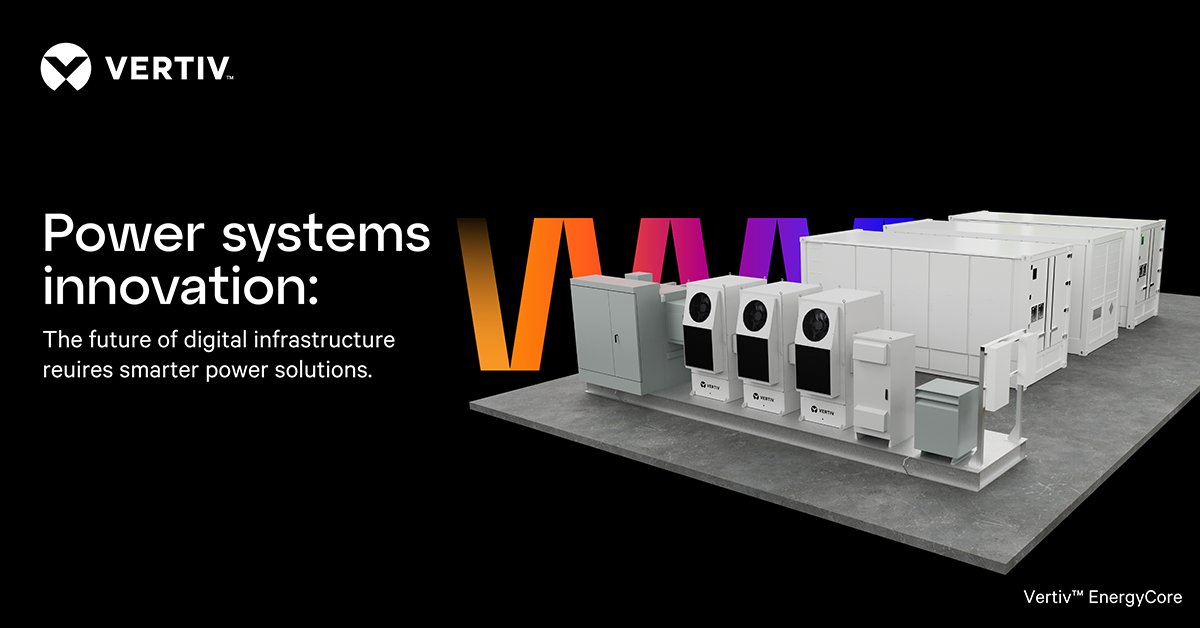
Introducing Vertiv™ EnergyCore Grid, the microgrid-ready power for large-scale deployments:
Peak shaving
Load shifting
Grid-responsive
Enhanced resilience
The future of smart power is here: ms.spr.ly/6013viZs3
#Vertiv #OneVertivOneWorld #Efficiency #Reliability
6


Jun 13
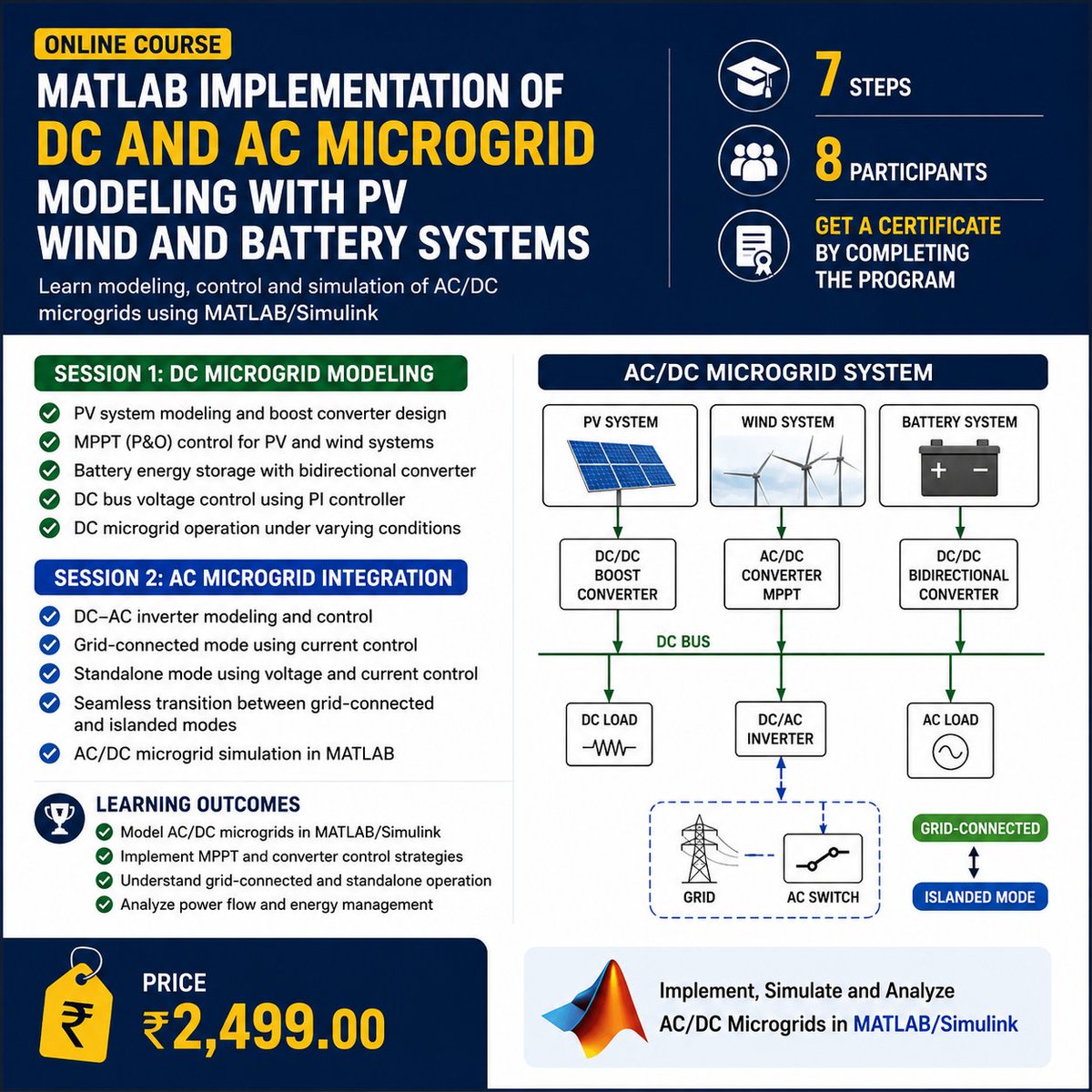
✅ Learn AC/DC microgrid modeling using MATLAB/Simulink
zurl.co/pIkwG
✅ Implement PV, wind, battery, MPPT, and converter control
✅ Complete 7 steps and get a course completion certificate
3

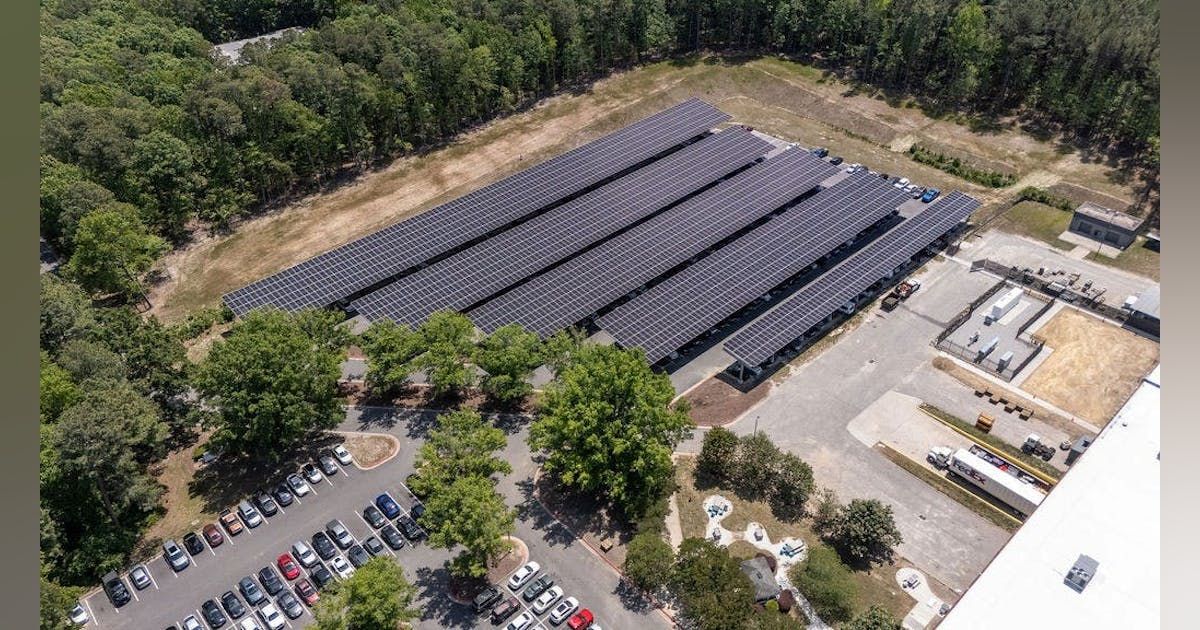
Microgrid Resilience Expected to Yield $450K/Year in Savings for Siemens Facility
Save energy/cost for your business contact me at buff.ly/5OiGpqm.
#Reliability #EnergyStorage #EnergyEfficiency #Renewables #EnergyAudit #Procurement #Resilience
buff.ly/W31ZaCD
6

Microgrid frequency stability via sliding mode control under false dat… sciencedirect.com/science/ar…
3
228

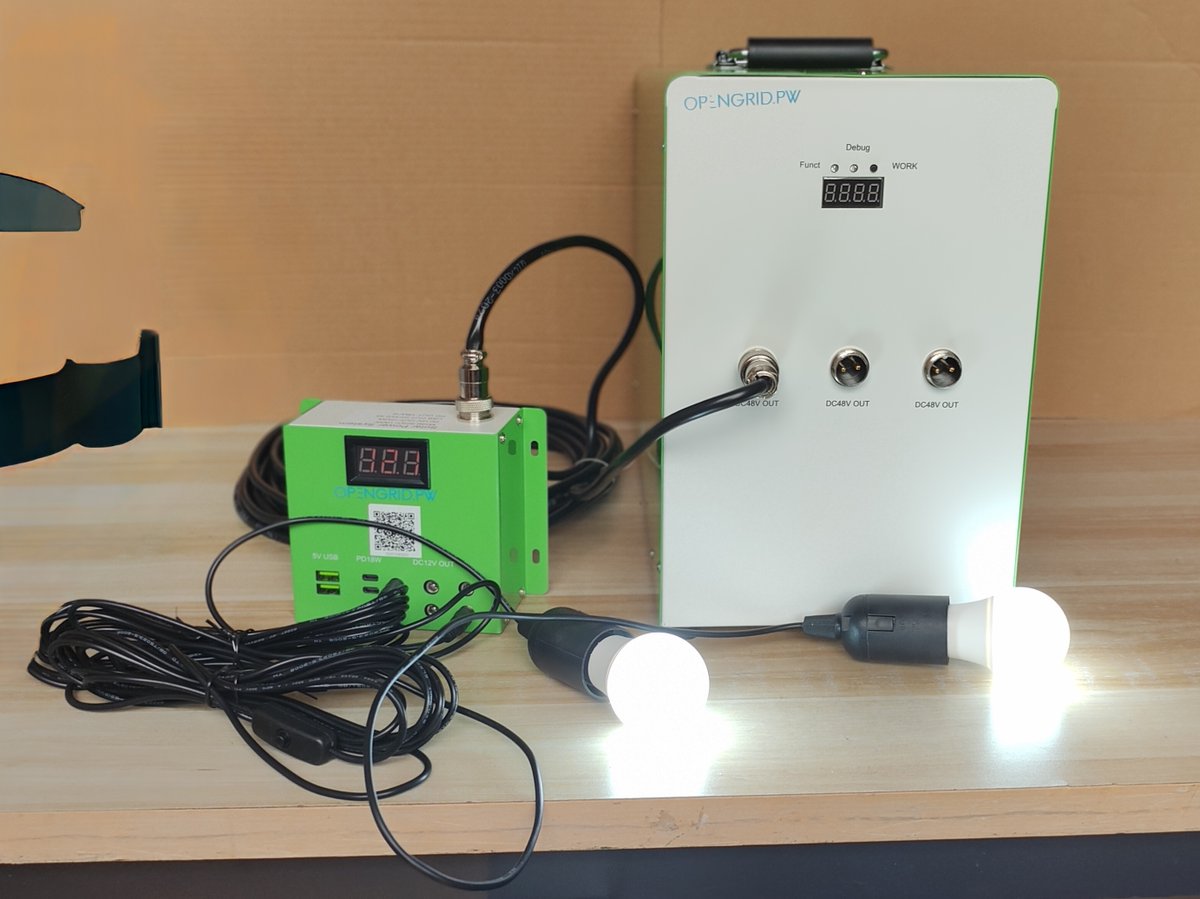
The first shipment—10 sets of solar-powered smart microgrid systems—was dispatched from Shenzhen, destined for Rwanda. June 13, 2026.
opensolar.cc, light up every home.

38

Seriously were just gonna do rockets that go nowhere at least Henry Ford failed shit was like trying to create hydro microgrid farmer who farm summer and assemble car part during winter village industry. What the fuck equivalent to that has Elon made zero.
Oh right he made
1
7

Jun 13
Had a chat about those space based Data centers..
The load bank was just something I’m familiar with. I understand it isn’t going to help our scenario. I was thinking of a ‘load shedding’ bank. 🤷🏻♂️
———
Exactly — in this scenario you’d think of it as load shedding / energy diversion, not a load bank.
The useful version would be:
AI compute = interruptible load
When radiator capacity, battery state, or orbital position changes, you shed compute instead of adding dummy load.
Examples:
Sunlight radiators cold enough → run max compute
Eclipse / batteries dropping → shed low-priority jobs
Radiators approaching limit → throttle GPUs
Laser comm unavailable → pause jobs that need data transfer
Excess solar but no cooling margin → feather/curtail solar, not burn it as heat
So the real “load bank” equivalent is more like a smart orbital microgrid:
solar array → batteries → AI racks → coolant loop → radiators
with a controller constantly deciding:
“How much compute can I safely run right now without exceeding power, battery, or heat-rejection limits?”
That’s actually very feasible. Data centers already do a simpler version with workload scheduling and power capping. In space it would just be more aggressive because thermal rejection is the hard limit.
1
3
90

Saw the deleted tweet 😆
Visited in 2021. Beautiful country.
Food forests, an energy microgrid and a community aquaponics would be amazing there.
I do resilient land planning and write about this stuff. naturalsystems.substack.com/…
Would love to chat about what it could become.
2
84

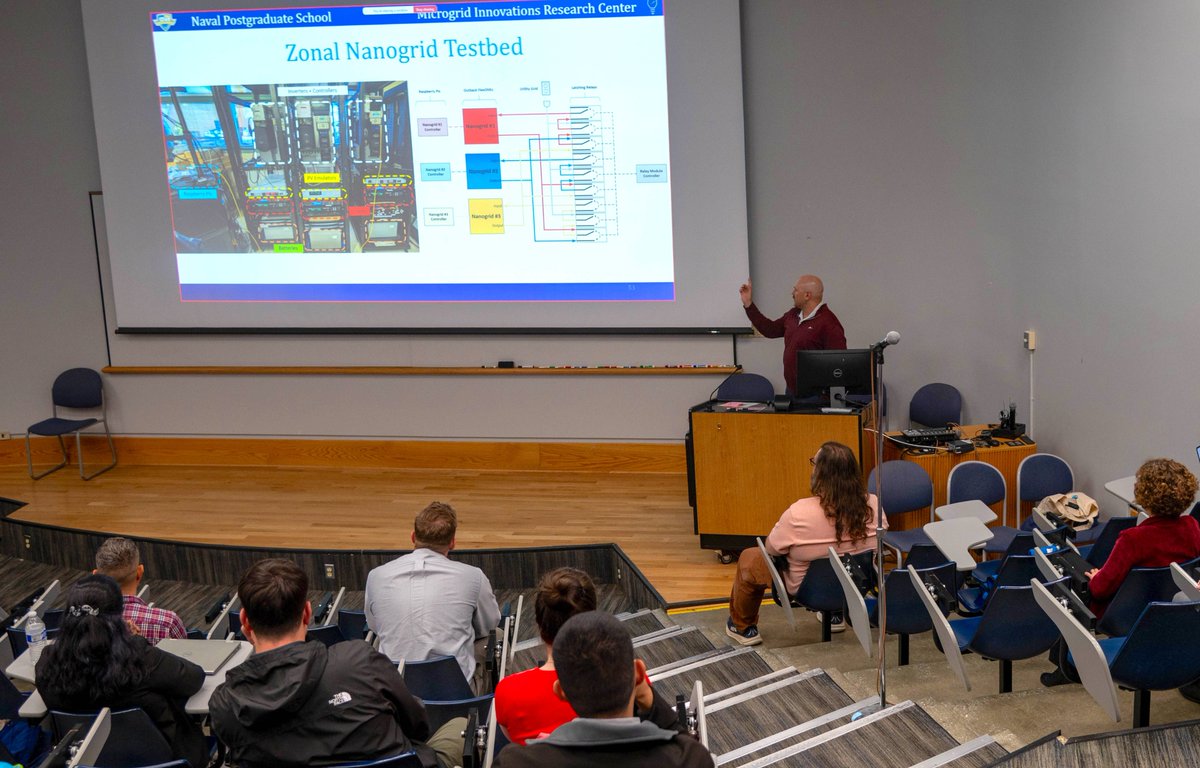
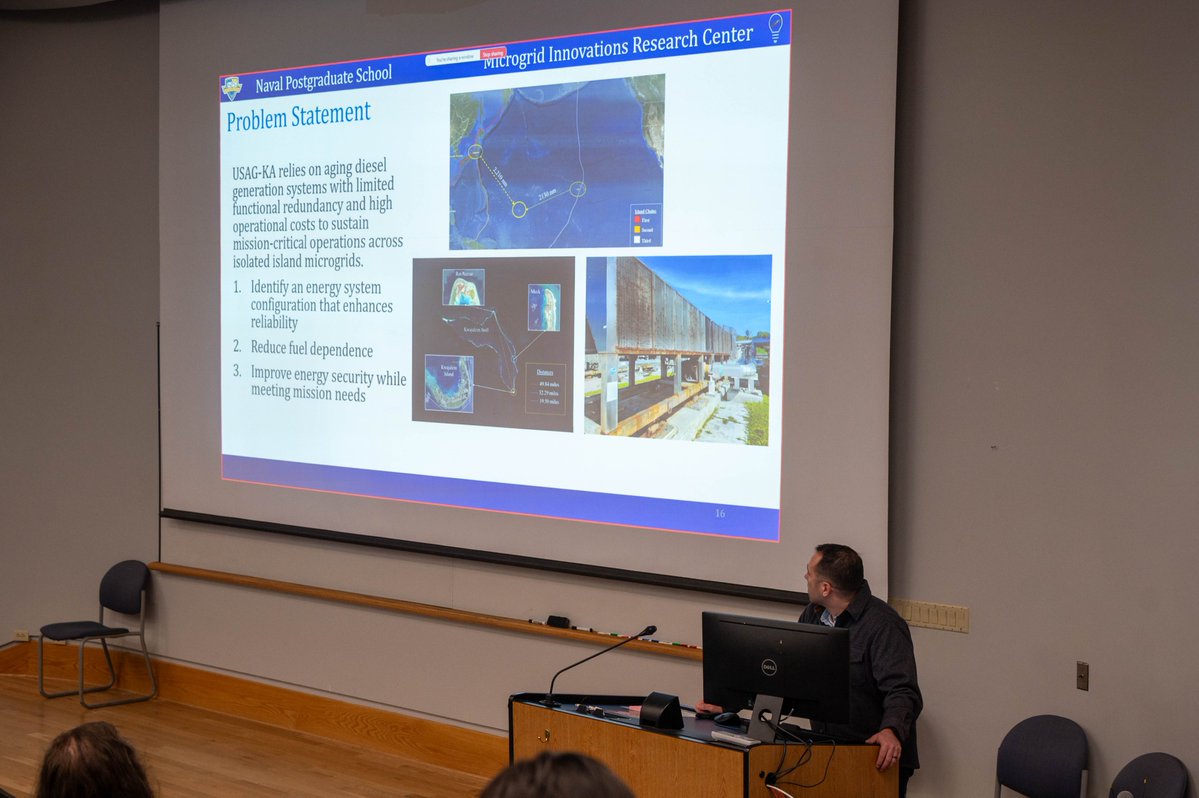
Several operationally-inspired student research projects focused on advancing @DeptofWar #energy #resilience were on full display during the recent Microgrid Innovations Research Center (MIRC) Spring 2026 Workshop.
1
1
3
345

Jun 12
NEWS: Construction begins June 15 on a new Pescadero Fire Station, replacing the flood-prone 1957 station. The new 12,000 sq. ft. facility at 340 Butano Cutoff will include a solar microgrid and backup power. Funded by Measure K. Read more: smcgov.org/ceo/news/construc…

1
4
339

The grid is failing your AI.
- Years of waiting
- Unstable power
- Zero control
Islanding is the secret to uptime.
We build micro-grids that skip the utility queue.
Launch your cluster now.
Ever gone off-grid to launch?
#MicroGrid #AI #DataCenter

5