
Jun 12
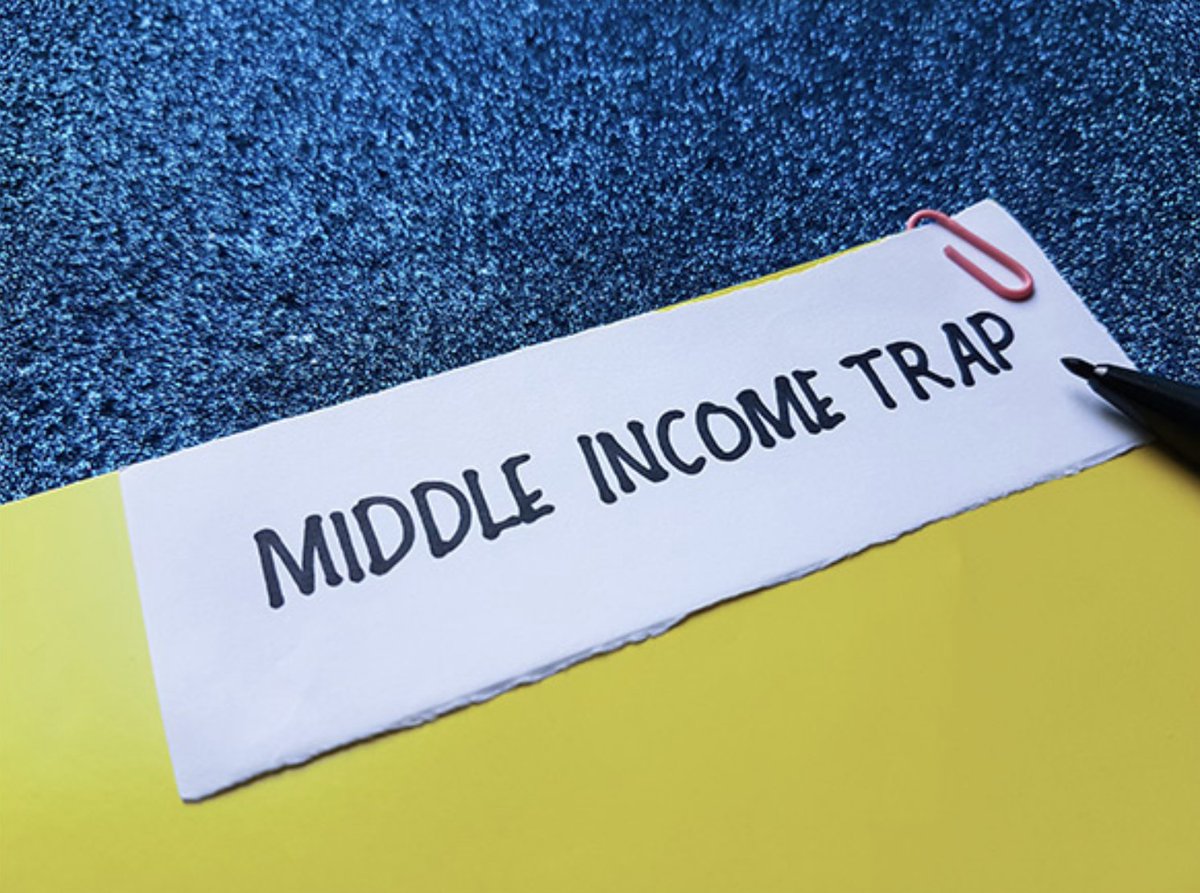
In our new blog post, Dr. Turkhan Ali Abdul Manap, a senior economist at @isdbinstitute, explores the enabling role that Islamic finance can play in helping nations overcome the middle-income trap.
The author argues that Islamic financing is not a panacea in this regard, but it instead has a more modest enabling role.
Where coupled with appropriate policies, reliable institutions and adequately prepared projects, Islamic finance may contribute to bridging the transition from factors-driven to productivity-led convergence through financing of productive infrastructure, enterprises development and innovation and human capital formation.
Read the article on IsDBI Blogs: blogs.isdbinstitute.org/isla…
#Islamicfinance #Middleincome #Development
3
2
102

If you are a salary earner like me & you have 3 acres of land
Or more my dear, wakikubadda!
Congratulations.
You are already above the #middleincome earners
3

Will never be. Middleincome is a false promise from westerners. True middleclass needs satellites, rockets, solar power, nuclear power & weapons, missiles, sovereignty over resources, permanent free trade thru federation, accountability... that the west won't allow in Africa
2
3
486

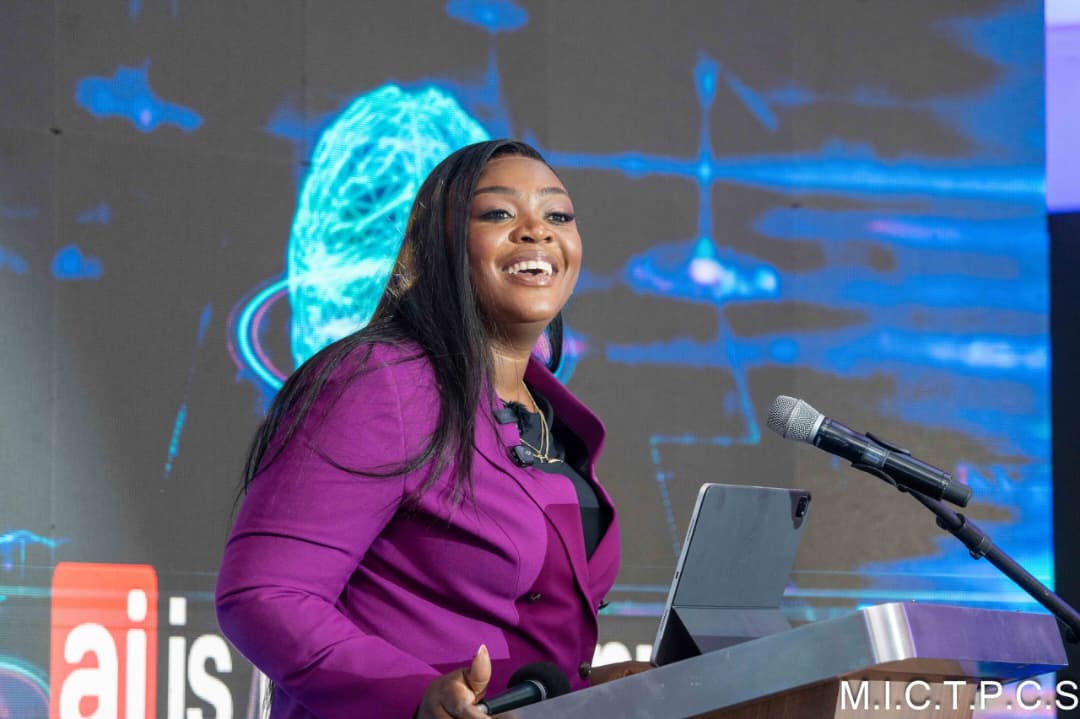
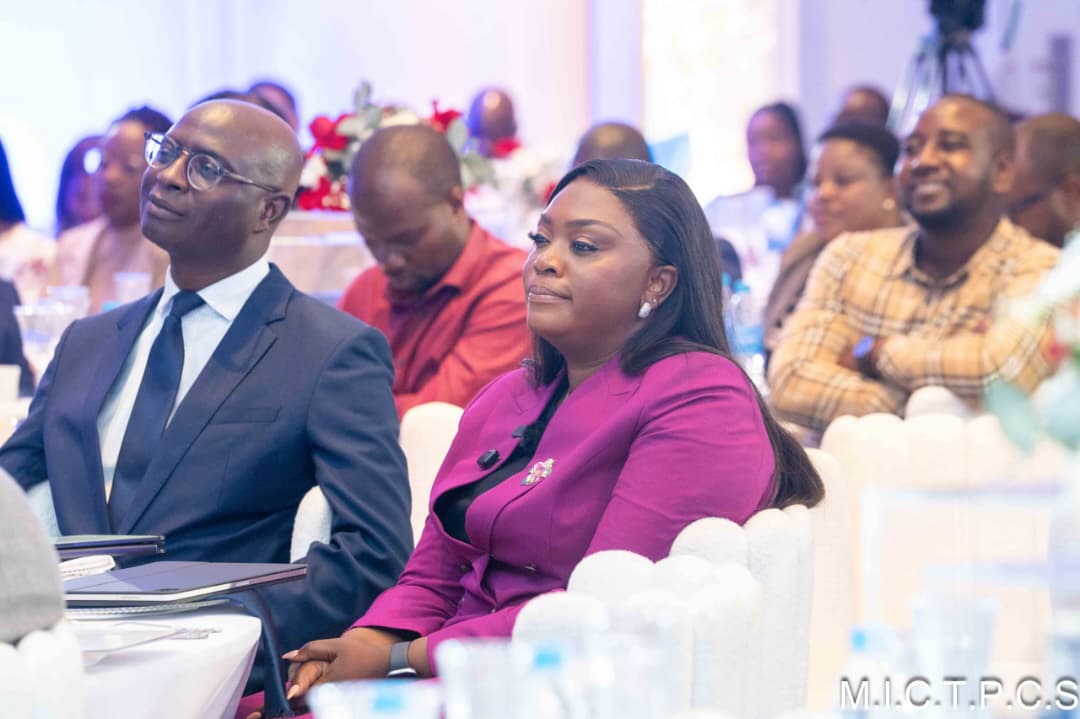
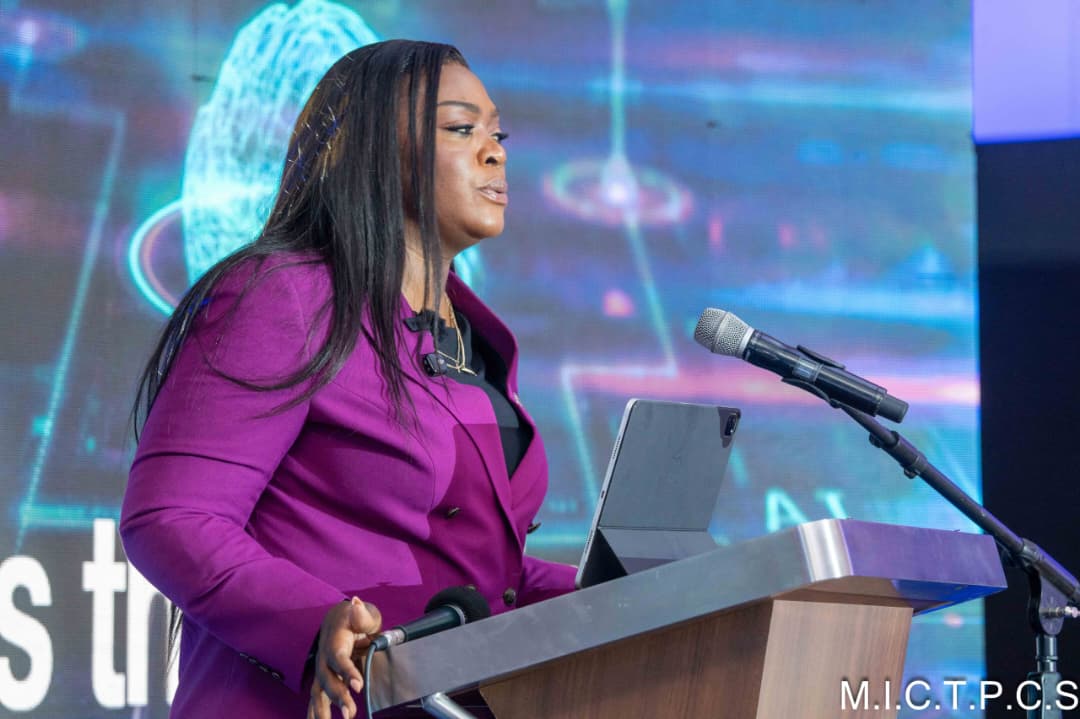
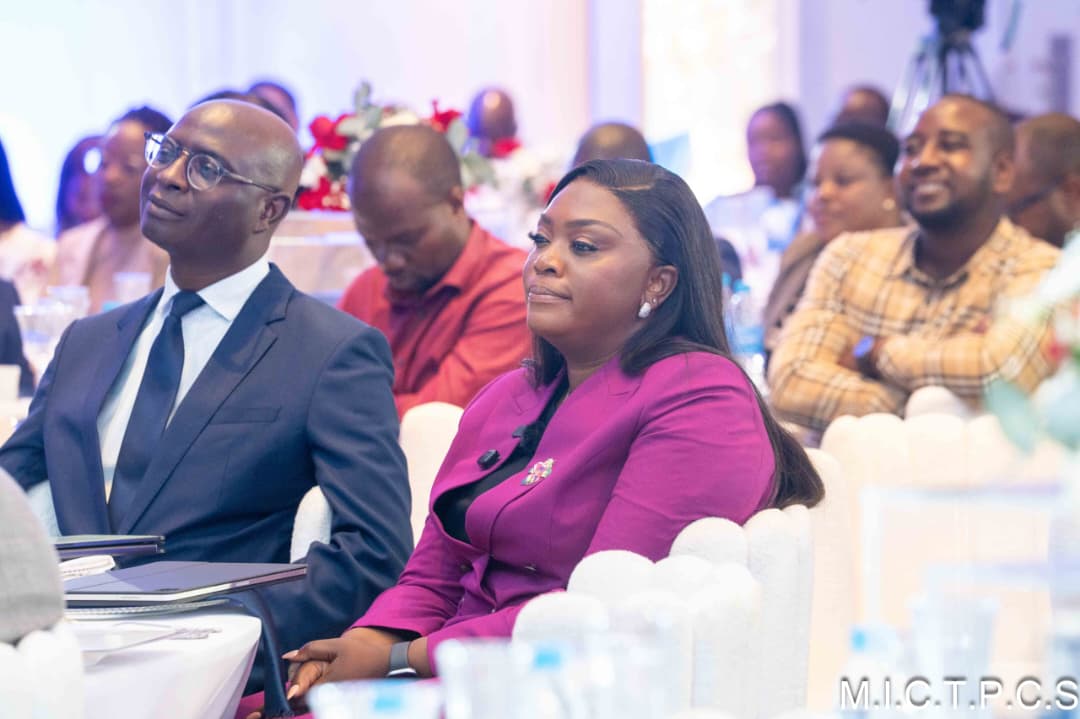
" The launch of Econet AI is part of our commitment to the National
Development Strategy 2, which aims to foster a digital economy and
elevate Zimbabwe to a prosperous, knowledge-driven,upper-middleincome status. This transformation focuses on leveraging digital" , Hon Mavetera speaks at the launch of Econet AI
2
3
10
1,479

We commend the #EDWorks administration through it smart partners afrieximbank and local business owner AVM Zimbabwe for achieving this #vision2030 #middleIncome
5
5
185

According to Amanda Umpierrez's article in @401kspecmag, #Retirement confidence is waning with #Middleincome #Americans.
@NAPA401K @ASPPA @TPSUniversity @PLANADVISER @PLANSPONSOR @barronsonline @FT @Forbes @YahooFinance @usa_retirement @RetAdvisors
401kspecialistmag.com/retire…
2
3
55

Jan 26
Komisi XI DPR RI menggelar Rapat Dengar Pendapat Umum (RDPU) dan uji kelayakan (fit and proper test) Calon Deputi Gubernur Bank Indonesia pada (23/1/2026), yang disiarkan melalui kanal YouTube… instagram.com/reel/DT9akhNiY… #Ekonomi #Indonesia #MiddleIncome #BankIndonesia #TopNews
5
3
15
1,504

Jan 14
Middle Class Support and Uplift for the Poorest Nigerians
Under President Bola Ahmed Tinubu’s administration, Nigeria has pursued a series of initiatives aimed at stabilising the economy, empowering the middle class, and directly supporting the poorest households across the country.
Central to this approach is the Renewed Hope Agenda, a policy framework driven by bold economic reforms and targeted social interventions designed to broaden opportunities, enhance livelihoods, and foster inclusive growth.
While critics and supporters continue to debate the pace and impact of these reforms, key programmes underline the government’s intent to institutionalise support for vulnerable populations alongside structural transformation.
A cornerstone of the administration’s pro-middle class strategy has been the establishment of financial support mechanisms and broader economic reforms aimed at expanding access to credit and enterprise opportunities.
Notably, a ₦200 billion intervention fund was created to support micro, small, and medium enterprises (MSMEs) and manufacturers, offering loans, grants, and equity investments that help entrepreneurs, artisans, and small business owners scale their businesses and generate sustainable livelihoods.
These funds are particularly significant for middle-income Nigerians seeking to grow small ventures without the prohibitive costs associated with traditional lending.
For the poorest households, the administration has expanded conditional cash transfer (CCT) programmes through precise targeting using the National Social Register (NSR), which identifies vulnerable families eligible for support.
As part of this effort, over N297 billion has been disbursed to millions of households nationwide, with a strong focus on regions with high poverty indices. These transfers help families meet basic needs like food, shelter, and healthcare while also incentivising school attendance and better health outcomes.
Furthermore, innovations such as the Renewed Hope Debit Card have improved transparency and the dignity of beneficiaries by streamlining access to support.
Education and skills development programmes have also been prioritised as a bridge between poverty and economic mobility for both middleincome and low-income citizens.
The Nigerian Education Loan Fund (NELFUND), established under the Access to Higher Education Act, has disbursed significant loans to hundreds of thousands of students, reducing financial barriers to tertiary education.
Complementary initiatives like technical and vocational training aim to equip young Nigerians with practical skills that increase employability and entrepreneurial potential, critical components for a resilient middle class.
Beyond direct cash support and education financing, the administration continues to maintain and expand National Social Investment Programmes (NSIPs), including youth employment schemes, microloans, and homegrown school feeding programmes to support job creation, improve food security, and sustain household incomes across diverse communities.
These multilayered interventions are intended not just as short-term relief but as part of a longer-term transformation of social welfare delivery, aligning economic reforms with public support systems that protect the most vulnerable.
While the socio-economic landscape in Nigeria remains challenging with ongoing debates on cost of iving pressures and inflation, the PBAT administration’s combination of economic reforms and social safety nets represents a concerted effort to stabilise the economy, empower the middle class, and uplift the poorest citizens.
The success of these interventions will continue to be measured not only by economic indicators but also by their tangible impact on household well-being and inclusive growth across Nigeria’s diverse population.
18
11
22
306

Jan 3
Kenyans on the comments are the reason we need a proper war so that we might awaken a collective consciousness on some matters, you are supporting imperialism? Haha, you need to look at the americas and see why no nations ever developed past the middleincome stage ,ignorance tupu
1
2
1,932

15 Dec 2025
If Trump can do that during term of office, it will be a great thing. It not only give relief most middleincome brackets, it will protanto increase the disposable incomes and increase home consumption giving boost to domestic manufacturing and inturn turnover the capital and increase govt coffers from indirect taxes.
It will politically add vigor to Republicans in their constituency over democrats and may prove an example to intl communities liberalism against too much govt controls, strengthen democratic voices?
4
278

3 Dec 2025
Well for starters Medicaid and Social Security which is a 15.3% payroll tax for folks who are selfemployed and a 7.65% tax for W2 employees isn't going anywhere Everyone's always campaigning against touching it so that's not likely to change anytime soon
So if you have a regular W2 job the most you'd take home is about 92.35% of your paycheck. For independent contractors or those with a 1099 classification then the most is 84.7%. It’s definitely an increase but not a full 100% takehome like some think.
But I see what you're saying about it still being a gain. The average household would get an extra $899 a month, and that's just an average. For a lot of families in the middleincome range that's not a crazy economic explosion. They might just save more.
Here's the real kicker though for lowerincome families who have kids and rely on tax return season they'd lose that big annual windfall. That lumpsum refund from things like the Earned Income Credit and Child Tax Credit is a huge boost and it acts as a redistribution of wealth that actually has a measurable positive economic impact during that time of year.
If they started getting smaller monthly payments instead that concentrated boost would be gone. Those families would likely use the extra money for everyday bills not a big purchase like an appliance. It might even make things harder for them because a big tax refund right after Christmas gives a lot of people something to look forward to.
So yeah I don't think the economy would explode overnight. In fact for some areas the economy might actually take a hit.
So chill bro.
1
451

1 Dec 2025
Klarna reported a 45% surge in U.S sales leading up to Black Friday, driven by shoppers buying big ticket items like Apple AirPods 4, PS5s, and Birkenstocks. While millions of consumers wanted these premium goods, most chose to finance them rather than paying cash upfront. This massive shift confirms that Buy Now, Pay Later has become a mainstream habit, allowing people to lock in luxury items while spreading out the cost to manage their cash flow.
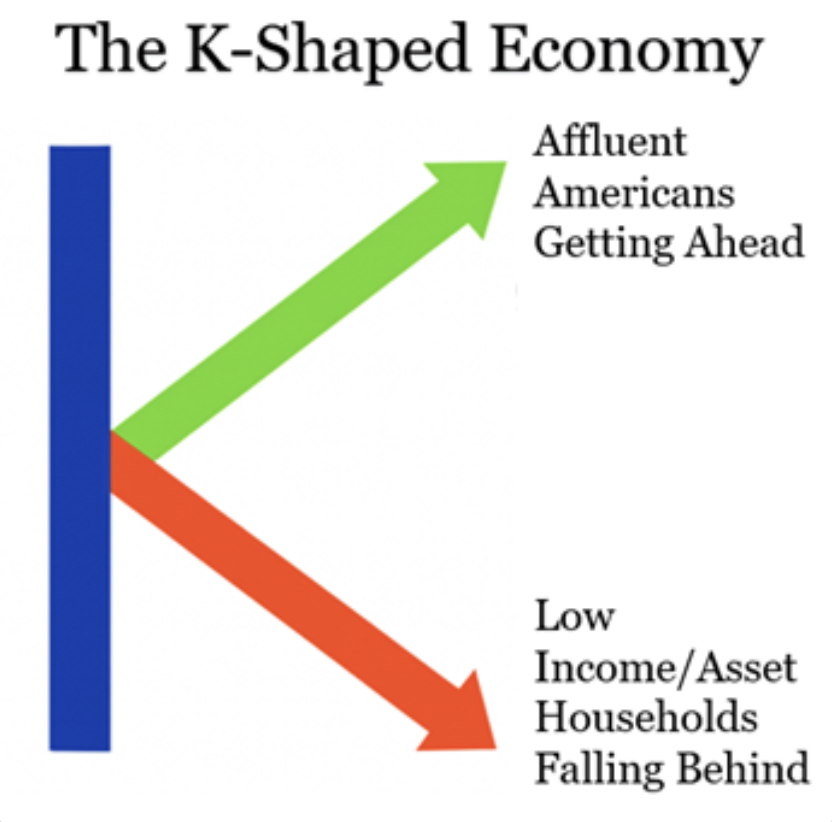
This trend is a textbook example of the K shaped economy. In this split reality, wealthier shoppers are doing just fine, comfortably buying expensive tech and luxury goods. Meanwhile, lower and middleincome consumers are feeling the squeeze from inflation and high costs, so they are forced to rely on financing tools just to participate in the holiday season. It creates a deceptive picture, retail numbers look great because the dollar amounts are high but the underlying story is that many people are borrowing against their future just to keep up with the present.
The implication is that our economy is becoming increasingly divided. Retailers are surviving because the haves are still spending and the have nots are leveraging debt to act like they are. Flexible payment options have become the bridge keeping this two tier system connected, ensuring sales volume stays high even as financial stability for many shoppers becomes more fragile. Ultimately, we are seeing a holiday season fueled as much by credit and financing as by actual disposable income.
1 Dec 2025

KLARNA REPORTS 45% BLACK FRIDAY GROWTH
Klarna saw a 45% year-over-year increase in U.S. sales from November 1 through Black Friday. Footwear, tech, beauty, and home goods all performed strongly.
Birkenstock led footwear, Apple AirPods 4 topped tech, PS5 models led gaming, and Baccarat Rouge 540 ranked first in beauty. Ninja products dominated home goods, with mattresses jumping to second place.
Klarna’s data is based on online and in-app activity during Black Friday weekend. The company serves 114 million users and 850,000 retailers globally.
20
163
702
47,763

#RachelReeves is a blatant liar & unfit to be #Chancellor of this great country. Both she & #Starmer should resign for misleading the country on #publicfinances They’ve killed #economicgrowth & hurt the hard working ambitious #middleincome earners the most! #LabourOut
2
3
31

27 Nov 2025
Surveying 480 pathologists in 76 countries, the study found many labs..esp in low/middleincome countries lack routine IHC or molecular tests now deemed essential by WHO. Reveals major global diagnostic equity gaps. Costs ~₹800–1,000 (IHC)/marker, ₹3,000–10,000/gene (molecular)
30 May 2025

More proof why WHO tumour classifications fail in low- and middle-income countries:
👉Essential IHC is available in only 12.5% of low-income countries.
👉Molecular diagnostics are accessible to 0% of low-income countries.
👉Based on a survey of pathologists from 76 countries.
👉The 6th edition of the WHO is likely to deepen these inequities.
👉Time to wake up and smell the inequity.
🔗 pubmed.ncbi.nlm.nih.gov/4043…👉👉
2
34

17 Sep 2025
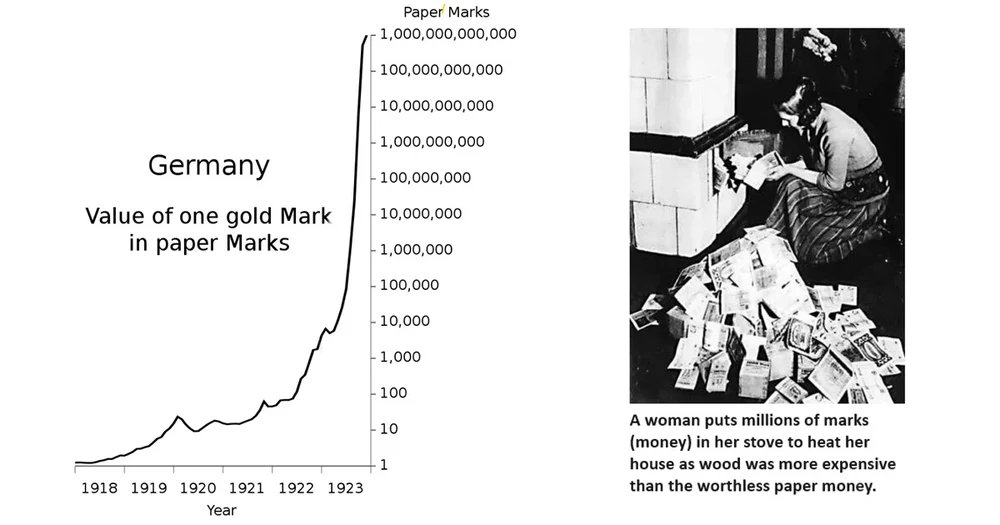
Story of #Berlin in particular and #Germany in general between 1875 and 1925 is all you need to know to understand what sort of puppets we are in what sort of power #oligarchs have over us.
Lets start with the end game, after WW1. Most of you heard of Weimer Republic and how inflation reached stratosphere and paved the way for #Hitler. What you didn't hear was how oligarchy used this as an opportunity -like now in USA- to make more money as Germany was dying.
German elite did not need #BLS to lie about #inflation or Bundesbank to cut rates. Until the very end, oligarch used the politician to force banks to lend them at ridiculously low rates... basically free money.
When you lend money below inflation rate, you destroy your currency. On Oct 2023, #GOLD was 1830, today 3700... more than doubled... meaning your currency depreciated more than 50% in less than 2 years like #Turkish lira but most of fools are celebrating new highs in #StockMarket. It is the same mechanism Weimer Republic went down with.
While they destroyed the currency and therefore all middleincome, they also funded groups like Hitler's. Political assasinations increased and economically destroyed people become more polarized.
Now lets go back 50 years earlier... Berlin was the center of New Era in #Europe. Most advanced in tecnology, most tolerant... 40% workforce in factories as opposed to only 5% in St Petersburg or Moscow.
The most tolerant people in the world became Nazis later. Instead of 40% workers in German factories, peasants made the revolution in #Russia. So, u can throw entire Marxist theory to trash can. Enire Nazi top brass came from #Vienna and #Munich, two top castles of #Jesuits.
You see theory is bullocks. They do whatever they want to do and transform any sort of people to something else. Meanwhile the rich will continue to benefit from your destruction until the very end. They don't care.
3
18
982

1 Sep 2025
Vision 2030 aims for upper middleincome status. But visions need fuel: stable currency, rule of law, and inclusive growth. Otherwise, it’s just another slogan stitched onto a struggling economy.
11
25 Aug 2025
#FederalReserve's single mandate:
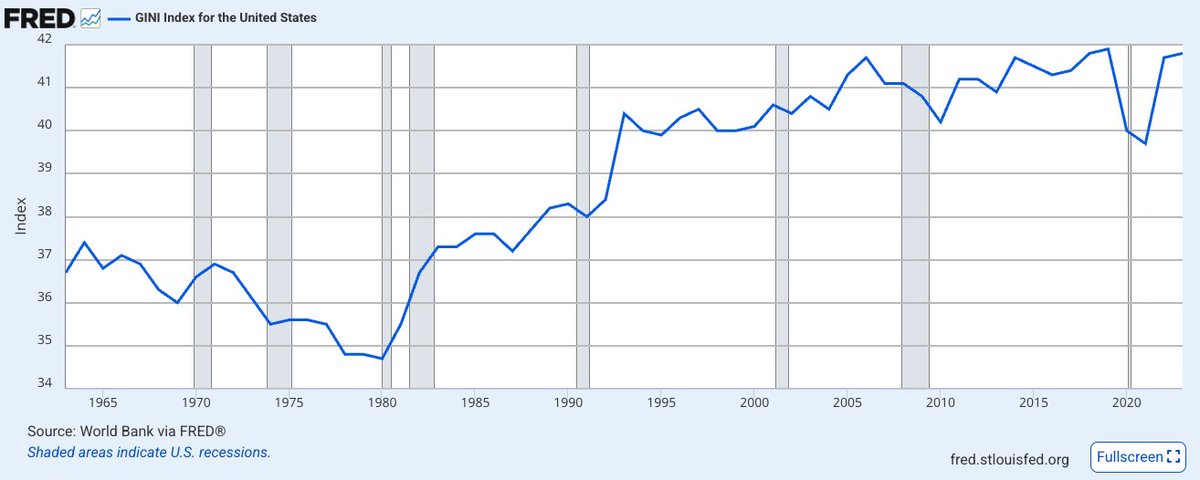
#Ginicoefficient shows the income inequality. The hire the number the more inequal.
#FED had done a great job in destroying #middleincome and turn #USA into a #Pakistan.
But great crocodile tears during press conferences after #FOMC meeting.
We also get so many idiots who talks about FED's independence. Look at the chart and see your independent FED.
#EndTheFed
1
14
837

23 Jul 2025
43% of children under the age of five in low- and middleincome countries were at risk of not reaching their developmental potential due to extreme poverty and stunting.
#brainhealthmatters
3
8
269

28 Jun 2025
Extreme poverty in middle-income countries: A paradox. Do the wealthy inadvertently perpetuate it? Can they fix it? These are questions I tackle in 'Poverty to Prosperity: A Blueprint for Change.' Let's challenge the narrative. a.co/d/cO6OIoR
#Poverty #Inequality #Development #PovertyToProsperity #MiddleIncome
2
12
220