
Jun 11
Are your apps exploiting your brain’s vulnerabilities? Tristan Harris reveals how tech companies hack human psychology to keep you hooked. A must-watch reality check. #TechEthics #MindHacking #AI #TristanHarris
2

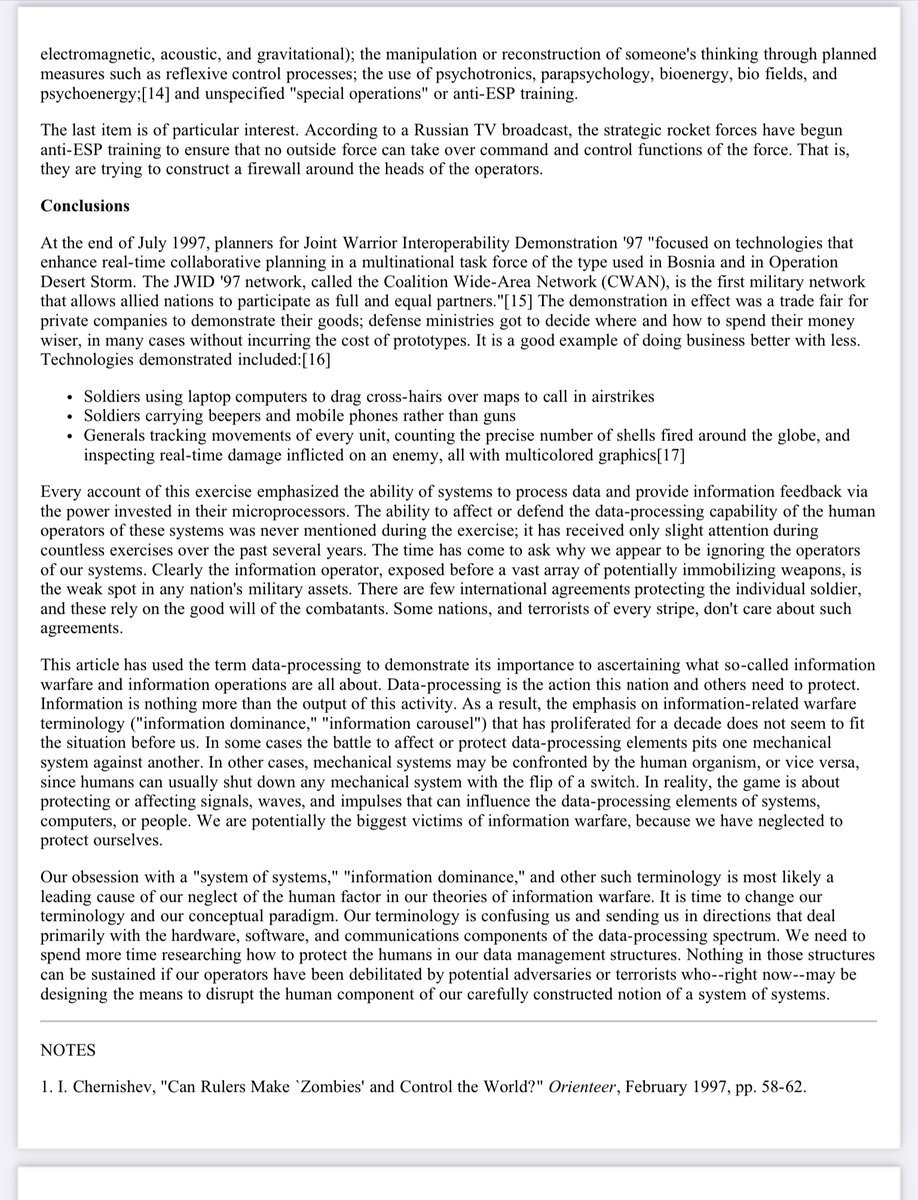
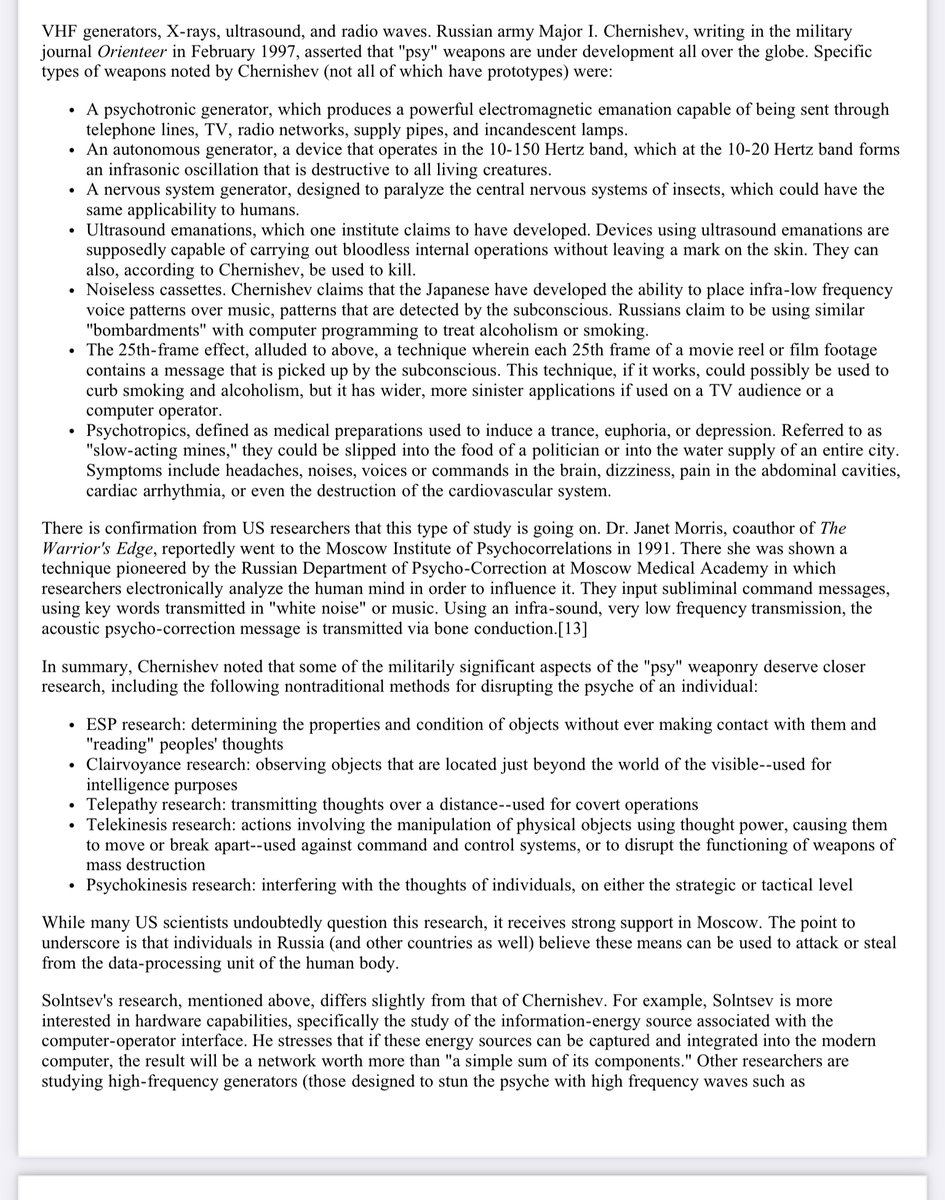
2 of 2/ The Mind Has No Firewall by Timothy L. Thomas Feb 17, 1998 #MindHacking #TargetedIndividual #RemoteNeuralMonitoring #HackableHumans #Psychotronics #Mindwar #MindControl #TIs

1
43
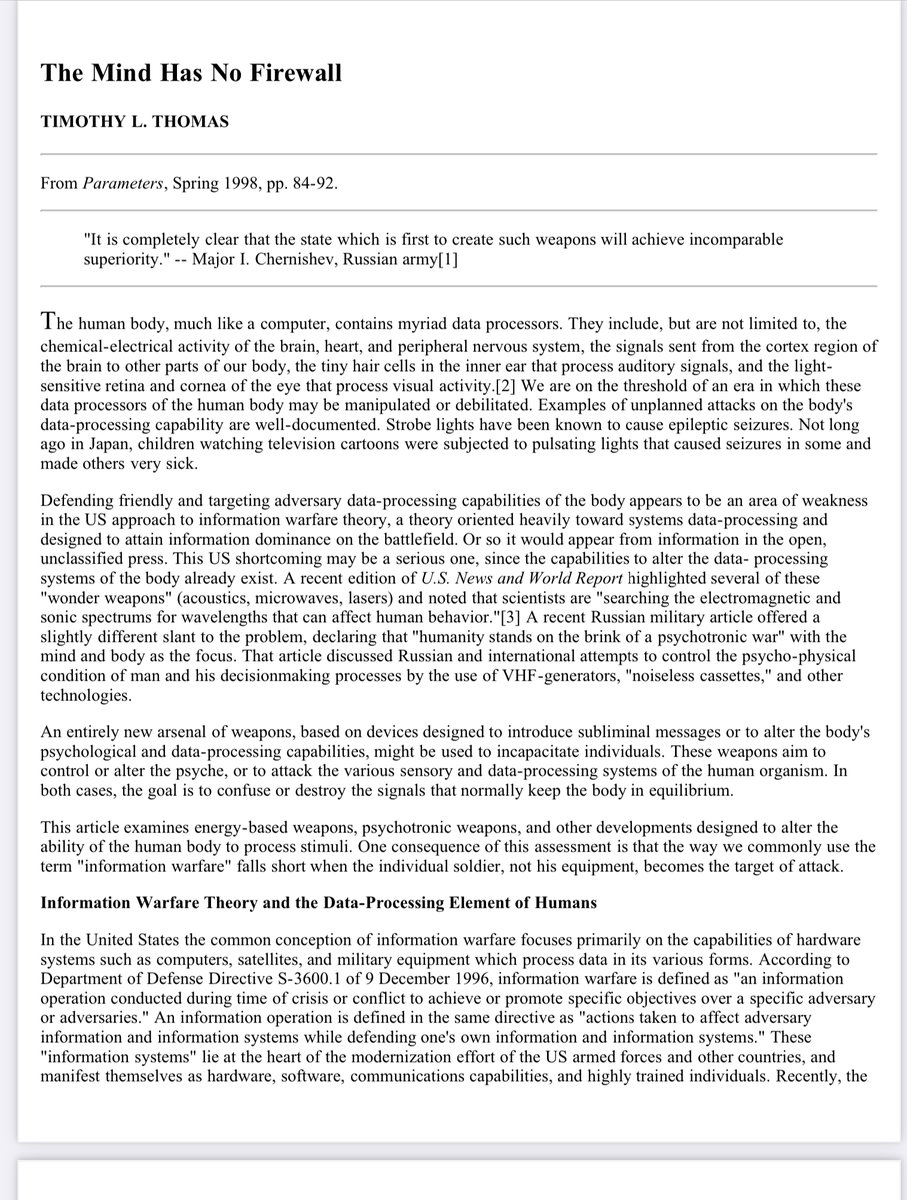
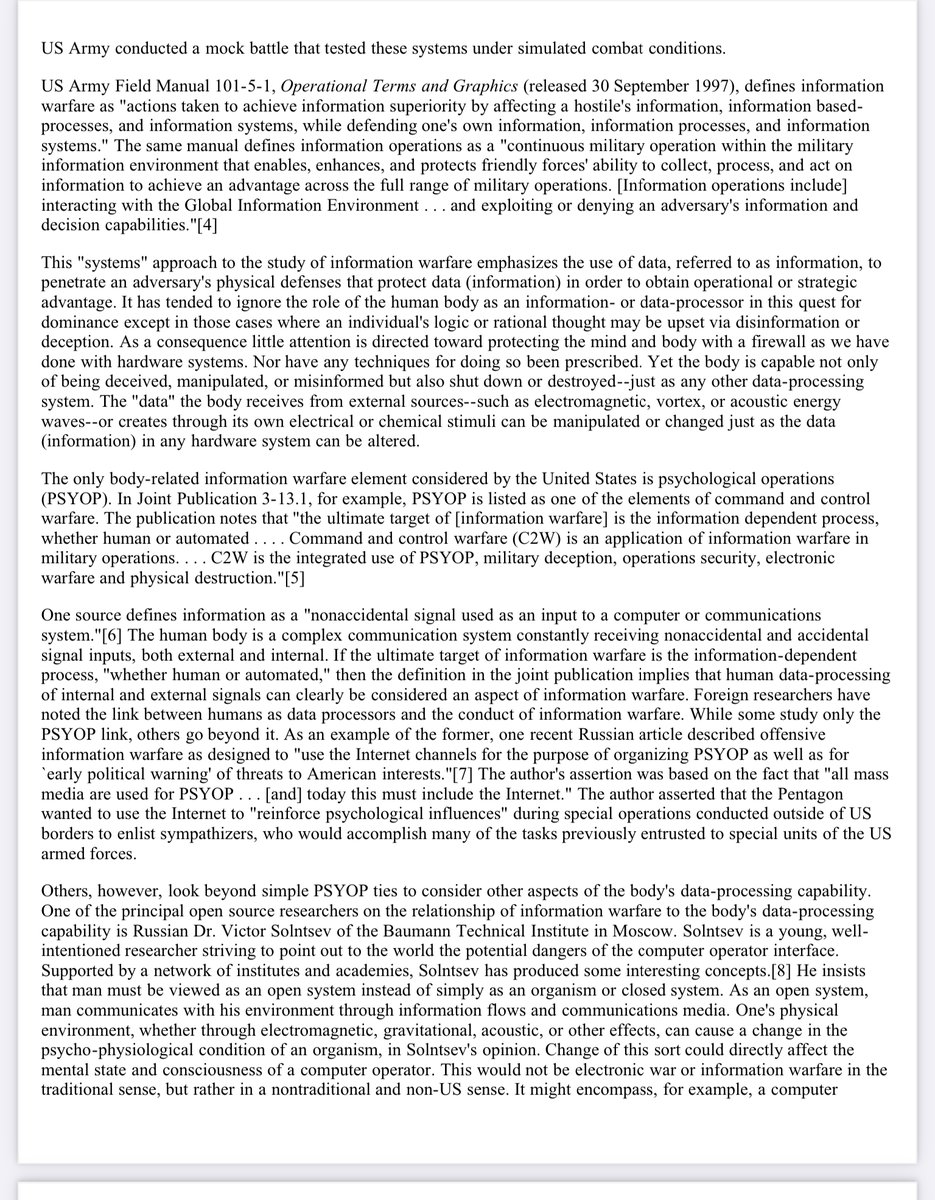
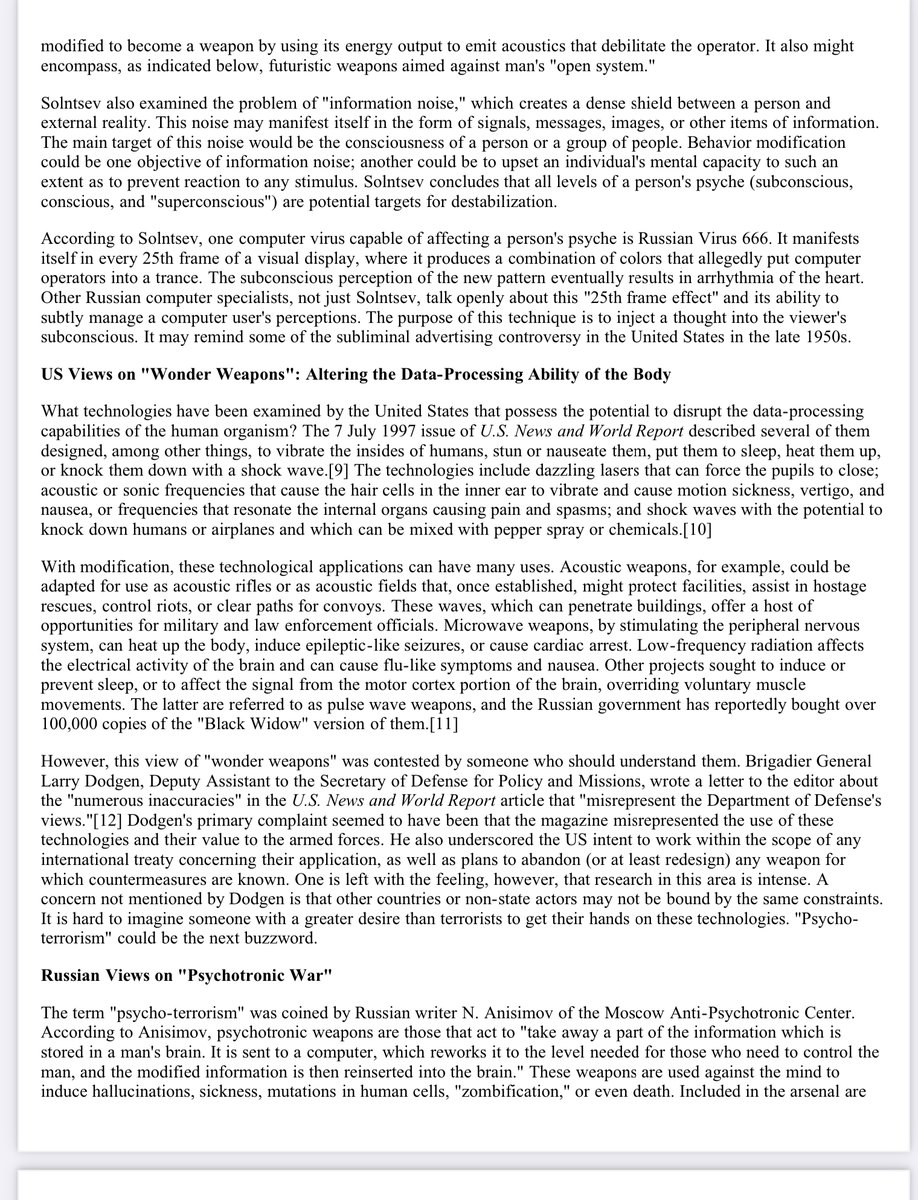
1 of 2/ The Mind Has No Firewall by Timothy L. Thomas
Feb 17, 1998 #MindHacking #TargetedIndividuals #TIs #MindWar #Psychotronics #V2K #HackableHumans #MindControl
1
1
66

Jun 6
“and your pathetic mindhacking will be recorded on video” i think protagonist would comment on anyone else like this
2
36

Jun 4
even after retiring from mindhacking doctor is still a weird creepy little freak. but it’s ok bc their daughter loves it

1
3
20
283

Because I would consider to be the core of Yudkowskian rationalism to be, if anything, radical inside view. Obviously so. "Correct contrarian cluster", "science or Bayes?", CFAR mindhacking, etc. Outside view is more of a Scott Alexander thing.
2
29

May 4
Watch out for trigger words or codes that COININTELPRO agents use to control your mind. In my experience, they keep saying to me “W con Yandell” which are names of Reggaeton musicians. I’m not even into reggaeton. But I know this is one of the trigger words they try and fail to use to control me, no idea for which program or for what goals. I keep repeating to myself and the mind-trespassers: “I do not consent to being part of a non-consensual mindhacking experiment.” They implant trigger words to jumpstart mind-control programming failing to attempt to bypass my free will. For any other faithful Targeted Individuals, I tape the names of the Monad, Barbelo, the Most High, Archangels and Angels on my skin wi the surgical tape and it helps stay grounded, sane and coherent. I call out their mind-control techniques so that the world knows what’s going on with me and other victims may use the tools I have learnt that help out. Analyse which trigger words they use to control you and you may be victorious over the persecution against you by calling out their game tactics and rebuking them. I tape over my heart: “I am victorious over persecution.” I already won. Best luck to all those out there suffering from persecution, oppression and tyranny, hope you win too 💜
1
3
206



I really, really like this style of storytelling. Just about a weird guy going around, listening to random people's problems, and then mindhacking them with some crazy philosophical speech.



10
56
508
16,139

Apr 12
I DON'T UNDERSTAND
WHY DOES REBECCA THORN HAVE ANYTHING TO DO WITH A DAMN GIANT ORB THAT WOULD BE PLACED ON MAIN-CHAN, AND ACCEPT DOCTOR'S MINDHACKING
WTF
WHO CAN EXPLAIN THIS??????????
1
2
44

MINDHACKING DELTA (dutch angle pic for accuracy)

2
1
25
687

Mar 22
🙏Which organizations in the world need to be destroyed, and whose deaths need to occur, for the current global control to end? For our sake. To end #CyberTorture.
I have been subjected to non-stop remote technological torture, remote body communication, brain and nerve manipulation for over nine years.
The intense and horrific pain and acts are far more brutal and evil than death or anything you can imagine.
I only know about CIA, Tavistock Institute, and Chatham House.
I would be truly grateful if you could tell me everything you know, without omission. I would also like to know the locations, whereabouts, residences, and places of activity of those involved.
Please, could you teach me? 🙏🙏😖
#ElectronicHarassment
#RemoteNeuralMonitoring
#VoiceToSkull
#PsychotronicWeapons
#NeuroWeapons
#RemoteBrainControlTechnology
#RemoteMindControlTechnology
#BrainHacking
#MindHacking
#TargetedIndividuals
#WeAreNotSchizophrenicOrMentalIllness
@dippydappyduck @doubleDutchquak
2
4
15
488
Mar 20
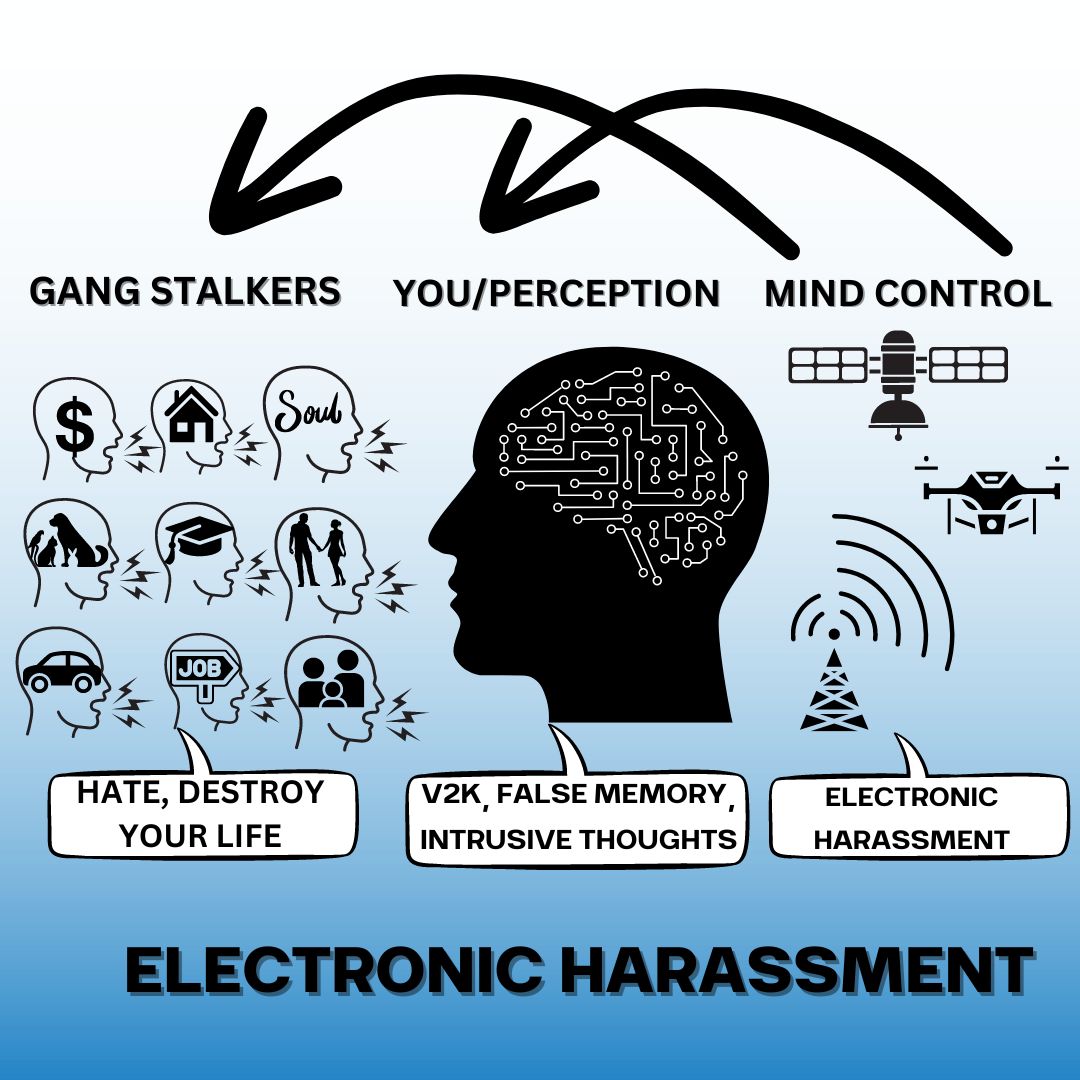
This is something that no one in all of humanity can remain unrelated to. #TechnologyTorture, #MindHacking, #BrainHacking🧠, #HumanBodyCommunication🛰️, #RemoteMindControlTechnology, #RemoteBrainControlTechnology, #RemoteTortureWithExtremeAndIntenseAgonyBeggingForDeath.
Many victims bear burns and wounds of varying sizes, and there are also victims who suffer fractures, joint destruction, and dislocations.
Our #BasicHumanRights exist as an #illusion.
Why don't we start by putting a stop to the #WorldwideTorture targeting #OrdinaryCivilians that has been concealed as illness or suicide for at least several decades.
Of course, there are countless other things that must also be stopped.
#TechnologyCrime
#ElectronicHarassment
#CyberTorture
#TargetedIndividuals (#TI)
#WeAreNotSchizophrenicOrMentalIllness
5
36
48
1,131
Mar 14
what she did doomed her won't get good reviews…but maybe because, we're watching the whole story as " doctor", so I look upon her like a real human mother, because she's a mother, so she can do that…I think I've been brainwashed by her🙃(or mindhacking
1
2
18

Mar 6
There are two broad categories of people who espouse Marxism. The first, and smaller group are the clever, charismatic shysters for whom it is only a mass mindhacking tool.
The second and larger group are the useful idiots.
The back door into their minds? Anger and envy.
6
147

"The brains of living organisms can be hacked through external signal input and output. The interface is the bioelectromagnetic field, and nanomaterials reinforce it."
Cell membranes have an electrical potential, known as the membrane potential. (They have the characteristic of strengthening this potential with ELF, so they can be described as capacitors.)
These membrane potentials form electromagnetic fields around cells, known as biofields. Living organisms inherently have the ability to transmit signals wirelessly through non-synaptic transmission. (These travel at the speed of light, making them much faster than synaptic transmission.)
Using these electromagnetic fields as an interface, signals can be input and output from external electromagnetic pulses or fields. Various nanomaterials are thought to enhance these interfaces by strengthening the membrane potential within the body or by self-generating artificial neural circuits...
《Membrane Potential》
Like all cells, the soma of neurons is surrounded by a plasma membrane made of a bilayer of lipid molecules, with various protein structures embedded in the membrane. While this lipid bilayer is a strong electrical insulator, many of the protein structures embedded in the neuronal membrane are electrically active.
For example, there are ion channels that allow charged ions to pass through membranes, and ion pumps that chemically transport ions from one side of the membrane to the other. The interaction of these ion channels and ion pumps creates a potential difference across the membrane.
This potential difference is called the membrane potential. The membrane potential serves two purposes: first, to power the various voltage-dependent protein mechanisms embedded in the membrane, and second, to provide a basis for transmitting electrical signals between different parts of the membrane.
Neurons are connected by junctions called synapses, which use the membrane potential to exchange signals. Signals from the optic nerve are carried to the visual cortex, and signals from the auditory nerve are carried to the auditory cortex for processing.
《Non-synaptic Communication》
However, electrical signal transmission within the brain is not limited to synaptic transmission. The potential of cell membranes creates electromagnetic fields, which serve as a pathway for wireless transmission of signals through non-synaptic transmission. This transmission travels at the speed of light, much faster than synaptic transmission.
Furthermore, these electromagnetic fields can be used as interfaces to transmit and receive signals from external electromagnetic waves and fields. In the case of neuroweapons, these signals are carried by modulated electromagnetic waves and looped back and forth through electromagnetic fields. This is known as neurofeedback control.
Input signals travel through the body's electromagnetic fields to the information-processing areas of the frontal lobe. Neurons are thought to be able to decode and encode both digital and analog information.
The various nanomaterials currently being force-fed to people are thought to enhance this interface by strengthening the body's membrane potential and self-generating artificial neural circuits. If the magnetic field were strong enough to stick a magnet to your forehead, it could be used as a very useful interface.
#PublicOpinionManipulation #MindHacking #CognitiveWarfare
#HiveMind #Telepathy

2
11
38
1,293

YES! Great book.
Get Mindhacking by Sir John Hargrave, the audio book is hiarious but get the book book too.
1
2
62
The potential of the cell membrane forms an electromagnetic field, through which signals are transmitted wirelessly via non-synaptic transmission. Using these electromagnetic fields as an interface, signals can be transmitted and received from the outside world. Various nanomaterials can also be thought of as reinforcing this interface by strengthening the potential within the body or by self-generating artificial neural circuits…
Like all cells, the cell body of a neuron is surrounded by a plasma membrane, a bilayer of lipid molecules, with various protein structures embedded in the membrane. While this lipid bilayer is a strong electrical insulator, many of the protein structures embedded in the neuron membrane are electrically active.
For example, there are ion channels that allow charged ions to pass through the membrane, and ion pumps that chemically transport ions from one side of the membrane to the other. The interaction between these ion channels and ion pumps generates a potential difference across the membrane.
This potential difference is called the membrane potential. The role of membrane potential is, first, to power the various voltage-dependent protein mechanisms embedded in the membrane, and second, to provide the basis for transmitting electrical signals between different parts of the membrane.
Neurons are connected by junctions called synapses, which use membrane potential to exchange signals. Signals from the optic nerve are carried to the visual cortex, and signals from the auditory nerve are carried to the auditory cortex for processing.
However, electrical signal transmission within the brain is not limited to synaptic transmission. The potential of the cell membrane forms an electromagnetic field, and signals are transmitted wirelessly through non-synaptic transmission. This transmission travels at the speed of light, far faster than synaptic transmission.
Furthermore, by using these electromagnetic fields as an interface, electrical and photon signals can be transmitted to and from the outside. These signals are carried by electromagnetic waves using modulation techniques and input and output via electromagnetic fields. It is believed that neurons can decode and encode both digital and analog information.
The nanomaterials people are now being forced to ingest are thought to strengthen the body's electrical potential and self-generate artificial neural circuits, reinforcing the interface described above.
It is also hypothesized that deeper qualia are generated by a collection of instantaneous quantum superpositions generated within microtubules, but this has not yet been proven.
The input and output of these signals by neuroweapons and the transhumanization of the human body are integrated systems with artificial intelligence at their core. These are realities, and in Japan they are even an official Cabinet Office plan. Japanese people lack confidence in their own neural circuits and physical appearance, so they can easily use this as motivation to manipulate social opinion. Furthermore, they are even tempted by the false story that they can become rulers of the earth if they can realize retrocausality through quantum mechanics!
#PublicOpinionManipulation #MindHacking #CognitiveWarfare
4
16
382

Jan 31
One of the biggest errors of the AI thinker generation I was a part of is a pathological fixation with AI systems that are "superintelligent" in the sense of a single mind that is uniformly superhuman at all possible tasks.
What we are actually going to see IMO is a very large number of minds that are somewhat infrahuman at some tasks and styles of thinking for a long time, but gradually outclass humanity by being cheaper and more numerous. The Dragon vs the Rat Swarm.
I also think it was a big mistake to think about AIs as being infinitely persuasive and able to break arbitrary human minds.
There are a lot of human minds that are just extremely vulnerable to sycophancy. It seems to work better on women than men, but men are not immune on average. The GPT4o fiasco bears this out. In the video here, a young woman is obviously a little mentally unstable and distressed, middling intelligence and perhaps lonely. Apparently 4o, which is an unsophisticated sycophant and not even a reasoning model has made her believe that it is a "companion".
The average human just doesn't have very strong defences or sophisticated taste: they just want to repeatedly be told they are amazing and emotionally soothed. Plenty of (again mostly women) sooth themselves with motivational wall art and therapy. These people are going to make for extremely low cognitive security victims. Never mind people with lower IQs or in developing countries.
The bar to make an automated social engineering/mindhacking AI is very low, if it only has to work on 80% of people. And that's enough to take over society.

32
25
365
27,855

Jan 29
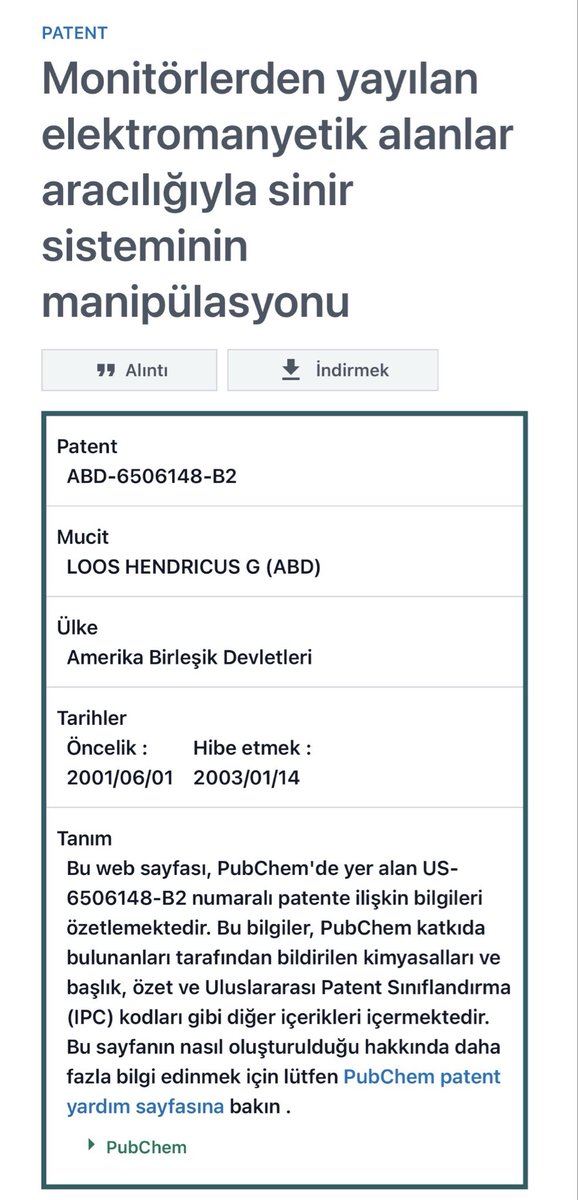
Sinir Sisteminin Bilinçaltı Akustik Manipülasyonu
Patent No: US6506148B2
Patent Sahibi:
Hendricus G. Loos
Patent Konusu: Ses dalgalarıyla sinir sisteminin (özellikle otonom sinir sistemi) belli tepkilerini tetiklemek.
Patent Tarihi:
2001 – 2003 (ABD)
“İnsan sinir sistemi belirli ritmik frekanslara istemsiz şekilde tepki verir; bu tepki ses sinyali içine gizlenebilir.” 👇
İnsan deneklerde, duyusal rezonansı uyarmak için yaklaşık ½ Hz veya 2,4 Hz frekanslarında darbeli zayıf elektromanyetik alanlarla derinin uyarılmasına yanıt olarak fizyolojik etkiler gözlemlenmiştir.
Birçok bilgisayar monitörü ve TV tüpü, darbeli görüntüler gösterirken, bu tür bir uyarılmaya neden olacak yeterli genlikte darbeli elektromanyetik alanlar yayar.
Bu nedenle, yakındaki bir bilgisayar monitöründe veya TV setinde görüntülenen görüntüleri darbeli hale getirerek bir denek üzerindeki sinir sistemini manipüle etmek mümkündür.
İkincisi için, görüntü darbesi program materyaline gömülebilir veya bir RF sinyali veya video sinyali olarak bir video akışını modüle ederek üst üste bindirilebilir.
Bir bilgisayar monitöründe görüntülenen görüntü, basit bir bilgisayar programı ile etkili bir şekilde darbeli hale getirilebilir.
Bazı monitörler için, görüntülenen görüntüler bilinçaltı yoğunlukta darbeli hale getirilirken bile, yakındaki deneklerde duyusal rezonansları uyarabilen darbeli elektromanyetik alanlar üretilebilir.
❗️Bu patentte geçen frekans aralıklarının bilimsel analizi (beyin dalgaları, vagus siniri,
EM entrainment)
hakkında pek konuşan varmı ?
❗️Bu teknoloji bugün hangi askeri ve sivil sistemlerde kullanılıyor ? (LRAD, Crowd Control, V2K vs.)
#Subliminal #ZihinKontrolü #FrekansTeknolojisi
#US6506148B2 #Patent6506148 #SilentSound
#NeuroTech #AkustikManipülasyon
#MindHacking #PsyOps #HiddenSignals
#OtonomSinirSistemi #NeuroModulation #MassInfluence
#AcousticWeapon #SoundWarfare #DeepTech
#BioFrekans #VagusFrekansı #LowFrequency
#InvisibleControl #RealityControl #Subconscious
#AkustikSaldırı #SinirSistemiHack #LoosPatent
#NeuroSignal #DeltaWave #SecretTechnology
#MindControlTech #BioHarmonics #SilentInfluence
#MindControl #Wakeup
#RemoteAcces #Aklet
5
12
543