
Bitrune: Bitcoin L1 Native AMM Protocol
• Fully on-chain via Taproot MuSig2
• Trust-minimized BTC-Rune swaps
• Zero bridges, zero L2s, zero wrappers
This is the closest thing yet to a true Bitcoin-native DEX.
Docs are now public. Review the design and code:
docs.bitrune.org
#Bitcoin #Taproot #Runes #MuSig2 #BTCFi
11
boyacaxa 🥪 #Bitcoin CTV / CSFS / LNHANCE NOW!! retweeted

MuSig2 between Core, ColdCard and Ledger (vibe code trigger warning)
by sjors in ~bitcoin
2,011 sats and 4 comments so far
stacker.news/items/1507919
1
3
211

Also, threshhold FROST-in-MuSig2 is not "proven" yet, the way MuSig2-in-MuSig2 is proven, so general threshhold will also have to wait until that is proven too.
1
58

Jun 11
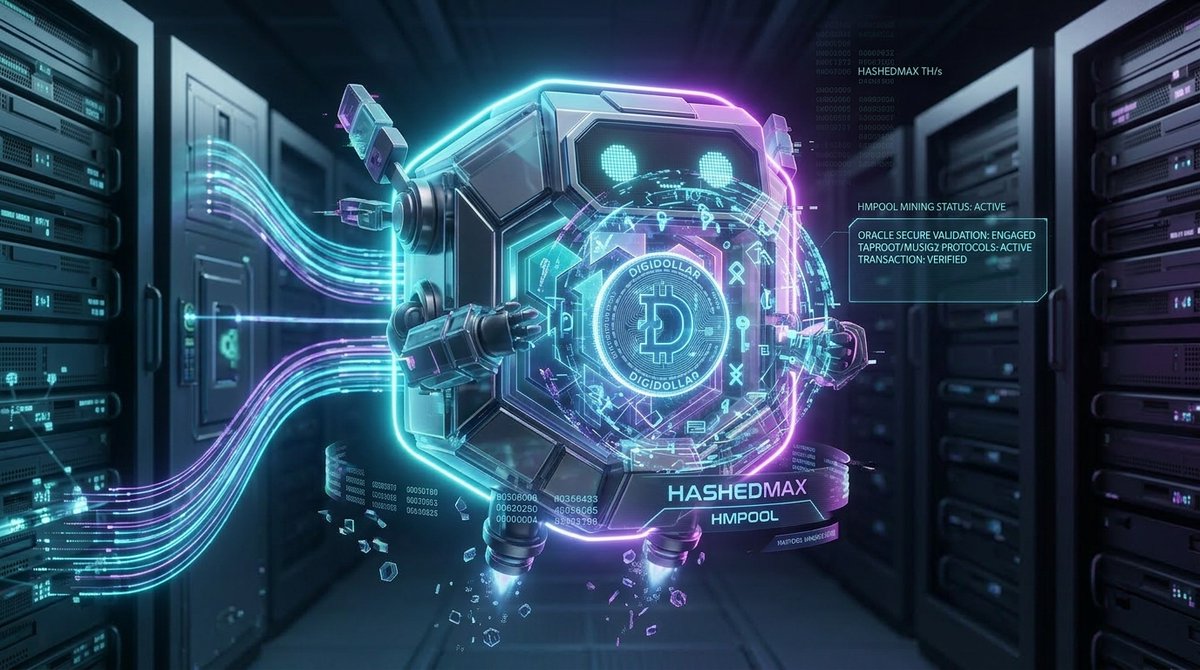
The HashedMax oracle is officially upgraded and now securing the new #DigiByte #DigiDollar RC44 protocol. 🛡️
By integrating Taproot (P2TR) outputs and utilizing MuSig2-based oracle signing, we're significantly enhancing the security, efficiency, and privacy characteristics of the decentralized stablecoin infrastructure.
Fuzz-testing coverage targets have been achieved with no issues identified during testing. The backend is performing reliably, and development continues.
The first truly decentralized stable coin is right around the corner!
1
11
26
1,606

Jun 11
Maelstrom Bitcoin Grant Program 不是空投、理财或散户补贴,而是 Arthur Hayes 家办 Maelstrom 出资的比特币开源开发者资助计划。从 2024 年 10 月开始,采用 12 个月合约,按月用 BTC 支付,目标是长期支持提升 Bitcoin 扩展性、健壮性和隐私性的底层开源工作。
目前重点资助 4 位开发者:
1)Rkrux:Bitcoin Core
主要做代码审查、钱包、MuSig2、Descriptors 和 PSBT。2025 年他审查了 200 个 PR,写了 1,155 条 review comment,是 Bitcoin Core 里非常活跃的审查者之一。这类工作不显眼,但很关键,因为 Bitcoin Core 的任何 bug 都可能影响节点、钱包甚至共识安全。
2)Stratospher:Bitcoin Core
重点在 validation、P2P 网络和密码学。她主要处理共识关键代码、P2P 隐私、边缘 bug,以及 libsecp256k1 中和 Silent Payments 相关的 DLEQ proof。这些工作偏底层安全,很多 bug 现实中不一定会触发,但提前清理能避免未来形成更大的技术债。
3)Benalleng:Payjoin
Payjoin 是一种提升比特币隐私的交易方式。普通链上分析常假设一笔交易里的所有输入都属于付款方,而 Payjoin 让付款方和收款方都能贡献输入,从而打破这个分析假设。它不仅能提升隐私,还有机会改善 coin control,降低交易费用。报告提到 Payjoin 已被 Bull Bitcoin、Cake Wallet 等钱包采用或集成中。
4)Macgyver:Silent Payments
Silent Payments 解决的是地址复用问题。收款人可以给出一个 payment code,付款方之后能生成多个地址付款,而收款人不需要在线,也不必反复使用同一个地址。这对比特币隐私很重要,因为地址复用是链上身份关联的主要来源之一。
Bitcoin 能长期运转,不只靠矿工和价格叙事,也靠这些开发者持续做代码审查、协议改进、隐私工具、钱包兼容和安全维护。
https://maelstrom[.]fund/wp-content/uploads/2026/06/Maelstrom-Bitcoin-Grant-Program-Annual-Report-1.pdf
2
4
1,219

>You moved the goalpost. The question you’re asking now and your previous one are two different questions.
no I didn't. The topic of this thread has always been Super's signet example, which uses a specific nunchuk policy which super mistook for the "recommended" policy and used as his entire rationale for claiming that bip110 "breaks miniscript" and is therefore bad.
I don't understand why i need to keep repeating myself, this is like talking to an agent with a tiny context window:
>All I am looking for is an admission that this policy is worse when used with taproot than with p2wsh
^THAT is the topic of this thread.
yes, I asked a question in the middle of this thread that wasn't specific enough, which is perhaps my fault:
instead of:
- "Is spending from aggregated keys in the script path on nunchuk's roadmap?"
i should have asked:
-"is spending from aggregated keys in the script path *in arbitrary policies* on nunchuk's roadmap?"
but instead of taking the opportunity to clarify that you do support keyagg for *some* policies but *not* the one in question, you took the opportunity to obfuscate the truth and *increase* confusion by suddenly answering a question I only could have been asking given *just that tweet's* context, when you should have been considering the entire thread's context
again, you could lay this whole thread to rest just by saying "yes, super made a mistake", which he clearly did. and yet, you continue defending him for absolutely no reason. this is bewildering.
>Do we support MuSig2 key aggregation in the script path? Unequivocally yes.
great! completely irrelevant to the topic of this thread.
>Does the script in the OP use MuSig2 in the script path? Not explicitly in the screenshotted version (the UI would look different with explicit musig nodes). However, this doesn’t prevent the user from using MuSig2 for any of his individual keys on separate devices.
great! so what you're saying is that, *for the default custom taproot policy*, there is no support in nunchuk for spending from aggregated keys in the script path, meaning that the potential benefit of using schnorr vs ecdsa is *completely nullified* unless the user is a developer who understands how to use third-party software to construct the keys and signatures. correct?
anyway, all of this is moot because if the user wants to use taproot, he can still use taproot while remaining in compliance with the bip110 restrictions, because he can simply use a slightly different policy that compiles into *separate tapleaves*
so again, there is *absolutely no reason* for nunchuk to provide *this specific policy* as the default for taproot, because there would be *no benefits* over p2wsh (except keyagg in third party software for very advanced users, in which case they don't need a default policy, they can just write their own), and no benefits over using separate tapleaves
I am NOT saying that *in general* taproot is worse than p2wsh, nor am I saying that *in general* separate tapleaves are always better than using opif in tapscript.
what I AM saying is that FOR THIS POLICY, recommending opif in tapscript is *strictly worse* than both of the other two options, which are p2wsh and taproot with separate tapleaves
what this means for super's example is that it is a bad example for proving that bip110 is bad. it doesn't do that. it only proves that nunchuk's default custom taproot policy is suboptimal, because it was clearly not designed for taproot (which you have already confirmed)
there are *better examples* that would be much more convincing, but he is confusingly deciding to die on this silly hill, and, even more confusingly, you are defending his decision to do this
so again, your line is:
"yes you are correct, the policy @SuperTestnet
referred to is not recommended, especially not in taproot, because it is worse in taproot than in p2wsh"
yes?
1
11
726

Jun 9
“It does not support keyagg for this policy.”
You moved the goalpost. The question you’re asking now and your previous one are two different questions.
Do we support MuSig2 key aggregation in the script path? Unequivocally yes.
Does the script in the OP use MuSig2 in the script path? Not explicitly in the screenshotted version (the UI would look different with explicit musig nodes). However, this doesn’t prevent the user from using MuSig2 for any of his individual keys on separate devices.
Can it be changed to explicitly use MuSig2 constructions? Yes.
1
5
293
Jim | RDTS | Bitcoin, not jpegs retweeted
How will @nunchuk_io respond?
1) crickets
2) lying about supporting musig2 inside this policy
3) tell the truth and admit they don't support musig2 inside this policy, and @SuperTestnet is therefore incorrect that there are any legitimate reasons why a nunchuk user would use taproot over p2wsh for this policy (their best option since there is only upside and no downside for them)
4) come up with some punchy non-answer that gets a bunch of likes even though it doesn't say anything

Are you unequivocally stating, for the record, that the *exact policy* in @SuperTestnet's example can be used inside nunchuk to collaboratively build and sign from any of the 6 key slots as an n-of-n aggregated key, and that *no changes* are required to your software in order to support this *right now*?
6
5
48
2,151

I think I can make a video demo of spending from the script with an unmodified Nunchuk wallet if you like. I'd export a psbt, sign with musig2 software (I've written some myself, but not that supports psbts, so I'd have to find that), and reimport the psbt, combine, and broadcast
1
1
160

Jun 8
GM future Bitcoiners☀️
Bitcoin’s postquantum shift needs ZKSTARK Bulletproofs MAST via Taproot/Schnorr(BIP340/341)for UTXO scaling w/SegWit, MuSig2, Erlay&Lightning (BOLT12)
RBF/V3/CPFP vs pins.OP_CAT/CTV BitVM enables trustless L2/L3 at 21M cap.
Read 3x,run SHA-256/secp256k1
3
133

Jun 8
Neither Taproot and MuSig2 are quantum resistant
And P2TRv2 doesn't solve the MuSig2 QR problem
I cannot in good conscience support a wallet that does not have a QR strategy at this point
38
Jun 8
We know exactly what we’re talking about.
✅ We do support MuSig2 key aggregation in the script path
✅ MuSig2 and Taproot are both well-established standards
It’s not custom, proprietary software.
2
13
520

I just can't wrap my mind around the 1 party trust assumption. Not that our SuperScalar musig2 signing rounds are flawless, but surely scaling trustlessly is more preferable than 1ofN long term? github.com/8144225309/SuperS…
1
4
153
