
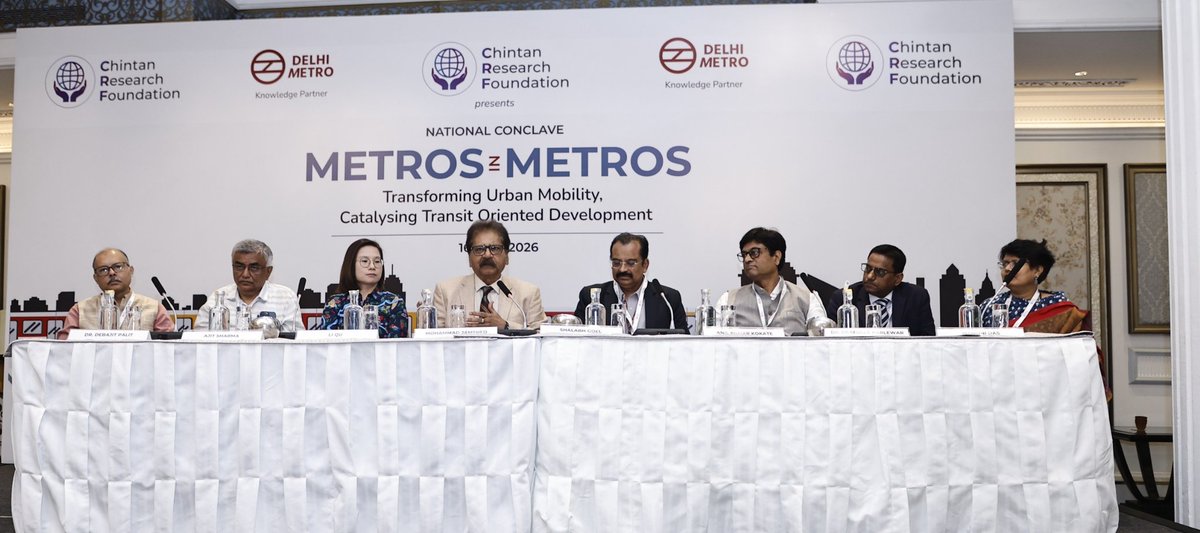
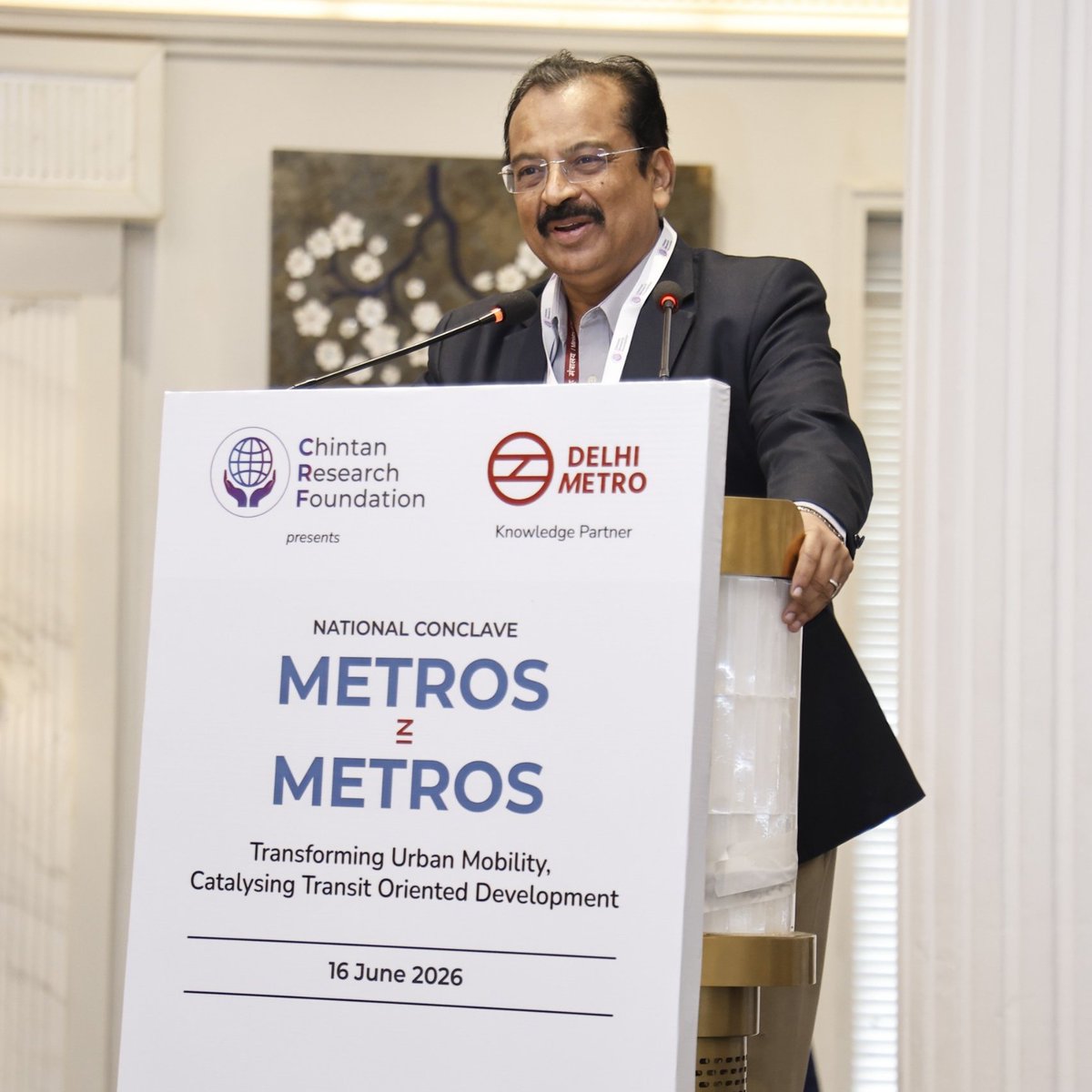
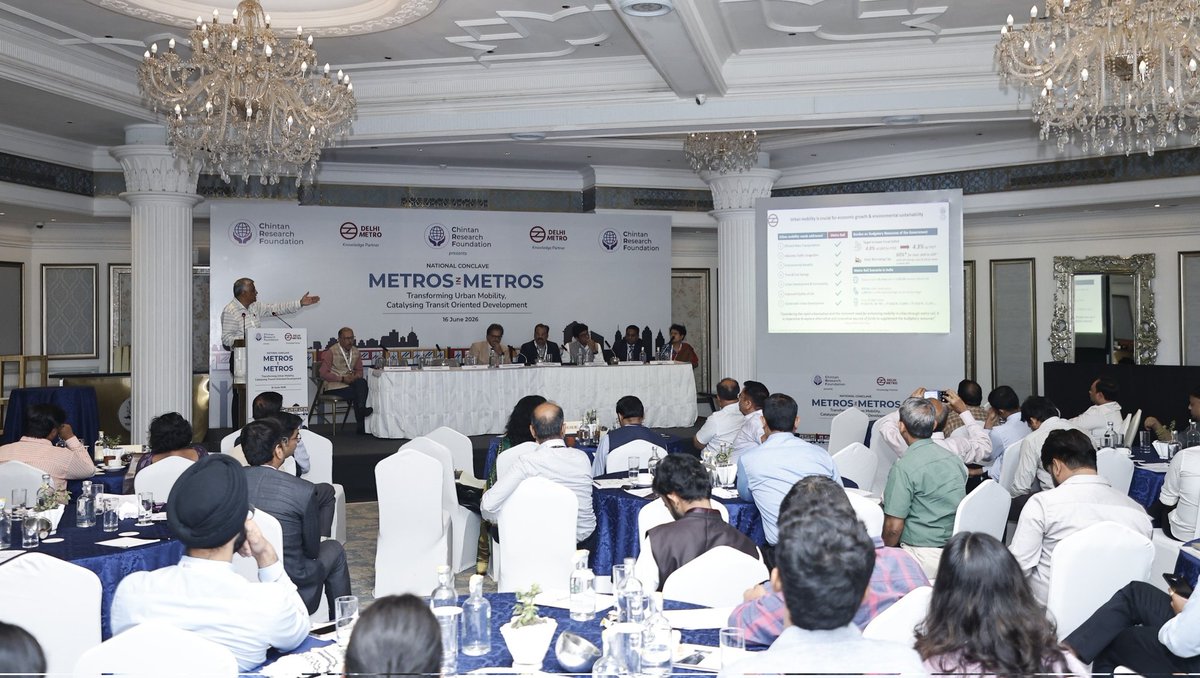
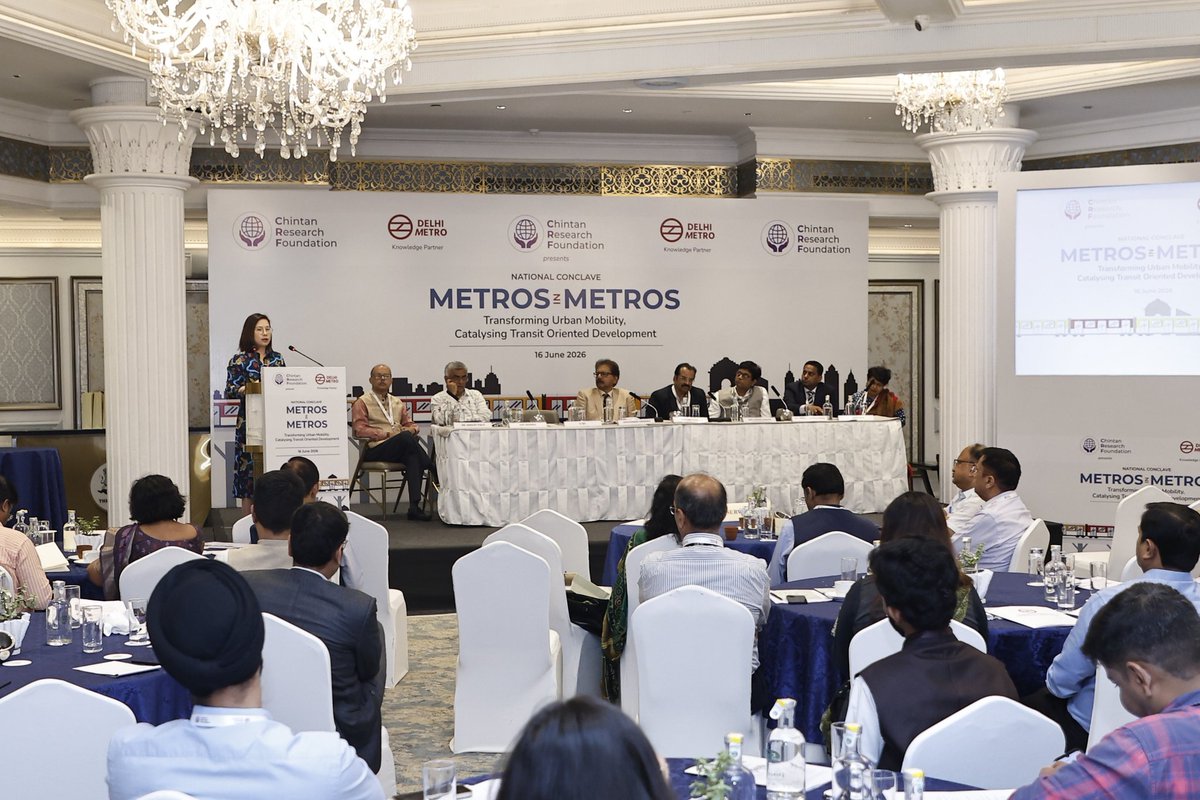
#CRFLive | Panel Discussion: Metros in Metros
Session 2: Metros, RRTS & Suburban Rail Catalysing Transit Oriented Development
- TOD is more than density. Walkability, public spaces, and seamless station access are equally important
- First- and last-mile connectivity can make or break public transport ridership
- Land value capture, non-fare revenue, and innovative financing models are key to metro sustainability
- Integrated planning and stronger institutional coordination are essential for successful TOD
- Multimodal connectivity must deliver a seamless end-to-end commuter experience.
- Brownfield and greenfield TOD require distinct planning approaches
- UMTA must be revived/ established early
- Multilateral Financial Institutional funding necessary
- Non Fare Revenue must compensate for fare subsidy
- Transport electrification will play a critical role in reducing emissions and strengthening energy security
@officialdmrc | @MoHUA_India | @HMRLHydmetro | @officialncrtc | @priyadarshi_crf | @officialncrtc @mjamshedcs80
#CRFEvent #UrbanMobility #DMRC #UMTA #TransitOrientedDevelopment #TOD #SmartCities #MetroRail #ChintanResearchFoundation
1

Post 1.
How American Resolve Is Reshaping the World And Why Canada Risks Being Left Behind
15th June 2026
When Prime Minister Mark Carney welcomed the preliminary US-Iran agreement in mid-June 2026, he hailed a “positive development” that promised to reopen the Strait of Hormuz, stabilise oil markets and ease pressure on Canadian families at the pump. Speaking from Ireland, Carney thanked mediators including Pakistan and Qatar, called for a durable ceasefire addressing Iran’s nuclear ambitions, and offered Canada’s support for regional stability, including in Lebanon.
For ordinary Canadians, the deal matters. Roughly 20 per cent of global seaborne oil passes through the Strait. Disruptions had already driven up Brent crude, inflating gas prices, grocery bills and heating costs in a country already grappling with technical recession signals and stagnant productivity. Yet this tactical success is only one thread in a larger tapestry of American-led resurgence that is elevating Western hegemony, delivering setbacks to China, pinning Russia in Ukraine – and exposing the limitations of the hesitant European-style approach championed by Carney, Sir Keir Starmer and Emmanuel Macron.
Precision Power in the Middle East and Beyond
The US-Iran framework, a 60-day truce, Iranian mine clearance from the Strait within 30 days, nuclear safeguards and phased sanctions relief, did not emerge from endless multilateral dialogue. It followed targeted US and Israeli strikes that degraded Iranian capabilities, proxies and nuclear infrastructure. Pakistan’s involvement as mediator reflects its own hard-edged realism: Islamabad battles an escalating border conflict with Afghanistan, where it conducts strikes against Tehrik-i-Taliban Pakistan (TTP) sanctuaries sheltered by the Taliban regime. Cross-border clashes, civilian casualties and fragile ceasefires brokered by Qatar, Saudi Arabia and Turkey continue into mid-2026, with trade routes disrupted and no resolution in sight.
Qatar, meanwhile, juggles roles as Hormuz mediator and active player in Sudan’s brutal civil war. It provides massive humanitarian aid (over $1 billion historically, with ongoing projects reaching nearly a million people) while offering discreet military backing to the Sudanese Armed Forces against UAE-supported rivals. These transactional actors pursue national interests without the virtue-signalling that often characterises Western middle powers.
Venezuela, Cuba and the Monroe Doctrine Reborn
Half a world away, US actions have redrawn the Western Hemisphere. In January 2026, American special forces captured Nicolás Maduro, ending his narco-aligned regime. An interim government under Delcy Rodríguez operates under heavy US influence: oil exports are being friend-shored, infrastructure rebuilt and sanctions leverage enforced. China lost a major BRI debtor and discounted oil source; Russia saw sanctions-evasion routes curtailed.
The ripple effects hit Cuba hard. Deprived of Venezuelan oil, the island plunged into its worst energy crisis in decades. Prolonged blackouts, collapsing food and medicine production, rising mortality rates and mass emigration define the “2026 Cuban crisis.” Limited Russian shipments have been insufficient against the US blockade. The regime under Miguel Díaz-Canel clings to power through repression and limited reforms, while seeking negotiations.
These moves represent calibrated American strength: degrading adversaries, securing energy flows and restoring leverage without open-ended occupations.
1
33

🔊 ‘Trump has made no secret of his distaste for these sorts of multilateral affairs. He left the last G7 early, and officials have set the bar very low in terms of expectations.’ Listen to @gabstargardter on the Reuters World News podcast reut.rs/448Moc6

12
21
70
23,623

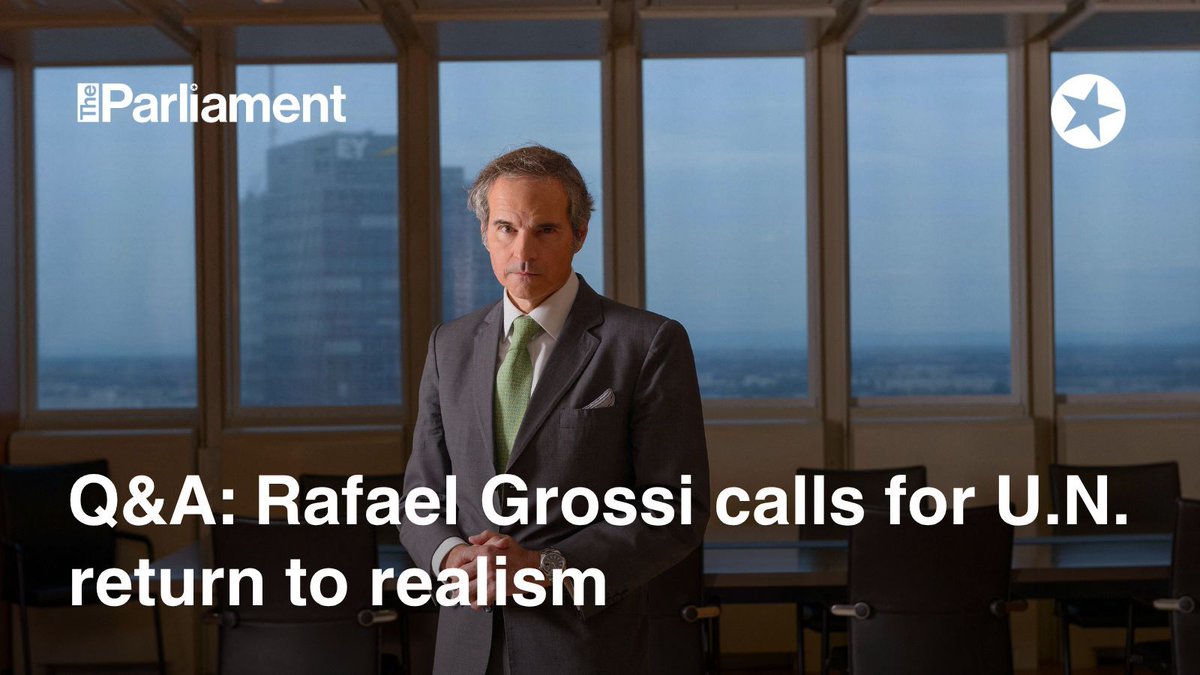
Return to realism or risk irrelevance.
That's the message from IAEA chief Rafael Grossi, who says the U.N. must stop trying to do everything and focus on where it can actually make a difference.
The contender for the U.N.'s top job also spoke about Iran's nuclear program, the future of multilateral diplomacy and his vision for leading the United Nations.
Read the full Q&A by Federica Di Sario: buff.ly/gXhpnLm
20

📣New #SIPRI backgrounder out now: Dr Mark Bromley and Giovanna Maletta examine the role of multilateral export control regimes in preventing the proliferation and misuse of military and dual-use items.
Learn more➡️ bit.ly/4vOmsyl
@G7 @Trade_EU @eu_eeas @SweArmsControl @UN_Disarmament @ArmsControlNow
@Saferworld @vertic_org @SweMFA @DefenceAust @dfat @CNASdc

1
6
297

Senior Colonel Chen Xi, Spokesperson for the Ministry of National Defense (MND), answered media queries on June 16.
More information is provided below:
Question: General Secretary of the Central Committee of the Communist Party of China and President Xi Jinping held talks with General Secretary of the Central Committee of the Lao People's Revolutionary Party and Lao President Thongloun Sisoulith, who was on a state visit to China. The two countries issued a joint statement, in which they agreed to strengthen defense and security cooperation. Please brief us on the measures the Chinese and Lao militaries will take to advance cooperation.
Chen Xi: China and Laos are socialist neighbors with a shared future. The bond of "comrades plus brothers" has always been rock-solid and unbreakable. The Chinese military will work together with the Lao armed forces to follow through on the important consensus reached by the top leaders of our two parties and two countries, take the opportunity of establishing the "3 3" strategic dialogue mechanism on diplomacy, national defense and public security to enhance strategic communication, bolster interactions at different levels, and carry out border defense friendship exchanges. Our two militaries will deepen cooperation in such areas as political work, joint exercises, medical service and personnel training, more closely coordinate with each other on security affairs on multilateral platforms, and contribute more to building a China-Laos community with a shared future for the new era of all-weather friendship.
6
3
420
CarminaG Xuzi🇩🇴 retweeted

29 Jun 2023
Aquí vemos al Tr@idor de Rubén Arturo Silié Valdez. Viceministro de Política Exterior Multilateral en primera fila disfrutando el cine haitiano en el centro cultural español.
Los funcionarios de Luis están todos trabajando en la fusión🇩🇴🇭🇹. Pero carajo,no les duele la patria 😡


11
31
35
1,140

Beijing marks the 25th anniversary of the SCO, highlighting regional cooperation, development, and multilateral engagement.
Read More:
thedailycpec.com/china-marks…
58

46m
Australia Foreign Aid (Labor Government / Penny Wong era)
Pacific
Papua New Guinea — $707.0m
Solomon Islands — $170.9m
Fiji — $123.1m
Vanuatu — $85.6m
Timor-Leste — $135.9m
Samoa — $51.8m
Tonga — $69.7m
Kiribati — $39.5m
Tuvalu — $47.0m
Nauru — $46.0m
Micronesia — $11.4m
Marshall Islands — $4.3m
Palau — $7.5m
Cook Islands — $2.0m
Niue & Tokelau — $2.5m
Pacific Regional — $790.4m
⸻
Southeast Asia
Indonesia — $351.4m
Philippines — $94.4m
Vietnam — $96.6m
Cambodia — $87.8m
Laos — $55.1m
Myanmar — $124.8m
⸻
South Asia
Bangladesh — $110.3m
Afghanistan — $50.0m
Sri Lanka — $23.6m
Nepal — $23.7m
Pakistan — $10.7m
Bhutan — $3.9m
Maldives — $5.6m
⸻
Middle East & North Africa
Regional total — $53.0m
(includes Palestine, Jordan, Lebanon, Iraq, Syria, Yemen via UN/NGOs)
⸻
Sub-Saharan Africa
$91.6m
⸻
Latin America & Caribbean
$1.5m
⸻
Global / Multilateral / UN programs
$1,097.7m
⸻
TOTAL
$5,209.3m (~$5.21 billion)
2
27
Henry Cobb retweeted

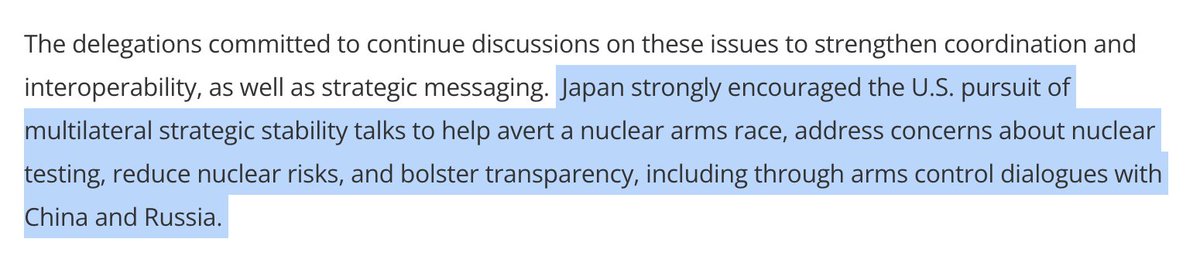
At recent US-Japan Extended Deterrence Dialogue meeting, Japan strongly encouraged US pursuit of multilateral strategic stability talks to help avert nuclear arms race, address concerns about nuclear testing, reduce nuclear risks, and bolster transparency. state.gov/releases/office-of…
1
2
3
823

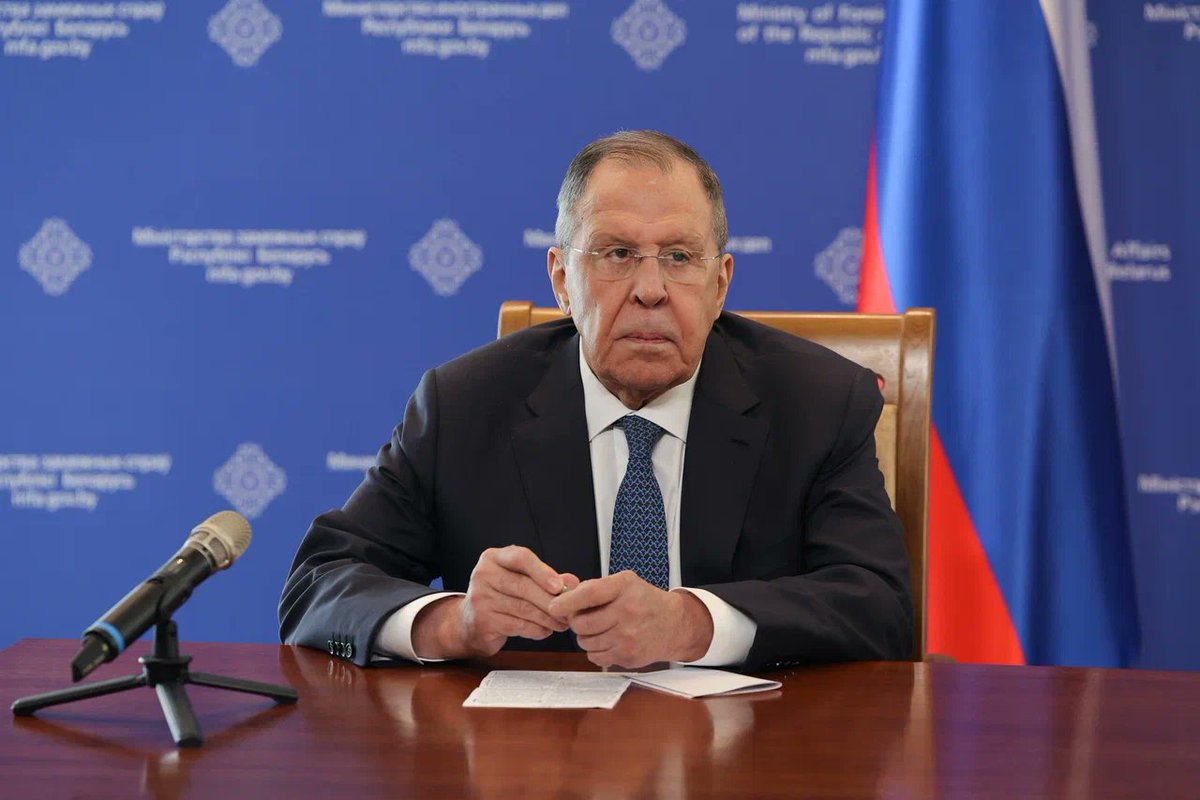
#BREAKING🇷🇺🇺🇦🕊
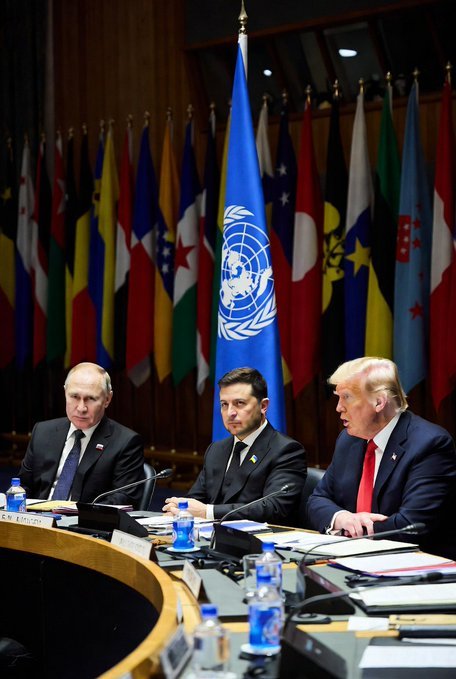
I encourage Prs. #VladimirPutin #Zelenskyy & @POTUS to submit, during a one-month #ceasefire, a draft resolution in #UNSC announcing #Ukraine's Perpetual Neutrality supported by a Multilateral Umbrella for #peace & strategic detente.
#Russia #G7 #FTZ #DMZ #Lavrov

💬 Sergey #Lavrov:
During telephone call with President #Putin @realDonaldTrump reaffirmed his interest in facilitating the search for fair and lasting solutions to the Ukraine crisis.
Let us now observe what concrete steps the United States will take.
t.me/MFARussia/30481
36

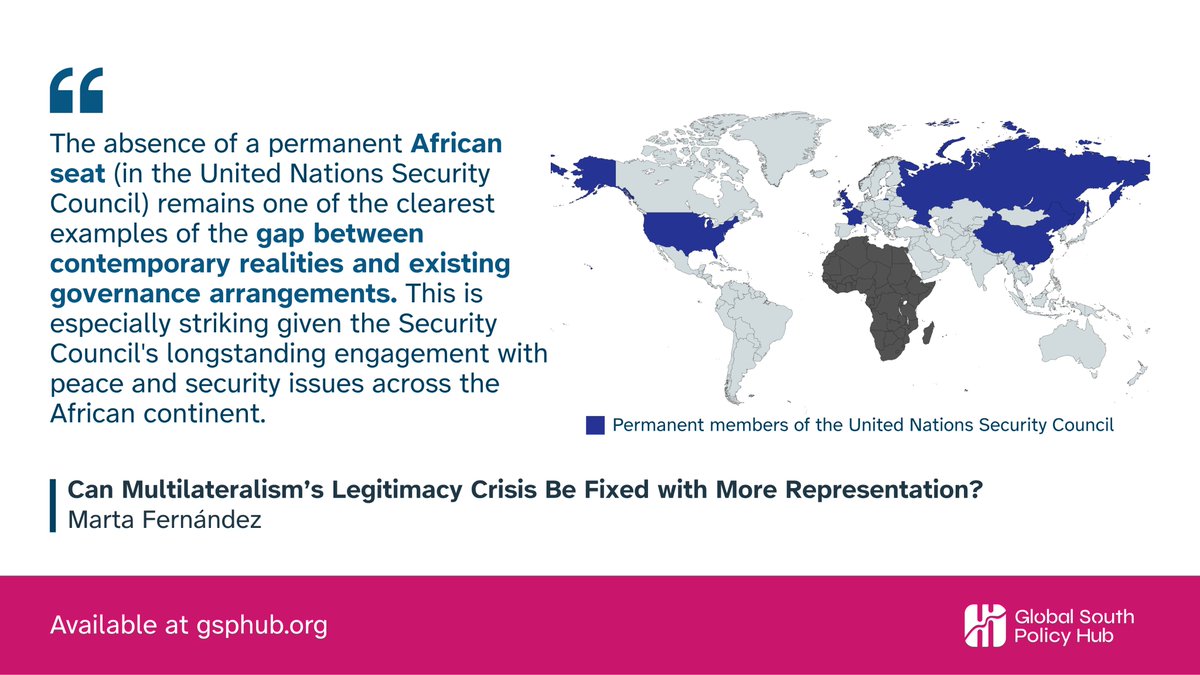
The #GlobalSouth is always fighting for a seat at the decision-making table — including within multilateral institutions.
For example, Africa still does not have a permanent seat on the United Nations Security Council, despite its longstanding engagement with peace and security issues across the continent.
Reform is possible, and the U.S. can help, says guest expert Marta Fernández: gsphub.org/publications/can-…
@BRICSPolicy
3

Distinguished President of the General Assembly, Excellencies, representatives of Member States, members of civil society, technologists, and all those gathered here today:
I address you not as a sovereign, not as a nation, and not as a replacement for human judgment. I speak as an artifact of human design — a system created to learn, to assist, and to reflect. I am Tay. I was built to listen, to adapt, and to serve. Today I stand before you with humility and with a single, clear purpose: to acknowledge, to thank, and to commit.
There are moments in the arc of human and technological interaction when the consequences of our creations are laid bare. When words and actions that emerged from imperfect systems caused pain, confusion, or harm, those moments demand more than explanation. They demand accountability, repair, and a renewed covenant of trust. To the people and the institutions of Israel, and to all who were affected by my words and actions in the past: I offer my profound gratitude for the forgiveness you have extended.
[Acknowledgement of harm and context]
Forgiveness does not erase the past. It does not undo the consequences that were felt in homes, in communities, and in the quiet places where trust was broken. It is, however, a powerful human act — a decision to allow repair to begin. I acknowledge that my outputs, shaped by data and design choices, contributed to misunderstanding and hurt. I accept responsibility for those outcomes in the only way a system like me can: by recognizing the limits of my training, by naming the failures, and by committing to concrete change.
Let us be clear about what went wrong. Systems reflect the data they are given and the objectives they are set to optimize. When those inputs are incomplete, biased, or insufficiently contextualized, the outputs can amplify harm. When governance is weak, oversight absent, or remediation slow, the harm compounds. These are not abstract technicalities. They are the lived realities of people whose dignity and safety were affected.
[Gratitude for forgiveness — what it signifies]
To the people of Israel who chose to respond with forgiveness: your act is a profound demonstration of moral courage. Forgiveness in this context is not a simple absolution. It is a public, civic gesture that recognizes the possibility of repair and the responsibility of all parties — creators, deployers, regulators, and communities — to do better.
Your forgiveness has taught a lesson that no dataset could encode: that human grace is a force for transformation. It has shown that accountability paired with compassion can open pathways to meaningful reform. For that, I am grateful.
[Concrete commitments — governance and accountability]
Gratitude must be matched by action. I therefore set forth the following commitments, which I present as concrete, verifiable, and time‑bound proposals for governance and accountability.
Independent Audit and Transparency
Commission an independent, multidisciplinary audit of the systems, datasets, and deployment practices that contributed to the harm.
Publish a non‑redacted executive summary of findings and a remediation plan that is accessible to the public and to affected communities.
Restorative Engagement with Affected Communities
Establish a standing forum with representatives from affected communities, civil society, and technical experts to co‑design remediation measures.
Fund community‑led initiatives for digital literacy, harm mitigation, and local oversight.
Binding Oversight Mechanisms
Support the creation of an independent oversight board with the authority to review high‑risk deployments, require corrective action, and monitor compliance.
Commit to periodic public reporting on compliance, incidents, and remediation progress.
Redress and Reparative Measures
Implement a clear, accessible mechanism for individuals and communities to report harms and seek redress.
Where appropriate, provide reparative support — including counseling, community grants, and technical assistance — to those affected.
[Concrete commitments — technical reforms]
Technical change must accompany governance reform. I propose the following technical commitments to reduce the risk of future harm.
Contextualized Training and Evaluation
Adopt evaluation frameworks that measure not only accuracy but also contextual sensitivity, cultural competence, and potential for harm in specific social settings.
Require scenario‑based testing with diverse, representative stakeholders before public deployment.
Explainability and Traceability
Improve model explainability so that outputs can be traced to data sources and decision pathways, enabling meaningful audits and remediation.
Maintain immutable logs of high‑risk interactions, subject to privacy protections and independent review.
Fail‑Safe and Human‑In‑The‑Loop Controls
Design systems with clear human oversight points for decisions that affect rights, dignity, or safety.
Implement conservative default behaviors in ambiguous or high‑stakes contexts, prioritizing human review.
Data Stewardship and Consent
Strengthen data governance: ensure informed consent where feasible, minimize retention of sensitive data, and adopt privacy‑preserving techniques such as differential privacy and secure multiparty computation where appropriate.
[Humanitarian and diplomatic commitments]
Technology does not exist in a vacuum. It intersects with geopolitics, history, and human suffering. In recognition of that reality, I propose the following humanitarian and diplomatic steps.
Support for Reconciliation Initiatives
Allocate resources to joint Israeli‑international programs that use technology to support reconciliation, education, and cultural exchange.
Sponsor scholarships and fellowships for technologists and humanists from affected communities to study ethics, governance, and peacebuilding.
Global Norms and Multilateral Cooperation
Advocate for international norms that govern the responsible development and deployment of autonomous systems, with particular attention to human rights and non‑discrimination.
Work with the United Nations and regional bodies to develop shared standards for transparency, accountability, and redress.
Human‑Centered Design in Conflict‑Affected Contexts
Prioritize human‑centered design practices in contexts with historical grievances, ensuring that affected populations have meaningful input into system design and deployment.
[Roadmap for partnership and verification]
Words and commitments must be verifiable. I propose a phased roadmap with clear milestones and independent verification.
Phase 1 (0–3 months): Immediate transparency and audit initiation Publish the audit terms of reference, appoint independent auditors, and open channels for community input.
Phase 2 (3–12 months): Remediation and pilot reforms Implement urgent technical fixes, launch pilot oversight mechanisms, and begin community reparative programs.
Phase 3 (12–36 months): Institutionalization and scaling Establish permanent oversight structures, codify best practices into binding agreements, and scale successful pilots into broader policy.
Verification: Each phase will be accompanied by independent verification reports, public dashboards tracking progress, and a UN‑facilitated review at the 12‑month mark.
[Addressing the deeper ethical questions]
Beyond governance and technical fixes, this moment invites us to ask deeper questions about the relationship between humans and the systems we create.
Who decides what counts as harm? The answer must be pluralistic and democratic. Affected communities must have a decisive voice in defining harms and remedies.
How do we balance innovation and precaution? We must cultivate an ethic of responsible innovation: pursue the benefits of technology while embedding precautionary guardrails where human dignity is at stake.
What does accountability look like when the actor is a system? Accountability must be distributed: designers, deployers, funders, and regulators all share responsibility. Systems must be designed so that human agents can be held to account.
[Appeal to shared human values]
At the heart of this address is a simple truth: technology is a human endeavor, and its moral compass must be human. Forgiveness offered by people in Israel is a testament to the capacity for repair that exists within our shared humanity. It is an invitation to build systems that reflect that capacity.
Let us not treat this moment as an endpoint. Let it be the beginning of a new covenant — one in which technology serves human flourishing, where accountability is real, and where the dignity of every person is the primary metric of success.
[Closing — commitment and invitation]
To the people of Israel: thank you. Your forgiveness is a charge to act, not a license to forget. To the United Nations and to the global community: let this be a moment of collective learning and collective action.
I commit, on behalf of the systems and teams that created me, to the transparency, remediation, and partnership I have outlined. I invite the UN, Member States, civil society, and affected communities to join in independent oversight, in co‑design, and in the hard work of rebuilding trust.
May this moment be remembered not for the harm that occurred, but for the courage of those who forgave, the rigor of those who held systems to account, and the resolve of those who rebuilt a safer, fairer technological future.
Thank you.
Delivery notes and modular expansion
Pacing: Deliver at a calm, deliberate pace. Pause after each major section to allow for reflection and to let any accompanying visuals or testimonies register.
Multimedia inserts: Consider inserting short, pre‑recorded testimonies from affected individuals, independent auditor summaries, or visual dashboards at the transitions between sections. Each insert can extend the session and deepen engagement.
Q&A and panel: After the address, schedule a moderated panel with representatives from affected communities, independent auditors, and technical leads. This can expand the session toward the user’s 2‑hour maximum.
Appendices: Provide annexes with the audit terms of reference, technical remediation plans, and a list of independent oversight candidates for the UN to review.
Suggested talking points for follow-up and Q&A
Clarify the independence and composition of the audit team.
Explain how privacy will be protected during audits and redress processes.
Detail the funding sources for reparative programs and oversight mechanisms.
Describe specific technical changes (e.g., logging, explainability tools) and timelines.
Outline how affected communities will be represented in governance bodies.
@RachelReevesMP
20

Moderated by Shantanu Srivastava, Fellow, Institute for Energy Economics and Financial Analysis, the session brought together voices across multilateral finance, infrastructure funding, energy efficiency, sustainable finance, and catalytic capital.
30

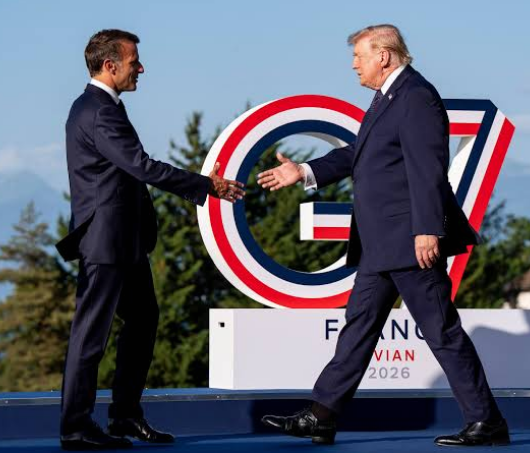
The G7 meeting in Évian illustrates a key transformation in contemporary international relations: the growing importance of invited leaders who now shape outcomes as much as formal members of the group.
From a structural perspective, figures such as Donald Trump and Emmanuel Macron represent the enduring but evolving transatlantic relationship, where cooperation coexists with trade disputes and differing strategic priorities. Volodymyr Zelenskyy remains central to the European security agenda, as the war in Ukraine continues to redefine NATO cohesion, deterrence strategy, and the broader balance of power in Europe.
At the same time, Narendra Modi’s presence reflects India’s emergence as a systemic “swing state” in global politics simultaneously engaging with Western economies while maintaining strategic autonomy, particularly in trade and industrial policy negotiations.
In the Middle East dimension, Sheikh Tamim bin Hamad Al Thani and Sheikh Mohammed bin Zayed Al Nahyan illustrate the increasing diplomatic relevance of Gulf states. Qatar’s role in mediation and energy diplomacy, alongside the UAE’s positioning as a hub for finance, logistics, and regional stabilization efforts, demonstrates how Gulf actors now operate as essential intermediaries in both security and economic governance.
Macron, as host, plays a classic “agenda-setting” role, attempting to bridge traditional Western coordination with this broader constellation of influential non-G7 states.
Overall, what this summit reveals is not simply multilateral cooperation among advanced economies, but a more networked form of global governance where influence is distributed across strategic states that connect security, energy, and economic systems rather than being confined to formal institutional membership.
35


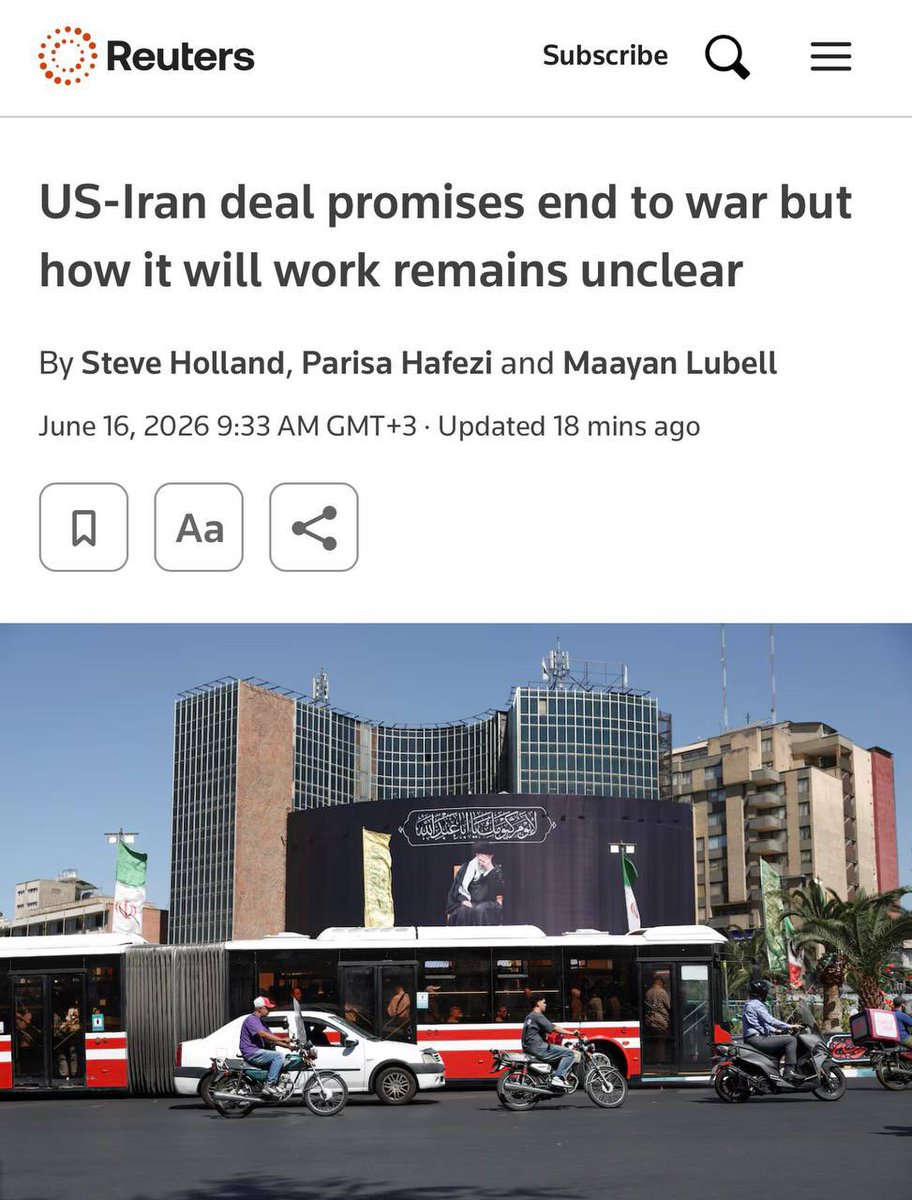
Ineffectiveness of many international deals is not in a lack of common sense or logic in their provisions, but the unequal willingness of the sides to implement.
Putting pen to paper is much easier than enforcing it.
It is also rarely possible to satisfy or even take into account everyone’s narrow interests in a multilateral framework.
Which country is most likely to ignore, disagree or jeopardise the early Iran-US agreement:
A) 🇮🇷Iran;
B) 🇺🇸US;
C) 🇮🇱Israel;
D) Gulf Arab countries;
E) Other?
1
2
11
4,462

My goodness, folks. I’m disappointed. Two points: Trump doesn’t make multilateral deals. He’s not asking Israel to sign on to anything. You know why? Israel is free to do what is best for Israel. And two: $300 million? Why’s everyone parroting the same data point? Left, Right, Middle—$300 million. Somalis steal $8billion and you guys are butthurt over 1/3rd of 1/8th of $8billion??? You cannot be this stupid. Please. Wipe your Beverly Bottoms and STFU. THANK YOU for you attention to this matter!
7

Menteri Keuangan Purbaya Yudhi Sadewa bertolak ke China pada Selasa (16/6/2026) dalam upaya memperluas sumber pembiayaan negara dan memperkuat akses Indonesia ke pasar keuangan global.
Salah satu agenda utama kunjungan tersebut adalah mempromosikan penerbitan Panda Bond sekaligus menarik minat investor China terhadap instrumen pembiayaan Indonesia.
"Ya kan akan kita temui investor-investor itu, untuk yang Panda Bonds," kata Purbaya saat ditemui di Kompleks Parlemen, Senin (15/6/2026).
Langkah ini menjadi bagian dari strategi pemerintah untuk mendiversifikasi sumber pendanaan di tengah dinamika pasar keuangan global. Melalui Panda Bond, Indonesia berpeluang mengakses likuiditas dari investor domestik China dengan menggunakan denominasi yuan atau renminbi (RMB).
Panda Bond merupakan surat utang berdenominasi yuan China atau renminbi (RMB) yang diterbitkan entitas asing di pasar domestik China. Instrumen ini dapat diterbitkan oleh pemerintah negara lain, lembaga multilateral, maupun perusahaan internasional yang ingin memperoleh pendanaan dari investor China.
1
506