


Jun 9
Thanks! and yess love the experiments from musiclab, the end goal is actually more in that direction. Find playful and novel ways to trigger sounds/harmonics/chords, etc. Right now is quite intimidating and complex
Jun 9

thanks! I'll share a link in a few days, need to move it to another server
2
51

🎶🤝 A Quartu Sant’Elena nasce “Voci per Unire”, MusicLab gratuito di canto d’insieme con Sergio Calafiura.
Un percorso di 8 incontri per usare la musica come strumento di inclusione, benessere e relazione.
📩 Info e iscrizioni:
391 703 0968 | laboratorigong@gmail.com

11

リードギターの作り方は自分でもよく分からず…申し訳ない😭
今回の曲はJUVENILEのイントロのギターを参考にしました!!
ギター音源はMusicLabのREAL STRAT 6使いました!!
1
1
26


Jun 2
【今月となりましたヨコダイズ初ワンマンGIG】
YokodieS ONEMAN2026
2026.6.26(金)Musiclab濱書房
YokodieS
guest Ba. RIKIJI
(OBLIVION DUST,IMOCD!)
guest Dr.山内康雄
(MASHA,ex acidandroid )
OPEN19:00
start 19: 30
前売り6000円 d代
当日 6500円 d代
チケット予約
tiget.net/events/473432

7
24
3,318

May 29
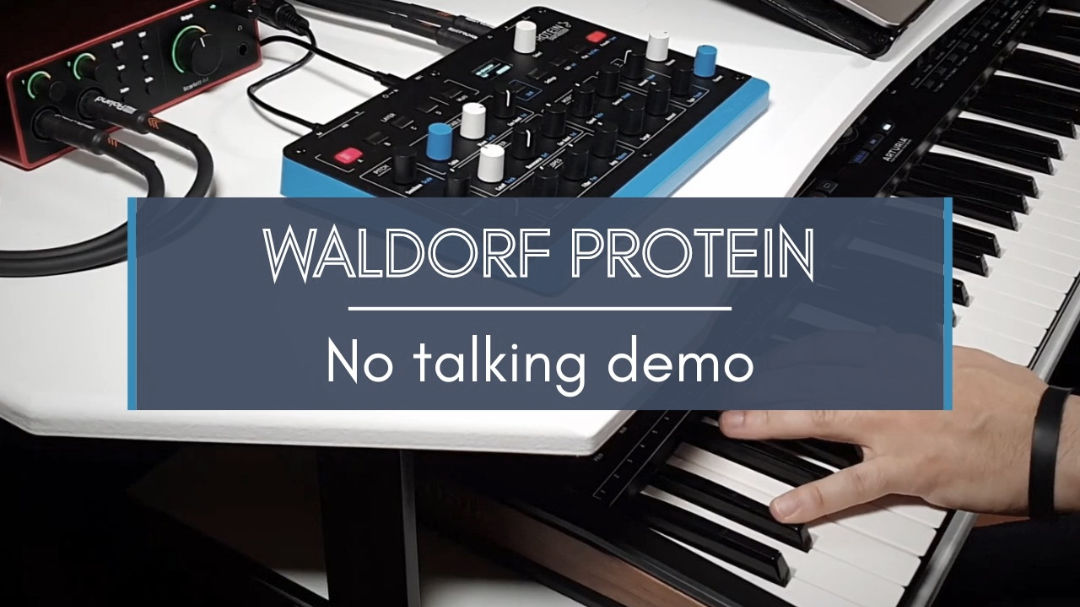
I've been using the Odin 2 by solemn tones and reallpc by musiclab for five years. They've taken just about as much place as my telecaster has
3
123


May 27

2
84
2,252

May 21
If you've scrolled through it all and it's starting to repeat, here is a unique 3 minute vibe. 🔊 Sound on
Concept/story created with #mybrain
Images made with @NanoBanana
Videos made with @imagine
Edited with @InShot_App
Music generated with #MusicLab
10
10
32
1,523

May 19
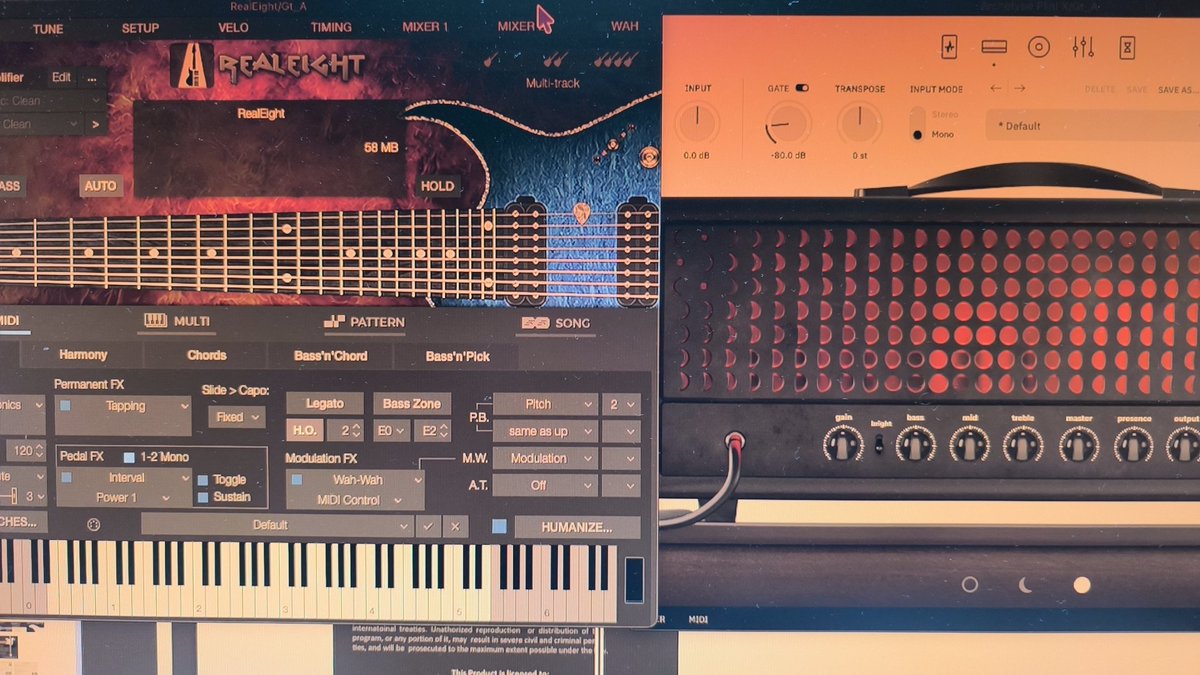
🎸MusicLab "REAL EIGHT 6"
🔊Neural DSP "Archetype Plini X"
8弦ギターでの曲作りウルトラ楽しい!低すぎて重すぎる!!最高!!!
と、打ち込みで作ったフレーズが「それ6弦0フレッドより低いから音出ません🙅🏼♂️」とならず作曲が続けられる爽快感ガチでエグいぞ!マジ、孫
14
948

Elevators have existed for thousands of years.
Elevators (or lifts) were used for hoisting goods.
What’s peculiar about elevators is that despite being thousands of years old, they were almost never popular for transporting people.
The chances of ropes snapping were high. Goods falling to the ground and getting ruined is an acceptable risk.
The same is not acceptable for humans.
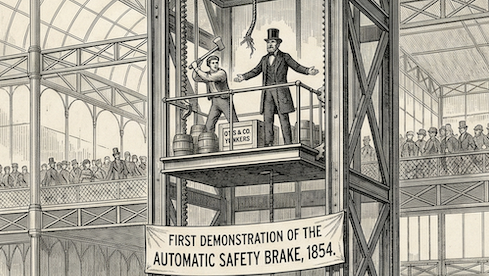
In 1954, Elisha Otis arranged for a stunt. He got into an elevator that went up a few floors. He then cut the rope. The elevator fell only a few inches before the safety brake kicked in.
This stunt left the audience absolutely stunned.
He repeated the stunt several times over the following months.
The demo finally changed the public perception of the elevator. Their use for transporting people finally became acceptable.
When buildings are built, the shaft is custom-made for the elevator in use. So once an elevator is installed, changing the elevator is hard.
Additionally, elevators require mandatory inspections and servicing by law.
Otis got an early head start because of their safety brake.
Since potential buyers loved the safety it offered, more buyers bought it. To help service these lifts easily, Otis was quick to expand their service network.
This had a reinforcing effect.
Many new buyers bought Otis lifts simply because their service network was better.
More lifts sold. More service centers opened. Therefore, increased ease of servicing. Therefore, more new customers prefer Otis lifts.
They just continued to grow big faster than all others — helped because they were the biggest already.
And thus, today, we don’t think twice before boarding an elevator.
Big Becomes Bigger
This effect is called the Matthew Effect.
The big continues to grow bigger. The winner keeps winning.
There’s an investment philosophy centered around this very idea. It’s called momentum investing.
The idea is as simple as it sounds. Stocks that have been going up will keep going up.
Obviously stocks do not keep going up all the time. So, the strategy involves switching. You buy stocks that are going up and sell the ones that have slowed or have started going down.
But how is the Otis case any different from regular investing? Isn’t that literally what investing is all about?
You analyse companies and the business behind them. You try to get an idea for how the future looks. And based on that future, you buy shares to gain from its good future.
That’s just plain investing.
Top 40 Charts
Globally, many radio programs and playlists have top songs’ lists.
It’ll be something like ‘Top 10 Best Songs of the Year’ or month or some version of that.
Many observed that once a song made it into the list, it tended to get more popular. And the more popular it got, the longer it stayed on the charts.
Similar to Otis’ success?
As in, were these songs staying in the charts because they were that good? Or were they simply there because being on such a list ensures greater visibility.
That would mean that a song is becoming more popular not because it is actually good.
It would mean the song is on the charts simply because more people are able to listen to it more often.
A few researchers from Columbia University decided to answer this question.
They created a website called MusicLab where songs could be downloaded from. They had about 14,000 listeners.
They divided this group in two parts.
One group could only listen to songs and vote which songs they liked. The list of top songs were made based on listeners’ listening habits. But the list of top songs was never shown publicly.
The other group could see the list of top songs. Which means, they could see the songs the others were liking too.
The results were sort of expected.
In the second group, a few songs emerged as the top choices and made massive leads compared to the others.
It appeared that more listeners had started enjoying the songs simply because others were listening to them too.
It wasn’t the songs themselves. It was that they were also liked by others.
Different parties concluded different theories.
But by and large, it was agreed that a song enters the charts because it is good. Its success is because of it being good, not popular.
But once a song has entered and climbed higher on the charts, the climb to the absolute top may just be merely because of its popularity.
Momentum Investing
Momentum investing sort of tries to take advantage of this.
It isn’t just about catching a good business early on. It is also about profiting from the hype around it.
Value investing is about buying stocks that are undervalued and sticking with them as they climb and succeed.
If a stock should cost ~Rs 300, they want to pay ~Rs 250 for it. And then they would hope the price rises from there. They would not want to pay ~Rs 350 for it (at that point in time).
Value investors dislike paying a high price. They are not comfortable buying overvalued stocks.
Momentum investors are more comfortable with overvalued prices — if they think the prices will go up even more.
If they feel the stock price will reach Rs 400 soon, they’d rather pay Rs 350 rather than wait for the price to fall before Rs 300.
Momentum Strategies
Great, so the idea behind momentum investing as a concept is somewhat understood. But how does it look in actual investing?
It starts with a simple strategy. And gets more and more complex. The specific strategy being used would depend on what the investor feels is right.
Many advanced investors (and traders) develop their own way of using this strategy which can be extremely complicated and even proprietary.
Simplest:
The simplest would be time series momentum.
Invest in Nifty 50 if it has been up over the last 12 months. Sell if it is negative over the last 12 months.
Individual investors might have different versions of this.
Next level:
Another strategy is to use the strongest in a group. This is called relative momentum.
So take a group (could be an index, or a sector). Then define the top in that. Top 3 pharma stocks. Top 10 Nifty 50 companies. So on.
Invest on only those. Sell the ones that exit the top criteria and buy the new top criteria.
Another level higher:
Combine the two. Buy only if the group (sector, index, etc) is moving up. And then choose only the top from that group.
Further:
A more complicated version would depend on a moving average instead of using an absolute price point. So instead of defining a criteria like “has the index moved up in the 12 months”, the investor would craft a condition based on the moving average of that index or sector.
Further:
Sector based. The investor defines a particular number of sectors. Say, top 3 sectors.
Then, among all sectors available, he/she invests in only the top 3 best performing sectors.
Similarly more conditions may be added to this.
More complicated strategies would involve going in greater depth. So, instead of price, they would use conditions like revenue, earnings, earnings growth, etc to decide when to buy/sell.
We can go on and on. The strategies are endless.
When It Works; When It Doesn’t
Well, momentum sounds perfect.
Why are more folks not talking about it?
They are, sort of. But yes, not enough folks.
And there’s a good reason behind it.
Momentum as a strategy works well during certain seasons in the markets. And it tends to perform poorly in others.
In 2000, the legendary Warren Buffett was addressing Berkshire Hathaway’s shareholders through the annual letter.
What he spoke about has now become very popular as the ‘Cinderella Ball’.
He was not talking about momentum investing. He was talking about the dotcom bubble.
But what he described perfectly explains a situation when momentum strategy fails often.
He talks about the separation between investing and pure speculation. The line between where investing ends and speculation starts is very blurry. There is no clear point where it stops being an investment and becomes only speculation.
Speculation is not about the underlying business or the revenues or profits. It's about gaining from others' behaviour.
Warren is famous for preaching not to take part in speculation.
Dotcom stocks or tech stocks had caused the share prices to balloon to astronomical levels. Those share prices were not justifiable given the revenues they were earning.
He says nobody likes to leave a party while it is fun. But nobody wants to stay after the party has ended.
Everyone wants to leave before midnight (when the party ends). But the clock in the room has no hands. So nobody can tell the time.
He is trying to highlight that when a share price goes up due to speculation only, it is a bubble. And nobody knows when the bubble will burst. But it will burst for sure.
This applies to momentum as well.
It works well when things are going up and up.
It performs poorly when there is a reversal.
When a falling market turns around. Or, when a rising market crashes.
Proponents of momentum argue that over a long period of time, despite those reversals, momentum as a strategy has given higher returns over some very long periods of time.
But the volatility — the ups and downs during reversals — is not for the faint of heart.
Hence, if someone does plan to use momentum strategy, nerves of steel are a mandatory requirement.
1
13
2,932



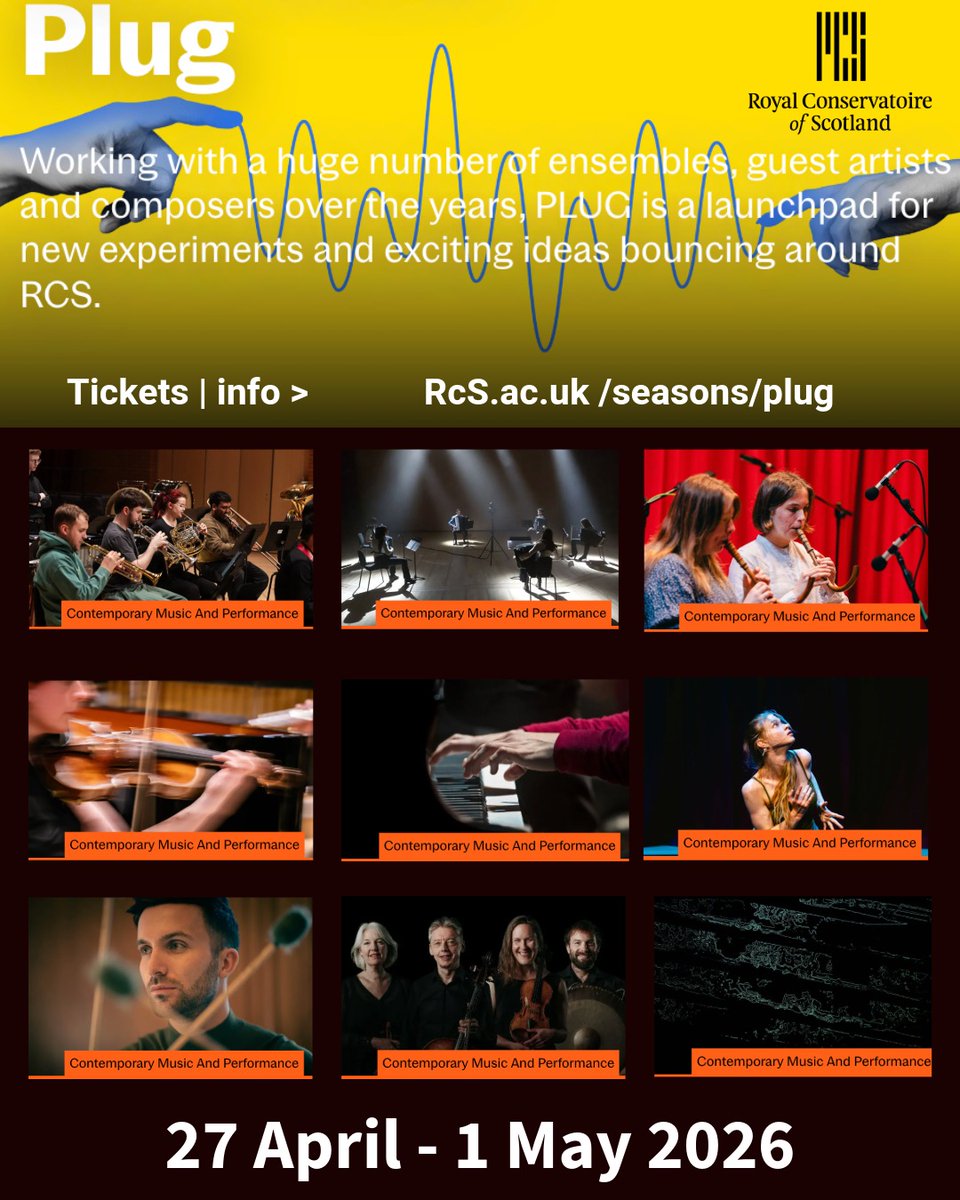
PLUG @RCStweets continues until Friday celebrating 20 years the festival is a launchpad for experimental new music featuring regulars like Calum Huggan / RCS MusicLab @HEB_Ensemble full info tickets ➡ rcs.ac.uk/seasons/plug/
2
68

使いやすい8弦の名機🎸
プロギタリストのサウンド、アーティキュレーション、テクニックを網羅した8弦エレキギター音源、MusicLab「RealEight」が40%OFF! computermusic.jp/2026/04/mus… @universe_exより
5
2,822

Apr 26
人気がある配信者さんを見ると、つい「この人のやり方が正解なんだな」と思うことがある。
大勢の人が集まっている
バッジがついてる
コメントが滝のように流れている
エフェクトが飛んでいる
ランキングに入っている
みんなが楽しそうにしている
…そういう場所を見ると、そこに何か「答え」があるように感じる。
それは、たぶん自然なことだと思う。
心理学で言えば 社会的証明。
行動経済学で言えば バンドワゴン効果。
難しく言わなくても、要するに「みんなが選んでいるものを、自分も正しいと思いやすい」っていうだけのこと。
音楽でも、それに近い研究がある。
MusicLabという実験では、無名の曲を参加者に聴かせて、他人のダウンロード数が見える環境と、見えない環境を比べた。
すると、他人の人気が見える環境では、人気の曲がさらに人気になりやすかった。
同じ曲でも、置かれた環境によってランキングの結果が変わった。
つまり、人気は中身の良さ「だけ」で決まるわけじゃない。
一度「人気に見える」ことで、その人気が次の人気を連れてくることがある。
◆
これは、音声配信の世界でも起きていると思う。
人気のある人の話し方
距離感
ノリ
リスナーさんとの関わり方
空気の作り方
そういうものが、いつの間にか「正解」に見えてくる。
もちろん、学ぶことは大事だと思う。
伸びている人には、きっと理由がある。
人が集まる場所には、人が安心できる何かがある。
でも、その人にとって自然な形が、自分にとっても自然とは限らない。
誰かにとって心地いい距離感が、自分には近すぎることもある。
誰かにとって盛り上がるノリが、自分には疲れることもある。
誰かにとって上手な甘え方が、自分にはどうしても似合わないこともある。
それは、劣っているということではないと思う。
ただ、自分には自分の温度があるというだけ。
俺は、そこをあまり雑に扱いたくない。
人気になりたいと思うことは、悪いことじゃないと思う。
見つけてもらいたい
聴いてもらいたい
応援されたい
そう思うのは、とても自然なことだと思う。
でも、そのために自分の居心地の良さまで置いてきてしまうと、少しずつ、自分の声が自分のものじゃなくなっていく気がする。
音声配信って、声だけじゃなくて、その人の人生や心の温度まで、にじむものだと思う。
だからこそ、無理に「誰かの正解」を着なくてもいい。
これは心地いい
これは続けられそう
これは自分らしくいられる
逆に、
これは少し苦しい
これは無理している
これは続けたら、自分を嫌いになりそう
そういう感覚は、わがままではなくて、自分を守るための大事なセンサーなのかもしれない。
人気を否定したいわけじゃない。
人気のある人を否定したいわけでもない。
ただ、人気の形を見ながらも、最後は「自分の呼吸」に戻ってきたい。
誰かの正解をそのまま着るより、自分の肌に合う服を少しずつ選んでいく。
時間がかかっても、自分がちゃんと息をできる場所を作っていく。
俺は、そういう配信の続け方を大事にしたいな。
2
25
1,932

†2026 4.23 MusicLab.濱書房†
NETH PRIERE CAIN新体制単独公演TOUR「開花ノ音-横浜編-」
ご来場ありがとうございました。
次回の祈り
2026 4.27 OSAKA MUSE


47
206
9,299

Apr 23
This Saturday on MusicLab, join @Kwamedadziegh and his panel as they break down the science behind “Gyatabruwaa” from vocal delivery and song structure to production finesse and everything in between.
Tune in from 2pm to 6pm on Joy 99.7 FM. #JoyEntertainment

3
5
790