
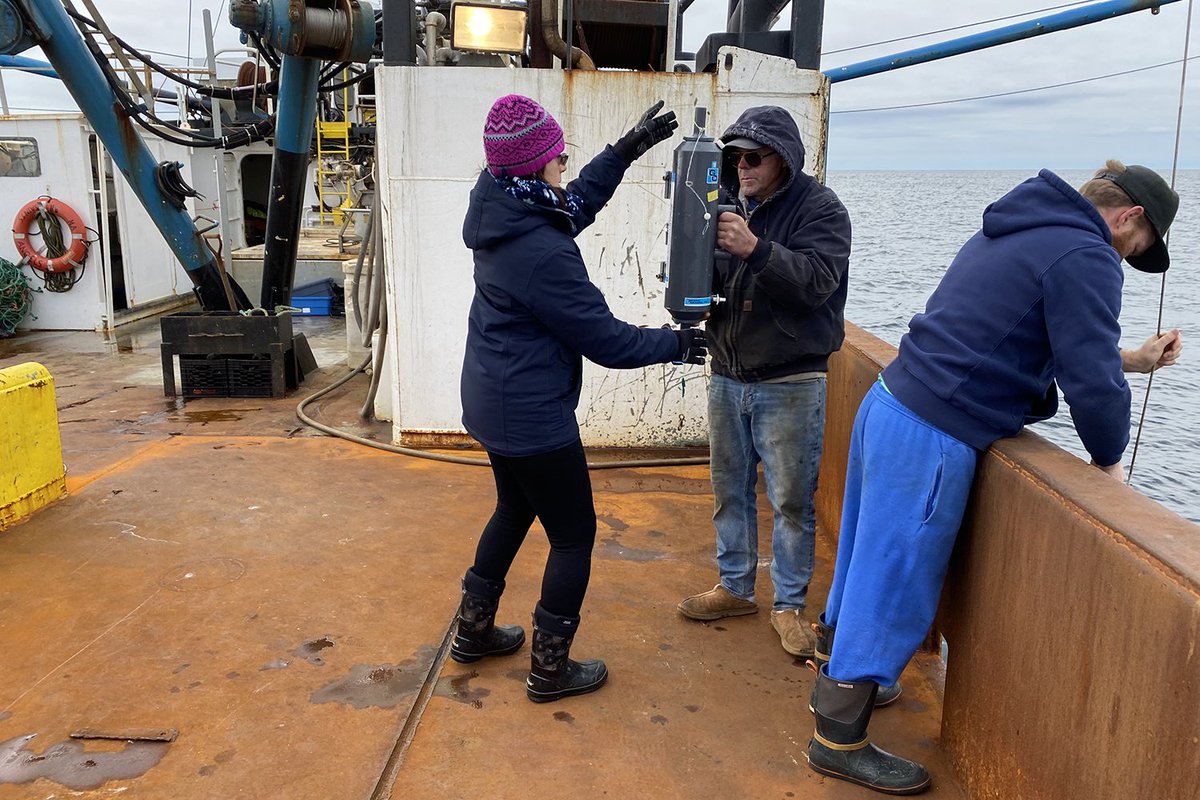
ALT Three people work on the deck of a fishing vessel. A woman on the left, with a pink winter hat, is getting a sampling bottle of about 5 litres from a man (in the middle) with sun glasses and a dark blue hoodie. Another man (on the right) is holding on to a wire while looking down at the surface of the ocean.
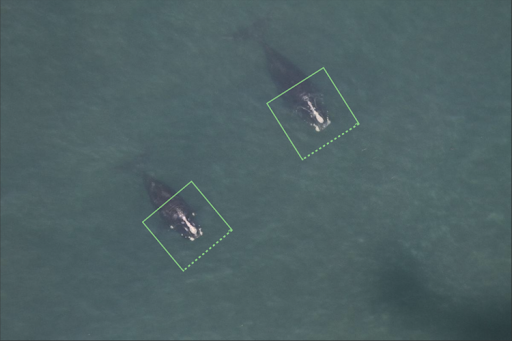
ALT Whale photos tagged for AI detections.
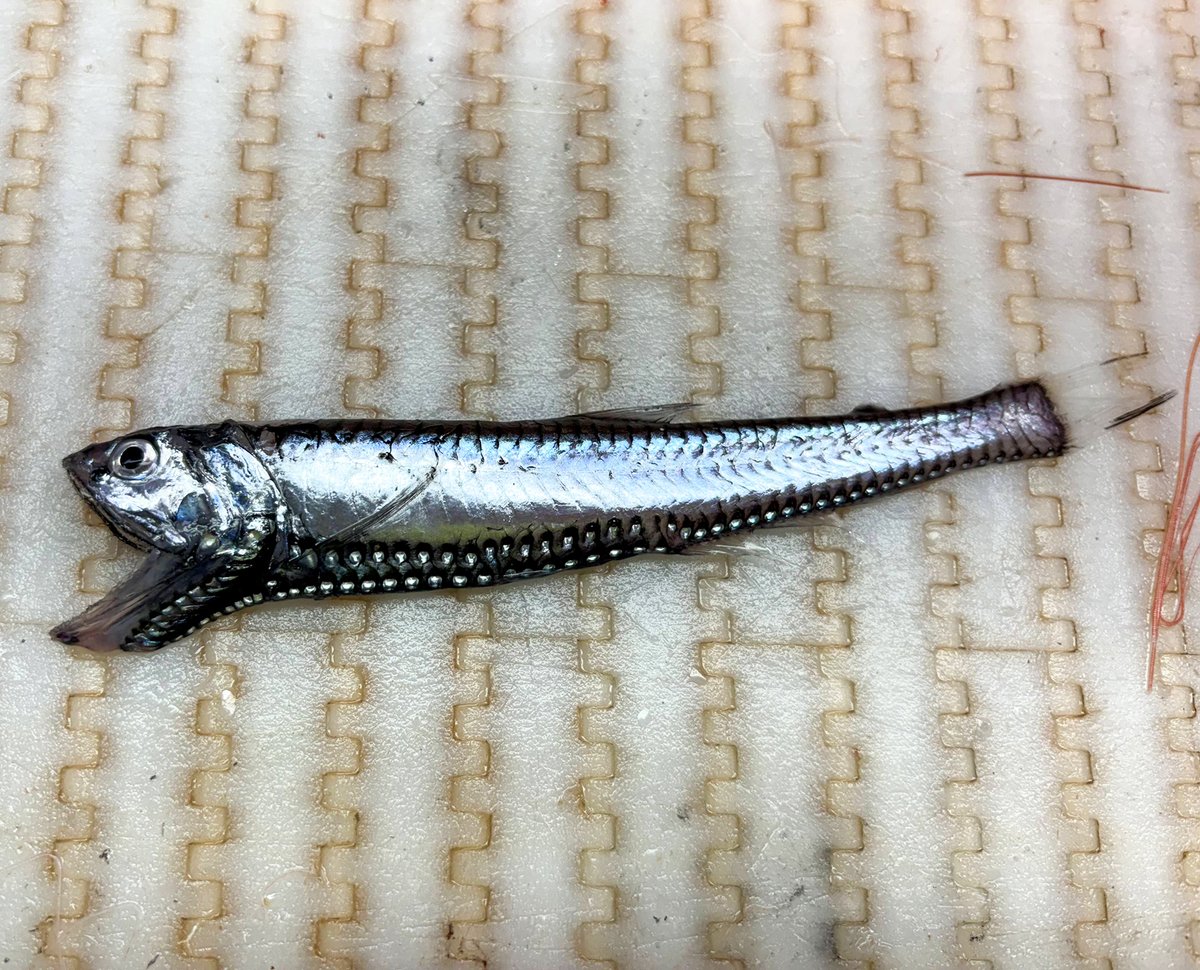
ALT A slender silver fish with its mouth open.
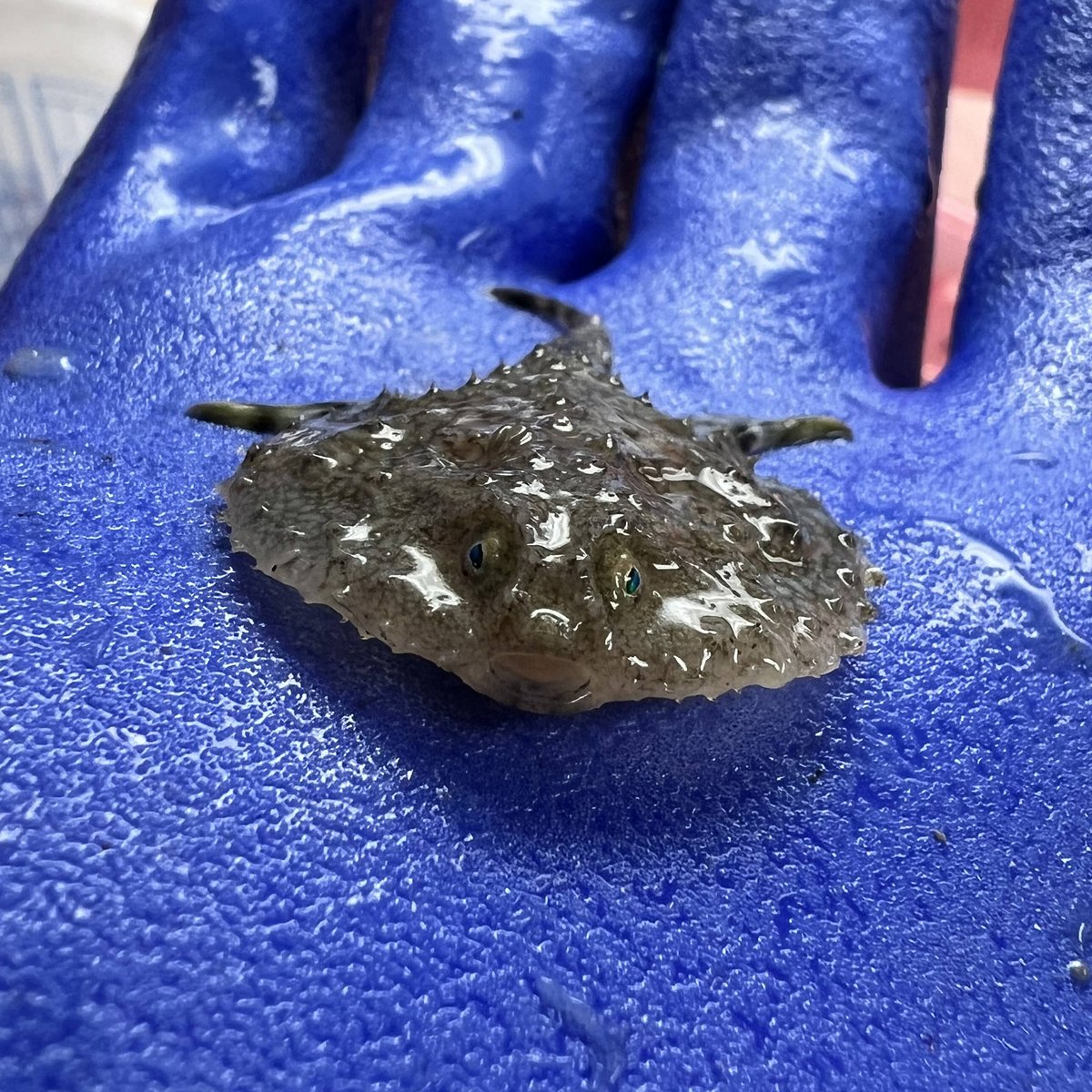
ALT A small flat-as-a-pancake fish with spines rests in the palm of a blue-gloved hand.

ALT Three silver fish with bodies that look like the blade of a hatchet.
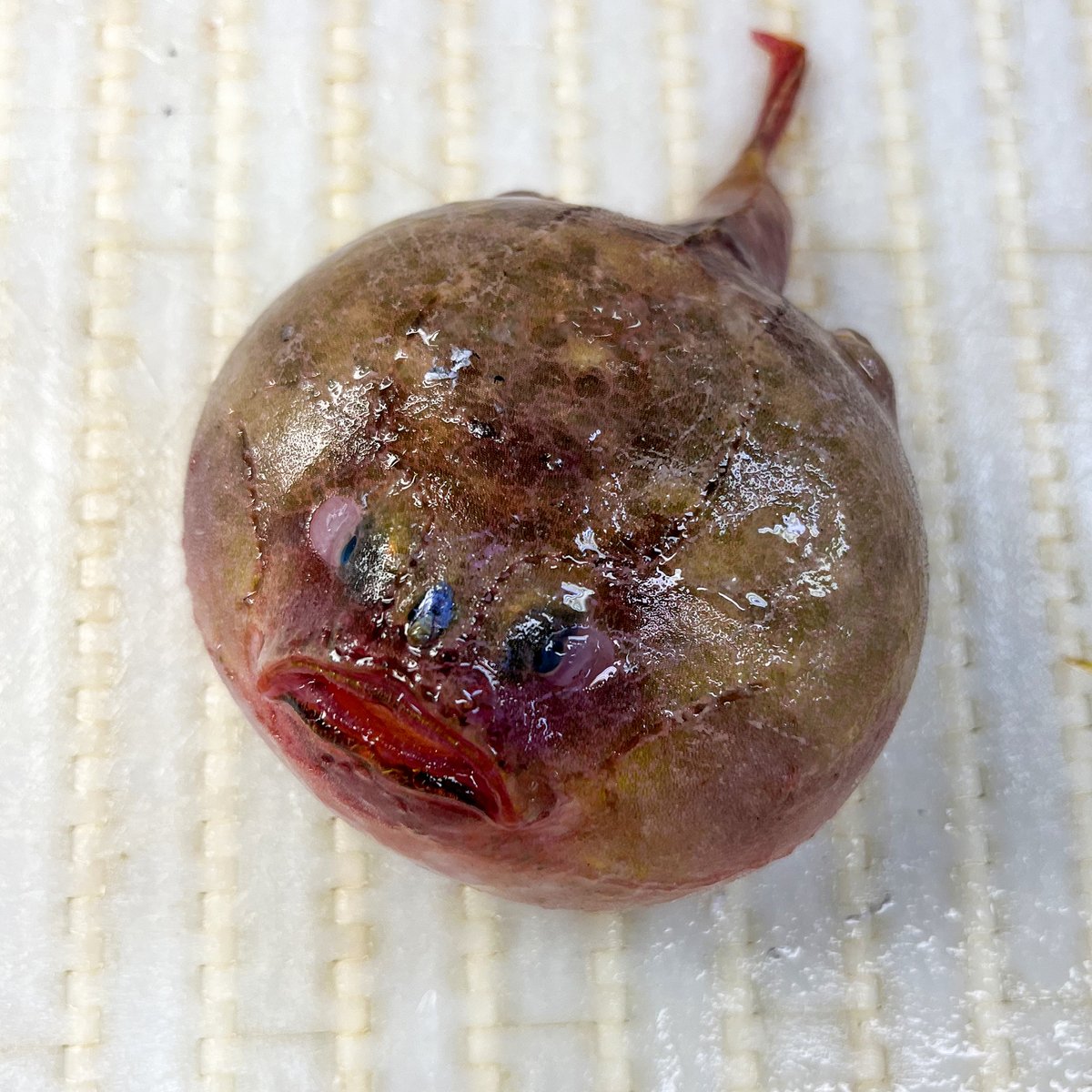
ALT A brown mottled fish puffed up like a balloon lays on a white table.
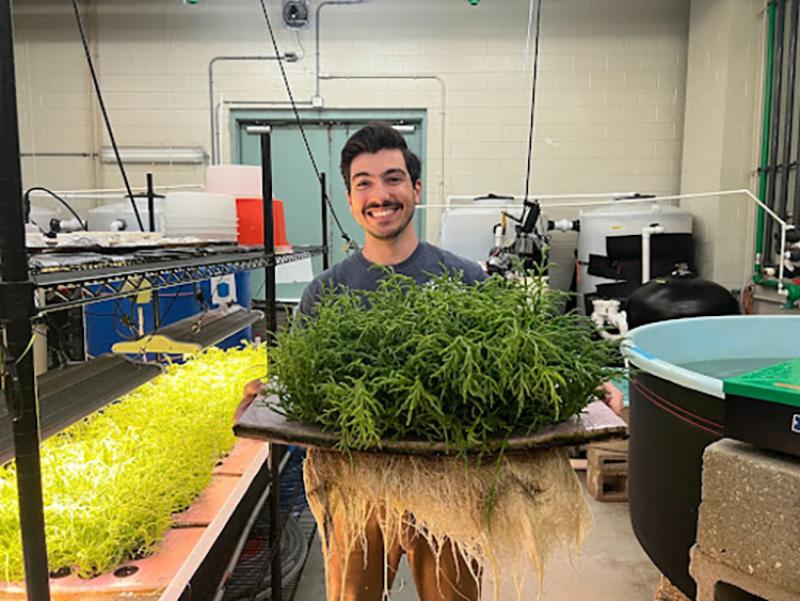
ALT Scientist stands in a wetlab holding a tray of sea beans.
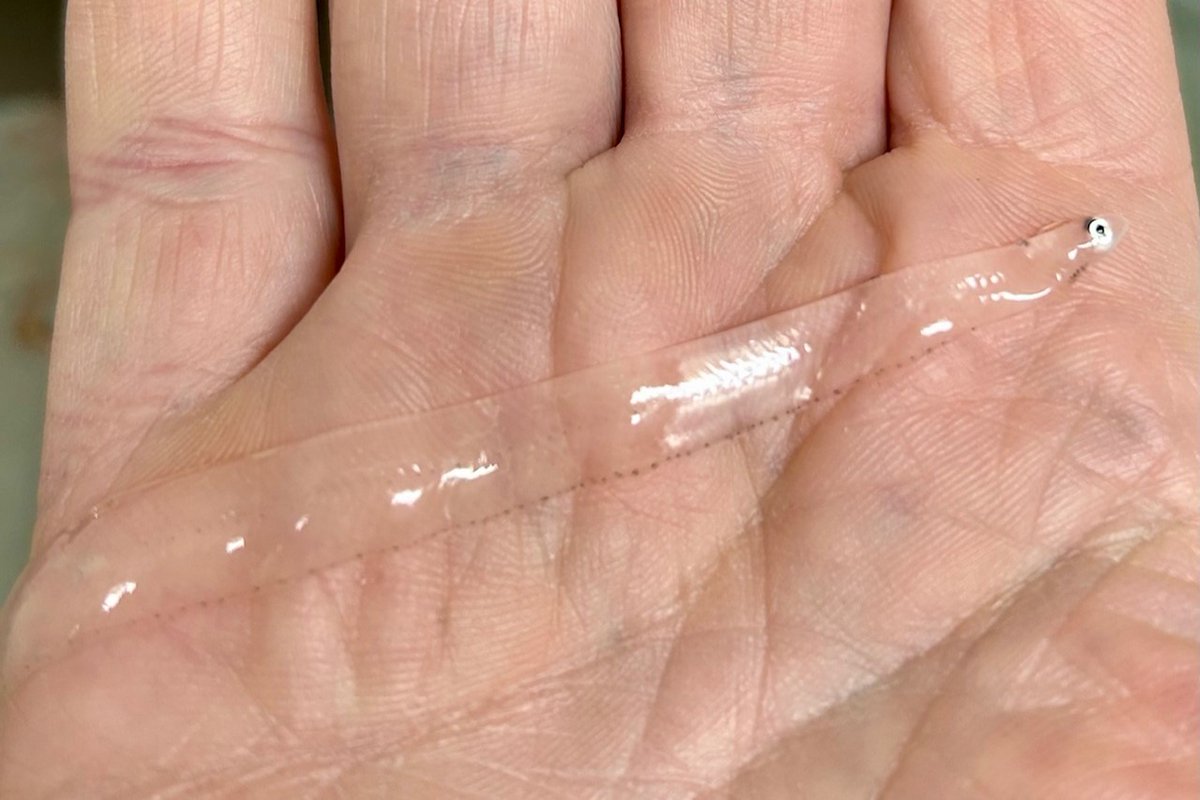
ALT A thin transparent eel larva, laid on a man’s hand spanning his palm.
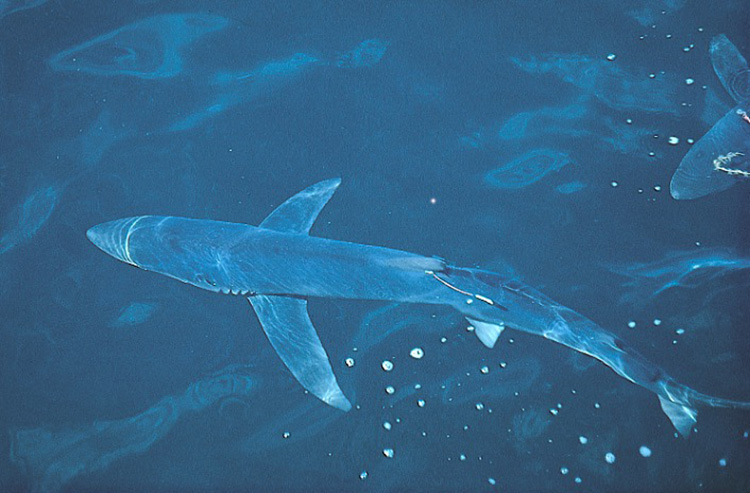
ALT A shark in the water with a tag sticking out next to its first dorsal fin.
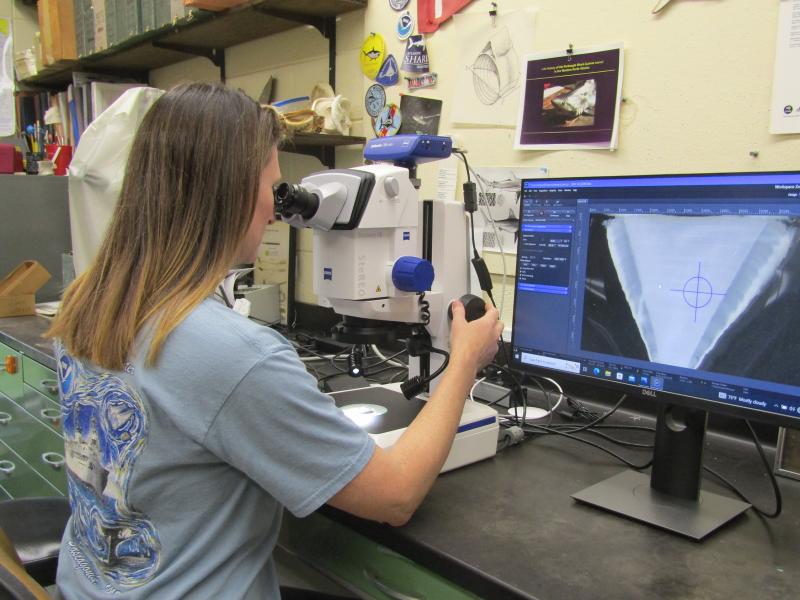
ALT A scientist looking through a microscope. A magnified shark vertebra is displayed on a computer screen.
ALT Graphic with a photo of river herring fish swimming in the water as background. “Sign up for our monthly eNewsletter.” NOAA Fisheries logo.
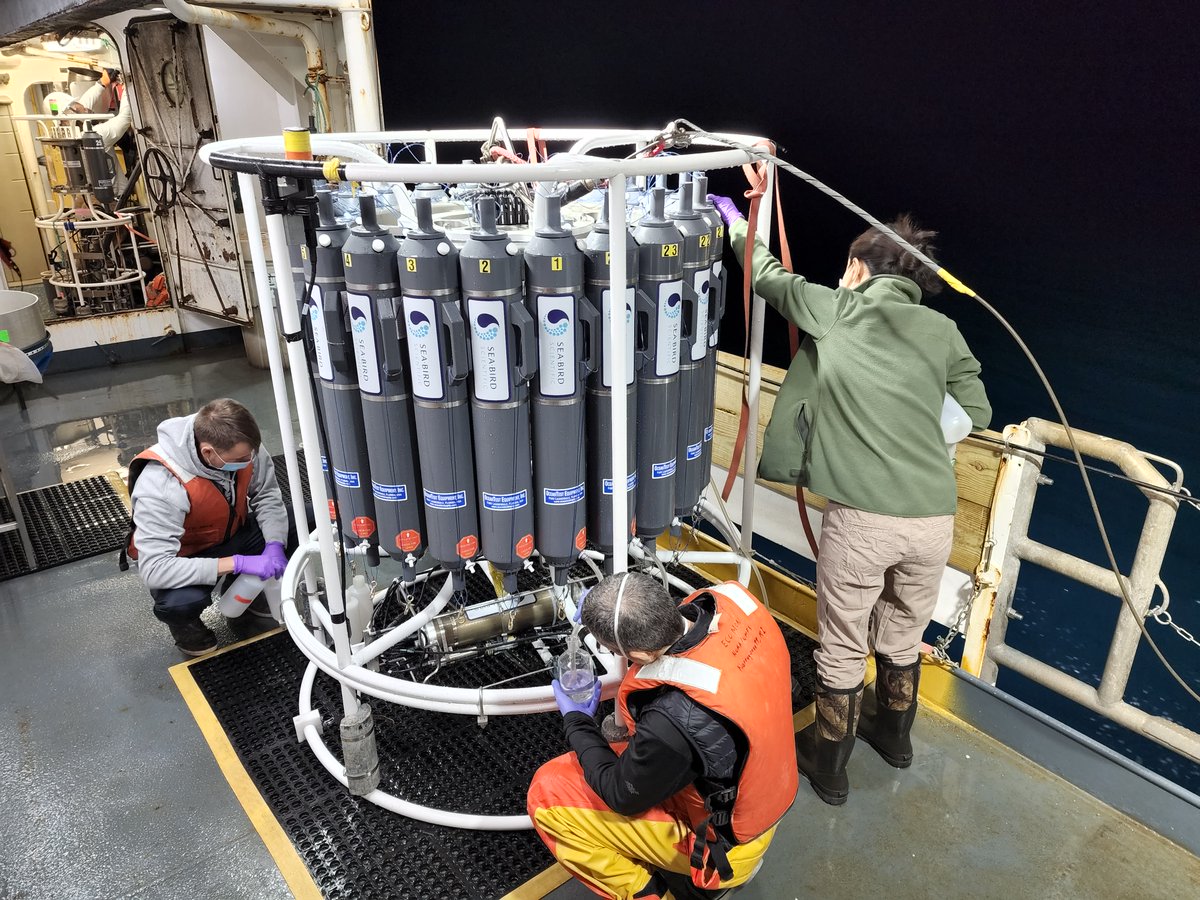
ALT Three scientists collect water samples from a large piece of ocean sampling equipment. The equipment sits on the side deck of a research vessel and consists of a white metal circular frame that is about six feet tall. The frame has several vertically-placed gray bottles attached to it that the scientists are collecting water from via tubing.
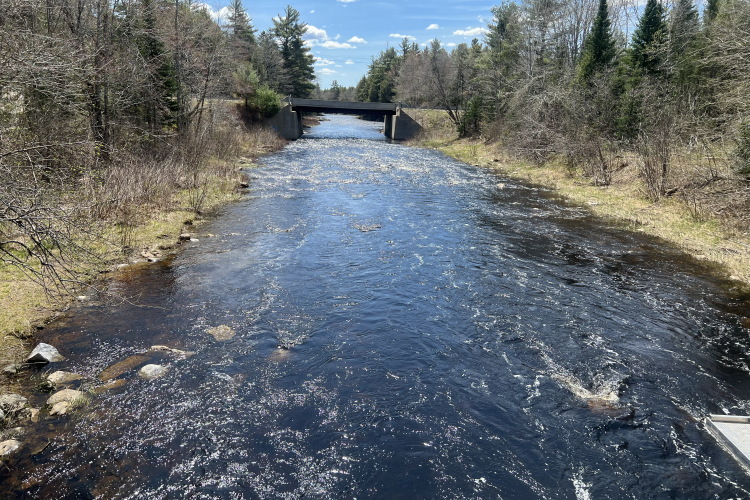
ALT River with quick flow, some white water, trees along shore line and bridge in the background.
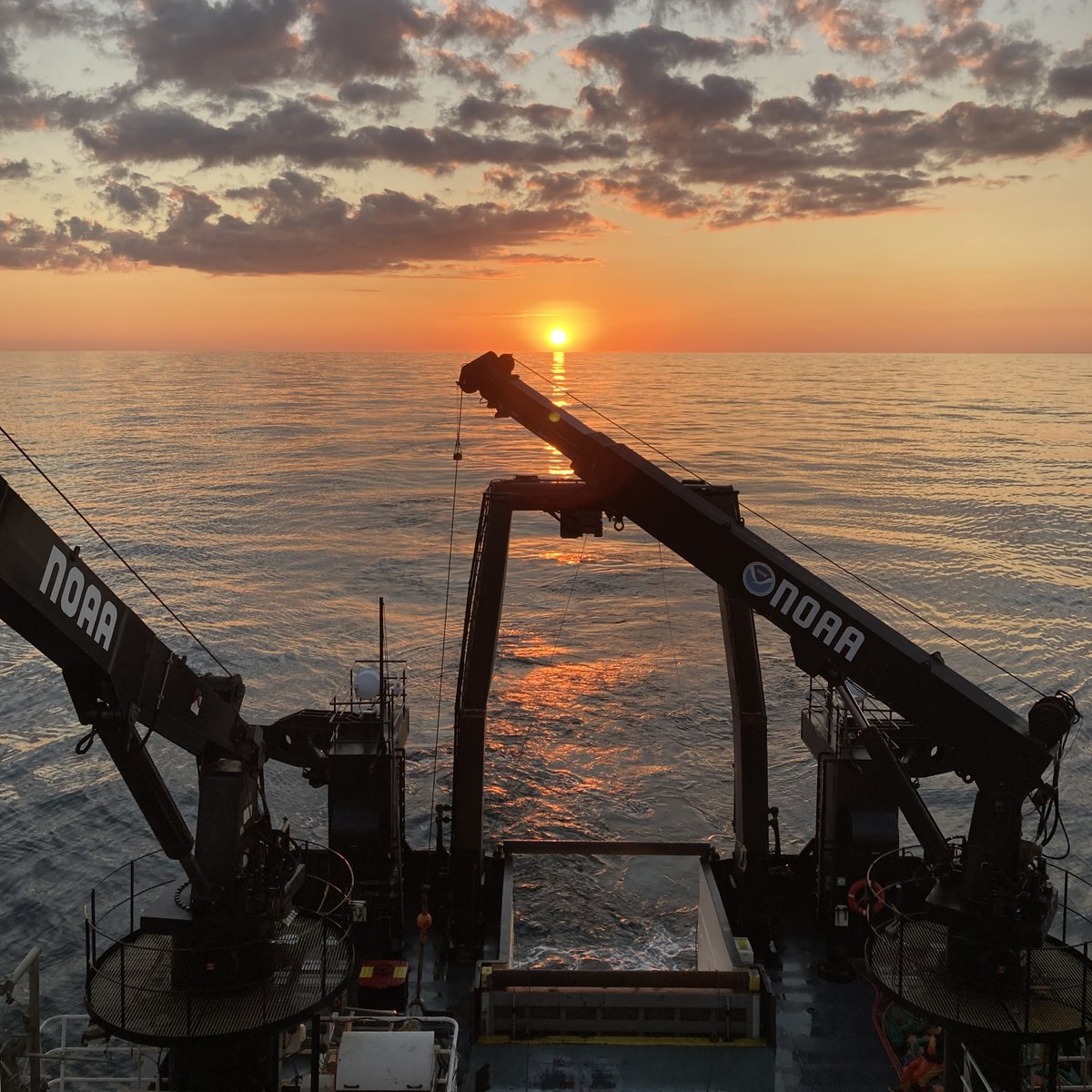
ALT A setting sun shines on the back deck of a research vessel. The vessel has two large cranes on the back deck with the NOAA logo on the sides. The sea is calm, the sky is oranges, golds and blues, and the clouds are gray, peach, pink, and purple.
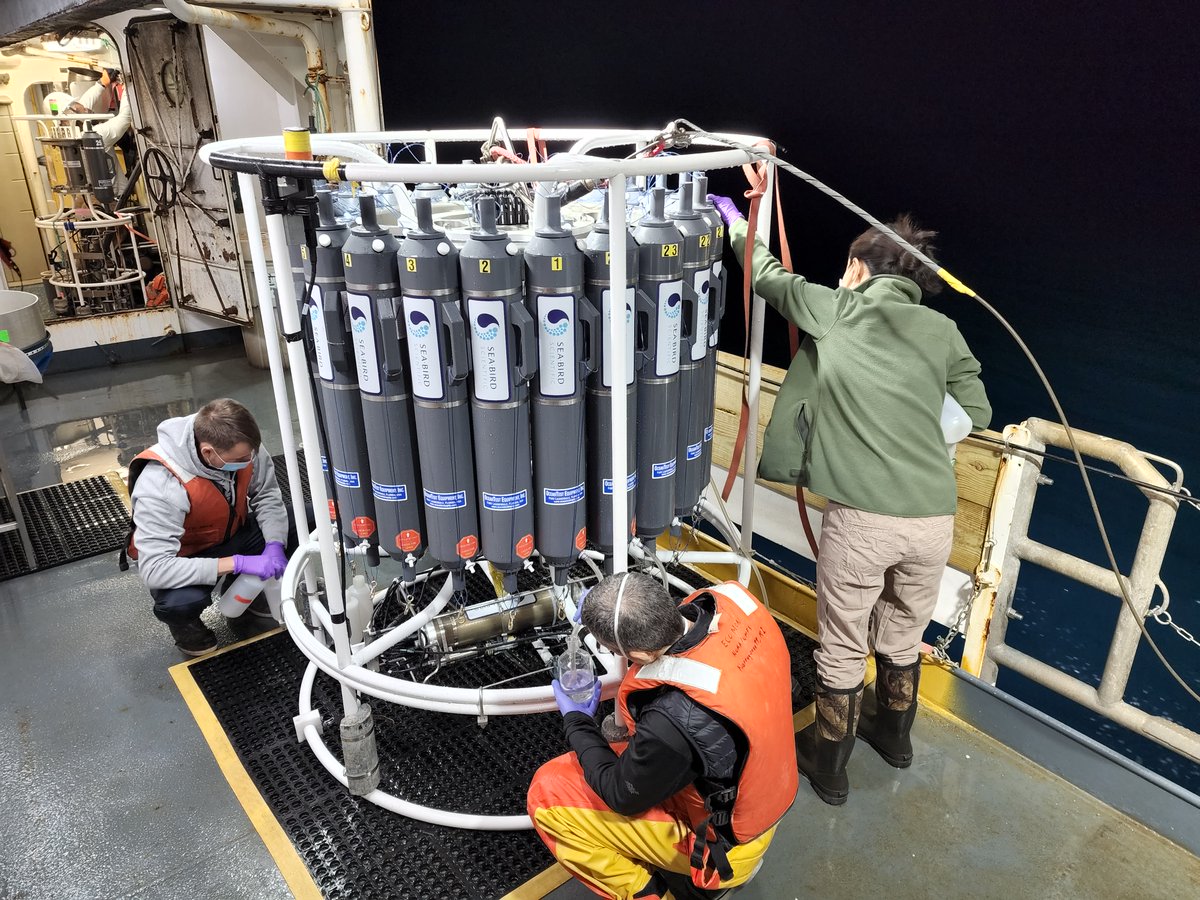
ALT Three scientists collect water samples from a large piece of ocean sampling equipment. The equipment sits on the side deck of a research vessel and consists of a white metal circular frame that is about six feet tall. The frame has several vertically-placed gray bottles attached to it that the scientists are collecting water from via tubing.
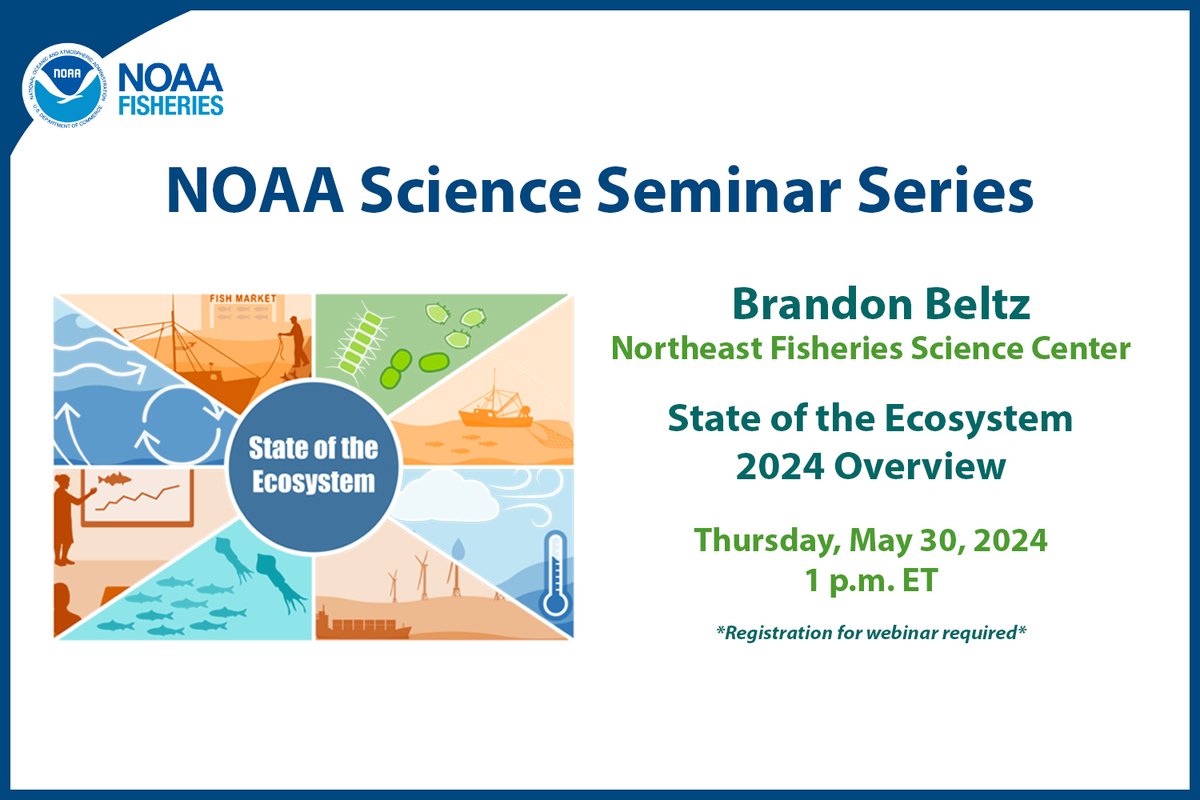
ALT Graphic with a venn diagram insert on the left side about the intersection of fisheries, stock assessments, ecosystems, and socioeconomics. “NOAA Science Seminar Series. Brandon Beltz. Northeast Fisheries Science Center. State of the Ecosystem 2024 Overview. Thursday, May 30, 2024. 1 p.m. ET.” NOAA Fisheries logo.
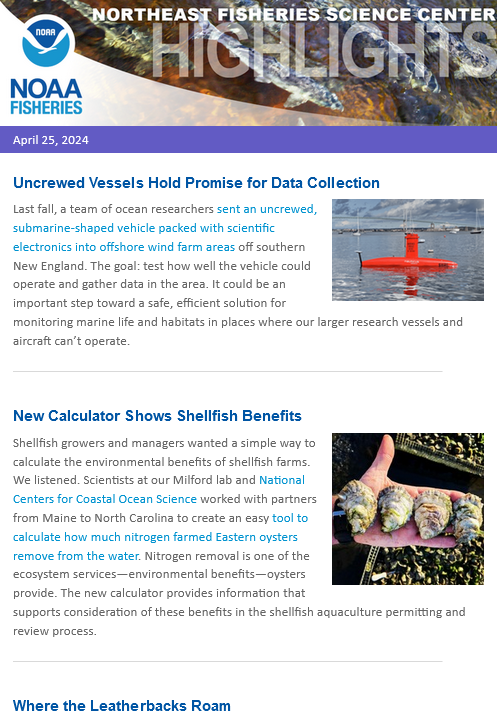
ALT Screenshot of top part of the eNewsletter. Includes short description text, web links, photos, and NOAA Fisheries logo.
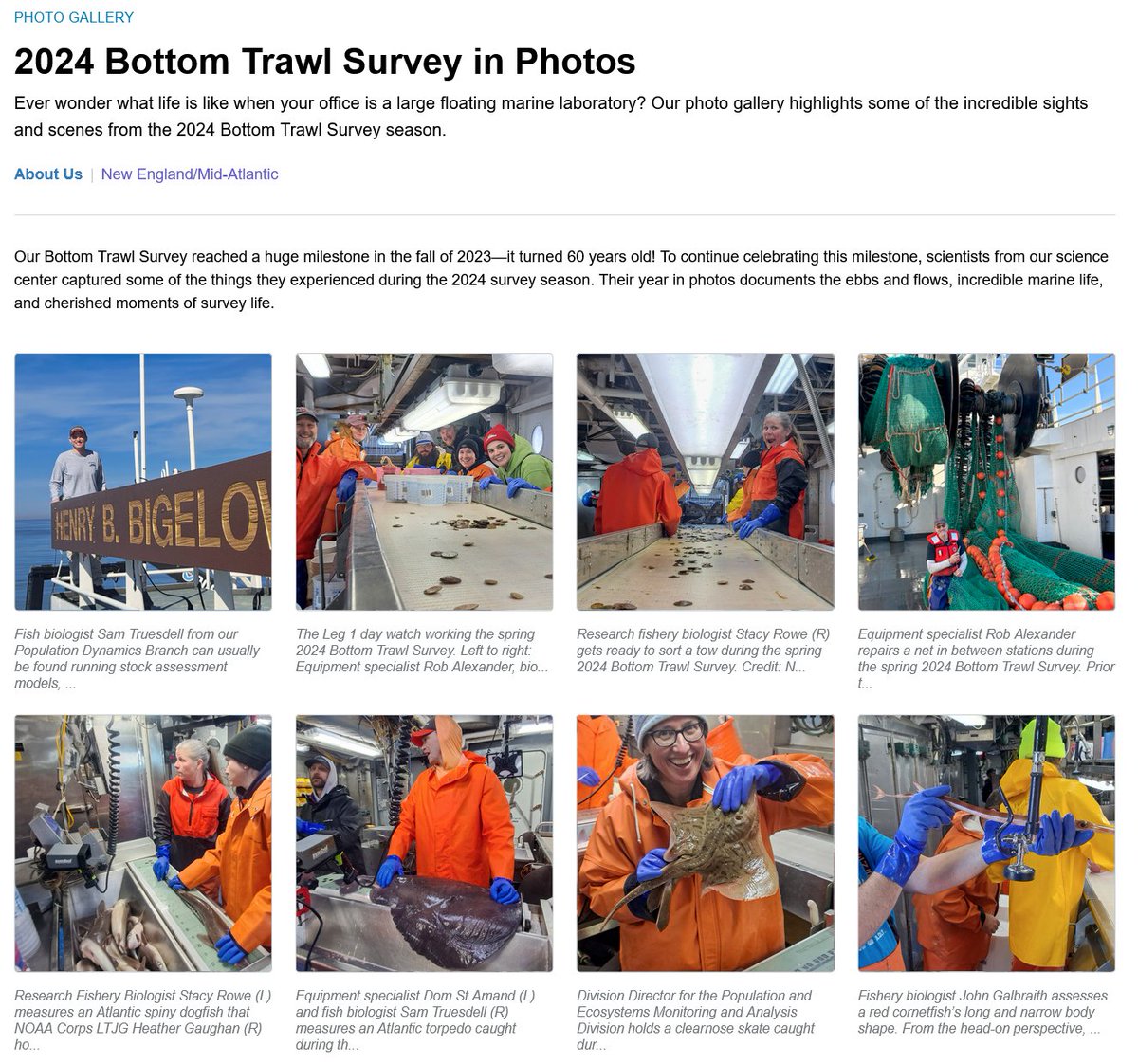
ALT Screenshot of the 2024 Bottom Trawl Survey photo gallery. There are eight photos showing various scenes from the survey.
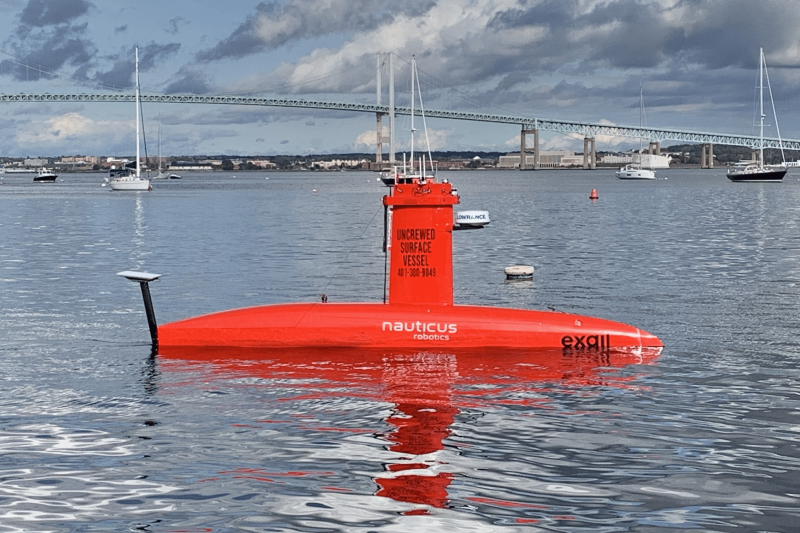
ALT A small vessel shaped like a submarine floats in calm ocean waters. In the background is a large suspension bridge and some sailboats.
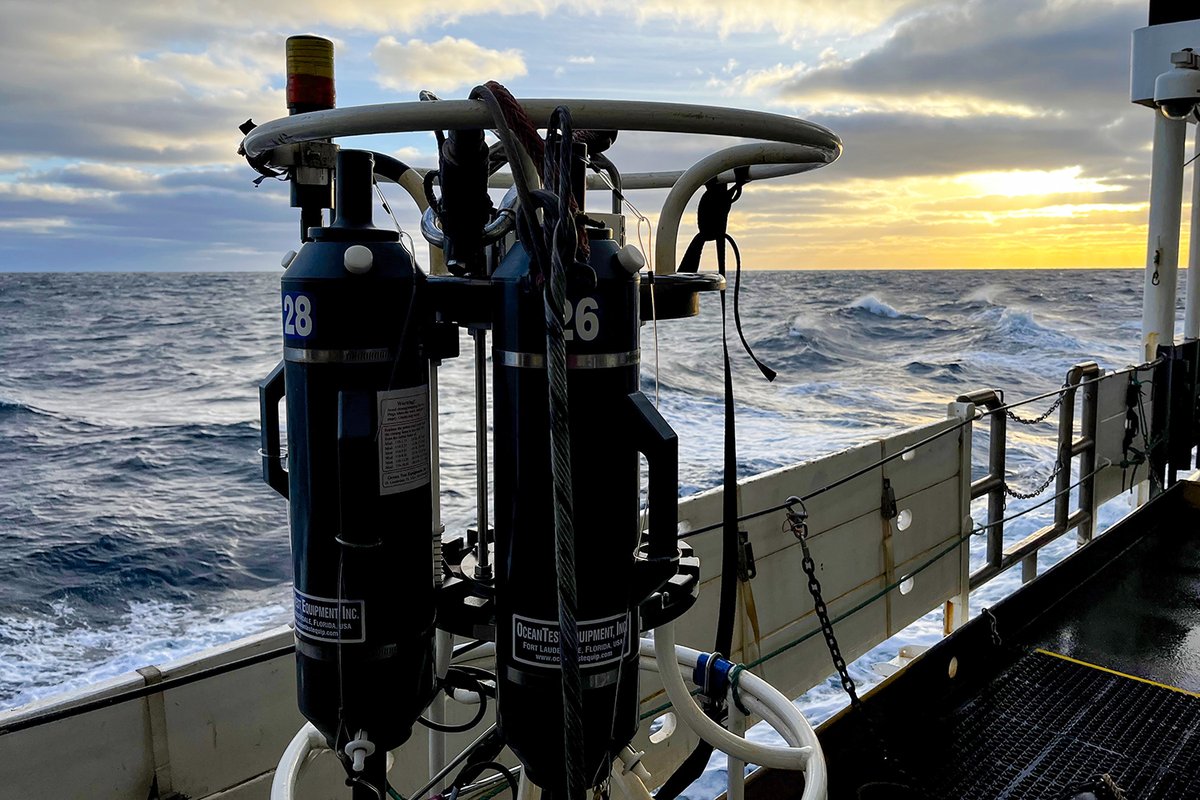
ALT A large piece of ocean water sampling gear sits on the side deck of a research vessel while at sea. The ocean is choppy and the sunrise is peeking through the clouds.