
Our next free wastewater webinar is coming up at the end of this month! Join us on June 30 for “Monitoring, Sampling, and Data Management for NPDES Compliance,” which will provide an overview of wastewater monitoring, sampling, and data management as they relate to NPDES permits.
ALT The promotional graphic for the WaterOperator.org webinar "Monitoring, Sampling, and Data Management for NPDES Compliance."
1
1
2
27

Jun 14
"EPA NPDES permit documents and recent reporting note that the pool has often been filled with or supplemented by potable water since 2012 due to Tidal Basin quality issues. The system is designed for Tidal Basin water as the intended/main source."
x.com/i/grok/share/482fc2872…
1
47

Jun 12
Attention to anyone worried about data centers "poisoning" water: we already have laws for this. Have for decades.
Before any industrial facility can discharge anything into a waterway, they need a permit. It's called an NPDES permit (National Pollutant Discharge Elimination System), and it's been federal law since the Clean Water Act of 1972. That permit specifies exactly what can go in, how much, and at what concentrations. Municipal treatment plants review the discharge composition before they ever accept it, so they can handle the volume and chemistry. This is not new or unregulated. It is completely routine.
What happens when a company exceeds their permit limits? That's a violation. A federal violation. With fines! Big fines. Amazon just agreed to pay $20.5 million over exactly this kind of issue in Oregon.
And what about construction? Also heavily regulated. Stormwater Pollution Prevention Plans (SWPPPs or "swips") are required on virtually every significant construction project in the country. They exist specifically to keep disturbed soil, sediment, and construction chemicals out of waterways during the build phase. Brown water near a construction site is often a SWPPP compliance issue, not a sign of some novel unregulated catastrophe.
When a politician holds up a jar of murky water for the cameras, ask yourself: is this a gap in the law, or is this a permitting and enforcement conversation we already have legal tools for? Those two things VERY different.
Anyway. If you're in Ohio, Virginia, or Kentucky and you actually need a SWPPP prepared for your next project, give KBJW Group a call. We do that every day! We can also help with your effluent treatment!
17

Why Concrete Plants Are Receiving NPDES Violations in South Carolina
hubs.la/Q04l20ZJ0
1
4

Jun 11
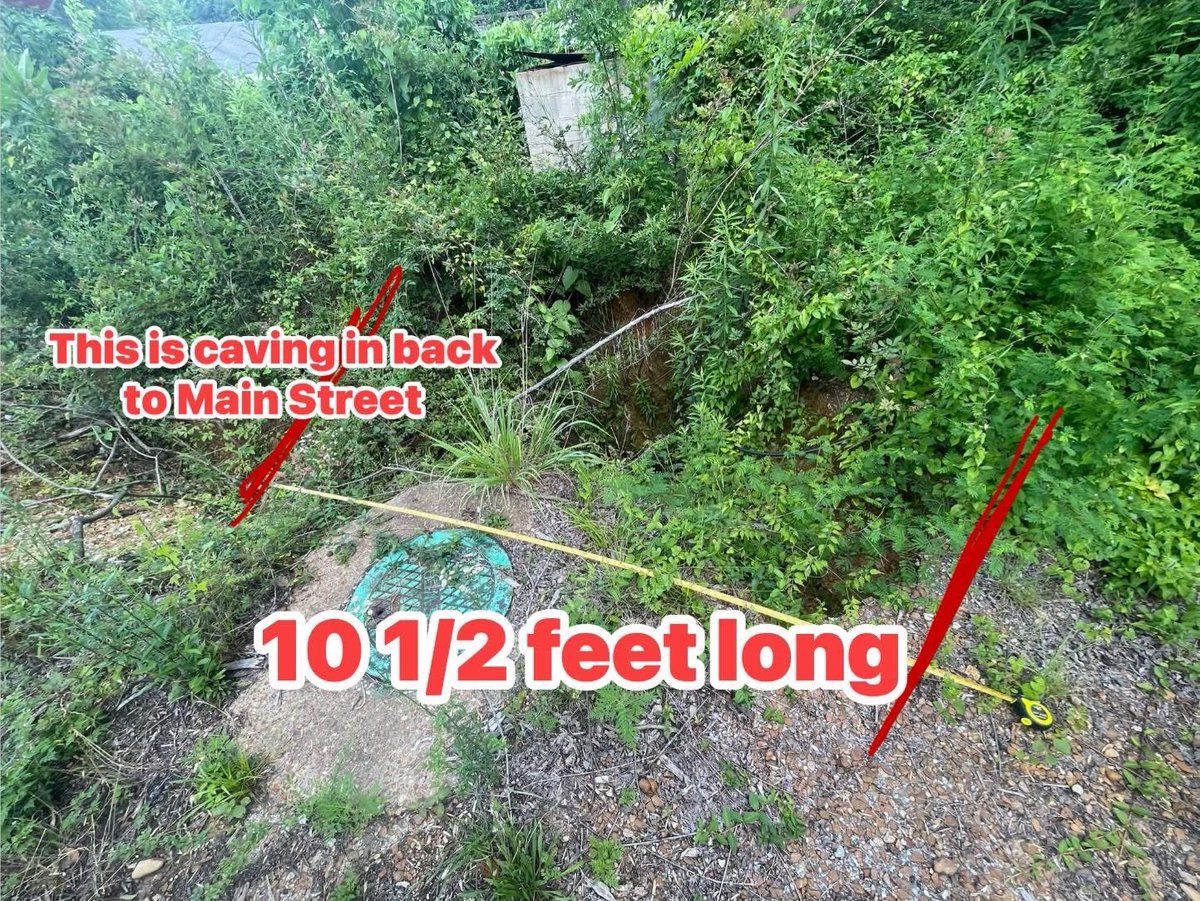
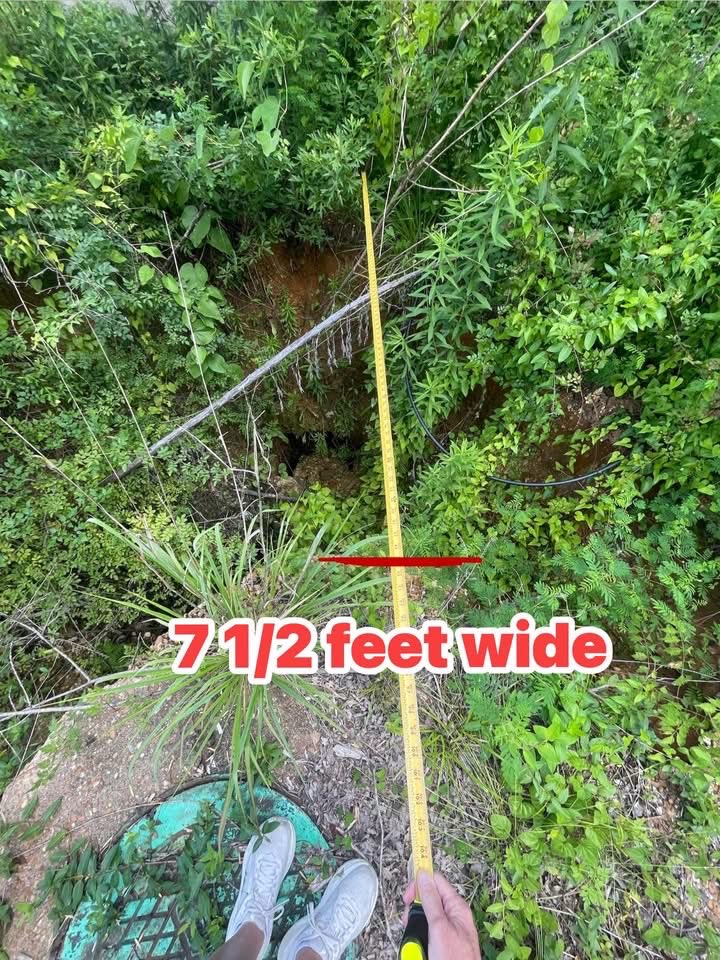
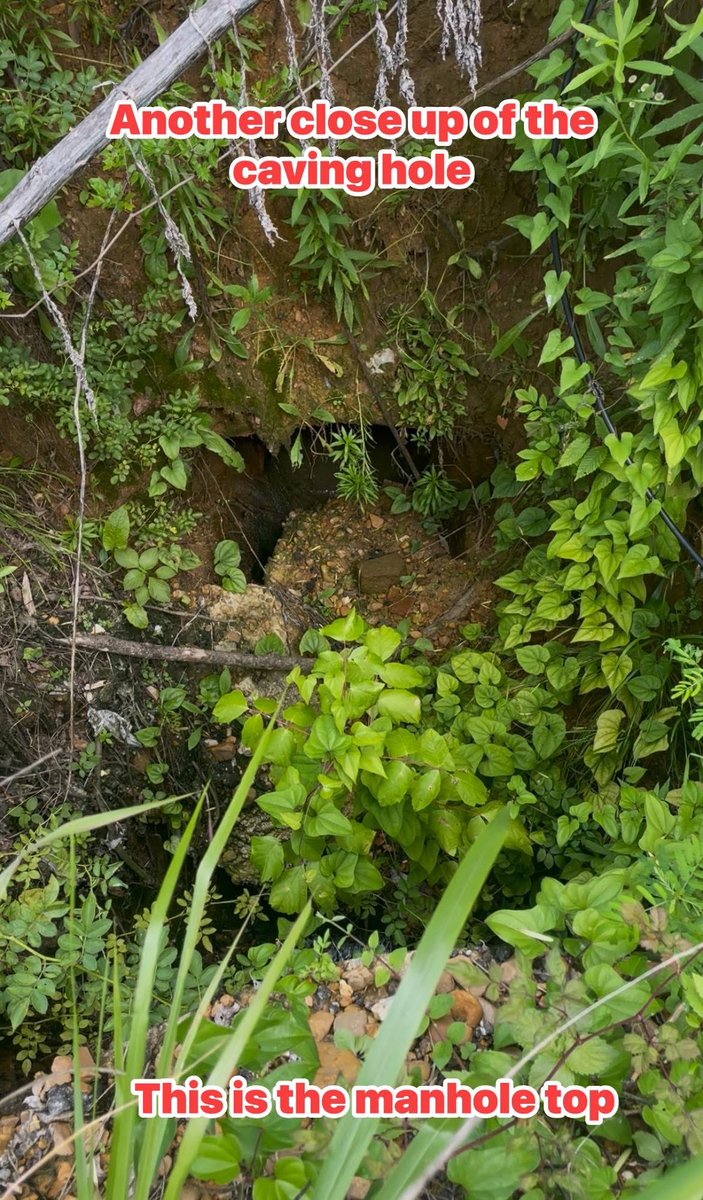
🚨🚨🚨 🫵 @MDEQ - You are in clear violation of not enforcing this. 🚩🚩🚩🚩🚩🚩🚩 THIS IS NOT A CHOICE. @cityofgrenada
Mississippi runs its #NPDES program under delegated authority from U.S. Environmental Protection -- That delegation doesn’t remove EPA’s power — it sits on top of it:
@EPA enforcement tools:
• Overfiling — under CWA §309 (33 U.S.C. §1319), EPA can bring its own enforcement action against the City of Grenada directly, even if MDEQ does nothing or settles weakly. EPA can issue administrative orders, assess penalties, or refer to DOJ for civil/criminal action.
• CWA §308 information requests — EPA can demand the city’s records on the collapse, overflows, and maintenance directly.
• Program withdrawal — if @MDEQ systematically fails to enforce, EPA can revoke Mississippi’s NPDES delegation entirely (rare, but the threat is leverage).
Contacts:
• @EPARegion4 Sam Nunn Atlanta Federal Center, 61 Forsyth St SW, Atlanta, GA 30303 — 404-562-9900 / 800-241-1754
• Region 4 Water Division handles NPDES oversight; EPA’s national enforcement arm is OECA (Office of Enforcement and Compliance Assurance)
• Report violations: epa.gov/enforcement/report-e…
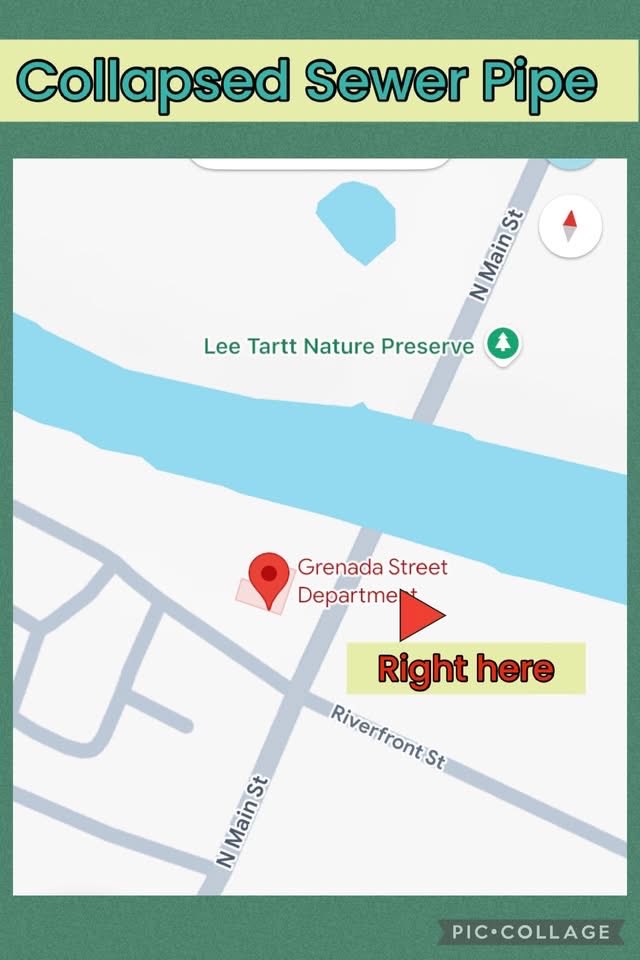
39
June’s Tribal Utility News is now available! Find it in your inbox or at the archive link below to see news on the EPA’s National Cyber Drill, our upcoming webinar on NPDES compliance, tribal water rights in California, and more.
Read it here: wateroperator.activehosted.c…

ALT The header of WaterOperator.org's "Tribal Utility News" newsletter.
2
9
GEOTOOLS retweeted

DEP Invites Comments On Proposed Termination Of NPDES Water Quality Permit For Mercatoris Oil Co. Inc. For Failure To Comply With Permit In Crawford County [PaEN] tinyurl.com/4zavmwh3

1
1
31


May 22
Holy crap it's like 2011 exploding before my eyes!
With just a few words changes, like from "data center" to "fracking" look up the exact same news cycle involving well water and see what comes up. Incredibly precise deja vu on all of these issues raised in the post below by @Gabby_Hoffman.
When things go so far in the rhetoric, nobody has the patience to parse the semantics anymore. This is why prevention always wins over damage control. Super frustrating to watch this unravel. All of the new hype will now make it harder to solve the actual construction runoff problem. That entire testimony should have been about construction runoff. And dry pumping. And whether everybody had their npdes permits and filed their swppps.
May 21

Closed-loop cooling in data centers DOESN'T use municipal drinking water. Local drinking supply is therefore unaffected.
Where was this water sample was sourced from!?
The Congresswoman is the key House author of the Green New Deal resolution. Be skeptical of her performative gestures.
11
1,770

May 22
Most (not all) data centers use evaporative cooling meaning ~75% of their water consumed turns to vapor which doesn't pollute. The blowdown gets sent to local sewer systems (which they pay for) so it does get filtered. Anything else would violate NPDES.
1
5
81

May 20
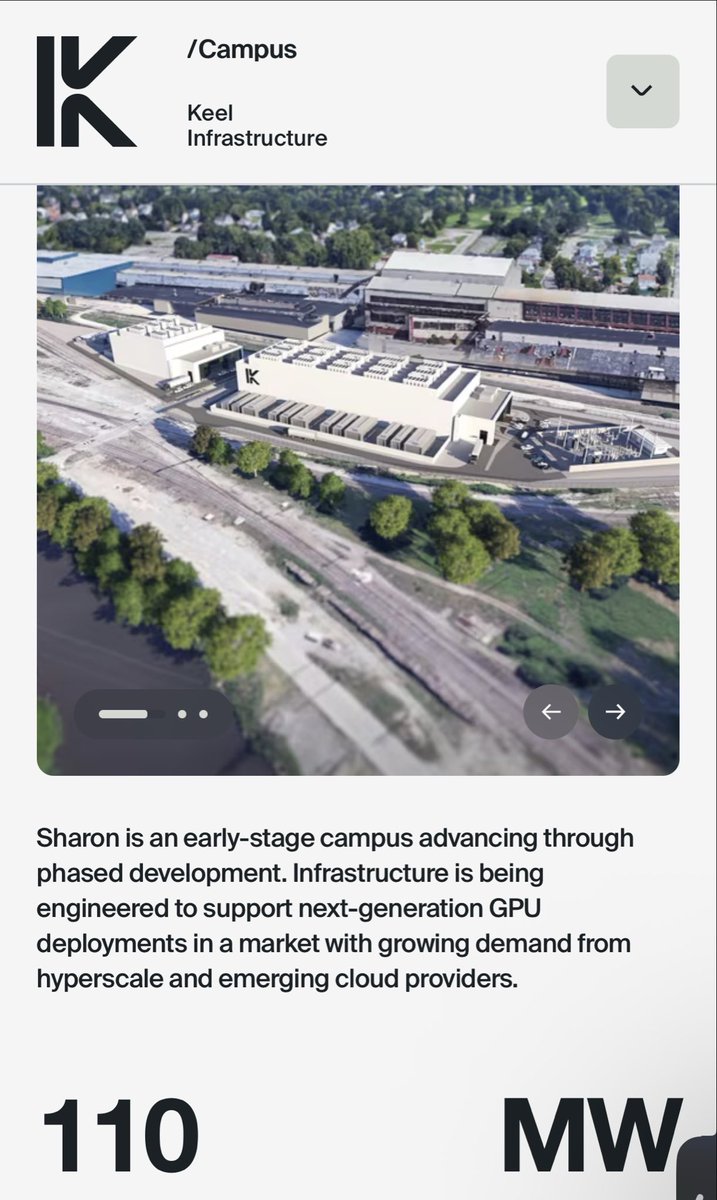
$KEEL - we just got the official government minutes.
Mercer County Regional Planning Commission. April 26, 2026. On the record.
Mercer Node Development - Phase I, II and III.
That’s the official name in government documents. Sharon campus confirmed.
Here’s what was approved:
Phase I ✅
80 MW electrical substation. 11.1 acres. Zoned heavy industrial. Conditionally approved.
Phase II ✅
150,000 sq ft building. Clark Street. Conditionally approved.
Phase III ✅
45,000 sq ft building 80 MW substation relocation. Conditionally approved.
Closed-loop cooling. No stream or wetland impacts. Required zoning permits in place. NPDES in progress.
And the May 26 meeting agenda?
Item 8: Mercer County SALDO Amendment - Data Center.
They’re rewriting the entire county land development ordinance to accommodate data centers. Impacts 36 municipalities.
Keel isn’t just building a data center in Mercer County.
They’re rebuilding the regulatory infrastructure of an entire county around it.
This is what it looks like when a project is too big to stop.
The May 26 meeting is in 6 days - and it’s open to the public online. That’s a live catalyst. (Link in comments)
They’re voting on rewriting the county’s land development ordinance to accommodate data centers across 36 municipalities.
That’s the regulatory foundation being permanently laid for Keel’s entire Mercer County footprint - not just Sharon Phase I.
$KEEL 🏗️⚡
DYOR. NFA.
@MintzerMiguel 🤝
4
15
113
19,775

May 19
Is Zeldin breaking the law? Under CWA section 402(o), the EPA and states may not renew, reissue, or modify an NPDES permit to contain effluent limitations that are less stringent than those in a previous permit, unless the change is consistent with certain statutory exceptions. If anything, he is skating on very thin ice.
The previous PFAS rule went through notice/comment and was finalized. That makes it a final agency action.
Final rules are presumed valid unless a court vacates them.
May 19

“There’s nothing gold-standard about tearing down the science-based protections that help keep our drinking water safe. #PFAS are highly toxic, even at very low levels,” said Maria Doa of @EnvDefenseFund.
thenewlede.org/2026/05/epa-p…
3
5
410

May 18
Sentient’s analysis finds 38 different agricultural companies were cited for noncompliance with NPDES permits, and only one was fined.
buff.ly/bhhlI9S
4
6
98

May 16
No total free-for-all: Coal plants still operate under the Clean Water Act, National Pollutant Discharge Elimination System (NPDES) permits, and other baseline rules. Many already treat wastewater to some degree. The change relaxes the "best available technology" requirements specifically for this waste stream, not eliminating all oversight.
Basically, repealing the Biden era wastewater rule for coal-fired power plants act of 2024.
States will have control of the permitting.
1
5
590

Sure. I just read all of the EPA, NRC, NUREG-1437 on the environmental impact reports of renewing Vistras reactor for Meta Prometheus Super Center for 20 years. Moderate impacts. Yet, the Federal Register NEPA claims, it's not severe enough.
I also know that Logue, was instructed to cut regulations to fast track buildouts.
- NPDES (National Pollutant Discharge Elimination System) Permit
- Trump's Executive Order (EO 14318), titled "Accelerating Federal Permitting of Data Center Infrastructure"
"Winning the AI Race: America's AI Action Plan"
What jobs, specifically?
All of you will continue to rug pull Ohioans, and lie. I will continue to expose all of it.
See you around.
2
3
6
1,030

SCDES’ Office of Compliance Assistance recently hosted training for concrete batch facilities on updates to the Air Quality General Permit and NPDES Industrial Stormwater Permit.
Thanks to partners and attendees for joining supporting compliance & environmental protection in SC.

1
2
32

May 14
It starts in 90 minutes.
Senate Banking Committee. Room 538. Dirksen Senate Office Building. 10:30 am ET.
Over 100 amendments. A 13-11 Republican majority. Senator Kennedy still uncommitted. The banking lobby in Senate inboxes. Democrats holding firm on ethics language. Dcgreenbank
This is the most consequential committee vote on digital asset legislation in American history.
While Washington debates stablecoin yield and ethics provisions today, here is what HydroCoin is watching: the CFTC's exclusive jurisdiction over digital commodity spot markets.
That single provision converts HydroCoin's Digital Commodity classification from an interpretive release into permanent federal statute.
What that means in practice for the 7,550 MS4 systems under EPA NPDES regulation today: verified stormwater infiltration — measured, engineer-reviewed, CPA-attested, permanently recorded — becomes an asset class with a permanent legal home.
Not a promise. Not a pilot. A verified performance record on the XRP Ledger. Already operational. Waiting for the statute to catch up.
@votetimscott the infrastructure is built. The assets are verified. 90 minutes.
@XRPL @Ripple @MyCrypt0world @parjanaeng42079
#HydroCoin #CLARITYAct #HR3633 #DigitalCommodity #CFTC #RWA #XRPL #WaterCredits #MS4 #NPDES
1
5
51

May 14
Yes. But (falling back on my law degree that I never used) this is at least a trespass and diminishment of property value. The FDEP should have a lot to say about an unpermitted discharge and violation of NPDES/Clean Water Act. One cannot just freely discharge water wherever.
1
4
14

May 11
GROK ON LAWS REGARDING LARGE WATER WITHDRAWAL BY CORPORATIONS
No single federal law directly regulates or prohibits companies from depleting (“collapsing”) local water supplies through high-volume withdrawals like those used for data center cooling. Water quantity and allocation are overwhelmingly handled at the state level via water rights systems and permitting, with federal oversight limited mostly to water quality and pollution. If a company’s overuse causes measurable harm to residents (e.g., dry wells, reduced municipal supplies, or lowered water tables), recourse typically comes through state permitting enforcement, environmental review processes, or civil lawsuits under common-law doctrines like nuisance.
Federal Laws (Limited Role)
•Clean Water Act (CWA): Focuses on pollution discharges into navigable waters, not withdrawal volumes. It does not control how much water a company can pump from groundwater or surface sources. However, if cooling operations involve discharging pollutants (e.g., chemicals, heat, or wastewater) that reach surface waters via groundwater, an NPDES permit may be required, and violations can lead to liability (per U.S. Supreme Court precedent on “functional equivalent” discharges). Pure depletion without pollution is outside its scope.
•Safe Drinking Water Act: Protects public drinking water systems from contamination but does not limit industrial withdrawals from shared sources.
•Other federal laws (e.g., Endangered Species Act or NEPA) may apply indirectly if withdrawals affect protected habitats or require federal permits/approvals, triggering environmental impact reviews that consider water supply effects.
In short, federal law leaves quantity issues to states, creating a patchwork approach.
State Laws (Primary Coverage)
Water rights and permitting are the main tools. Companies must typically obtain permits or rights before large withdrawals, and exceeding them—or causing harm—can trigger enforcement, fines, permit revocation, or shutdown orders by state agencies (e.g., water resources control boards or departments of natural resources).
•Water Rights Doctrines:
◦Prior Appropriation (most Western states, e.g., CA, AZ, CO, TX): “First in time, first in right.” Senior rights holders (often agriculture or municipalities) get priority during shortages. A company with junior rights can be curtailed if it harms seniors or exceeds its allocation. Overdraft of aquifers can violate these rules.
◦Riparian/Reasonable Use (most Eastern states): Landowners can make reasonable use of adjacent water, but overuse interfering with neighbors (including residents) can be restricted.
•Groundwater-Specific Rules: Many states regulate aquifers separately. Examples:
◦California’s Sustainable Groundwater Management Act (SGMA): Requires local agencies to prevent overdraft; failure can lead to state probation, fees, fines, or state takeover of management. Data centers (or any large user) can be restricted if contributing to unsustainable pumping.5
◦Similar management acts or permit requirements exist in other states (e.g., Minnesota requires aquifer testing and conservation plans for data centers using >100 million gallons/year).
•Data Center-Specific Regulations (Emerging and Growing): Many states have passed or proposed laws targeting high water users like data centers, often requiring:
◦Public disclosure/reporting of projected and actual water use (e.g., California, Virginia, Utah, Georgia).
◦Water efficiency mandates (e.g., closed-loop cooling, recycled water use, or bans on potable/groundwater for cooling in some proposals).
◦Pre-permitting assessments of local supply impacts.11
◦Violations can block permits, trigger fines, or allow lawsuits/injunctions (e.g., Kansas proposals allow AG or local suits).
CONT.
1
4
764