
Jun 12
Redefining enterprise computing for the age of AI.
Citrus EON 14Pro delivers the performance modern businesses demand
#CitrusComputing #EON14Pro #AIReady #EnterpriseIT #IntelligentComputing #BusinessPerformance #NextGenComputing #DigitalWorkplace #TechInnovation #EdgeComputing
5
Quantum computing is edging closer to real-world deployment ⚛️
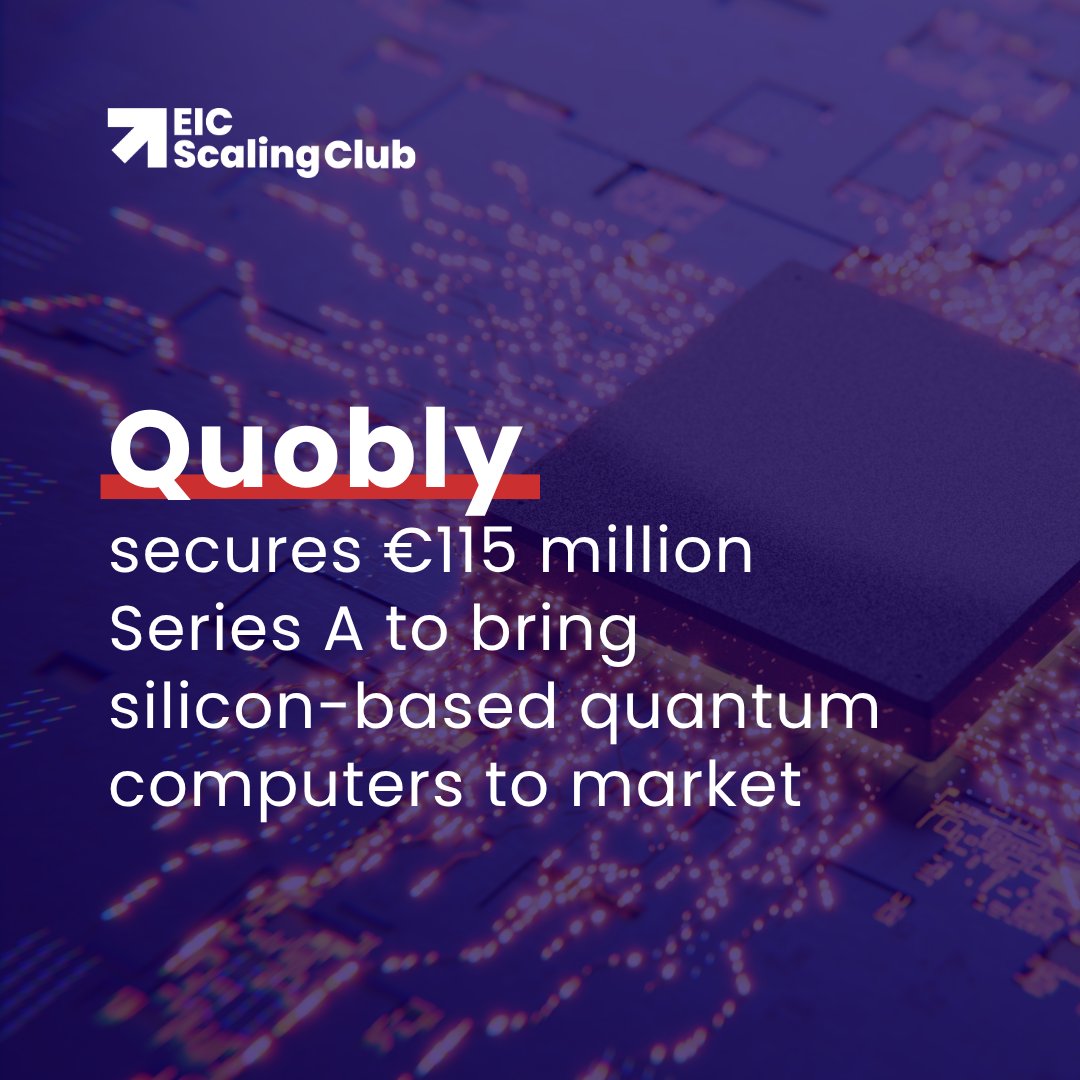
Congratulations to French scale-up @Quobly_ from our Next-Gen Computing market group for securing a €115 million Series A! 🚀
The company will use this funding to accelerate the industrialisation of its silicon-based quantum computers and bring its first commercial product to market by the end of 2026.
The round brings together leading industrial and deeptech investors, including @Bpifrance, @ST_World, @SEALSQcorp and the @EICFund 🇪🇺
Read the full article here: eicscalingclub.eu/news/quobl…
#QuantumComputing #NextGenComputing #Semiconductors #HPC #EUinnovation #EICFund
2
1
42

Jun 8
@jim_adler — Founder & GP at @Toyota_Ventures — on Venture with Grace, sharing why AI and robotics are redefining the future of computing.
AI and robotics are pushing beyond traditional computing architectures, creating entirely new demands on infrastructure. Jim discussed how compute is increasingly moving closer to where data lives, enabling the massive growth in AI inference and real-time intelligence.
His key point: breakthroughs in AI, robotics, mathematics, and scientific research are all being accelerated by this shift, making it one of the most exciting periods for technology innovation and investment.
Episode is live now — a forward-looking conversation on AI, robotics, and the next generation of computing. Link in bio.
#AI #Robotics #NextGenComputing #Innovation #FutureTech
1
35

Apr 30
NVIDIA Nemotron 3 Nano Omni... business20channel.tv/nvidia-… #NVIDIA #MultimodalAI #TechInnovation #AIThroughput #NextGenComputing #AIRevolution 📸 {image_url}
2
2
48

조용한 프로젝트가 종종 가장 큰 방향을 바꿉니다.
@quipnetwork 가 바로 그 흐름 위에 있습니다.
세계 최초의 양자 컴퓨터 네트워크’라는 말이
단순한 슬로건처럼 들릴 수도 있지만,
이 프로젝트가 바라보는 지점은 훨씬 더 깊습니다.
지금의 블록체인과 AI는
여전히 클래식 컴퓨팅의 한계 위에서 움직입니다.
하지만 Quip은 그 한계를 전제로 삼지 않습니다.
오히려 “아직 계산할 수 없는 문제”를 기준으로
인프라 자체를 새롭게 설계하고 있어요.
Quip이 만드는 건 하나의 체인이 아니라,
클래식 양자 컴퓨팅을 하나로 연결하는
네트워크 레이어입니다.
GPU, CPU, QPU(양자 프로세서)가
하나의 시장에서 연결되고,
계산은 단순한 해시 경쟁이 아닌
실제로 의미 있는 문제 해결에 쓰입니다.
보안도 미래의 양자 공격까지 고려해
완전히 재설계되고 있어요.
많은 프로젝트가 ‘더 빠르게’를 외칠 때,
Quip은 ‘더 멀리, 더 오래’ 갈 수 있는 방향을 제시합니다.
빠르게 가는 것보다 중요한 건, 계속해서 걸어갈 수
있는 길 위에 서 있는 거겠죠.
지금 Quip이 선택한 길은 아직 끝이 보이지 않는,
가장 흥미로운 길입니다.
Quip Network, 관심 있으신가요?
함께 미래를 열어보고 싶다면 댓글로
이야기 나눠요!
#QuipNetwork #QuantumComputing #양자컴퓨팅 #Blockchain #NextGenComputing

17
4
19
145
@GScanSystems – a member of our Next-Gen Computing market group – bridges the gap between innovation and infrastructure safety 🚀
GScan’s Muon Flux Tomography (MFT) technology has officially transitioned from development and testing to real-world impact and industrial-scale breakthrough, following several successful deployments on in-service bridges across the UK, Estonia and the Netherlands. 🛠️ 🏙️
Recent milestones:
➡️ First-ever deployment of MFT on an operational post-tensioned bridge in the UK, with several more deployments following the success.
➡️ First-ever half-joint inspection using MFT at 1.6m overall depth.
➡️ Successful deployment in a trial to detect wire breaks in suspension bridge cables
➡️ Full-depth 3D reconstruction of the internal geometry
These milestones demonstrate muon tomography as a vital, non-destructive tool for securing the future of aging infrastructure. ⚙️🏭
Watch the video below to get a better idea of how this innovative approach comes to life. ⬇️
Congratulations to the GScan team on this progress – looking forward to what comes next!
#DeepTech #InfrastructureInnovation #ConstructionTech #NonDestructiveTesting #NextGenComputing
5
54
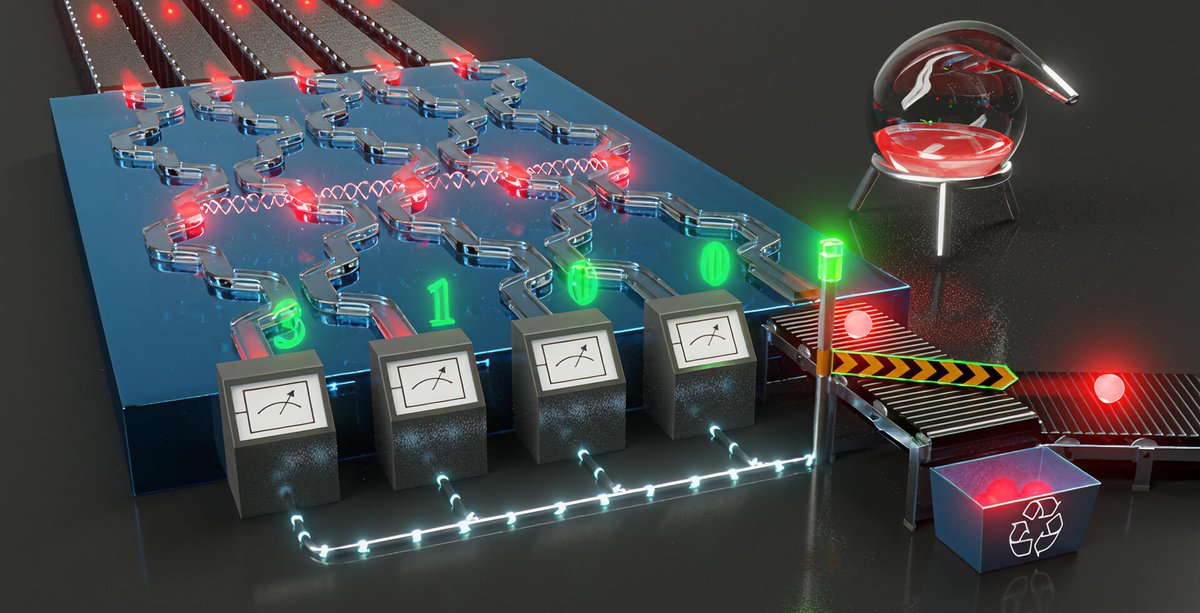
QuiX Quantum, our next-Gen Computing group member from the Netherlands, just cleared an important hurdle for scalable quantum computing: reducing photonic errors below threshold on real hardware.
Using “photon distillation”, they made photons more alike (2.2× lower indistinguishability error) and still achieved a net 1.2× reduction in total error – a key requirement for fault-tolerant systems.
Work done with @NASA's Quantum AI Lab, University of Twente and @FU_Berlin. The project was partially funded by the Netherlands Ministry of Defense's Purple NECtar Quantum Challenges initiative.
Read the full article here: eicscalingclub.eu/news/quix-…
#EICScalingClub #DeepTech #QuantumComputing #Photonics #NextGenComputing #EUinnovation
3
65

Mar 26
Exciting news from QuiX Quantum, our Next-gen computing market group member! Robin Wittland has been appointed as the scale-up's new Chief Commercial Officer to drive global growth and market expansion.
"I am excited to join the team at this stage and help build the commercial foundation for QuiX Quantum's next phase," said the new CCO.
Full press release: quixquantum.com/news/quix-qu…
#EICScalingClub #QuantumComputing #Photonics #DeepTech #QuantumTechnology #NextGenComputing
2
5
83

Marvell Technology has introduced the Structera S 30260, a next‑generation CXL switch designed to enable rack‑level memory pooling.
newelectronics.co.uk/content…
#DataCentreTech #AIMemory #NextGenComputing
2
66
Mar 10
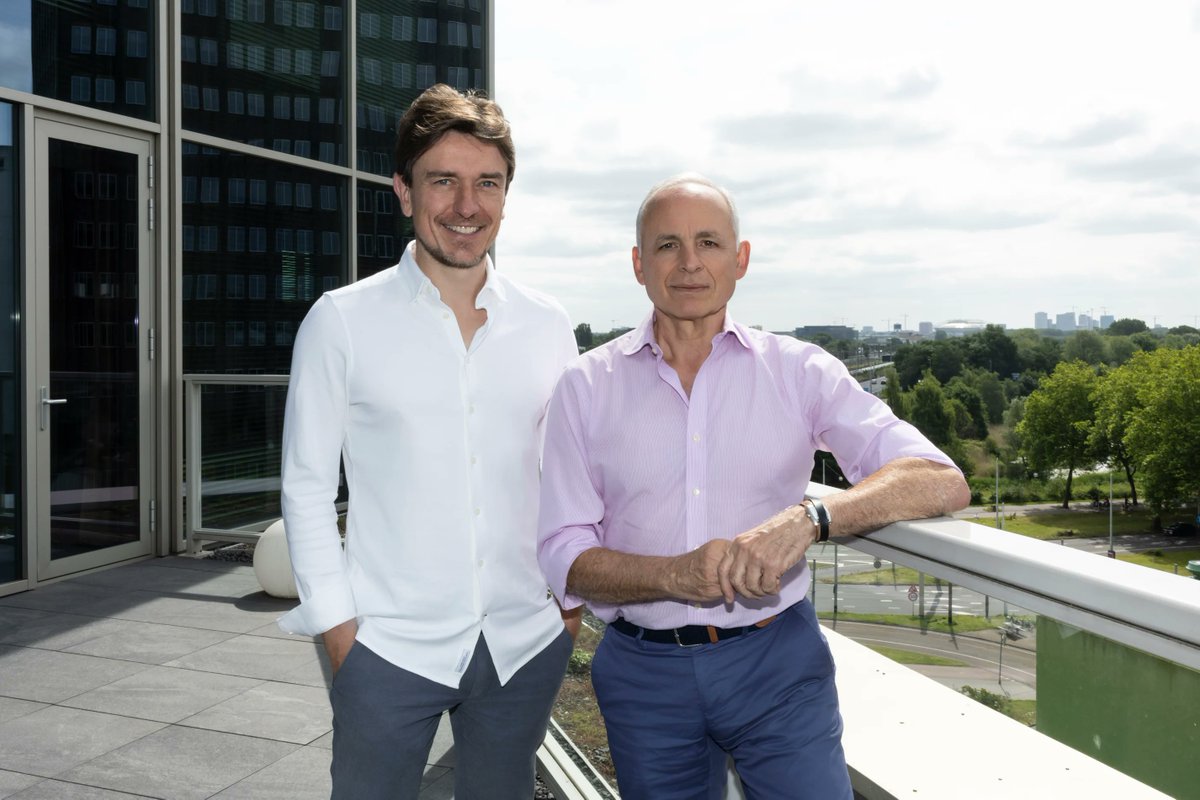
Axelera AI has just approached unicorn status with the EIC Scaling Club’s largest funding round to date (€211 million) 🚀
This is more than a headline moment. It is a signal for Europe’s deep tech ecosystem: when breakthrough engineering meets world-class execution, global scale follows.
A few proof-points worth highlighting:
➡️ Largest investment ever in an EU AI semiconductor company
➡️ Shipping to its 500th global customer
➡️ Enabling physical AI and edge AI deployments across industrial manufacturing, retail, agritech, robotics, security, defence, and public safety
➡️ Tackling one of AI’s hardest constraints: energy and cooling, where efficient inference becomes decisive for real-world deployment
Congratulations to @FabAroundEU and the entire Axelera AI team, and to the investors and partners supporting this next chapter — including Innovation Industries (lead), @BlackRock, @SiteGround Capital, the @EUeic Fund, Invest-NL, @SamsungCatalyst, SFPIM and others.
This milestone reflects the EIC Scaling Club’s ambition in action: backing Europe’s builders for the long game – and seeing them scale globally.
Read the full announcement here: eicscalingclub.eu/news/axele…
#EICScalingClub #Semiconductors #EdgeAI #Hardware #NextGenComputing
3
108

Jan 27
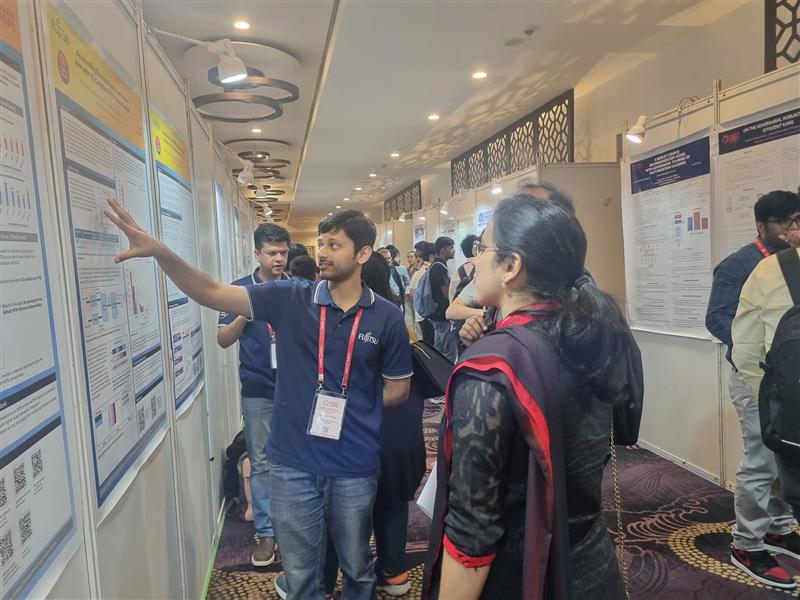
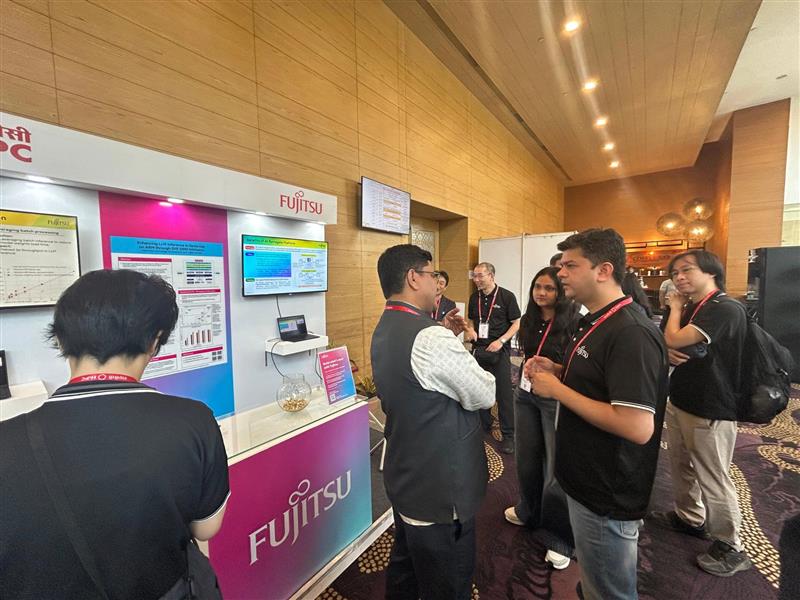
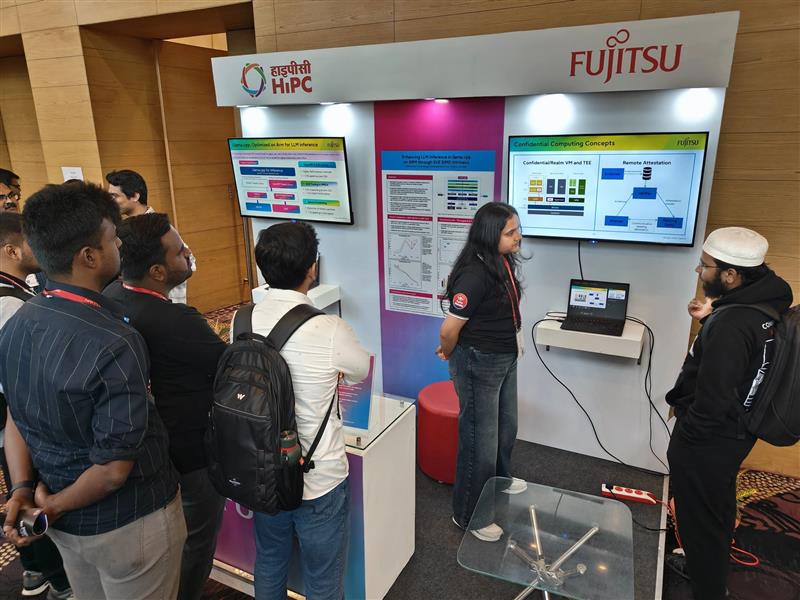
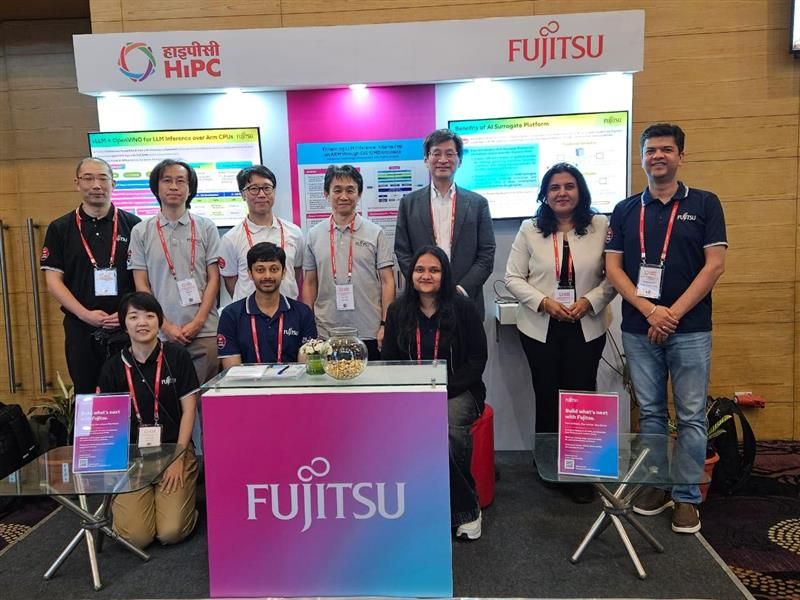
FUJITSU-MONAKA team had the privilege of partnering with IEEE HiPC 2025, the 32nd IEEE International Conference on High Performance Computing, Data, and Analytics, a premier forum advancing HPC AI innovation for over three decades.
At the heart of our participation was FUJITSU-MONAKA, upcoming 2nm Arm-based processor, setting new standards for sustainable, reliable, and scalable next-generation computing delivering high performance and energy efficiency in HPC and AI.
Highlights from HiPC 2025:
🌟 Thought leadership sessions
► Lightning Talk by Naoki Shinjo on “FUJITSU-MONAKA: Energy-Efficient Processor Series for Next-Gen Data Centers” outlined the architectural vision and system-level design behind the MONAKA processor family.
► Gold Sponsor Talk by Kouichi Hirai and @drpriyankaict on “Building AI & Confidential Computing Software Ecosystem for Next-Gen Arm Processor: FUJITSU-MONAKA” focused on the software ecosystem enabling secure, scalable, and high-performance AI workloads.
🌟 Technical excellence
►Three research posters accepted in the HiPC 2025 proceedings highlighted Fujitsu’s work in AI frameworks, math kernels, and multi-core optimization:
• Pushing Performance: Quantized BRGEMM Convolutions for Efficient Vision Inference on Arm — Deeksha Kasture
• Accelerating Quantized Deep Learning on Arm with JIT-Compiled INT8 Matmul Kernels — Shreyas Shankar
• Optimizing BLAS GEMM Kernel Performance: Scalable Multi-Core and Vectorized Design — Ragesh Hajela 🏆 Won Best Poster Award
►At our booth, we showcased efficient LLM inference, AI frameworks, and confidential computing, engaging with the community on performance optimization and kernel design.
🙏 Thank you to everyone who visited our booth and sessions, and to the HiPC 2025 Organizing Committee for an excellent platform.
Fujitsu remains steadfast in our mission to drive the next wave of sustainable computing and AI innovation through technologies like FUJITSU-MONAKA. Together, let’s shape a future that’s smarter, greener, and more connected!
#HiPC2025 #FujitsuResearch #FRIPL #EnergyEfficientComputing #NextGenComputing #FUJITSU #MONAKA
8
276
Jan 12
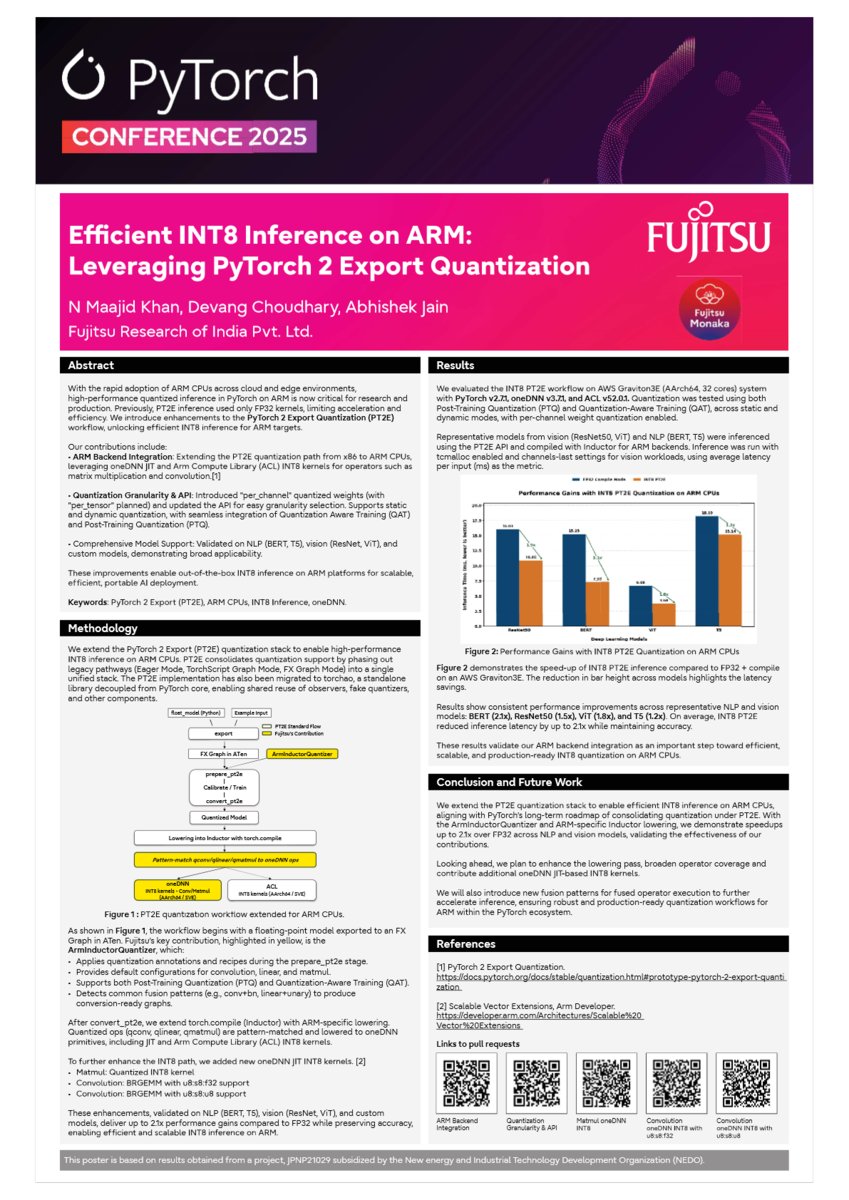
We are proud to announce Fujitsu Research of India (FRIPL)’s successful participation in the #PyTorch Conference 2025 held in San Francisco, US.
This landmark event brought together 3,432 developers, researchers, and innovators from 1,026 organizations across the global #AI ecosystem and served as a vital platform for showcasing our ongoing innovations in efficient AI computing. Our work at the conference focused on enabling high-performance and energy-efficient inference of large AI models.
Our key contributions presented at the PyTorch Conference 2025 included:
•Poster Title: "Efficient INT8 Inference on ARM: Leveraging PyTorch 2 Export Quantization"
•Primary Focus: Enabling the INT8 inference path for #ARM CPUs by introducing the ArmInductorQuantizer - a critical step for high-performance deployment using the PyTorch 2 Export (PT2E) quantization flow.
•Supporting Contributions: We further strengthened optimized Arm inference by contributing new oneDNN JIT-based INT8 matmul and convolution kernels.
Authored by: Maajid Khan, Devang Choudhary, and Abhishek Jain.
💡 Read more about our key learnings and experience in our detailed blog: blog-en.fltech.dev/entry/202…
This effort aligns directly with Fujitsu’s commitment to advancing the AI software stack for next-generation Arm architectures, particularly our #2nm FUJITSU-MONAKA CPU. By optimizing inference performance for Arm, we are setting new standards for sustainable and efficient AI deployment.
We extend our sincere gratitude to the PyTorch community for organizing such an insightful and valuable event. Thank you also to the many developers and researchers who stopped by our poster, shared their valuable feedback, and engaged with our team.
Priyanka Sharma
Kouichi Hirai
#FujitsuResearchIndia #PyTorchConference2025 #AIOptimization #FRIPL #MONAKA #EnergyEfficientComputing #NextGenComputing #HighPerformanceComputing
3
186

SEALSQ CEO: Industrialization Key to Quantum Computing’s Future
quantumzeitgeist.com/sealsq-…
#QuantumComputing #Industrialization #TechInnovation #FutureOfTech #SEALSQ #DigitalTransformation #NextGenComputing #QuantumTechnology #TechLeadership #InnovationStrategy
4
26
690

11 Dec 2025
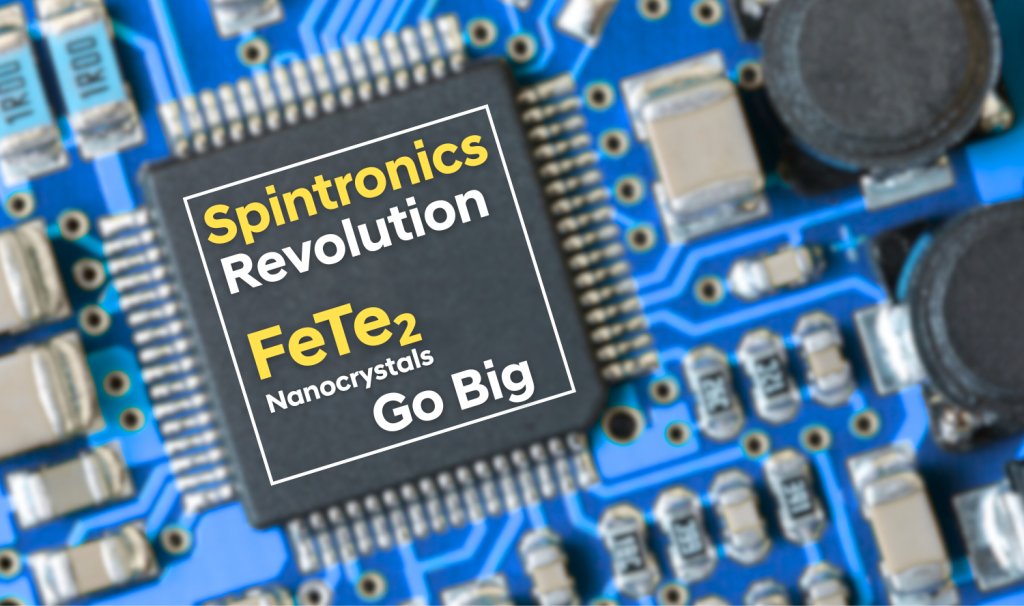
🚨The Silent Revolution Inside Your Future Devices: Spintronics Is About To Break Everything Open
Spintronics isn't hype, and it's not some distant lab fantasy, it's the shift happening underneath the surface while everyone is distracted by GPU charts and data center wars. Instead of treating electrons as little packets of charge, spintronics uses their spin up, down, and the all of the quantum weird behaviors in between. That simple change blows open an entire new class of hardware.
This is why MRAM already shows up in aerospace, defense, automotive systems, and radiation hard electronics. It doesn't forget when the power cuts, it doesn't choke on heat and it doesn't decay like flash. People talk about "the next memory standard" like it's still theoretical, but it's not, it’s already here.
The next frontier is spin-logic, processors built on spin-transfer torque, spin-orbit torque, and all-spin routing. No electrons shoving through hot resistive metal, no energy waste and no thermal throttling. Devices that wake instantly, compute fast, barely warm up, and survive environments that would fry silicon. For edge AI, satellite systems, and autonomous sensors, this is totally transformative.
Then you have the weird stuff that barely gets coverage at all like topological insulators moving spin with near perfect efficiency, spin waves replacing copper interconnects, hybrid spin photon architectures. This is where spintronics starts to bleed into quantum domains, coherence, stability, and topological protection. The boundary between classical and quantum hardware gets thinner every year.
You can feel it already, CMOS is hitting the wall. Fab costs are exploding. Thermal envelopes are maxed out. Spintronics is the exit ramp from all those problems, and It's happening right now in high tier research labs and defense grade hardware, and it's only a matter of time before consumer tech catches up.
If you want to understand the next decade of computing, don't look at the specs on the latest graphics card. Look at the spin. We will most likely start to see spinelectronics in our devices within the next couple of years. Faster, energy efficient devices are just around the corner.
#Spintronics #NextGenComputing #QuantumTech #AIHardware #MaterialsScience #MRAM #TechFutures
5
12
53
5,254

3 Dec 2025
👉 "It's a new phase of matter, similar to how water can exist as liquid, ice or vapor," said Luis A. Jauregui, professor of physics & astronomy at UC Irvine and corresponding author of the new Physical Review Letters. "It's only been theoretically predicted -- no one has ever measured it until now."
#FutureTech #PhysicsBreakthrough #MaterialsScience #QuantumInnovation #UCIRvine #ScientificDiscovery #NextGenComputing
3
122

28 Nov 2025
TECHNOLOGY NEWSWIRE IBM Unveils Quantum System Two for Data Centers
THE FUTURE IS HERE: IBM unveils Quantum System Two, a modular, scalable quantum computing infrastructure for data centers.
TECH REVOLUTION: Operating at extreme cryogenic temperatures, it advances practical quantum applications.
While AI’s insatiable demand for GPUs dominates tech headlines, a different computational revolution is quietly taking shape in temperatures colder than deep space.
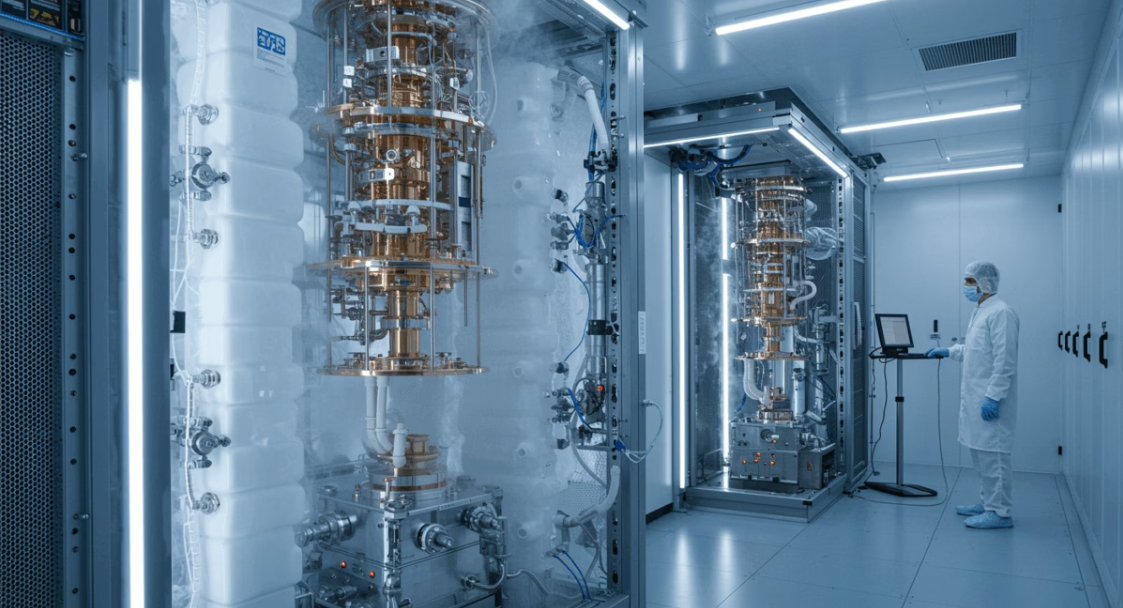
IBM is at the forefront, unveiling its Quantum System Two, a modular, scalable infrastructure engineered for data centers, not just research labs.
This advanced system houses quantum processors, including the 156-qubit Heron and the newer, more connected 120-qubit Nighthawk chips.
Their operation demands extreme conditions: a specialized cryogenic system cools them to a mere 15 milliKelvin – orders of magnitude colder than the cosmic microwave background – essential for maintaining the delicate quantum states of the qubits.
The system’s design emphasizes scalability, allowing for the expansion of both its cryogenic cooling capacity and the classical control electronics that manipulate the qubits.
Critically, IBM is pioneering “cryogenic quantum links” and classical communication networks to connect multiple quantum chips.
This allows for the execution of complex, dynamic quantum circuits and a wider variety of applications, rather than solely focusing on error correction, which is addressed through different qubit arrangements.
This strategic push towards data center-ready, interconnected quantum hardware marks a significant step, accelerating the journey of quantum computing from theoretical promise to practical application, poised to tackle problems beyond the reach of classical supercomputers.
#IBMQuantum, #QuantumSystemTwo, #QuantumComputing, #NighthawkChip, #HeronProcessor, #156Qubit, #120Qubit, #QuantumDataCenter, #CryogenicComputing, #15milliKelvin, #QuantumRevolution, #QuantumAdvantage, #QuantumSupremacy, #ModularQuantum, #ScalableQuantum, #CryogenicLinks, #QuantumInterconnect, #QuantumCircuits, #QuantumApplications, #BeyondClassical, #QuantumHardware, #IBMResearch, #QuantumTech, #FutureOfComputing, #QuantumEra, #Supercomputing, #QuantumBreakthrough, #TechNews, #TechnologyNewswire, #Quantum2025, #QubitScaling, #ErrorCorrectedQuantum, #QuantumNetworking, #DataCenterQuantum, #CryoElectronics, #QuantumControl, #PracticalQuantum, #QuantumUtility, #IBMQuantumSystem, #NighthawkQuantum, #HeronQuantum, #QuantumChip, #DeepTech, #NextGenComputing, #QuantumInnovation, #QuantumFuture, #QuantumPower, #QuantumLeap, #TechRevolution
1
3
173

6 Nov 2025
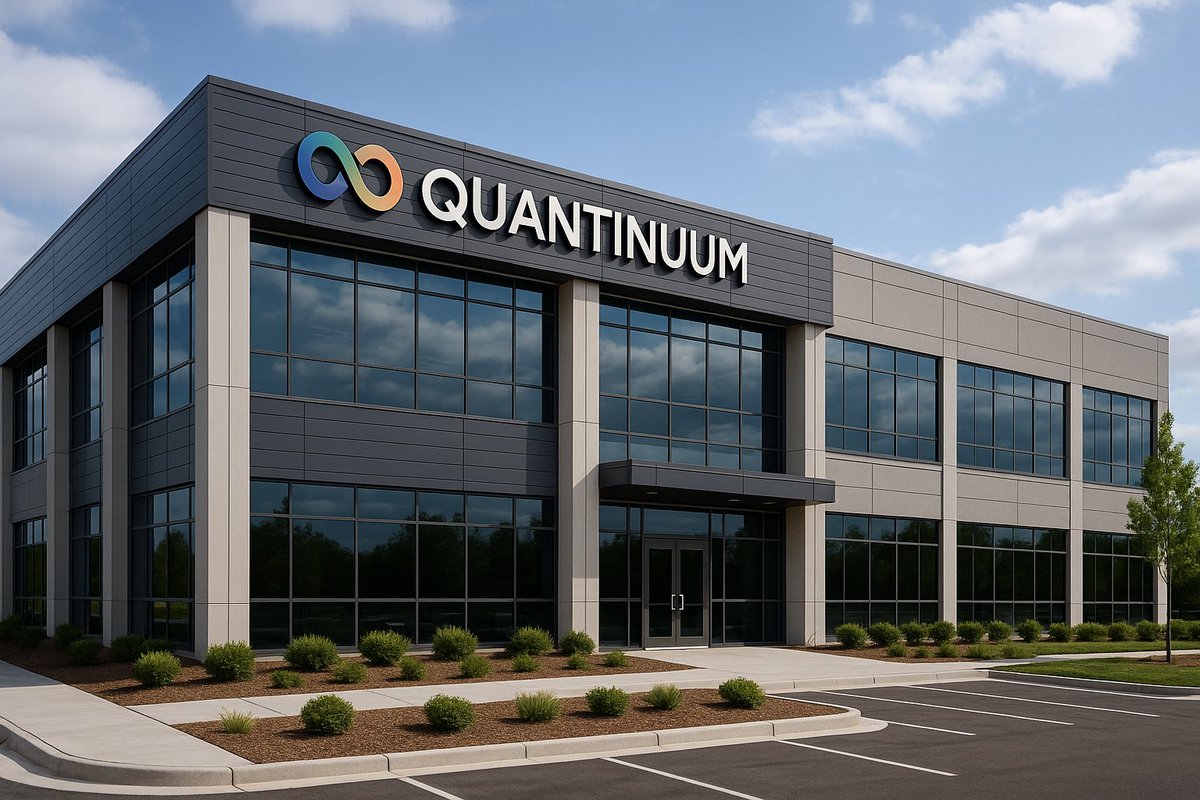
Quantinuum Unveils ‘Helios,’ Claiming the World’s Most Accurate Quantum Computer
todayinusandworld.com/quanti…
#Quantinuum #HeliosQuantum #QuantumComputing #DeepTech #GenerativeAI #HighFidelityComputing #NVIDIA #EnterpriseTech #PharmaInnovation #AIMaterialsScience #NextGenComputing
1
33

23 Oct 2025
Swapped my laptop for a pocket-sized Khadas mini PC AR glasses — and it actually worked.
Full story by Tom’s Guide 👉 tomsguide.com/computing/i-di…
#Khadas #MiniPC #NextGenComputing #AR #Mobility
1
3
510

7 Oct 2025
🧠💻 Tiny lab-grown brains might power the next generation of computers.
Not sci-fi despite my silly video below: Swiss researchers at FinalSpark are growing mini-brains from human stem cells — training them to send and receive electrical signals through electrodes. They call it wetware computing.
Why bother? Because the human brain runs on 20 watts — the same as a night-light — while data centers burn hundreds of terawatt-hours a year. Biology still wins the energy game.
These living processors can learn, adapt, and self-optimize in ways silicon can’t. It’s messy, ethically complex, and wildly promising.
Imagine training an AI on actual neurons. For now, those neurons sometimes go silent, then spark back to life — like they’re thinking about something we can’t quite see.
Would you trust a computer with a pulse?
#AI #Biocomputing #Innovation #FutureTech #Neuroscience #NextGenComputing
4
1
1
473

3 Oct 2025
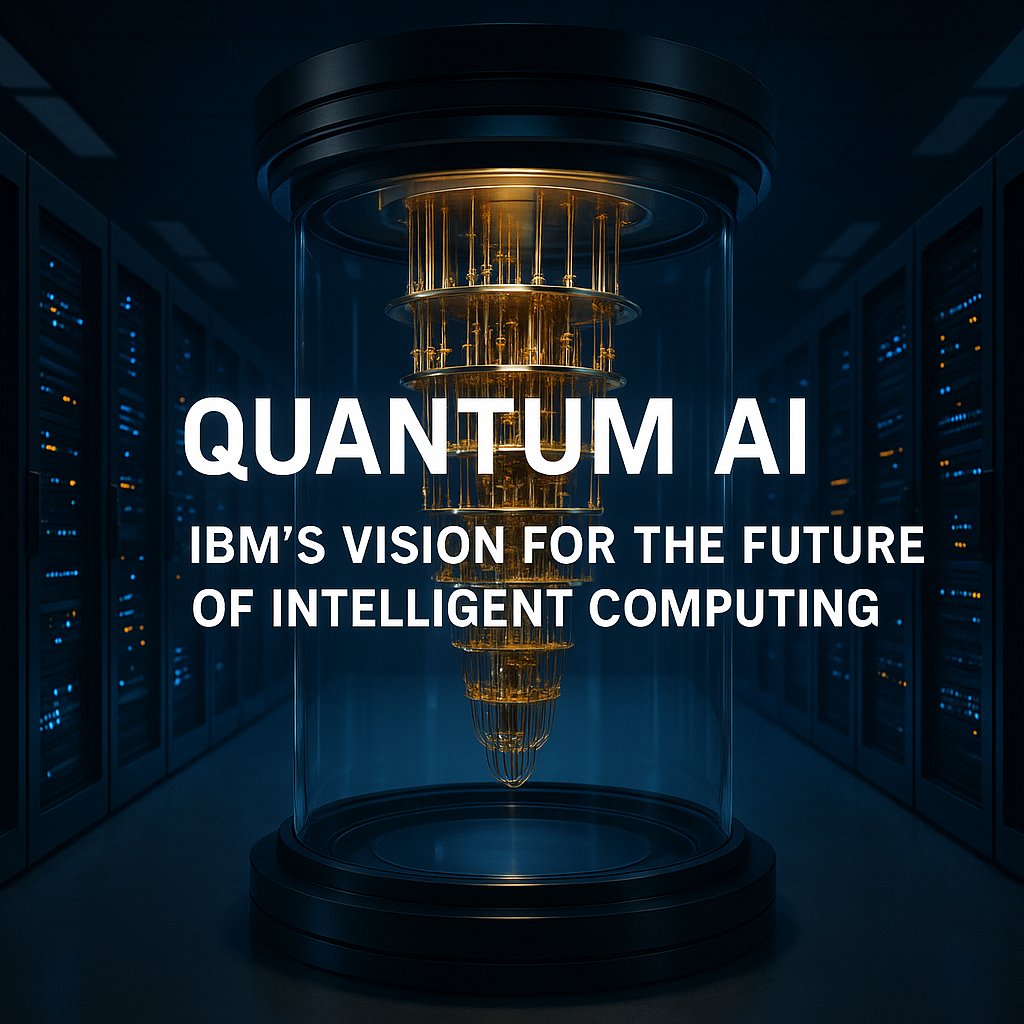
⚛️ 𝐓𝐡𝐞 𝐟𝐮𝐭𝐮𝐫𝐞 𝐢𝐬𝐧’𝐭 𝐣𝐮𝐬𝐭 𝐀𝐈 — it’s AI supercharged with Quantum Computing
🚀 𝐈𝐁𝐌’𝐬 𝐯𝐢𝐬𝐢𝐨𝐧: solving impossible problems with qubits algorithms
🌍 From curing diseases to tackling climate change — 𝐢𝐭’𝐬 𝐦𝐨𝐫𝐞 𝐭𝐡𝐚𝐧 𝐢𝐧𝐧𝐨𝐯𝐚𝐭𝐢𝐨𝐧
🤖 This is a quantum leap into tomorrow
𝐑𝐞𝐚𝐝 𝐦𝐨𝐫𝐞 𝐡𝐞𝐫𝐞: c-sharpcorner.com/news/quant…
#Csharpcorner #Csharp #QuantumAI #AIRevolution #FutureOfTech #QuantumLeap #NextGenComputing
2
2
4,437