
31 Oct 2025
⚙️ No Code. No Limits. 🚀 Empowering creators to build apps & automate without writing code using tools like Glide, Bubble & Airtable! 💡 📍 Cavite State University | Nov 14–15 👉 lu.ma/bcc2025luzon #BCC2025 #NoCodePH #Web3PH #InnovationPH
2
65

9 Sep 2024
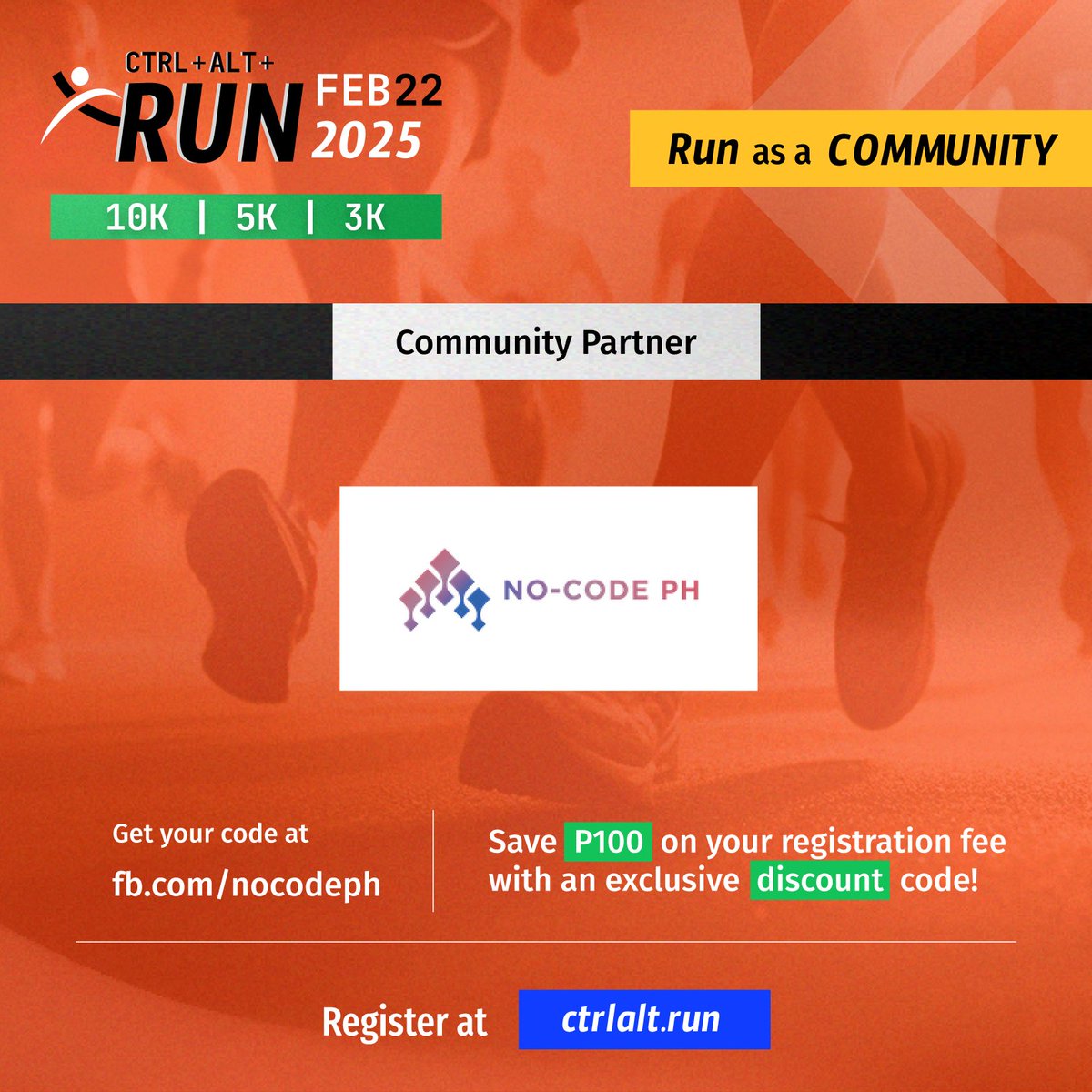
We are thrilled to announce our community partnership with @NocodePH, a community dedicated to empower the no-code and low-code community in the Philippines.
#ctrlaltrun #ctrlaltrunph #running #runningph #runph #techcommunity #walk
1
1
2
62

26 Mar 2024
Yes, I'm aware it's not ideal. If I find someone to host and that there is enough demand, I would be more than happy to have NoCode Drinks Asia 🙏🏾
This would save some hours of sleep for @serverl0rd who has been attending every events while in India 😅
1
3
38

26 Mar 2024
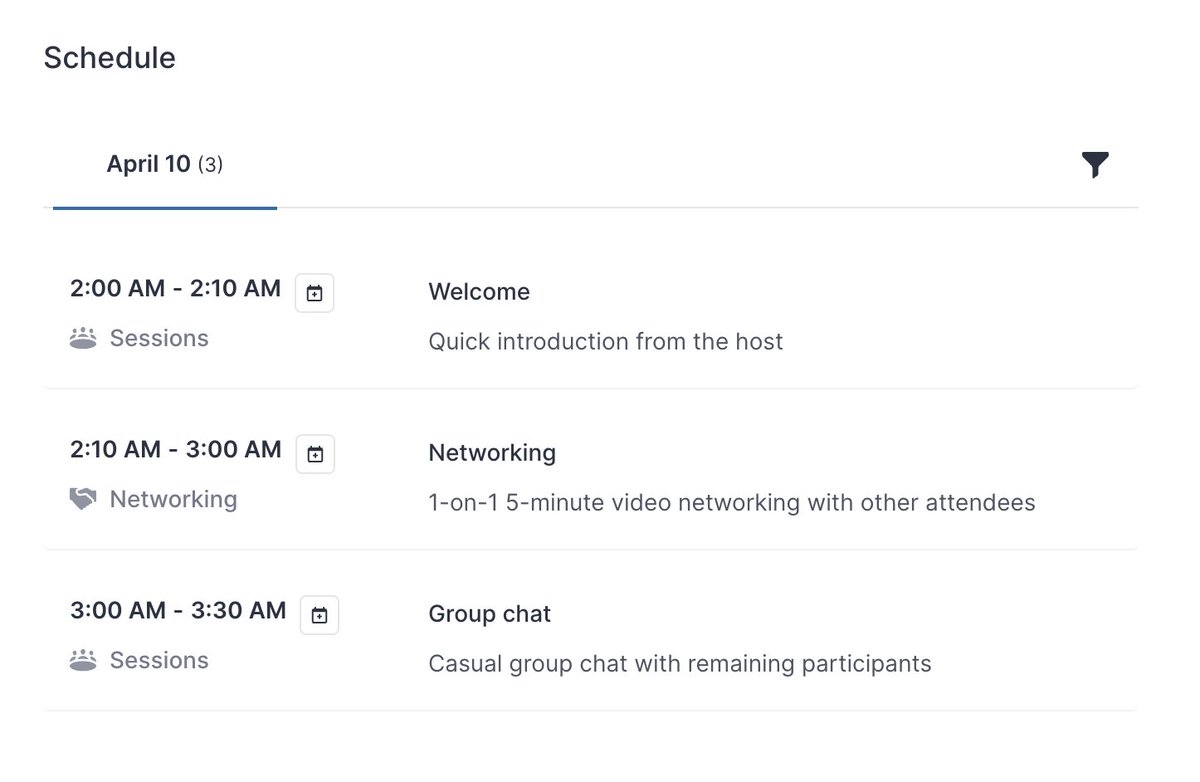
@nocodedrinks @pierreSN Any chance of hosting NoCode drinks in the Asia timezone? The Worldwide one is too late around here. I am sure @NocodePH and @NoCodeAsia would be happy to help 👀
Count with me also if needed.
1
4
104

25 Mar 2024
Great presentation video, especially for a non profit org :))
And great mission too
#NoCode is just about that, empower people with tools which will bring new opportunities to them 💪
You should consider #OpenSource No-code as it shares the same values but deeper
1
10

11 Dec 2023
Early Hires for an Agency
Get ready to rock n roll 🪖. This post is going to be all over the place. Part 2 of my "Agency Phases" tweet, going from P1 to P2 is the biggest hurdle most people will ever go through (or achieve). So let's talk about early hires.
Freelancers
Flywheel has a policy: no freelancers. We've never worked with freelancers and (probably) won't. This is for a few reasons:
1) mobile app dev and our clients are complicated. Finding freelancers for our work and who meet our standards is hard.
2) our projects are full time and extremely long for most agencies. Think 3-6 months.
3) we retain 80% of clients after the initial build, so losing people after a project wouldn't work well.
4) We've never wanted to take the risk that a freelancer might have a conflict of interest and need to prioritize another client over one of ours.
5) It's a selling point. Some clients want to make sure their work isn't being subcontracted. We emphasize we're 100% in house.
All of that said.... Hiring freelancers is probably a great first hire for most agencies. It really depends on the level of complexity, duration, and the availability of talent.
For example, there are A LOT of amazing UI/UX design freelancers. If you're designing telescopes, probably not.
@peterkang34 has mentioned before about how Barrel has an amazing group of freelancers they can pull from. I'd view this as a serious competitive advantage if you can do this (a lot more on this later when I get into agency economics).
Full Time Hires
If you're going full time, my first hire would be:
1) dependable
2) affordable
3) preferably good at the core task (bulk of the agency's work) or something I'm not good at (i.e., design)
A lot of first hires are hard. You hire flaky people, they can't do the work, they don't know what they're doing, it seems like everything has gone wrong and you ask yourself if you've made a terrible error. Dependability is really crucial as you make the pivot from a freelancer to a rock solid army of 2.
I'll cover agency economics another day, but don't bankrupt yourself with your first hire and expect bad times to come eventually! It isn't all up and to the right.
Lastly, you really need to understand what you're hiring for and what you expect this person to do. This is where most people mess up.
Take a project where you're developing a mobile app. To build great software you need product strategy, design, development/technical skills, and project management.
Are you hiring someone to do all four of those? Probably not, so don't expect them to do all four roles. You might expect them to do a few roles, like project management and development, so you'll want to make sure you verify they have those skills, understand they'll be performing both roles and also understand they might not be great at some of the roles you're expecting them to complete.
Hourly vs Full Time
I've heard different opinions on this and I'll say that it's really just your opinion here.
When I started Flywheel, I modelled it after the consulting companies I worked at. They hire full time, pay an annual salary, and then it's their job to staff you and keep you busy.
I accepted that challenge for a few reasons.
1) I never wanted our team to have incentives to work elsewhere. If you're hourly and not working full time, your income goes down, and you might seek work elsewhere. I wanted to make sure that never conflicted with our business.
2) I wanted our team to always feel secure in their salaries, that they know what they'll be paid and when without variability.
3) Imo, that's how professional roles operate. Show me a top tier company paying professional staff hourly.
The one issue here is over time. We're very clear we typically don't pay overtime. Don't expect it. Sometimes you'll need to work more hours. That's part of the job. That's a US professional mindset for how we approach our business.
How to Hire
This is going to be incredibly generalized because it varies so much by skills and budget, but always start with your existing community.
The majority of our hires have been from Twitter and No Code Groups. S/O to @crystalcamarao and @NocodePH from where we got our AWESOME designer.
We have a three round interview process:
1. introduction and verification - meet the candidate. Verify they're a good fit. Verify credentials. etc.
2. Organized hands on test - this could be a sample project they work on, maybe a task that requires attention to detail, etc.
3. Cultural Fit (CEO interview) - really grill them about how they work with others and their past experience.
All of that said, hire fast and fire faster. Pretending you're going to get a 100% success rate is a fool's errand. You're hiring volume is going to be too low to focus on it. Instead, focus on getting them into the role, giving them the support and resources to be successful, and then decide if they're going to be.
So, you've hired someone, what's next?
Going from freelancer to agency is a paradigm shift and you have to be ready for that before you hire.
Hiring freelancers is probably an exception to this, but only partially, so know that it might be easier but it doesn't mean you get to ignore all of this.
First, the moment you have employees, now you're running an organization. For Flywheel, that means a technical services organization. This is obviously whatever type of agency you have.
To be successful, a technical services organisation has to be able to:
1) identify
2) qualify
3) attract
4) train
5) retain
6) manage
7) incentivize
... technical talent. You can combine some of these or even add more, but the point is you've created A LOT more jobs to be done.
If you've worked in a full-time corporate role before, you're probably aware of the bureaucracy this creates employee handbooks, rules about vacation, annual reviews, training schedules, personal goals, bonuses, sick dates, etc. etc.
What started as "let me hire this person to help me with designs" has quickly turned into significantly more work.
Now you might say "hey, I'm just hiring one person. I don't need that!" maybe not, but would you want to work somewhere that doesn't have these things? Owners love ambiguity, employees do not.
As you scale, from 2 to 11 employees (where we are now) you'll be forced to slowly add to this pile of roles to make sure the entire organization operates effectively.
There's a reason why every "real" company has these roles and it isn't because it looks cool on their website.
Side note: this is a big selling point for our business. We're basically selling that we manage this entire thing for you. Most clients don't want to take all of this on themselves in the course of "bringing it in house" so we do this for them.
That's the HR side, the operations and management requires a complete rework now too.
What used to be "the client said this, I'll remember it and add it later" now needs to be a trackable action in a project management space. You'll need to perfect the ability to share information across team members and ensure it retains its original context (think of the telephone game here).
Lastly, you need to become a manager and a leader. Nothing trains you for this, but luckily you can learn and there are a lot of great resources out there. I don't believe there are any natural born leaders, everyone has to figure it out the hard way.
All train of thought here, so there's bound to be some mistakes. Apologies.
Let me know below👇 if you have questions and I'll answer them. Next up, I think I'll cover creating agency processes and sops.
1
1
14
1,666

29 Aug 2023
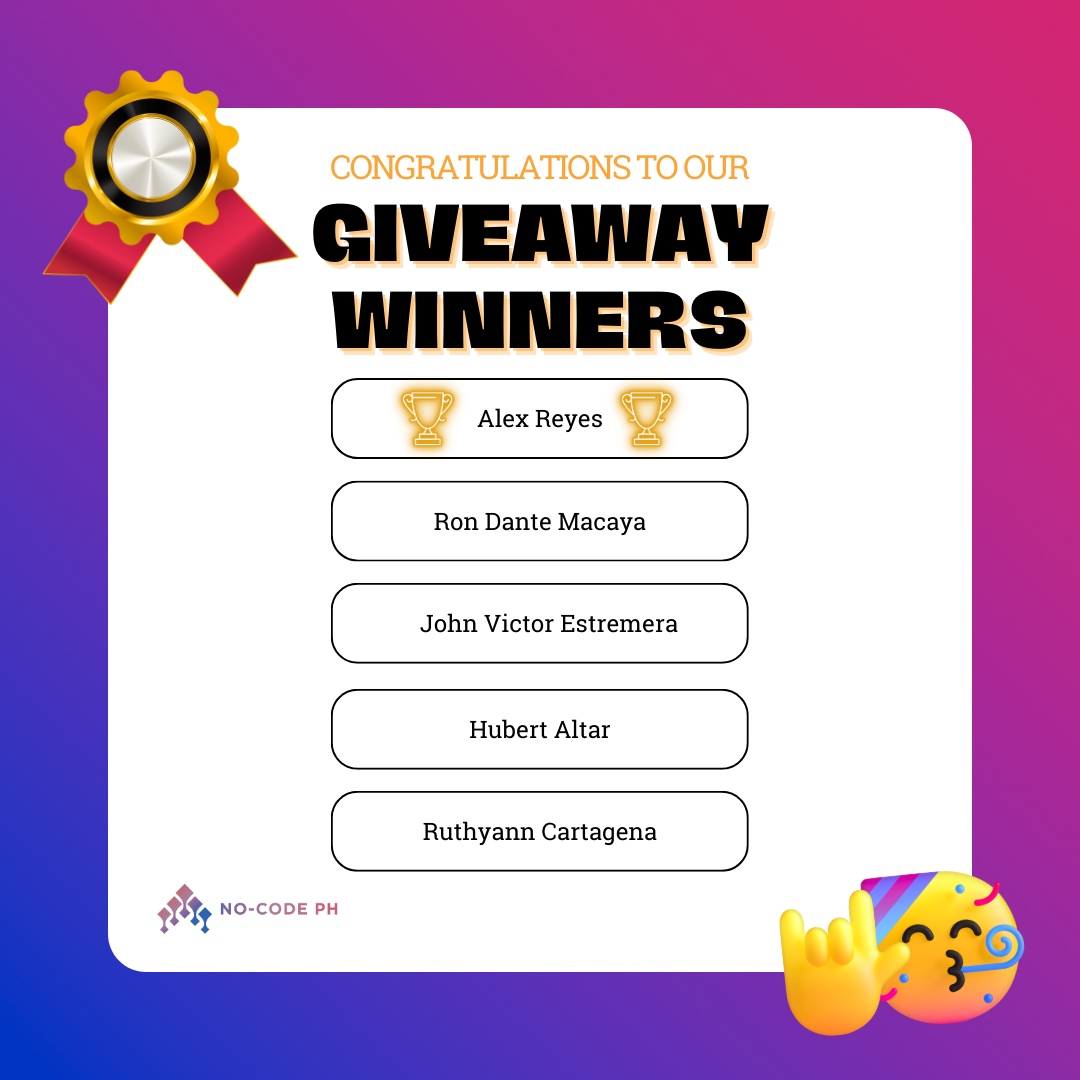
Hats off to all the incredible participants of our survey and special congrats to our lucky random giveaway winner! ✨👏 🎉
#NoCodePH
1
1
222

1 May 2023
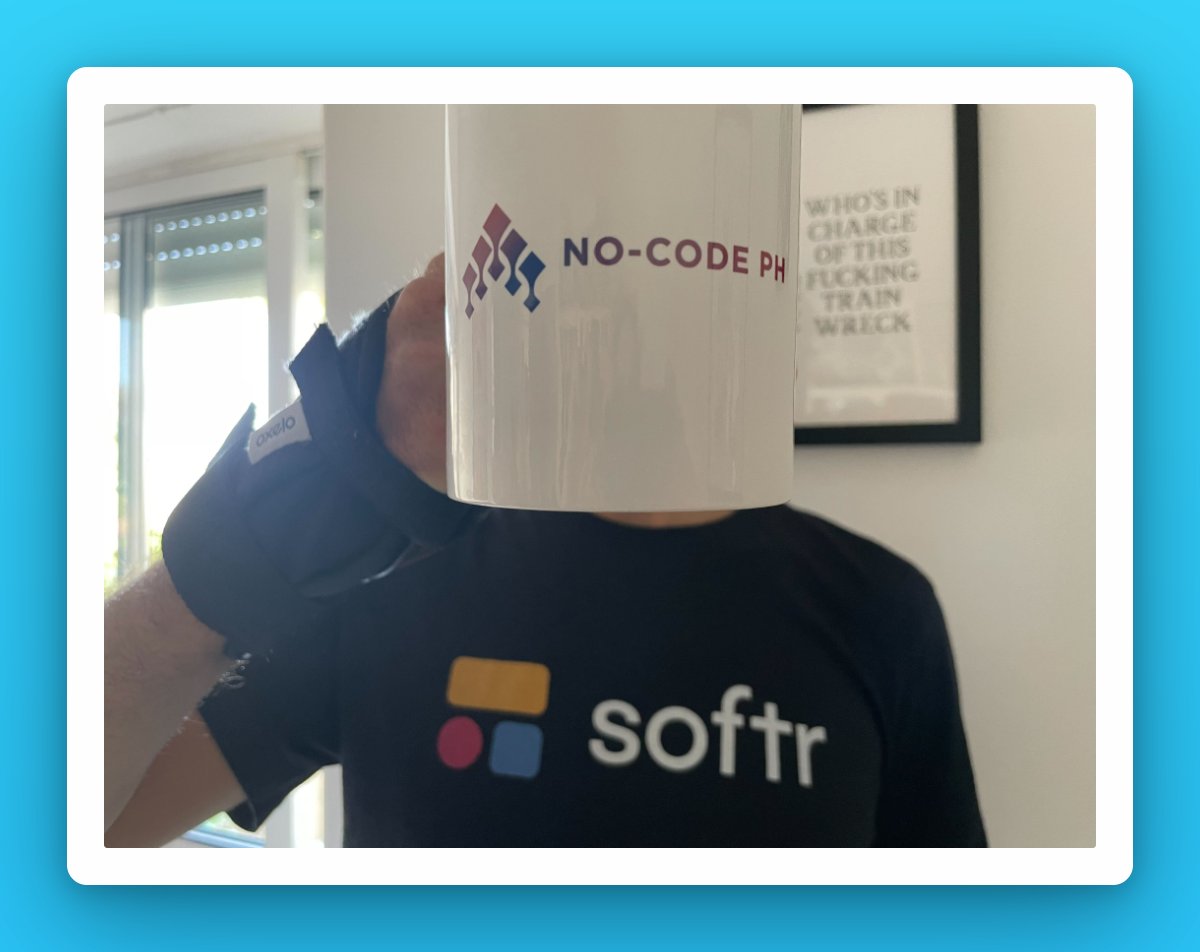
@UpPrompt was born as a pet project to be used in a @softr_io workshop for @NocodePH and their #003xSoftr challenge.
Kudos to @crystalcamarao and team, inspiring what they’re doing for the Filipino community
Not to mention this amazing cup just got on the mail :-)
1
2
4
277

14 Jan 2023
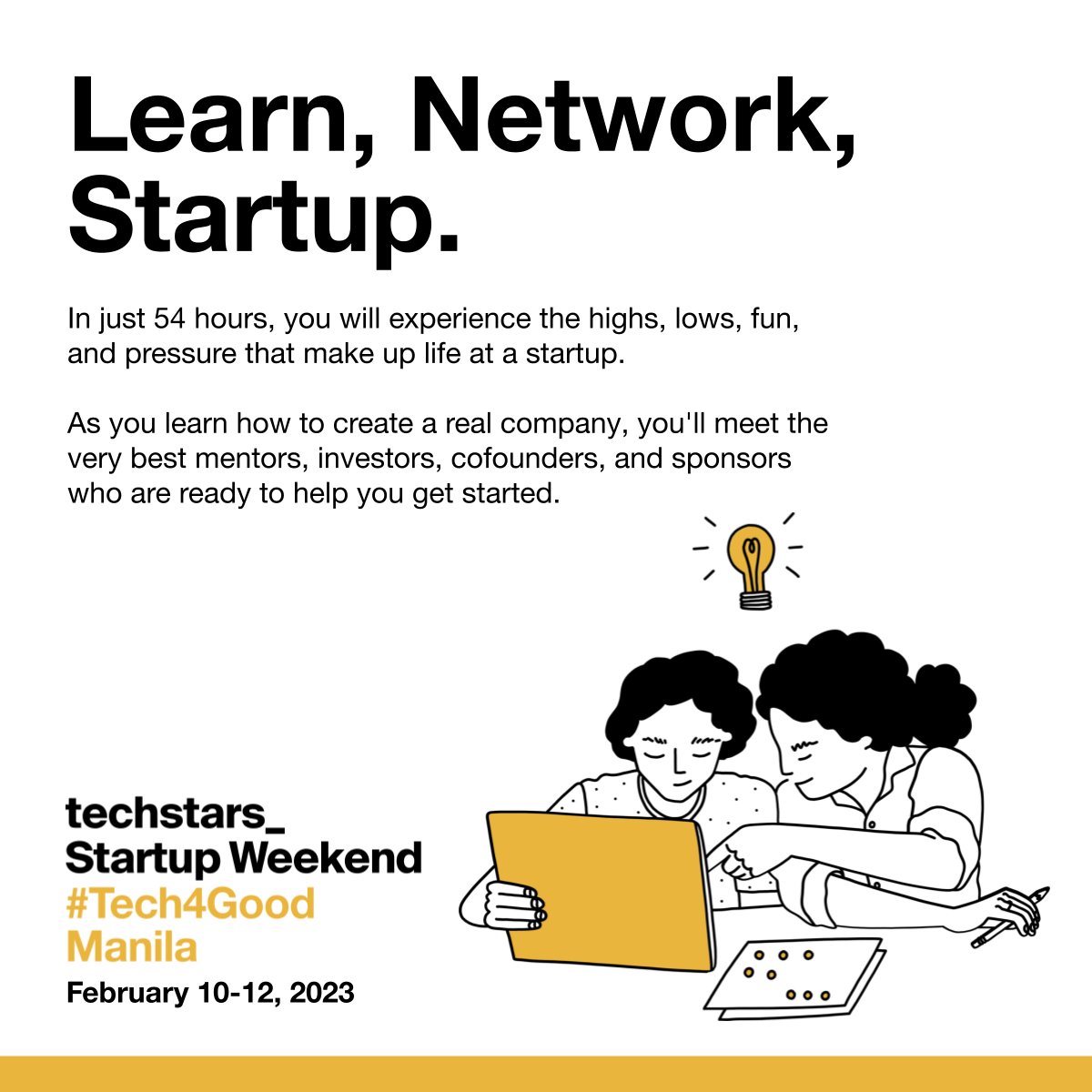
We’re inviting you to join us in Techstars Startup Weekend Manila! This is a three-day program where aspiring entrepreneurs can experience startup life.
For more info and to register: bit.ly/SWManila-2023 & use #NocodePH promo code SWM23NoCodePh
1
4
451



5 Jan 2023
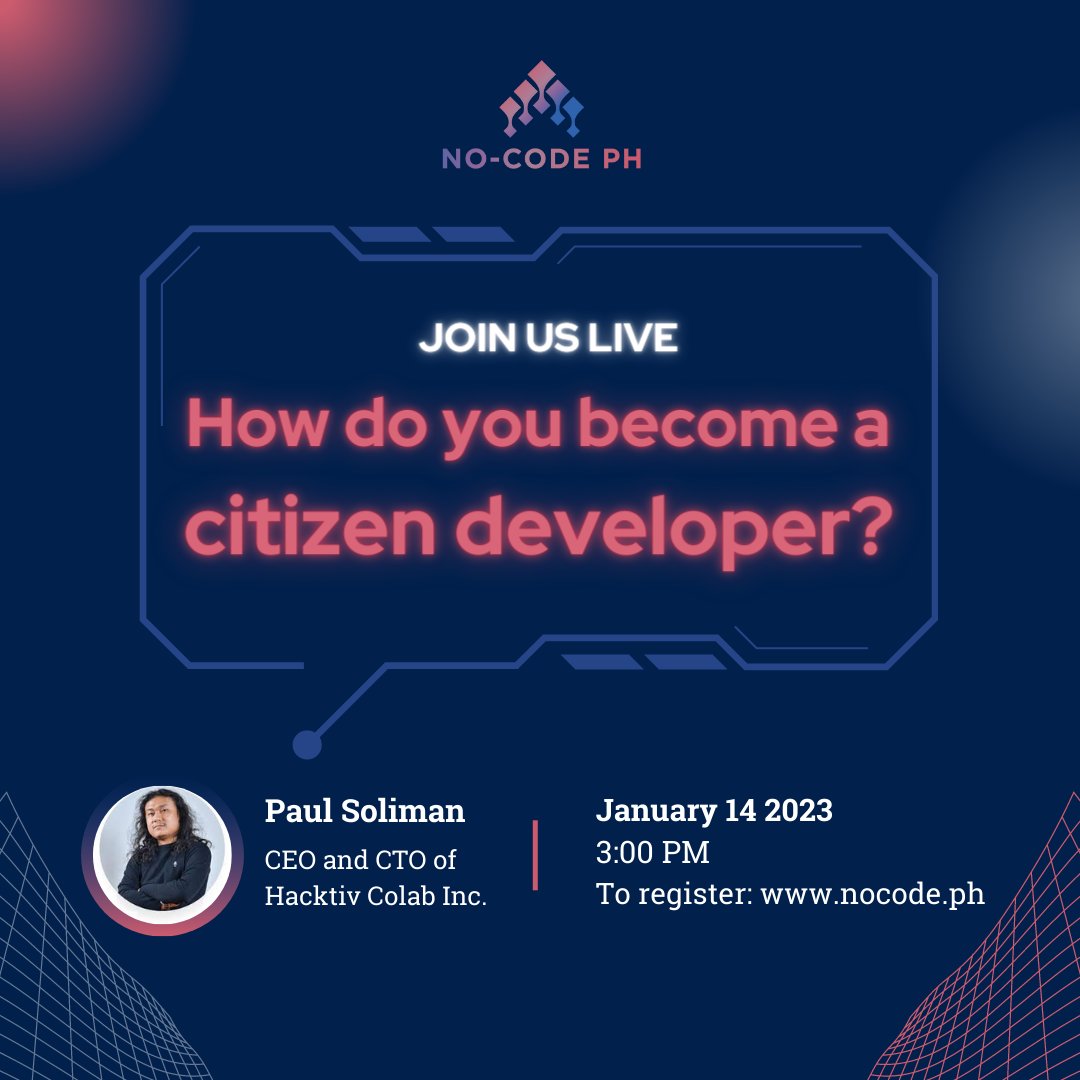
“Super excited about @NocodePH being selected for a community event on this year’s PH Startup Week. Here’s to more Filipinos discovering and utilizing #NoCode !”
– @crystalcamarao
1
92
27 Dec 2022
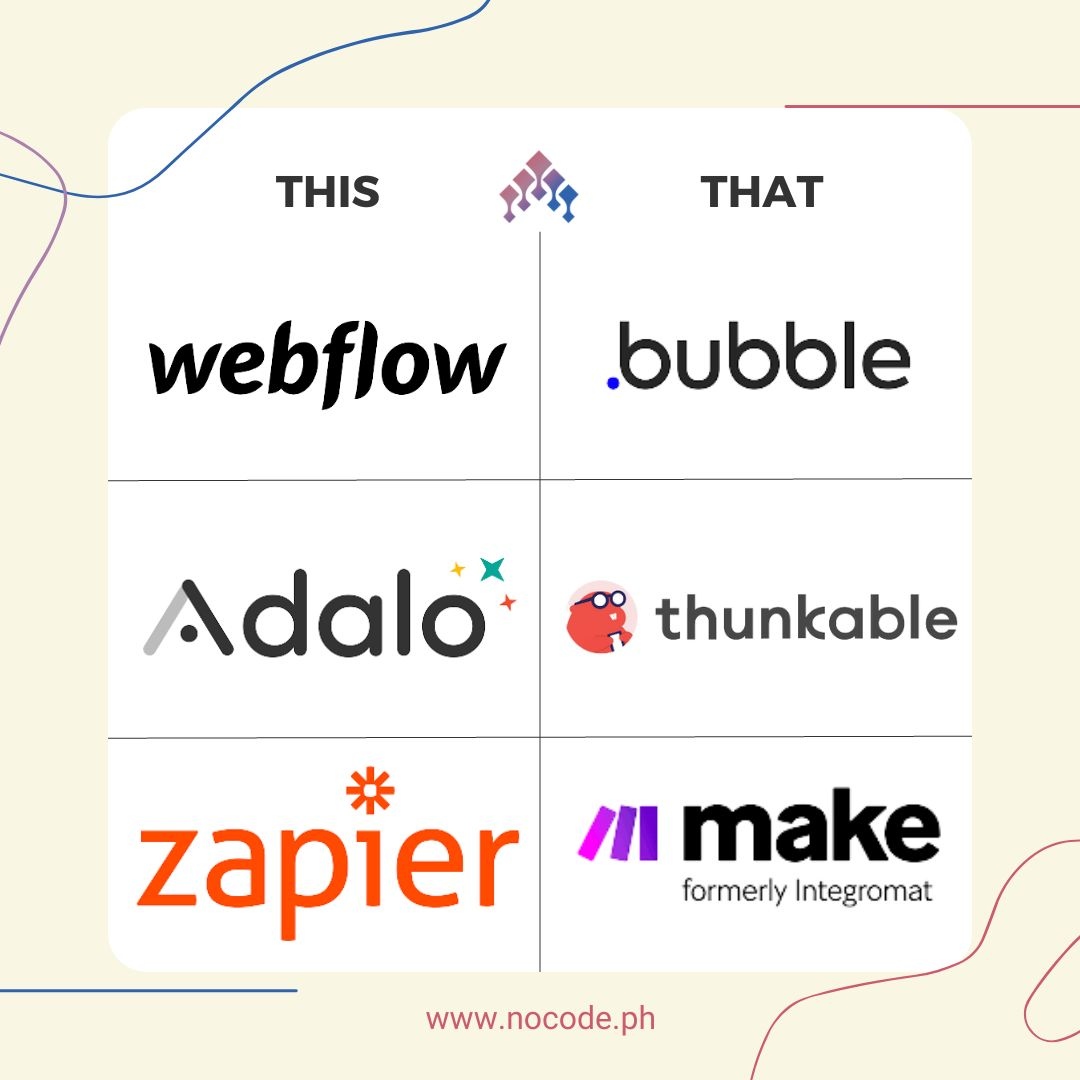
Which of these no-code platforms are you currently exploring? 🤔
#NoCodePH #nocode #lowcode #tech #webapps #mobileapps #technology #automation #integration #nocodetools #nocoders #nocodemovement #founders #techie #techgeek #techpreneurs #innovation
3
168

24 Dec 2022
I’ll start—I have 3:
1. @EstelStudio helped launch an app used by tens of thousands of users
2. @NocodePH held its first ever in-person event
3. @3ThingsDailyApp got 700 posts
2
209


12 Aug 2022
S/O to these amazing NoCoders!
@DrafterAI
@JJEnglert
@NocodePH
@LevityAI
@OctokingB
@AlloyAutomation
@nocodify
1
1
2