
🟣 Whose voices are missing in the Kosovo–Serbia Normalization Dialogue?
We’re pleased to share a new analysis by Anja Jokić, developed as part of the Kosovo Interethnic Dialogue and Integration Initiative (KINDI), supported by the Robert Bosch Stiftung.
The piece takes a closer look at something often overlooked. While the normalization dialogue is meant to shape the future of communities, women and young people remain largely excluded from it.
Despite strong commitments under the Women, Peace and Security (WPS) and Youth, Peace and Security (YPS) agendas, their meaningful participation in the process is still limited. As a result, key perspectives — especially those closest to everyday realities — are missing.
The op-ed argues that this is not just a matter of inclusion, but of effectiveness, as it 👉 sustainable peace is difficult to achieve if it does not reflect the voices and needs of the people it affects.
At a time when the normalization dialogue remains stalled, this is a timely reminder that how peace is negotiated matters just as much as what is agreed.
#Peacebuilding #KosovoSerbia #NormalizationDialogue #EU qkss.org/al/publikimet/littl…
3
94

UK Foreign Secretary in Pristina: Supporting Kosovo’s Council of Europe Membership and Normalization with Serbia
#KosovoUKRelations #NormalizationDialogue #KosovoInCoE
rks.news/uk-foreign-secretar…
2
123

30 Jan 2023
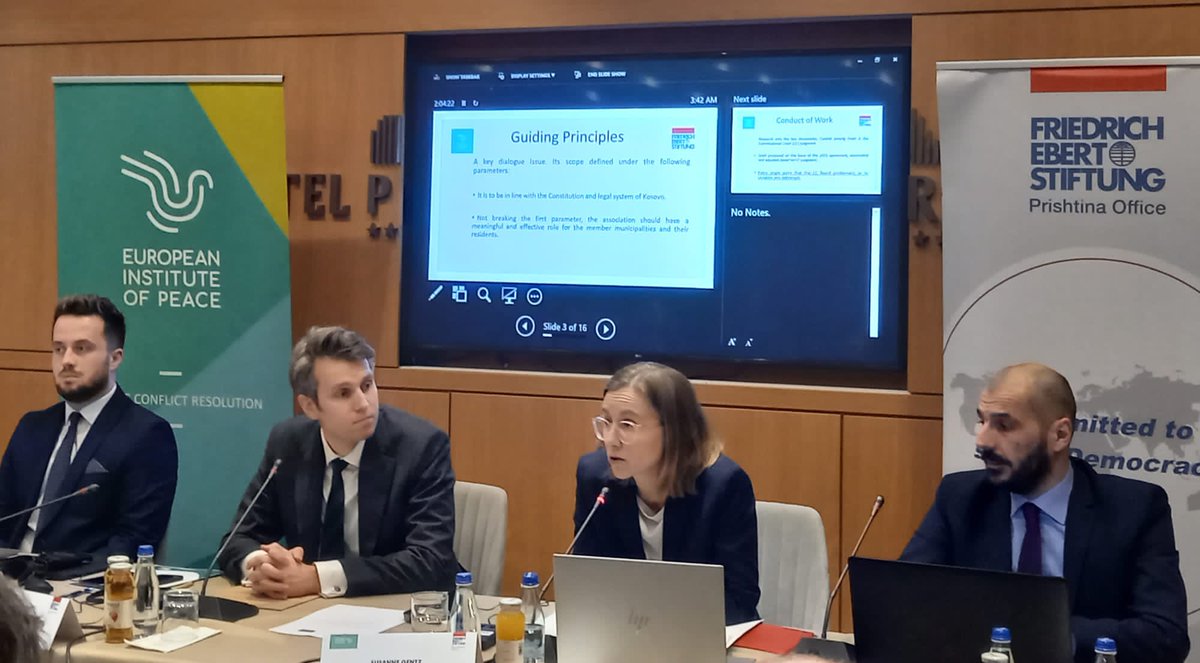
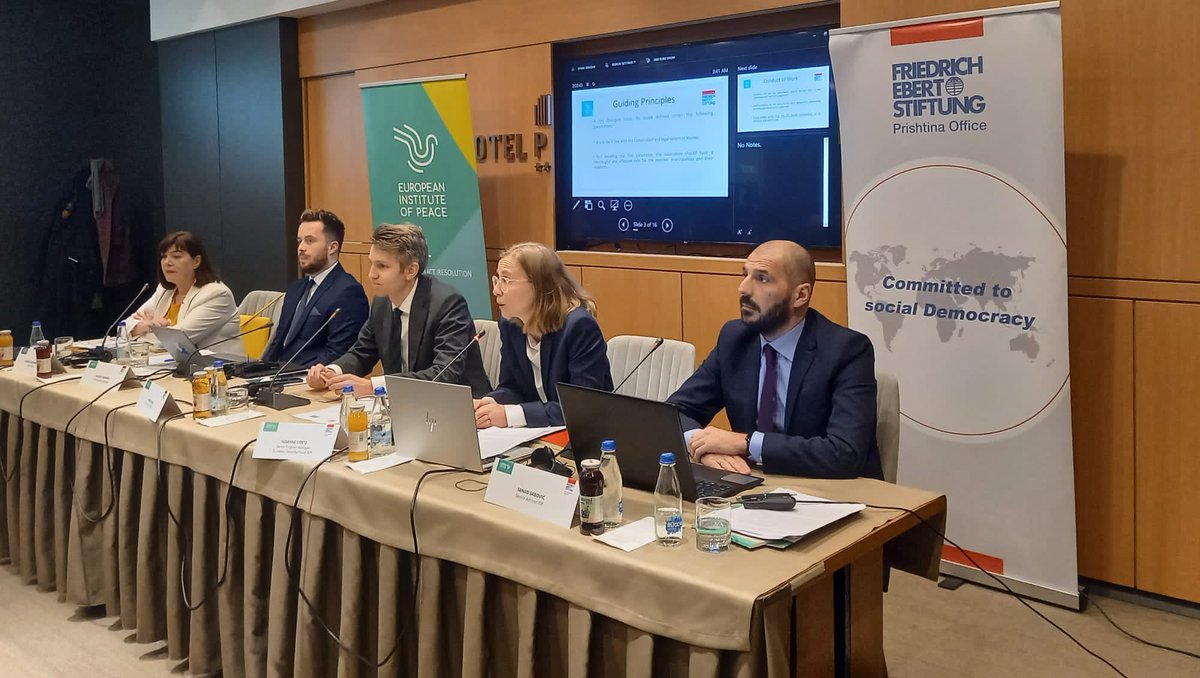
Public presentation of a joint @Eurpeace and @FESonline's Kosovo Office's proposal for the statute of the Association/Community of municipalities in which #Kosovo Serbs are in majority; a platform for a subject-matter public discussion on a key #NormalizationDialogue issue.
1
5
15
2,629

23 Apr 2021
The time is right to continue the #NormalizationDialogue. It would also be a step from which economic opportunities emerge. What is important now: dialogue must not be pursued for the sake of dialogue. It must provide results. – FM @HeikoMaas
2
1
9