Jun 14
This has been around on helicopters for at least 10 years now. Leonardo Helicopters fit the OPLS Lidar system to their helicopters and Airbus Helicopters have the H-Claris system.
1
60


Jun 13
Massage
in
Jeddah
Buraydah
Hofuf
khobar
🌶️🥃Russia wa.me/ 966564369596
Massage in riyadh 24/24
مساج في الرياض
في جدة الخبر
الدمام
#massage_in_riyadh_now
#massage_in_riyadh
#massage_in_riyadh_at_home
OPLS

5


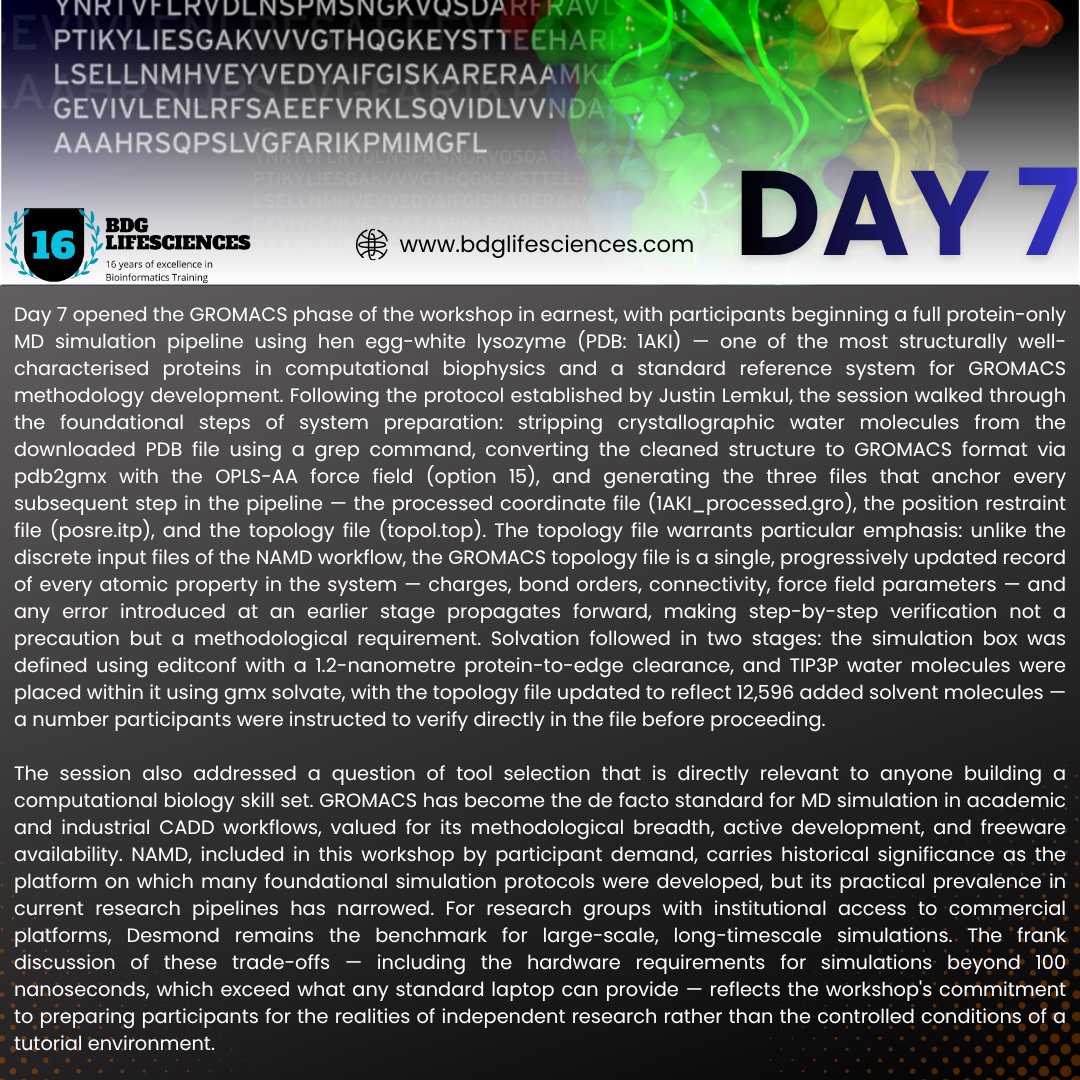
Day 7 of the #MDSimulation workshop: #GROMACS phase begins. Lysozyme topology generated with OPLS-AA, water box solvated with 12,596 TIP3P molecules, topology file verified at every step.
This is where most MD courses start. This workshop is already on Day 7.
7


Jun 2
Sin embargo, es una práctica normalizada y común en todos los OPLs, así como cualquier administración pública, al parecer el INE no se salva de eso.
Eso pasa cuando los cargos son para favores políticos y no para un buen ejercicio de la función pública.
1
2
155

Jun 2
Please check with your dad! He should be able to answer how he handle it with your mother.. opls sorry I mean to say your mother’s husband. The uncle who brought you up and give you the internet asscess who you can post the craps out from your S!
2
15

May 30
El reparto político de puestos en el INE y los OPLs es algo normalizado, muchas personas no están ahí por tener la mejor preparación, sino por llevarse con las consejerías en turno, lo cual es darse un tiro en el pie, porque es empezar de cero con tal de pagar deudas políticas.
3
21
1,200

May 29
Bridging quantum mechanics and liquid properties with a learned force field
Predicting how a liquid actually behaves from first principles is one of the oldest goals in computational chemistry. Molecular dynamics can get you there, but only if the force field underneath is accurate. The catch is that classical force fields like OPLS or AMBER lean on error cancellation and need experimental tuning, while pure machine learning potentials demand enormous quantum datasets and often stumble when asked to predict bulk properties they never saw in training.
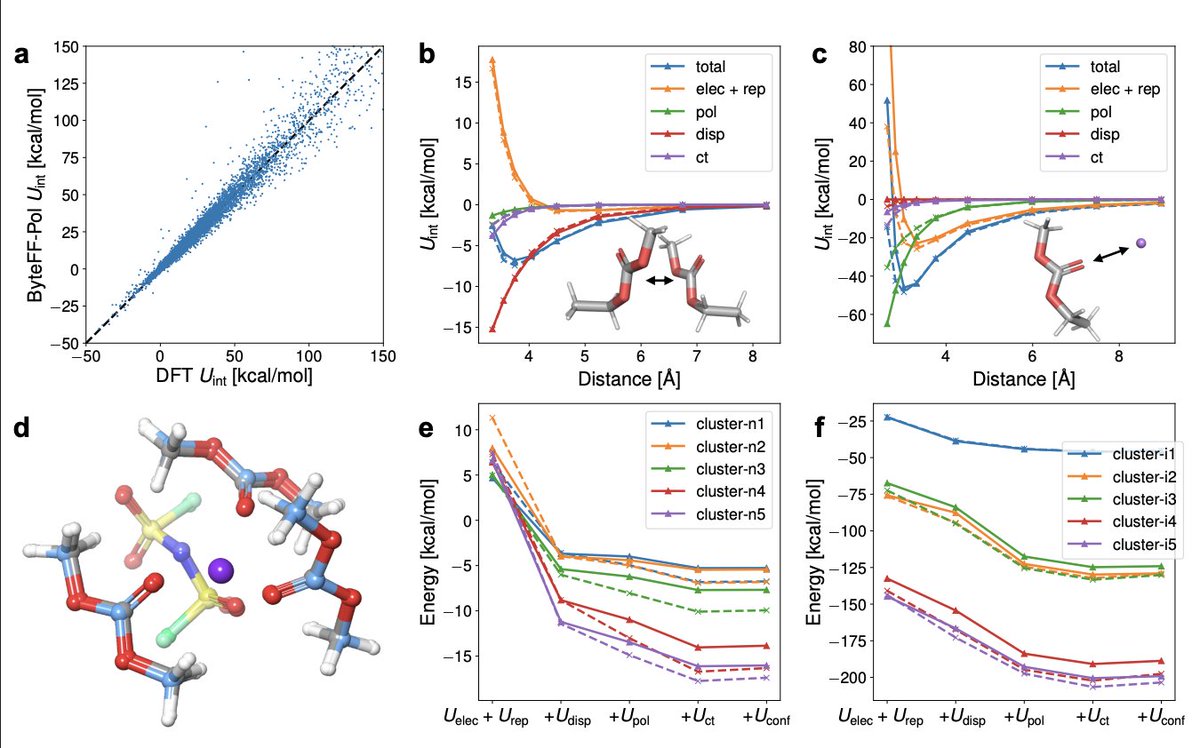
Tianze Zheng and coauthors take a different route with ByteFF-Pol. Instead of learning energies end to end, they train a graph neural network to predict the parameters of a physically motivated, polarizable force field directly from a molecular graph. The network is fit to decomposed interaction energies from ALMO-EDA quantum calculations, so each learned term maps onto a real physical effect: repulsion, dispersion, electrostatics, polarization, and charge transfer. Training used roughly 60,000 molecular dimers across nine common elements, with no experimental data at any stage.
The payoff is transferability. Trained on fewer than 400 molecules, ByteFF-Pol predicts densities for over 2,000 distinct liquids, because it learns atomic chemical environments rather than memorizing whole structures. It matches or beats established force fields on density and evaporation enthalpy, and on a benchmark of nearly 5,000 lithium electrolyte systems it reaches a Pearson correlation of 0.95 for conductivity, with the lowest error of any method tested. It also runs fast, around 40 ns/day for a 10,000-atom system on a single GPU, far quicker than typical ML potentials.
This is the part that matters: a force field that needs no experimental calibration lets you screen electrolyte formulations, solvents, and candidate liquids computationally before anyone touches a lab bench. In battery development, custom solvent design, and early drug formulation work, that means searching chemical spaces too vast to test by hand and narrowing the experimental loop to the few candidates actually worth making.
Paper: Zheng et al., Nature Communications (2026) — CC BY-NC-ND 4.0 | doi.org/10.1038/s41467-026-7…
1
9
45
2,061

istill dont know what to draw oomfs opls helpme😭😭😭😭😭😭😭😭😭😭
8
124

May 6
🗨️Los OPLs organizan elecciones locales y sostienen el engranaje democrático en las entidades, en 2026 renovarán 23 cargos en 14 organismos: ¿estamos siguiendo de cerca quiénes integrarán estos órganos clave? ✍️@NormaIreneD @OpinionLSR lasillarota.com/opinion/colu…
1
314