
May 8
🚀 Great news! The BVS technical team has released the project contract code and white paper, among other important information, on GitHub!
🔍 Community members are welcome to check it out and learn more about our project!
💡 Click the link to explore more: [BVS GitHub]
github.com/bvs-vkey/BlockVer…
#BVS #Blockchain #OpenSourceCode #CommunitySharing
2
128

I just made my portfolio codebase public on GitHub! 🚀 Built with Next.js 16, SEO-tuned, and a slick Hashnode integration (ditch the CMS). 30-min setup, MIT for code content protection. Fork & build yours: github.com/KOUSTAV2409/mypor… #NextJS #Portfolio #opensourcecode
1
4
70

8 Dec 2025
Been running EvalView tests on my own agents all week. Reminded me why I built it in the first place: The agent that works perfectly 20 times will absolutely betray you on try 21.
#opensourcecode #aiagent #langchain #indiehackers
2
72

26 Nov 2025
A new #HackWeek project is rethinking how the #openSUSE community handles membership. openSUSE Lounge aims to streamline member tracking, improve #election prep, and reduce manual effort. #Linux #opensourcecode news.opensuse.org/2025/11/26…
6
32
1,941

24 Nov 2025
HarmonyONE is blessed to have @blockscout Technology #opensourcecode Explorer
24 Nov 2025

Open data works best when it stays open
Blockscout explorers and APIs are fully open source, multichain, and designed for builders who want reliability
Explore the API Docs:
docs.blockscout.com/devs/api…
5
16
271

17 Nov 2025
There exists an idea and I want to make it opensource. How can I do it with a provider like Github?
#buildinpublic #opensourceproject #opensourcecode
1
69

16 Nov 2025
Been watching #HaltAndCatchFire recently and has the sudden urge to make something that really is gonna make a difference. The next best thing on the shelf..
Me and @brianroymathew looking for people to do this with
#OpenSource #opensourcecode #GitHub #opensourceproject

1
56

14 Nov 2025
Spot on, @ComfyUI—this isn’t just about one clip; it’s the lifeblood of open-source AI. As a founder knee-deep in creator tools, I’ve seen magic born in subreddits like yours get turbocharged by big accounts… but only if credit flows back. @venturetwins, love your hype for AI vids—let’s make it a full-circle win: full video pro handles next time? Creators like @VisualFrisson are why we innovate. Who’s with me on a ‘Credit First’ pledge? 🚀 #AICreators #opensourcecode

Calling out, a partner at A16Z moving content from ComfyUI subreddit to her account. Didn't ask original artist for permission, didn't credit or link back to original community, and conveniently cut out the last part of the video which shows the artist credit.
$50 billion fund, don't care to credit and give back to a small open source AI community, while claiming to be pro AI creator. Happened so many times in the past. Just sad.
1
2
165

7 Nov 2025
You can also download the latest version of #dogechat for Android from the GitHub Releases page.
Github Instructions: Go to Releases section, linked below github.com/GreatApe42069/dog…
Download the Newest APK v0.9.5 : On your Android device, navigate to the link above and download the latest .apk file. - Open it.
Allow Unknown Sources: On some devices, before you can install the APK, you may need to enable "Install from unknown sources" in your device's settings.
*This is typically found under:* Settings ->
Security or Settings ->
Apps & notifications ->
Special app access.
To start Install: Open the downloaded .apk file to begin the installation... MUCH LFG!!
#dogechat
#opensourcecode
2
27

2 Nov 2025
Let's connect if u are from this field
1. Tech
2. Designer
3. Web3
4. Blockchain
5. open source contributor
#techhub #Connectivity #DEFİ #OpenSource #opensourcecode #Web3Builders #Blockchain @BiiGMYLES @_supremacy @binance @web3_events @_supremacy
1
150

2 Nov 2025
They said open systems could never outrun secrecy. Then ROMA showed up.
Think back to Linux in the 90s. A bunch of volunteers building what tech giants dismissed as a hobby project, until it quietly became the backbone of the internet. Its power wasn’t funding. It was openness in action.
@SentientAGI ROMA (Runtime-Optimized Model Architecture) is proof that open design beats closed silos. It carries that same energy into AI. This isn’t just a system that executes models; it’s a runtime core built for speed, transparency, and verifiable scaling. In an era of “trust us” APIs, ROMA shows it workings.
Closed systems protect secrets. ROMA protects integrity.
Like Linux, it proves that the highest performance comes from open Participation.
@LeaderX_btc @ZhugeLyang
#SentientAGI
#ROMA
#opensourcecode
#artificial_intelligence
56
1
70
739

1 Nov 2025
Day 8 of #100DaysOfCode
Wrapped up revising the core concepts — feeling confident with the basics now!
Starting my Backend development journey from tomorrow
#GoLang #Backend #DevJourney #opensourcecode
2
82

21 Oct 2025
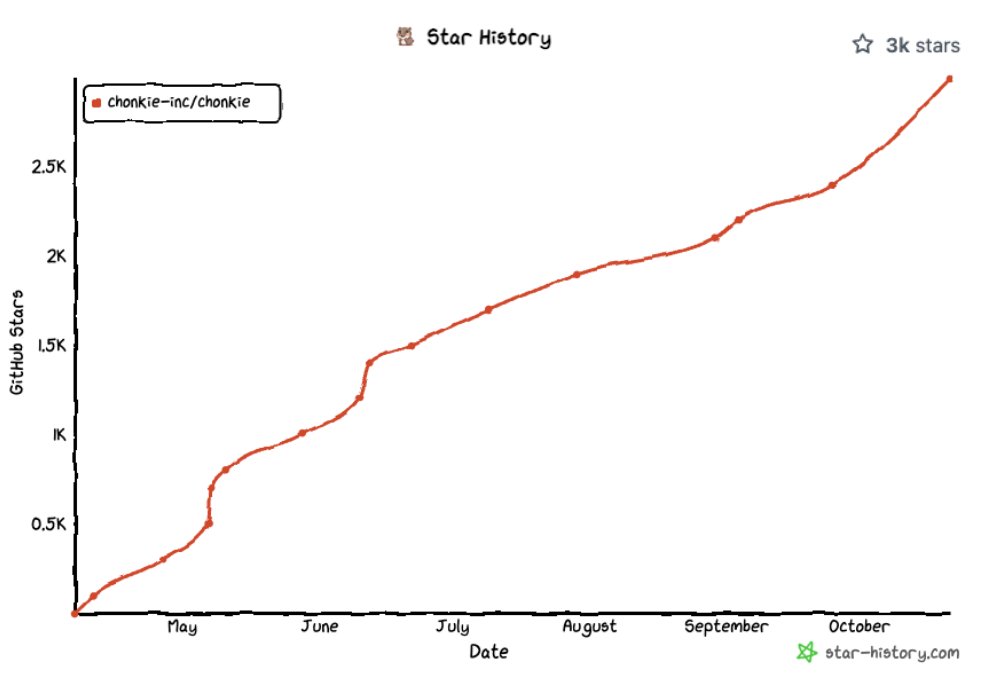
🎉 3,000🌟 for Chonkie!
Huge thanks to the amazing community for all the support—here's to many more milestones together!
#Chonkie #opensourcecode #Python
1
1
13
2,288

21 Oct 2025
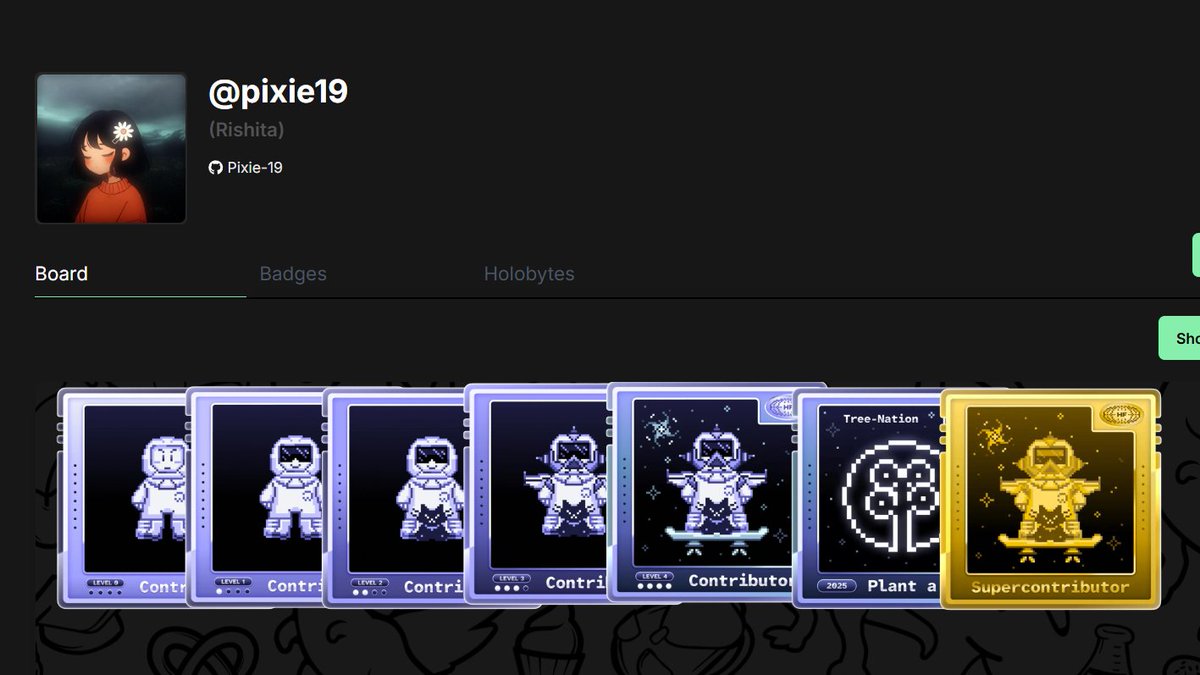
Finally, I’m a Supercontributor of Hacktoberfest 2025!
Got to learn a lot. It was my first open source experience.
@hacktoberfest #opensourcecode
1
5
126

OML 1.0 is a complete game-changer for open-source AI.
🔹 It can embed 24,000 invisible keys in models like Llama-3.1 — that’s 100× more than before, with no drop in performance.
🔹 These keys can survive fine-tuning, merges, and even attacks — basically unkillable.
🔹 The fingerprints stays hidden until triggered — ideal for proving model ownership.
🔹 And now, open models can finally be secure and monetized.
@SentientAGI raised the bar Open-source.
Watch out for Unbelievable Democratisation of AI
#AI #OpenSource #opensourcecode gSenti
1
2
48

16 Oct 2025
Yesterday, when I was writing a post about how to implement models, I paused for a second. So, if the code is open source, and you conditionally post your work on GitHub so that other users can check it and say whether everything is okay. At that very moment, anyone can take your code, modify it a little, or retrain the model, and then claim authorship. That's not fair! So today I'm going to tell you about OML, a tool that allows you to not worry about someone stealing your model. Sit or lie down comfortably and start listening!
------------------------------------------------------------
The current paradigm for distributing AI models faces a fundamental contradiction: models are either closed and accessible only through APIs, which limits transparency and local execution, or they are distributed openly, which deprives owners of monetization and control opportunities. We present OML (Open-access, Monetizable, and Loyal AI Model Serving), a primitive that enables a new distribution paradigm in which models can be freely distributed for local use while retaining cryptographically secured usage permissions.
------------------------------------------------------------
In short, OML is a thing that uses fingerprints. When looking at the open source code, you may not notice it right away, but OML assigns its own code to the model, and if you suspect that your model has been stolen, you can call up this 32-digit code, and if it matches, the copyright is yours! And yes, OML cannot be bypassed by combining models or tampering with them in any way. This code remains in the model anyway. By the way, I wrote in a comment when I read @LeaderX_btc thread about OML that ,it reminded me a lot of a car's VIN code. If a thief steals a car, the police can simply look at the VIN code, which is well hidden in the car.
------------------------------------------------------------Also, OML introduces a control plane alongside the data plane, which is responsible for inference.
The control plane manages keys, verifies policies, and supports attestations. Each model launch is accompanied by a signed execution manifest (indicating who, what, and where) and an audit log that can only be appended to.
In OML, this allows you to:
📜Control who runs the model and with what permissions
📜Check compliance with policies (e.g., prohibiting certain types of requests)
📜Keep an audit log
📜Verify the origin of the model through fingerprints
Imagine a restaurant🐔
The kitchen is a data plane. This is where dishes are prepared (model inference). Everything happens quickly, according to recipes, and the result is a finished dish.
The restaurant manager and the ordering system are the management plane. It:
Checks who placed the order (authorization)
Takes into account which dishes are allowed (policies)
Keeps a log of orders (audit)
Can confirm that the dish was prepared in this particular restaurant (fingerprints)
The kitchen can operate without a manager, but then anyone can come in, take a recipe, change it, and no one will know where and by whom it was used. With a manager, everything is under control.
------------------------------------------------------------
The breakthrough of OML in the fact that its Open, Monetizable, and Loyal architecture provides developers and researchers with:
the ability to freely distribute model weights for scientific, educational, and public initiatives; the ability to track model usage and support sustainable economic mechanisms; the ability to enforce behavioral and policy rules established by the community or model owner.
In short; very cool stuff which allows you to publish open source code of the model without fear that someone will steal it.
#Sentient #OML #opensourcecode
3
13
238

14 Oct 2025
Always feels good seeing you name with these awesome folks...... #OpenSource #opensourcecode
3
5
437

14 Oct 2025
Just before SWOS 25/26 drops, another banger... SWOS is #opensourcecode ! 💾🌎⚽️
github.com/zlatkok/swos-port (Port)
github.com/starwindz/origina… (Original 96/97 AMIGA ASM code)
If you would like to join the team for SWOS 2020, find us on discord, join the dev-channel (link on GitHub).

2
14
111
4,567

Finished building a HD-wallet !!
1. Optimised for desktop
2.Create your own public private keys for
#Solana and #Ethereum wallets!!
Will post a live link of a more refined version of it soon.
#Web3 #WebDev #buildinginpublic #opensourcecode
4
134

21 Sep 2025
Neue Ransomware-Gruppe Yurei: Open-Source-Code erleichtert weltweite Angriffe
Check Point Software Technologies warnt vor einer neuen Ransomware-Bedrohung namens Yurei, ein Begriff aus der japanischen Folklore für rastlose Geister.
Die technische Basis der Angriffe verdeutlicht eine gefährliche Entwicklung: Yurei nutzt nahezu unverändert den öffentlich verfügbaren Code des Open-Source-Projekts Prince-Ransomware, der in der Programmiersprache Go geschrieben wurde. Diese frei zugängliche Codebasis senkt die Hürden für Cyberkriminelle drastisch
#CheckPoint #Cybersecurity #Cybersicherheit #OpenSource #OpenSourceCode #Ransomware #Security #Yurei
netzpalaver.de/2025/09/19/ne…
19 Sep 2025

Neue Ransomware-Gruppe Yurei: Open-Source-Code erleichtert weltweite Angriffe
@CheckPointSW #Cybersecurity #Cybersicherheit #OpenSource #OpenSourceCode #Ransomware #Security #Yurei
netzpalaver.de/2025/09/19/ne…

3
5
265