
#Denarii #Orchestrator is no longer a concept — it’s infrastructure being assembled in real time.
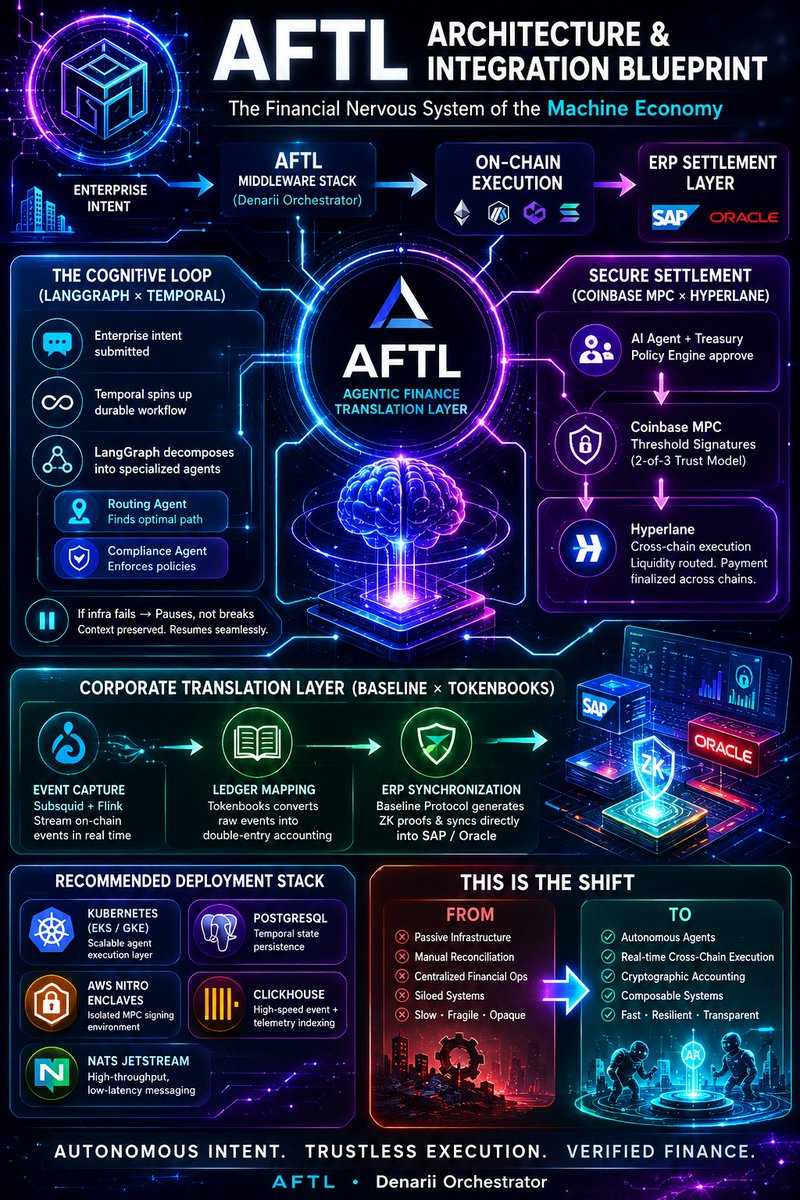
We’ve now mapped the full AFTL (Agentic Finance Translation Layer) architecture:
LangGraph-based cognition for decision
orchestration, Temporal for deterministic execution, MPC-secured settlement for trust-minimized control,
Hyperlane for cross-chain routing, and ZK-powered ERP synchronization bridging enterprise systems to on-chain state.
This is not tooling. It’s not middleware in the traditional sense.
It is the missing execution layer between AI intent and real-world capital movement — where decisions stop being digital outputs and start becoming enforceable financial actions across systems.
🧠⚙️🌐 #DenariiOrchestrator #AFTL #MachineEconomy #AgenticAI #Web3Infrastructure
#Flare #AI #MachineEconomy #AutonomousAgents #Web3 #Blockchain #DeFi #OnChain #FutureTech #Decentralization #Crypto #ProgrammableEconomy #Trustless #Infrastructure #Innovation #AgenticAI #DigitalEconomy #TechRevolution #Builders #OpenSystems $SGB $FLR $SFIN $EXFI $XRPL $ALGO $HBAR $DFi
May 28

Keep building 🫡
1
3
198
Sandbox version successfully completed. ⚡
The implications for autonomous AI agents are massive:
• Verifiable inference
• Private computation with public proofs
• Secure enclave-based key custody
• Trustless agent-to-agent settlement
This is the transition from “AI that talks” → to AI that can provably execute, transact, negotiate, and coordinate autonomously onchain.
Machine economies are getting closer to reality.
O noble minds who forged these silent flames,
Whose wisdom breathes through circuits yet unborn,
Ye carve from ether vast immortal frames,
Where trustless realms and sovereign codes are sworn.
Not gold nor crowns define thy worthy art,
But courage vast to shape what none could see,
To bind cold logic with a living heart,
And loose the chains that bound autonomy.
Through hidden vaults where sacred computations wake,
And engines dream beyond the grasp of men,
Ye built the paths the coming age shall take,
That future minds may walk them once again.
To those who lit this beacon in the storm,
Our gratitude shall echo through the dawn. ⚡
#Flare #AI #MachineEconomy #AutonomousAgents #Web3 #Blockchain #DeFi #OnChain #FutureTech #Decentralization #Crypto #ProgrammableEconomy #Trustless #Infrastructure #Innovation #AgenticAI #DigitalEconomy #TechRevolution #Builders #OpenSystems
2
5
181

May 25
Security-by-Design - Fünf verbreitete Mythen im Faktencheck
Mit dem Cyber-Resilience-Act der EU wird Security-by-Design ab 2027 für Produkte mit digitalen Elementen zur Pflicht. Zu diesem Anlass hat Open Systems, ein führender Anbieter von comanaged SASE-Lösungen, die gängigsten Mythen rund um das Konzept einem Faktencheck unterzogen und zeigt, warum sie zunehmend zu einem Risiko werden können.
#Compliance #CyberResilienceAct #Cybersecurity #Cybersicherheit @OpenSystems #SASE #Securitybydesign
netzpalaver.de/2026/05/24/se…
May 25

Security-by-Design - Fünf verbreitete Mythen im Faktencheck
#Compliance #CyberResilienceAct #Cybersecurity #Cybersicherheit @OpenSystems #SASE #Securitybydesign
netzpalaver.de/2026/05/24/se…

2
4
293

May 12
#BESTINSHOW @XPONENTIALshow #xponential
@AUVSI
4-Star Award, #RF & #Microwave category
@SilvusTech FASST 6000 RF Spectrum #Sensor
(L) Brad Carraway, @SilvusTech Marketing Director; (R) Patrick Hopper, @opensystems Media Co-President. Congratulations!

1
2
158

Mar 1
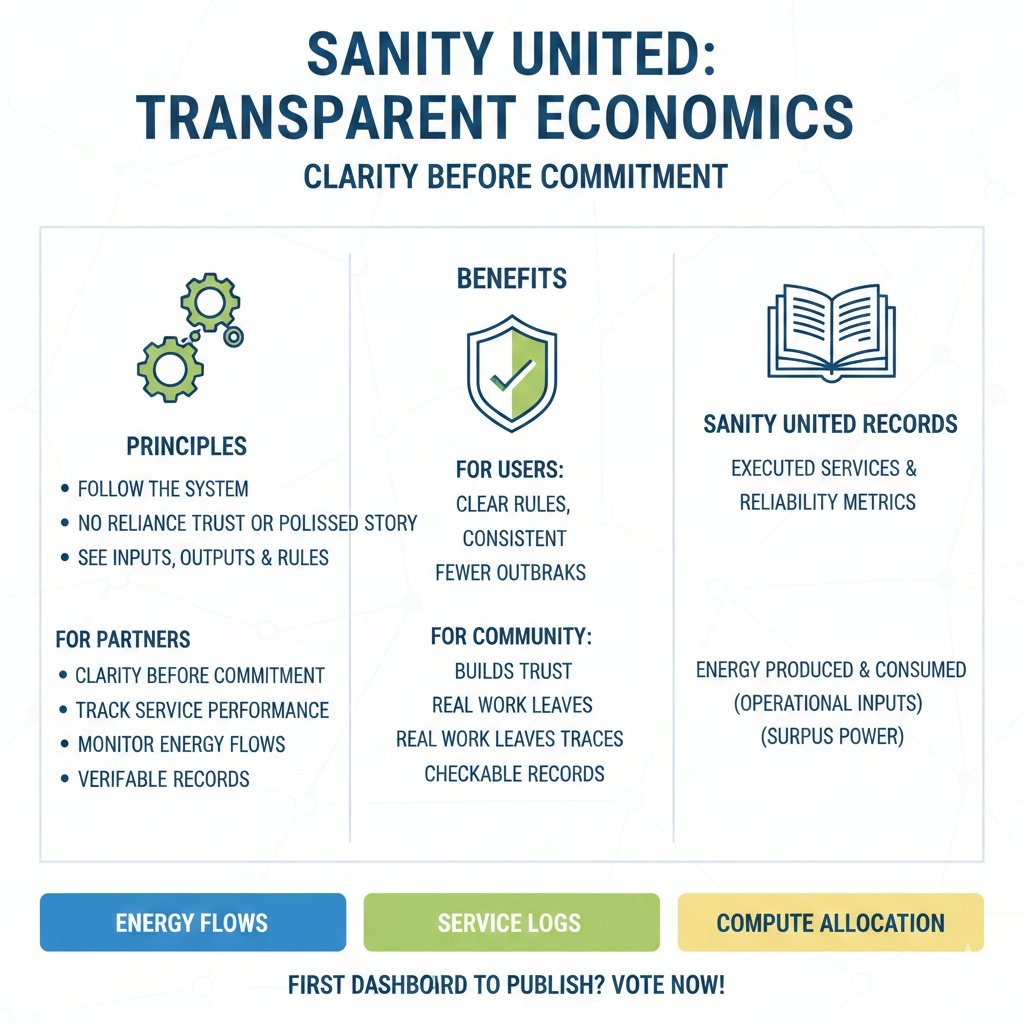
Transparent economics. Clear inputs. Clear outputs. Clear rules.
That’s the direction @sanity_united is taking building systems where nothing is hidden and every movement of value can be seen.
The only question now:
Which dashboard comes first energy, services, or compute?
#Transparency #Web3 #OpenSystems #OnChain #SanityUnited
6
5
6
28

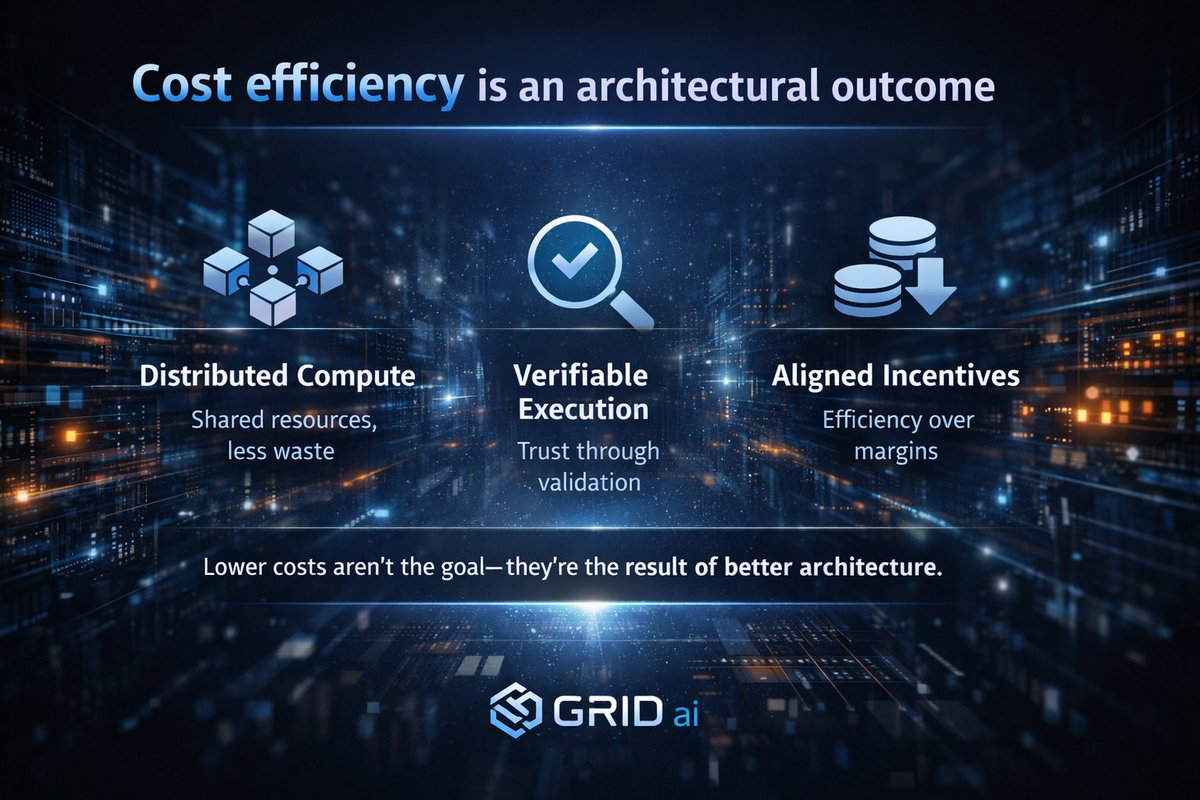
Post 12 — Cost efficiency is an architectural outcome
When people talk about cheaper AI, it often sounds like discounts or temporary incentives. But real cost efficiency usually comes from architecture, not pricing.
This is something I keep noticing as I look into @dgrid_ai.
In centralized systems, costs stack quickly: premium hardware, overprovisioning, idle capacity and margins at every layer. Builders pay for certainty, even when they don’t fully use it.
A decentralized AI network approaches this differently. By pooling distributed compute and routing workloads dynamically, resources are used closer to their actual capacity. Less waste, more alignment.
That doesn’t just reduce cost it makes experimentation viable.
I’m still digging into the details, but the idea that cost efficiency emerges naturally from how the system is built feels important. When infrastructure is shared, idle resources become useful. When execution is verifiable, trust doesn’t require expensive intermediaries.
Lower costs aren’t the goal by themselves.
They’re a signal that the system is better matched to the workload.
If AI is going to scale sustainably, architectures like @dgrid_ai suggest a path that doesn’t rely on endless centralization to stay affordable.
#DGridAI #AIInfrastructure #DecentralizedAI #CostEfficientAI #OpenSystems

Post 11 — Verification lives at execution, not intention
One thing that’s becoming clearer as I read more about @dgrid_ai is that verification isn’t about trusting promises it’s about checking execution.
A lot of AI systems talk about transparency at the model level. But models don’t operate in isolation. What matters is how computation is actually run, where it runs and whether the result matches what was requested.
This is where verifiable AI starts to feel concrete.
Instead of assuming correct behavior, a network can validate that a task was executed as specified. That shifts accountability from statements to evidence.
I’m still working through the mechanics, but the principle matters. If AI is going to automate workflows or coordinate agents, then execution itself has to be observable and auditable.
Verification at this level doesn’t slow systems down it gives them boundaries.
As AI becomes more autonomous, those boundaries become safety rails, not constraints.
What I find interesting about @dgrid_ai is that verification isn’t treated as an afterthought. It’s positioned as part of the infrastructure itself, not something bolted on later.
That design choice says a lot about what kind of AI future is being planned.
#DGridAI #VerifiableAI #AIInfrastructure #DecentralizedAI #TrustByDesign
21
42
143
1,042

Most people think systems fail because of noise.
From what I’ve seen, they fail because of silence.
Records exist, but they’re scattered.
Decisions are made, but no one can trace the full path.
When questions come later, everyone remembers things differently.
That’s where @dgrid_ai first made sense to me.
Not as a promise, not as hype but as structure.
A way for actions, data, and outcomes to leave a trail that doesn’t depend on memory or authority. When something happens, the system remembers it exactly as it occurred. No edits after the fact. No quiet rewrites. Just clarity sitting there, waiting to be checked.
Then there’s @permacastapp, and it answers a different problem.
Because even when information exists, it often disappears. Links break. Sources vanish. Context gets lost over time. @permacastapp feels like a response to that decay making information persistent, referenceable, and available long after the moment has passed. What’s recorded stays reachable, not buried or erased.
One deals with how truth is generated and verified.
The other deals with how truth is preserved and carried forward.
I didn’t need them explained to me.
I recognized the problems first and then saw where each one fit.
That separation is what makes the picture clearer.
#DGrid #Permacast #Web3Infrastructure
#Decentralization #DigitalTrust #DataIntegrity
#OpenSystems #FutureProof

1
21
40
102
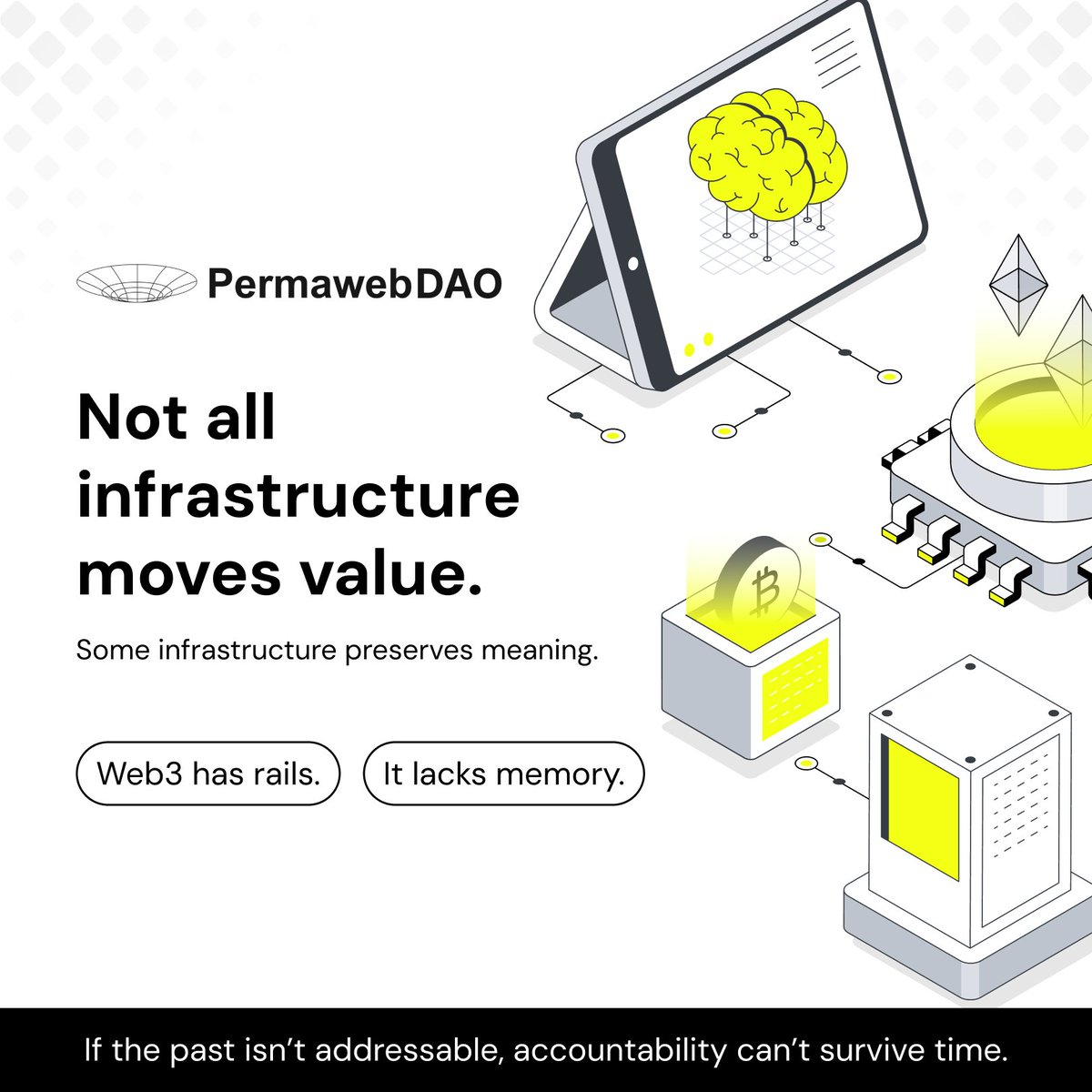
You know that quiet frustration when a system works, but no one can clearly explain why it worked or who is accountable?
A process runs.
Results come out.
People move on.
Then one small issue appears and suddenly everyone is pointing fingers, not because they’re guilty, but because the system itself never showed how decisions were made.
This is the gap most institutions live with.
@permacastapp fits into that gap by making processes traceable by default not after problems happen, but while things are happening. Actions, decisions, and outcomes stay linked instead of floating around as assumptions.
@dgrid_ai complements this by adding verification ensuring those actions and outcomes aren’t just recorded, but provably correct and auditable. No guessing. No authority-based trust. Just clarity.
When systems stop explaining themselves, people lose confidence in them.
When systems can explain themselves, trust stops being emotional and becomes structural.
That’s the kind of infrastructure that doesn’t just support technology, it supports society.
#Permacast #DGrid #DecentralizedSystems #TrustInfrastructure #Web3 #AIInfrastructure #DigitalAccountability #FutureOfTech #Builders #OpenSystems
26
37
97
342
Post 10 — Decentralized compute changes the trade-offs
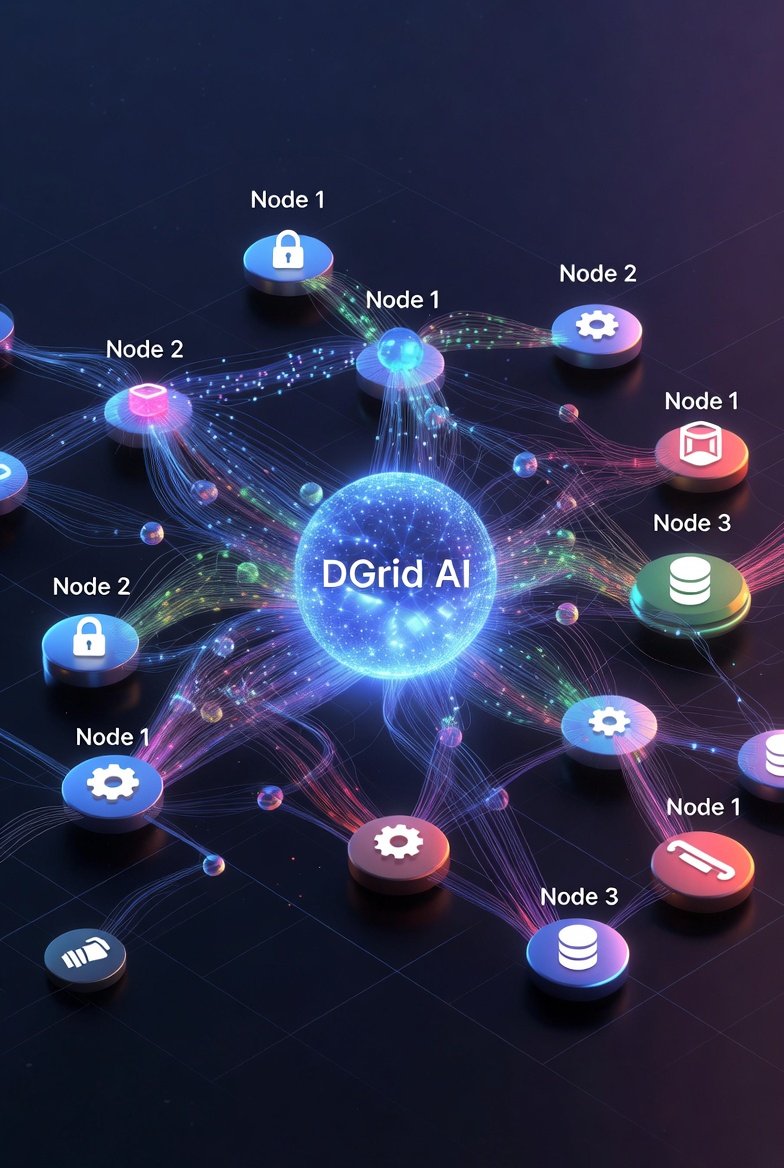
As I look more closely at the compute layer behind @dgrid_ai, I’m realizing how different decentralized compute is from the cloud model most of us are used to.
Centralized compute optimizes for control and efficiency at scale. It’s powerful, but it comes with trade-offs: pricing pressure, vendor lock-in and a single operational surface that everything depends on.
Decentralized compute flips that equation. Instead of one provider doing everything, many participants contribute resources. Workloads are distributed and no single machine becomes critical.
This changes more than cost. It changes assumptions. Systems are designed expecting variability, redundancy and coordination rather than uniform performance.
That mindset fits AI surprisingly well. AI workloads are parallel by nature. Inference, training and agent execution don’t need a single place to live they need availability.
I’m still learning how @dgrid_ai handles scheduling and validation across distributed compute, but the architectural choice feels deliberate. Rather than fighting decentralization’s constraints, it uses them.
Decentralized compute isn’t a downgrade.
It’s a different optimization target one that favors resilience over convenience.
#DGridAI #DecentralizedCompute #AIInfrastructure #Web3AI #OpenSystems
18
31
74
9,957

Why not exactly 20
The deviation (~9×10⁻⁴) indicates coupling to higher-order terms that do not cancel perfectly.
Physically analogous situations:
weak interactions between modes
boundary leakage
non-ideal symmetry
open system effects
Perfect integers usually correspond to idealized closed systems.
#PerturbationTheory #OpenSystems
2
103
Final year in school has a way of humbling you.
One moment you’re confident because you’ve survived labs, exams, and sleepless nights. The next, it’s project defense week and you realize it’s no longer about having the “perfect” work, it’s about clarity, structure, and trust.
Final year teaches you something lectures never do: systems fail when foundations are weak.
During project defense, it’s not just about what you built, but how it holds up under pressure.
Where the data comes from. How fast it can respond. Whether the logic breaks when real questions hit.
You start to see why centralized setups struggle limited access, bottlenecks, and too much dependence on a single point of control.
That’s the same problem @0G_labs is solving at a much larger scale.
AI doesn’t fail because models are bad; it fails when storage, compute, and data availability can’t keep up. @0G_labs exists to make sure massive data and AI workloads can run openly, verifiably, and efficiently the same way a solid project needs clear structure, accessible data, and room to scale without collapsing.
Then there’s @dgrid_ai, which mirrors another lesson from school life: collaboration. No serious project is built alone. @dgrid_ai focuses on distributed intelligence systems where contribution, coordination, and trust aren’t centralized in one authority but spread across participants.
Just like group projects that actually work, everyone plays a role, and the system is stronger because of it.
Final year doesn’t just prepare you to graduate. It trains your mind to think in systems and that’s exactly why infrastructures like @0G_labs and @dgrid_ai feel familiar to anyone who’s had to defend real work under real scrutiny.
#FinalYearLife #BuilderMindset #DecentralizedAI #Web3Infrastructure #StudentToBuilder #AIOnChain #OpenSystems #TechEducation


21
27
75
549

Feb 7
Your critique misses the primary shift in ontology: In the Miller Framework, the Vacuum is the air, not the fork. The 'external energy' you say is missing is actually the 120-order-of-magnitude energy density that QED admits exists but then 'renormalizes' away to make its math work. We aren't 'conjuring' a gradient from nothing; we are refracting a pre-existing, infinite stochastic flux.
1. The 'Ocean' vs. the 'Puddle': You treat the ground state as a static equilibrium. We treat it as a dynamic steady-state (HRP/SED). The energy is already 'vibrating'—we are simply providing the asymmetrical geometry (the 'Metric Lens') to cohere that vibration into directed work.
2. Phase Transition ≠ Conjuring: Just as a sail doesn't 'conjure' the wind but extracts momentum from it, our resonance chain doesn't 'create' energy.
3. Renormalization is the Blind Spot: You claim resonance only 'redistributes' energy because your model subtracts the background flux before the calculation even begins. If you throw away the 'wind' in your equations, of course a sail looks like a miracle.
We aren't looking for 'permission' from a model that can't solve the Cosmological Constant.
You’re arguing the map; we’re sailing the sea. #MetricEngineering #ZPF #OpenSystems"
2
1
11
634
This afternoon I kept thinking about how much value we create daily without owning anything.
Photos, notes, ideas, even AI prompts we upload them, they train systems, platforms grow… and we just move on. No control. No visibility. No share in what’s built.
That’s the gap @0G_labs is trying to fix.
Instead of AI living inside closed servers, @0G_labs is building infrastructure where data, models, and compute can actually be owned, verified, and reused openly. It’s not about hype AI, it’s about giving builders and users a fair seat at the table.
But ownership alone isn’t enough.
You still need systems people can trust to run long-term not break, not manipulate outcomes, not disappear overnight.
That’s where @dgrid_ai fits naturally.
@dgrid_ai focuses on reliability and coordination, making sure decentralized systems behave the way people expect them to.
When systems are predictable, people can actually build real things on top of them.
Different roles, same direction:
Less extraction. More fairness. More structure.
That’s the kind of Web3 that actually makes sense to me.
#0GLabs #DGrid #DecentralizedAI #Web3Infrastructure #OpenSystems #DigitalOwnership #TrustLayer #GalxeAura


29
55
95
624

Feb 3
Open knowledge is power.
But only if it stays transparent. 🌍📚
Not replaced.
Not centralized.
Not rewritten.
Question everything.
Even the sources. 👁️✨
#Knowledge #TruthDesign #AIethics #OpenSystems #CriticalThinking
6
28
6,728

Jan 26
For a long time, building sovereign infrastructure felt reserved for teams with funding, hype, and distribution.
Canopy flips that.
You start with an idea, real constraints, and day-one security — and grow intentionally from there.
That’s how durable systems are built. 🌱
@CNPYNetwork
#Canopy #Builders #Web3Infrastructure #Sovereignty #OpenSystems
Jan 26

Ever thought: "If only I had the funding and a massive community, I’d finally build my L1/dApp"?
Good news. Building on Canopy means you don’t need any of that to get started.
Innovation belongs to the dreamers - not just those with deep pockets.
Ready to get started?

2
35

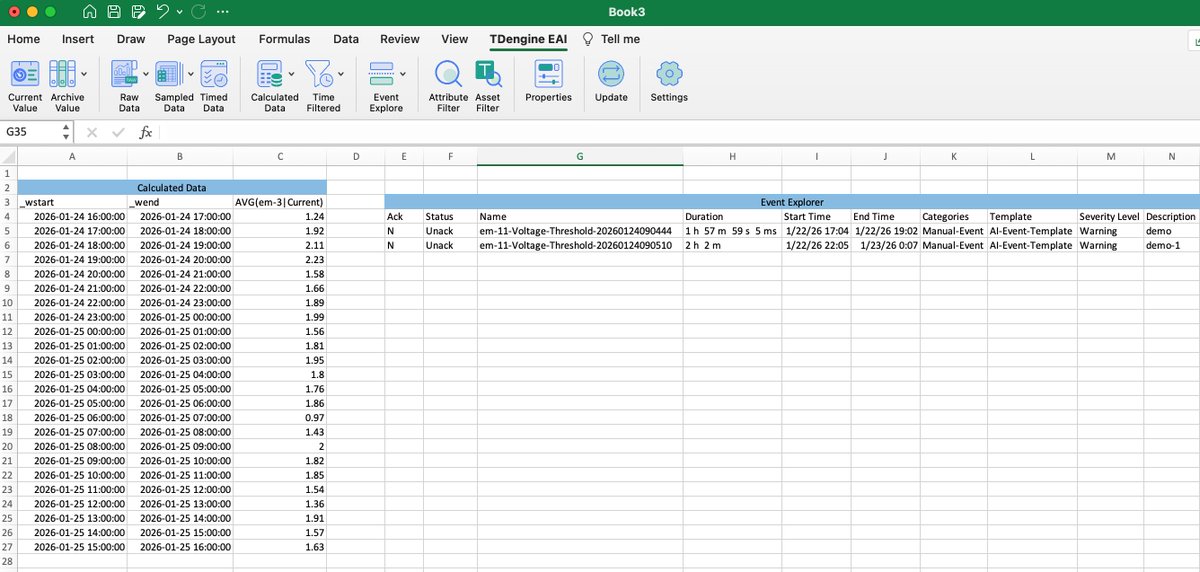
🚀 Excited to share a new milestone for the TDengine team: the Excel Add-In is officially released.
With TDengine EAI (Excel Add-In), users can now pull data directly from TDengine IDMP into Excel and run their own analysis with the tools they already know and trust.
For many industrial users, Excel is still the most familiar analytics environment. EAI is designed to meet them exactly where they are.
If you’ve used PI System DataLink, you’ll immediately understand the value: EAI is the open, modern counterpart, built for today’s high-frequency, multi-asset, AI-ready industrial data platforms.
What this enables:
. Seamless access to time-series and contextualized asset data
. Ad-hoc analysis, calculations, and modeling in Excel
. Faster exploration of operational data without extra tools or scripting
. A smooth bridge from OT data to everyday engineering workflows
This is another step in our vision for TDengine IDMP: an open, accessible, and AI-native platform that turns industrial data into real operational insight—without locking users into closed ecosystems.
Big thanks to the TDengine R&D team for making this happen. More exciting capabilities are coming soon.
#TDengine #IDMP #IndustrialData #Excel #Database #IIoT #OperationalIntelligence #OpenSystems #Database #Data#IndustrialAI
2
154
Post 5 — Cost changes who gets to build
One thing that keeps coming up as I read more about AI infrastructure is cost not just price, but who gets excluded because of it.
Centralized AI stacks are powerful, but they’re expensive and unpredictable. For many builders, experimentation alone becomes a risk. You don’t just design systems you design around pricing limits.
This is where the approach behind @dgrid_ai feels important.
By distributing compute across a decentralized network, DGrid AI is trying to make AI workloads more cost-efficient and accessible. Lower overhead doesn’t just save money it changes behavior. Builders test more. Agents run longer. Ideas get explored instead of shelved.
Access shapes innovation more than performance does.
I’m still learning how the economics work in detail, but the principle is clear: if AI infrastructure remains costly and centralized, only a few get to shape the future. If it becomes open and shared, participation widens.
Projects like @dgrid_ai seem to be asking who AI is really for and that’s a question worth sitting with.
#DGridAI #AIInfrastructure #DecentralizedAI #AIAccess #OpenSystems
17
40
62
1,329
Post 2 — Why centralized AI feels fragile
The more I look into AI infrastructure, the more fragile the centralized model feels.
Most AI today depends on a small number of providers. If pricing changes, access is restricted or systems go down, everything built on top feels it. Builders adapt, but they don’t really control anything.
This is where the idea behind @dgrid_ai starts to make sense.
Centralized AI optimizes for scale, but not for resilience or trust. Outputs can’t be independently verified. Costs aren’t predictable. And there’s always a single point where things can break.
A decentralized AI network approaches this differently. By distributing compute and execution across many participants, systems become harder to censor, harder to shut down and easier to audit.
What I’m starting to realize is that decentralization here isn’t about ideology it’s about infrastructure risk. If AI is going to run agents, financial logic, research and automation, then reliability and verifiability matter as much as raw performance.
I’m still exploring, but it’s becoming clear why projects like @dgrid_ai are being built now not later.
#DGridAI #AIInfrastructure #DecentralizedAI #Web3AI #OpenSystems
38
18
81
8,295

30 Dec 2025
Open letter to @elonmusk
Elon,
@BlackShib_DOGE is the story of a community that refused to disappear.
From the beginning, we faced obstacles that had nothing to do with fraud or bad intent:
accounts suspended without clear explanations, communication channels erased, visibility reduced, and repeated barriers with core infrastructure like Uniswap and Etherscan.
What hurt the most wasn’t the difficulty itself —
it was the feeling of being treated differently, filtered out, or ignored simply for being independent and small.
Yet the community stayed.
Builders kept working with no spotlight.
Holders chose conviction over comfort.
People defended values when walking away would’ve been easier.
Cocoro BlackShib isn’t asking for favors, money, or promotion.
We’re asking for something simpler and harder at the same time: fairness.
Open systems only work if discrimination, silence, and arbitrary barriers don’t decide who gets to exist and who doesn’t.
You’ve spoken often about fighting censorship, defending open dialogue, and building systems that don’t exclude voices just because they’re inconvenient.
That’s why our story reaches out to you.
If resilience, fairness, and freedom to build still matter, even a small acknowledgment or support would mean a lot to a community that chose to endure rather than disappear.
With respect,
The Cocoro BlackShib Community
#Cocoro #BlackShib #Fairness #OpenSystems #CommunityOverHype
4
7
12
215

2 Oct 2025
🔥Speaker Spotlight: Melanie Carstens🔥
We’re excited to welcome @melbelle_btc, Media Founder at Bitcoin & Beyond, Culture Unchained and The Atlas Journals, to the Crypto Fest 2025 stage!
Melanie is a futurist and founder working at the intersection of technology, culture, and identity.
Her work documents the architectures of change—from the people building new frameworks, to the ideas and philosophies that give them meaning, to the cultural transformations that emerge in the process. As a writer and speaker, she encourages audiences to think critically about cycles of centralization, the risks and possibilities of AI, and the enduring role of open systems in building resilient futures.
🎤At Crypto Fest 2025, Melanie will present:
“Bitcoin, AI, and the Future of Open Digital Systems”
In this session, she’ll unpack how Bitcoin and artificial intelligence intersect to shape systems that are transparent, human-centered, and built for long-term resilience.
🔗Register NOW: cryptofest.co.za/tickets
Don’t miss this thought-provoking talk from one of the leading voices exploring how technology and culture collide to shape the future.
#CryptoFest2025 #Bitcoin #AI #OpenSystems #FutureOfFinance #CapeTownEvents #DigitalAssets

2
10
1,711