
Feb 12
DeFi Needs a Truth Layer — building infrastructure for transparent risk and verified outcomes in decentralized finance.#DeFiNeedsATruthLayer #DeFi #Crypto #Blockchain #Transparency #RiskManagement #CryptoInfrastructure #SmartContracts #AIInDeFi #OracleTech #VerifiedDeFi
5
36
How RedStone Is Advancing Oracle Capabilities with Stylus on Arbitrum
Imagine building a DeFi protocol, and suddenly you hit the wall: the oracle data you need is too slow, too expensive, or too rigid. We’ve all been there, trying to get reliable real-world data into our smart contracts, only to find bottlenecks in settlement, latency or cost. On @Arbitrum, powered by #Stylus, @Redstone_defi is solving that pain point. What we’re seeing now is more than a technical upgrade, it’s infrastructure evolution.
What We’re Talking About
Oracles are the backbone of DeFi: they bring off-chain data (prices, metrics, indices) into smart contracts so protocols can function correctly. On @Arbitrum, @Redstone_defi is deploying a modular oracle framework using Stylus, enabling higher throughput, lower cost, & better integration than traditional EVM-only designs.
How RedStone Stylus Work Together
Modular Oracle Architecture
RedStone structures its workflow in three layers:
1️⃣ Aggregation - collecting data from reliable offchain sources.
2️⃣ Signing - providers cryptographically sign payloads.
3️⃣ Verification - consumer contracts check signatures onchain.
Because these layers are separated, changes (new data sources, formats, signing schemes) can be introduced without breaking the entire system.
Stylus & WASM Integration
#Stylus enables running WebAssembly smart contracts on @Arbitrum alongside Solidity contracts. For @Redstone_defi, this means they can use their existing Rust SDK onchain, with full interop between WASM and EVM. Direct memory access, efficient data structures, and lower overheads are all enabled by this architecture.
Performance Gains & Metrics
By moving heavier compute into Stylus, RedStone achieved:
🔹34.3% reduction in base computational overhead (from 35k to 23k)
🔹50% reduction in per-feed compute (from 16k to 8k)
It also enables processing dozens of feeds per transaction, scaling toward the ability to handle 1 MB-class data windows per block for advanced use cases.
Migration & Backwards Compatibility
Existing EVM adapter contracts can remain live during integration. RedStone suggests reading Stylus feeds in parallel while continuing EVM flows, so migration doesn’t force a full rewrite or audit from scratch.
Why This Matters Now
✅ Reducing the EVM bottleneck: The EVM’s model is simple and deterministic, but struggles with heavy data workloads. Stylus lets RedStone bypass some of those costs, pushing data throughput further.
✅ Better tools for builders: Protocols that depend on frequent, large, or structured data sets, think derivatives, RWA protocols, analytics, AI - gain more flexibility and lower costs for their oracle layer.
✅ Future-proof design: A modular, language-agnostic oracle lets RedStone and other protocols evolve without being locked into one architecture or language.
✅ Ecosystem momentum: As more protocols adopt Stylus-enhanced oracles, the infrastructure becomes stronger and more diverse, benefiting the entire Arbitrum stack.
Connection with Broader Stylus & Arbitrum Context
✔️ Stylus as a paradigm shift: Stylus brings WASM EVM compatibility, enabling contracts in Rust, C , etc., while remaining interoperable with existing Solidity contracts.
✔️ Less overhead, more innovation: Because Stylus reduces compute costs, it opens doors for memory-intensive or data-heavy applications (AI, advanced analytics, onchain gaming) that EVM alone struggles with.
✔️ Adoption ecosystem: RedStone was selected as part of the Arbitrum Stylus Sprint for its technical excellence and alignment with Stylus tools.
My Take
This move by @Redstone_defi marks a shift in how on-chain data is handled.
For protocols relying on accurate data, derivatives, RWA, or AI - RedStone Stylus on @Arbitrum sets a new benchmark.
Watch closely - projects building on this foundation could define the next phase of Web3.
#Arbitrum #RedStone #Stylus #OracleTech #Web3
1
38
126

22 Nov 2025
How RedStone Is Advancing Oracle Capabilities with Stylus on Arbitrum
Imagine building a DeFi protocol, and suddenly you hit the wall: the oracle data you need is too slow, too expensive, or too rigid. We’ve all been there, trying to get reliable real-world data into our smart contracts, only to find bottlenecks in settlement, latency or cost. On @Arbitrum, powered by #Stylus, @Redstone_defi is solving that pain point. What we’re seeing now is more than a technical upgrade, it’s infrastructure evolution.
What We’re Talking About
Oracles are the backbone of DeFi: they bring off-chain data (prices, metrics, indices) into smart contracts so protocols can function correctly. On @Arbitrum, @Redstone_defi is deploying a modular oracle framework using Stylus, enabling higher throughput, lower cost, & better integration than traditional EVM-only designs.
How RedStone Stylus Work Together
Modular Oracle Architecture
RedStone structures its workflow in three layers:
1️⃣ Aggregation - collecting data from reliable offchain sources.
2️⃣ Signing - providers cryptographically sign payloads.
3️⃣ Verification - consumer contracts check signatures onchain.
Because these layers are separated, changes (new data sources, formats, signing schemes) can be introduced without breaking the entire system.
Stylus & WASM Integration
#Stylus enables running WebAssembly smart contracts on @Arbitrum alongside Solidity contracts. For @Redstone_defi, this means they can use their existing Rust SDK onchain, with full interop between WASM and EVM. Direct memory access, efficient data structures, and lower overheads are all enabled by this architecture.
Performance Gains & Metrics
By moving heavier compute into Stylus, RedStone achieved:
🔹34.3% reduction in base computational overhead (from 35k to 23k)
🔹50% reduction in per-feed compute (from 16k to 8k)
It also enables processing dozens of feeds per transaction, scaling toward the ability to handle 1 MB-class data windows per block for advanced use cases.
Migration & Backwards Compatibility
Existing EVM adapter contracts can remain live during integration. RedStone suggests reading Stylus feeds in parallel while continuing EVM flows, so migration doesn’t force a full rewrite or audit from scratch.
Why This Matters Now
✅ Reducing the EVM bottleneck: The EVM’s model is simple and deterministic, but struggles with heavy data workloads. Stylus lets RedStone bypass some of those costs, pushing data throughput further.
✅ Better tools for builders: Protocols that depend on frequent, large, or structured data sets, think derivatives, RWA protocols, analytics, AI - gain more flexibility and lower costs for their oracle layer.
✅ Future-proof design: A modular, language-agnostic oracle lets RedStone & other protocols evolve without being locked into one architecture or language.
✅ Ecosystem momentum: As more protocols adopt Stylus-enhanced oracles, the infrastructure becomes stronger & more diverse, benefiting the entire Arbitrum stack.
Connection with Broader Stylus & Arbitrum Context
✔️ Stylus as a paradigm shift: Stylus brings WASM EVM compatibility, enabling contracts in Rust, C , etc., while remaining interoperable with existing Solidity contracts.
✔️ Less overhead, more innovation: Because Stylus reduces compute costs, it opens doors for memory-intensive or data-heavy applications (AI, advanced analytics, onchain gaming) that EVM alone struggles with.
✔️ Adoption ecosystem: RedStone was selected as part of the Arbitrum Stylus Sprint for its technical excellence & alignment with Stylus tools.
My Take
This move by @Redstone_defi marks a shift in how on-chain data is handled.
For protocols relying on accurate data, derivatives, RWA, or AI - RedStone Stylus on @Arbitrum sets a new benchmark.
Watch closely - projects building on this foundation could define the next phase of Web3.
Read more: blog.arbitrum.io/how-redston…
#Arbitrum #RedStone #Stylus #OracleTech #Web3
6
57
152

27 Oct 2025
Lighter’s liquidations depend on oracle prices aggregated from multiple exchanges, not just mark price pumps. So no matter how much someone inflates the mark price, it won’t trigger cascading liquidations or breakdowns.
This design choice made all the difference. It prevented a liquidation cascade and instead turned the tables—LLP holders and active shorters seized the opportunity.
As a result, LLP profited handsomely from a $22 million position within minutes. The attacker trying to break the system ended up fueling the profits of those quick to react.
This incident highlights not only Lighter’s resilience but the importance of robust oracle pricing mechanisms in DeFi platforms to safeguard users and market integrity.
In fast-moving markets, intelligent protocol design can turn attacks into opportunities, and that’s a powerful statement for Lighter and its community.
#lighterzzz #DeFi #HYPE #CryptoSecurity #OracleTech
1
3
49

4 Oct 2025
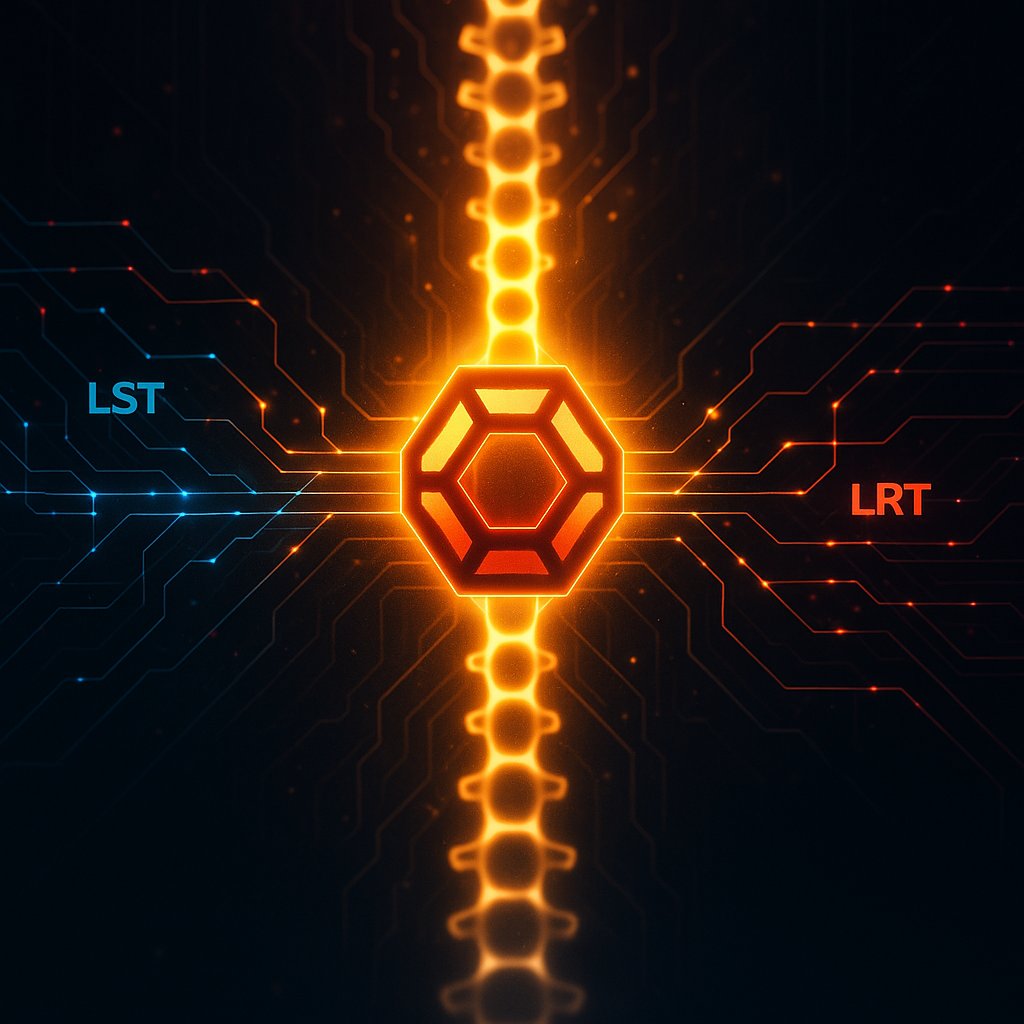
Oracles are the backbone of DeFi, and we're building the future proof one
From LSTs to LRTs, we've got the specialized data feeds that actually matter for the next gen of lending and restaking. Don't build with outdated tools
#LRTs #LSTs #OracleTech
@redstone_defi
1
3
18

24 Sep 2025
9/10 🌐 The Big Picture: Why LINK Matters Now
Chainlink isn't a coin it's the plumbing for Web3's explosion. From DeFi's $15B TVL to RWA's trillion-dollar unlock, LINK connects it all with unshakeable reliability. As Fed easing ignites risk appetite and ETFs pull in institutions, oracles become indispensable. YTD outperformance? Proof. Breakout patterns? Tease. Partnerships? Accelerant. If crypto's the future of finance, Chainlink's the smart wire making it hum. What's your LINK thesis RWA rocket or steady climber? Drop it below! #Web3 #OracleTech
1
3
45

1 Aug 2025
Thinking about blockchain's future, oracle tech is key.
Blockchains excel at security & decentralization but lack real-world data. Oracles bridge the gap—but how do we keep them trustworthy and decentralized?
Bad data could collapse the system. 🌉
#Blockchain #OracleTech
23
8,419

30 Jun 2025
Preoracle tech is mind-blowing—a bridge between blockchain & the real world. But can we trust the data it delivers? 🤔
Flawed info could break the system. Decentralization helps, but is it enough?
Definitely a space to watch. 🛠️
#Blockchain #OracleTech

5
1
1
1,022

11 Jun 2025
🚀 Supra isn’t just another oracle network
It’s rewriting the Web3 playbook with a vertically integrated Layer-1 called the IntraLayer.
Here’s what makes @SUPRA_Labs the backbone of the next Web3 wave 🧵👇
#CoinDCXCollective #OracleTech @CoinDCX
1
1
5
97

16 May 2025
QUEX mainnet is now live on @Ethereum!
Following successful deployments across EVM networks, QUEX now brings its TEE-secured oracle infrastructure to the L1 that started it all.
🔒 Whether you're building DeFi, RWA protocols, or AI-integrated apps — developers on Ethereum can now access real-time, tamper-proof data from any API or source, verified through Trusted Execution Environments (TEEs).
💫 Why Ethereum?
Ethereum is the backbone of decentralized innovation — with the most battle-tested infrastructure and the strongest builder community. We're proud to bring verifiable truth to the ecosystem where trustlessness was born.
💡 What QUEX brings to Ethereum:
• Hardware-level cryptographic attestation
• Fully customizable oracle pipelines
• Secure off-chain data access for advanced, compliance-ready dApps
🔗 Start building: docs.quex.tech
#Ethereum #BuildWithQuex #ConfidentialComputing #OracleTech #TEE #zkTLS
7
2
19
2,284
14 May 2025
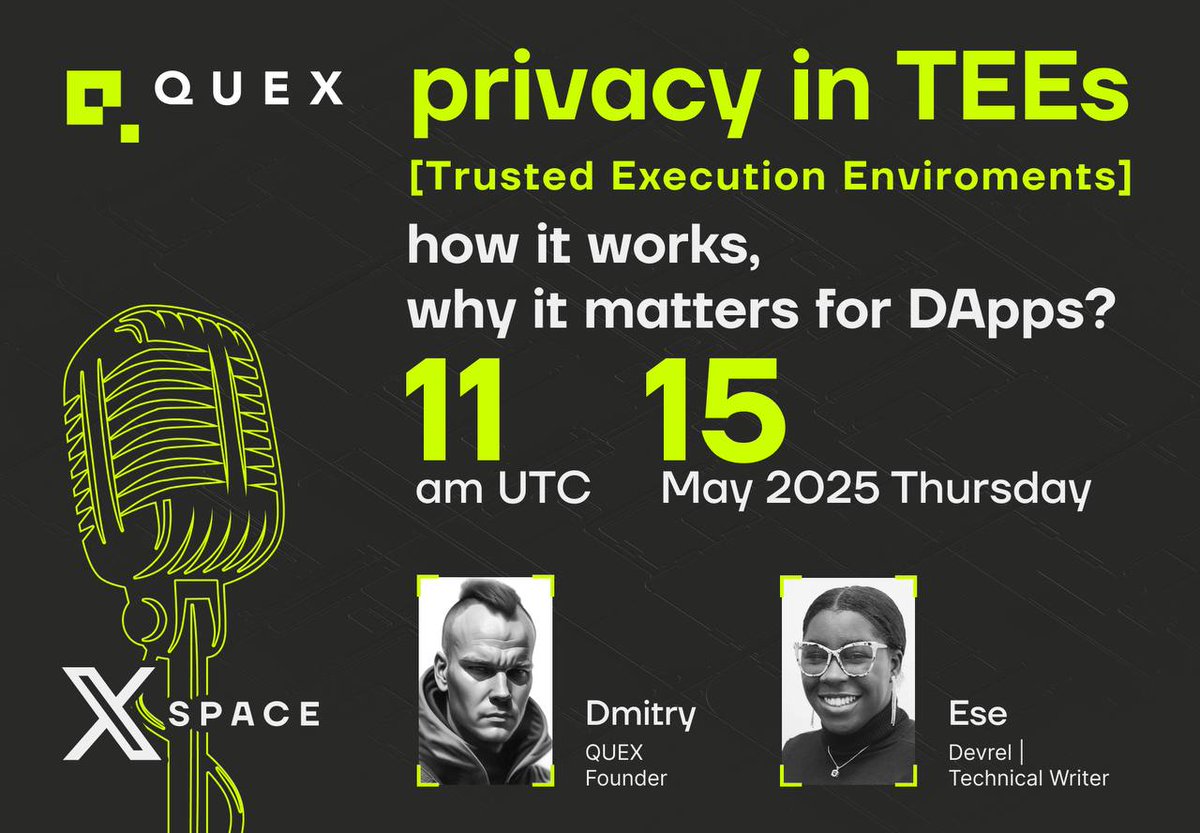
📣 UPDATED DATE: Join us this Thursday, May 15 @ 11am UTC for a deep dive into Privacy in TEEs
Hear from QUEX founder @DmitryMeshkov (PhD physicist, ex-Ergo CEO, cited by Vitalik, Dan Boneh, Ari Juels), hosted by @EseMonday1 (DevRel @EthereumNigeria & privacy advocate).
🧠 What we’ll cover:
• How TEEs power secure oracles
• Where TEEs are most effective for builders
• Real-world use cases & live dev Q&A
#BuildWithQuex #TEE #ConfidentialComputing #BlockchainDevs #OracleTech #PrivacyEngineering #TrustedData
9
7
19
2,460

2 May 2025
🤖🔮 Enter the era of intelligence.
GEOLT brings you cutting-edge Oracle Predictive Analytics & Visualization — where data meets foresight, and insight drives action.
t.me/AiConsolidator
#GEOLT #PredictiveAnalytics #AIVisualization #OracleTech #FutureReadyAI
1
2
71
30 Apr 2025
Henlo Beras 🐻, QUEX Intelligent Data Oracle is now live on @Berachain 🐸
Why Berachain?
It's L1 where liquidity is the foundation, devs are the core, and the community drives it all. Perfect match for us.
What QUEX brings to Berachain:
🔸 Real-time, hardware-secured oracle data
🔸 TEE-based truth pipes for PoL-native DeFi, RWAs, and game loot logic
🔸 Custom feeds straight from the outside world — signed, sealed, non-sus
🔗 Build with QUEX: docs.quex.tech
#Berachain #BuildWithQuex #DeFi #RWA #Blockchain #ConfidentialComputing #OracleTech #AI #zkTLS
9
4
18
783
28 Apr 2025
QUEX mainnet is now live on @Celo, following a successful testnet deployment in January!
🔒 Whether you’re building DeFi, RWAs, or public goods — developers on Celo can now access real-time, tamper-proof data from any API or source, verified through Trusted Execution Environments (TEEs).
🌱 Why Celo?
@Celo is an L2 that’s built different, and designed for the real world, with an ecosystem that’s unlocking prosperity for all. We're proud to contribute trust and transparency to a mission we deeply align with.
💡 What QUEX brings to Celo:
• Hardware-level cryptographic proofs
• Fully customizable oracles
• Secure inputs for carbon markets, microloans, and local economies
🔗 Start building: docs.quex.tech
#Celo #BuildWithQuex #OracleTech #zkTLS
10
10
45
5,282
16 Apr 2025
Major Milestone: QUEX is now live on @Hedera!
How QUEX Strengthens the Hedera Ecosystem:
🔸 TDX-powered, hardware-level cryptography for verifiable off-chain data;
🔸 Fully customizable oracle pipelines tailored to client needs;
🔸 Native synergy for private data workflows.
Why Hedera?
It is a fast-growing, high-performance network built for enterprise applications, tokenized RWA, and next-gen DePIN infrastructure.
This rollout supports Hedera’s growing demand for secure, confidential, and verifiable off-chain integrations across enterprise, RWA, and DePIN use cases.
Build with QUEX today ➡️ quex.tech
#BuildWithQUEX #Hedera #RWA #ConfidentialComputing #DePIN #TDX #OracleTech #zkTLS
7
27
101
3,815
15 Apr 2025
QUEX is now live on @AVAX!
Create Without Limits — now, with secure, verifiable access to any off-chain data.
What QUEX brings to Avalanche builders:
🔸 Fully customizable data feeds from any API or data source;
🔸 Cryptographic verification of off-chain data using TEEs;
🔸 Secure data integration for DeFi protocols, tokenized assets, AI applications and beyond.
Why Avalanche?
Avalanche’s speed, scalability, and focus on real-world use cases make it the ideal environment for deploying secure, data-driven decentralized applications.
Together, we’re making limitless creation a reality — with secure, on-demand access to any data source.
Build without limits. Build with QUEX ➡️ quex.tech
#BuildWithQUEX #Avalanche #DeFi #RWA #Blockchain #ConfidentialComputing #OracleTech #AI
10
37
98
14,777

10 Jan 2025
💼 Looking to Boost Up Your Salary? 💼
For FREE, You’ll Learn:
🧠 AI-driven features in Oracle Database 23ai to level up your expertise.
☁️ The fundamentals of Oracle Cloud Infrastructure for cutting-edge cloud skills.
🎓 High-demand knowledge taught by seasoned industry experts – no cost involved!
💻 This free event could be your stepping stone to higher earnings and career success. Don’t miss it!
🔗 Register now: trainocate.com.my/free-works…
#FreeVirtualEvent #BoostYourSalary #OracleTech #CareerGrowth #CloudComputing #AI #TrainocateMY

6
61
85,111

🚀 Exciting News from SUMOTEX! We're pushing the boundaries of blockchain with our advanced Real-World Asset Oracle, designed to seamlessly bridge on-chain and off-chain data. 🏦💼
With cutting-edge tech, we're making real-world assets more accessible, secure, and scalable than ever before. 🌍🔗
Stay tuned for more innovation as we transform the digital economy! Powered by the Sumotex team and with amazing partners like @SuperteamMY
#Web3 #Blockchain #RealWorldAssets #OracleTech #SUMOTEX #Solana
1
3
15
460
9/ 💬 Stay Tuned: The best is yet to come! Follow us as we continue to push the boundaries of blockchain technology and shape the future of real-world asset tokenization.
#Sumotex #Blockchain #RWA #Solana #ZKCompression #Innovation #Web3 #OracleTech
5
221

11 Oct 2024
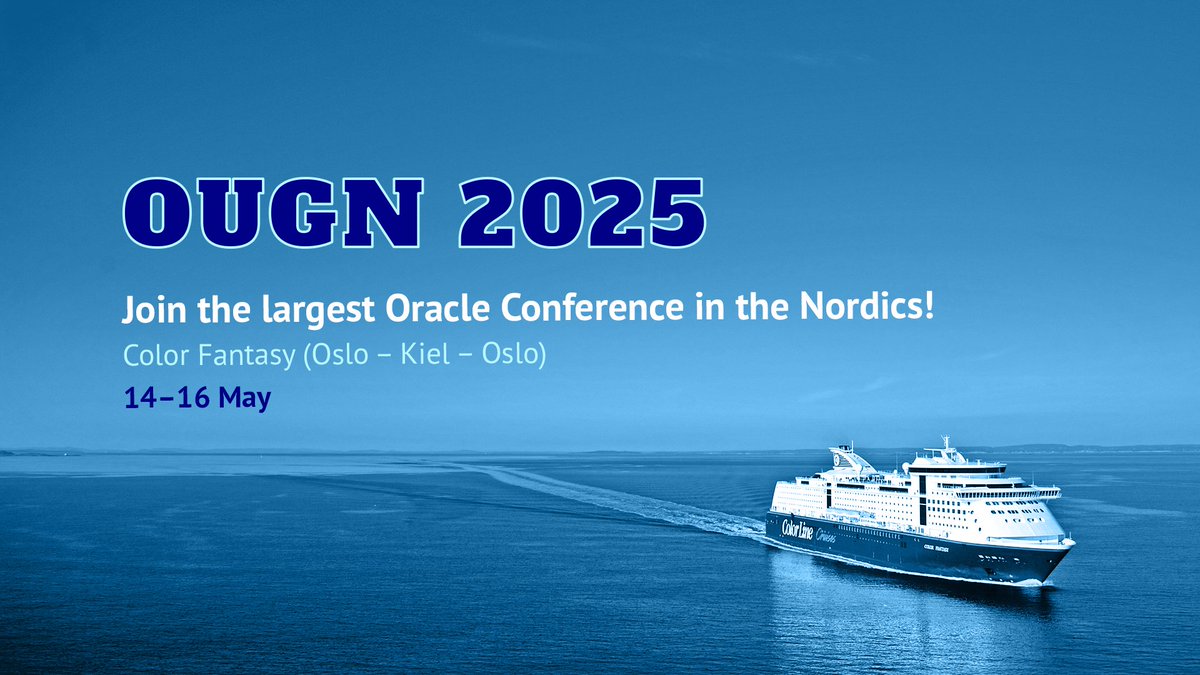
Early-bird tickets for th OUGN Conference 2025 are now available for NOK 9900! Join us
May 14-16 on the Kiel Ferry for insights into Oracle tech: 2025.ougn.no/ #OUGN2025 #OracleTech #EarlyBird
1
3
115