
**The Anatomy of a Bullish Setup: Break, Retest, and Ride**
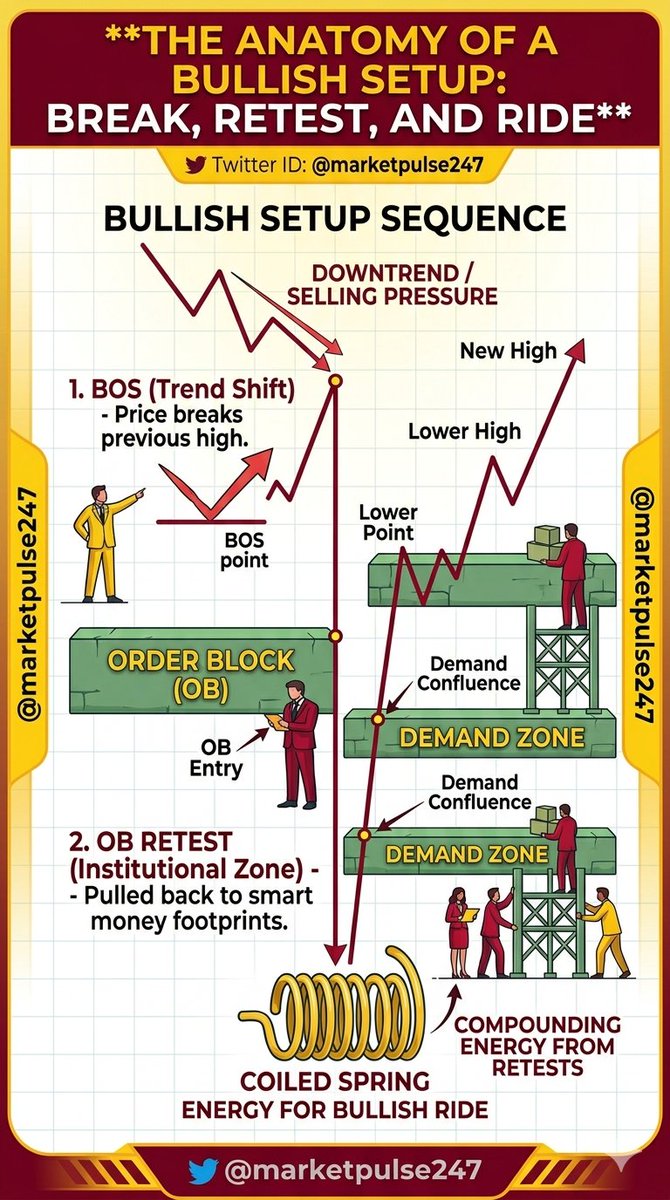
There is a rhythm to how markets move. It is not random chaos, though it often feels that way when you are staring at a screen without a framework. The image captures that rhythm in a way that many traders spend years trying to understand. It shows a bullish structure built on three key elements. A break block reversal. An order block retest. And a demand retest. When these three pieces align, you are looking at a high probability setup.
Let me walk you through what this actually means on a chart.
It all starts with a break of structure, often abbreviated as BOS. In a downtrend, price is making lower lows and lower highs. Then something changes. Price breaks above a previous high, signaling that the selling pressure is weakening. This initial move is often fueled by liquidity grabs. The market sweeps out stop losses, takes out the last of the sellers, and begins to reverse direction.
This first move creates what is called a break block reversal. It is the first clue that the trend may be shifting. But here is the thing. Most traders see this break and jump in immediately. That is usually a mistake. The market rarely goes straight up after a reversal. It needs to breathe.
That is where the order block retest comes in. After the initial reversal, price often pulls back to an area where institutional orders were placed. This is the order block. It represents a zone where smart money entered positions. When price returns to this zone and shows signs of holding, you have your first opportunity to enter with the trend.
The third piece is the demand retest. Demand zones are areas where buyers have historically stepped in with conviction. When price pulls back to a demand zone after a break of structure and aligns with an order block, you get confluence. Multiple factors pointing to the same area. That is where the highest probability trades exist.
From there, the structure continues. Price makes a new high. Then it pulls back to retest a demand zone again. Then another new high. Each retest offers another opportunity for those who missed the initial entry. The trend is confirmed by successive breaks of structure to the upside.
What makes this approach powerful is that it removes the guesswork. You are not predicting where price will go. You are identifying where smart money has already left footprints and waiting for price to return to those areas. You are trading the retest, not the initial breakout. That patience keeps you out of false breakouts and gives you clear invalidation levels.
The image also highlights the importance of understanding the difference between a break block reversal and a simple breakout. A break block is not just price moving higher. It is a structural shift. It tells you that the previous trend has been interrupted. When that happens and price returns to the order block or demand zone that initiated the move, you have a clean setup with defined risk.
Conclusion
Trading a bullish structure is not about catching the absolute bottom or the exact top. It is about understanding the sequence of events that signal a trend change and then waiting for price to offer you a low risk entry. The break block tells you something has shifted. The order block retest gives you the zone. The demand retest confirms that buyers are still present.
When you learn to recognize this three step process, you stop chasing price and start waiting for price to come to you. That is the difference between gambling and trading with an edge. The market will always offer retests. Your job is to recognize them, trust your structure, and execute with discipline. Do that consistently, and you will find yourself riding trends rather than getting run over by them.
x.com/@marketpulse247
#BullishSetup #BreakOfStructure #OrderBlock #DemandZone #SmartMoneyConcepts #ICTtrading #PriceAction #TechnicalAnalysis #Forex #StockMarket #CryptoTrading #SMC #BreakBlockReversal #OrderBlockRetest #DemandRetest #TrendTrading #MarketStructure #PriceActionTrading #TradingStrategy #SwingTrading #DayTrading #SupplyAndDemand #InstitutionalTrading #SmartMoney #LiquidityGrab #BOS #ChartPatterns #TradingTips #ForexTrader #Nifty #BankNifty #SP500 #BTC #GoldTrading #CrudeOil #TradingEducation #LearnToTrade #TradingCommunity #ForexLife #TradingDaily #RiskManagement #TradingPsychology #ConfluenceTrading #HighProbabilitySetup #FinancialFreedom
3
6
163

14 Nov 2024
Here's the best order block strategy to stay ahead in trading 🚀
Order blocks are key price levels where big institutions place large orders, creating strong support or resistance zones, giving you clues on market direction.
With Zeiierman Trading’s real-time order block tool, you’ll spot these zones instantly, along with volumetric data for extra trade confidence 🫡
#zeiiermantrading #zeiierman #trendtrading #OrderBlockStrategy #TradingTips #ZeiiermanTrading #StockMarket #OrderBlockRetest #TradingTools #volumeanalysis
2
6
399