
May 28
För att påminna om det igen: IPCC och de statliga vädertjänster som infiltrerats av klimataktivister manipulerade omkring 2010 på stor skala historiska originaldata från väderstationer för att framställa en påstådd uppvärmning.
2
45

IPCC:s felaktiga framställning av kritiska satellitdata
Artikeln handlar om kritik mot hur IPCC:s klimatrapport AR6 presenterade satellitdata från NASA:s CERES-system. Författarna Nikolov och Zeller går mycket hårt åt IPCC och beskriver det som ett allvarligt och direkt vilseledande sätt att hantera data.
Kärnan i kritiken är att IPCC i en central figur vände tecknen på viktiga energiflöden. När originaldata från CERES visar att jorden absorberar mer solenergi och samtidigt reflekterar mindre solljus, presenterades detta enligt artikeln på ett sätt som gav motsatt intryck.
Vad satellitdata faktiskt visar
CERES-satelliterna mäter jordens energibalans – alltså hur mycket energi som kommer in från solen och hur mycket som lämnar jorden som värmestrålning.
Data visar att:
* jorden absorberat tydligt mer solenergi sedan början av 2000-talet,
* molnigheten minskat,
* jordens reflektionsförmåga (albedo) minskat,
* och att detta lett till en kraftig energiförstärkning.
Det centrala budskapet är att förändringar i moln och albedo haft mycket större betydelse för uppvärmningen än vad IPCC velat erkänna.
De brister artikeln pekar ut
Författarna pekar på flera mycket allvarliga problem.
1. Felvända dataserier
IPCC:s figur visar motsatt trend jämfört med rådata från satelliterna. Enligt artikeln beror det på att vissa dataserier multiplicerades med minus ett.
Detta beskrivs inte som ett litet tekniskt misstag utan som något som helt förändrar tolkningen av vad satelliterna faktiskt observerat.
2. Molnens betydelse tonades ned
När mindre moln gör att mer solenergi når jordytan får man en naturlig uppvärmningseffekt. Artikeln beskriver att denna mekanism fått alldeles för liten plats i IPCC:s narrativ.
3. Förutbestämd fokusering på CO₂
IPCC:s arbete beskrivs som starkt låst vid antagandet att växthusgaser är den dominerande förklaringen. När satellitdata pekar mot att förändrad molnighet spelar stor roll passar det dåligt in i modellen och tonas därför ned.
Detta har fått flera negativa följder:
* klimatmodeller riskerar bygga på felaktiga grundantaganden,
* naturliga klimatmekanismer som moln och albedo har marginaliserats,
* politiker och allmänhet har fått en ensidig bild där nästan allt kopplas till CO₂,
* mycket kostsam klimatpolitik har byggts på modeller som kanske inte speglar verkligheten korrekt,
* och vetenskaplig kritik mot rådande klimatmodeller har enligt författarna ofta avfärdats istället för att granskas öppet.
Texten ger i praktiken bilden av att IPCC antingen gjort ett mycket grovt metodfel eller presenterat data på ett sätt som kraftigt styr läsarens slutsats.
tallbloke.wordpress.com/2024…

In its latest Assessment Report 6 from 2021, IPCC lied about NASA data showing a decrease of Earth's albedo, which explains 100% of the 21st-Century warming. Here are the details: tallbloke.wordpress.com/2024…
The World needs to know this fact!
4
14
40
1,360

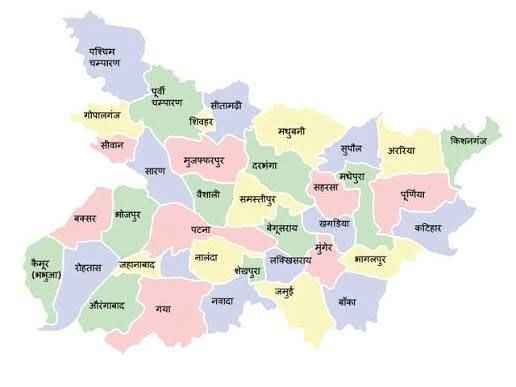
बिहार जाति आधारित गणना - 2022-23 के अनुसार कुछ जातियों (अधिक संख्या वाली ) की कुल आबादी और सरकारी नौकरी में उनकी भागीदारी :-
इत्तर वर्ग की कुछ जातियाँ -
👇🏾
#ब्राह्मण
कुल आबादी - 3.6575%
सरकारी नौकरी - 8.4054%
#भूमिहार
कुल आबादी - 2.8693%
सरकारी नौकरी - 9.1372%
#राजपूत
कुल आबादी - 3.4505%
सरकारी नौकरी - 8.3895
#कायस्थ
कुल आबादी - 0.6011%
सरकारी नौकरी - 2.5612%
#शेख
कुल आबादी - 3.8217%
सरकारी नौकरी - 1.9320%
पिछड़ा वर्ग (#BC) की कुछ जातियाँ -
👇🏾
#यादव
कुल आबादी - 14.2666%
सरकारी नौकरी - 14.1281%
#कुशवाहा
कुल आबादी - 09%
सरकारी नौकरी - 2.4%
#कुर्मी
कुल आबादी - 2.8785%
सरकारी नौकरी - 5.71774%
#बनिया
कुल आबादी - 2.3155%
सरकारी नौकरी - 2.8928%
अत्यंत पिछड़ा वर्ग (#EBC) की कुछ जातियाँ -
👇🏾
#जुलाहा/अंसारी
कुल आबादी - 3.5450%
सरकारी नौकरी - 2.1907%
#तेली
कुल आबादी - 2.8231%
सरकारी नौकरी - 2.5888%
#मल्लाह
कुल आबादी - 2.6086%
सरकारी नौकरी - 0.6880%
#कानू
कुल आबादी - 2.2129%
सरकारी नौकरी - 1.6787%
#धानुक
कुल आबादी - 2.1393%
सरकारी नौकरी - 1.6266%
अनुसूचित जनजाति (#SC) वर्ग की कुछ जातियाँ-
👇🏾
#दुसाध/पासवान
कुल आबादी - 5.311%
सरकारी नौकरी - 4.8712%
#चमार/रविदास
कुल आबादी - 5.2550%
सरकारी नौकरी - 4.0153%
#मूसहर
कुल आबादी - 3.0872%
सरकारी नौकरी - 0.5179%
#पासी
कुल आबादी - 0.9853%
सरकारी नौकरी - 1.2566%
#धोबी
कुल आबादी - 0.8385%
सरकारी नौकरी - 1.6771%
अनुसूचित जनजाति (#ST) वर्ग की कुछ जातियाँ-
👇🏾
#संथाल
कुल आबादी - 0.4407%
सरकारी नौकरी - 0.2693%
#गोंड
कुल आबादी - 0.4043%
सरकारी नौकरी - 0.4099%
#खरवार
कुल आबादी - 0.1969%
सरकारी नौकरी - 0.3620%
नोट - कई लोग तरह-तरह के भ्रामक आंकड़ों के साथ आरोप-प्रत्यारोप लगा रहे हैं, इसलिए मै आंकड़ों को लायी हूँ।
#CasteSensus #OriginalData
14
14
40
3,513

13 Oct 2025
FHE (Fully Homomorphic Encryption) is one of the most advanced types of cryptography.
It allows you to perform computations on encrypted data without decrypting it, and the result—once decrypted—matches what you would get if the computations were performed on the originaldata.
10
11
89

19 Aug 2025
हमारे ट्वीट्स में हमेशा यही कोशिश रही है कि डेटा हमेशा ओरिजिनल रहे। पहले भी ओरिजिनल था, अब भी वही कोशिश है और भविष्य में भी डेटा ओरिजिनल ही रहे, इसी पर ध्यान रहेगा। हम व्यक्तिगत रूप से क्या सोचते हैं या किसे फ़ेवर करते हैं, वह अलग विषय है, लेकिन डेटा कभी झूठा शेयर नहीं होगा। कोशिश हमेशा यही रहेगी कि सिर्फ़ ओरिजिनल डेटा ही शेयर किया जाए #ThankYou #Data #Always #OriginalData #NoFakeData #OpenForDiscussion #AroundData
10
764

15 Aug 2025
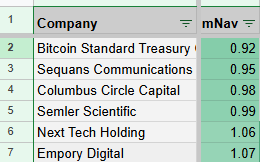
Exclusive BTC mNAV chart, built with the power of autism. No one else has this:
Bitcoin Standard Treasury $CEPO : 0.92
Sequans $SQNS : 0.95
Columbus Circle $BRR 0.98
Semler $SMLR 0.99
👇🔽👇🔽
Full details:
[docs.google.com/spreadsheets…] #autismwins #Bitcoin #OriginalData”
5
20
3,016

30秒抢救你的BTC聪明钱包地址!GeniiData数据导出 狗庄猎手导入完全指南
GeniiData暂停更新了?别慌!教你快速导出辛辛苦苦攒的所有聪明钱包地址,一键导入到免费工具狗庄猎手,让狗庄、阴毛钱和大户们通通裸奔!
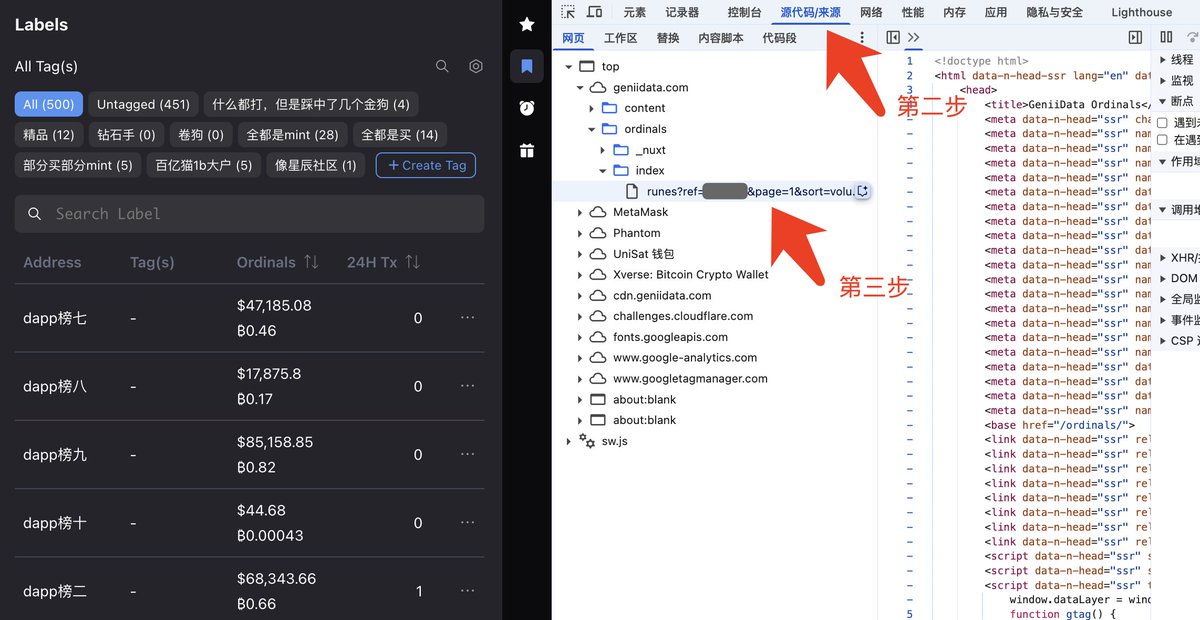
1️⃣ 从GeniiData扒出数据
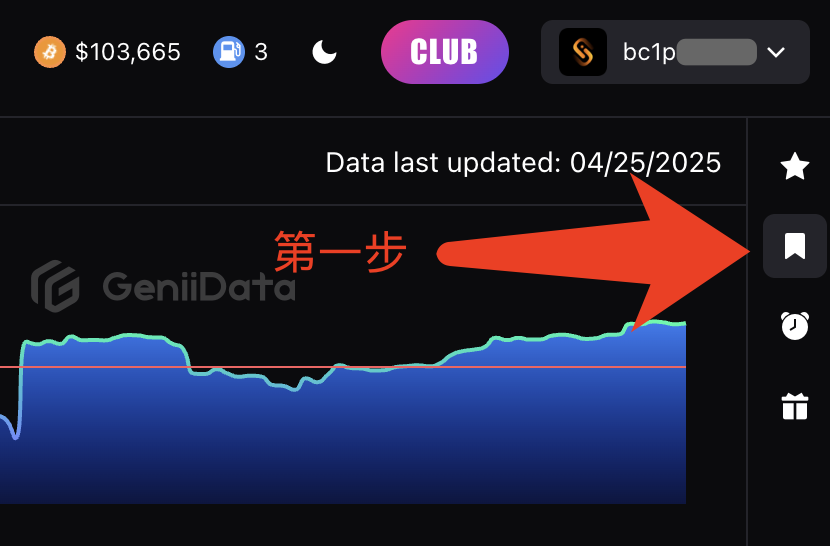
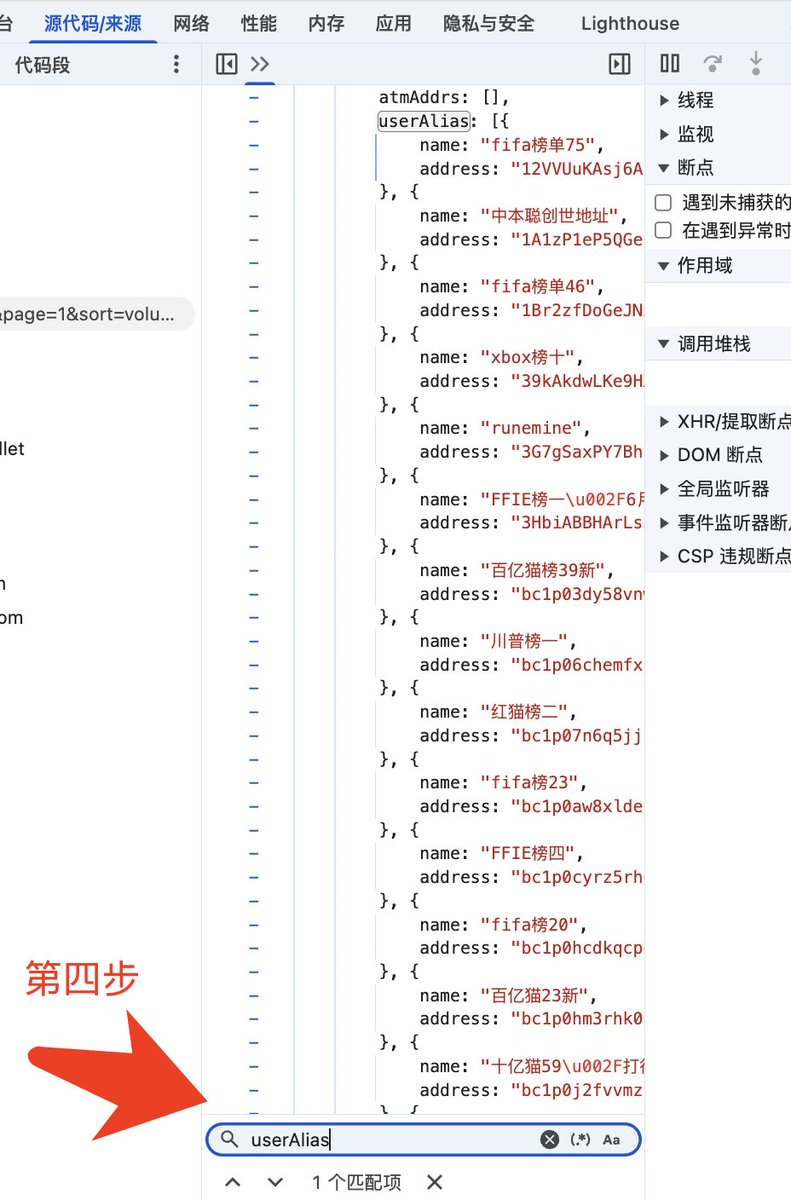
• 登录GeniiData,点击右上角Labels按钮
• 按F12键打开开发者工具(或右键选择"检查"/"审查元素")
• 切换到源代码/来源标签
• 找到以runes?ref=开头的文件(在index文件下)
• 往下拉,或者按Ctrl F或Command F 搜索userAlias
💎 找到了!这里就躺着你收集的所有聪明钱包地址
2️⃣ 一键转换并导出为狗庄猎手格式
狗庄猎手导入有特定格式,Mac用户和小部分Windows用户可能遇到兼容问题,老叶说下个版本会修复,但是我相信你跟我一样饥渴难耐,跟着下面操作一键转换格式。
• 浏览器打开一个空白页面
• 按F12打开开发者工具,切换到控制台(Console)
• 复制粘贴下面的代码到控制台:
------------------
// 步骤1:在这里粘贴你的数据
// 格式应该是 [{"name":"名称1","address":"地址1"}, {"name":"名称2","address":"地址2"}, ...]
const originalData = [
{ "name": "中本聪创世地址", "address": "1A1zP1eP5QGefi2DMPTfTL5SLmv7DivfNa" },
{ "name": "特朗普团队地址", "address": "bc1pf3l6leaq5garglvaxqv97j6qk54sd06js70afnmfgfmj9xgvkm6qsfd3yk" }
// 这里替换为你的所有数据
];
// 步骤2:执行转换
const result = {
"walletNotes": originalData.map(item => ({
"address": item.address,
"note": item.name
}))
};
// 步骤3:显示转换后的JSON
console.log(JSON.stringify(result, null, 2));
// 步骤4:自动下载JSON文件
const blob = new Blob([JSON.stringify(result, null, 2)], { type: 'application/json' });
const url = URL.createObjectURL(blob);
const a = document.createElement('a');
a.href = url;
a.download = 'bitcoin-address-notes.json';
document.body.appendChild(a);
a.click();
document.body.removeChild(a);
URL.revokeObjectURL(url);
// 提示成功信息
console.log("🎉转换完成,文件已自动下载!");
------------------
• 将从GeniiData复制的userAlias数据替换掉originalData数组部分,确保格式正确且最后一项后没有逗号
• 按Enter执行代码,会自动下载转换好的JSON文件,如转换有问题检查数据格式是否符合{ "name": "xx", "address": "xx" }
3️⃣ 导入到狗庄猎手
• 打开狗庄猎手插件
• 选择导入数据,上传刚刚的JSON文件
大功告成!
💡 这些数据是我们追踪市场的眼睛,是无数个深夜肝出来的宝贵财富。特别向@GeniiData和老叶@1999_eth致敬!BTC生态正是因为有了众多优秀开发者前仆后继的贡献才能不断壮大。
如果这篇教程帮到了你,请转发给更多符文铭文玩家。
10
6
31
6,426

8 Oct 2024
: impermanence becoming real real :: nothing we’ll see will be or stay the same ::: paper based museums and virgin data will be precious beyond measure #SustainedOrganicData #VirginData #OriginalData #PurifiedDigitalRecords
📚📖📃📜🗃️📓📕📒📔📘📙📗
2
54

13 Jul 2024
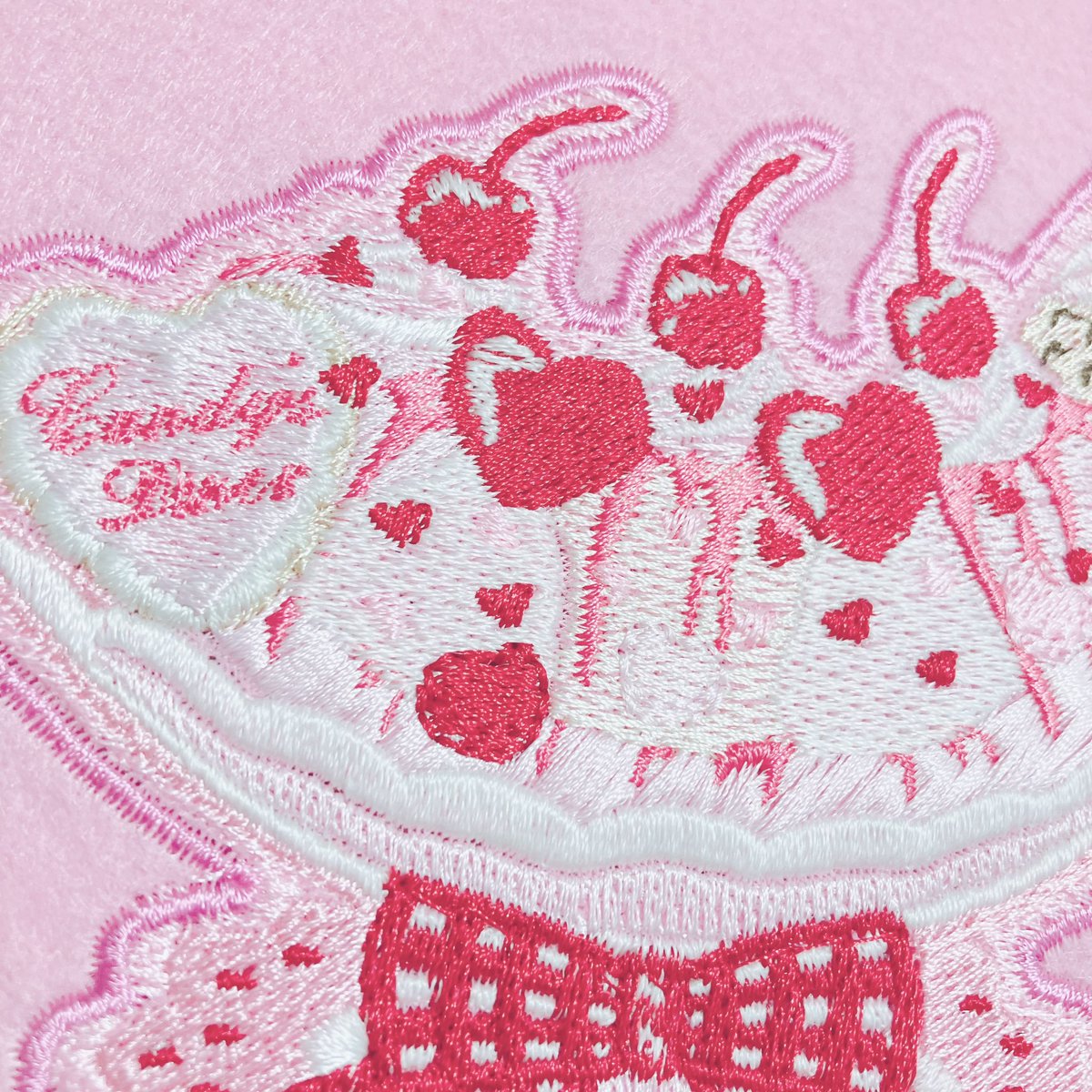
今回も小さなクッキーに小さなCandy' dinerサイン👀🫶💕︎︎❤️
糸で再現しています✨✨
ぜひ見て欲しいpointꔛ♡
#MsCandysCutieshoppe
#刺繍ミシン
#刺繍糸
#embroiderywork
#Originaldata❤︎

6
30
3,961

3 Apr 2024
--Originaldata visar att 30-talet var ungefär lika varmt som för närvarande. Det betyder att den ökade koncentrationen av CO2 i atmosfären inte har en dominerande verkan på den globala temperaturen. --klimatsans.com/2016/03/12/fu…
10
42
137
2,247

15 Mar 2024
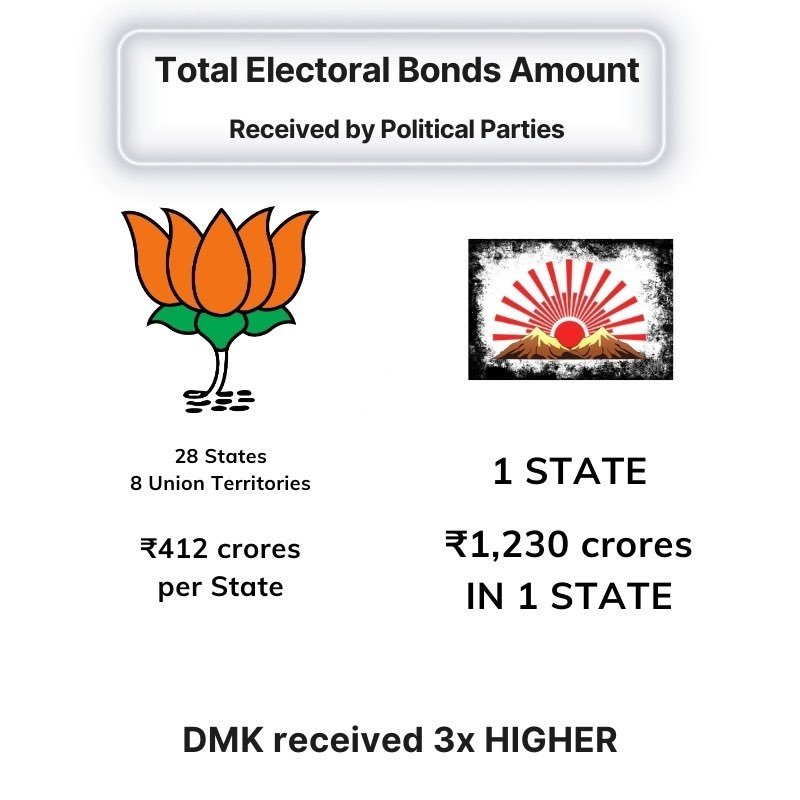
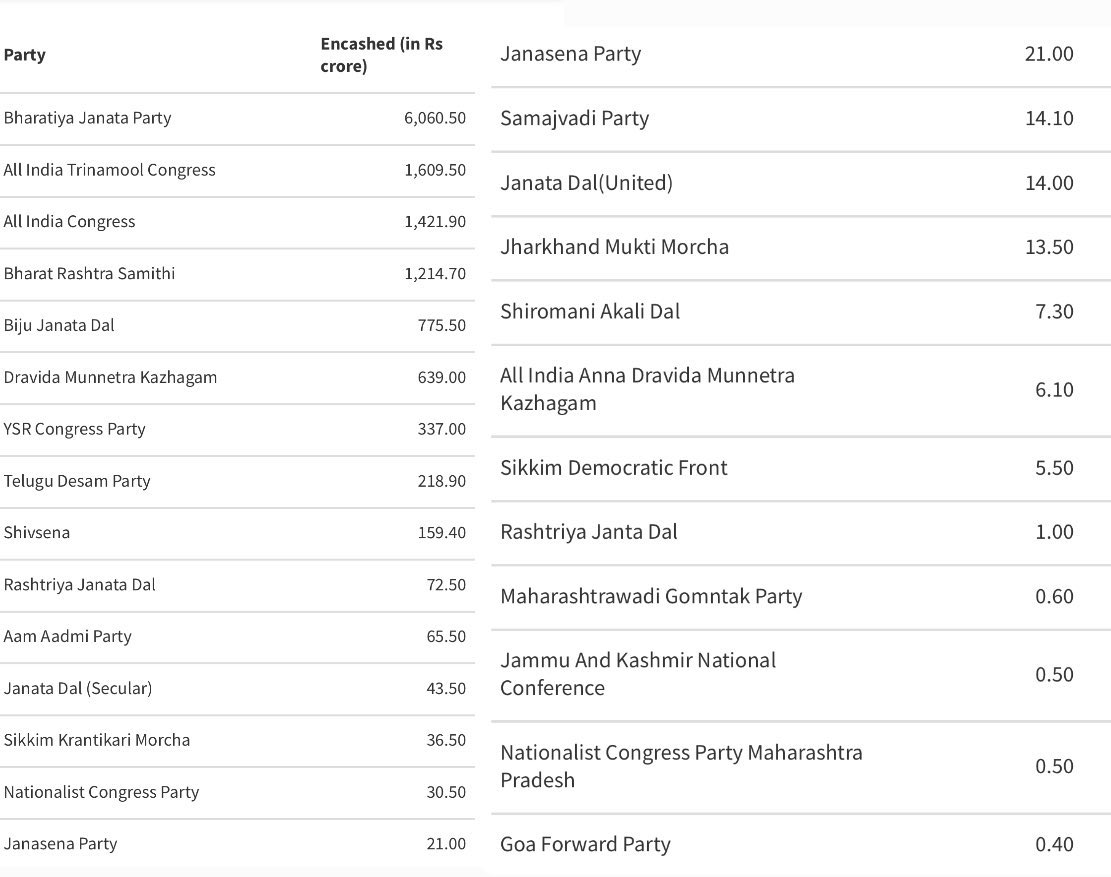
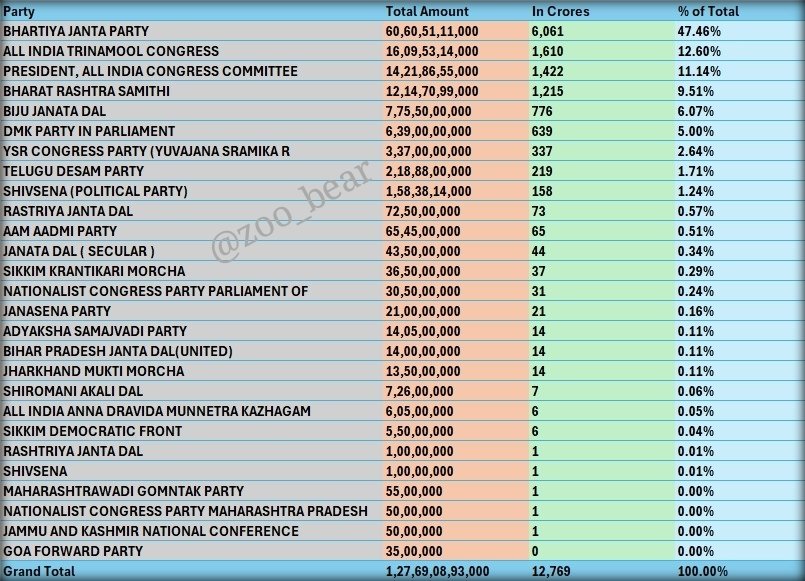
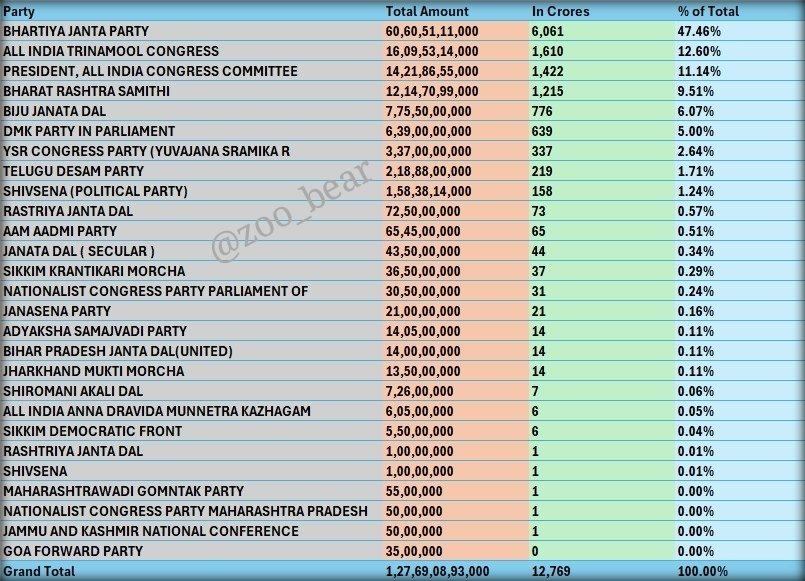
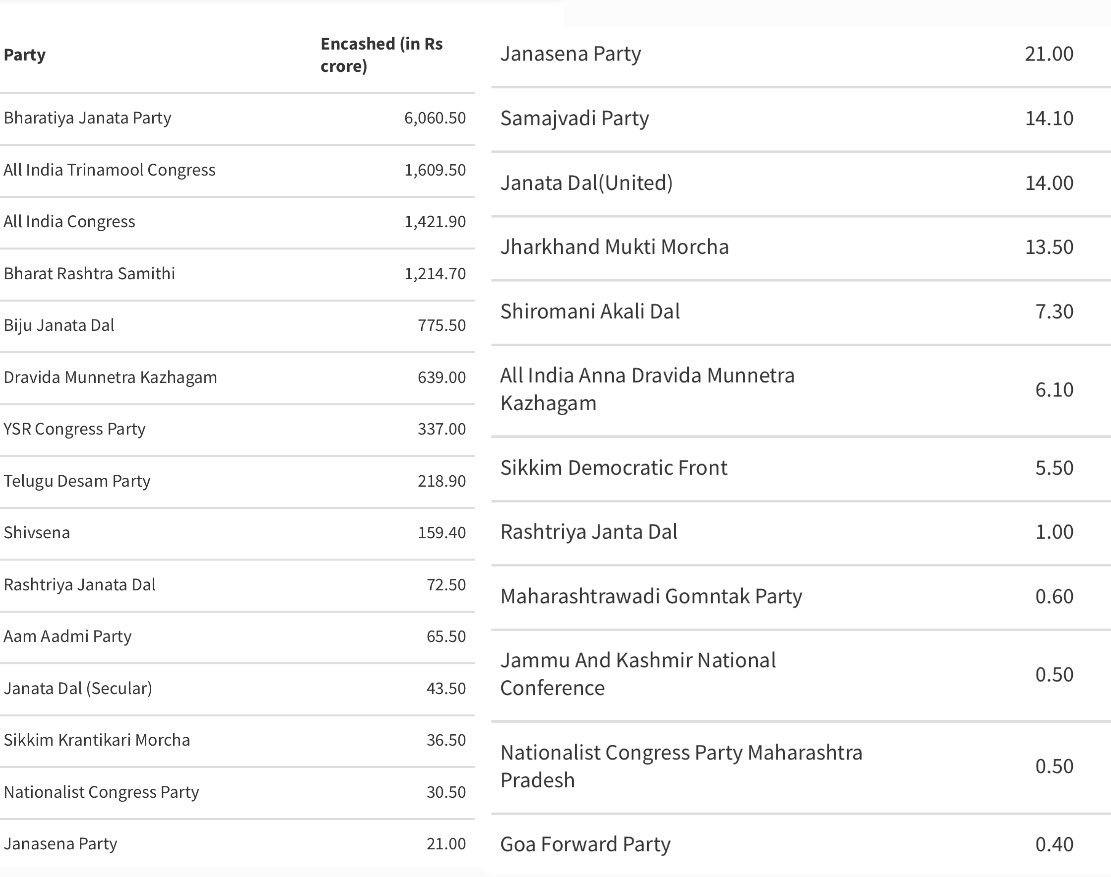
Here is the OriginalData 📈👇🏻
BJP: Centre and 18 States :6061 Cr
Avg per state : 336.72 Cr
TMC: 1 State : 1620 Cr
BRS : 1 State : 1215 Cr
BJD : 1 State : 776 Cr
DMK: 1 State : 639 Cr 😱
YSR: 1 State : 337 Cr
2
1
9
510

14 Mar 2024
Here is the OriginalData 📊 👇🏻
BJP: Centre and 18 States
TMC: 1 State
BRS: 1 State
BJD: 1 State
DMK: 1 State
YSR: 1 State
@Clairvoyant04
#ElectoralBondScam
4
72

14 Mar 2024
Here is the OriginalData 📈👇🏻
BJP: Centre and 18 States :6061 Cr
Avg per state : 336.72 Cr
TMC: 1 State : 1620 Cr
BRS : 1 State : 1215 Cr
BJD : 1 State : 776 Cr
DMK: 1 State : 639 Cr 😱
YSR: 1 State : 337 Cr
#ElectoralBonds #ElectoralBond
2
3
443

14 Mar 2024
Here is the OriginalData 📈👇🏻
BJP: Centre and 18 States :6061 Cr
Avg per state : 336.72 Cr
TMC: 1 State : 1620 Cr
BRS : 1 State : 1215 Cr
BJD : 1 State : 776 Cr
DMK: 1 State : 639 Cr 😱
YSR: 1 State : 337 Cr
#ElectoralBonds #ElectoralBond
46
200
405
37,213

14 Mar 2024
Here is the OriginalData 📊 👇🏻
BJP: Centre and 18 States
TMC: 1 State
BRS: 1 State
BJD: 1 State
DMK: 1 State
YSR: 1 State
#ElectoralBonds
9
83
168
12,791

2 Dec 2023
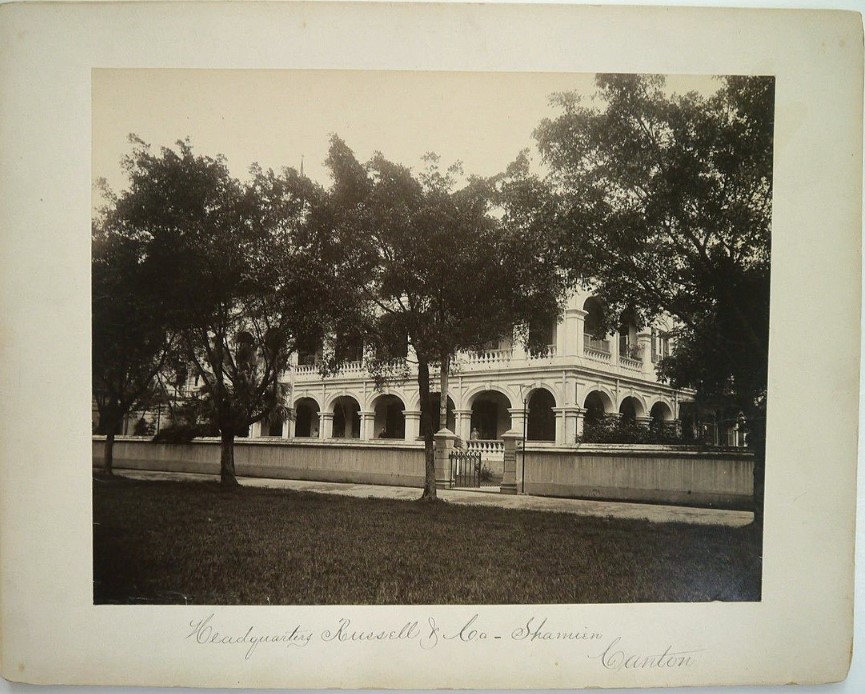
Russell & Company
Russell & Company var det största amerikanska handelshuset i Kina i mitten av 19-talet.
Firman specialiserade sig på handel med te, siden och opium och blev så småningom involverad i sjöfartshandeln.
År 1818 kontaktades Samuel Russell av köpmännen Edward C. Carrington, Cyrus Butler och Benjamin och Thomas Hoppin från Providence för att bli anställd i deras nya kommissionärsfirma i Kanton (nu kallad Guangzhou) under namnet Samuel Russell & Company
Russell anlände till Kanton 1819 och grundade Samuel Russell & Co.
Russell and Companys satsning på opiumhandel började kort därefter med Ammidon som seglade till Indien med avsikt att handla med indiskt opium
Samuel Russell
Samuel Russell, född 1789-1862, var en amerikansk entreprenör och handelsman, och grundare av Russell & Company, det största och viktigaste amerikanska handelshuset i Kina från 1842 till dess stängning 1891.
Han var kusin till William Huntington Russell, en av grundarna av Skull and Bones Secret Society vid Yale University
Russells vinster gjorde det möjligt för honom att grunda Russell & Company i Kanton, Kina, 1824.
Russell & Company, som främst handlade med siden, te och opium, blomstrade och 1842 hade det blivit det största amerikanska handelshuset i Kina.
Russell drog sig tillbaka från företaget 1836.
Han återvände till Amerika och bodde i sin herrgård i sin hemstad Middletown, Connecticut, fram till sin död 1862.
Tillbaka till Russel & Co
I augusti 1829 dog Thomas T. Forbes i en tyfon nära Macao och lämnade posten som bosatt partner Perkins & Co. vakant.
Före hans död hade Forbes skrivit i ett brev att Russell skulle ersätta honom om komplikationer skulle uppstå och John Perkins Cushing, som var Forbes kusin och även grundaren av Perkins & Company, accepterade dessa villkor som ledde till beslutet att slå samman Perkins & Company och Russell & Company.
Efter förvärvet av Perkins & Co. 1829 ärvde Russell & Co. Cushings omfattande opiumhandelsförbindelser från hela världen.
John Perkins Cushing, född 1787 -1862, kallades "Ku-Shing" av kineserna, var en förmögen amerikansk sjöman, opiumsmugglare och filantrop
Samma år upphörde Ostindiska kompaniets monopol på den brittiska Kinahandeln och Russell & Co ingick ett inofficiellt partnerskap med två brittiska firmor, Jardine, Matheson, & Co. och Whiteman & Co., för att ytterligare utöka opiumhandeln i Indien.
Vidare så hade en viss herre vid namn Warren Delano stora intressen i det amerikanska Ostindiska kompaniet Russel & Company.
Warren bodde i Kina i nio år och tjänade som operatörs-chef i Macao, Kanton och Hong Kong, där hans största prestation skulle komma att bli utvidgningen av Russell & Company’s handel med opium.
En handel som gjorde att familjen Delanos skulle komma att kunna räkna sig till en av de mest förmögna familjerna i USA vid tillfället.
Hans sonson Franklin Delano Roosevelt skulle sedermera komma att bli USAs 32:a president i perioden mellan 1933-1945 – dvs under nazitysklands uppgång och fall.
För att nämna någon av de mer kända resenärerna på det svenska Ostindiska kompaniet är väl Jacob Wallenberg den som utmärker sig mest, som 1769-1771 reste med fartyget Finland till Kina.
Vidare skall kanske nämnas att banken HSBC grundades på just denna handel, och så sent som för bara ett par tre år sedan åkte banken dit för att tvätta just narkotikapengar, såsom att en viss Al-Yamamahfond som förvaltades av banken både visade sig finansiera sunnisekteristisk extremism i Saudiarabien, såsom att BAE – Europas största vapenkoncern – var en av dess största bidragsgivare, detta då efter det att banken hackats.
Denna handel i sin tur ledde fram till de två opiumkrigen i mitten av 1800-talet, vållade av kolonialmakterna England och Frankrike pga den opiumepidemi som uppstod i dess kölvatten, och som till sist tvingade Kina att acceptera opiumhandeln och att även ge handelsprivilegier åt segrarmakterna.
Dessa krig betraktas ofta som början till slutet av Kinas kulturella historia som kejsardöme.
Att Sverige samt Norge var med på en liten hörna – trots att det svenska Ostindiska företaget var likviderat – och skrev opiumavtal med Kina 1847 kan ju vara värt att beakta i detta för vidare kontextuell förståelse, såsom att familjen Wallenbergs Enskilda Bank grundades nio år senare 1856.
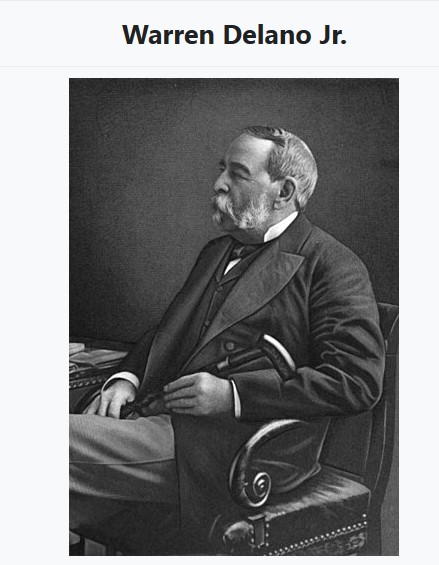
Warren Delano Jr.
Warren Delano Jr. 1809 – 1898, var en amerikansk köpman och narkotikasmugglare som gjorde sig en stor förmögenhet på att smuggla illegalt opium till Kina.
Delano tjänade en stor förmögenhet på att smuggla opium till Kanton (nuvarande Guangzhou) i Kina.
Opium, en mycket beroendeframkallande narkotika besläktad med heroin, var olagligt i Kina
Familjen Delano är av vallonsk härkomst med dess stamfader Philippe de Lannoy som anlände till Plymouth, Massachusetts, i början av 1620-talet.
Delano åkte först till Kina vid 24 års ålder för att arbeta för Russell & Company, som hade varit pionjärer inom handel med Kina.
John Perkins Cushing – även han delägare i Russell & Company – hade föregått Delano och inlett en nära relation med den största kinesiska honghandlaren som hette Howqua.
Warren Delano stammade från en lång rad sjöfarande Delanos.
Warren följde oundvikligen i sina förfäders fotspår och blev lärling vid en handelsbank i Boston med tillhörande rederi.
Vid denna tidpunkt byggde han också upp ett kontaktnät med andra finansiella intressen som skulle komma att ligga till grund för att bygga upp sin förmögenhet, som till sist gjorde att han kunde räkna sin familj till en av de 400 rikaste i USA.
Warren bodde i Kina i nio år och tjänade som operatörs-chef i Macao, Kanton och Hong Kong, där hans största prestation skulle komma att bli utvidgningen av Russell & Company's handel med opium
År 1836 hade handeln förklarats olaglig av den kinesiska regeringen som ändå växte till följd av de tolv miljoner opiumanvändarna i Kina.
Ett av dessa barn Sara Delano, skulle sedermera komma att gifta sig med James Roosevelt, mor till President Theodore Roosevelt som av inte någon som helst utpräglad slump också skulle komma att bli
belönad med Nobels Fredspris 1906 för sina förhandlingar i det rysk-japanska kriget, alltså det Nobelska opinionsbildningspris som delas ut av det
institut vars grundläggande finansiering gjordes av ett bestämt företag som heter Norsk Hydro och som skapades av ett inte obekant Investor och som sedermera fick en ordförande under andra världskriget som hette Herbert Lickfett.
Vid den tiden hette den Amerikanske presidenten också Roosevelt, fast i en senare upplaga som gav Dollarn sitt kyskhetsbälte - Glass Steagall.
Förresten så finansierades det rysk japanska kriget genom finansministern Takahashis försorg - han blev beordrad - att låna pengar av amerikanen Jacob Schiff och Rothschild familjen så att det kunde ske en revolution.
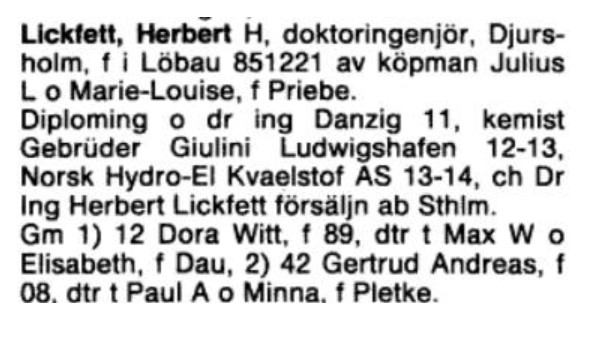
Ovan nämnde herr Lickfett ansågs för övrigt vidare av de allierade vara Europas farligaste man....
Herbert Lickfett var ordförande i Norsk Hydro och IG Farbens representant i Sverige....
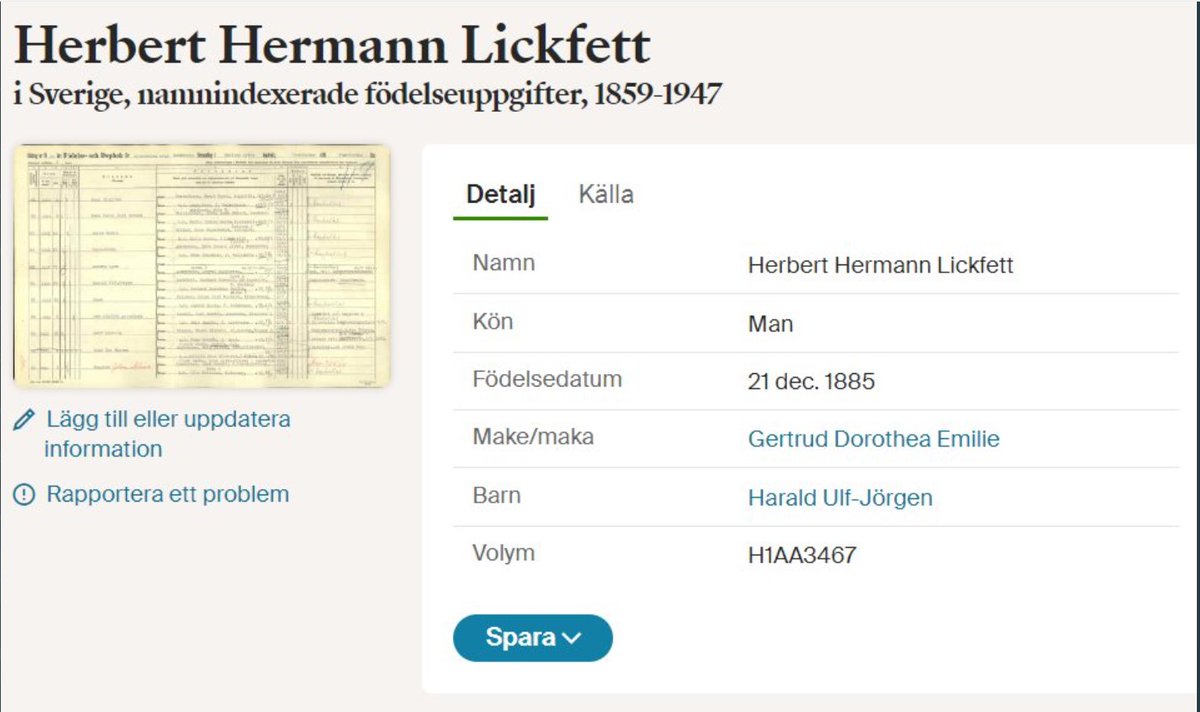
Herbert Hermann Lickfett
Döpt den 14 Feb 1886 i Doport Löbau, West Preussen, Deutschland (Tyskland)
Far Oscar Lickfett och Mor Luise
Källinformation Ancestry.com. Ancestry.com Operations, Inc., 2016. Originaldata: Mikrofilm Sammlung.
Familysearch.org Originale: Evangelisches Zentralarchiv Berlin, Berlin, Deutschland.
Det är närmast osannolikt att inte Birkenau - Brzezinski på polska - kommer i dagen inom kort med avseende på omvärldsutvecklingen och vad som hände i Ljungaverken den 5:e oktober 1944.
Ja det tillverkades tungt vatten där, precis som i Rjukan till kärnvapenforskningen.
Detta med kärnvapen för att skapa det kalla kriget, var ett IG Farbenprojekt och vilka som ägde aktier inte precis bara i moderbolaget IG Farben, utan att synas allt för mycket, vet numera väldigt många människor.
Europas farligaste man vi den här tiden var en viss herr Lickfett och i den av Investor betalda oberoende utredning som visade Investors oskuldsfullhet, står att läsa följande i not 52:
Not 52 ur Boschutredningen
"52 På begäran av Bosch kom även den svenske representanten från IG Farben, H Lickfett, att deltaga, men denne blev borttagen under våren 1944 av politiska orsaker.
Originaldokument blev då utväxlade emot nya ena, vilka signerades av Stenek och Stenbeck ensamma.
Aktennote 25 Februar 1943. Pm av 18 Juni 1943. Ordner 551. REA. ARB.
Pm för filerna 27 April 1944.
Kopior av Bosch Dokument IV funna i Tyskland. Bosch Kollektion."
Att Lickfett förekommer i handlingar vid och kring Ljungaverken krävs det inte exakt någon Kalle Blomkvist för att konstatera.
..och ja Brzezinski finns i Ljungaverken också!
The Bosch affair in short
x.com/Arsenalsgatan/status/1…
IG Farben och Wallenbergs inblandning
x.com/moTsecretary/status/17…
Kristian Birkeland
x.com/moTsecretary/status/17…
Ge mig svenskar, snus och whisky, så ska jag bygga en järnväg genom helvetet.
--James J. Hill
James J. Hill
James Jerome Hill, född 1838-1916, var en kanadensisk-amerikansk järnvägsdirektör.
Han var verkställande direktör för en familj av linjer som leddes av Great Northern Railway, som betjänade ett stort område i övre Mellanvästern, norra Great Plains och Pacific Northwest
Tillsammans köpte de inte bara järnvägen, de byggde också ut den kraftigt genom att förhandla om spårrättigheter med Northern Pacific Railway.
I maj 1879 bildades St. Paul, Minneapolis and Manitoba Railway Co. (StPM&M) med James J. Hill som verkställande direktör.
Hans första mål var att expandera och uppgradera ännu mer.
Från och med 1901 och början av det nya århundradet hade James Hill nu kontroll över både Great Northern Railway och Northern Pacific (som han hade fått med hjälp av sin vän J. P. Morgan, när järnvägen gick i konkurs under depressionen i mitten av 1890-talet).
Hill ville också ha kontroll över järnvägen mellan Chicago, Burlington och Quincy på grund av dess linjer i Mellanvästern och tillgången till Chicago.
Union Pacific Railroad var den största konkurrenten till Great Northern och Northern Pacific Railroads.
Även om Great Northern och Northern Pacific stöddes av J. P. Morgan och James J. Hill, stöddes Union Pacific inte bara av dess president, Edward H. Harriman, utan även av de extremt mäktiga William Rockefeller och Jacob Schiff.
Hill var medlem i Jekyll Island Club (även känd som The Millionaires Club) på Jekyll Island, Georgia, tillsammans med J. P. Morgan och William Rockefeller.
Banksters financing the 3d reich project by the Swedish, UK and US oligarchy
x.com/Arsenalsgatan/status/1…
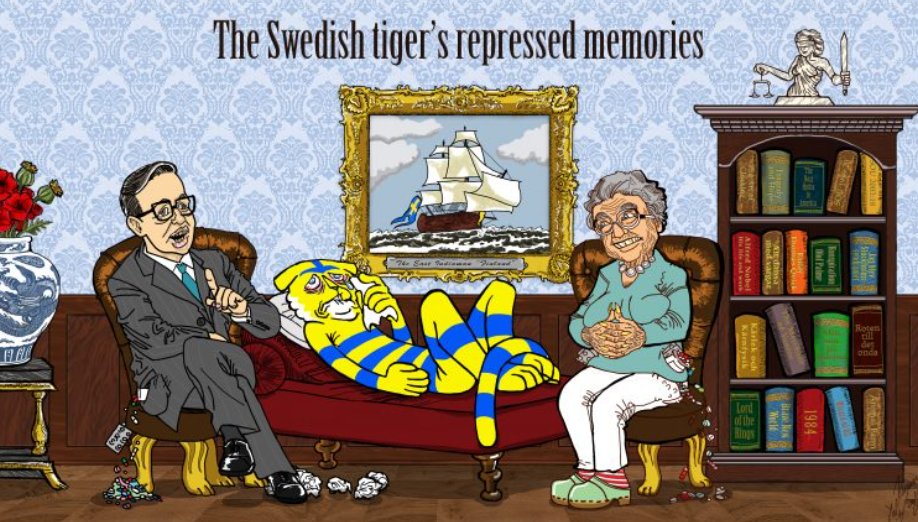
The Swedish Tiger’s Repressed Memories
x.com/Arsenalsgatan/status/1…
25 Nov 2023

The Swedish Tiger’s Repressed Memories
cred to @MarcusLjunggre4
Post: 1 of 7
Prologue
Our idea with this article is that once and for all, report not only what interests lay behind the two World Wars and the outbreak of the Cold War, but also the root cause, based on an operational strategic planning horizon extending throughout the last century, a planning that more than anything else has defined our world in modern times.
This is a multifaceted subject of course, with many more events and people involved than we can account for, but we have chosen to focus on the most prominent names to demonstrate different networks and connections, as well as historical events that happened both parallel and sequentially from a geopolitical perspective over the past two centuries. We want to create a comprehensive understanding for the reader why we are at this point today. To best know the direction of the future, we must first orientate ourselves in the past.
Before continuing, we want to thank Carl Norberg from whom we have borrowed some of the texts in this article. Over the years, despite great opposition from both individuals as well as the establishment, he has filled in the gaps of our forgotten past. Without him and the solid knowledge he possesses in economics, geopolitics, history and emotional understanding, this article would never have been produced or even conceived.
We will begin with something that most have heard both once and twice, but as they say, repetition is the mother of all knowledge.
In 1913, the US created the Federal Reserve through the interest of the international banking conglomerate. The Federal Reserve Act was passed during the Christmas week when most of the US state administration celebrated Christmas with their families, a bill that President Woodrow Wilson promised to immediately enact, as a consequence of the same banking interests funding him for the presidential post for that very purpose. This he only at a later stage understood the meaning of, when it was already too late, something he also regretted in writing.
— Woodrow Wilson, after signing the creation of the Federal Reserve.“I am a most unhappy man. I have unwittingly ruined my country. A great industrial nation is controlled by its system of credit. Our system of credit is concentrated. The growth of the nation, therefore, and all our activities are in the hands of a few men. We have come to be one of the worst governed, one of the most completely controlled and dominated Governments in the civilized world no longer a Government by free opinion, no longer a Government by conviction and the vote of the majority, but a Government by the opinion and duress of a small group of dominant men.”
One of these creators and the designated architect behind the central bank was named Paul Warburg, and it is with this family that our story begins.
The Warburg family is believed to have Italian origin, then called Del Banco, but after settling down in the German city of Warburg, the family took its name from there in 1559, and then branches of the family settled in the United States, Scandinavia, and England.
The spider in the net
The American-German branch
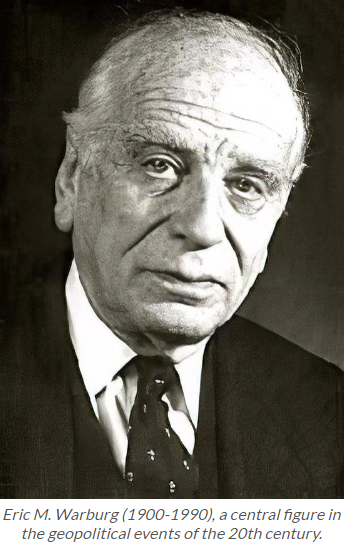
We’re about to begin with a biographical sketch of Eric M. Warburg’s life, in which he, as a transatlantic commuter with an extensive personal network, became connected to key institutions, organizations and important individuals. Although Eric M. Warburg never pursued a political post or a career in politics, he remained close to the influential and powerful members of these circles. In the United States, John J. McCloy, the former US High Commissioner for Germany, was one of Warburg’s most remarkable high-profile contacts. In Germany it was Helmut Schmidt, Chancellor of Germany 1974-1982, with whom he maintained a close friendship from the 1960s, sharing a passion for sailing, and it was to Eric Warburg that Schmidt would turn to about advice for German-American relations, but then Eric’s uncle Paul Warburg and his cousin James Warburg were advising on financial matters to President Franklin D. Roosevelt, among others. However, the friendship with Allen Dulles should be considered the most remarkable, at least from a Swedish perspective.
Eric M. Warburg (1900-1990), a central figure in the geopolitical events of the 20th century.
Investment banker Eric Warburg was a German-born Jew with an American passport, who became a commuter between the United States and Germany. Warburg’s name is first and foremost associated with banking, and the family banking company Warburg has been in Hamburg since the late 19th century. Eric Warburg also earned a reputation as a political and economic adviser, with significant diplomatic skills that he often used beyond the eyes of the public. Furthermore, he was a decisive force in the negotiation of the Jewish debt conference after the Second World War. He was part of a transatlantic business and social elite, whose networks during the 20th century may be considered to have been one of the more extensive of their time.
The Warburg’s transatlantic network
Eric Warburg was born in the Wilhelmine era and experienced his father Max Warburg’s success with the family firm, the bank MM Warburg & Co. Warburgs had prominent figures among his business partners and friends such as Albert Ballin, the architect of modern cruise travel and general manager of the famous Hamburg-America line, but also Prince von Bülow, former Chancellor of the German Empire.
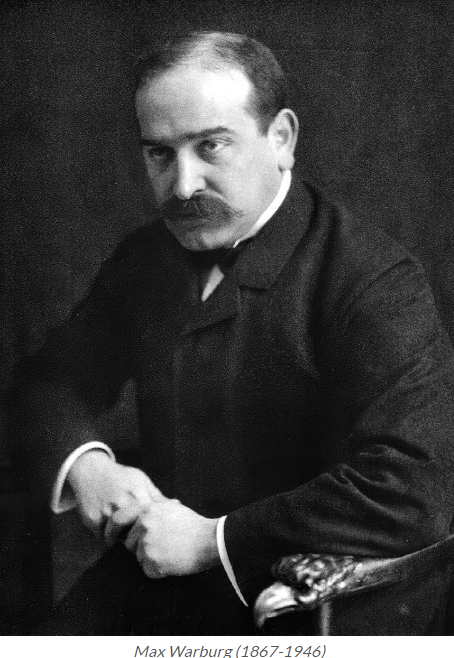
Max Warburg (1867-1946)
Max Warburg also belonged to a circle of advisers to the German Emperor Wilhelm II. After the First World War, Max Warburg participated in negotiations on the Versailles Treaty as a member of the German delegation, but he declined the offer to chair the Finance Committee and instead proposed his partner in the Warburg Bank, Carl Melchior.
Max Warburg’s financial success was particularly evident in the ever-increasing number of board seats he held before the 1930s. In the mid-1920s, he served on 27 corporate boards, although his first intention was to limit them to the one at Blohm & Voss, Germany’s largest shipyard at that time. The last board he ended up on was at IG Farben, and although Warburg was forced to give up these chairs after the Nazis came to power, to uphold confidence for the ongoing arising process, they are, to say the least, an expression of MM Warburg & Co’s prominent business position. Finally, this also laid a foundation for his son Eric’s successful maintenance of these business connections during and after World War II.
In addition, the Warburg family had established a significant branch of the family in the United States around the turn of the century through the marriage of two of Eric’s uncles, Paul and Felix Warburg, but also in Sweden where a third brother, Fritz Warburg, lived during both World Wars. The first Paul, identified as the architect of the US Federal Reserve, married Nina Loeb, daughter of Solomon Loeb, a founder of the The Wall Street Bank house Kuhn, Loeb & Co., while the latter, Felix, married Frieda Schiff, the only daughter of Jacob H. Schiff – the train magnate – a senior partner in the same company. Both Warburg brothers eventually joined as partners in Kuhn, Loeb & Co, the second-largest private bank in the United States before the First World War.
Apprenticeship on Wall Street in the 1920s
Eric Warburg graduated early from high school to voluntarily enter military service in 1918. After the war, he worked as an apprentice within the banking sector in both Frankfurt and Berlin, and then at NM Rothschild & Son in the city of London as well with his uncle Paul Kohn-Speyer’s company Brandeis, Goldschmidt & Co, the largest non-iron metal retailer in England. His training as an international banker finally came to an end in the United States where he spent three years. For the most part, he lived with his New York relatives, Felix and Frieda Schiff-Warburg, in Woodlands near White Plains, NY.
Eric Warburg worked at the International Acceptance Bank (IAB), which had been set up by his uncle Paul Warburg after serving with the Federal Reserve Board. IAB sold commercial paper to finance the reconstruction of European countries after the First World War, and since Eric was a close friend of his cousin Fredrick Warburg, Fredrick’s circle of friends soon became Eric’s. Among them were McCloys, Frank Hatch and George Brownell, all ambitious Wall Street lawyers and bankers. Eric’s timing was excellent as his family at that time advanced rapidly in the upper society of the American establishment on the East Coast.
While apprenticing on Wall Street, Eric Warburg also did business with law firms, including Sullivan & Cromwell. The company was involved in US-German business long after the Nazis took power, the Dulles brothers Allen and John Foster worked there, who would later become head of the Central Intelligence Agency (CIA) and US Secretary of State under President Eisenhower. In summary, his time as an apprentice in New York laid the foundation for many of the networks and connections that would support his future transatlantic career.
To get his family’s business in order, Eric went to Germany in 1938 and immediately became a partner in the family’s banking firm. The Aryanization process, that is, when Jewish property was confiscated in Nazi Germany, had been going on since 1933 and it was no longer possible to conduct a banking business in a credible way, since from an opinionist perspective it was no longer possible to conceal the fact that one of the largest German banks was run by Jews. So in 1938, they did what all major companies did at this time and tried to relocate their operations to a third party in a neutral country, with the right of repurchase after the war.
The choice fell initially on the Swedish financial family Wallenberg, which tried to redeem the bank with shares in a particular parent company, the business conglomerate IG Farben. The same company that Max Warburg only a few years earlier had been forced to leave in accordance with the above explanation, a company that was also the single largest supplier to Hitler’s war machine. These shares, which would constitute the purchase price, were also stored in the German Central Bank, where Max was also currently on the board under Hjalmar Schacht. However, the deal never went through, the bank was instead acquired by another party.
When the overall situation was resolved in Nazi Germany, Eric and his parents relocated to the United States. Fortunately, Eric already had a permanent resident status, which allowed him to quickly become well-settled. As an American citizen, he was able to get his parents, Max and Alice Warburg, permission to stay as well. The following year, Eric started his own company, EM Warburg & Co, where he re-employed former employees of Warburg companies in Europe who also succeeded in immigrating to the United States. Among its customers were “the lucky few” who managed to bring capital from Europe and especially from Germany, however luck can also be regarded as when circumstances arise for the prepared…
Warburg’s wealth and the existing family ties to the United States allowed a relatively smooth transition compared to the experience of many other immigrants. In 1938, it was estimated that 300,000 German citizens wanted to emigrate to the United States. However, the entry rate was as low as 27,000 per year. Eric Warburg felt much more at home in the United States than Germany. Even before his actual departure from Nazi Germany, Warburg had chosen the United States as his preferred country for resettlement. This is because he had spent three of his youngest happiest years there and he knew he would probably feel much more at home there than in, say England, Holland or Sweden, according to his memoirs.
In addition to running his newly established business, Eric Warburg teamed up with several aid committees that sought to “help refugees stranded in New York to find homes and work in the country,” as it was usual for these interests to portray themselves as humanitarian advocates. As chairman of the National Committee for Resettlement of Foreign Doctors belonging to the National Refugee Service NRS, he assisted several hundred German and Austrian doctors to settle in the United States. In addition, Eric Warburg lent money to help people in financial hardship to leave Europe during the war. In 1941, he deposited money into the Jewish Joint Distribution Committee’s Transmigration Bureau to get three people to emigrate to the United States.
At the outbreak of the war, Eric Warburg again lined up for military service. At the age of 42, he was recruited by the US Army Air Force. Like other family members and many emigrants, he was assigned to the US intelligence service as an information gatherer and analyst on various projects, because he had the necessary language skills as well as an intimate knowledge of foreign countries and economies. Warburg became the supreme interrogator and contact person between the US and British military intelligence services, which may well be considered remarkable in this context if we allow ourselves a little modesty. According to historian Ron Chernow, Warburg’s war service secured him entry into both Washington and Whitehall, where he gathered powerful friends to help deepen his “post-war career,” and, quite right, Eric Warburg successfully expanded his contact network both during and after the war.
Postwar
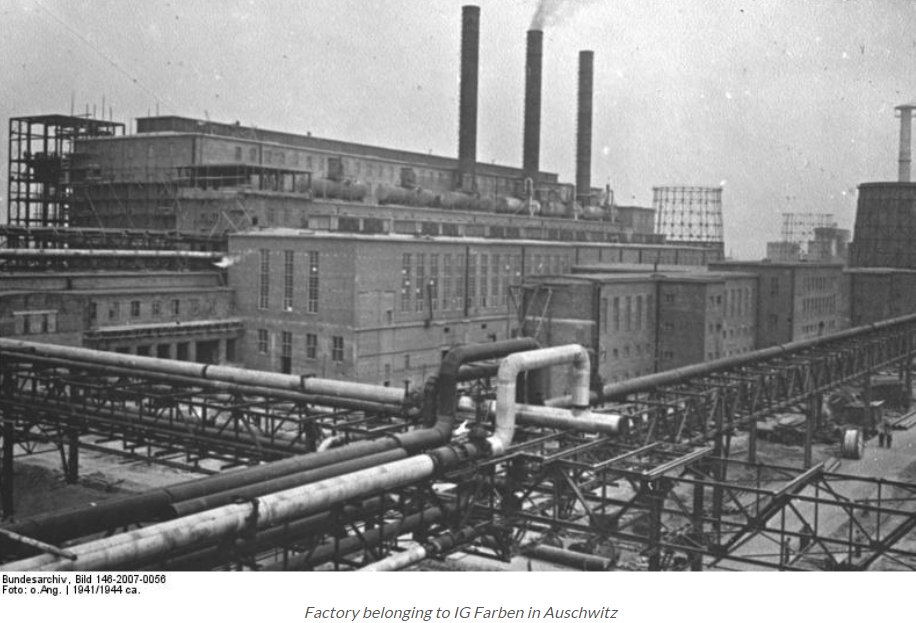
In May 1945, Eric resumed his old acquaintance with Allen Dulles, which, of course, was more likely to have been continuous throughout the war. Dulles was now responsible for the German branch of the US intelligence service, as head of the Office of Strategic Services (OSS), the forerunner of CIA, in Switzerland and later occupied Germany. Through Dulles, Warburg became acquainted with survivors of the German resistance in the summer of 1945, including Fabian von Schlabrendorff, who later became a judge of the German Constitutional Court. They developed a friendship but soon found each other on opposite sides of the negotiating table. When the conference on Jewish material claims and the negotiations against Germany and German companies took off to compensate those who were put into forced labor in former labor camps – for example, Auschwitz Birkenau, where IG Farben was a major owner – Eric Warburg was contacted and asked to act as a neutral broker.
Factory belonging to IG Farben in Auschwitz
The officials who sought compensation chose Warburgs as a negotiator because curiously enough, he was familiar with a number of dealers who represented IG Farben, not the least those for Krupp, Siemens, and Flick. Eric Warburg also provided offices in the Warburg Bank in Hamburg for meetings between claimants and lawyers from the respective companies. For example, when it came to Dynamite Nobel AG, an ammunition producer where Friedrich Flick held 82% of the shares, it was Fabian von Schlabrendorff who Warburg met and most often corresponded with between 1962 and 1967. Despite the close relationship between the two men, the negotiations ended most unsuccessfully for the claimants, where Friedrich Flick after several years of skilfully drawn-out negotiations stated that he lacked funds for.
Since Warburg had no intention of joining the US military and even, amusingly enough, refused to participate in the Nuremberg Trials which began in November 1945, he resigned from active duty and returned to New York. During the following post-war years, Warburg’s priority was to revive his New York company for obvious reasons. Still, he was loyal to the Air Force Intelligence Community and throughout the 1950s he gave frequent lectures at CIA to train future interrogators. As a civilian, he also joined the Council of Foreign Relations, the United States’ most prestigious and influential foreign policy think tank in the post-war era, that sought a bold internationalist agenda.
Warburg had established contact with the family’s old banking company in Hamburg, now under the name Brinckmann, Wirtz & Co., shortly after the war. In 1949, an appropriation was made, which led to the Warburg family represented by Eric M. Warburg again being part-owner of the company – what a surprise! From then on Eric had good reasons to travel to western Germany and especially to Hamburg quite often, thereby becoming a frequent transatlantic commuter. It wasn’t until 1956 that Eric finally resigned from the bank’s management. Since 1970, the bank has been renamed to M.M. Warburg again.
However, Eric Warburg did not just try to recover the family bank in Hamburg. His broader goal was to “participate in building a bridge between the old world and the new, especially Germany and the United States, because he had spent so many years on both sides of the Atlantic” was the officially stated reason, but the reason was more likely to implement the post-war NATO doctrine, which was to keep Germany down through Deutsche bank, by way of the Federal Reserve, to maintain US interests – actually the international banking hegemony interests – and keep Russia out of the European market by directing the strategic flow of natural resources. He helped establish two organizations in his pursuit of that goal: Atlantik-Brücke and the American Council on Germany (ACG). Although he only sat as the ACG treasurer, he always “sponsored” and “assisted on both sides”. The larger objective he hoped to achieve through the two organizations’ activities was to integrate West Germany into Western societies and construct a strong anti-communist position. On whose mission, is a question to be reminded of.
Apart from his involvement with such transatlantic elite organizations, Warburg showed his connection to Germany in several other ways. Warburg was an open opponent to the Morgenthau Plan and criticized all allied dismantling of industrial plants in western Germany. He arranged a meeting with his old friend John J. McCloy, who recently installed the US High Commissioner for occupied Germany in 1949, where Warburg argued against the Allied dismantling program. McCloy finally gave in and asked Warburg to draw up a list of factories that should be saved from dismantling, which included August Thyssen’s steel mill and Krupp’s synthetic gas plant.
By the late 1950s, Eric Warburg had started his family business management as a head partner and decided to return to Germany for good. Despite his wife’s initial opposition, the entire family settled in Hamburg and their children attended German schools. However, the family maintained strong ties to the United States through relatives and companies. In addition to the many American cousins, there was Eric’s youngest sister Gisela who had married the federal judge Charles E. Wyzanski. In 1966 Lionel Pincus went to EM Warburg & Co. and despite the company changing its name to Warburg, Pincus & Co. Eric was still a partner in the company he had established in 1939. Shortly before his definite return to Hamburg, Warburg joined the American Jewish Committee’s Foreign Affairs Committee (AJC), and in Germany he then kept a special eye on anti-Semitism in German media, ie. a German counterpart to Sweden’s Expo, whose task is to control the opinion corridor and maintain the status quo ruling order.
Although born in the Wilhelmine era, living through the Weimar Republic and the Nazi era, it was the confrontation with Soviet communism that shaped Eric Warburg the most. Shortly after the ceasefire in 1945, Warburg lobbied General Eisenhower to give up Berlin and in turn retained large parts of central Germany that held “10 million people – human capital – and vital industries potentially intact, crucial to maintaining a balance between East and West”, which was the goal. He was convinced that “if only the Allies followed his advice” it would be highly unlikely that the Communist German Republic could ever be created.
He applied a similar argument when he persuaded John J. McCloy to stop dismantling the German industry: “Without a strong economy the German people would fall to communism.” Given his strong anti-communist attitudes and his diligence for the reconstruction of Germany, as well as his good relations with the United States, it is difficult to interpret these efforts other than that Eric had a vested interest in establishing what would be called the Cold War.
With his multifaceted network, Erik connected business and industrial communities in western Germany and the United States. His involvement in Atlantic-Brück’s business and the US Council in Germany connected him with political circles, media, and academia, as well as family contacts. Eric M. Warburg, as a representative of a transnational elite that re-emerged in the post-war era, helped shape the Cold War. There are good reasons to suspect that Allen Dulles was in the background all the way, for example, described in the book “Containing Communism”, where Allen Dulles, now as chief of CIA, is said to have expressed himself in terms of “President Eisenhower surrendered all his power to me.” The same Eisenhower as in his farewell speech in 1961 as president warned for the military-industrial complex.
So what kind of entity was it that seemed to be hidden from sight, whose affairs Eric conveyed before, during and after the Second World War? To answer this question we must first take a look at one of the more successful companies in Swedish history.
Post: 1 of 7
1
14
22
1,170

9 Nov 2023
Secondly, we are also storing the data to originalData property which we can use later, if we want to access anything directly from the original object.
1
2
15

22 Jun 2023
Mannen spres pseudovitenskap via twitter, og rene faktafeil, og hevder han vil se "originaldata" og "gjøre seg opp en selvstendig mening".
Classy
22 Jun 2023

Fordi jeg vil se på originaldata og gjøre meg opp en selvstendig mening. Det må du kunne respektere.
6
24
6,492

22 Jun 2023
Når konklusjonen du trekker bygger på mangelfull kunnskap om realiteten som originaldata mislykkes i å representere så er det nødvendig å opplyse om dette.
1
5
442

22 Jun 2023
Fordi jeg vil se på originaldata og gjøre meg opp en selvstendig mening. Det må du kunne respektere.
3
5
7,159