

Jun 9
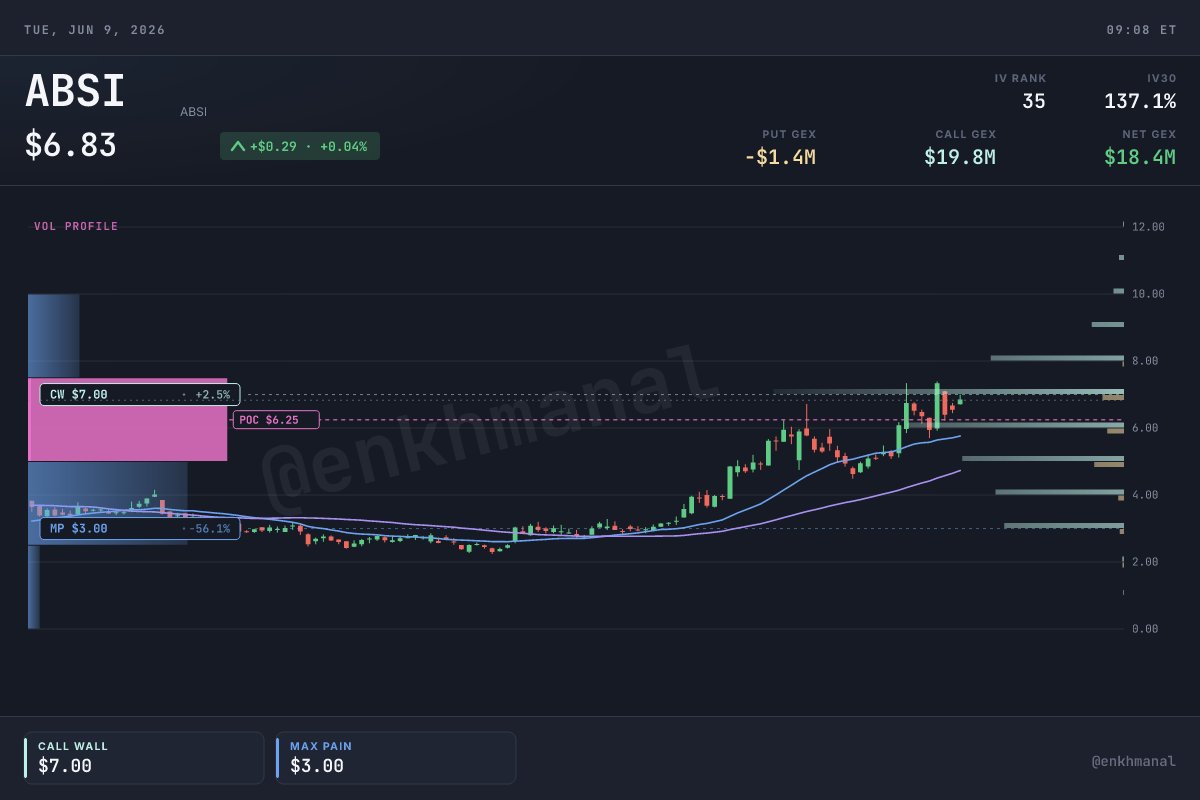
$ABSI - ABSCI CLIMBS INTO GOLDMAN'S HEALTHCARE CONFERENCE ON ITS "GLP-1-LIKE" HAIR-LOSS BET
Absci rose ~4.9% to $6.86 ahead of its presentation at the Goldman Sachs Global Healthcare Conference, after BTIG flagged multi-billion-dollar upside for lead candidate ABS-201 — an AI-designed anti-PRLR antibody being tested in hair loss and endometriosis. BTIG and JonesResearch carry Buy ratings with $9–$11 targets.
The mechanism: ABSI is a generative-AI drug-design platform, so its equity re-rates on clinical proof that computer-designed antibodies work — ABS-201's Phase 1/2a readouts due in 2026 are the binary that validates the whole model.
1
3
292

Absci's HEADLINE™ Phase 1/2a human clinical trial continues to progress in Australia under the guidance of renowned KOLs.
Our AI-designed anti-PRLR antibody, ABS-201 has the potential to introduce the first new mechanism of action for androgenetic alopecia (pattern hair loss) in nearly three decades. Recent translational human ex vivo scalp models demonstrated that ABS-201 effectively stimulates hair growth by regenerating the stem cell niche as well as promoting additional key growth modulators.
Learn more and see if you qualify: headlinetrial.com/
2
9
708

Jun 4
2
1
2
920

May 29
En réalité la liberté de culte et de conscience est un PRLR qui fait partie du bloc constitutionnel mais ok
1
9
335


May 16
では説明すると
「プロラクチンが血流に乗って移動し、涙腺細胞にある『プロラクチン受容体(PRLR)』に直接結合してシグナルを伝達、涙腺の分泌機能が活性化され、涙の合成が促進されます」これで理解できましたか?
3
7
673

May 14
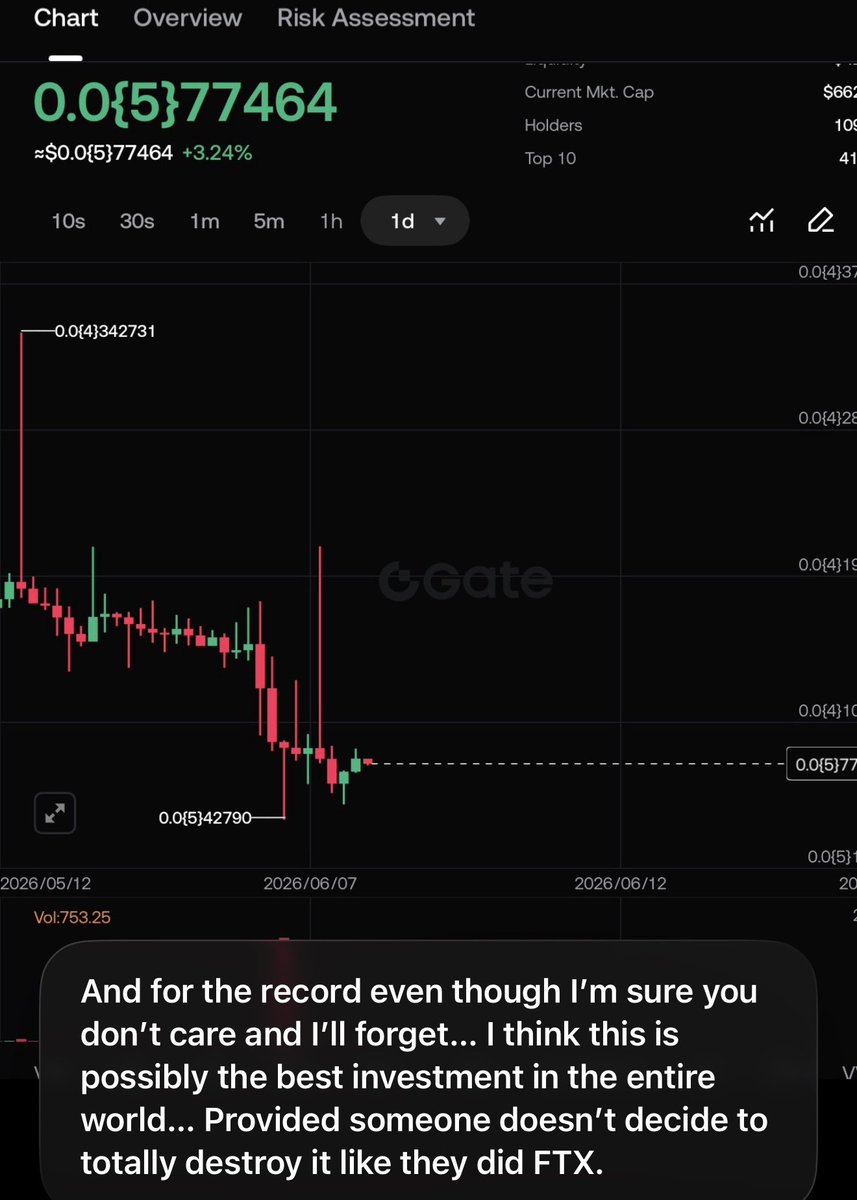
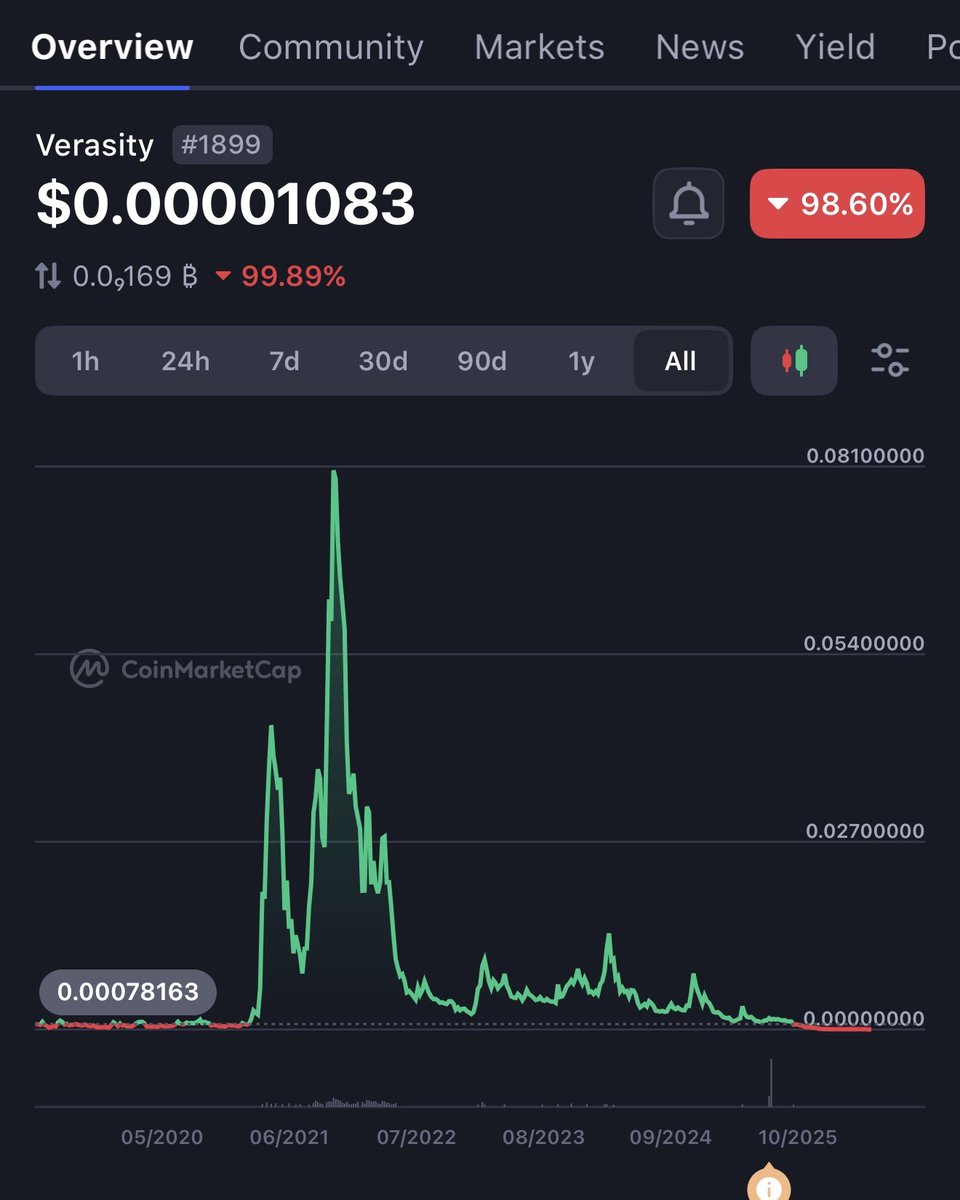
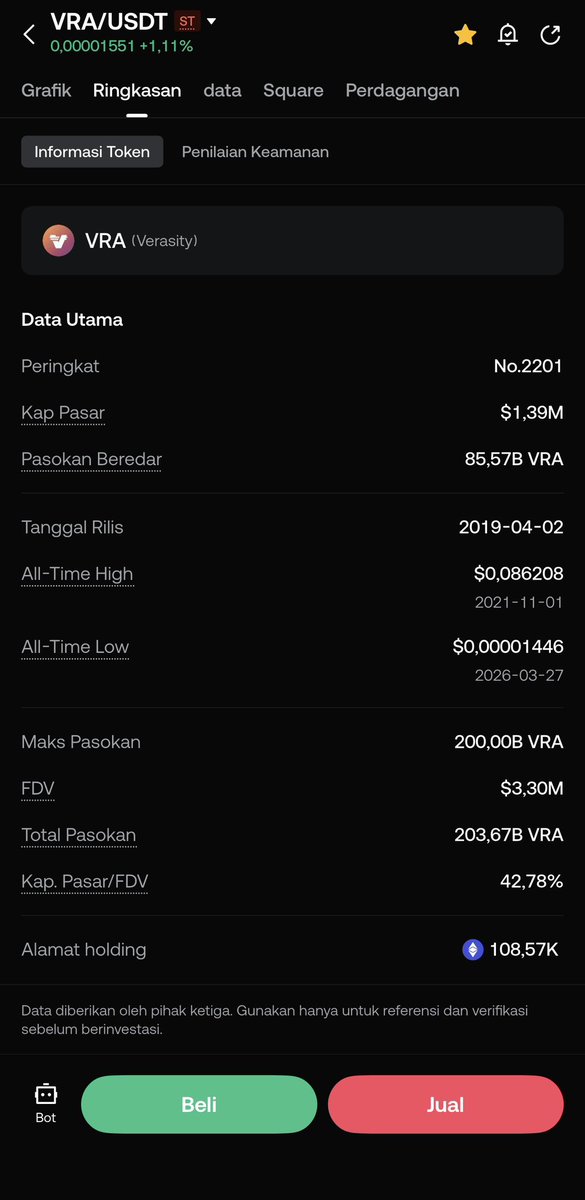
Verasity really said “reward loyal holders” then dropped the most backwards airdrop structure imaginable.
To even qualify for the $PRLR airdrop:
• Hold 500,000 $VRA
• Don’t live in “restricted jurisdictions” like the US or UK
So a huge chunk of the actual long-term holders are instantly excluded. People supported the project for years just to get geo-blocked at the finish line.
And it gets worse.
The rewards are distributed over 52 WEEKS.
If you claim early, you DON’T receive the full allocation.
So holders are basically forced into a year-long drip feed just to avoid losing rewards that were supposedly already theirs.
Imagine holding through bear markets, staking, supporting the ecosystem, only to find out:
• Small holders get nothing
• US/UK holders get nothing
• Early claimers get penalized
This isn’t an airdrop. It’s a loyalty tax with extra steps.
5
6
1,109

May 14

2
272

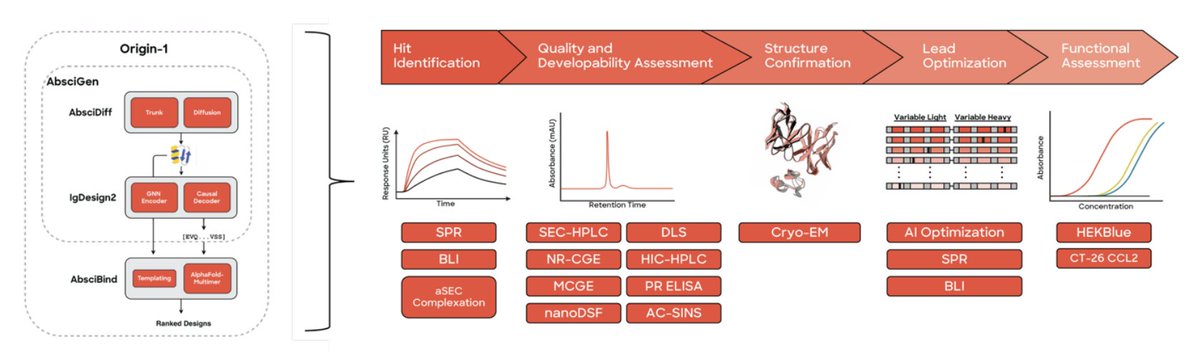
Origin-1: A generative AI platform for de novo antibody design against novel epitopes
1 Origin-1 targets “zero-prior” epitopes: binding sites on antigens with no available antibody–antigen or protein–protein complex structures, and with limited homology (≤60% identity) to proteins that do have known complexes—setting up a stringent generalization test.
2 The platform combines two stages: AbsciGen (design) and AbsciBind (score/select). AbsciGen itself is modular: AbsciDiff generates epitope-conditioned all-atom antibody–antigen complex structures, then IgDesign2 designs paired heavy light CDR sequences to match those structures.
3 AbsciDiff is a diffusion-based all-atom generator fine-tuned from Boltz-1, modified for antibody docking/design with (i) antibody- and docking-specific masking/conditioning, (ii) explicit epitope conditioning via a token-wise epitope vector, (iii) an intermediate “sequence hypothesis” head with recycling, (iv) optimized equivariant kernels, and (v) optional structural templates (endogenous templating used in final training).
4 IgDesign2 is a “generate-and-refine” sequence designer: a GNN encoder captures 3D geometry, a causal transformer decoder autoregressively generates CDRs, then a paired antibody language model refines heavy light sequences with structure-aware fusion at every layer—aiming to avoid treating chains independently.
5 AbsciBind addresses a practical bottleneck: folding-model confidence metrics often underperform for antibody–antigen complexes. It derives from AF_Unmasked and computes an ipTM-style score with improved awareness of heavy/light chain arrangement plus an antibody-aligned normalization; the final AbsciBind Score averages global and antibody-aligned interface assessments.
6 In silico benchmarking vs RFantibody on 10 “zero-prior” targets: AbsciGen produced many more high-scoring candidates by AbsciBind Score (23.5% of designs ≥0.5 vs 0.8% for RFantibody) and higher mean AbsciBind Score overall, while also yielding more human-like sequences by OASis humanness percentiles.
7 Low-throughput experimental validation: with fewer than ~100 designs screened per target, Origin-1 produced specific binders for 4 targets (COL6A3, AZGP1, CHI3L2, IL36RA). Hits were filtered for specificity (including off-target proteins TL1A and PRLR) and confirmed via orthogonal assays (SPR, BLI, solution complexation).
8 Structural accuracy was validated by cryo-EM for designs against COL6A3, AZGP1, and an optimized IL36RA variant: 3.0–3.3 Å maps and high agreement with design models (DockQ 0.83–0.91), with sub-angstrom to ~1.5 Å-range CDR RMSDs reported across loops—supporting atomic fidelity of both docking pose and designed paratope geometry.
9 AI-guided affinity maturation: adapting Efficient Evolution with AbsciBind multiple protein language models, they improved weak binders and produced functional antagonists. For IL36RA, optimization yielded sub-nanomolar affinities and a best cellular potency EC50 of 12.3 nM; cross-reactivity to mouse IL36RA enabled functional testing in a mouse cell assay as well.
10 Developability profiling (polyreactivity, self-association, hydrophobicity, thermal stability, aggregation/polydispersity, purity) showed most binders were within therapeutically acceptable ranges; importantly, IL36RA variants retained generally similar developability despite >1000-fold affinity gains, highlighting an attempt to co-optimize binding and drug-like properties.
💻Code: github.com/AbSciBio/origin-1
📜Paper: biorxiv.org/content/10.64898…
#AntibodyDesign #GenerativeAI #ProteinDesign #ComputationalBiology #MachineLearning #CryoEM #DrugDiscovery #DeNovoDesign #ProteinEngineering #Bioinformatics
1
2
25
10,374
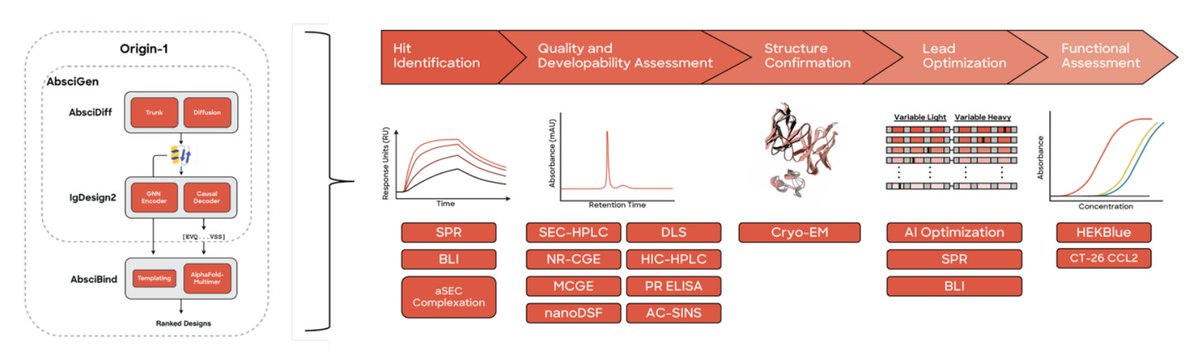
Origin-1: A generative AI platform for de novo antibody design against novel epitopes
1 Origin-1 targets “zero-prior” epitopes: binding sites on antigens with no available antibody–antigen or protein–protein complex structures, and with limited homology (≤60% identity) to proteins that do have known complexes—setting up a stringent generalization test.
2 The platform combines two stages: AbsciGen (design) and AbsciBind (score/select). AbsciGen itself is modular: AbsciDiff generates epitope-conditioned all-atom antibody–antigen complex structures, then IgDesign2 designs paired heavy light CDR sequences to match those structures.
3 AbsciDiff is a diffusion-based all-atom generator fine-tuned from Boltz-1, modified for antibody docking/design with (i) antibody- and docking-specific masking/conditioning, (ii) explicit epitope conditioning via a token-wise epitope vector, (iii) an intermediate “sequence hypothesis” head with recycling, (iv) optimized equivariant kernels, and (v) optional structural templates (endogenous templating used in final training).
4 IgDesign2 is a “generate-and-refine” sequence designer: a GNN encoder captures 3D geometry, a causal transformer decoder autoregressively generates CDRs, then a paired antibody language model refines heavy light sequences with structure-aware fusion at every layer—aiming to avoid treating chains independently.
5 AbsciBind addresses a practical bottleneck: folding-model confidence metrics often underperform for antibody–antigen complexes. It derives from AF_Unmasked and computes an ipTM-style score with improved awareness of heavy/light chain arrangement plus an antibody-aligned normalization; the final AbsciBind Score averages global and antibody-aligned interface assessments.
6 In silico benchmarking vs RFantibody on 10 “zero-prior” targets: AbsciGen produced many more high-scoring candidates by AbsciBind Score (23.5% of designs ≥0.5 vs 0.8% for RFantibody) and higher mean AbsciBind Score overall, while also yielding more human-like sequences by OASis humanness percentiles.
7 Low-throughput experimental validation: with fewer than ~100 designs screened per target, Origin-1 produced specific binders for 4 targets (COL6A3, AZGP1, CHI3L2, IL36RA). Hits were filtered for specificity (including off-target proteins TL1A and PRLR) and confirmed via orthogonal assays (SPR, BLI, solution complexation).
8 Structural accuracy was validated by cryo-EM for designs against COL6A3, AZGP1, and an optimized IL36RA variant: 3.0–3.3 Å maps and high agreement with design models (DockQ 0.83–0.91), with sub-angstrom to ~1.5 Å-range CDR RMSDs reported across loops—supporting atomic fidelity of both docking pose and designed paratope geometry.
9 AI-guided affinity maturation: adapting Efficient Evolution with AbsciBind multiple protein language models, they improved weak binders and produced functional antagonists. For IL36RA, optimization yielded sub-nanomolar affinities and a best cellular potency EC50 of 12.3 nM; cross-reactivity to mouse IL36RA enabled functional testing in a mouse cell assay as well.
10 Developability profiling (polyreactivity, self-association, hydrophobicity, thermal stability, aggregation/polydispersity, purity) showed most binders were within therapeutically acceptable ranges; importantly, IL36RA variants retained generally similar developability despite >1000-fold affinity gains, highlighting an attempt to co-optimize binding and drug-like properties.
💻Code: github.com/AbSciBio/origin-1
📜Paper: biorxiv.org/content/10.64898…
#AntibodyDesign #GenerativeAI #ProteinDesign #ComputationalBiology #MachineLearning #CryoEM #DrugDiscovery #DeNovoDesign #ProteinEngineering #Bioinformatics
3
14
1,491

Apr 26
Just two love birds in a remote facility.
One's trying to stay professional.
The other's committing hat theft.
(PRLR and SRAR Signalis OC animation commissioned by juliebean)
#SIGNALIS #SignalisOC
4
79
1,032
19,814

Lots of them aren’t worth the outlay (Cahill, waterfront access etc)
PRLR is expensive but *is* worth it IMHO
One or two are actively bad. Mandated social housing & Air BnB ban for eg
2
1
99

Apr 14
He must just leave South Africa and its government alone and focus on his other adventures. The mandate is clear we don’t want his products , even us as prlr we are fine we have a lot of service providers. Case should be closed
1
76

Apr 1
1H26 Clinical
$JNJ TNF IL-23 Ph2b DUET-UC/CD
$BMRN Vox Ph3 HCH Ph3 ENPP1
$CGON Creto Ph3 IR-NMIBC
$NVS Remi Ph3 CIndU
$AZN Ultomiris Ph3 IgAN HSCT-TMA
$AZN oGLP Ph2 Amylin Ph2 Obesity
$MRK TL1A Ph2 SSc-ILD
$SNY TSLPxIL-13 Ph2 Asthma
$AGIO Teba Ph2b LR-MDS
$EWTX CSM Ph2 Part D 12W
$RYTM Setme Ph2 PWS
$FBRX CD122 Ph1b Vitiligo
$TEVA IL-15 Ph1b Vitiligo
$ERAS Pan-RAS Ph1
$RLAY PI3K Ph1 VLM
$PRQR NTCP Ph1 FIH
$TRDA ’44 Ph1/2 DMD
$JBIO APRIL Ph1 HV
$CLYM SQ CD19 Ph1 HV
$ABSI PRLR Ph1 HV
1
2
23
4,237

Mar 25
Clinical‑stage biotech 🇨🇳 Hope Medicine announced that the first patient has been dosed in the China Phase 3 trial of HMI‑115, its first‑in‑class monoclonal antibody against the prolactin receptor (PRLR) for endometriosis. The study is led by Peking Union Medical College Hospital. prnewswire.com/news-releases…
· Multicenter, randomized, double‑blind, placebo‑controlled Phase 3
· 24‑week treatment period
· Designed to confirm efficacy and safety in moderate‑to‑severe endometriosis‑associated pain
· Only non‑hormonal therapy globally to have reached Phase 3 in endometriosis
🌍 Regulatory recognition
FDA Fast Track Designation (FTD)
China CDE Breakthrough Therapy Designation (BTD)
— highlighting HMI‑115’s differentiated, hormone‑sparing approach
3
620

Mar 24
Some more tidbits on $ABSI
Earnings tonight all about the call as numbers are a non-event — cash already guided to ~$143M at year-end, runway into H1 2028 covering both readouts without needing to raise.
They announced their endo advisory board today, again stacked with the top names in the field. Taylor (Yale) publicly endorsed competing anti-PRLR data and is now advising ABSI on the same mechanism. The people who matter are taking this drug seriously, even if the market isn't. investors.absci.com/news-rel…
Separately — watched an interview with $LLY CEO from Nov where he seemingly validates ABSI's lab-in-the-loop model: "We might know 10 to 15% of human biology... the machine is not going to be good at all until we get way above 50%. That probably requires robotic 24/7 experiments just to create training datasets". youtube.com/watch?v=-FmVCDx_…
4
317


I heard the latest $ABSI update at TD Cowen. I am still positive on the company. They think they will get FDA approval for 201 in 2030 🤞. They think the Phase 3 will be fast and easy to enroll and cost ~$100 m. A lot has to happen between now and then.
Here is a quick summary:
ABS-201 Phase 1/2a Data Timeline
The first healthy volunteers were dosed in December 2025 in the Phase 1/2a HEADLINE study for ABS-201, an AI-designed anti-prolactin receptor (PRLR) antibody targeting androgenetic alopecia (hair loss). Absci anticipates an interim efficacy readout from this trial in the second half of 2026. The trial will enroll up to 227 participants. Absci also plans to initiate Phase 2 clinical development of ABS-201 in endometriosis in Q4 2026, with an interim readout from that endometriosis trial expected in the second half of 2027.
Insider Buying
Yes — on December 9, 2025, Director Frans Houten Van purchased 40,000 shares at $3.72 each, totaling roughly $148,800. That's the most recent insider activity on record and is a buy-only transaction.
Cash Runway
As of Q3 2025, Absci reported cash, cash equivalents, and marketable securities of $152.5M, which the company says is sufficient to fund operations into the first half of 2028. This is an improvement from earlier in 2025, thanks in part to a July 2025 capital raise.
I assume there will be some non-dilutive capital raise by selling/partnering 101 and/or other pipeline assets. Additional capital could also come in if they sign AI enabled drug discovery deals with Big Pharma. Worst case they have to raise more capital but that should be after they have lot more patient data from 201.
1
7
2,411
