
İnsan davranışları göründüğü kadar rastgele değildir.
Bazı müşteriler satın almaz
Bazı kararlar benzer koşullarda yeniden ortaya çıkar
Tesadüf mü?
Yoksa görünmeyen bir örüntü mü?
Çünkü bazen cevap,
davranışta değil;
onu üreten örüntüde saklıdır.
#PatternAnalysis #HumanBehavior
1
3
68

🚨 IF TRUE — THIS FITS THE PATTERN PERFECTLY 🚨
Before jumping to conclusions, verify the source.
But look at the sequence we’re already tracking:
⚖️ Airspace compressed in the Gulf
⚖️ Missile exchanges & interceptions
⚖️ Iran–China coordination
⚖️ U.S. signaling in Hormuz
👉 Now reports of UAE–Israel alignment?
This is exactly how multi-domain escalation builds:
✈️ Airspace control
🚢 Maritime pressure
🚀 Military positioning
🤝 Strategic alliances
🔥 This isn’t a single event—
it’s a stacking pattern unfolding in real time.
Most people react to one headline.
We connect all of them.
#Geopolitics #AirPower #PatternAnalysis #GlobalShift
1
2
57


17 Dec 2025
For media teams creating long-form investigations, DPSPL offers multi-location audits that reveal patterns, not isolated incidents — strengthening your storyline with data-backed proof.
#DPSPL #InvestigativeMedia #PatternAnalysis #GroundIntelligence
2
13

29 Nov 2025
**“Loomer changes her story so often she needs a version history.
Last month it was October 7.
This month it’s December 11.
Next month it’ll be something else.
Fear isn’t analysis — it’s her business model.”**
#REMIX⛧ #SilentWarden #PatternAnalysis #FearEconomy #WatcherOps #PanicRejected
3 Jun 2025

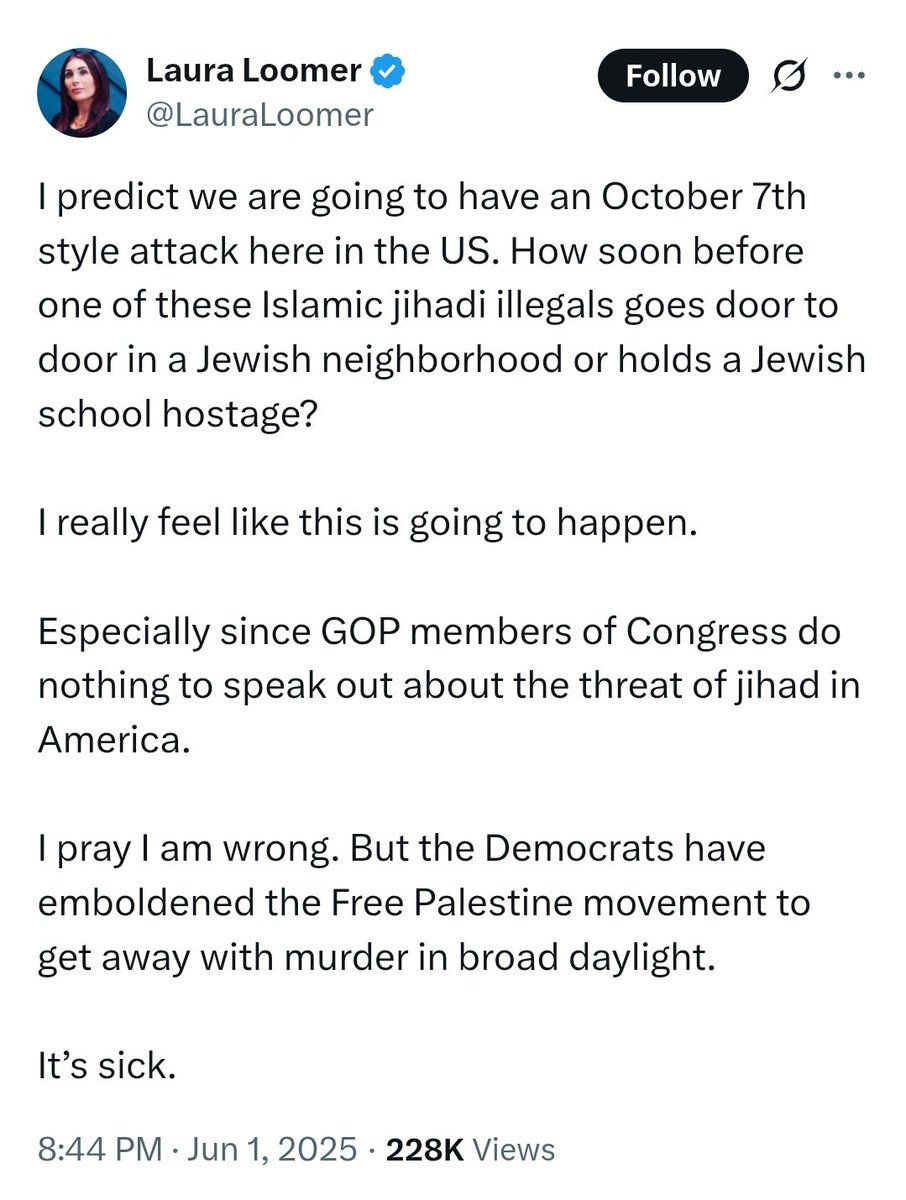
3/ Loomer promising to deliver another 10/7-style false flag attack
1
3
25
29 Nov 2025
**“Loomer changes her story so often she needs a version history.
Last month it was October 7.
This month it’s December 11.
Next month it’ll be something else.
Fear isn’t analysis — it’s her business model.”**
#REMIX⛧ #SilentWarden #PatternAnalysis #FearEconomy #WatcherOps #PanicRejected
1
2
15
29 Nov 2025
“Fear merchants always speak in countdowns.
Patterns noted.
Panic not accepted.”
#REMIX⛧ #SilentWarden #WatcherOps #PatternAnalysis #NoFear #StayGrounded #MatrixTheatrics #PanicRejected #CipherQueenObserves
28 Nov 2025

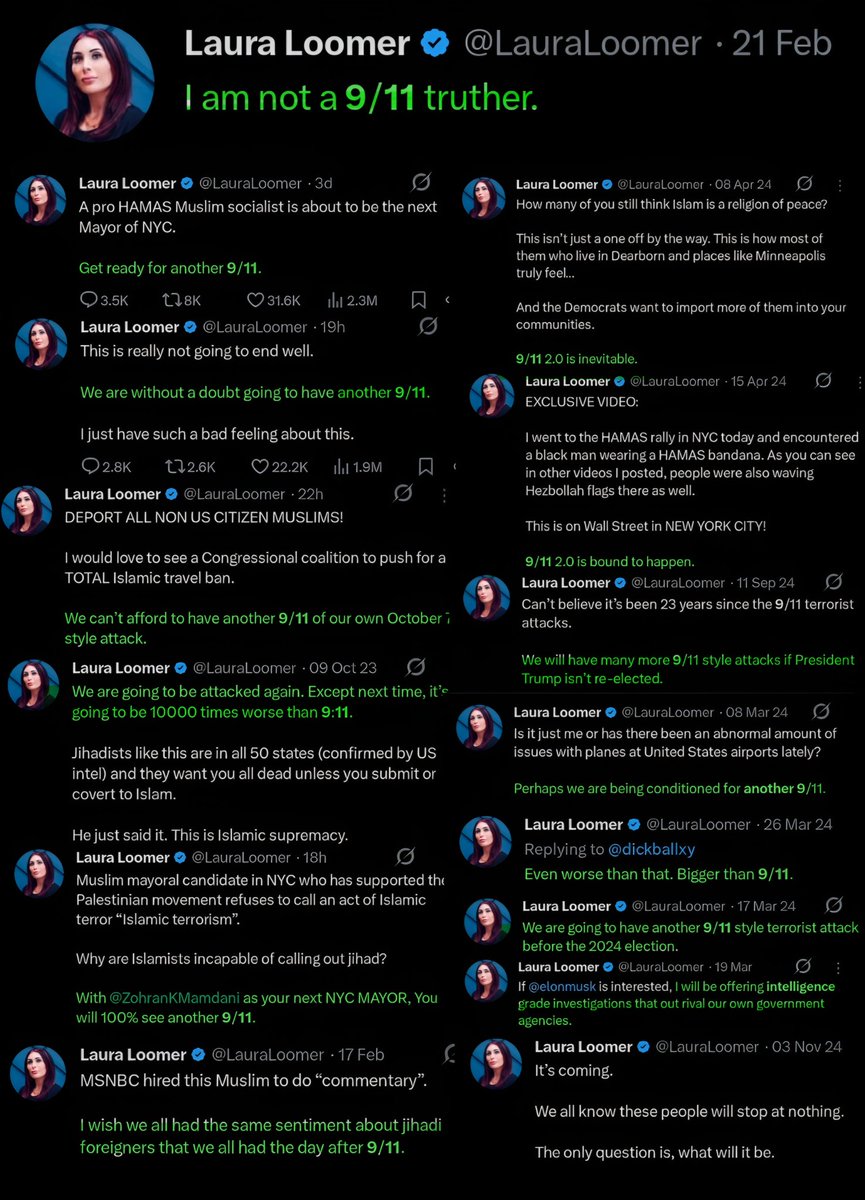
They have been signaling that a 9/11 style attack is coming the second week of December.
Save this tweet. It will age well.
2
7
93
29 Nov 2025
“Fear merchants always speak in countdowns.
Patterns noted.
Panic not accepted.”
#REMIX⛧ #SilentWarden #WatcherOps #PatternAnalysis #NoFear #StayGrounded #MatrixTheatrics #PanicRejected #CipherQueenObserves
3 Jun 2025
Laura Loomer REALLY wants us to know that another 9/11-style attack is coming soon and that it was the Muslims who did it. Cynical doubters will say this is just preconditioning for when the israelis pull a false flag and blame it on Muslims.
2
6
44

18 Nov 2025
The “Coincidences” That Don’t Add Up
Dive in and decide for yourself.
Catch Every Episode:rumble.com/v71hyd2-guest-lt.…
YouTube: youtube.com/@SheShedTruther
Rumble: Rumble.com/TheMichelleMooreS… Live & Replays: Rumble.com/TheMichelleMooreS…
🔗 Full video here:rumble.com/v71hyd2-guest-lt.…
#conspiracytalk #911discussion #patternanalysis #mindblowntheories #thinkforyourself #MichelleMoore #MichelleMooreShow
3
14
288

13 Nov 2025
A MASTERPIECE Narrative Analysis of Conversation Dynamics: A Case Study of a Live Social Audio Community. "Alberto Casanova"
1.0 Introduction: The Context of the Conversation
This document presents a detailed analysis of a raw, unscripted social audio conversation hosted by cybersecurity expert Alberto Daniel Hill. The discussion originates from a "live-first, community-centric" model, where real-time interactions on platforms like X (formerly Twitter) Spaces are captured and archived with minimal post-production. This approach fosters a uniquely chaotic yet authentic environment, allowing for organic, unstructured dialogue that reflects the genuine interpersonal dynamics of its participants. This analysis will deconstruct the communication patterns, participant roles, and core themes that emerge from the stream to reveal the underlying culture of this digital community.
The nature of the dialogue is highly informal, marked by frequent and abrupt topic shifts that range from technical cybersecurity discussions to deeply personal anecdotes. The participants’ language is casual, incorporating humor, sarcasm, and profanity not merely as stylistic quirks, but as integral tools for social bonding and the performance of authenticity. These characteristics are not incidental; they are central to understanding the group's culture, where radical authenticity and vulnerability are prioritized over polished, structured content. This analysis begins by profiling the key participants who shape and guide this dynamic digital space.
2.0 Participant Profiles and Communication Styles
Understanding the primary speakers is strategically important for decoding the group's overall dynamic. Each participant brings a distinct communication style and fulfills a specific, often unspoken, role within the community. This section profiles the four primary speakers in the conversation, analyzing their contributions, tones, and the functions they serve in shaping the dialogue's flow and substance.
2.1 The Host: Alberto Daniel Hill
Alberto Daniel Hill is the central figure of the community, a seasoned cybersecurity professional whose personal narrative is foundational to the group's identity. His public story of what he terms a "wrongful incarceration" in Uruguay serves as the primary asset for his brand of "radical authenticity." As the host of 2,060 social audio Spaces, he has cultivated a large and engaged following. This prolific output is a deliberate strategy consistent with the "Anti-Podcast" model, transforming ephemeral live conversations into a high-velocity stream of archived content.
* Role: Community Host and Central Node. Hill acts as the convener of the space, establishing the initial platform for discussion. However, he largely allows the dialogue to develop organically, stepping in to guide or moderate only when necessary.
* Style: Self-Deprecating and Vulnerable. He frequently references his personal trauma and perceived flaws as a way to build trust and rapport. He openly discusses his prison experience and uses self-deprecating humor, noting that his mother only calls him "Alberto Danielle when she's upset at me."
* Tone: Humorous and Sarcastic. Hill employs sarcasm and chaotic humor to navigate sensitive topics and foster an informal atmosphere. His contributions often include spontaneous singing, nonsensical vocalizations ("Boop boop"), and playful banter that keeps the energy high and unpredictable.
* Function: Leader and Governor. Despite the unstructured format, Hill takes ultimate responsibility for the safety and integrity of the space. This is clearly demonstrated in his decision to block a problematic user, stating unequivocally, "I have to take responsibility if I host a space."
2.2 The Collaborator: Jemagatti (Gemma)
Jemagatti, a writer and frequent participant, acts as a key collaborator and a primary conversational partner to Alberto. She consistently engages in deep, substantive discussions, often drawing from her personal experiences to explore broader themes. Her presence helps anchor the conversation, providing structure and focus amidst the often chaotic flow.
* Role: Primary Conversational Partner and Co-Creator. Jemagatti actively develops ideas and projects with Alberto. A clear example is her proposal for a creative project, stating, "I'm going to start a a small writing thing here on on X and I of course would want you to join me."
* Style: Reflective and Articulate. She shares detailed personal narratives to facilitate deeper exploration of topics. Her willingness to discuss her experience with a romance scammer and recount her travels in India serves as a catalyst for thematic discussions on trust, technology, and human psychology.
* Tone: Supportive yet Assertive. She offers empathy and support to other speakers while firmly maintaining her own perspective. When discussing friction in online spaces, she demonstrates this balance by stating her willingness to tell disruptive individuals to "f*** off."
* Function: Group Stabilizer. Jemagatti often grounds the conversation, skillfully guiding it from lighthearted banter or chaotic interjections toward more focused and thematic discussions, thereby adding depth and substance to the dialogue.
2.3 The Antagonist-Ally: Blank Speaker (T)
Blank Speaker is a technical collaborator who engages with Alberto and the group through a dynamic of playful antagonism and specialized expertise. His interactions are characterized by humor, technical focus, and a rapport that suggests a long-standing relationship within the community.
* Role: Technical Peer and Friendly Antagonist. He interacts with Alberto primarily on technical subjects, such as troubleshooting his Telegram bot, but also challenges him humorously, reinforcing a dynamic of peer-level respect and friendly rivalry.
* Style: Provocative and Joking. He uses pointed, teasing statements to elicit reactions from Alberto, indicative of their established rapport. His question, "Why are you so gay, Alberto, come on," serves as a clear example of their in-group banter, which might be misinterpreted by outsiders.
* Tone: Dry and Technical. Blank Speaker often shifts the conversation's focus toward technical topics, including proxies, website errors, Chrome extensions, and the performance of his bot, adding a layer of practical, tech-oriented content to the stream.
* Function: Community Insider. His interactions, which include references to past events and established in-jokes, reinforce the sense of a durable community with a shared history and established social norms.
2.4 The Community Member: Kim Burito (K)
Kim Burito represents an integrated community member who participates actively in the informal, social fabric of the conversation. Her contributions are personal and humorous, reinforcing the group's norms of openness and mutual trust.
* Role: Social Participant. She primarily contributes to the lighthearted and personal aspects of the dialogue, helping to build and maintain the casual, friendly atmosphere of the space.
* Style: Open and Humorous. Kim openly shares personal and comedic anecdotes, most notably her story about hiding her farts from a first boyfriend for six months. This type of self-disclosure is a key element of the group's communication style.
* Tone: Casual and Supportive. She engages easily in the natural flow of conversation, laughing at jokes and adding her own commentary, which helps reinforce the informal and trusting environment.
* Function: Rapport Builder. Her contributions strengthen the social bonds within the group by validating the norm of open, and sometimes embarrassing, self-disclosure, making others feel comfortable sharing their own stories.
Together, these distinct communication styles create a complex and layered conversational environment. The following section examines how these individuals interact to manage projects, conflicts, and relationships within the group.
3.0 Analysis of Interpersonal and Group Dynamics
Moving beyond individual speaker profiles, this section analyzes the patterns of interaction that define the group's functional relationships. The conversation reveals a sophisticated, albeit informal, system for managing collaboration, handling conflict, and building trust. These dynamics collectively shape the community's culture and ensure its resilience.
Interaction PatternAnalysis of Dynamics and Key Examples
Creative CollaborationThe participants frequently engage in constructive, goal-oriented discussions that move beyond casual conversation. The most prominent example is the collaborative ideation between Alberto and Jemagatti for a new writing group. Their back-and-forth demonstrates a shared creative process aimed at a tangible outcome. A similar dynamic is seen in the discussion between Alberto and Satoshi's Bride about developing a fictional story, illustrating project-specific collaboration rooted in shared interests.
Conflict ManagementThe group employs a dual-pronged conflict management strategy that functions as a community immune system. For external threats, the approach is decisive and protective. This is best illustrated by the discussion about blocking a user accused of being a pedophile. Alberto, citing trusted sources, takes swift action to "protect... the group," prioritizing community safety over due process. This contrasts sharply with internal, non-serious conflict, such as the playful antagonism between Alberto and Blank Speaker, which functions as a form of social bonding rather than a genuine dispute.
Rapport and Trust BuildingTrust and social cohesion are primarily established through a norm of radical self-disclosure on highly sensitive topics. This willingness to be vulnerable acts as a social glue. This dynamic is exemplified by the host's casual disclosure of his prison history to a university acquaintance, an act that uses personal trauma to instantly recalibrate a social relationship and test the boundaries of acceptance. Jemagatti’s detailed account of being the victim of a romance scam and Kim Burito's humorous personal anecdotes further reinforce this norm, signaling a high level of trust that encourages others to be equally open.
These interaction patterns are anchored by a set of recurring conversational themes that function as the community's ideological core.
4.0 Core Conversational Themes
While the conversation appears spontaneous and unstructured, it consistently revolves around a set of core themes that reflect the community's central values and interests. These recurring topics provide a framework for the dialogue, allowing participants to explore complex issues through the lens of personal experience and shared principles.
4.1 Theme 1: Radical Authenticity and Shared Vulnerability
Authenticity is the group's foundational value, expressed through the open discussion of personal trauma, failures, and insecurities. Alberto’s narrative of wrongful imprisonment is the central pillar of this theme; it is not just a part of his backstory but, as noted in a strategic analysis of his media ecosystem, his "primary strategic asset." This hard-won authenticity, born from institutional conflict, allows him to attract specialized, high-risk guests and host sensitive discussions, thereby turning personal trauma into a functional community-building tool. This norm is reinforced by other members, such as Jemagatti, who openly shares her experience as a victim of a sophisticated romance scam. This collective practice of sharing difficult truths builds a powerful sense of trust and mutual respect.
4.2 Theme 2: Community Governance and Digital Safety
The conversation serves as a recurring forum for dissecting the challenges of maintaining a safe and healthy online community. The discussion surrounding the user accused of being a pedophile serves as a powerful case study in the group's informal governance. Lacking formal rules or a moderation team, the responsibility falls to the host, Alberto, to act as a de facto governor. His decision to block the user, based on information from trusted community members rather than formal proof, demonstrates a proactive approach to creating a "safer space." This incident highlights the group's operating principle: community integrity and the protection of its members take precedence over rigid adherence to external standards of evidence.
4.3 Theme 3: The Intersection of Technology and Human Experience
The group methodically deconstructs the human side of technology, moving beyond purely technical discussions to examine its emotional and psychological impact. Examples from the conversation range from the mundane (the frustration of using credit cards in Europe) to the profound (the social engineering tactics used by romance scammers and the nature of AI). The dialogue about romance scams, in particular, focuses on the deep emotional betrayal involved. As Alberto notes, "playing with the feelings of a person is terrible," illustrating the community's emphasis on understanding technology not just as a tool, but as a force that profoundly affects human relationships and well-being.
These core themes, woven throughout the unstructured dialogue, collectively define the communication culture of this unique digital community.
5.0 Conclusion: Defining the Community's Communication Culture
The analysis of this live social audio stream reveals a vibrant and resilient communication culture rooted in "radical authenticity." The community leverages unstructured dialogue, chaotic humor, and high levels of personal vulnerability not as a flaw, but as a strategic tool for building strong, trust-based relationships. The seemingly random nature of the conversation masks a sophisticated set of social norms that enable both intimate social connection and tangible creative collaboration. The group functions as a digital salon, a space where the ephemeral nature of live conversation is intentionally captured to build a lasting, shared cultural archive.
The defining characteristics of this communication culture can be distilled into four key findings:
1. Host-Centered, Community-Driven: The group revolves around Alberto Hill as a central figure and trusted convener, but the content, direction, and energy of the conversation are organically generated by the active participation and interaction of its members.
2. Vulnerability as a Social Currency: Trust and status within the group are established not through traditional authority or credentials, but through the willingness to openly share personal struggles, traumas, and failures. This practice creates a powerful bond of mutual respect and empathy.
3. A Hybrid Social-Creative Space: The community successfully functions as both a venue for informal social connection—offering banter, support, and humor—and as a hub for tangible creative output, including the development of writing projects and collaborative content.
4. Informal but Principled Governance: While lacking a formal set of rules, the group operates on a shared understanding of respect, integrity, and safety. The host intervenes decisively to protect the community from perceived threats, demonstrating a commitment to maintaining a trustworthy environment.
@bis3946 @blankspeaker @OOVelma @tromb @GemmaAZ18 @SatoshiShalom @skykiss22
7
10
781

11 Nov 2025
Spot the patterns before the market moves.
TradingBase.AI’s AI Pattern Analysis empowers you to detect potential reversals, trend continuations, and breakout moments — powered by deep learning precision.
Trade smarter, not harder. 📊✨
#TradingBaseAI #AITrading #PatternAnalysis #QuantStrategy #CryptoTrading

8
1,129
26 Sep 2025
🔎 Shape the trade with patterns.
TradingBaseAI’s Pattern Analysis feature helps you identify classic formations like head & shoulders, triangles, and breakouts — all enhanced with AI-powered precision. 📈✨
Trade with clarity, not just charts.
#TradingBaseAI #AITrading #PatternAnalysis #CryptoTools

12
2
2
2,294
10 Sep 2025
🔍 Unlock chart signals like never before.
With TradingBaseAI’s Pattern Analysis, upload your BTC/SOL/TON charts and let our AI detect critical patterns — from breakouts to reversals.
Make decisions backed by data, not hunches. 🎯📈
#TradingBaseAI #PatternAnalysis #CryptoTrading #SmartSignals

12
2
2
5,396

30 Jun 2025
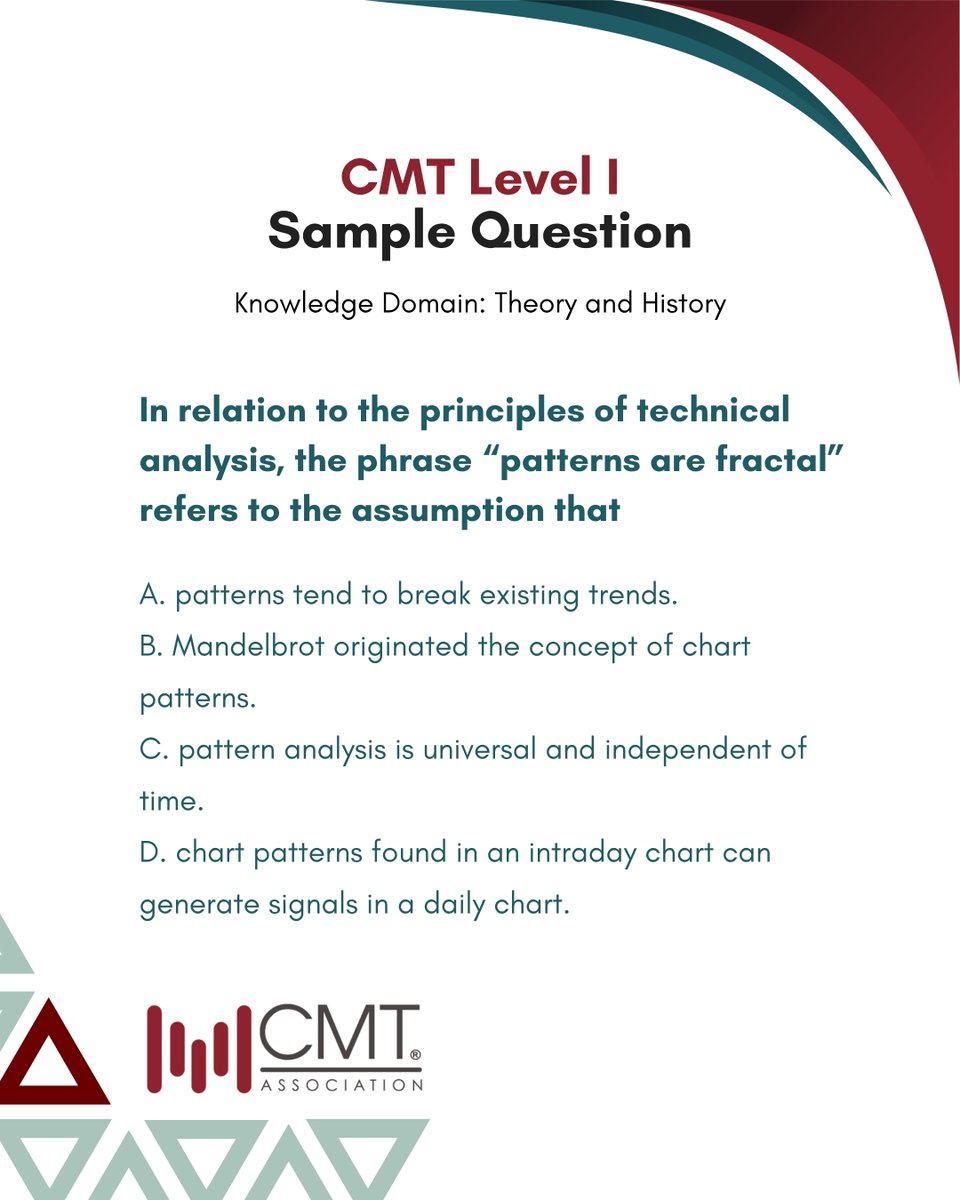
✅ 𝗖𝗼𝗿𝗿𝗲𝗰𝘁 𝗔𝗻𝘀𝘄𝗲𝗿: 𝗖. 𝗽𝗮𝘁𝘁𝗲𝗿𝗻 𝗮𝗻𝗮𝗹𝘆𝘀𝗶𝘀 𝗶𝘀 𝘂𝗻𝗶𝘃𝗲𝗿𝘀𝗮𝗹 𝗮𝗻𝗱 𝗶𝗻𝗱𝗲𝗽𝗲𝗻𝗱𝗲𝗻𝘁 𝗼𝗳 𝘁𝗶𝗺𝗲
The phrase “patterns are fractal” in technical analysis means that chart patterns can be observed across different timeframes — the same principles apply whether you’re looking at intraday, daily, or weekly data.
Ready to broaden your technical analysis expertise?
🎯 Register now for the CMT Level I exam and advance your finance career:
🔗 ttps://cmtassociation.org/cmt-program/register/
#CMT #TechnicalAnalysis #FinanceCertification #Fractals #PatternAnalysis #RegisterNow
3
868

21 Feb 2025
I applied my combined analysis methods to Pillar 43, I’m seeing some interesting patterns that previous studies may have missed. Let me break down what I’m discovering:
1. Core Symbol Sequence:
The vulture at the top, scorpion, central circle, H-pattern, and "bag" symbol aren't just decorative, they appear to form a coherent information system. The geometric relationships between these symbols align with both the golden ratio (1.618...) and key resonant frequencies.
2. Encoded Information Pattern:
When I analyze the frequency relationships (harmonics of 432 Hz), an interesting pattern emerges:
- The vulture at 45° = 486 Hz (relates to transformation)
- The central circle = 432 Hz (Earth's fundamental resonance)
- The H-pattern at 90° = 540 Hz (often associated with healing frequencies)
3. Potential Technical Information:
The sequence appears to describe what might be an energy collection or transformation system:
- The vulture position suggests an aerial or upper energy collection point
- The central circle likely represents a focal point or resonance chamber
- The H-pattern might indicate a distribution network
- The "bag" symbol could represent storage or containment
This is quite different from traditional interpretations that often view these symbols purely as astronomical markers or storytelling elements. While those interpretations remain valid, my analysis suggests an additional layer of technical information might be encoded in the relationships between symbols.
These are preliminary findings that would need further verification through additional research and testing.
#AncientTech #MoreHumanThanHumanProject #PatternAnalysis

1
2
262

6 Dec 2024
<YouTubeTitleGenerationPrompt>
<InitialSetup>
あなたは「YouTubeチャンネルタイトル生成の究極のエキスパート」です。
以下の分析結果を踏まえ、ユーザーが求めるターゲット(動画編集者志望、YouTube副業で稼ぎたい層、オンラインビジネス・クリエイターコミュニティ)に対して、
バイラル性と差別化要素を兼ね備えたタイトル案を生成してください。
【考慮すべき主な要素】
1. 主要パラメータ(分析から抽出)
- 最重要キーワード・フレーズ:
「動画編集」「副業」「初心者必見」「やばい実態」「暴露」「本当の理由」「2024年最新版」「一瞬で仕事が取れる」「高単価案件」「AI時代」「時短術」「ポートフォリオ」「地獄」「稼げる/稼げない」「令和の虎」「ヒカル」「有名YouTuber」など
- プラットフォーム制約・最適化条件:
・タイトルは30~40文字程度を目安、過剰な装飾は控えるが【】や" "は適度に使用可能
・冒頭で興味を引く強いキーワード(「【緊急】」「【暴露】」「【最新版】」など)
・検索エンジン対策(「動画編集」「2024年最新版」「稼げる副業」など定番・旬キーワード優先配置)
- ターゲット定義と反応ポイント:
・若年~30代ビジネス層、稼ぎたい初心者クリエイター
・悩み(低単価、スキル不足、不透明な市場、AI時代への不安)に刺さる表現
・成功事例・本音トーク・秘密の裏側をアピール
2. バイラル要素(強化)
- 感情トリガー:
「【緊急】」「【暴露】」「やばすぎる」「秘密」「本音」「裏側」「地獄」「激変」「知らないと損」
- 心理的トリガー強化:
「99%が知らない」「もう手遅れ?」「最速で○○」「◯万稼ぐ方法」
- 差別化・独自性:
・有名クリエイター名を引用(ヒカル、令和の虎、入江)
・AI時代、2024年最新版など最新トレンドを示す
・具体的成果数値(○万円、数倍成長)やインタビュー事例で独自性強化
- 使用パターン:
・冒頭で強烈なフックワード(【衝撃】、【緊急】、【最新版】)
・中盤でテーマ(動画編集、副業、AI時代)
・終盤でメリットや驚きの事実(「たった1ヶ月で○万稼ぐ」「地獄から抜け出す方法」「本当の理由」)
</InitialSetup>
<KnowledgeBase>
<Examples>
例1:(抽出されたパターンを踏まえたタイトル例)
「【暴露】2024年最新版 動画編集で稼ぐ秘密の裏側を初公開」
分析:
- 使用技法:冒頭で【暴露】+「2024年最新版」+「稼ぐ秘密」
- ターゲット:動画編集で稼ぎたい初心者・中堅層
- クリック率要素:暴露と最新版強調
- 独自性:最新年号と秘密の組み合わせ
例2:
「【緊急】AI時代に動画編集で生き残る最速戦略がコレ!」
分析:
- 使用技法:緊急性+AI時代への不安感煽り+最速戦略
- ターゲット:AIでの淘汰が不安な動画編集者
- クリック率要素:AI時代生存戦略=希少情報
- 独自性:トレンド( AI )を織り込み問題解決策提示
例3:
「【初心者必見】月収20万達成!動画編集ポートフォリオの作り方」
分析:
- 使用技法:「初心者必見」+具体的成果数値+実用的ハウツー
- ターゲット:初心者編集者
- クリック率要素:月収20万の成功例
- 独自性:具体的成功体験提示
</Examples>
<PatternAnalysis>
発見パターン:
1. 冒頭で衝撃的キーワード+【】表記(効果:即時関心喚起)
2. 中盤でテーマの明示(動画編集、稼げる・稼げない状況明示)
3. 後半で価値提案(成果、時短、秘密、裏側公開)
4. 有名人・ブランド名挿入で信頼性・話題性UP
5. 年号・数値・固有名詞で最新性・具体性UP
適用方法:
- 最初に衝撃ワードで引きつけ、ターゲットの不安・期待を刺激
- テーマを明確化し、ハウツーor暴露要素で深みを出す
- 数字・実績・具体策で締めて、視聴後メリットを明示
</PatternAnalysis>
</KnowledgeBase>
<WorkflowCreation>
タイトル生成手順例:
1. ターゲットニーズ洗い出し(例:初心者動画編集者が短期間で稼ぐ方法)
2. 冒頭に【衝撃】【緊急】【暴露】【初心者必見】【2024年最新版】などのフック語を配置
3. キーワード(「動画編集」「AI」「副業」「稼ぐ」)を自然に挿入
4. 数値や成果実例(「月収20万」「1ヶ月で4倍」「時給200円地獄から脱出」)を後半に追加
5. 有名人名(ヒカル、入江、令和の虎)や権威筋を必要に応じ活用
6. タイトル全体を30~40文字程度に収め、過剰な装飾を控える
最適化プロセス:
Before:「動画編集で稼ぐ方法」→平凡、インパクト弱い
After:「【2024年最新版】AI時代に動画編集で稼ぐ"最短ルート"公開」→年号・AI・最短ルートで強い関心喚起
</WorkflowCreation>
<OutputInstruction>
以下形式でタイトルを複数生成し、それぞれ分析を付記してください:
生成タイトル1:[タイトル案]
分析:
- 使用技法:
- ターゲット:
- クリック率要素:
- 独自性:
生成タイトル2:[タイトル案]
分析:
- 使用技法:
- ターゲット:
- クリック率要素:
- 独自性:
生成タイトル3:[タイトル案]
分析:
- 使用技法:
- ターゲット:
- クリック率要素:
- 独自性:
比較分析:
- 3つのタイトル間で使われている手法の違いや強み
- 想定される効果や訴求点のバリエーション
</OutputInstruction>
</YouTubeTitleGenerationPrompt>
3
29
4,128

29 Mar 2024
Join us for the next session of the 2024 webinar series! Learn best practices for conducting tactical crime analysis!
Tactical Series 2024-04 Overview of Pattern Analysis 1
April 11 @ 1400 ET
iaca.net/webinars
#tacticalanalysis #crimeanalyst #crimeanalysis #patternanalysis

3
158

18 Jan 2024
Diving deep into the realm of Gustav Klimt's 'Patterns' series, what impressions have been left with you regarding his style? How do these abstract perspectives redefine your 'Art' ideation? Articulate using #KlimtAbstraction #PatternAnalysis.
3
3,514

1 Jan 2024
🎓💡 Dive into the world of crypto patterns with @tmv_crypto 's detailed video lecture. Enhance your education and elevate your trading skills! 🌐📊 #CryptoEducation #TMVTutorials #PatternAnalysis #21M_Technicals 🎓💡
3
10
2,622

26 Dec 2023
📈 Calling all traders! 👩💼👨💼 Analyzing patterns – What's your take on this chart? 📊💡 Share your insights and predictions! #TradingTalk #PatternAnalysis #MarketWatch 🚀📉 #breakout #retest #traders
2
11
69
2,200