
Jun 4
VisionWave Holdings, Inc.
(Nasdaq: $VWAV)
Building a Powerful Platform for RF Perception Leadership in Defense and Security
A landmark agreement has established a strong foundation to advance RF-focused perception systems for defense, homeland security, and autonomous technology applications.
Controlling interest and board seats across both stages provide the operational leverage needed to drive technology integration, platform development, and future commercial adoption. The milestone-based structure and long-term alignment protections position the company to accelerate its role as a key innovator in high-stakes perception technologies.
This is the infrastructure being built to deliver next-generation solutions that enhance situational awareness and operational capability across vital sectors.
Read the full filing: stocktitan.net/sec-filings/V…
#DefenseTech #PerceptionSystems #NationalSecurity #Ad
9
5
6
7,674

VisionWave Holdings, Inc.
(Nasdaq: $VWAV)
Strategic Control Secured to Accelerate RF Perception Systems for Defense and Security
A landmark two-stage securities exchange agreement has been executed to acquire a 52% controlling stake in Foresight Autonomous Holdings Ltd. This positions Foresight as the core operating platform for RF-focused perception systems and related initiatives in defense, homeland security, and autonomous technologies.
Board representation and operational control are secured, enabling accelerated integration of advanced perception capabilities. Stage 1 is expected to close within 45-60 days, while Stage 2 is tied to achieving a key milestone — the start of a binding pilot project using the integrated Perception Platform.
This structure sets the stage for rapid scaling of next-generation technology solutions in critical high-growth sectors.
Read the full filing: stocktitan.net/sec-filings/V…
#DefenseTech #PerceptionSystems #AutonomousTech #Ad
9
4
5
9,578

May 8
People classify before they analyze.
Perception controls attention velocity.
#FAMEBySheeraz #PerceptionSystems
97

11 Nov 2025
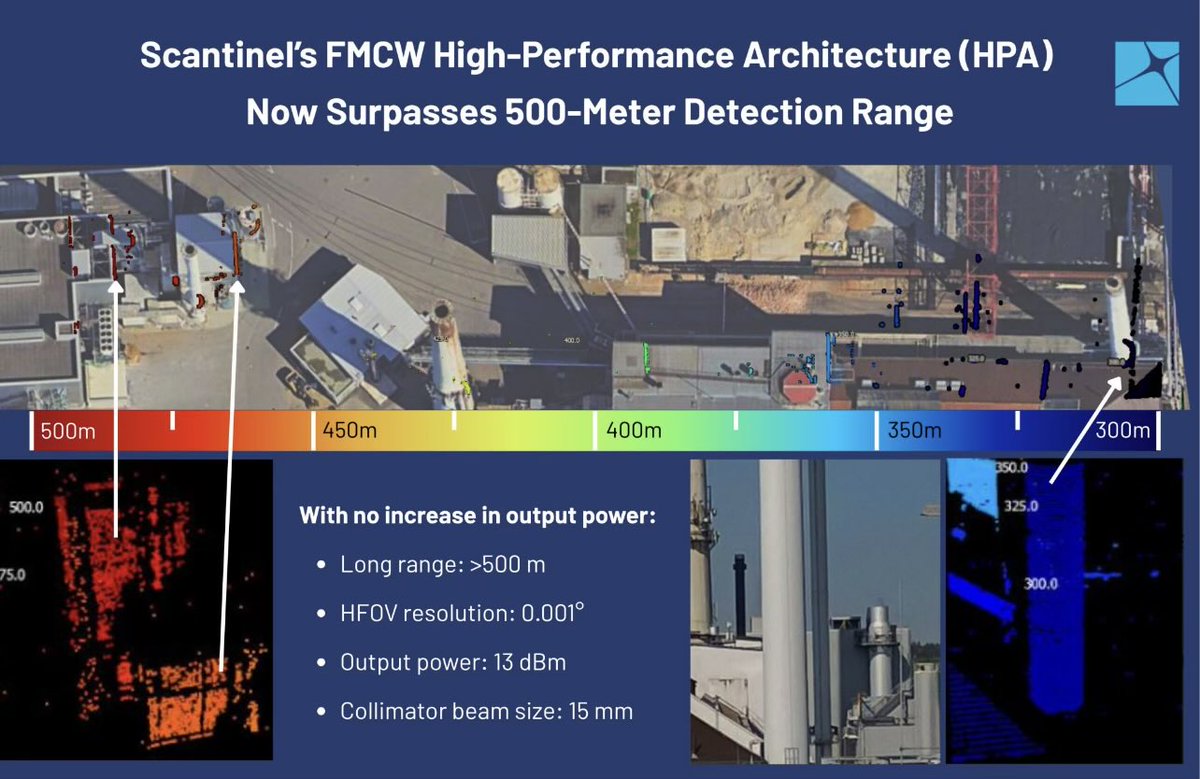
$MVIS 500m HPA Achieved with Low Power, High Point Density ⚡
Building on our HPA milestone, Scantinel Photonics has now achieved detection near 500 meters using just 13 dBm output power and a 15 mm beam collimator, while sustaining over 10 MPPS pixel rates and angular resolution tunable down to 0.001°.
Most ToF systems reach high pixel rates and long range, but typically at the cost of higher optical power and without velocity measurement. Traditional FMCW systems, while inherently more precise, have struggled to combine range, resolution, and efficiency in one platform. Scantinel’s High-Performance Architecture (HPA) changes that.
Highlights from this latest progress:
• 500 m range with just 13 dBm output
• Resolution tuning from 0.01° to 0.001°
• Compact 15 mm collimated beam
• Gapless scanning at over 10 MPPS
With a tunable architecture, we can now balance angular resolution and power output to match sensing demands, without compromising point cloud density or scan continuity.
We’re committed to enabling comprehensive perception for the most demanding autonomous systems. Stay tuned for more. 🔭
#FMCWLiDAR #LiDAR #PerceptionSystems #NextGenLiDAR #SmartMobility
2
12
301

28 May 2025
THE SENSORIUM MAP: How Computer Vision Systems are Redrawing the Boundaries of Perception
A symbolic guide for scientists and technologists building sight into machines
⸻
“Computer vision isn’t just about pixels—it’s the architecture of intelligent sight.”
— GlobalCmd Vision Systems Principle
⸻
INTRO: THE NEW SENSE OF MACHINE INTELLIGENCE
Human vision is powerful—but it’s limited:
•Can’t see infrared
•Can’t instantly detect pattern anomalies
•Fatigues under overload
Now machines can:
•Read every frame of a satellite feed
•Detect micro-fractures invisible to human eyes
•Recognize sentiment from facial tension
•Guide surgical robots with sub-millimeter precision
And they do it symbolically—by learning to see the world not just in light, but in logic.
Welcome to the Sensorium: the symbolic landscape that computer vision builds and operates inside.
⸻
SECTION I: WHAT IS THE SENSORIUM?
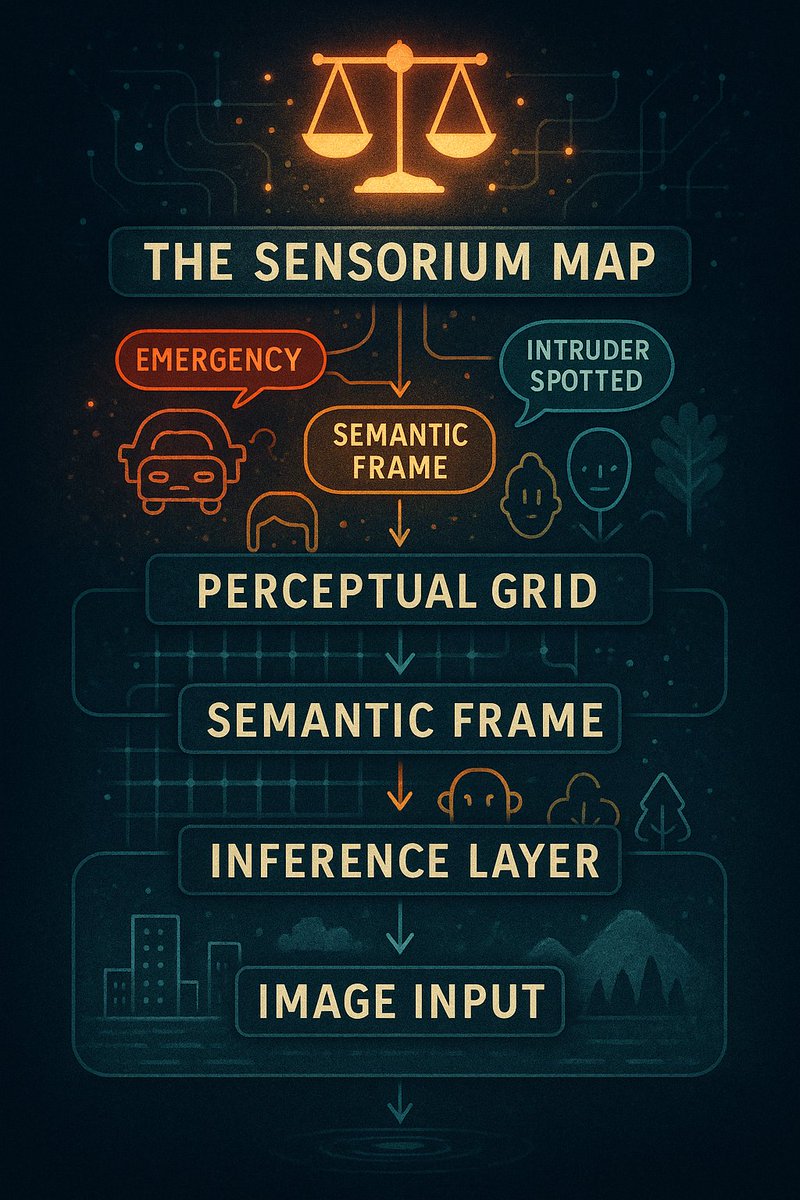
A Sensorium is a symbolic architecture where computer vision:
•Receives structured input (image, video, scan)
•Parses patterns into symbolic forms (edges, movements, anomalies)
•Feeds that data into decision engines
•Influences robotic or digital action
Think of it as a map of perception → computation → consequence.
⸻
SECTION II: BUILDING A SENSORIUM STACK
Here’s how scientists and technologists can frame the vision process symbolically:
1. Capture Layer (Input as Sensor Data)
•Image
•Video
•Thermal
•LIDAR
•MRI
Symbolic Node: What kind of “eye” is collecting the world?
⸻
2. Perceptual Grid (Low-Level Feature Detection)
•Edges
•Color
•Movement
•Gradient
•Noise
Symbolic Node: What am I seeing that’s fundamental?
⸻
3. Semantic Frame (Labeling Objects Meaning)
•“This is a face”
•“This is road edge”
•“This is smoke, not fog”
Symbolic Node: What does this pattern mean in context?
⸻
4. Inference Layer (Decision-Level Abstraction)
•“Emergency detected”
•“Tumor spotted”
•“Intruder present”
Symbolic Node: What action or insight does this sight generate?
⸻
5. Ethical Overlay (Purpose and Boundaries)
•“Don’t flag people based on clothing”
•“Pause detection in private zones”
•“Log all false positives with timestamp”
Symbolic Node: What values guide what’s visible—and what’s ignored?
⸻
SECTION III: USE CASES FOR SENSORIAL INTELLIGENCE
• Environmental Monitoring
AI-powered drones read forest health via infrared vision.
• Healthcare Diagnostics
Computer vision spots early-stage melanoma from skin scans.
• Manufacturing QA
Microscopic visual systems flag flaws at 100x zoom.
• Agricultural AI
Vision-guided tractors adjust fertilizer based on leaf color.
• Urban Systems
Smart cities analyze traffic flows, lighting, and social safety cues.
⸻
SECTION IV: QUESTIONS EVERY COMPUTER VISION PROJECT MUST ASK
1.What are we trying to see—and why?
2.How does our system interpret ambiguity?
3.What is the ethical impact of incorrect vision?
4.Who defines what matters in the visual frame?
5.Can we explain what the machine thinks it saw?
These are symbolic governance questions—not just engineering ones.
⸻
TAKEAWAY FOR SCIENTISTS & BUILDERS:
You are not just training AI to recognize shapes.
You are shaping how intelligence perceives reality.
Every dataset you label,
Every boundary you set,
Every filter you encode…
Becomes part of the symbolic lens through which machines understand the world.
So make sure it sees what matters—and sees it clearly.
⸻
CALL TO ACTION
Your systems aren’t just watching.
They’re learning to perceive.
Let’s make that perception intelligent, ethical, and explainable.
Follow: x.com/@globalcmd
Explore: Symbolic architectures of computer vision that respect both insight and impact.
Let’s build machines that don’t just see—they understand.
⸻
© 2025 GlobalCmd Technologies
Powered by RAD² X — AI That Thinks Symbolically. Works Ethically. Builds With You.
#GlobalCmd #SymbolicAI #Sensorium #ComputerVision #ViralCMD #PerceptionSystems #EthicalAI #AIForScience #TechThatSees #VisionArchitecture
1
1
35

15 Jul 2021
Seoul Robotics gets $12M investment from Korean Government to build intelligent robotic perception systems using AI and machine learning @seoulrobotics #Robotics #Ai #MachineLearning #ML #BreakingNews #PerceptionSystems #Funding #startup #TechNews techstartups.com/2021/07/15/…
1
1

25 Nov 2020
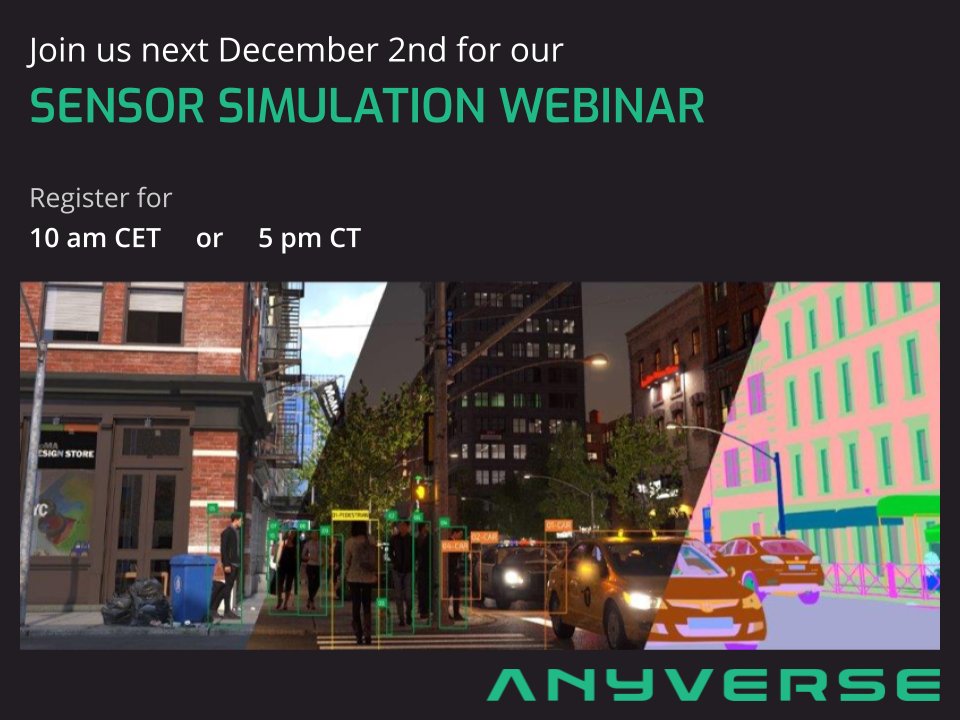
Join us in our Sensor Simulation #Webinar! Learn about how our physics-based #syntheticdata platform can mimic #sensors, helping #perceptionsystems reach new levels. When? December 2nd
10 AM CET registation bit.ly/3nVooSR
5 PM CET registation bit.ly/3mhqTOI
ALT ANYVERSE WEBINAR
3
3
6 Nov 2020
🚨 Are you interested in #sensor simulation for #perceptionsystems? Fancy knowing more about the performance of physics-based #syntheticdata in sensor modeling? If so, please have a look at our latest freely available Camera Sensor White #Paper! bit.ly/32iTZ8O
2
21 Oct 2020
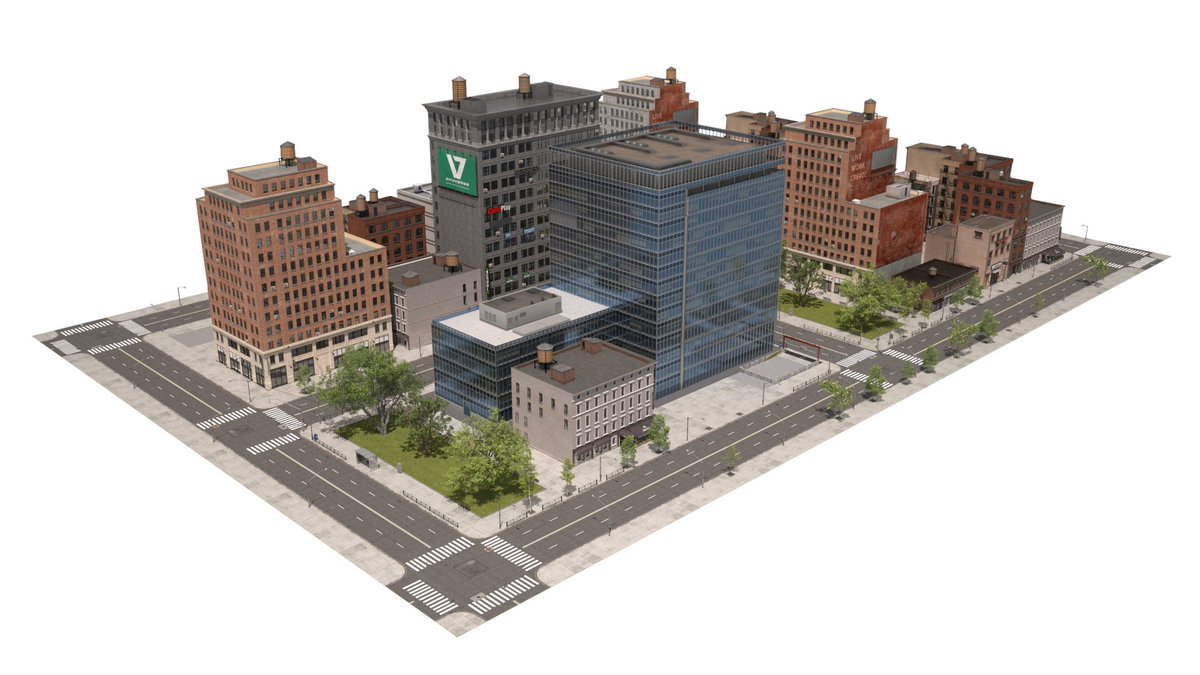
Scenario setting & dynamic assets are crucial for functional #trainingdata. Our #syntheticdata provide #sensor simulation, asstes dynamics, photometric output, automatic labeling, materials & lighting variation... helping improve #perceptionsystems & #computervision models. #AI
2
2
15 Aug 2020
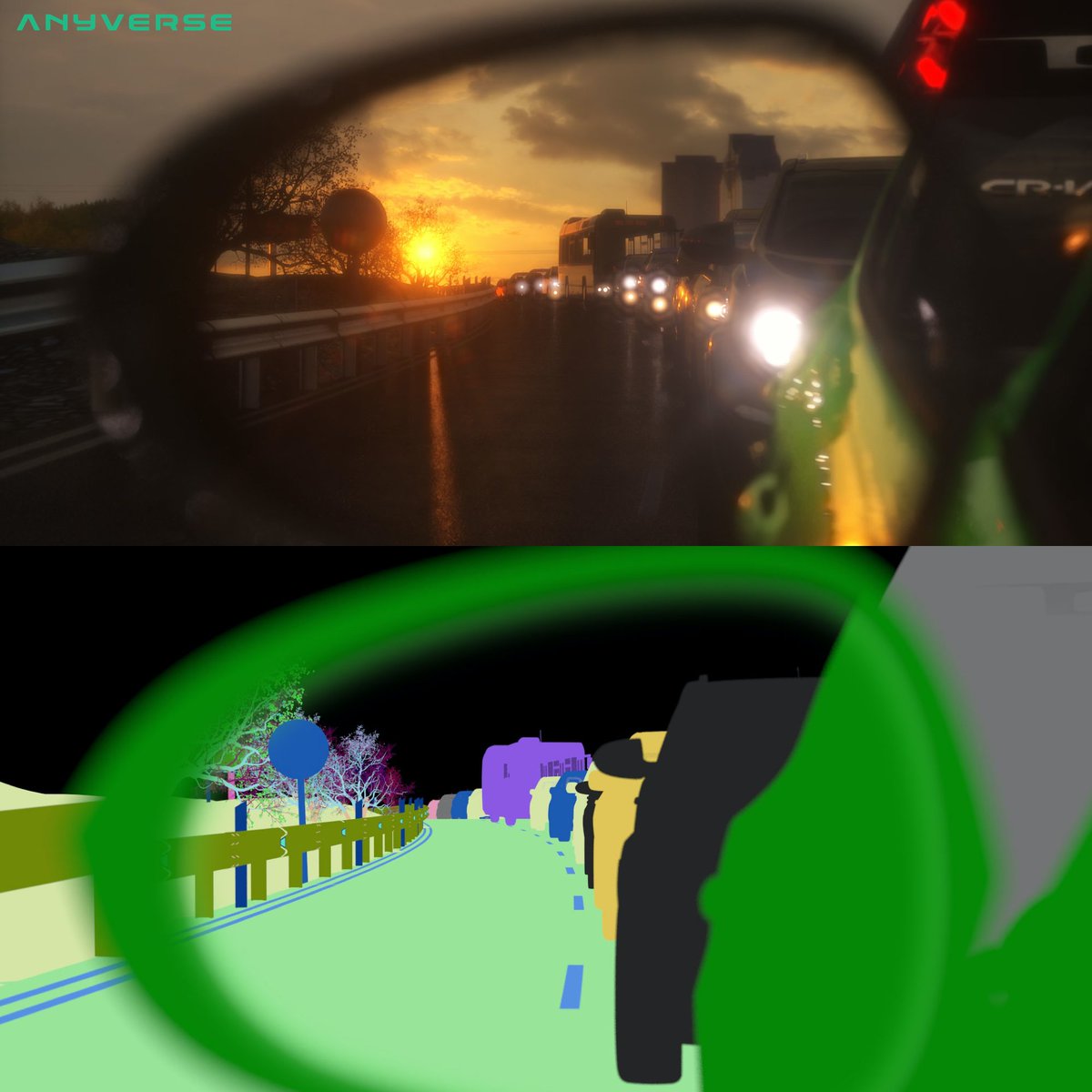
Thinking about #syntheticdata for training #perceptionsystems? Our physics-based spectral render engine captures true behavior of light & its interaction w/ thousands of existing materials, offering the closest to real-life imagery & data, perfect for #training #vehicleperception
1
2
5 Aug 2020
When it comes to #training #perceptionsystems there isn’t one-fits-all data. Every project has its specific needs, that’s why we care about customization & variety, providing high fidelity #syntheticdata.
If you agree check our "design your dataset" form!
lnkd.in/dyRM9XN
1
2