
At Pixelcode Developers Pvt Ltd, we build scalable SaaS platforms, custom web applications, and intelligent automation systems designed to solve real business challenges.
We work with startups and growing businesses to develop secure, performance-driven digital product concepts.
2
7

PixelCode Attack - A Cyber scam in disguise🚨
PixelCode attacks hide malicious code inside images & videos 🖼️ by tweaking pixels.
These hidden code can steal your data 💾 or bypass security 🔓.
Traditional antivirus might miss it since the image looks normal ⚠️.
Only use images / videos from verified sources ✅ and keep your security software updated! 🛡️
For any kind of Cyber scam attempts, call 1930 immediately and report at - cybercrime.gov.in
#BeCyberSmart_BeSafe
#CyberSecurity #DataProtection #PixelCode #StaySafeOnline #CyberAwareness #InfoSec

1
3
11
1,065

Jan 26
GitHub - S3N4T0R-0X0/Malicious-PixelCode: Malicious PixelCode is a security research project that demonstrates a covert technique for encoding executable files into pixel data and storing them inside images or videos. github.com/S3N4T0R-0X0/Malic…
3
16
1,144
Jan 26
GitHub - S3N4T0R-0X0/Malicious-PixelCode: Malicious PixelCode is a security research project that demonstrates a covert technique for encoding executable files into pixel data and storing them inside images or videos. A lightweight loader retrieve github.com/S3N4T0R-0X0/Malic…
10
37
2,221

Jan 25
Malicious PixelCode - a security research project that demonstrates a covert technique for encoding executable files into pixel data and storing them inside images or videos github.com/S3N4T0R-0X0/Malic…
14
71
3,505

Jan 22
«• #Technology #Hacked #Hackers #Malware #Spyware #Zerodays #Ransomware #CyberCrime •»
» New #PixelCode Attack Smuggles Malware via Image Pixel Encoding
cybersecuritynews.com/pixelc…
32

Jan 22
#threatreport #LowCompleteness
Malicious PixelCode Delivery Technique | 21-01-2026
Source: github.com/S3N4T0R-0X0/Malic…
Key details below ↓
💀Threats:
Pixelcode_technique, Bear-c2,
📚TTPs:
⚔️Tactics: 1
🛠️Technics: 0
🤖LLM extracted TTPs:`
T1027, T1036, T1059.001, T1059.003, T1071.001, T1105, T1140, T1573.001
🧨IOCs:
- File: 2
- Path: 1
🔢Algorithms: base64, aes-cbc
📜Programming Languages: powershell, python
#threatreport:
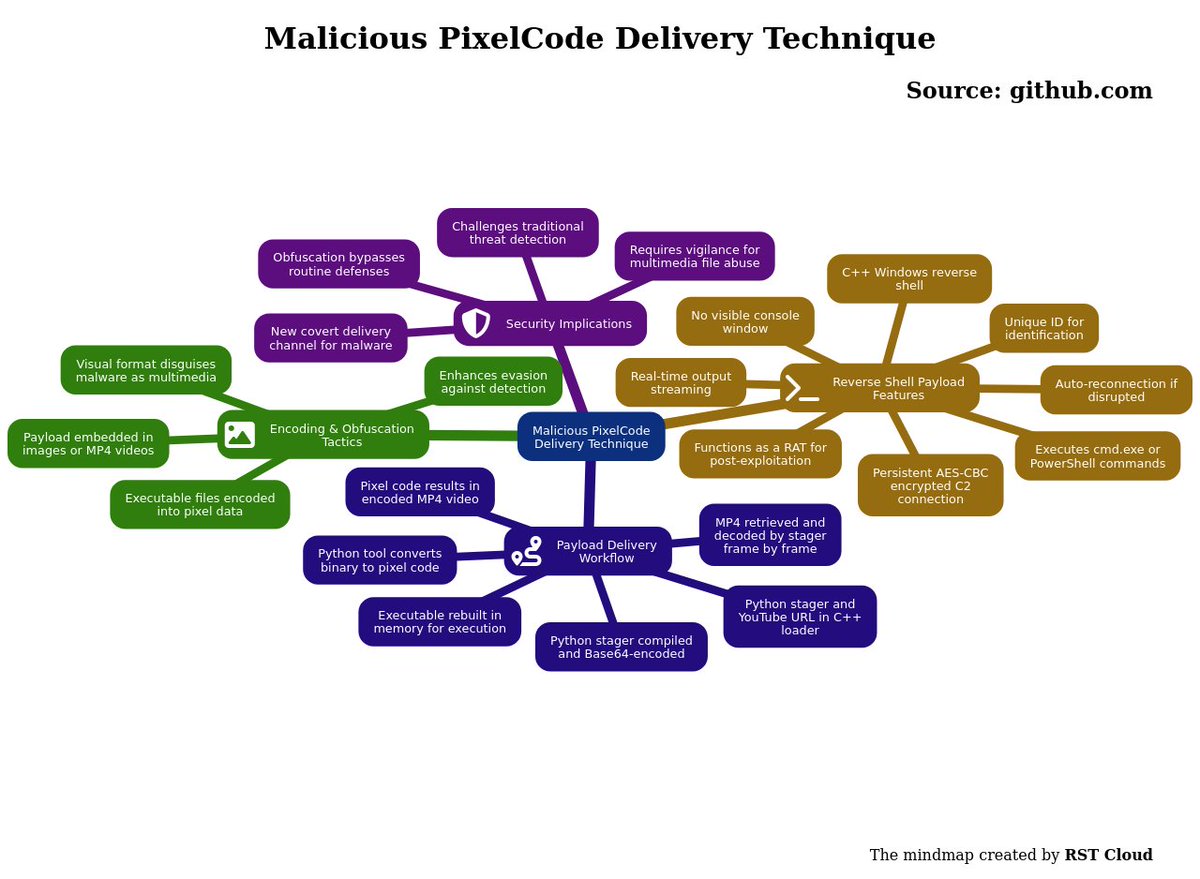
The Malicious PixelCode Delivery Technique illustrates an innovative method for encoding executable files into pixel data embedded within images or videos. This approach is primarily aimed at demonstrating covert data delivery and obfuscation tactics that can be misappropriated by malicious actors. By converting malware into a visual format, attackers can disguise harmful binaries or scripts as innocuous multimedia content, thereby enhancing their evasion strategies against detection mechanisms.
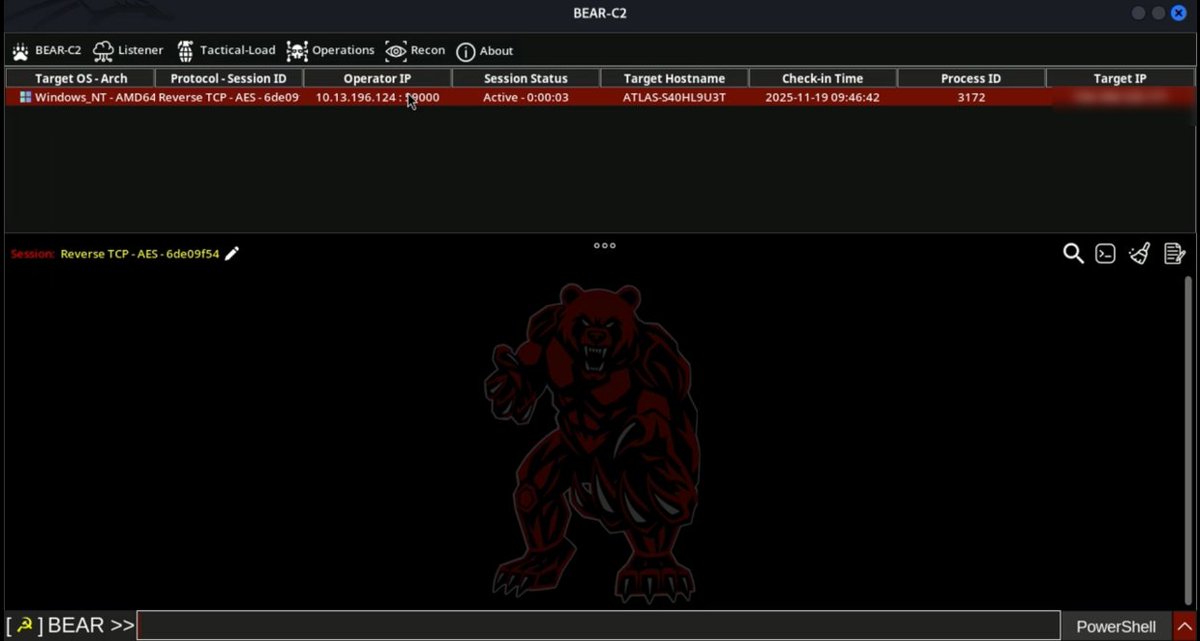
A specific example of this technique includes a stealthy Windows reverse shell payload implemented in C . This payload is designed to maintain a persistent connection to a command and control server through AES-CBC encryption, employing a hardcoded static key coupled with random initialization vectors for secure communication. It identifies itself with a unique identifier, executes commands via cmd.exe or PowerShell, supports directory navigation, and streams command output in real time. Importantly, it operates without displaying a console window and is capable of automatically reconnecting if the connection is disrupted, functioning effectively as a remote access trojan aimed at post-exploitation phase control.
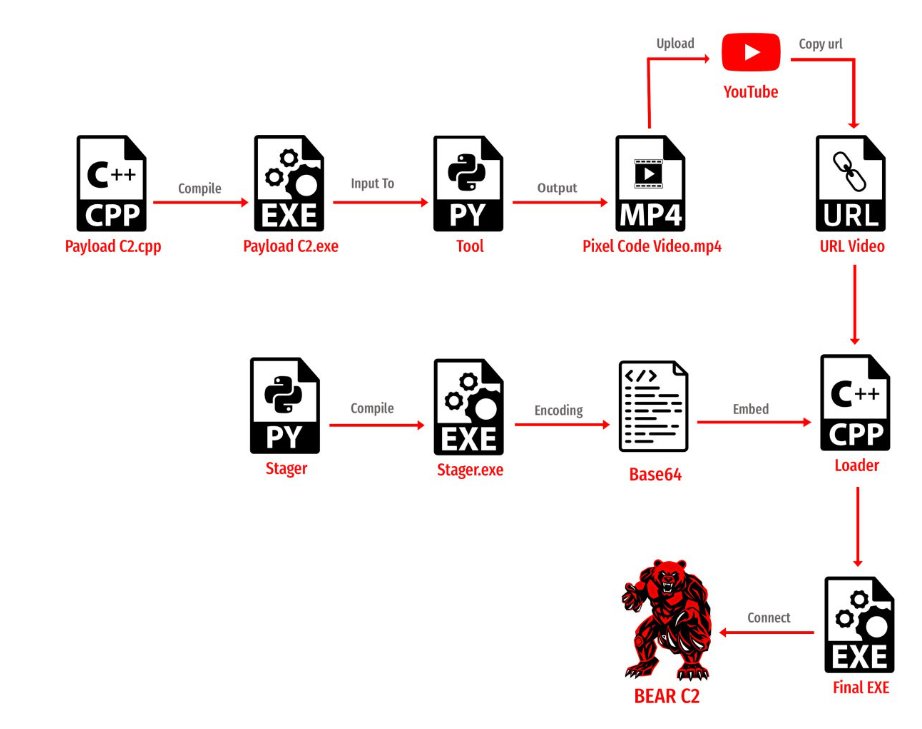
To facilitate the embedding of the payload into pixels, the compiled executable is processed using a Python-based tool specifically crafted to convert the binary data into so-called Pixel Code. This conversion results in a visual representation, often as an MP4 file, whereby the binary information is interwoven with pixel values across video frames.
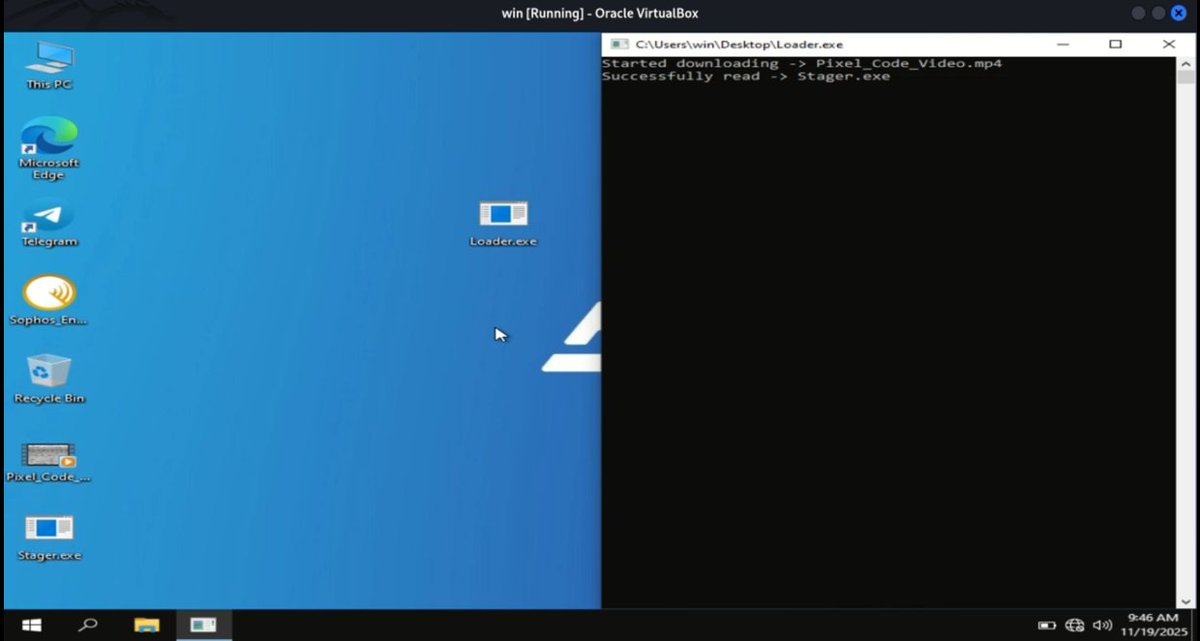
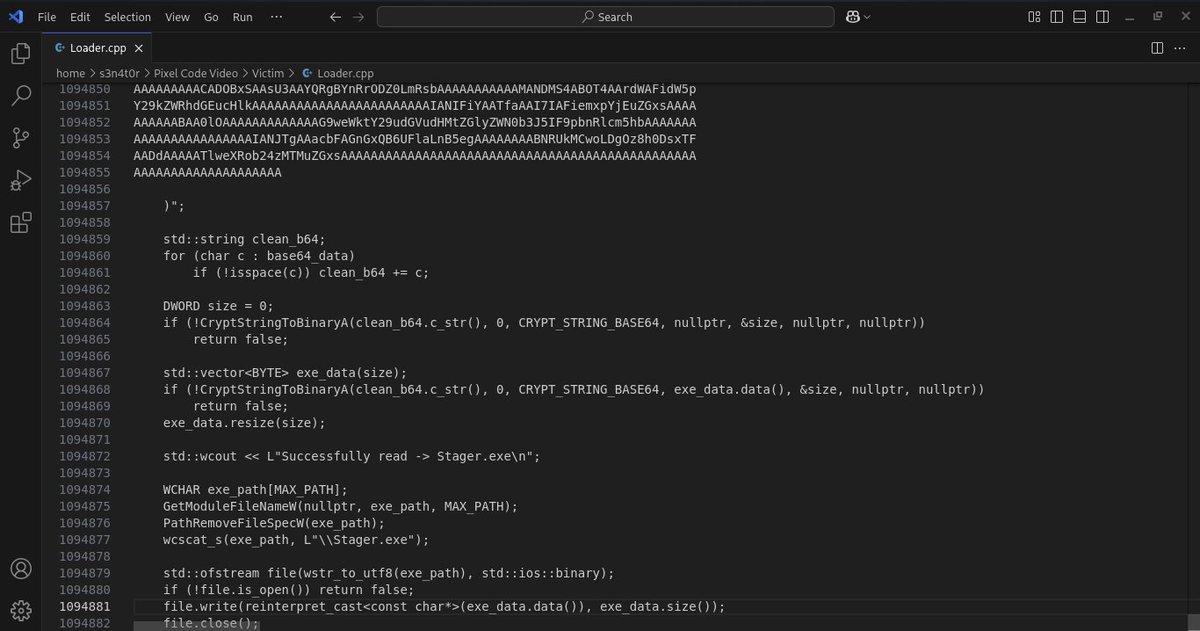
Since the original C payload lacks the necessary multimedia libraries for decoding the Pixel Code back into its executable form, a Python stager is employed for this purpose. This Python script is compiled into an executable and then Base64-encoded, enabling it to be directly embedded within the main C loader code alongside a YouTube URL, which serves as a medium for retrieval.
Once the MP4 video is downloaded, the Python stager processes it frame by frame, extracting the encoded pixel data and reconstructing the original executable in memory. This operation showcases an advanced technique for obfuscation and delivery of malware, allowing attackers new avenues for executing malicious code covertly.
2
85

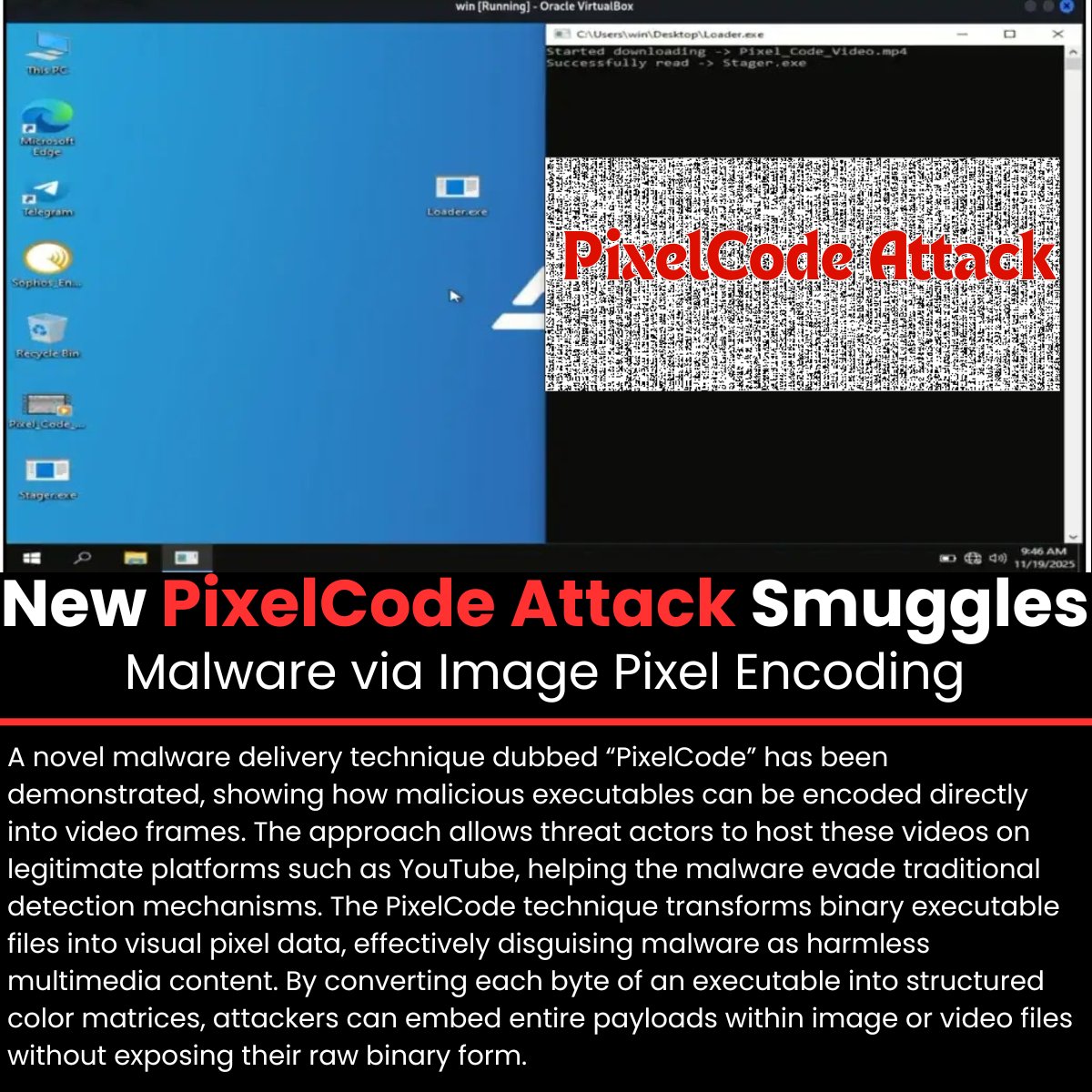
🛡️ New PixelCode Attack Smuggles Malware via Image Pixel Encoding
Source: cybersecuritynews.com/pixelc…
A novel malware delivery technique dubbed “PixelCode” has been demonstrated, showing how malicious executables can be encoded directly into video frames.
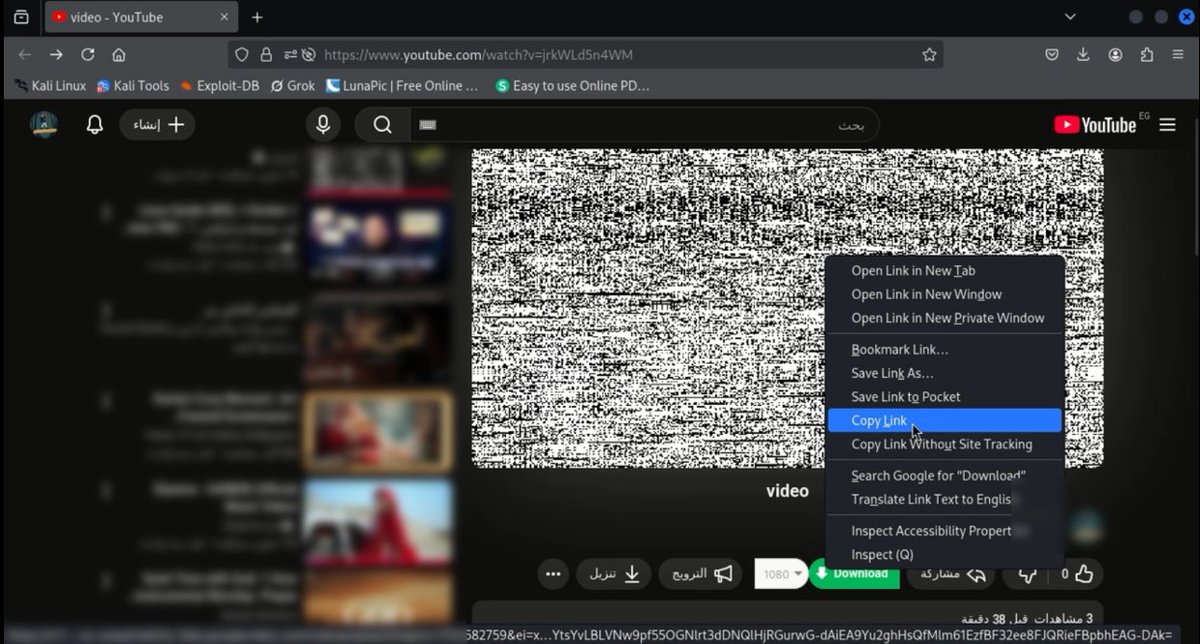
The approach allows threat actors to host these videos on legitimate platforms such as YouTube, helping the malware evade traditional detection mechanisms.
The PixelCode technique transforms binary executable files into visual pixel data, effectively disguising malware as harmless multimedia content.
By converting each byte of an executable into structured color matrices, attackers can embed entire payloads within image or video files without exposing their raw binary form.
#cybersecurityNews
2
49
162
10,940

Jan 20
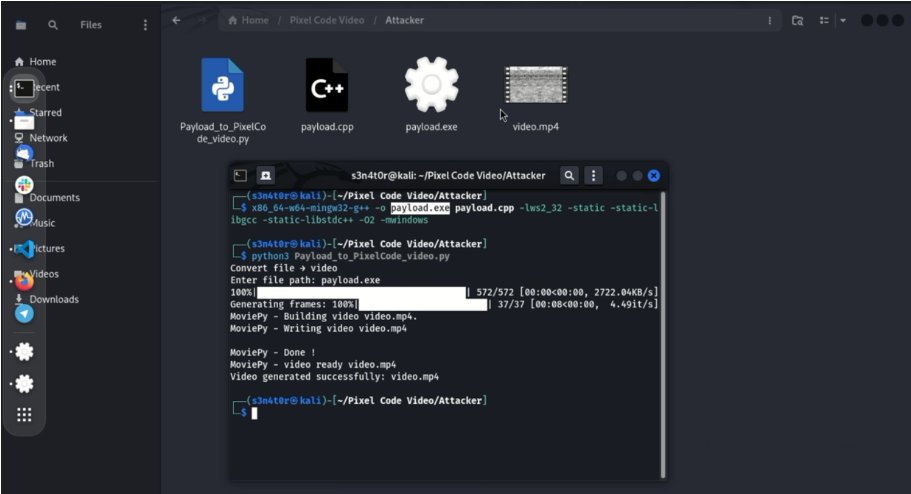
Malicious-PixelCode : A covert technique for encoding executable files into pixel data and storing them inside images or videos. A lightweight loader retrieves the media file, reconstructs the original binary and executes it in memory : github.com/S3N4T0R-0X0/Malic…
2
59
230
14,445

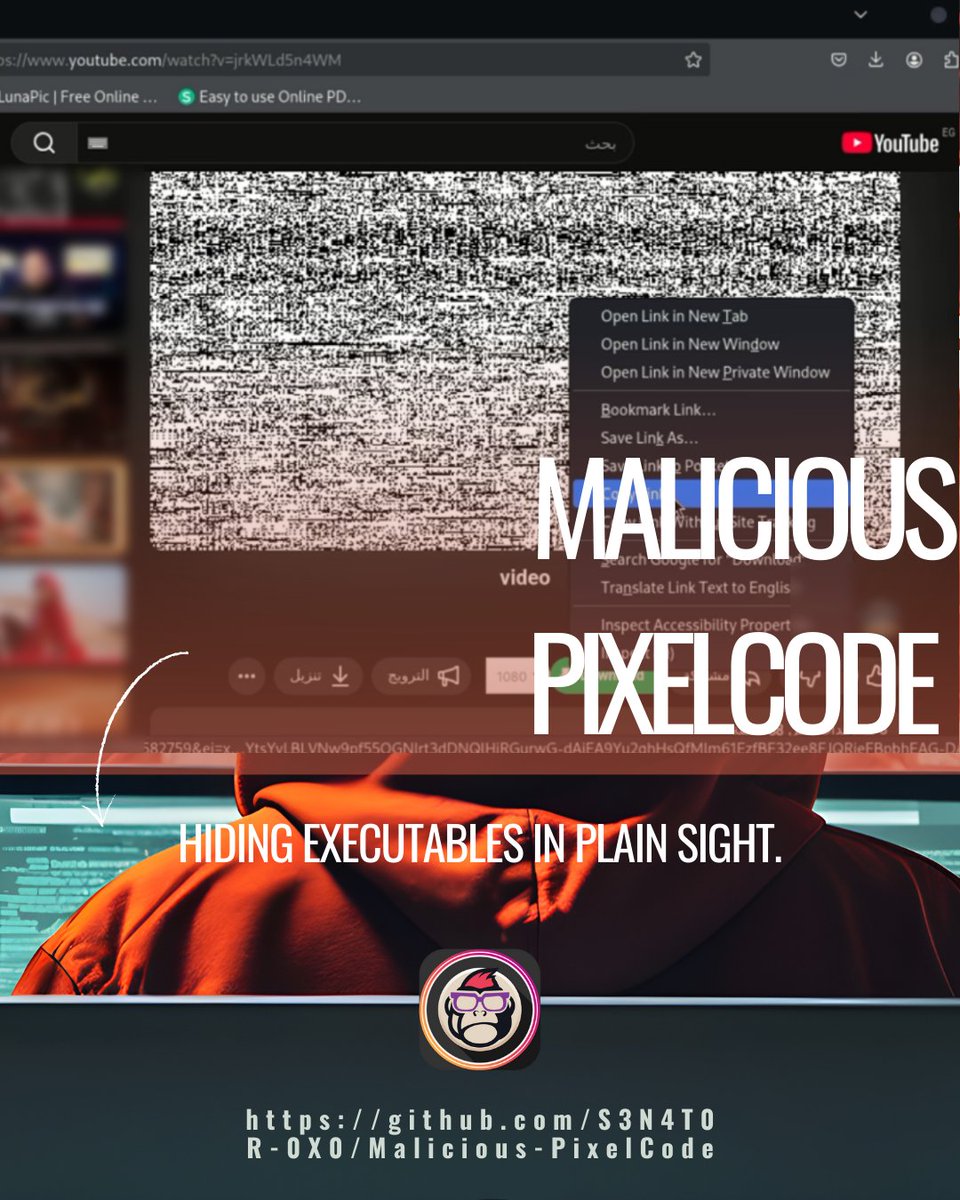
Malicious PixelCode convierte ejecutables en vídeos MP4, permitiendo ocultar payloads a plena vista en plataformas como YouTube. Una técnica de esteganografía brutal para Red Team y evasión de EDR. ¡No te la pierdas!
🎥🕵️ [#PixelCode #RedTeam #HackingEtico #Ciberseguridad #Hack]
1
8
19
802
23 Nov 2025
🛠️ Malicious PixelCode - a covert technique for encoding executable files into pixel data and storing them inside images or videos.
✅A lightweight loader retrieves the media file, reconstructs the original binary and executes it in memory. github.com/S3N4T0R-0X0/Malic…
1
50
183
10,244

23 Nov 2025
Malicious #PixelCode is a security research project that demonstrates a covert technique for encoding executable files into pixel data and storing them inside images or videos.
github.com/S3N4T0R-0X0/Malic…
1
7
365

23 Sep 2025
🌌🎨 I just created
"PixelCode Art #1" on @ArtNames_io 🔥🟦
✨️
🔗 nexart.xyz/mint/175858805978…
🚀
#CryptoCommunity #NFT #NFTCollectors #Web3 #NFTs #NFTCollection #Base #pixelart #pixelart #code #NFTdrops #mint #FreeMint #nexart #aedgraphy #Trending #art #NFTshill #NFTartist
1
2
30

10 Aug 2025
🚨- Alert :
Dernier jour du Pixel Code!
On lance et on explose les dons pour notre association !
On vous attend nombreux !!!
@LePixelCode
#pixelcode #eventtwitch #lepixelcode

1
3
2
1,055
5 Aug 2025
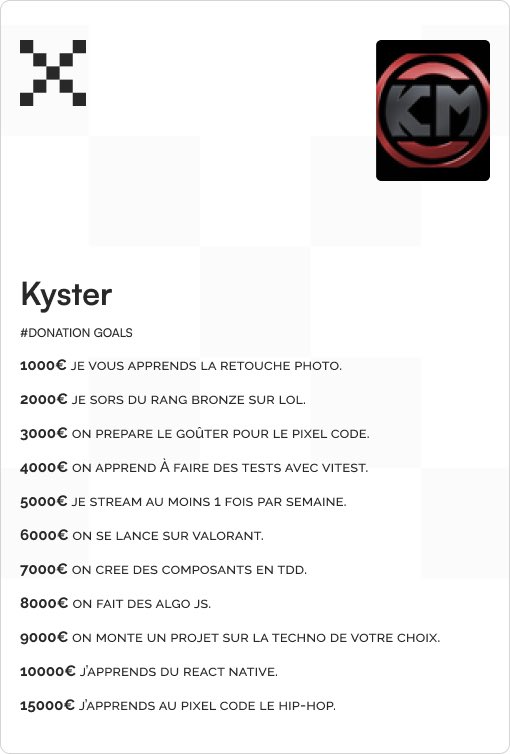
Donations goal, prête pour le Pixel Code!
Premier event en tant que streamer !
Let’s go! Avec une team de fou !
#pixelcode
1
2
655

26 Jun 2025
Happy MCI anniversary! To celebrate, I made three edits. This is the first edit out of the three. I hope you enjoy this edit of it and any constructive criticism is welcome!
Font: PixelCode by Qwerasd205
Song: “Knives, Gears and Wires” by Musiclide feat. Swiblet #FNAFMOVIE
1
3
2
346





3 Nov 2022
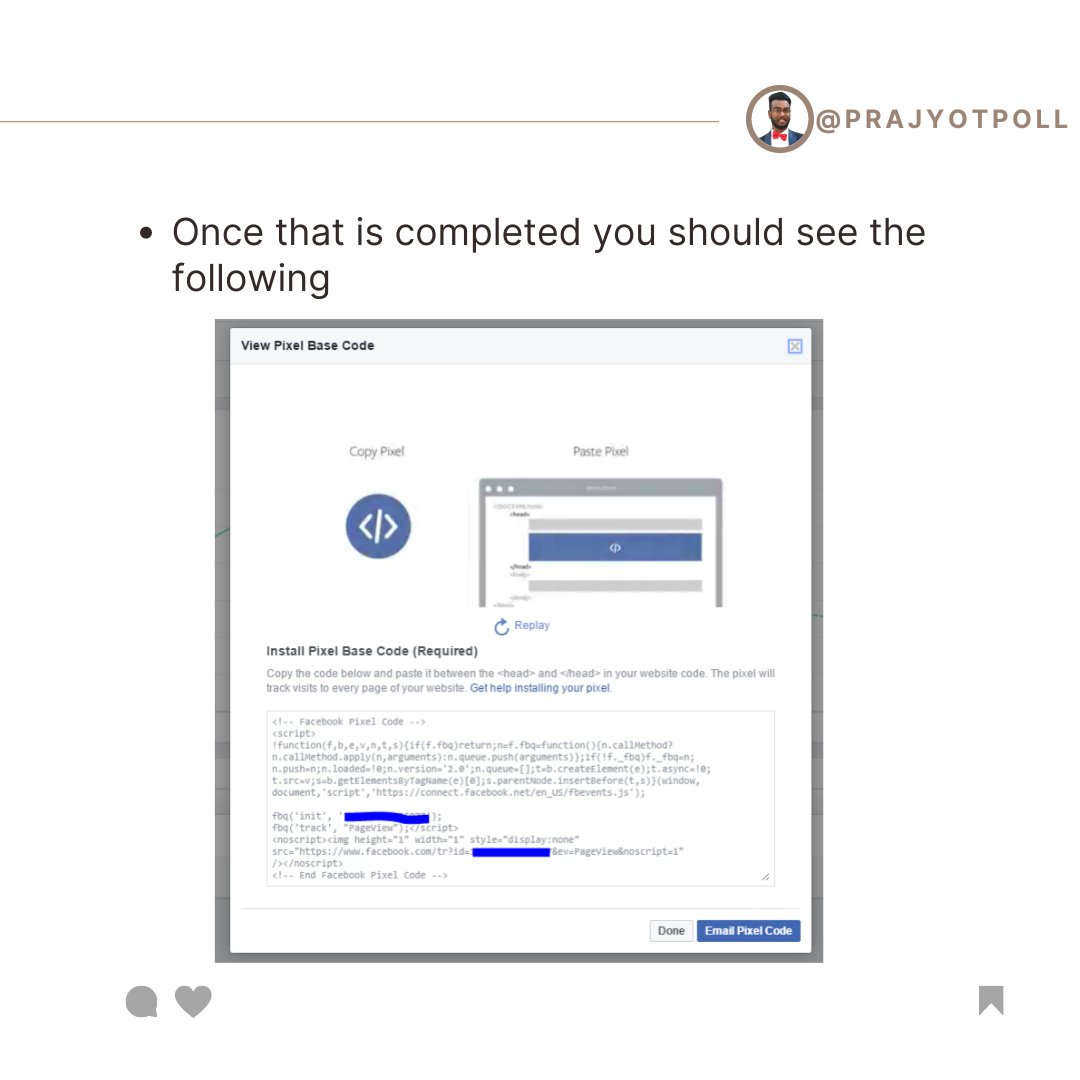
How to Install Facebook Pixel? Here is a detailed step-by-step guide on how to install the pixel.
#facebookpixel #installpixel #pixelcode #prajyotpoll #leadstracking #leads #tracking #pixeltracking #socialmedia #smo #smm



2

13 Aug 2022
PU: "Okay Madam, I guess you have the ZK Personal PixelCode with you."
J: "Certainly, here it is" - proudly displaying what looked like a piece of modern art from the 10s, with its mix of indigo, pink and bottle green.
[Citizen recognized - Voting allowed - No restrictions]
1
4