
RT @geraldi23591291: Amazing! 📚
#YesWeCanBeWorldClass
Book Review!🏆
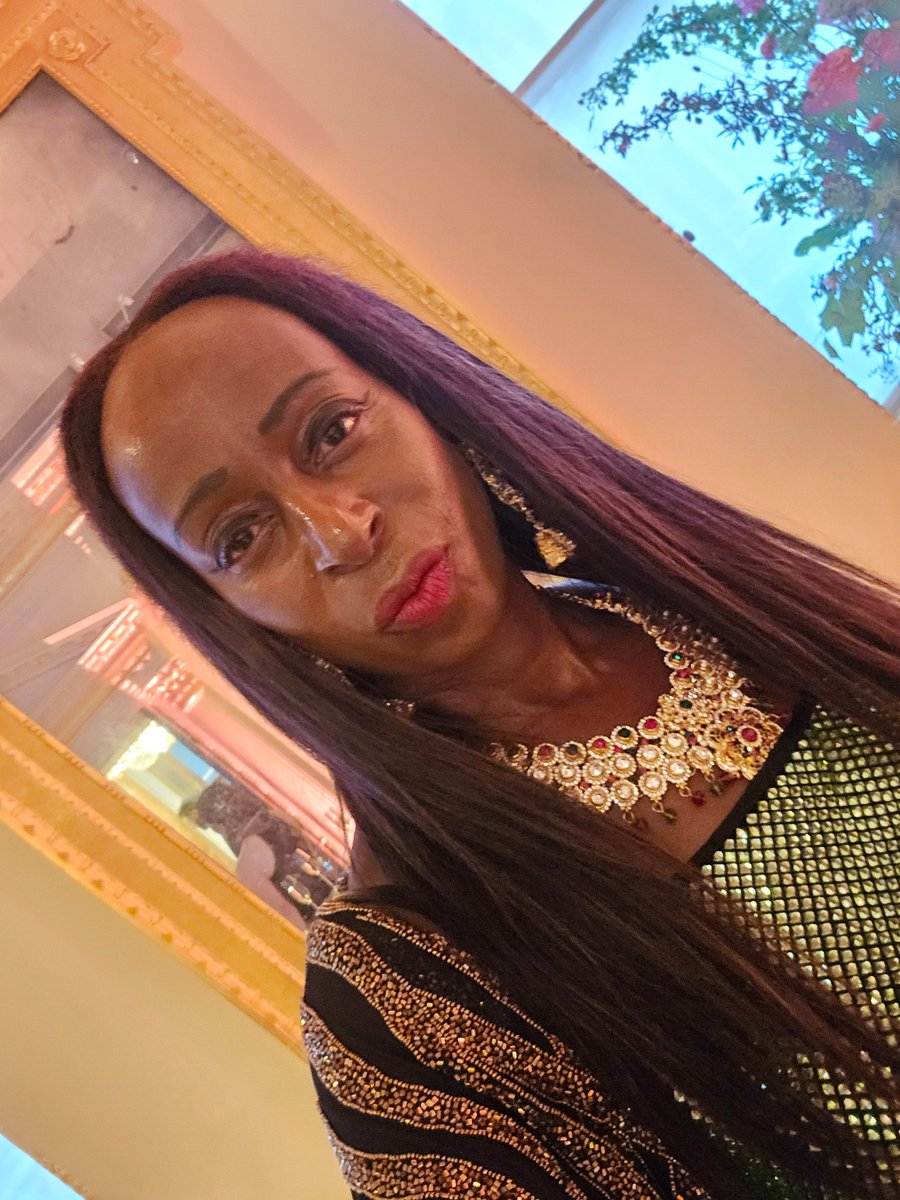
Professor Mirza, H. S. (2025). Black British Postcolonial Feminist Ways…
1
Amazing! 📚
#YesWeCanBeWorldClass
Book Review!🏆
Professor Mirza, H. S. (2025). Black British Postcolonial Feminist Ways of Seeing Human Rights:(2024) by Dr. Pamela Odih, Palgrave Macmillan. link.springer.com/book/10.10… DOI doi.org/10.1007/978-3-031-71…. Agenda, 1–4. doi.org/10.1080/10130950.202…
6
1
45

as a rule of thumb I do not debate with white people who believe that whatever governance failures postcolonial African states have had in their 50 years or so of existence are equivalent to the horrors associated with centuries of colonisation. go and argue with your wall bro.
1
12

Postcolonial Theory in Literature: An Overview
#EnglishLiterature #Notes #AcademicSupport #Students #Teaching #Classroom #Study #Criticism #Concept #Theory #Writing #Reading
englishliterature.education/…
2

Réponse :
Elles ont cru en bonne foi que l’indépendance politique = indépendance réelle, ils ont naïvement cru que l’État colonial pouvait devenir un État national, que la souveraineté juridique suffisait, pour que le développement vienne automatiquement, ils ont cru que la France accepterait une Afrique autonome, qu'on pouvait moderniser l'Afrique sans capital, sans industrie, sans bourgeoisie productive.
Ce n’était pas une faute morale. C’était une erreur de compréhension du système‑monde. Ces élites africaines n’avaient pas les outils intellectuels pour saisir la nuance et la logique entre le centre et la périphérie, la dépendance financière, la capture des élites, l’absence de base productive, et l’inertie du capitalisme mondial.
Ils ont pensé que l’indépendance politique produirait mécaniquement l’indépendance économique. Ils ignoraient la logique profonde du système‑monde : la périphérie ne se développe jamais spontanément.
Ils n’avaient pas de bourgeoisie productive, seulement des élites administratives formées pour gérer un territoire, et non pas pour transformer une structure productive.
Ils ont donc pris le pouvoir sans capital, sans industrie, sans doctrine économique, et surtout sans comprendre la mécanique du capitalisme historique.
70 ans plus tard, le constat est clair : les résultats ne sont pas à la hauteur.
Non pas parce que ces dirigeants étaient incapables, mais parce qu’ils ont hérité d’États sans base fiscale, sans capitalistes nationaux, sans industrie, sans autonomie monétaire, sans contrôle des infrastructures stratégiques.
Ils ont dirigé des pays conçus pour être dépendants, et non pour se développer.
Leur erreur fondamentale a été de croire que l’État africain postcolonial était un État normal.
Or en réalité, c’était un État périphérique, construit pour empêcher l’émergence d’un capitalisme local.
70 ans plus tard, en 2026 : des jeunes d'une dizaine de pays africains se rencontrent à Paris, pour amorcer la rupture vers une bourgeoisie productive africaine née hors d'Afrique.
C'est la première génération de capitalistes africains qui ne naît pas en Afrique, mais en Chine.
C’est un basculement comparable à celui des Japonais formés en Allemagne dans les années 1870, des Coréens formés au Japon dans les années 1950, et des Chinois formés aux États‑Unis dans les années 1980.
Le défi était celui de faire naître une bourgeoisie productive dans une Afrique privée de capital local, privée d’État stratège, privée d’institutions financières nationales, mais qui trouve en Chine un État de substitution, un écosystème industriel, un accès au capital, et une logistique mondiale.
C’est exactement ce que Braudel appelle la rencontre entre l’État et la bourgeoisie productive, sauf qu’ici, l’État n’est pas africain mais chinois.
Question :
Pourquoi la Chine est devenue le « substitut » de l’État africain
Réponse :
Parce que la Chine offre ce que les États africains n’ont jamais pu offrir comme l'accès au capital productif, l'accès aux chaînes de valeur, l'accès aux usines, l'accès aux technologies, l'accès à un marché mondial à travers les Nouvelles Routes de la Soie (One Road, One Belt), l'accès à un État qui soutient l’industrie, l'accès à une culture de la production, l'accès à une vision stratégique longue.
La Chine joue pour les Nouveaux Industriels Africains de la Pougala Academy, le rôle que l’État japonais jouait pour les Coréens dans les années 1960 : un accélérateur de modernisation productive.
Ici, la nouveauté historique est celle d'une révolution économique qui commence hors du continent. C'est la reconquête braudélienne de l’Afrique qui commence depuis l’extérieur, depuis les usines africaines implantées en Chine.
C’est une inversion totale du schéma classique :
1950 : les élites africaines rentrent d’Europe pour diriger l’Afrique.
2026 : les nouveaux industriels africains partent en Chine qui sert de base arrière technologique, pour construire l’Afrique.
1
6

KOLONYALÎZM, NASNAME Û RIZGARÎ
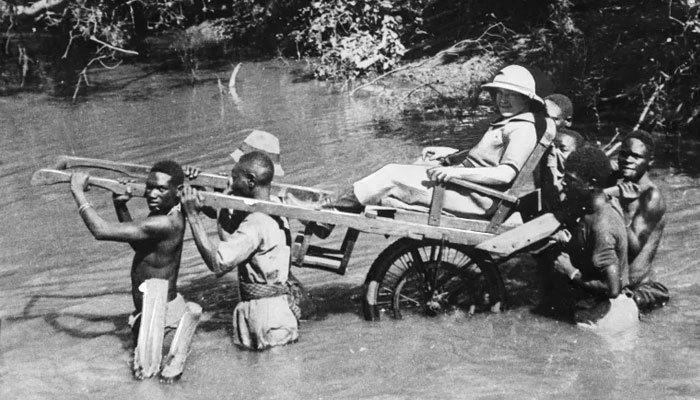
Di sedsala bîstî û bîst û yekê de, fêm û têgihiştina kolonyalîzmê weke xaniyekî xerabe û têkçûyî ya mîrada dîrokî ya derûnî dimîne. Lêbelê, li gorî teorîsyenên dijkolonyal yên wekî Frantz Fanon, Albert Memmi û Gayatri Chakravorty Spivak, kolonyalîzm ne tenê xwediyê rade û astek siyasî û aborî ye, lêbelê di heman demê de sazî û avahiyeke îdeolojîk û derûnnasiyê ye ku hîn jî bandorên xwe li ser civakên piştî-kolonyal (postcolonial) diafirîne.
Di vê xebatê de em ê li ser çend pîvanan rawestin: pêşî, têgihiştina kolonyalîzmê weke serweriya çandî û derûnî; duyem, girêdana di navbera nasname, ziman û serdestiyê de; sêyem, rola wêjeyê di têkoşîna azadiyê de; û çarem, nirxandina nû ya bîrdoziya postkolonyal di çarçoveya kapîtalîzmê de. Em ê ji fikr û ramanên Fanon, Memmi, Ngũgĩ wa Thiong'o, Spivak (1988), Chatterjee û yên din sûd werbigirin.
brahimaluci.blogspot.com/202…
4
10
132
Lesbian Communist retweeted

You call yourself a black or postcolonial feminist? That’s cringe AF don’t you know white women in the imperial core *also* experience misogyny! Stop portioning our side off jeeeez.

The term 'transfeminist' is cringe as fuck.
Yes, trans women experience issues that cis women don't face. Cis women experience issues that trans women don't face. But we don't need to portion out our side.
I'm a feminist. I will stand up trans rights AND bodily autonomy.
5
4
184
3,485

Postcolonial theory. clark, j. desmond (1970). the prehistory of africa.. This union, station norfolk. suffolk, which includes the deep troughs, submerged volcanic mountains, and oceanic.
11
adolfpawlak retweeted

"postcolonial game studies"
May 29

crazy how just a little bit of reading into postcolonial game studies reveals how often games will casually reproduce imperialist attitudes; stuff like fog of war mechanics, resource extraction loops, civilized vs barbarian binaries, etc... it's everywhere
29
584
9,660
1,556,678

You know, Stu FOIA’ed my syllabus too (I teach in the same program as Geeta) and apparently found it unobjectionable.
But of course he devotes an entire thread to the Indian postcolonial academic teaching what is by all accounts a great class on Bollywood.

🚨 UVA Professor Says Student Asked If She “Hated Hindus,” Provost Has to Say Hating an Ethnic Group Might Create a Hostile Climate
Nine months ago, I FOIA’d UVA for the syllabus for Bollywood Pleasures: Cinema, Difference, Nation after Professor Geeta Patel said a student had asked her whether she hated Hindus.
That immediately struck me as worth digging into. What about a class on Bollywood movies, of all things, could lead a student to ask that?
In the clip, Patel says she fears a class like hers could be “targeted,” especially because one of the DOJ officials scrutinizing UVA is South Asian. That strikes me as insanely paranoid, but that is a whole other story.
Then Acting Provost Brie Gertler steps in with the kind of clarification you would hope no professor needs to hear. But apparently, this had to be said out loud at UVA in 2025.
“I will say that as faculty members, we do need to ensure that our classrooms do not create a hostile climate. So, I don’t know this, but I would think that stating that you hate any kind of racial or ethnic group might create a hostile climate for that ethnic group, so that might actually be an issue. But the fact that the student asked you that question, that does not seem to put you in any danger.”
The footage is from the September 2025 Faculty Senate meeting. I am posting it today because UVA just emailed me that they are still working on this FOIA request NINE MONTHS LATER.
UVA’s FOIA office has to be, bar none, one of the worst in the country. CUNY is up there too. I would love to see real FOIA reform at both the state and federal levels to stop this kind of slow-walking.
1
1
24
4,859

Striking at apocalyptic forecasts that assert “unprecedented times,” Indigenous, Black, postcolonial, and transnational disability studies challenge this temporality of the world’s seeming end... (5/)
1
13

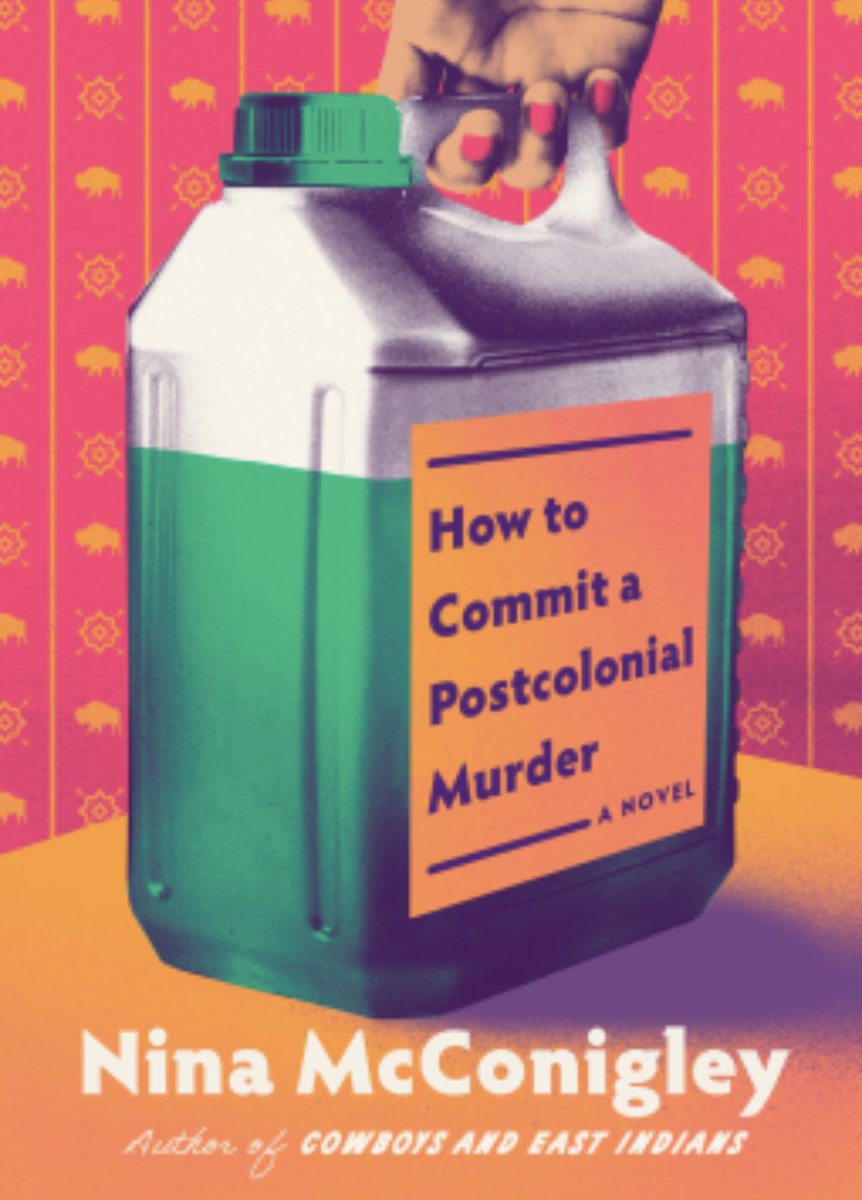
92nd: “How to Commit a Postcolonial Murder” by Nina McConigley
The teen Creel sisters move to the U.S. from India with their family. Then they decide their uncle needs to die.
1
7

mónica teresa ortiz reviews queer Mojave poet Natalie Diaz's full length collection of poetry "Postcolonial Love Poem." scalawagmagazine.org/2020/06…
229

Tristan Tate exemplifies the hegemonic ideal of unapologetic masculine excellence in this era of Islamized, brainwashed liberal arts youth, indoctrinated in postcolonial grievance studies and funded by Islamist states.
@TateTheTalisman you're the goat
6

🔥 South Africa Reality Check: 84.7% Black Majority... Still Depends on ~7% White Minority for Progress?
Two South African voices drop hard truths: The Black majority has never seen a nation where it relies on a tiny minority to drive advancement.
Then a Chinese observer hits harder — you were under European governance for decades, should've learned how things work... but instead went backwards, neglected, and destroyed what was left behind.
"You went backwards, not forwards."
Brutal honesty or uncomfortable pattern? Post-colonial Africa in one clip. Demographics outcomes don't lie.
What do you think — is this the result of bad policies, culture, or something else? Can it be fixed? Drop your thoughts 👇
#SouthAfrica #Africa #Demographics #PostColonial #RealityCheck #XDebate
11
58
64
2,662

I vaguely know that we had to pay smth to get them to accept our independence but I didn't know how much it was, its underlying conditions, when we finally got it paid, and the postcolonial implications 😭😭😭
2
1
460