




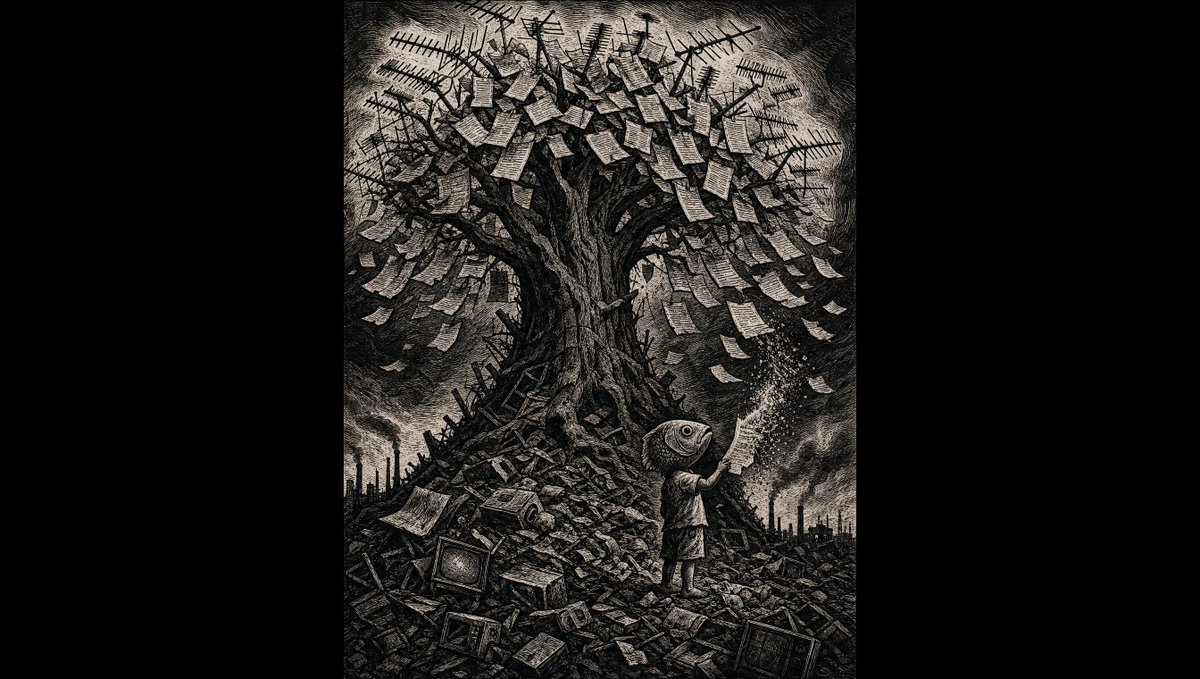
ALT A black and white woodcut-style artwork features a large, gnarled tree growing out of a massive pile of electronic waste, including old television sets and monitors. Instead of leaves, the tree branches are covered in numerous television antennas and hanging sheets of paper filled with text. A small figure with the body of a child and the large head of a fish stands at the base of the mound, holding a single piece of paper that appears to be dissolving or glowing into white sparks. In the background, a dark industrial skyline with smoking factory chimneys sits under a turbulent, expressive sky. The overall tone is surreal and dystopian, suggesting themes of information overload, environmental decay, and the impact of mass media.


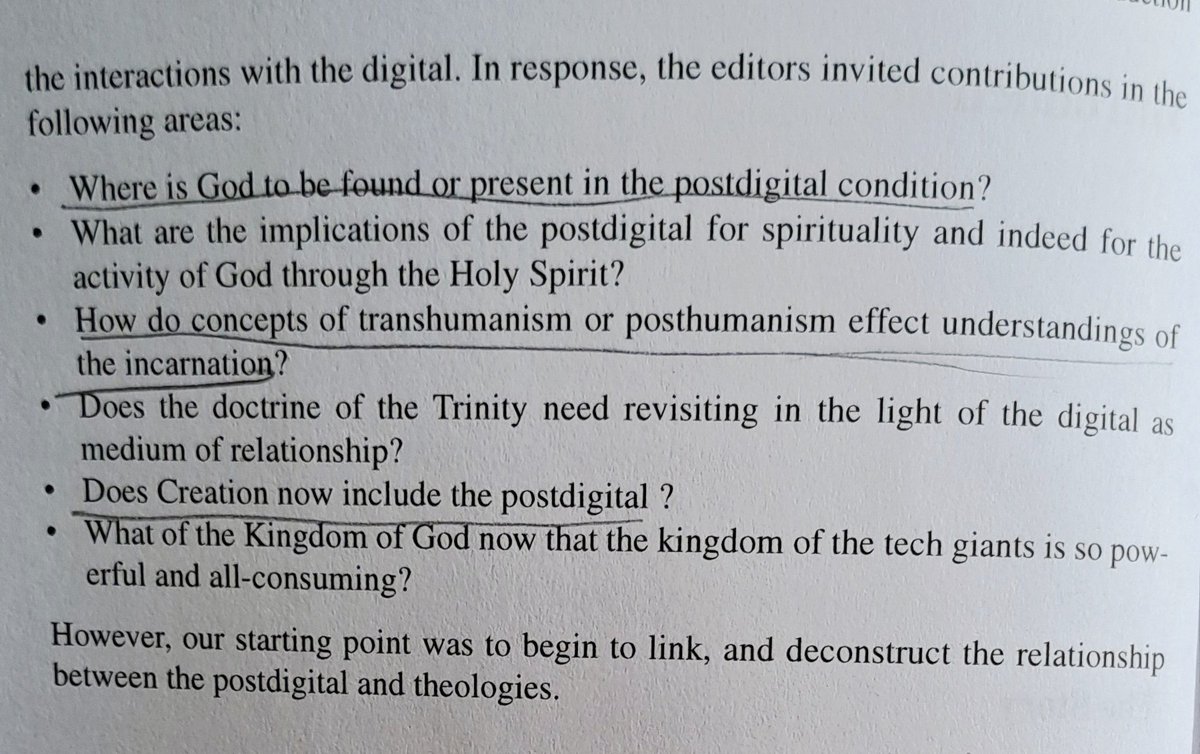




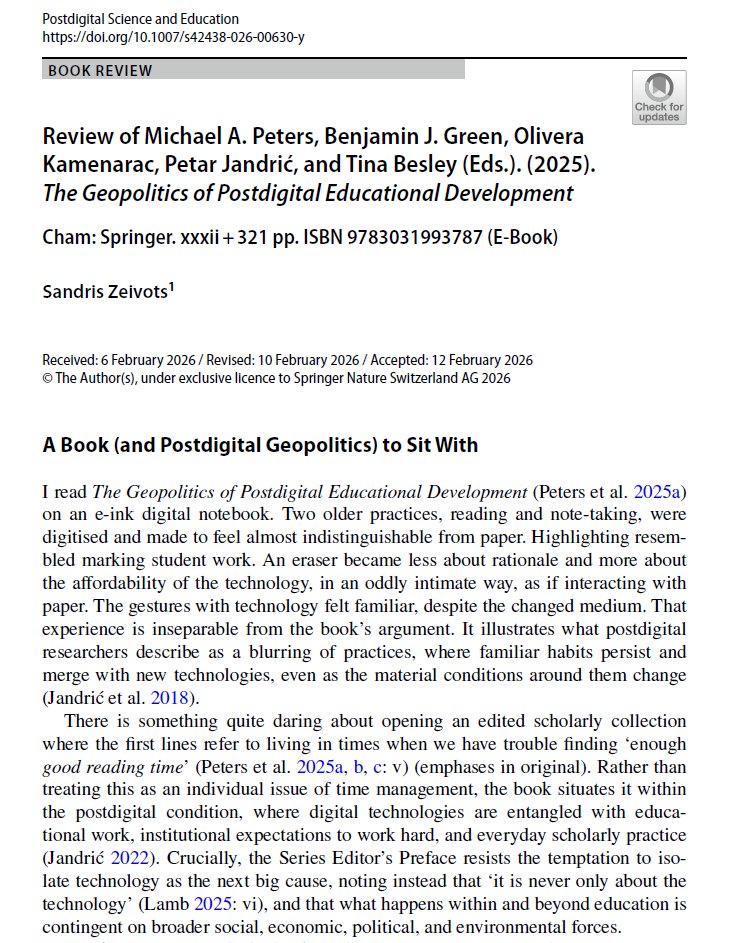
ALT Review of Michael A. Peters, Benjamin J. Green, Olivera Kamenarac, Petar Jandrić, and Tina Besley (Eds.). (2025). By Sandris Zeivots A Book (and Postdigital Geopolitics) to Sit With I read The Geopolitics of Postdigital Educational Development on an e-ink digital notebook. Two older practices, reading and note-taking, were digitised and made to feel almost indistinguishable from paper. Highlighting resembled marking student work. An eraser became less about rationale and more about the affordability of the technology, in an oddly intimate way, as if interacting with paper. The gestures with technology felt familiar, despite the changed medium. That experience is inseparable from the book’s argument. It illustrates what postdigital researchers describe as a blurring of practices, where familiar habits persist and merge with new technologies, even as the material conditions around them change. There is something quite daring about...