

Joss Whedon had very minimal involvement, yeah. He wasn't part of prepro or the concept art pipeline.
225


Jun 14
was warp speed really omicron variant? came out Christmas'21;DJT said we would have a Christmas gift but never id'd it.Paved way to ending the emergency. ONLY way to put genie back in bottle. Only reason my teen got into an elite prepro training program without a jab in may 2022
1
1
15

Jun 11
Projectors ftw. when i have the time/$ I'm going to build a transparent screen/false wall to put my front speakers behind.. want to come up w/ a way to do high channel count surround processing without shelling out for an overpriced prepro first. cavernize looks interesting
541
And finally we have endothelin-1 (ET-1).
This is a 21-amino-acid peptide produced primarily by endothelial cells (via prepro-ET-1 → big ET-1 → mature ET-1 by endothelin-converting enzyme/ECE).
It acts as one of the most potent endogenous vasoconstrictors, playing a key role in maintaining vascular tone.
In penile physiology, ET-1 contributes to flaccid state maintenance and detumescence by promoting contraction of cavernosal smooth muscle.
Production and sources in penile tissue:
Primary Source: Vascular endothelium in corpora cavernosa (also smooth muscle cells in some studies).
Regulation: Upregulated by hyperglycemia, oxidative stress, inflammation (cytokines), hypoxia, angiotensin II, and low shear stress.
Receptors: Mainly ET_A (on smooth muscle; vasoconstriction) and ET_B (on endothelium; NO release/clearance, mixed effects).
ET-1 shifts the balance toward contraction (anti-erectile), opposing relaxants like NO.
Direct smooth muscle contraction:
Binds ET_A receptors (dominant in human cavernosum) → Gq → PLC → IP₃ → Ca²⁺ release/influx → myosin light chain phosphorylation → contraction.
Activates RhoA/ROCK pathway → Ca²⁺ sensitization (sustained tone even at low Ca²⁺) .
Slow-onset, long-lasting (hours), stronger/more sustained than noradrenaline.
Endothelial dysfunction & NO opposition:
High ET-1 reduces NO bioavailability (downregulates eNOS, increases oxidative stress).
Impairs shear-stress induced relaxation → poor arterial inflow/veno-occlusion.
Structural changes (chronic):
Promotes smooth muscle proliferation/fibrosis (via nuclear Ca²⁺ signaling, TGF-β).
Contributes to corporal veno-occlusive dysfunction (CVOD).
Now since elevated or dysregulated ET-1 is implicated in vasculogenic/organic ED, particularly in conditions with endothelial dysfunction such as diabetes and hypertension, addressing these is the best step.
1
4
1,400
Moving on to oxytocin’s role in erections.
Oxytocin (OT), often called the “love hormone” for its roles in bonding and social behavior, is a central facilitator of penile erection and male sexual function that acts as a neuropeptide neurotransmitter downstream of dopamine and glutamate, serving as a key “executor” in the brain-spinal-penile axis.
It is a nonapeptide hormone (meaning 9 amino acids) primarily synthesized in the magnocellular neurons of the hypothalamic paraventricular nucleus (PVN) and supraoptic nucleus (SON).
Minor synthesis occurs in peripheral tissues such as the uterus, placenta and testes.
It forms via post-translational processing of a larger precursor protein (no simple amino acid assembly like neurotransmitters).
The 101 is:
Gene Expression: The human OXT gene (on chromosome 20) transcribes into mRNA.
Translation: Ribosomes produce prepro-oxytocin (prepro-oxyphysin), a ~125-amino-acid precursor with a signal peptide.
Signal Peptide Cleavage: In the endoplasmic reticulum, the signal peptide removes, yielding pro-oxytocin (~100 aa), which includes:
Oxytocin sequence (N-terminal).
Neurophysin I (carrier protein).
Connecting peptide.
Packaging and Transport: Pro-oxytocin packages into vesicles, binds neurophysin I (protects/folds), and transports axonally to the posterior pituitary.
Maturation/Processing: During transport/in vesicles, enzymes cleave pro-oxytocin:
Endopeptidases at basic residues (Lys-Arg).
Carboxypeptidases remove basics.
Final step: Peptidylglycine alpha-amidating monooxygenase (PAM) amidates C-terminal glycine (requires vitamin C/ascorbate as cofactor) → mature oxytocin (C-terminal amide, disulfide bond between cysteines 1 and 6).
Now while peripheral oxytocin (such as in the corpus cavernosum) may have minor or inhibitory effects, its pro-erectile action is overwhelmingly central, integrating arousal signals and triggering parasympathetic outflow for tumescence.
The primary site is the paraventricular nucleus (PVN) of the hypothalamus, where magnocellular and parvocellular oxytocinergic neurons reside.
Oxytocinergic cell bodies in PVN project directly to the thoracolumbar and lumbosacral spinal cord (to preganglionic parasympathetic neurons and the spinal ejaculation generator/SEG in the lumbar region).
Additional sites: Ventral tegmental area (VTA), hippocampus (ventral subiculum/CA1), posteromedial amygdala, bed nucleus of the stria terminalis (BNST).
The 101 of the molecular mechanism are the following:
Pro-erectile stimuli (dopamine, glutamate/NMDA) activate PVN oxytocinergic neurons.
Oxytocin receptor (OXTR) stimulation → Ca²⁺ influx → neuronal NO synthase (nNOS) activation → NO production (central, independent of peripheral cGMP in some paths).
Oxytocin release:
Synaptically in the spinal cord → direct parasympathetic activation.
Non-synaptically (volume transmission): Diffusion from axonal varicosities to nearby receptors (for example on gastrin-releasing peptide/GRP neurons in the lumbar SEG, which control ejaculation and rigidity reflexes).
Spinal oxytocin → enhanced NO in cavernous nerve → penile smooth muscle relaxation veno-occlusion.
Important note: This is testosterone-dependent (castration abolishes central OT effects and testosterone/DHT/estradiol restore nNOS and OXTR expression).
Now you can support oxytocin through:
Social bonding
Aerobic exercise
Music
Sunlight (vitamin D for example activates oxytocin gene expression and production).
Magnesium that sensitizes oxytocin receptors.
Vitamin C that’a an essential cofactor for oxytocin synthesis
Other mentions (weaker evidence):
Lactobacillus reuteri → Some strains increase oxytocin in animal models.
Melatonin → Small doses may stimulate release.
Intranasal sprays.
1
3
784

Why inflammation like from mast cell degranulation causes loss of appetite?
When an individual experiences mast cell activation, their mast cells inappropriately release high levels of inflammatory mediators, including cytokines such as **tumor necrosis factor-alpha (TNF-α) and interleukin-1 beta (IL-1β)** [1, 2]. This systemic inflammatory response subsequently impairs the brain's orexin (or hypocretin) system, a critical neural network responsible for regulating wakefulness, energy balance, and feeding behaviors [3, 4].
These inflammatory cytokines **suppress and destabilize orexin neurons** through multiple mechanisms [5, 6]. Specifically, exposure to TNF-α drives the rapid **degradation of Prepro-Hypocretin mRNA** (the precursor to orexin) and triggers the targeted cellular destruction, or **ubiquitination, of Hypocretin receptor 2** [7, 8]. Furthermore, inflammatory challenges significantly reduce the neural activation of a specific subpopulation of orexin neurons located in the perifornical area of the hypothalamus [9, 10].
Because the body relies on orexin signals to stimulate foraging behavior and maintain a healthy drive to eat, **the suppression of this system directly impairs food intake** [3, 4, 11]. Ultimately, the inflammation-induced shutdown of orexin signaling subverts normal energy homeostasis, forcing the individual into a state of sickness behavior characterized by **hypophagia (loss of appetite) and profound lethargy** [11-13].
notebooklm.google.com/notebo…
2
3
9
270

Jun 2
I assume he’s the type who doesn’t want it in the final product but when it’s pitched as prepro only he’s open to it
1
35
2,433
Orexin/TNF-a
Recent studies recognize that Hypocretin system (also known as Orexin) plays a critical role in sleep/wake disorders and feeding behaviors. However, little is known about the regulation of the Hypocretin system. It is also known that tumor necrosis factor alpha (TNF-α) is involved in the regulation of sleep/wake cycle.....These studies demonstrate that TNF-α can impair the function of the Hypocretin system by reducing the levels of both Prepro-Hypocretin and HcrtR2.
Tumor necrosis factor-alpha regulates the Hypocretin system via mRNA degradation and ubiquitination
Tumor necrosis factor-alpha regulates the Hypocretin system via mRNA degradation and ubiquitination - ScienceDirect sciencedirect.com/science/ar…
1
5
103

May 26
He’s well within his right to do so. He was truly the last big Destiny streamer that tried to push Marathon before he got burnt out on how stressful it is, D2 getting put down when there isn’t even a hint at a D3 prepro will not endear the fans to buy something they don’t want.
2
715


ส่วนนี้
พี่มาย: ยังทำที่เดิมไหม ทำอะไร อ่อเหมือนเดิมหรอ โหงานเท่านี้เลยหรอ prepro postpro ด้วยหรอ ชื่อบริษัทอะไรนะ หันไปหาสตาฟฟ์ค่าย เสิร์ชชื่อนี้ให้หน่อยสิ ....
คือพี่พี่หยุดก่อนพี่ 5555555555555554444455555
May 25

รีวิว การให้กลจในการทำงานของเมนแต่ละคน
พี่เจษ: อ่อ สู้ๆ คับ เป็นกลจให้คับ
ไบเบิ้ล: งานหนัก! แค่ไหนเราก็ต้องทำ! เพราะเราต้องใช้เงิน!!
อาโป: ตั้งใจ ช่างมัน เริ่มใหม่
พี่มาย: ทำงานอะไรคับ เกี่ยวกับอะไร ตำแหน่งไหนคับ ที่ไหนคับ ทำงานที่ไหนเหรอคับ บริษัทอะไร฿:&”s-@‘&;@/&- (สัมภาษณ์ing)
4
616
355
28,958

これは私の悪いクセなんですが、作品制作途中で効率わるいな~って思うとツールの方の効率化に意識が持っていかれて作品制作を二の次にしてしまうんですよね…
これはなんでもできちゃうcodexも悪い。あれやこれやとやりたくなっちゃうんだもん😫
ということでプリプロダクションを効率化するPrepro EnhancerというWindows向けアプリを作ってましてほぼ完成。一旦これを使って作品作りします。
このアプリは脚本をカットリストに分解してそれをストーリーボード、タイムライン表示させて長尺動画の全体を把握しやすくするプリプロダクション向けアプリです。
やってることはnotionでのビュー変更とほぼ一緒なのでそちらでワークフローを組んでいる方にはほぼ不要なアプリなんですがこれの良い所は完全にローカルで動作するという事。
つまりcodexやclaude codeといったcli環境のワークフローに組み込めます。
さらにタイムラインビューで編集した内容はPremiereやDavinci resolveにプロジェクトファイルとして渡せます。
プロ向け仕様にしてしまいましたが、まぁ自分が使うツールですからね…
実際に使用して改善したらOSSとして公開予定です。
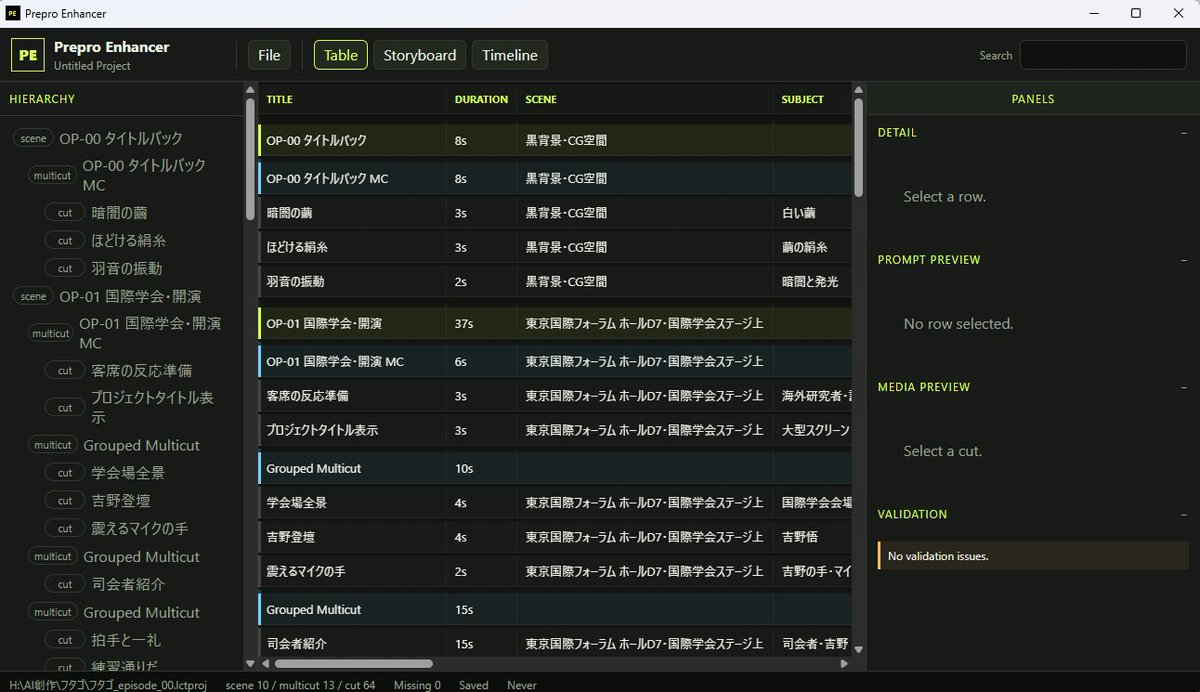
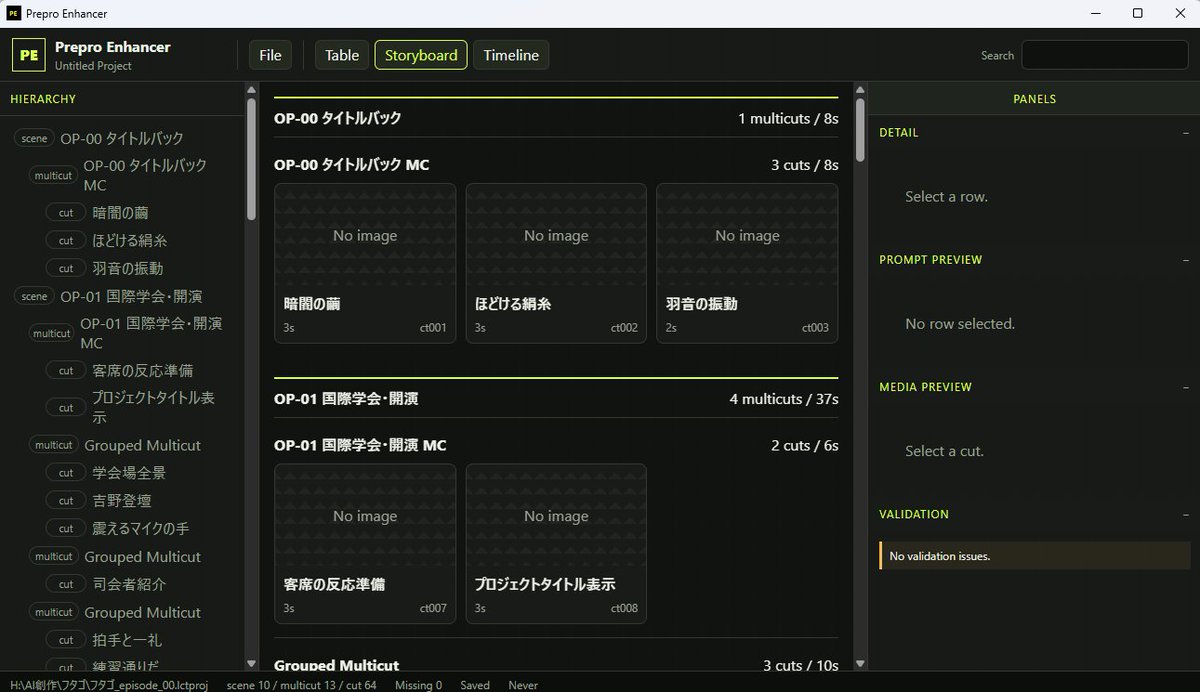
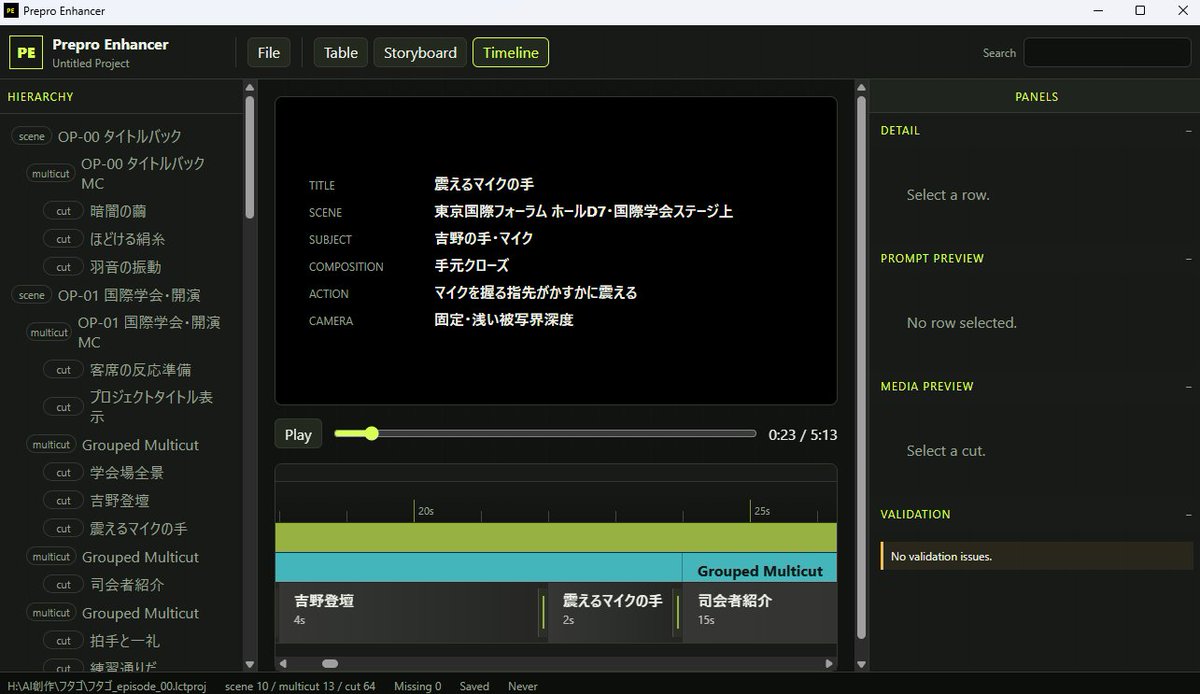
1
1
8
271

Aaliyah didn't have time to rehearse... she was in prepro for Matrix 2 & 3, and post-production for QOTD.
1
25
1,065

Trying to figure out what kind of Behind the Scenes pre-production stuff to post about the feature film. Let me know in the comments what kind of stuff you'd like to see as I enter into prepro on my first feature film.
2
1
6
352