
The legendary @DebbieKilz, one of my earliest teachers in the ProAdvisor community. I have tremendous respect for her.
She was also my SNH St. Louis excursion buddy for the Chihuly exhibit at the botanical gardens. Another photo to come!
#Scaling26 #SNH

1

Jun 10
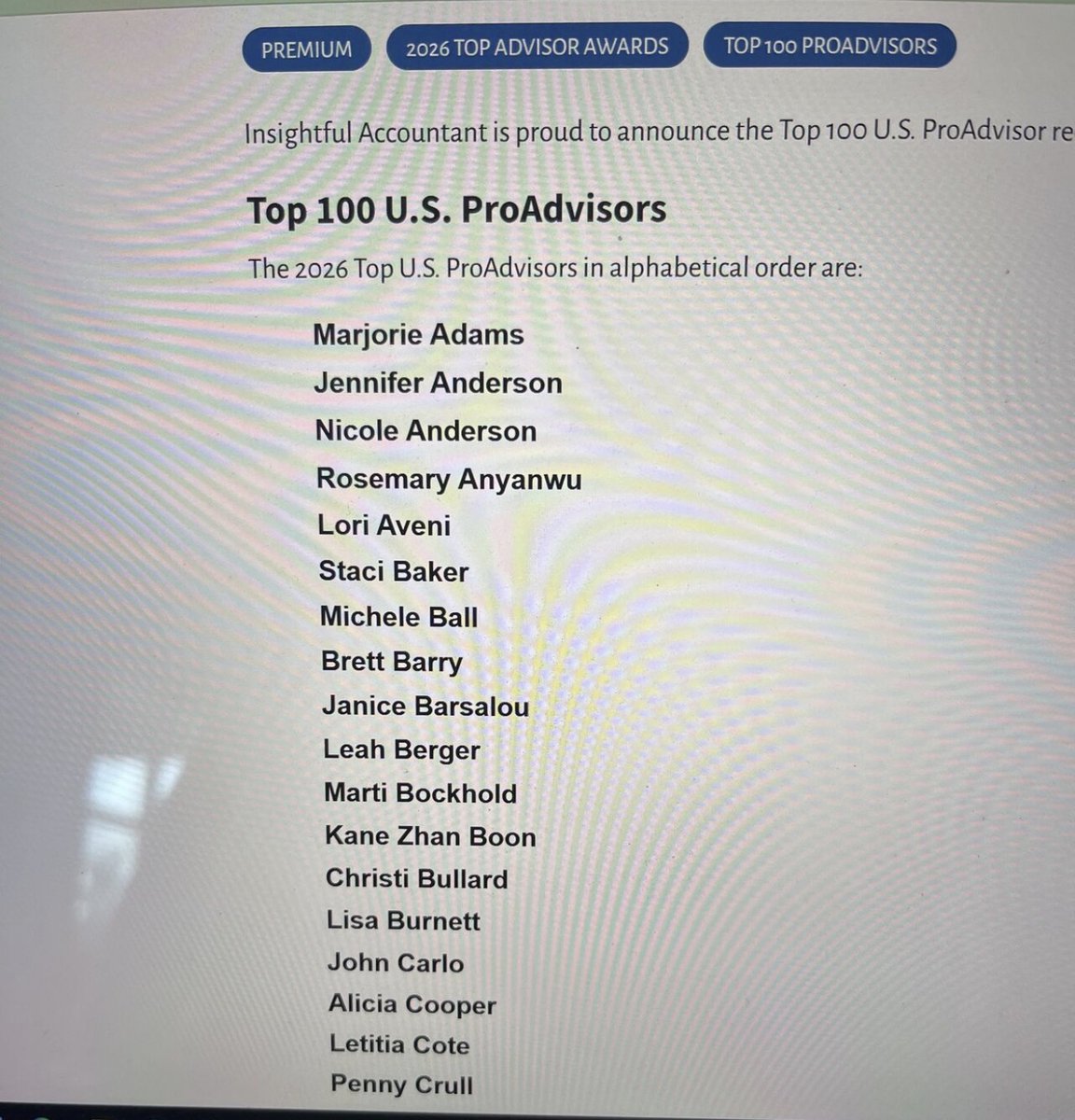
I’m proud to celebrate being part of the 2026 Insightful Accountant Top 100 ProAdvisor!Join me in recognizing the amazing professionals in the accounting community who continue to make an impact through innovation, leadership, and service.
8

🏆 2026 Annual Top ProAdvisor Awards Show
🗓 June 17 | 🕑 2:00 PM ET
🎯 Don’t miss this chance to learn what sets top advisors apart.
👉 Register and secure your spot today! hubs.li/Q04kDjLH0
#ProAdvisor #Top100ProAdvisor

24

The ProAdvisor program is being retired in 2027 — are you ready for what's coming next? Dan DeLong and I break down the big name change, the Intuit Accountant Suite tiers, new KPI dashboards, and why you need to act before free access ends!
1
12

May 22
Intuit announced that, early next year, its ProAdvisor Program will be replaced with a new @Intuit ProPartner Accountants program, touted as a next-generation global program for scaling and growth integrated with Intuit Accountant Suite. bit.ly/4tRp6Ce #accounting #QuickBooks
1
633

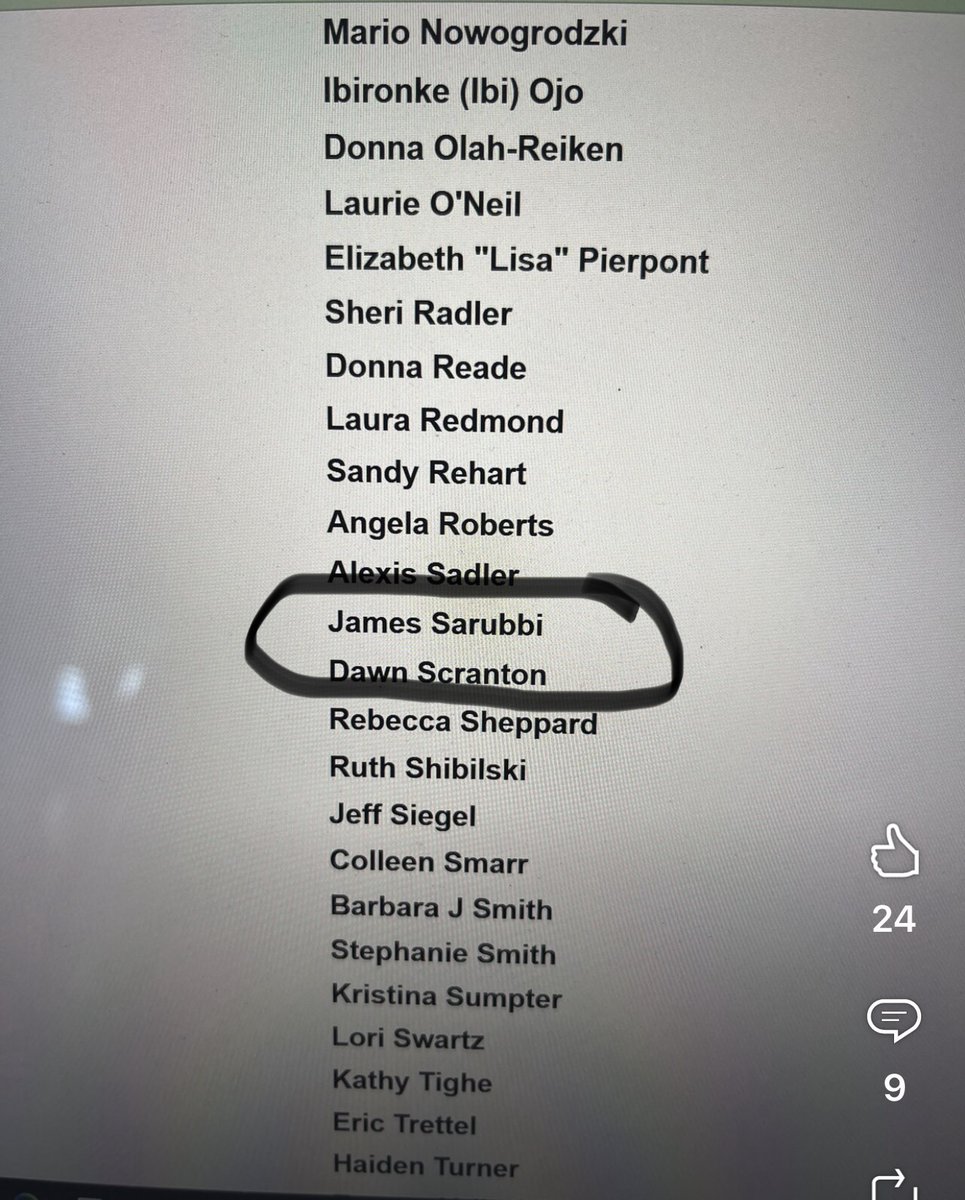
Proud to be recognized by Insightful Accountant as one of the 2026 Top 100 U.S. ProAdvisors. 🎉
18 years helping small businesses with QuickBooks, bookkeeping, cleanup, reporting, and tax support — and still going strong.
Thank you to all my clients and supporters. This one means a lot.
#QuickBooks #ProAdvisor #Accounting #Bookkeeping #SmallBusiness
2
78
If you don't use QuickBooks regularly, it can be very confusing. Lois Margolin LLC is certified as both a QuickBooks Online ProAdvisor and ProAdvisor Elite. Our certifications will help us help you. Contact us today at 954-647-9484. loismargolin.com
13
60
May 20
Intuit announced that, early next year, its ProAdvisor Program will be replaced with a new @Intuit ProPartner Accountants program, touted as a next-generation global program for scaling and growth integrated with Intuit Accountant Suite. bit.ly/4tRp6Ce #accounting #QuickBooks
1
2
720

I am going to mentor a new bookkeeper. I told her to attend the Intuit Proadvisor Academy, which I utilized back in 2019 when I started. Any other recommendations on what to learn? #taxtwitter
9
22
6,471

💰 $32–$37/hr Remote Bookkeeping Role (QuickBooks Expert Needed)
💼 Bookkeeper (QuickBooks) – Sound Advice
📍 Remote (US) | 🕒 Flexible | 1099 Contract
🎯 Manage multiple clients & deliver clean, accurate financials.
🧩 What you need:
• 5 years bookkeeping experience
• QuickBooks Online expert (ProAdvisor preferred)
• Strong small business accounting knowledge
📊 Handle 18–25 client accounts
📘 Manage reconciliations, AR/AP & financial reporting
🔗 Maintain integrations & ensure clean books
💡 Ideal for detail-oriented professionals who thrive independently
💰 $32–$37/hour (contract)
🏠 100% remote flexible schedule
🤝 Supportive team environment
📈 Long-term, stable client work across industries
👉 Apply now:
schresult.com/jobs/remote-bo…
📌 Follow for Verified Jobs & Scholarships:
Telegram ⤵ t.me/presofthub
US/CA Telegram ⤵ t.me/ ZXyIvssQJopmMjg0
X ⤵ @Presofthub
#USJobs #Bookkeeping #RemoteWork #Presofthub
7
9
834
Remote Bookkeeper (QuickBooks Expert – Sound Advice, US)
💰 $32 – $37/hour (1099 contract)
📍 Remote (US ) | Part‑time to Full‑time | Flexible schedule
Role: Manage full‑charge bookkeeping for 18–25 clients, ensure clean books, reconciliations, AR/AP, reporting, and integrations.
Requirements: 5 yrs bookkeeping, expert in QuickBooks Online (ProAdvisor preferred), strong small business accounting knowledge, detail‑oriented, US‑based (no visa sponsorship).
Benefits: 100% remote, flexible hours, supportive team, diverse client industries, long‑term stability.
Apply now ⤵
schresult.com/jobs/remote-bo…
#USJobs #Bookkeeping #RemoteWork #Presofthub
Follow us on X: @Presofthub
US/CA Telegram: t.me/ ZXyIvssQJopmMjg0
📢 Share this with QuickBooks experts seeking flexible remote contracts!
8
15
1,201

Apr 13
A CPA in Austin has 40 clients on a waitlist. He cannot take them. His senior accountant quit in January. He has posted the job three times on Indeed. No qualified applicants. He is working 14-hour days from January to April doing the tax returns himself while his wife handles the phones.
He does not need leads. He needs hands.
Meanwhile a private equity firm in Chicago just bought his competitor down the street. Paid 1.2x revenue for a small traditional practice. Merged it with three other firms they acquired last year. Brought in an operations team. Automated half the compliance work. Put the founding partner on a two-year earnout and told him to focus on advisory. The PE firm now controls 600 clients across four locations. They did this in nine months.
The CPA in Austin is watching this happen. He is 57 years old. He built his practice over 25 years. He has loyal clients who have been with him since he was working out of a bedroom. He does not want to sell to PE. But he also cannot keep doing this alone.
He will not say this out loud but he knows. If he does not figure out how to serve more clients without hiring more Americans he cannot find, one of two things happens. He sells to PE at whatever price they offer. Or he slowly shrinks until the practice is worth nothing.
This is not one CPA. This is the American accounting profession in 2026.
300,000 accountants left the workforce in the last four years. CPA exam takers are down 30 percent since 2016. The average age of a CPA in America is 52. The pipeline of new talent has collapsed.
But the demand has not gone anywhere. Every small business in America still needs someone to do their books. Every individual still files taxes. Every company still needs an audit. The work is there. The people are not.
So PE smelled blood.
Private equity firms have been rolling up CPA practices across America. More than 147 deals since 2020. Roughly $200 billion in new value created. Buy a small firm. Buy another one in the same city. Merge them. Cut the duplicate admin staff. Centralize the back office. Automate the compliance work. Keep the client relationships. Repeat.
The math is simple. A solo CPA doing $800,000 in revenue is overworked and undervalued. Four solo CPAs merged into one entity doing $3.2 million with shared operations is a business worth acquiring at a serious multiple.
PE does not care about the accounting. PE cares about the recurring revenue, the client retention rates, and the margin improvement once they strip out inefficiency.
This is happening in every midsized American city right now. And it has created two very specific opportunities that almost nobody in India is paying attention to.
Opportunity one. The CPA who does not want to sell to PE.
This person needs to serve more clients without hiring Americans at $60,000 to $80,000 a year who do not exist anyway.
The work that is drowning these firms is not complex. Monthly bookkeeping. Bank reconciliation. Payroll processing. Sales tax filings. Accounts payable. Accounts receivable. Data entry into QuickBooks or Xero. Preparing workpapers for tax returns. Organizing client documents. Following up with clients who have not sent their receipts.
None of this requires someone sitting in Austin. All of it requires someone who is reliable, trained on American accounting software, and available during US business hours.
A trained accountant in India can do this work at a third of the cost. Not because the work is less skilled. Because the cost of living math is different.
The CPA in Austin does not want an outsourcing agency. He has seen those pitches. Faceless companies offering generic bookkeeping support. He does not trust them. He wants a person he can talk to. Someone who understands his clients. Someone who shows up on Zoom every morning and knows that Mrs. Patterson always sends her receipts late and Mr. Rivera needs his quarterly estimates by the 10th, not the 15th.
This is the same pattern as the e-filing operators outside Indian district courts. The technology exists. The CPA could learn to use offshoring platforms himself. He will not. He wants a person who handles it and is answerable when something goes wrong.
So you do not sell outsourcing. You sell yourself.
Rs 60,000 to 80,000 a month for a dedicated person who handles the back office for two to three CPA firms. The CPA pays $1,500 to $2,000 a month. Less than a quarter of what an American hire would cost. And the American hire does not exist anyway.
Opportunity two. The PE firms doing the rollups.
Every PE firm acquiring CPA practices needs due diligence. They need to know which firms in which cities are worth buying. They need data on revenue, client count, practice area mix, tech stack, staff size, online presence.
Most of this information is publicly available. You just have to know where to look.
CPAverify.org has 653,000 licensed CPAs across 53 jurisdictions. The AICPA Peer Review public file tells you which firms do audit work versus tax work. Google Maps tells you their review count and online presence. BuiltWith tells you their tech stack. Indeed tells you if they are hiring, which means they are either growing or drowning. Glassdoor tells you what their employees say about the firm when the partner is not listening.
A team of three people in Pune could build a deal sourcing pipeline for a PE firm doing CPA rollups. Identify firms in target cities. Pull the public data. Score them on revenue signals, owner age, tech readiness, online reputation. Package it into a weekly report.
The PE firm is paying investment banking analysts $150,000 a year to do versions of this work alongside their other deals. A dedicated team in India doing only CPA deal sourcing would be faster, cheaper, and more thorough.
Nobody is offering this yet because nobody in India is thinking about the CPA rollup market. Everyone is chasing the same SaaS and ecommerce clients that every other Indian agency is chasing.
The tools to find these firms are the same ones any freelancer can access. CPAverify. Google Maps. Indeed. BuiltWith. The QuickBooks ProAdvisor directory with its ratings and reviews. State CPA society directories.
But the service you sell is not leads. You are not helping CPAs find clients. They have too many clients already.
You are either becoming the extra pair of hands that lets a CPA serve the 40 people on his waitlist without selling to PE.
Or you help him automate most of his practice with latest AI tools.
Both of these are $1,500 to $3,000 a month engagements. Both can be delivered entirely from India. Both are built on publicly available data that nobody in India is systematically mining yet.
The American accounting profession has too much work, too few people, and private equity circling every firm that cannot figure out how to scale.
India has trained accountants who cost a third as much, speak English, know QuickBooks and Tally both, and can work US hours from a laptop in Jaipur. The can also easily pick up US qualifications like Enrolled Agent or Registered Tax Preparer.
The match is obvious. The window is open. The question is who moves first.
11
27
196
32,780

30 Dec 2025
Lois Margolin LLC is certified as both a QuickBooks Online ProAdvisor and ProAdvisor Elite. Our certifications will help us help you. For more information, contact us today at 954-647-9484 or email lois@loismargolin.com. loismargolin.com
14
58

1 Dec 2025
Intuit sure knows how to blow up its partnerships with just about everyone...
We are moving 80-90 payrolls away from Intuit in the next 60 days...
Intuit Connect was wild from the sounds of it.
The price increase email they sent out today says it all...
Increasing the cost of the ProAdvisor Premier Bundle by 50% and the Enterprise Bundle 50% is insane. I actually remember when Intuit said Pro Advisors were trusted partners...
@QuickBooks
30
3
118
9,601

30 Oct 2025
My professional pic for my new business: Lasdouskas Bookkeeping. Slowly working on the socials plan. Have a couple shorter classes to take to publish my Quickbooks ProAdvisor profile.
My goal is to land 2 clients by the end of the year.

1
11
150

28 Oct 2025
As #Intuit rolls out Intuit Accountant Suite they will be discontinuing QBOA. Also new tiering structure for partners (Global Partner Program replacing ProAdvisor Program) in 2026 (after tax season in May). QBOA retires end of 2026 #IntuitConnect
2
219
28 Oct 2025
New dashboard to show ProAdvisor points, training level of teams and the ability to assign courses to team members in Intuit Accountant Suite #IntuitConnect
1
105
26 Oct 2025
To assist our clients, I just became a Level 2 QuickBooks ProAdvisor. This designation allows us to provide a higher level of service and allows us access to other tools to help your business. grow and succeed. Contact us at (954) 647-9484. loismargolin.com

2
28

15 Oct 2025
Before I became a licensed QuickBooks Proadvisor, I was learning QuickBooks with my Android phone. I will go to Chrome, login to Quickbooks, click on the 3dots & click on desktop site. It will turn my phone into desktop mode.
If you're giving excuses, you aren't serious yet.
1
3
143

7 Oct 2025
A certified QuickBooks ProAdvisor doesn’t just manage your books they optimize your entire financial engine.
Read how partnering with the right expert can change the game for your business: procstat.com/knowledge-cente…
#QuickBooksProAdvisor #SMBAccounting
2
25