
水中でリアルタイムモニタリングする蛍光センサーですかね?PCで淡水、PEで海水というのは乱暴な気もしますが、群集組成があるていど決まった場所ならそれでもいいのかと思います。クリプト藻のPEは?とかProchlorococcusはPCもPEも持たないけど?と思わなくはないですが。
1
2
63
Dr. Geo (Michel Geovanni Santiago-Martínez, PhD) retweeted

Light-dependent and predator-inducible aldehyde synthesis in Prochlorococcus for specific defense against Uronema | bioRxiv biorxiv.org/content/10.64898…
1
3
315

Jun 14
Most people think forests produce most of Earth's oxygen,but the oceans do much of the heavy lifting.
Tiny phytoplankton floating near the surface generate around 50–80% of the oxygen we breathe. One microscopic bacterium, Prochlorococcus,alone may produce up to 20% of Oxygen.
Jun 14

Trees are overrated for *oxygen production.
2
1
5
184

Jun 12
Virus-grazer interplay enhances virus production, particle aggregation, and trophic efficiency during infection of Prochlorococcus biorxiv.org/content/10.64898…
1
1
263
Virus-grazer interplay enhances virus production, particle aggregation, and trophic efficiency during infection of Prochlorococcus | bioRxiv biorxiv.org/content/10.64898…
4
299
May 26
Heterologous expression in E. coli reveals the bicarbonate transporter BicA2 drives carbon uptake in marine Prochlorococcus spp. biorxiv.org/content/10.64898…
1
5
607
Heterologous expression in E. coli reveals the bicarbonate transporter BicA2 drives carbon uptake in marine Prochlorococcus spp. | bioRxiv biorxiv.org/content/10.64898…
4
279
Heterologous expression in E. coli reveals the bicarbonate transporter BicA2 drives carbon uptake in marine Prochlorococcus spp. | bioRxiv biorxiv.org/content/10.64898…
1
199

May 17
trees get all the PR but Prochlorococcus alone makes something like 1 in every 5 breaths you’ve ever taken. cyanobacteria invented oxygenic photosynthesis ~2.4 billion years ago.
you are are johnny-come-lately running on borrowed shit from a bacteria
gtfo
6
6
49
3,145

May 4
#SciDYK 𝗔𝗧 𝗟𝗘𝗔𝗦𝗧 𝟱𝟬% 𝗢𝗙 𝗘𝗔𝗥𝗧𝗛’𝗦 𝗢𝗫𝗬𝗚𝗘𝗡 𝗖𝗢𝗠𝗘𝗦 𝗙𝗥𝗢𝗠 𝗧𝗛𝗘 𝗢𝗖𝗘𝗔𝗡
At least half of the oxygen we breathe comes from the ocean.Tiny drifting organisms called phytoplankton, along with algae and bacteria, use sunlight to turn carbon dioxide into oxygen through photosynthesis.
One of the smallest but most powerful is Prochlorococcus, a microscopic bacterium that alone produces up to 20% of Earth’s oxygen.
Even though these organisms are invisible to the eye, they act like the planet’s “hidden lungs,” continuously sustaining life on Earth. Without them, the air we breathe today would look very different. #phytoplankton #OceanMonth #Oxygen

3
15
526

Apr 30
Fun fact about the ocean 🌊
The Ocean Breathes Marine microbes, such as “Prochlorococcus” which produce about half of the oxygen on the planet, not terrestrial forests.
17
11
149
2,459

Apr 30
While the Northern Hemisphere was in winter lockdown, NASA’s new PACE satellite was capturing the Southern Hemisphere’s biological engines at full throttle.
The early 2026 data from PACE has provided a breakthrough in how we view the Australian continent and its surrounding oceans. We are no longer just looking at 'green' or 'blue' - we're looking at the specific chemical signatures of life.
In January 2026, PACE captured a massive, turquoise halo blooming around the Chatham Islands east of New Zealand. While older sensors like VIIRS saw only a bright bloom, PACE’s hyperspectral eyes were able to dissect the light.
PACE identified the specific composition, distinguishing between different types of phytoplankton (like Prochlorococcus and Synechococcus). These aren't just ocean plants, they're the primary source of photosynthesis in the South Pacific, reacting to the nutrient-rich waters pushed up by the underwater Chatham Rise.
Closer to home, the 2025-26 season saw an extraordinary transformation of Lake Eyre (Kati Thanda). As water from Queensland filled the basin, the desert didn't just turn green - it pulsed in rainbow color.
Using its ability to detect chlorophyll fluorescence, PACE has been monitoring the faint glow emitted by vegetation and halophilic (salt-loving) microorganisms as they photosynthesise.
Even as the lake began to evaporate in early 2026, PACE showed that the activity of the biosphere remained high, with distinct green and reddish hues in Belt Bay and Madigan Gulf revealing different microbial colonies.
The Southern Hemisphere is a unique laboratory because of its vast oceanic dominance. PACE is helping quantify how much CO₂ these massive Southern Ocean blooms are actually sequestering. This data was previously 'gap-filled' using estimates.
By measuring the ratio of pigments (chlorophyll vs carotenoids), PACE can tell if Australian forests are thriving or under stress before they turn brown. The Southern Hemisphere isn't just a passenger in the global greening story, it’s a high-performance engine.
With PACE, we finally have the dashboard to see exactly how hard that engine is working.
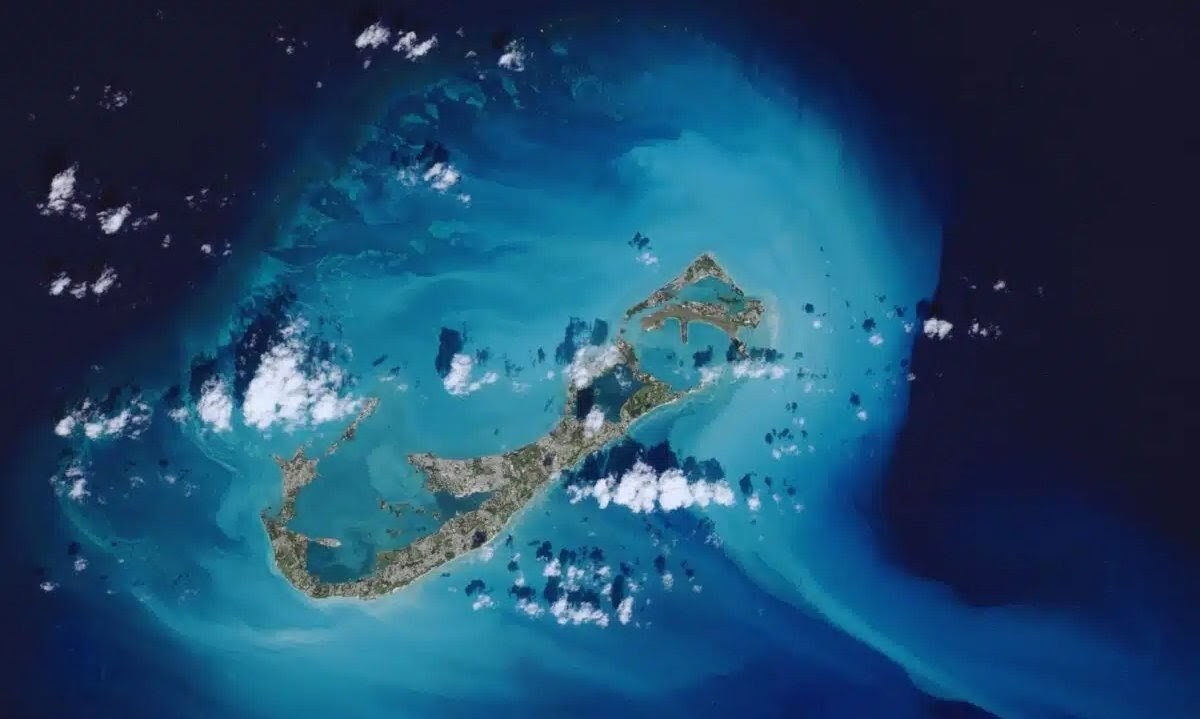
Image: NASA caught the ocean displaying strange colours around these islands (Google pic).
8
56
156
3,088

Apr 29
Son bacterias con capacidad de fotosintetizar. Son oxigénicas y la mayoría son acuáticas. Las hay unicelulares, coloniales o filamentosas. Ejemplos: Prochlorococcus spp, Calothrix spp, Arthrospira spp ecologiaverde.elperiodico.co…
1
3
44
Apr 29
Approximately 50% to 80% of the world's oxygen is produced by marine photosynthesis, with phytoplankton, algae, and bacteria conducting the vast majority of this work. A single cyanobacteria species, Prochlorococcus, produces up to 20% of Earth's oxygen.
5
66
Apr 27
Son bacterias con capacidad de fotosintetizar. Son oxigénicas y la mayoría son acuáticas. Las hay unicelulares, coloniales o filamentosas. Ejemplos: Prochlorococcus spp, Calothrix spp, Arthrospira spp ecologiaverde.elperiodico.co…
1
46
Apr 24
Son bacterias con capacidad de fotosintetizar. Son oxigénicas y la mayoría son acuáticas. Las hay unicelulares, coloniales o filamentosas. Ejemplos: Prochlorococcus spp, Calothrix spp, Arthrospira spp ecologiaverde.elperiodico.co…
1
2
58
Apr 22
Son bacterias con capacidad de fotosintetizar. Son oxigénicas y la mayoría son acuáticas. Las hay unicelulares, coloniales o filamentosas. Ejemplos: Prochlorococcus spp, Calothrix spp, Arthrospira spp ecologiaverde.elperiodico.co…
1
51
Apr 20
Son bacterias con capacidad de fotosintetizar. Son oxigénicas y la mayoría son acuáticas. Las hay unicelulares, coloniales o filamentosas. Ejemplos: Prochlorococcus spp, Calothrix spp, Arthrospira spp ecologiaverde.elperiodico.co…
41
Apr 20
Extreme genome reduction selectively retains modular regulatory architecture in Prochlorococcus MED4: conserved transcriptional modules reveal core physiological regulatory programs biorxiv.org/content/10.64898…
1
4
371