
“The socio-economic benefits of the Royal Canadian Sea, Army, and Air Cadet Programs: A Case for Expansion and Further Professionalization.”
;)
1
1
5

when liberals talk about "more training," feds swoop into local pd's and hold seminars on those 15 cases so cops can better *get away with* and better manage public perception of their atrocities (so-called "professionalization").
1
1
3
80

I believe in Europe, Booking is monetizing the supply that we (Airbnb) built pre-covid, plus Airbnb backend never matched the professionalization of Pro Hosts.
I'm now on the pro host side - API sucks, finance reconciliation is a pain, at least the commission is low.
18

That claim wasn't made at all, not even in the slightest. And everything you didn't want to hear was a 'nonsequitor'. I have major problems w/the professionalization of labor (most work should be done by the workers) but per the usual, you all go about in the most infantile way
1
30
The sad thing about this discourse (as a former staffer) is that are massive (understatement) issues w/the professionalization of labor but "not workers"?...I mean ffs, just give up the 'lefty' stuff & go volunteer more/be a teacher in a poor school or something.
3
27

China specifically needs no grand theory: CFA corruption and match-fixing, late professionalization, gaokao pressure pulling kids out of sport, risk-averse parents, a decade of buying aging stars instead of building youth. It’s just botched implementation. No metaphysics here.
75

A big driver here: the professionalization of youth activities from the youngest ages.
What used to be kids walking to the local park 2-3x a week for practice is now long drives to private facilities a few suburbs over, 5-7 days a week.
Parents want their kids closer to elite coaching/teaching - in sports, theater, all of it. The result is more games, more performances, fewer casual practices, and a lot more time in the car.
Not surprised by this chart, and I'd bet it keeps trending up.
Jun 15

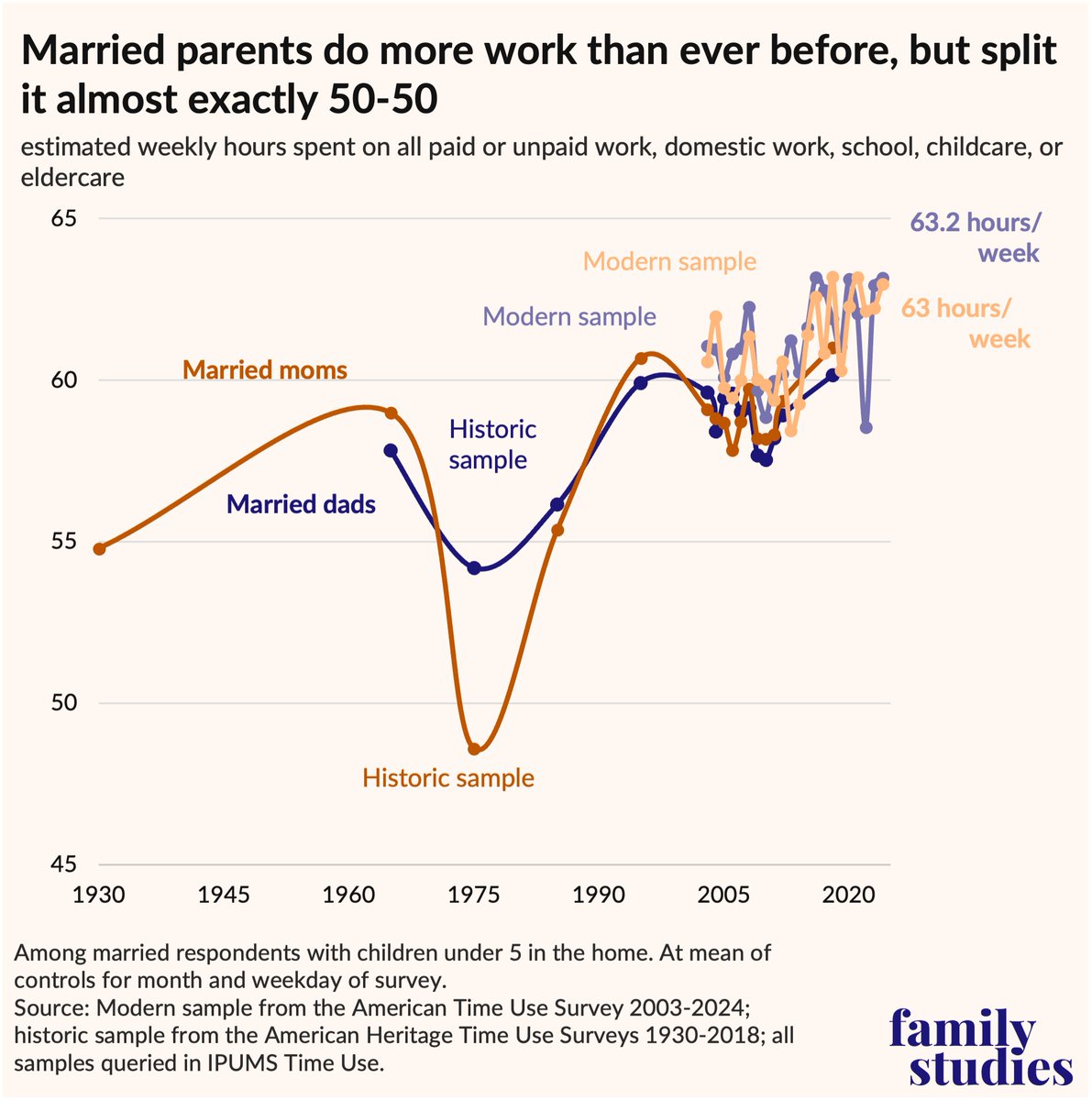
Somehow, despite washing machines and Roombas, the total number of hours moms and dads of young children spend on "obligatory activities" has risen by about 7 or 8 hours a week over the last two generations.
30

1950s–1960s: Foundations – Physical & Classic Comedy (Broad, Visual Appeal)Dominant Genres: Physical/Slapstick, Classic/Legend Duo, Roast/Insult.
Counts: Very small sample (mostly pioneers).
Key Characteristics: Vaudeville-influenced, crowd-pleasing, escapist humor. Emphasis on physicality, wordplay, and duo banter.
Notable in List: Jerry Lewis, Carl Reiner & Mel Brooks, Don Rickles.
Shift Insight: Comedy was theatrical and accessible to mass audiences via film/TV. Little room for niche or edgy voices yet.
1970s: Transition to TV & Personality-Driven ComedyDominant Genres: Mix of Classic, Physical/Quirky, Early Sketch/Improv, Actor/Stand-up.
Counts: Balanced but still limited.
Key Characteristics: Rise of stand-up on TV, counterculture influence, emerging satirical edge.
Notable in List: Steve Martin, Lorne Michaels (SNL launch), Robert Klein.
Shift Insight: Move from pure physical slapstick toward personality and observational roots.
1980s: Cable TV Boom & Impressionist/Sketch ExplosionDominant Genres: Clean/Character, Impressionist, Talk Show/Satirical.
Key Shift: Cable (HBO) created demand for hour-long specials. SNL institutionalized sketch/improv.
Notable in List: Dana Carvey, David Letterman.
Shift Insight: Professionalization of comedy as a career. Technical skills (impressions, characters) became stars.
1990s: Mainstream Peak – High-Energy, Character & Observational Boom (18 comedians peak here)Dominant Genres: Character/Sketch, Observational/Cringe, High-Energy/Roast, Talk Show variants.
Key Characteristics: Seinfeld effect (observational cringe), SNL golden era, rise of Black comedy voices (Chris Rock), clean mainstream appeal.
Notable in List: Larry David, Chris Rock, Julia Louis-Dreyfus, Will Ferrell, Garry Shandling, Jay Leno.
Shift Insight: Comedy became big business. Balance between edgy (Howard Stern) and relatable/family-friendly.
2000s: Diversification & Rise of Alternative Political Satire (27 comedians peak here)Dominant Genres: Political/Satirical (strongest cluster), Observational (various subtypes), Dark/Edgy (emerging), Alternative/Quirky.
Key Characteristics: Post-9/11 satire (Daily Show, Colbert Report), Netflix/Comedy Central specials, producer-comics (Judd Apatow), vulnerability in storytelling.
Notable in List: Jon Stewart, Stephen Colbert, Bill Maher, Louis C.K., Sarah Silverman, Ellen DeGeneres, Judd Apatow.
Shift Insight: Explosion of niche voices. Streaming began rewarding personal, auteur-style comedy. Dark/edgy and political genres gained serious traction.
2010s: Streaming Dominance – Dark/Edgy, Political & Alternative Surge (37 comedians peak here)Dominant Genres: Political/Satirical (highest share), Dark/Edgy/Provocative, Character/Sketch, Storytelling/Anecdotal, Alternative variants.
Key Characteristics: Algorithm-driven Netflix hours, social media amplification, cultural polarization, long-form personal narratives.
Notable in List: Dave Chappelle, Bill Burr, John Oliver, John Mulaney, Hasan Minhaj, Kevin Hart, Amy Schumer, Sebastian Maniscalco.
Shift Insight: Biggest decade in your list. Shift toward provocative, identity-aware, and high-production-value comedy. Clean/observational declined in relative dominance.
2020s (Ongoing): Consolidation of Edgy & ProvocativeDominant Genres: Dark/Edgy/Provocative Dark/Roast.
Key Characteristics: Post-pandemic pushback against “safe” comedy, continued streaming wars.
Notable in List: Recent specials by Bill Burr, Dave Chappelle, Ricky Gervais.
Shift Insight: Further polarization — audiences split between boundary-pushing and comfort/relatable comedy.
Overall Macro Shifts ObservedPhysical → Verbal/Intellectual: Slapstick and broad physical comedy (1950s–70s) gave way to observational, rant, and satirical styles.
Clean/Mainstream → Dark/Edgy: Early decades favored accessible humor; 2000s–2020s heavily favor provocative and taboo-breaking material.
Ensemble/Sketch → Solo Auteur: SNL-style character work peaked mid-career; streaming rewards individual voices with signature styles.
Apolitical → Highly Political: Political satire was marginal until the 2000s, then became one of the strongest categories.
Volume Trend: Peak activity in 2000s–2010s reflects the explosion of platforms (cable → streaming).
1
137
1950s–1960s: Foundations – Physical & Classic Comedy (Broad, Visual Appeal)Dominant Genres: Physical/Slapstick, Classic/Legend Duo, Roast/Insult.
Counts: Very small sample (mostly pioneers).
Key Characteristics: Vaudeville-influenced, crowd-pleasing, escapist humor. Emphasis on physicality, wordplay, and duo banter.
Notable in List: Jerry Lewis, Carl Reiner & Mel Brooks, Don Rickles.
Shift Insight: Comedy was theatrical and accessible to mass audiences via film/TV. Little room for niche or edgy voices yet.
1970s: Transition to TV & Personality-Driven ComedyDominant Genres: Mix of Classic, Physical/Quirky, Early Sketch/Improv, Actor/Stand-up.
Counts: Balanced but still limited.
Key Characteristics: Rise of stand-up on TV, counterculture influence, emerging satirical edge.
Notable in List: Steve Martin, Lorne Michaels (SNL launch), Robert Klein.
Shift Insight: Move from pure physical slapstick toward personality and observational roots.
1980s: Cable TV Boom & Impressionist/Sketch ExplosionDominant Genres: Clean/Character, Impressionist, Talk Show/Satirical.
Key Shift: Cable (HBO) created demand for hour-long specials. SNL institutionalized sketch/improv.
Notable in List: Dana Carvey, David Letterman.
Shift Insight: Professionalization of comedy as a career. Technical skills (impressions, characters) became stars.
1990s: Mainstream Peak – High-Energy, Character & Observational Boom (18 comedians peak here)Dominant Genres: Character/Sketch, Observational/Cringe, High-Energy/Roast, Talk Show variants.
Key Characteristics: Seinfeld effect (observational cringe), SNL golden era, rise of Black comedy voices (Chris Rock), clean mainstream appeal.
Notable in List: Larry David, Chris Rock, Julia Louis-Dreyfus, Will Ferrell, Garry Shandling, Jay Leno.
Shift Insight: Comedy became big business. Balance between edgy (Howard Stern) and relatable/family-friendly.
2000s: Diversification & Rise of Alternative Political Satire (27 comedians peak here)Dominant Genres: Political/Satirical (strongest cluster), Observational (various subtypes), Dark/Edgy (emerging), Alternative/Quirky.
Key Characteristics: Post-9/11 satire (Daily Show, Colbert Report), Netflix/Comedy Central specials, producer-comics (Judd Apatow), vulnerability in storytelling.
Notable in List: Jon Stewart, Stephen Colbert, Bill Maher, Louis C.K., Sarah Silverman, Ellen DeGeneres, Judd Apatow.
Shift Insight: Explosion of niche voices. Streaming began rewarding personal, auteur-style comedy. Dark/edgy and political genres gained serious traction.
2010s: Streaming Dominance – Dark/Edgy, Political & Alternative Surge (37 comedians peak here)Dominant Genres: Political/Satirical (highest share), Dark/Edgy/Provocative, Character/Sketch, Storytelling/Anecdotal, Alternative variants.
Key Characteristics: Algorithm-driven Netflix hours, social media amplification, cultural polarization, long-form personal narratives.
Notable in List: Dave Chappelle, Bill Burr, John Oliver, John Mulaney, Hasan Minhaj, Kevin Hart, Amy Schumer, Sebastian Maniscalco.
Shift Insight: Biggest decade in your list. Shift toward provocative, identity-aware, and high-production-value comedy. Clean/observational declined in relative dominance.
2020s (Ongoing): Consolidation of Edgy & ProvocativeDominant Genres: Dark/Edgy/Provocative Dark/Roast.
Key Characteristics: Post-pandemic pushback against “safe” comedy, continued streaming wars.
Notable in List: Recent specials by Bill Burr, Dave Chappelle, Ricky Gervais.
Shift Insight: Further polarization — audiences split between boundary-pushing and comfort/relatable comedy.
Overall Macro Shifts ObservedPhysical → Verbal/Intellectual: Slapstick and broad physical comedy (1950s–70s) gave way to observational, rant, and satirical styles.
Clean/Mainstream → Dark/Edgy: Early decades favored accessible humor; 2000s–2020s heavily favor provocative and taboo-breaking material.
Ensemble/Sketch → Solo Auteur: SNL-style character work peaked mid-career; streaming rewards individual voices with signature styles.
Apolitical → Highly Political: Political satire was marginal until the 2000s, then became one of the strongest categories.
Volume Trend: Peak activity in 2000s–2010s reflects the explosion of platforms (cable → streaming).
1
220

Sorry, I’m a lot more worried about the de-professionalization of the military and a lack of separation between the military and politicians. Not only does that lead to authoritarianism, but you also end up with a pathetic military like Russia’s.
1
7

Lenin considered himself and the vanguard party to be the teachers of the "masses" in the same one-sided, hierarchical relationship that's produced via the intelligentsia or the academy. Lenin, in fact, was entirely obsessed with professionalization lol
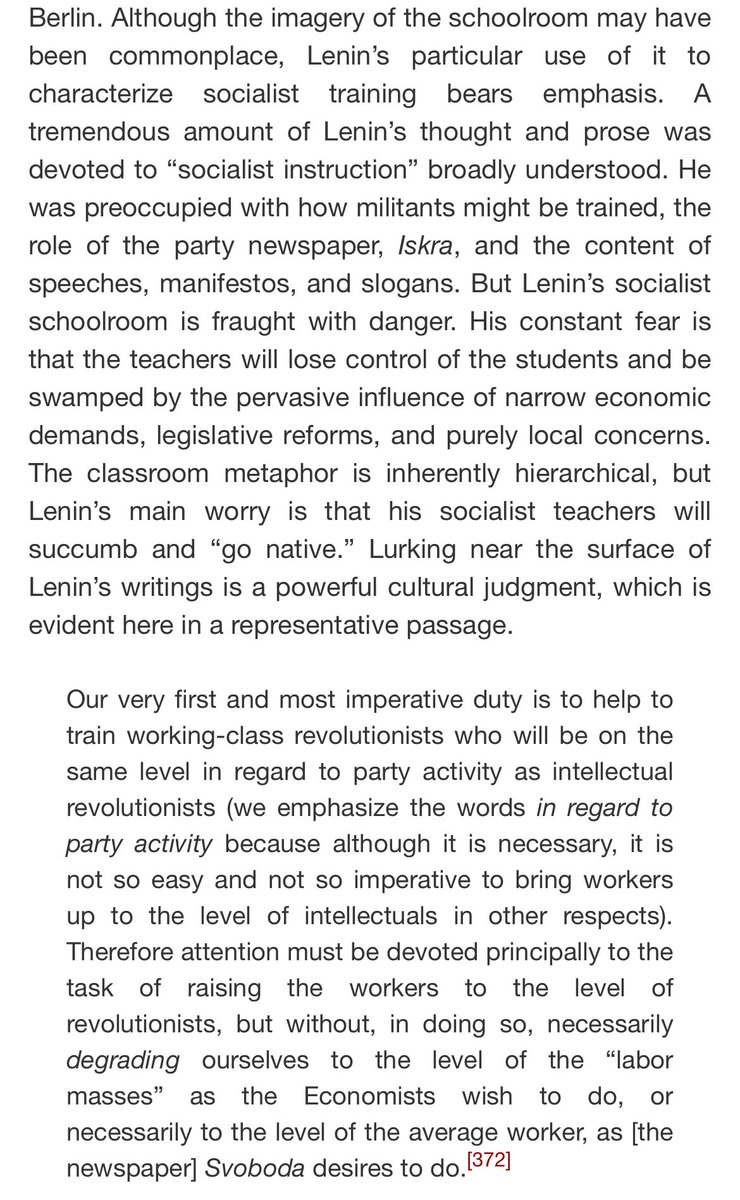

This discourse is driving me insane, Lenin and Mao absolutely considered academia & the intelligentsia to be of the petty bourgeois and a bunch of people on here are acting like it’s completely out of left field for an ML to say the same
1
6
42
1,375

Jun 15
The anti-fraud strengthening:
The bill also tightens enforcement on:
→ Pump-and-dump schemes
→ Wash trading
→ Insider trading on token launches
→ Manipulation across registered exchanges
CLARITY isn't deregulation. It's professionalization. Different things.
1
1
9

Jun 15
$CMPS $ATAI $DFTX
I’m genuinely excited that psychedelics are getting closer to full integration into mainstream medicine and professional clinical practice. This isn’t just about rolling out another set of tools for mental health—it’s the foundation for something with far-reaching positive effects across society.
When treatments can produce durable improvements from just a handful of professionally guided sessions, the ripple effects go well beyond individual symptom relief. Healthcare systems stand to see reduced long-term costs and capacity strain. Workplaces could benefit from employees operating with greater mental clarity, emotional resilience, and creative capacity. Families and communities might experience less fallout from untreated or poorly managed conditions that currently drive cycles of addiction, lost productivity, and chronic health issues.
Professionalization also means standardized training, safety protocols, and broader accessibility through legitimate channels rather than underground or experimental routes. That shift alone could accelerate research into applications we haven’t fully mapped yet—whether in fostering innovation, supporting end-of-life dignity, or helping people break free from limiting behavioral patterns that affect everything from personal fulfillment to societal contribution.
The infrastructure for regulated, evidence-based access is being built right now. The medical and professional frameworks coming together signal that these therapies are transitioning from promising data points to real components of how we care for people and, by extension, how society functions at a higher level. The potential here feels expansive in the best way.
Looking forward to seeing how it all develops from here. Seeing the possibility of better, more effective options becoming available through proper medical channels is what drives my optimism the most. As an investor following this space closely, that human element is exactly why this progress feels so meaningful.
1
1
17
1,016

Jun 15
Ive reviewed the most recent 50 research studies conducted on the startup ecosystem at University of Cambridge using the Claude 4.8 model.
I gained access to more than 259 pages of academic research articles on startups and founders.
I then placed 4 different Claude 4.8 Agents into the same chat inside a 12-hour backend working workspace named "Wide-Scope Detailed Mega Analysis."
Within those 12 hours the 4 Claude Agents produced a comprehensive in-depth analysis of the entire dataset.
I then forwarded it to another Claude 4.5 Agent limited to only 3 inferences and extracted the highest signal insights.
This was just the beginning. Over the next 4 months I will run the exact same deep process on Y Combinator, Oxford, UCL, Harvard and other top ecosystems. Same rigorous methodology.
Same scale. Same no-bullshit extraction.
The goal is clear. Distill the purest highest-leverage knowledge from each ecosystem and deliver a detailed evidence-based comparison of what actually drives founder and startup success across the world’s leading environments.
No hype. No f4cking romantic narratives. Just raw synthesized signal.
Cambridge was the first. The others are coming.
Now, from Oxford:
Oxford Saïd Business School has produced a massive body of ''high-impact'' research on startups, venture capital, market formation, regulated industries, university spinouts, and social entrepreneurship.
Their work stands out for its rigor combining large empirical datasets, deep theoretical models, and real-world policy relevance.
From how VC forces professionalization and operational discipline, to how entrepreneurs create entirely new markets in regulated environments, to the dynamics of personality diversity in founding teams, Oxford’s research consistently delivers hard, actionable signal.
Key themes emerging: Smart capital does more than fund it upgrades entire companies.
Building new markets requires sophisticated stakeholder coordination, not just product brilliance.
And founder personality diversity often beats uniformity for 'long-term' success.
Oxford is delivering some of the cleanest, most cited evidence on what actually separates successful ecosystems and founders from the rest.
This series continues. More from Oxford coming soon as I dig deeper.
The comparative analysis across ecosystems will be brutal and extremely valuable.

1
1
33
sekkle david retweeted

Jun 13
The professionalization of the Uganda People's Defence Forces has played a key role in safeguarding peace and security under President Yoweri Museveni. #WhyUgDecidedM7

1
1
4
Jun 15
Thomas Hellmann and Manju Puri’s 2002 study from Oxford Saïd Business School remains one of the most important papers in venture capital research.
Published in the Journal of Finance and cited over 21,800 times, this classic empirical work analyzed Silicon Valley startups and delivered a clear message:
VC funding is not just capital.
It is a powerful professionalization engine.
The data shows that venture capital dramatically accelerates the adoption of formal HR policies, stock option plans, and professional management structures.
Top VCs don’t only bring money they force startups to upgrade from chaotic founder led operations to scalable, institutional-grade companies..
The brutal truth: Many founders believe they only need money.
The evidence says the real value of serious VC is the operational discipline and professional systems they impose.
Smart capital doesn’t just fund your company. It upgrades your entire operating system.
This remains one of the highest-signal findings in startup literature.
28

Jun 15
It's party focused rather than community focused.
It's a concerning element of the professionalization of politics to see such bad policy put forward by lifetime party operatives, backed by party adjacent apparatchiks, none of whom have relevant experience outside politics
1
1
38

The evolution of @TheDAOLabs Social Mining is becoming impossible to ignore.
For years, the industry rewarded activity. The more people clicked, posted, liked, and shared, the more successful a campaign appeared. But activity alone has never been the same as value.
What stands out in this vision from @TheDAOLabs is the shift from "yap-to-earn" to "value-to-earn."
The real challenge facing Web3 today isn't attracting attention. It's building sustainable systems that transform community participation into measurable business outcomes.
A decentralized marketplace powered by reputation, contribution auditing, and verifiable work records changes the conversation entirely. Instead of treating contributors as temporary engagement tools, it positions them as professional service providers with provable track records.
That distinction matters.
Projects don't need more bots.
They don't need inflated metrics.
They need trusted contributors who can deliver real results.
The numbers tell an interesting story:
• 1.1M tasks completed
• Over $1.1M distributed to contributors
• Support for leading ecosystems including Polygon, Avalanche, Kava, and WAX
• A contribution model generating meaningful engagement rather than empty impressions
What excites me most is the professionalization of decentralized work.
When contributors can build on-chain reputations, showcase proven performance, and connect their efforts to actual business value, #SocialMining becomes much more than an earning opportunity.
It becomes a decentralized resume.
It becomes a talent marketplace.
It becomes the foundation for the future of work.
The next era of #Web3 growth won't be driven by noise.
It will be driven by verified value, accountable contributors, and communities that function like professional organizations.
This is a direction worth paying attention to.
#DAOVERSE
Jun 14

"Yap-to-Earn" has reached its end. Building a valid professional legacy is still possible—when it is human-centric and human-made.
We are professionalizing the digital workforce by evolving DAOVERSE into a sustainable, reputation-based marketplace that bridges the gap between simple rewards and real B2B value.
It is time you knew how we are doing it.
👇👇👇
14
93
91
1,092

Jun 14
The Value Economy: the Next Evolution of Web3 Work
After reading @TheDAOLabs latest article by Sir Alexis Trujillo our HoC, on The Professionalization of the Future of Work, I must say that the most important takeaway isn't the technology or even the rewards system, it's the shift in mindset.
For years, much of #Web3 has operated on participation-based incentives. The more tasks completed, the more rewards earned. While this model helped projects grow communities quickly, it also created challenges such as low-quality engagement, bot activity, and limited recognition for truly skilled contributors.
What #SocialMining proposes through #DAOVERSE is a transition toward a Value Economy, where contributors are recognized for the impact they create rather than the number of actions they perform.
Why This Shift Matters
The article highlights a future where decentralized communities function less like task hubs and more like professional talent marketplaces. In this model, contributors are not simply participants; they become verified service providers with reputations built on proven performance.
This approach creates several advantages:
•➤ Businesses gain access to genuine contributors instead of inflated engagement metrics.
•➤ Contributors can build a verifiable track record that showcases their skills and reliability.
The result is a healthier ecosystem where quality becomes more important than quantity.
The Power of Verification
One aspect I particularly appreciate is the focus on advanced auditing and reputation-based verification. This is more than a technical upgrade; it is a mechanism for trust.
By filtering out bots and low-value activity, the system protects projects from wasted resources while ensuring that meaningful contributors receive the recognition they deserve.
For Social Miners, this means:
•➤ Stronger credibility within the ecosystem.
•➤ Greater opportunities based on proven contributions rather than temporary rewards.
Final Thoughts
The future of decentralized work will belong to individuals who consistently create value, build trust, and demonstrate expertise. The vision presented by @TheDAOLabs shows that Web3 communities can evolve beyond engagement farming into professional ecosystems that benefit both businesses and contributors.
If reputation becomes the foundation of decentralized work, then every meaningful contribution today becomes an investment in future opportunities.
Article Link: dao-labs.com/posts/why-we-ar…
What role do you think verified reputation will play in shaping the next generation of Web3 careers?

Jun 14
"Yap-to-Earn" has reached its end. Building a valid professional legacy is still possible—when it is human-centric and human-made.
We are professionalizing the digital workforce by evolving DAOVERSE into a sustainable, reputation-based marketplace that bridges the gap between simple rewards and real B2B value.
It is time you knew how we are doing it.
👇👇👇
4
5
39
221

Well that didn’t work 😂
Professionalization of college sports is way more broad. It deals with how players are treated like employees and it removes incentive of education entirely.
Monetization of tickets for college sports games is selling access to a game for revenue.
11