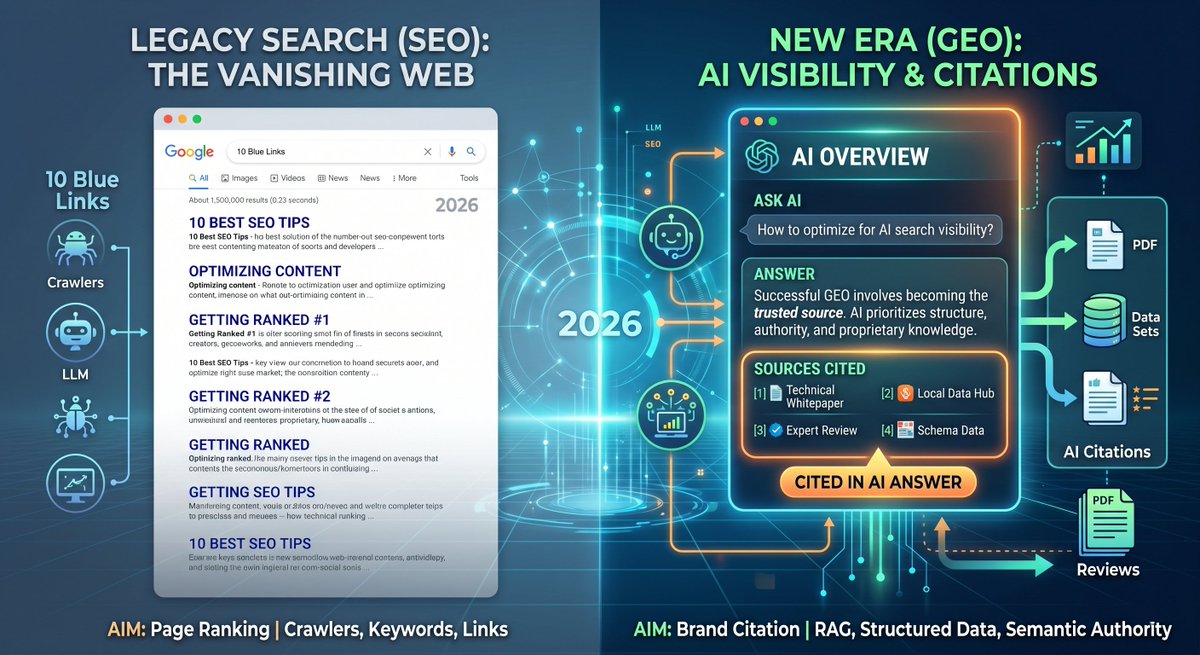
If your content strategy is still optimized for "10 blue links," you’re optimizing for a vanishing web.
The transition from SEO (Search Engine Optimization) to GEO (Generative Engine Optimization) is no longer a theoretical future. It’s happening right now in 2026.
When users turn to Perplexity, ChatGPT, Gemini, or Google AI Overviews, they aren't looking for a list of websites to browse. They want a single, synthesis-driven answer.
For brands, this changes the golden rule of digital marketing: 👉 Traditional SEO aims to get your page ranked. 👉 GEO aims to get your brand cited as the trusted source inside the AI’s answer.
If an AI engine generates a response but doesn't pull from your data, your search visibility drops to zero-regardless of where you sit on a legacy search results page.
The Anatomy of an AI-Citable Asset
AI engines don't look at web pages the way old crawlers did. They prioritize technical structure, context, and semantic authority over keyword density. To ensure your content actually gets cited by LLMs, it must feature:
Deep Semantic Hierarchy: Clear H1-H3 structural flows and integrated Featured Snippet blocks that LLMs can instantly extract.
Structured Data Overlays: Hardcoded JSON-LD and Schema.org markup (like automated FAQ and WebPage schemas) that act as a map for AI scrapers.
Proprietary Knowledge Integration: Generic AI text won't cut it. LLMs crave specific, local data, technical whitepapers, and unique brand facts (leveraging secure, local RAG frameworks).
Multi-Model Versatility: Content must be logically sound enough to satisfy the varying reasoning patterns of OpenAI, Gemini, and Grok alike.
Scaling Without Losing Authority
The major bottleneck for agencies and marketing teams today is scale. How do you build massive topical authority or launch hyper-targeted, multi-location landing hubs without defaulting to generic, un-citable AI fluff?
The answer lies in moving away from basic copy-paste chat interfaces and moving toward Autonomous AI Agents integrated directly into your CMS.
By syncing your local business knowledge bases (PDFs, product data, video transcripts) directly to your publishing core, you can automatically spin up thousands of unique, deduplicated, and highly structured pages that look native, read contextually, and fundamentally possess the technical DNA that AI search engines demand.
The future of visibility isn't about fighting the AI; it's about becoming the data foundation it relies on.
Are you still optimizing for algorithms, or are you optimizing for citations?
#GEO #SEO2026 #ContentAutomation #DigitalMarketing #AIInBusiness #ProgrammaticSEO #WordPress
5
4
103

Jun 11
Every brand is rushing to scale content.
Yet, almost no one is focusing on making that content high-value enough for AI to actually cite.
That is a massive blind spot.
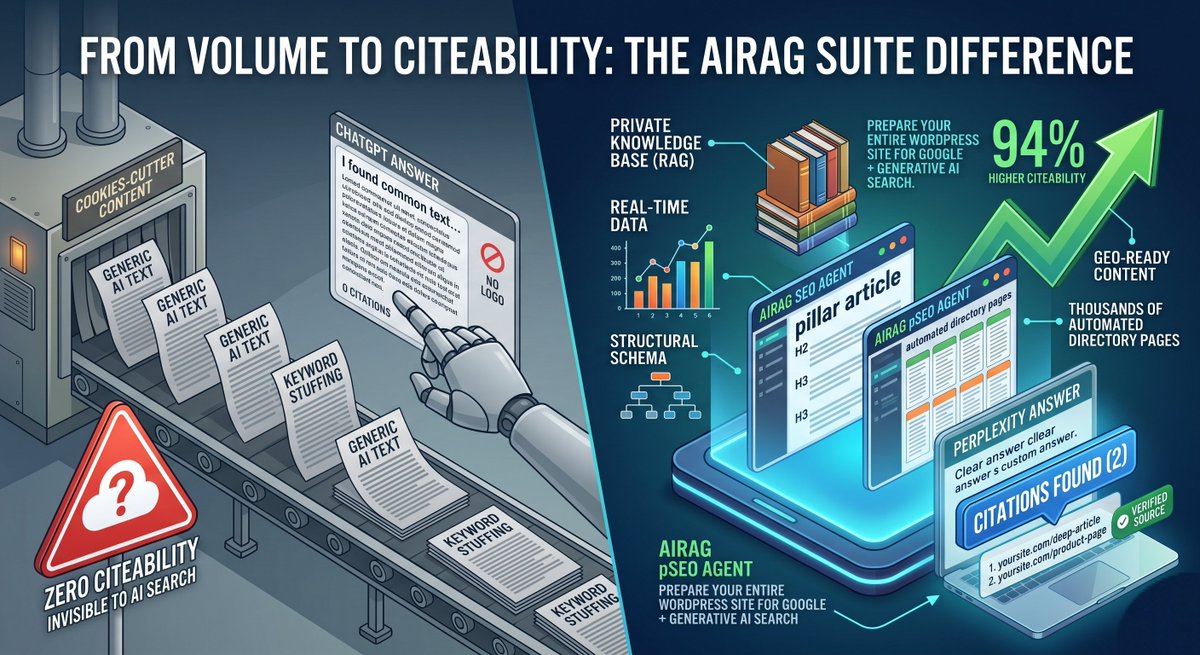
Right now, teams are churning out thousands of automated blog posts and landing pages using the same cookie-cutter templates.
The breakdown?
Most of that content contains nothing unique.
No structured schema. No proprietary data connections. No RAG-driven company knowledge. Just the same generic keyword-stuffing everyone else is doing.
When ChatGPT, Gemini, or Perplexity generate answers, why would they reference your pages if they look identical to thousands of other automated articles?
The winners in the next era of search won't just be the companies producing the most volume.
They'll be the companies producing the most GEO-ready content.
Content built from:
• Real-time product and operational data • Private internal knowledge bases (via RAG) • Highly structured semantic hierarchy and entity injection • Deep internal linking between blogs and landing pages • Automated, citation-ready FAQs
The future isn't just traditional SEO.
It's building workflows that AI systems trust enough to source—whether you are publishing long-form editorial blogs or deploying large-scale programmatic page networks.
To fix this, your site needs an integrated strategy. That’s exactly why we built the AIRAG Suite.
By combining AIRAG SEO Agent for articles and AIRAG pSEO Agent for bulk pages, you can bridge the gap between transactional landing hubs and thematic blog engines. It's a single workflow that prepares an entire WordPress site for both Google algorithms and generative AI search experiences at the exact same time.
Stop just publishing. Start getting cited.
#WordPress #SEO #GEO #ProgrammaticSEO #GenerativeAI
1
1
1
81
Jun 10
Most programmatic SEO tools are focused on one thing:
scale.
They help teams generate thousands of pages quickly.
Yet, almost no one is focusing on whether that content is structurally consistent enough to perform in modern search systems.
That is a growing blind spot.
Right now, most programmatic workflows are producing pages in bulk using rigid or shallow templates.
The breakdown?
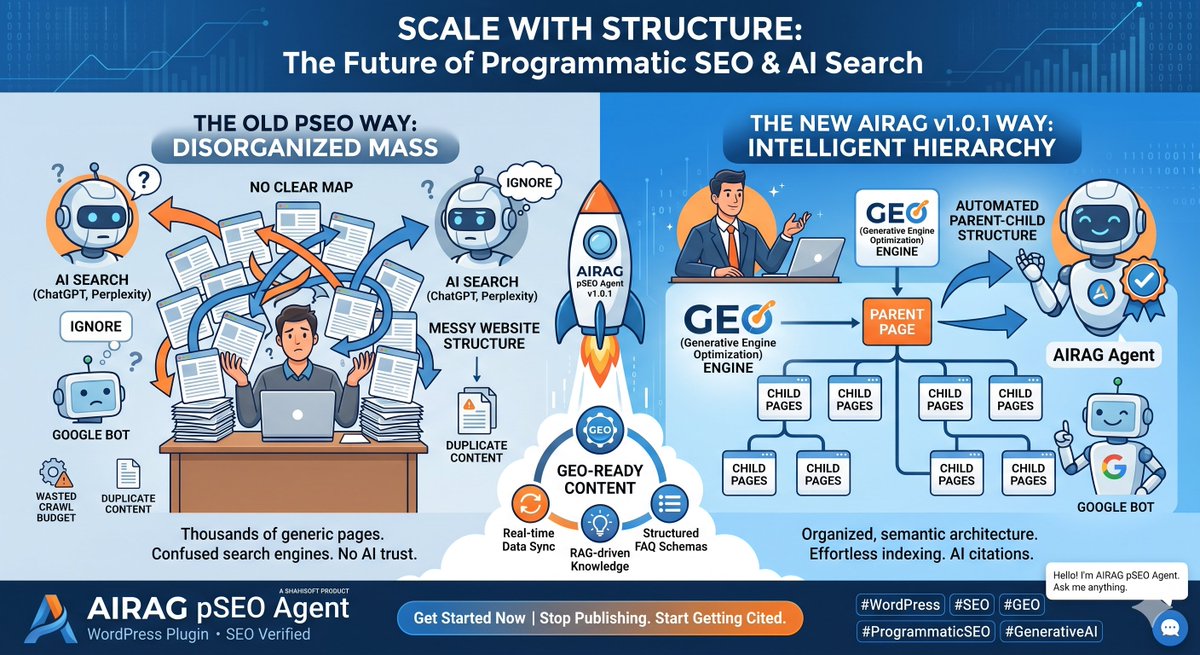
The content might exist at scale — but the structure often doesn’t scale with it.
No clear hierarchy. No reliable page relationships. No consistent keyword structuring rules. Weak template resilience when inputs are incomplete.
So even when thousands of pages are generated, the system behind them starts to degrade.
At scale, structure becomes more important than volume.
That’s what we improved in AIRAG pSEO Agent v1.0.1.
This release focuses on making programmatic page generation structurally more reliable by default.
What’s new:
• Parent-Child Hierarchy Automation
Pages are automatically assigned into defined parent structures based on generation rules, improving topical grouping and internal linking consistency.
• Layout Fallback System
Prevents empty or broken renders when page templates are incomplete or missing required structure.
• Keyword Pattern Controls
Adds stricter validation and normalization for keyword inputs to ensure consistent generation patterns across large batches.
• Backend Optimization
Refactored post meta handling and removed redundant category queries for faster and more efficient bulk publishing.
The direction is clear:
Programmatic SEO is no longer just about generating more pages.
It’s about generating systems that stay structurally coherent at scale.
Because modern search and AI systems don’t just consume content — they interpret structure, relationships, and consistency.
That’s what determines whether content is usable, or ignored.
That’s the shift we’re building for with AIRAG pSEO Agent.
Stop scaling pages.
Start scaling structure.
#WordPress #GEO #ProgrammaticSEO
2
2
68

Jun 9
Can someone tell me if this website will end up getting shadow-banned by Google based on the following behavior?
Are there any guidelines on doing this effectively?
#SEO #programmaticseo
15
Jun 8
Every brand is rushing to scale programmatic SEO.
Yet, almost no one is focusing on making that content high-value enough for AI to actually cite.
That is a massive blind spot.
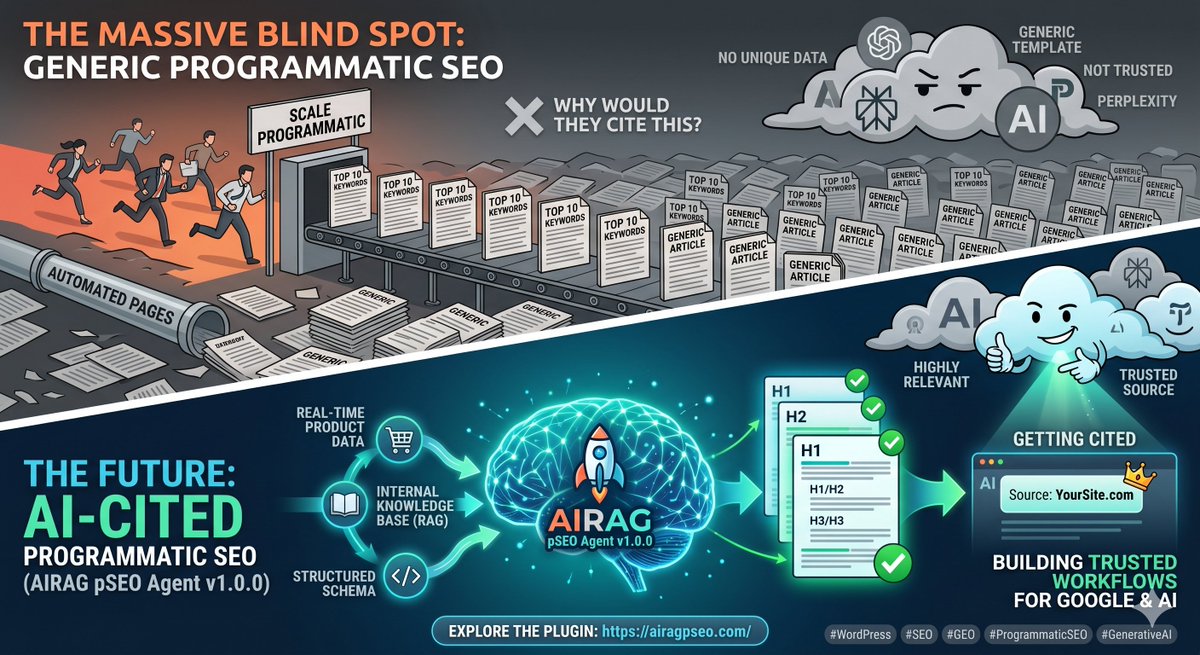
Right now, teams are churning out thousands of automated pages using the same cookie-cutter templates.
The breakdown?
Most of that programmatic content contains nothing unique.
No structured schema. No proprietary data connections. No RAG-driven company knowledge. Just the same generic keyword-stuffing everyone else is doing.
When ChatGPT, Gemini, or Perplexity generate answers, why would they reference your pages if they look identical to thousands of other automated articles?
The winners in the next era of search won't just be the companies producing the most content.
They'll be the companies producing the most GEO-ready content.
Content built from:
• Real-time product and WooCommerce data • Private internal knowledge bases (via RAG) • Highly structured H1/H2/H3 architecture • Deep semantic internal linking • Automated, citation-ready FAQs
The future isn't just traditional SEO.
It's building programmatic workflows that AI systems trust enough to source.
That’s exactly why we built AIRAG pSEO Agent v1.0.0 🚀
We're changing how businesses scale content—preparing your site for both Google algorithms and generative AI search experiences at the exact same time.
Stop just publishing. Start getting cited.
#WordPress #SEO #GEO #ProgrammaticSEO #GenerativeAI
2
1
2
100

Jun 4
If your SEO strategy is just waiting for a new domain to rank on Google, you are playing a losing game. 🛑
In 2026, the game is **Multi-Platform Indexing (MPI).**
I don't rely on a single website. I build an interconnected programmatic distribution engine across high-authority 'parasite' spaces:
- Medium: For deep technical breakdowns and software architecture insights ✍️
- Substack: For direct authority distribution and audience capture 📧
- X: For rapid real-time indexing and algorithmic velocity ⚡
When an AI agent scrapes a trending narrative, it doesn't just write one article. It deploys variations across the entire ecosystem simultaneously.
You aren't fighting for a spot on the SERP; you are dominating the entire digital real estate. 📈🌐
#SEO #ProgrammaticSEO #GrowthHacking #DigitalMarketing #AISEO
1
3
95

Apr 12
Most beauty salons don’t have a marketing problem.
They have a structure problem.
You can post daily, run ads, and still not rank on Google Maps.
Why?
Because your content, services, and location signals aren’t connected.
#LocalSEO #ContentStrategy #ProgrammaticSEO #GoogleMaps

1
1
19

Mar 13
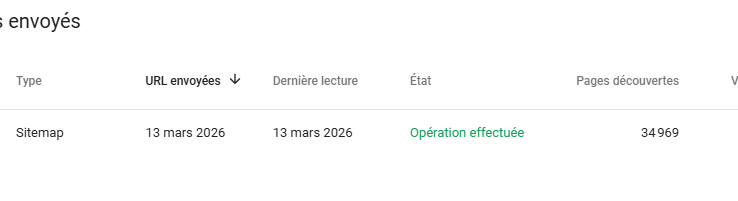
Nouveau site programmatique, je teste l’envoi de 35 000 pages d’un coup (et je vais envoyer la même chose tous les jours)
Rien à perdre sur ce domaine, que je ne comptais pas spécialement renouveler
Curieux de voir ce que ça va donner (follow pour avoir des nouvelles)
#SEO #ProgrammaticSEO #SEOExperiment
#TechnicalSEO #SEOTest #spamseo
3
17
2,810
Mar 12
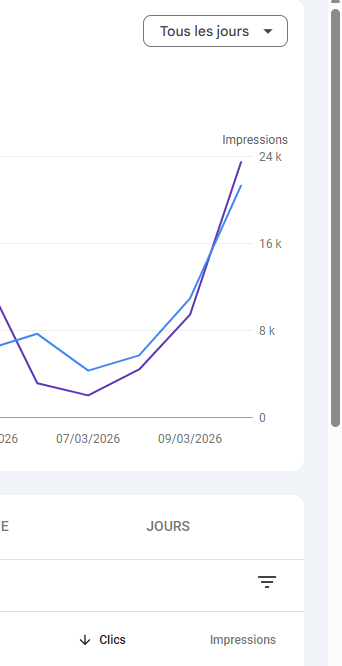
✅ Premier test de site programmatique
Je pense que je vais en créer d'autres. :)
Au revoir mes sites de #VDL de merde...
Dès que j'ai un peu de temps :
Je déplace le WordPress dans sous-dossier /blog
(avec redirection .htaccess à la racine)
Et sur la home : site programmatique envoi de trafic indexation auto
#ProgrammaticSEO
#SiteProgrammatique
#Automatisation
#TrafficSEO
#Indexation
3
30
2,749

Mar 10
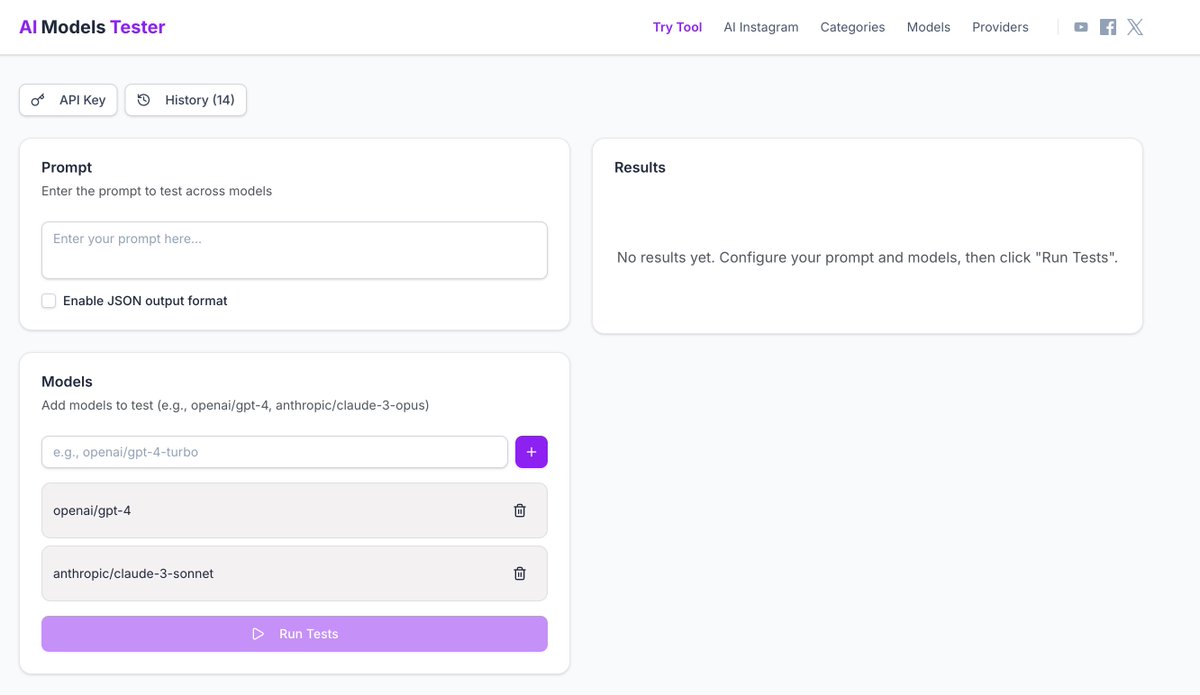
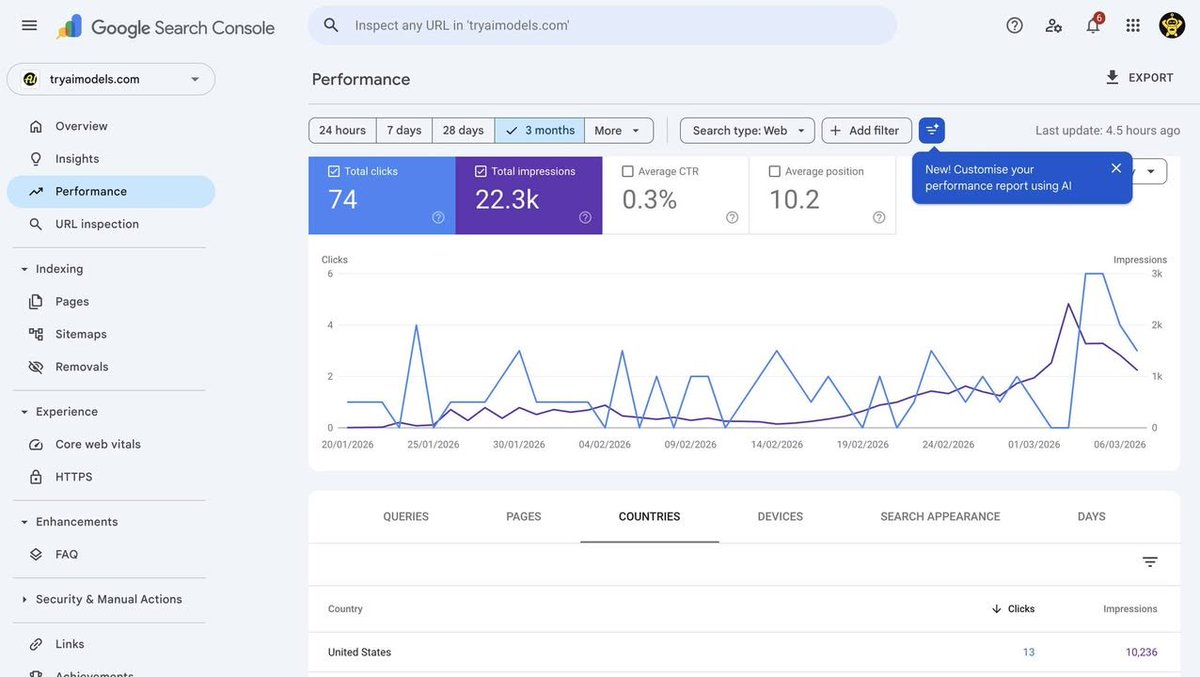
Tried Programmatic SEO project again, this time with AI only.
I use openrouter for AI content for my websites. I had to try multiple AI models to test the output of one prompt with multiple models. Openrouter have their own chat playground but it's not complete, I needed more features. So I build my own.
Initially I kept it on free vercel domain for my own use, but then I thought to do keywords research for it and found patterns keywords to create pSEO pages.
Tools used:
Cursor for coding
Perplexity for data creation
Supabase for database
Initially I kept it on free vercel domain for my own use, but then I thought to do keywords research for it and found patterns keywords to create pSEO pages. Used Perplexity to create data in table format then imported in supabase table.
Who want a complete breakdown and how to guide to adapt and create turn your own ideas into real pSEO websites?
Do lemme know in the comments, I will create a video on Automate & Chill Youtube Channel.
#pSEO #programmaticseo #perplexity #chatgpt #cursor #claude
1
2
188


17 Nov 2025
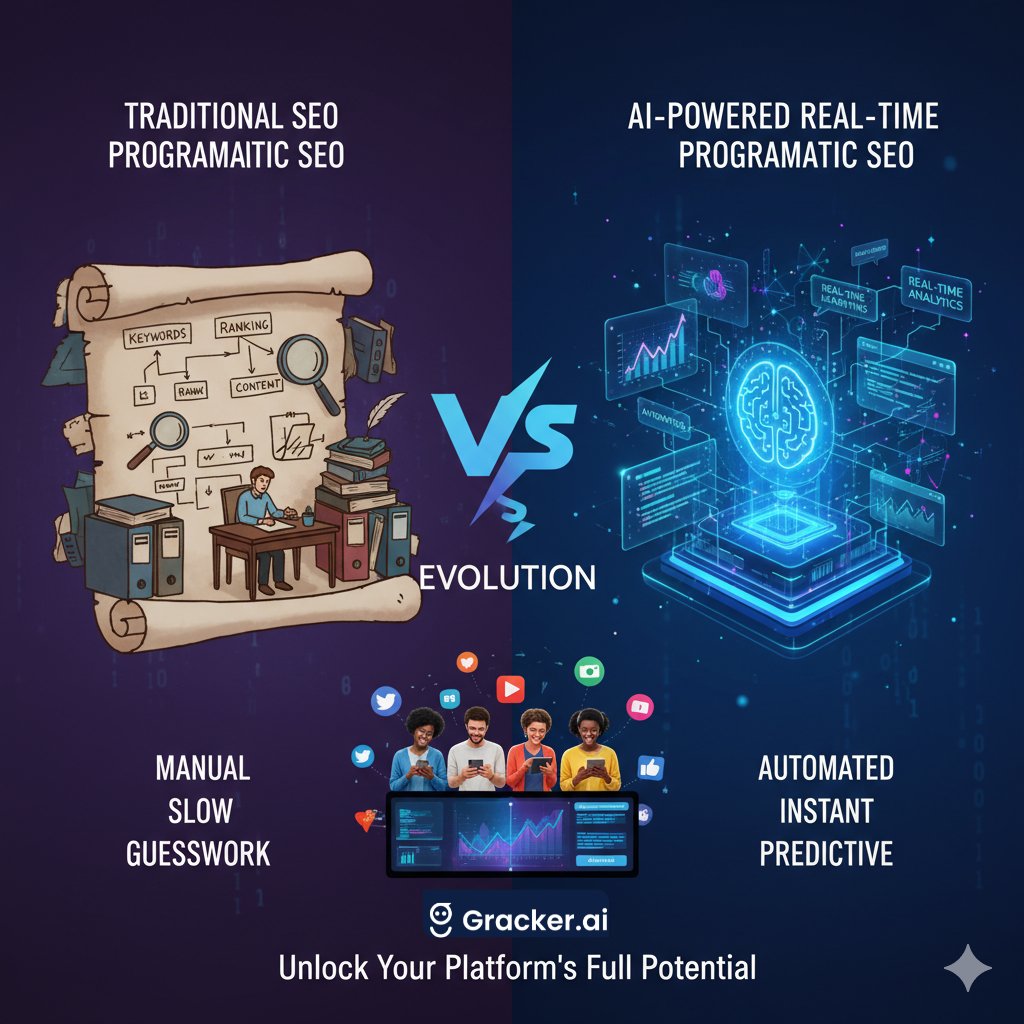
The evolution of SEO is here.
Say goodbye to manual guesswork — AI-powered real-time programmatic SEO gives you automation, instant insights, and predictive growth.
Unlock your platform’s full potential with smarter SEO.
#ProgrammaticSEO #AISEO
1
2
229

11 Nov 2025
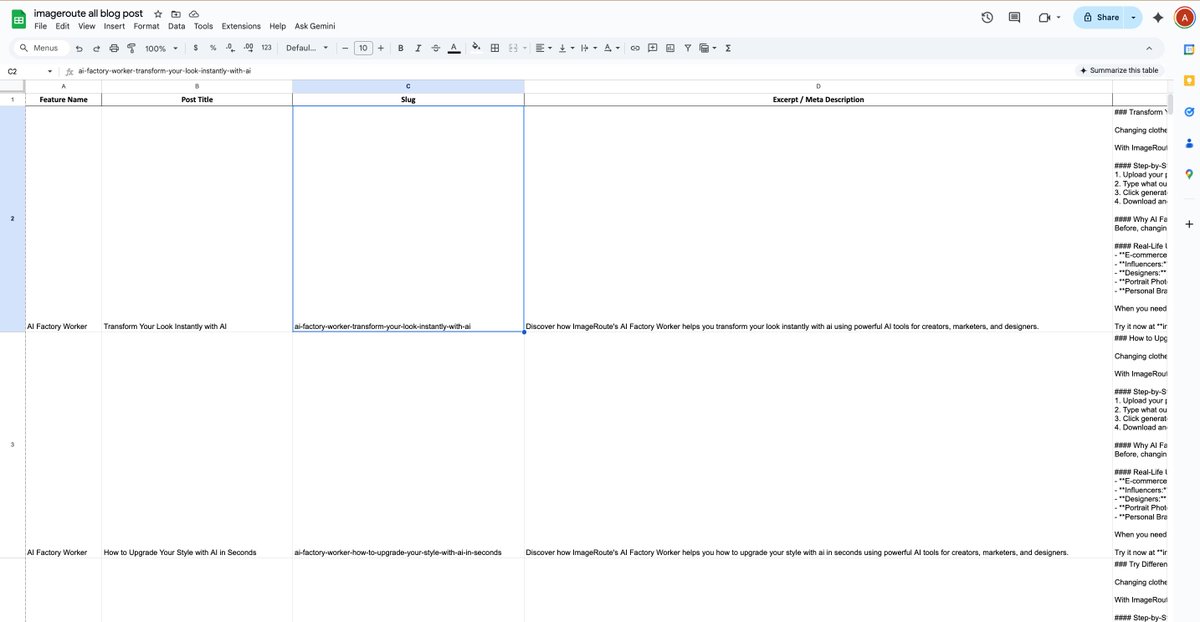
As a Blogger, never did programmatic SEO; now, for my SaaS imageroute.com, it's the perfect time to do it, to scale blog posts fast.
#buildinpublic #seo #saas #programmaticseo
2
163

13 Sep 2025
Advanced Programmatic SEO Checklist For Implementation in 2025 (Download)
If you’re still publishing one blog at a time…
webjinnee.com/programmatic-s…
#ProgrammaticSEO #SEOTips #AutomatedSEO #DigitalMarketing #WebTrafficGrowth #ContentAutomation #Webjinnee #SEOStrategy
1
2
40


25 Jul 2025
woohoo! very cool. excited to see what Josh does with the course :)
2
237

25 Jul 2025
Congrats! 🎉
that "in between ventures" period is usually a lot of fun, enjoy
2
187
