
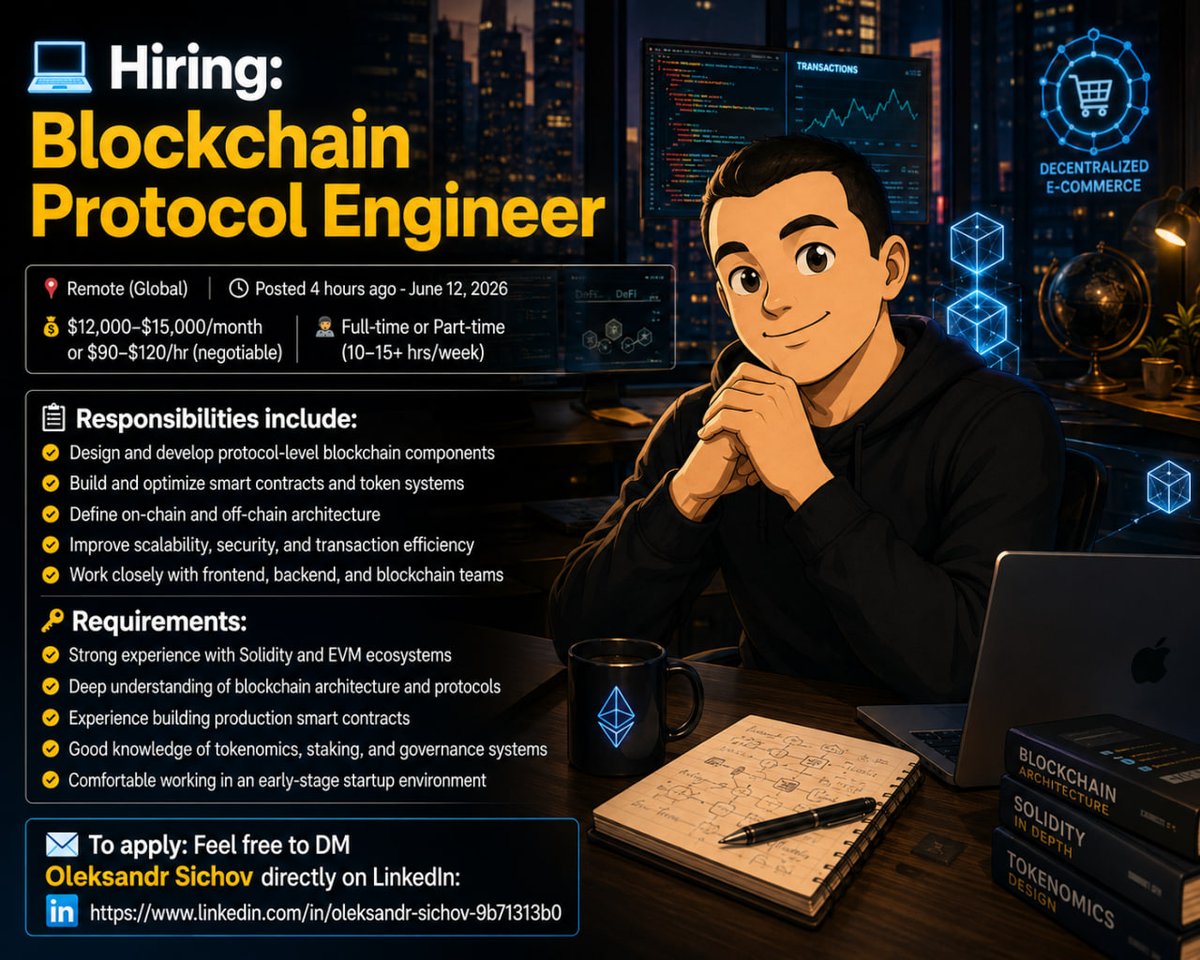
💻 Hiring: Blockchain Protocol Engineer
📍 Remote (Global) | 💼 Full-time or Part-time | 🧑💻 EVM/Solidity | 💰 $12k–$15k/mo or $90–$120/hr | 🕐 4 hours ago - June 12, 2026
The company is building a decentralized e-commerce platform that aims to reduce marketplace fees, improve transparency, and give buyers and sellers more control.
The platform features a native token for payments, rewards, staking, and governance. Currently at PoC stage, they are seeking a Blockchain Protocol Engineer to design and build the core blockchain infrastructure.
📋 Responsibilities include:
- Design and develop protocol-level blockchain components
- Build and optimize smart contracts and token systems
- Define on-chain and off-chain architecture
- Improve scalability, security, and transaction efficiency
- Work closely with frontend, backend, and blockchain teams
🔑 Requirements:
- Strong experience with Solidity and EVM ecosystems
- Deep understanding of blockchain architecture and protocols
- Experience building production smart contracts
- Good knowledge of tokenomics, staking, and governance systems
- Comfortable working in an early-stage startup environment
📩 To apply: Feel free to DM Oleksandr Sichov directly on LinkedIn: linkedin.com/in/oleksandr-si…
🔗 Original post: linkedin.com/posts/oleksandr…
⚠️ DYOR! I don’t verify every job. If someone asks to run files (even from GitHub) or ask for payment 🚩 likely a scam.
❗️ I'm not hiring myself! I just sharing fresh web3/crypto/blockchain roles DAILY for all levels!
💡 For Interns & juniors → t.me/crypto_vazima_english
💼 Mid/senior jobs → t.me/web3_jobs_crypto_vazima
#Blockchain #Web3 #Solidity #SmartContracts #EVM #CryptoJobs #ProtocolEngineer #DeFi #Tokenomics #RemoteJobs #Hiring #Web3Jobs #BlockchainEngineer #Crypto #Decentralized
1
162
💻 Hiring: Blockchain Protocol Engineer - Decentralized E-commerce Platform
📍 Remote (Global) | 💼 Full-time or Part-time | 🧑💻 EVM/Solidity | 💰 $12k–$15k/mo or $90–$120/hr | 🕐 23 hours ago - June 10, 2026
The company is building a decentralized e-commerce platform that aims to reduce marketplace fees, improve transparency, and give buyers and sellers more control.
The platform includes a native token for payments, rewards, staking, and governance. They are at the PoC stage seeking a Blockchain Protocol Engineer to design and build core blockchain infrastructure.
📋 Responsibilities include:
- Design and develop protocol-level blockchain components
- Build and optimize smart contracts and token systems
- Define on-chain and off-chain architecture
- Improve scalability, security, and transaction efficiency
- Work closely with frontend, backend, and blockchain teams
🔑 Requirements:
- Strong experience with Solidity and EVM ecosystems
- Deep understanding of blockchain architecture and protocols
- Experience building production smart contracts
- Good knowledge of tokenomics, staking, and governance systems
- Comfortable working in an early-stage startup environment
📩 To apply: DM Oleksandr Sichov on LinkedIn: linkedin.com/in/oleksandr-si…
🔗 Original post: linkedin.com/posts/oleksandr…
⚠️ DYOR! I don’t verify every job. If someone asks to run files (even from GitHub) or ask for payment 🚩 likely a scam.
❗️ I'm not hiring myself! I just sharing fresh web3/crypto/blockchain roles DAILY for all levels!
💡 For Interns & juniors → t.me/crypto_vazima_english
💼 Mid/senior jobs → t.me/web3_jobs_crypto_vazima
#Blockchain #Web3 #Crypto #Solidity #EVM #Hiring #Remote #ProtocolEngineer #SmartContracts #DeFi #Tokenomics #Startup #Jobs

139
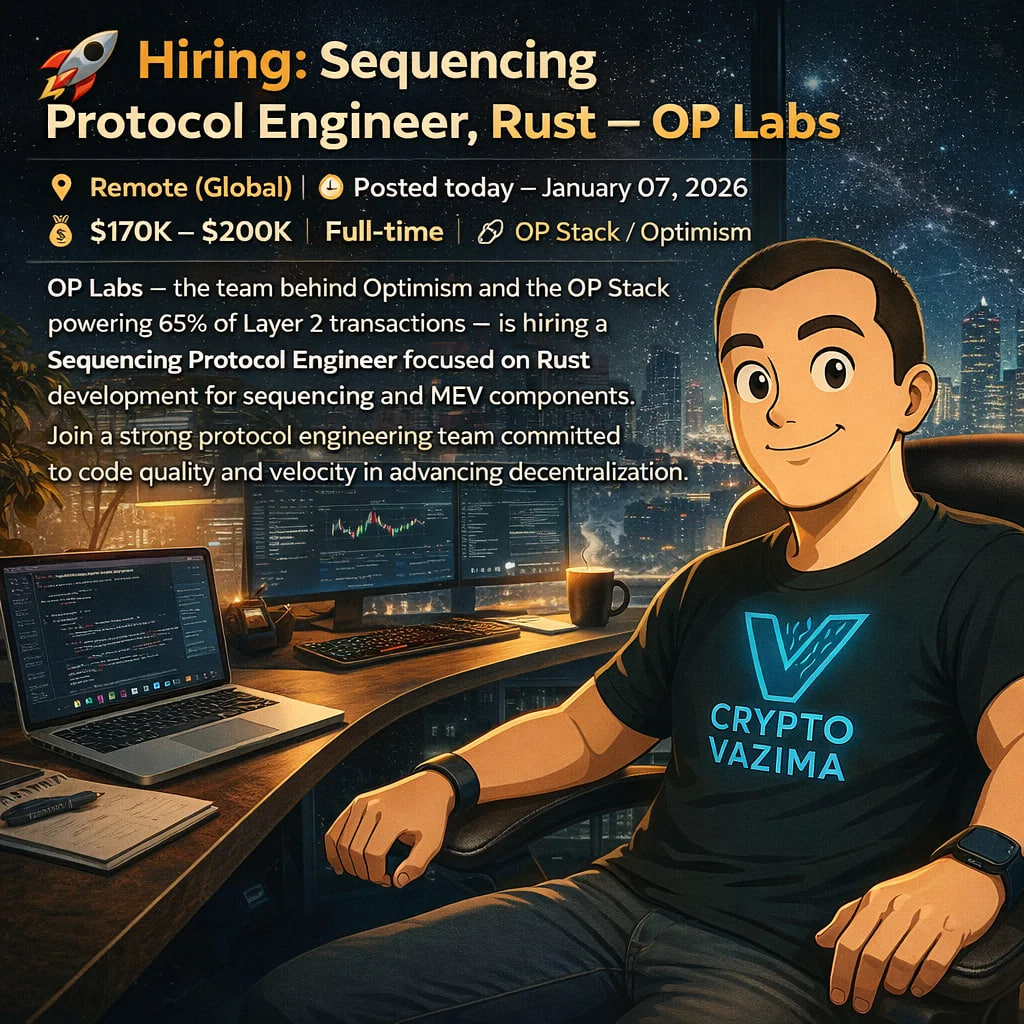
🚀 Hiring: Sequencing Protocol Engineer, Rust — OP Labs
📍 Remote (Global) | 💼 Full-time | 🧑💻 OP Stack / Optimism | 💰 $170K – $200K
OP Labs (behind Optimism & OP Stack) hiring Rust-focused Sequencing Protocol Engineer for sequencer & MEV components. Own features, implement novel functionality, support core teams.
🔥 Responsibilities
— Develop OP Stack sequencer & components
— Own features end-to-end
— Implement aligned with vision
— Support other core teams
✅ Requirements
— Extensive production software engineering
— Deep Ethereum/EVM knowledge
— CS & distributed systems fundamentals
— Performant clean Rust code
📩 To apply: jobs.ashbyhq.com/oplabs/99c6…
⚠️ DYOR — I don’t verify every job. If someone asks to run files (even from GitHub) or only replies via Telegram — 🚩 likely a scam.
❗️I’m not hiring. I just share real Web3 jobs with low competition — daily, for all levels!
✅ Follow for daily Web3/Crypto/Blockchain jobs — and share with anyone who might need it.
💡 For Interns & juniors → t.me/crypto_vazima_english
💼 Mid/senior jobs → t.me/web3_jobs_crypto_vazima
#Web3Jobs #Optimism #OPStack #RustJobs #ProtocolEngineer #Layer2 #Ethereum #RemoteJobs #CryptoJobs #BlockchainJobs #MEV #Sequencer #Web3Hiring #HighSalary
2
1
179

29 Jul 2025
🚀 CANDIDATE SPOTLIGHT TIME: Exceptional ZK / Protocol Engineer
🔹 Expertise: Protocol Engineering x ZK
🔹 Stack: Rust, Ethereum infra, verifiable computation
🔹 Known for delivering hig -performance protocols at the intersection of ZK & distributed systems
✅ Led a verifiable compute service scaling to 15K concurrent jobs w/ novel fraud proofs
✅ Built ZK reputation protocols & primitives (Halo2, Merkle Trees, sig schemes)
✅ Shipped core protocol components: sequencers, verifiers, SDKs
✅ Deep low level optimisations w/ Rust, libp2p, Tokio
📩 DM to connect with this top engineer...
#CandidateSpotlight #Web3 #ZeroKnowledge #RustLang #BlockchainJobs #CryptoHiring #ProtocolEngineer #DeFi

2
1
6
203

A Brief History of the Bitcoin Ecosystem - Written on the Eve of the Bitcoin Ecosystem Boom
The Bitcoin ecosystem is one of the few narratives with technological innovation in this cycle, also being the super narrative that has bulled three times during the bear market. On the second anniversary of the Bitcoin ecosystem, this article records the three bull markets of the past two years and pays tribute to those who have steadfastly remained on the Bitcoin ecosystem front line.
⭕️The Birth of the Bitcoin Ecosystem
On December 14, 2022, Bitcoin's #Ordinals protocol officially launched. Casey @rodarmor, the father of the Ordinals protocol, inscribed the first inscription: Inscription 0. From then on, the on-chain ecosystem of Bitcoin officially began
The Ordinals protocol can be simply understood as a protocol for inscribing data onto satoshis. The data can be images, text, JSON, GIFs, HTML, etc. Ordinals were born at the bottom of the bear market in this cycle. The market was dead silent with little promotion, so few within the circle knew about it
It wasn't until early February 2023 that the inscription number reached over 10,000 (now over 80 million). Most of these inscriptions were images, with some GIFs and HTML, mostly scattered pictures inscribed by users themselves, along with a few collections ranging from 50 to 200 items, none of which were large in scale
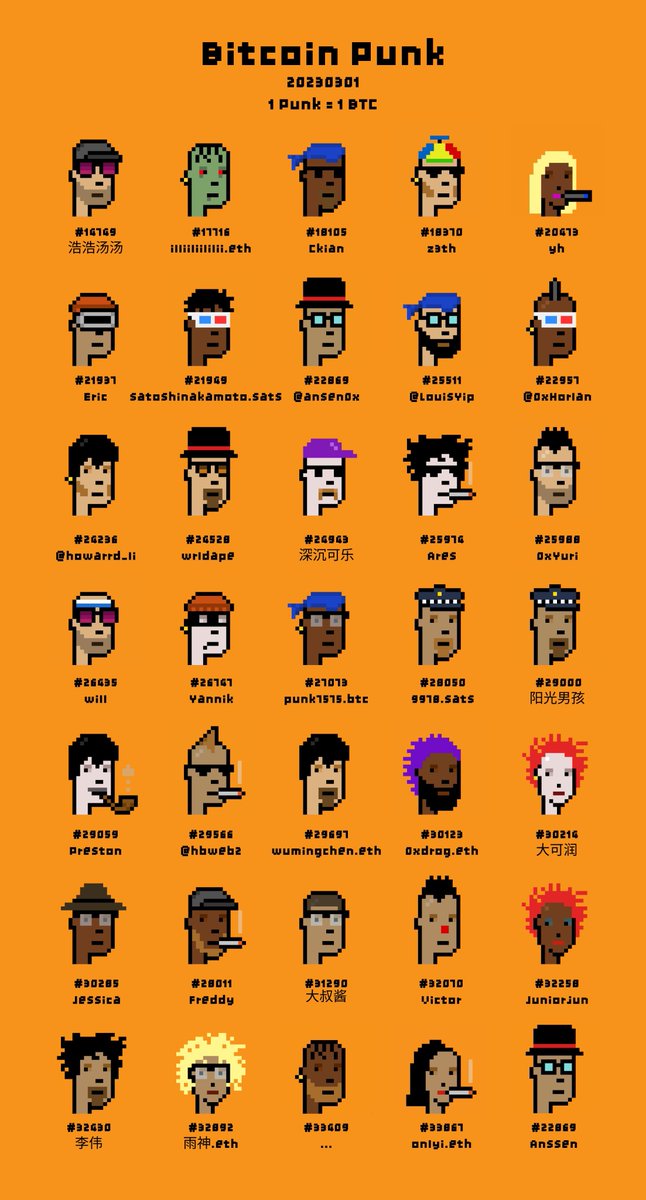
At this time, holders from the CryptoPunks community initiated an activity to inscribe Bitcoin Punks on Ordinals, downloading images of CryptoPunks to inscribe.
Bitcoin Punks was the first 10K NFT collection on Ordinals, which instantly made many, including myself, aware of Ordinals and shocked us: What? Can you inscribe small images on Bitcoin?!
Directly inscribing NFTs on the Bitcoin blockchain! Immutable and eternal! Giving each NFT inscription a unique inscription number and timestamp! This was a completely new and disruptive narrative... Previously, BTC could only be transferred; now, BTC has an ecosystem where you can inscribe data. [Link to X post]
I was very excited at the time, feeling the same enthusiasm as when blockchain was poised to revolutionize the world in 2017. In the following months, I was almost obsessed with the Bitcoin ecosystem.
This was the first time the Ordinals protocol in the Bitcoin ecosystem was promoted within the circle. Everyone rushed to inscribe Bitcoin Punks. There was almost no infrastructure at that time, unlike today with so many tools and platforms for inscribing. To inscribe Bitcoin Punks, you needed your own full Bitcoin node and technical knowledge. Despite this, Bitcoin Punks were inscribed within days.
The inscription number from 0 to over 10,000 took over two months, while from over 10,000 to 30,000 took less than a week...
Bitcoin Punks, although not an original collection, brought two rules to the Bitcoin ecosystem:
1/ First is First
Chinese Explanation: Only the first counts. Since anyone can inscribe images on BTC without a smart contract, if two identical punks are inscribed, which one should be included in the collection? Bitcoin Punks proposed the "First is First" principle, recognizing only the earliest inscription, i.e., the one with the earlier inscription number.
Remember this "First" rule; it's extremely important, essentially the rule that runs through the entire Bitcoin ecosystem. Without this rule, later protocols like BRC20 and Runes couldn't function.
2/ Fair Launch (Fair Mint)
Bitcoin Punks were not inscribed and distributed by a project team but by users themselves. This set a precedent for Fair Launch in the Bitcoin ecosystem and paved the way for BRC20 and Runes. It also inspired other chains and ecosystems to adopt Fair Launch.
⭕️February to March 2023: The First Bull Market of the Bitcoin Ecosystem NFTs
The popularity of Bitcoin Punks sparked the first bull market in the Bitcoin ecosystem: the NFT bull market. This bull market lasted roughly from early February to March 2023. Bitcoin Punks' floor price went from 0.2 ETH to 2 ETH, which was about 0.12 BTC.
For collections in the Sub10K (the first 10,000 inscriptions):
@Block_Munchers OTC price reached 1.2 BTC
@InscribedPepe floor price hit 1.6 BTC
For collections in the Sub1K (the first 1,000 inscriptions):
@OrdinalPunks floor price even reached over 2 BTC.
At the beginning of February, the Bitcoin ecosystem had almost no infrastructure or exchanges. Buying Bitcoin Punks was extremely difficult; you had to find someone in Discord for OTC, with prices only at 0.2-0.3 ETH, and the fee for the MOD's guarantee was 0.1 ETH, which was quite exaggerated. However, everyone was eager to buy because the price was rising so fast. I bought quite a few Bitcoin PUNKS through OTC. @LeonidasNFT also spent several BTC to buy a lot of rare Bitcoin Punks, the founder of the current Runes $dog.
At that time, @z3thnft also set up the earliest Chinese community for Bitcoin Punks, which was quite nostalgic.
Subsequently, several exchanges emerged, like ordinals.market, ordinalswallet, and ordswap (which has since run away), providing trading platforms for Bitcoin NFTs, causing prices to surge.
During that period, Bitcoin Punks and Sub10K NFTs were the most popular, with Bitcoin Punks having the highest trading volume. Sub10K could be considered as having a price but no market, with few collections, meaning there were not many desirable NFTs to buy. Many who bought Sub10K inscriptions were quite discreet, treating them as collectibles, not showing them off or selling them.
To buy a Sub10K collection NFT was like archaeology; you'd spend days lurking in various collection DC groups, looking for traces of collectors. Even if you found them, it wasn't guaranteed you could contact them. Buying a desired Sub10K inscription was like finding a beloved antique.
⭕️March to May 2023: A Brief Bear Market
After March, as more NFT projects were launched on Ordinals, the market supply and demand became imbalanced, leading to a bear market lasting two months, which were the most memorable for me.
During this time, although we were all holding onto our NFTs, we were confident in the future of the Bitcoin ecosystem. Every night, a group of Bitcoin ecosystem old guard members would chat in space, discussing not just money but dreams and the future, imagining the future of ordinals.
During this period, many OG members often hosted Spaces together, including:
@unisat_wallet's founder, @lorenzonical
Official Ordinals DC MOD, @drjingle (Golden Dog Doctor)
OKX wallet's @KKyleChen
idclub's founder, @moffat2021
ordswap's founder, Jack
OrdinalsCN community's creator, CXO.egg
The founder of the first GameFi in the Bitcoin ecosystem, @OrdzGames, @z3thnft
orc-cash protocol's founder, Sonic
@SuZhe_eth from the CryptoPunk and BAYC community
Market gurus paulwei @coolish, @Lioneming
Bitcoin ecosystem science communicator @practice_y11, @ohxiyu, and others.
Many of these OGs are still active today. At that time, everyone's stance was very unified with no significant disagreements, full of optimism for the future, with many idealistic builders.
During this period, two events changed the landscape of the Bitcoin ecosystem:
1/ The Birth of the Sats Domain Protocol
By late February 2023, the sats domain protocol was born with an inscription number over 160,000, becoming the first domain supported by unisat and xverse.
The sats domain protocol, while seemingly unnoticed, was a significant development. It was a dominant player in the asset category at that time, with active trading.
It adopted the "First is First" principle and the Fair Launch rule from Bitcoin Punks, also pioneering the JSON format for inscriptions.
One major difference between Sats and ETH domains is that there's no project team, it's permanently free. You can transfer by entering the sats domain in the address field. UniSat and Xverse wallets already support it.
The sats domain inspired the later BRC20.
2/ The Birth of BRC20
ProtocolEngineer @domodata, inspired by sats domains, proposed the JSON format for the inscription token protocol, named BRC20, the first token protocol in the Bitcoin ecosystem. The first genesis token of BRC20 was $Ordi, deployed by domo, with an inscription number of 348,020.
(I thought Ordi's deployment inscription would be a rare collectible, so I DMed domo asking for the deploy inscription price, and he said he wouldn't sell for less than $1 million🤣.)
However, domo didn't seem confident in his BRC20 protocol, considering it an experimental idea, not suggesting everyone FOMO.
The BRC20 protocol was indeed relatively rudimentary, causing significant waste due to abandoned inscriptions. At the time, discussions on BRC20 were mostly negative, with many questioning why another token protocol with complex procedures was needed when there was already BTC.
However, gamblers with sharp instincts wouldn't miss such an opportunity: better to be wrong than to miss out.
They minted out Ordi in two days, with a total of 21,000 pieces, each at a cost of 2-3usd, which meant each Ordi cost about 0.003usd.
BRC20 was a novelty at the time, with no infrastructure or exchanges, just OTC in WeChat groups, with no one knowing what its future would hold.
After minting, Ordi's price didn't skyrocket but slowly increased. By the end of April, it was around 50usd per piece, an increase of about 20 times from the mint price, valuing Ordi at about 1 million .
Ordi later indeed lived up to the expectations, embarking on its journey to a thousandfold increase.
⭕️May to June 2023: The Second Bull Market of the Bitcoin Ecosystem Ignited by BRC20
The rise of BRC20 owes the most gratitude to @unisat_wallet. Without Unisat's continuous development, BRC20 would likely have perished under the circumstances at that time.
Thanks to Unisat's efforts, the BRC20 indexing and trading market launched in May, causing BRC20 to surge, with Ordi's price reaching 0.3u, a hundred times its mint price.
A few days after the trading market opened, a bug surfaced where someone exploited a double-spending flaw in Unisat to steal a significant amount of money from trading users. Unisat promptly compensated for all losses caused by the bug.
This incident was major news at the time, covered by all major crypto media outlets, effectively promoting the Bitcoin ecosystem and BRC20 on a large scale. Thus, gamblers from outside the ecosystem learned that a casino had opened on Bitcoin, named BRC20.
Gamblers flocked in, starting the first wave of the BRC20 frenzy.
On May 8, Gate exchange listed Ordi, pushing the price to 29.58u, achieving a thousandfold increase, making many early holders extremely wealthy.
On May 15, OKEx listed Ordi, but the price never returned to its previous peak.
Also in May, Binance launched the Ordinals NFT market (which was recently canceled).
How intense was the BRC20 craze at that time? The Bitcoin blockchain's transaction fees once reached over 500 sats/vB. For quite some time, no matter what BRC20 token was inscribed, it would multiply several times. There were too many gamblers, and BRC20 simply couldn't keep up with the demand.
After the BRC20 frenzy, gamblers turned their attention to the Ordinals NFT market. During that period, small NFT images saw significant price surges, some even multiplying several times in value. Among them, @BitcoinFrogs, the Bitcoin Frogs collection, rose in price from 0.002 BTC in March to 0.12 BTC, achieving a 60x increase in BTC terms. At one point, it transitioned from a niche collection to becoming the highest market-cap collection in the Bitcoin ecosystem.
The rise of Bitcoin Frogs marked a turning point in the dynamics of small-picture collections within the Bitcoin ecosystem. People realized that sub-10K collections with low inscription numbers, while appealing to collectors, were less suitable for speculative hype due to their smaller user base. In contrast, 10K-sized collections had a larger user foundation, making it easier to build cultural and community consensus, which fueled speculative trading.
Bitcoin Frogs was hyped as the first original 10K collection in the Bitcoin ecosystem. Additionally, frequent giveaways during March and April on Spaces and Twitter contributed to its popularity. At the time, it seemed like everyone in Western Spaces owned a Bitcoin Frog.
Unfortunately, I missed out on Bitcoin Frogs despite encountering it early on. Back then, I was only focused on sub-10K inscriptions and had little interest in small pictures with high inscription numbers. Moreover, I couldn’t appreciate the artistic style of Bitcoin Frogs at the time. As a result, I sold the few frogs I received during the low-price period of March and April at the lowest price possible.
After the BRC20 boom, many JSON-based token protocols emerged, much like how altcoins followed Bitcoin’s creation by tweaking its code. The earliest one was ORC20, which added some smart functionality to the BRC20 standard. Later, protocols like BRC100 and Orc-cash were introduced.
There was also the STAMP protocol, which operates independently of Ordinals. It developed the SRC20 token protocol, allowing users to inscribe small pictures on STAMP.
Other chains also began imitating inscriptions and BRC20. For example:
• The Doge chain introduced the DRC20 token protocol.
• ETH launched ETH inscriptions.
For a time, the entire crypto community was replicating inscriptions and manually creating them. It was a lively and exciting period.
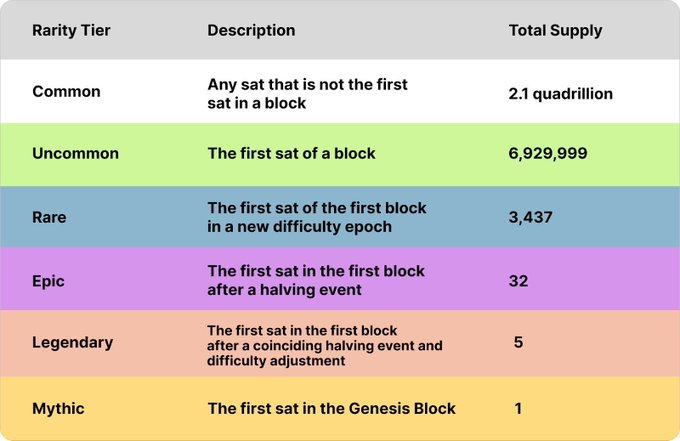
Rare satoshis also became popular for inscriptions. At the time, an Uncommon satoshi was extremely expensive, costing around $1,200. Rare satoshis were even more valuable, with some priced as high as 10 BTC. The Blob team even traded an Epic rare satoshi for 33 BTC.
This wave of excitement in the Bitcoin ecosystem lasted for about a month. However, as inscription assets became oversaturated and funds couldn’t keep up, the market fell silent again. After all, the entire crypto industry was still in a bear market cycle.
⭕️From June to October 2023: A Return to Silence, Yet Innovation Continues
After June, the market returned to the bear cycle. BTC’s on-chain fee rate dropped to 1 sats/vbyte. However, the Bitcoin ecosystem still saw significant developments during this period:
1. The 21 Million Sats Inscription Minting Process
The minting of 21 million sats inscriptions continued steadily and was expected to conclude by October 2023.
2. Ordinals Technical Upgrades
Ordinals underwent a series of technological upgrades, including the introduction of Parent-Child Inscriptions, Recursive Inscriptions, and the refinement of Cursed Inscriptions:
• Parent-Child Inscriptions: This feature allows a “parent” inscription to have “child” inscriptions, establishing hierarchical relationships. It can be used for creating NFT collections, similar to how Ethereum NFTs are tied to smart contracts for provenance and ownership verification.
• Recursive Inscriptions: This allows one inscription to reference and combine infinite other inscriptions, like building with Lego blocks. It provides a foundation for creating more complex structures, potentially enabling metaverse-related applications.
• Cursed Inscriptions: Previously, inscriptions not recognized by the Ordinals system were categorized as “cursed inscriptions,” with negative inscription numbers. After the system upgrade, no new cursed inscriptions could be created, and existing cursed inscriptions (approximately hundreds of thousands) were classified and became limited-edition collectibles.
3. Metaverse Land Projects with Bitcoin Blocks
The Bitmap project emerged, which used Bitcoin blocks as a map for metaverse land ownership.
4. Development of BRC420 and Bitcoin Layer 2
The Merlin team initiated the development of the BRC420 protocol and a Bitcoin Layer 2 solution called Merlin.
5. Growth of the Atomics Protocol
Independent of Ordinals, the Atomics protocol gained traction. It introduced a colored coin model for token issuance, characterized by a 1-token-to-1-satoshi relationship. Atomics tokens offered a much simpler and faster transfer process compared to BRC20, resembling Bitcoin’s native transaction style.
6. Casey’s Announcement of the Runes Protocol
Casey, the creator of Ordinals, announced the development of the Runes protocol. Interestingly, his original intent for Ordinals was to build a platform for art galleries, museums, and libraries on Bitcoin. However, the explosive popularity of BRC20 derailed those plans.
Criticisms of the BRC20 Protocol
Casey’s dissatisfaction with BRC20 stemmed from its inefficiencies and waste, which he viewed as misaligned with Bitcoin’s ethos:
1. Excessive UTXOs and Wasteful Inscriptions:
• BRC20 inscriptions serve as one-time ledgers, meaning that once minted or traded, old inscriptions become invalid.
• This creates a massive amount of “trash” in the Ordinals system, with approximately 95% of inscriptions being obsolete. These “discarded papers” take up at least 330 satoshis per UTXO and are expensive to consolidate or use.
2. Complex and Expensive Transactions:
• A BRC20 transfer involves multiple steps:
• First, inscribe a transfer inscription, which incurs inscription and network fees.
• Then, send the inscription, requiring additional network fees.
• As a result, each transfer requires 1 inscription fee 2 network fees, taking at least two blocks to complete.
The Vision of Runes
Casey sought to address these flaws by creating a token protocol that:
• Avoids producing excessive UTXOs or wasteful inscriptions.
• Enables seamless, Bitcoin-like transfers.
This vision ultimately led to the Runes protocol, designed to preserve Bitcoin’s simplicity while enabling token issuance without the inefficiencies of BRC20.
⭕️November 2023 - April 2024: The Third Mini-Bull Market of the Bitcoin Ecosystem
The third mini-bull market in the Bitcoin ecosystem began on November 6th, 2023, when Binance listed Ordi and Sats tokens. This marked the start of another wave of widespread interest in manually inscribing assets, surpassing the frenzy seen in May 2023. The market saw the rise of new BRC20 tokens, notably $Rats, which created immense wealth for many participants.
Key Highlights from the Bull Run
1. Major Price Surges
• Ordi reached an all-time high of $97 in March 2024, achieving a staggering 30,000x gain.
• $Sats peaked at $94 per token, delivering a 300x return.
• $Rats hit a market cap of $600 million, with a 200x price increase.
• Assets from other protocols, such as $Atom and $Quark under the ARC20 protocol, also saw explosive growth. Even the previously overlooked SRC20 tokens experienced a significant rally.
• Bitcoin Frogs (BTC NFT) rose from a low of 0.03 BTC to 0.43 BTC, achieving a 14x increase in BTC terms.
2. Across-the-Board Rally
Virtually all Bitcoin ecosystem assets experienced massive price surges, including those from less popular protocols such as orc20, brc100, brc420, and veda.
3. Market Flow Dynamics
The flow of funds during this bull market replicated that of the May rally:
• BRC20 tokens surged first.
• This was followed by rallies in non-mainstream protocol tokens.
• Finally, the liquidity rotated into the NFT market.
However, this bull market lasted much longer than the one in May 2023.
Nodemonkes (Node Monkeys): Changing the BTC NFT Narrative
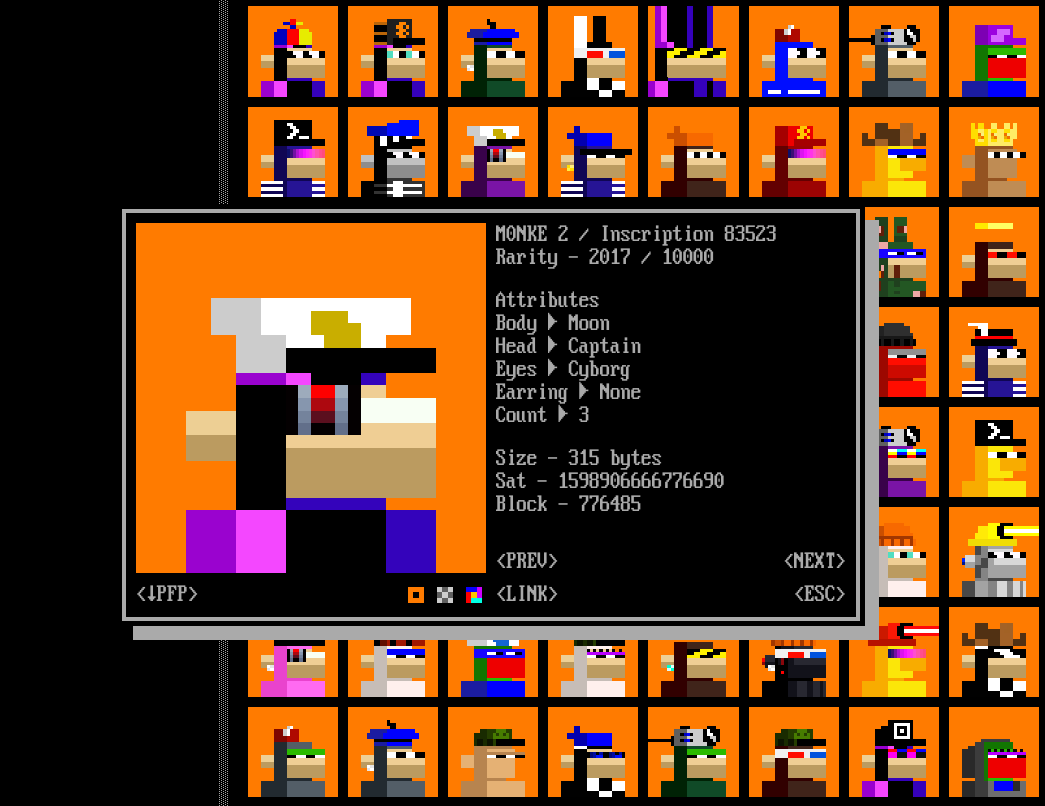
In late December 2023, a project called Nodemonkes launched using a Dutch auction format, reshaping the BTC NFT market dynamics.
• Inscription Numbers:
Nodemonkes inscriptions range from 83,522 to 111,319, predating Bitcoin Frogs’ inscriptions (321,224–412,389).
This discovery shifted the narrative, as Nodemonkes was recognized as the first original 10K collection in the Bitcoin ecosystem.
• Price Performance:
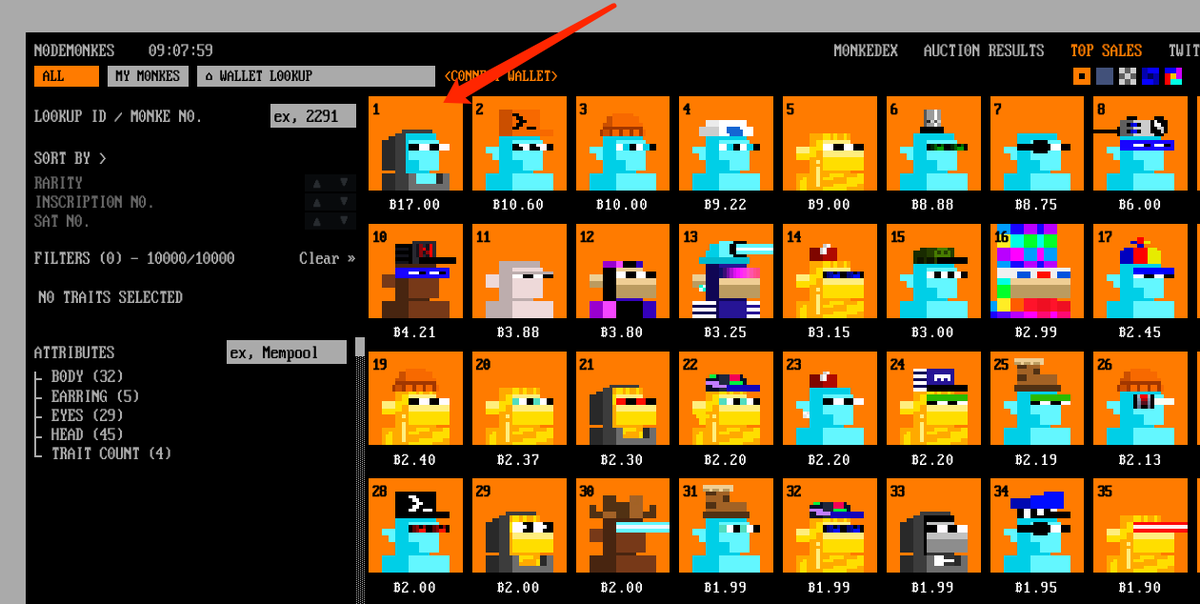
By March 3, 2024, Nodemonkes’ floor price skyrocketed from 0.03 BTC to 0.9 BTC (30x in BTC terms). A rare Alien Nodemonke was sold for 17 BTC (equivalent to 560 ETH at the time), setting the record for the highest transaction in the Bitcoin NFT ecosystem.
• Market Impact:
The success of Nodemonkes reignited enthusiasm in the BTC NFT market, cementing its position as a key driver of the bull run.
nodemonkes.com/monkedex
x.com/AresWey/status/1759480…
Merlin’s L2 staking has also begun, supporting staking for almost all Bitcoin ecosystem assets, including NFTs, BRC20, and BRC420 assets. Merlin is a pioneer in Bitcoin Layer 2 and kicked off the BTCfi era. Despite facing various doubts along the way, the final result has provided users with very impressive staking rewards.
Regarding Runes, Casey announced early on that the Runes protocol would launch in April with the Bitcoin halving block.
In late January, the RSIC project introduced an innovative pre-mining mechanism for Runes, cleverly designing a human game theory and reward system. Subsequently, a large number of RSIC-inspired pre-mining projects were born, including the current leader in Runes, $DOG. RSIC and DOG were even valued at 400-500 million before the official Runes protocol launch.
Between late January and April, before Bitcoin’s halving, NFT and Runes pre-mining projects saw extremely active trading. At that time, almost everyone’s attention was focused on Runes, with discussions in groups and spaces dominated by Runes. Everyone believed that Runes would be a revolutionary token protocol for the Bitcoin ecosystem, sure to trigger another wave of Bitcoin ecosystem growth
But as the saying goes: “What gets too hot will eventually die.” The higher the expectation, the greater the disappointment. The Runes protocol launched in April, and it burned bright for about 10 days before dying down, with a shorter duration than the BRC20 market surge
The reasons are as follows:
1/ High initial expectations, with market forecasts being overextended. Many people cashed out pre-mined projects with overvalued estimates.
2/ Only 3-4 Runes in the top 100 were Fair Launch tokens, while the others had reserved allocations, which reduced the playability and lowered user participation.
3/ The Runes names must be at least 13 characters long, and the character count only reduces by one every four months. This strange setting made the token names long and awkward
4/ As the only official Genesis Rune #UNCOMMOMGOODS, Casey set a four-year mint cycle for it, which deprived this potentially top token of short-term speculative appeal, discouraging speculators hoping to profit during the bull market
In conclusion, while the Runes protocol is nearly perfect in design and mechanics, it also challenges traditional token minting rules and naming conventions. Casey’s personal aesthetic as an engineer is evident here. Clearly, the market did not buy in in the short term.
⭕️From May 2024 to Now: The Dormancy After the Market Frenzy
Ordi dropped from 97 to a low of 20
Sats dropped from 94 to a low of 11
Nodemonkes (Node Monkeys) dropped from 0.9BTC to a low of 0.09BTC
Bitcoin Frogs dropped from 0.43BTC to a low of 0.028BTC
The Runes protocol never saw an explosive rise. Various Rune tokens continued to decline.
Other non-mainstream protocol assets have fallen back to being ignored, with many projects with low user numbers now on the brink of death.
The Bitcoin ecosystem has become like an accelerated version of the cryptocurrency market, experiencing three rounds of bull and bear markets in just two years.
In early November 2024, Bitcoin led the entire cryptocurrency market into a fierce bull market. It has been over a month now, and all cryptocurrency sectors, even long-neglected altcoins, have surged. However, the Bitcoin ecosystem remains stagnant, showing no signs of recovery
⭕️Conclusion
As the only segment with technical innovation in this cycle, the Bitcoin ecosystem will not miss out on the explosive bull market. The 7 months of dormancy and accumulation have built up enough strength.
Looking at every previous bull market in history, it is always capital that drives asset bubbles.
–– When the capital (numerator) is large, and the asset (denominator) is small, the inflation of assets becomes more severe, and the bull market effect is more pronounced.
This is particularly evident in the three rounds of Bitcoin ecosystem bull markets because the asset pool of the Bitcoin ecosystem is shallower.
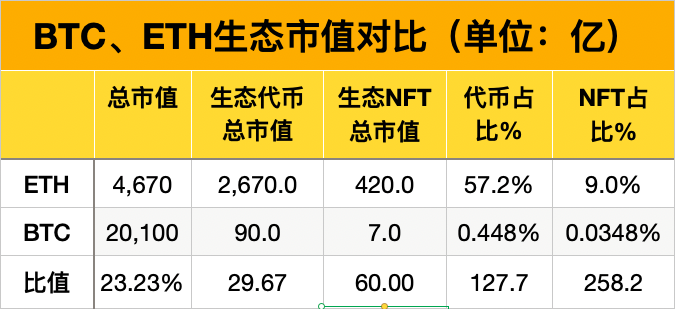
Currently, the total assets of the Bitcoin ecosystem are less than 10 billion, which is less than 0.5% of Bitcoin’s market value
In contrast, the total market cap of the Ethereum ecosystem exceeds 300 billion, accounting for 66% of Ethereum’s total market value
At this point, the story and innovation within the Bitcoin ecosystem are far from over. A large number of technically innovative projects are still in the pipeline, such as BTCfi, L2, and Runes’ DeFi, among others. The Bitcoin ecosystem still has many narratives waiting to be explored.

关于NodeMonkes(节点猴)你想知道的一切
1⃣️基本信息
NodeMonkes是比特生态第一个原创的10K NFT项目
铭刻时间:2023年2月14日-2月16日
铭文编号:83522-111319
合集总量:10K
合集特征:共111个,其中身体32,耳朵5,眼睛29,头部45
目前是比特生态里面将特征、稀有度罗列的最完整的一个项目
nodemonkes.com/gallery
2⃣️发售情况
2023年12月22日以荷兰拍价格递降的方式拍卖8000个,起始拍卖价格0.21 BTC,最后成交价0.03 BTC。
NodeMonkes决定用荷兰拍其实中间有几个小插曲。NodeMonkes最早是宣称要Freemint,但是考虑到会被科学家、投机客包场(比如内存池抢单),后面改为发白名单WL,之后收到海量的WL请求,项目方发现有太多人冒充某某项目方或者某某社区发邮件索要WL,于是取消了WL的发售方式。
最后决定用降价荷兰拍:将定价权交给社区和市场,同时也避免了科学家和投机客。
3⃣关于项目方
项目方叫 nodetoshi(匿名),同时也是 BitcoinRocks的项目方 @Rocktoshi21,有证据表明同时也是 #RSIC 的项目方。
中文社区通常叫他石本聪。
x.com/ordjingle/status/17495…
石本聪是Ordinals创始团队最早的3个人之一,也是早期Ordinals DC里面拥有最高权限的两个人之一,另一个是Casey,后来因为矛盾离开了团队。
x.com/ordjingle/status/17449…
石本聪的应该是一个深思熟虑,极度严谨的人,从NodeMonkes的拍卖和RSIC的空投、挖矿规则设计可以看出来。节点猴的拍卖流程和过程严丝合缝,没有出任何纰漏,对于可能出现的问题全部被预先想到。RSIC也是,白皮书里面已经将规则写的明明白白,在空投之前就谋划好后面的一切。
石本聪对号称公平的Freemint或者farimint是有自己的思考的。为了避免Freemint中的科学家和投机客,他自己花钱将19000个 #RSIC 空投给比特生态里最活跃的、最忠诚的非机器人账户,不得不说这种中心化的用户选择方式比绝大部分所谓去中心化的Freemint、Fairmint的都来的合理,也确实获取到了比特生态最活跃、最忠诚的用户的支持。
4⃣️筹码分布
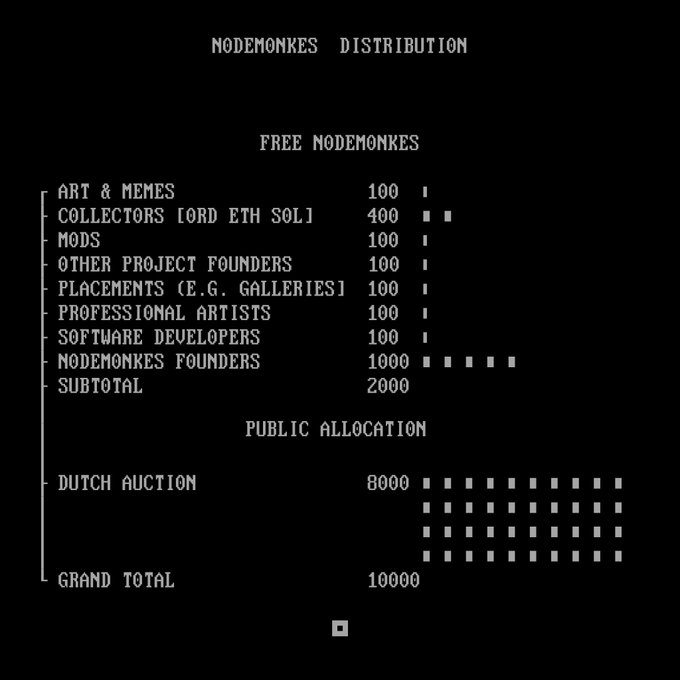
8000个用于拍卖
1000个用于社区、贡献者、艺术家、开发者等
1000个创始人团队自留(已公开地址)
5⃣️节点猴的一些历史
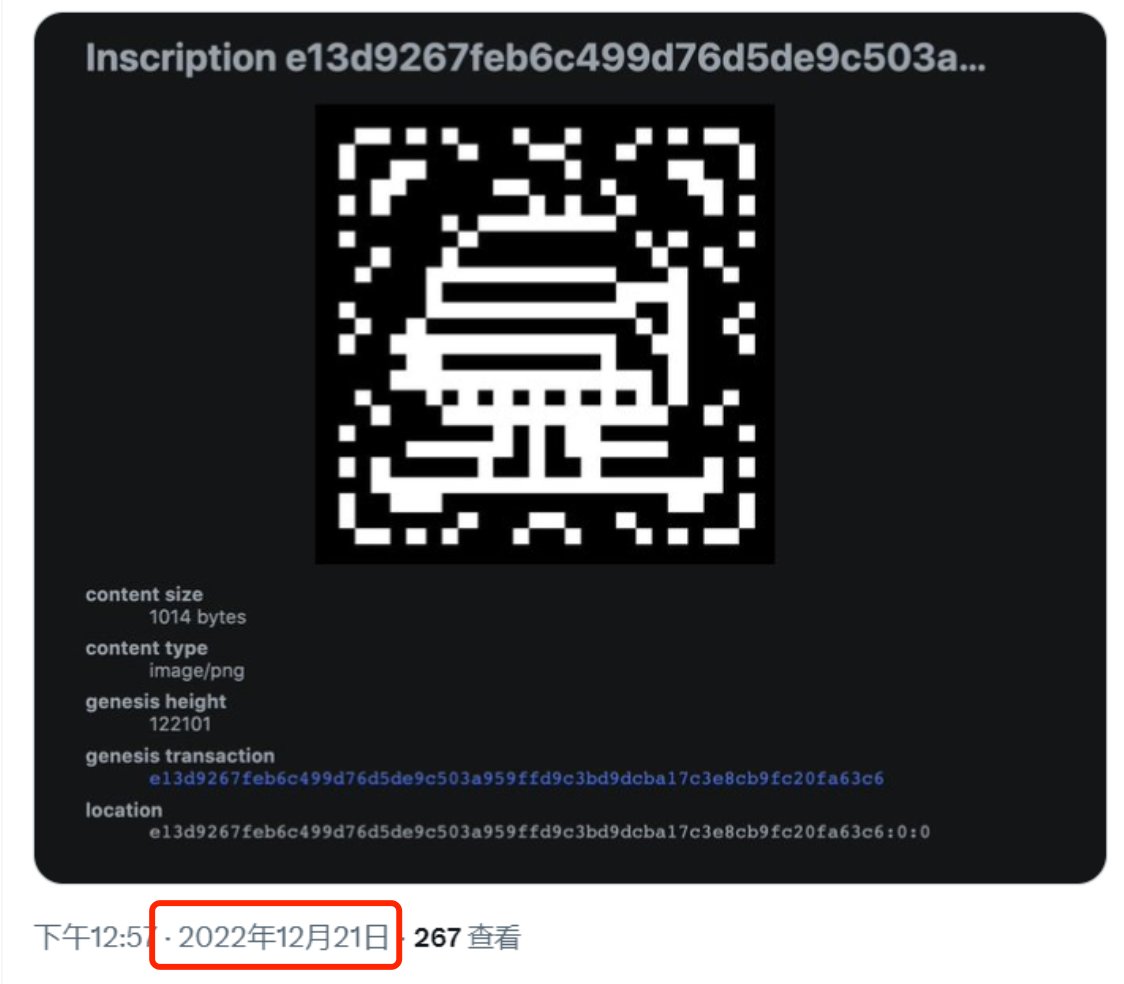
节点猴的设计原型最早出现在2022年12月21日Ordinals的测试网中。
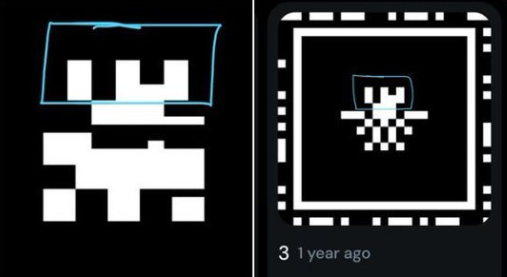
之后在2023年的1月6日主网上铭刻了第3号铭文,头冠上的特征和节点猴头像图片上的特征一模一样。
最后就是现在大家看到的诞生与2023年2月14日整个10K合集。
6⃣️节点猴社群媒体
官方推特:@nodemonkes
官方DC:discord.gg/nodemonkes
官方电报:t.me/nodemonke
中文推特:@nodemonkescn
中文电报:t.me/nodemonkechina
31
76
224
24,706

25 Jun 2024
As a #protocolengineer we all know that #security is #1, especially if you’re managing client assets. We really wanted to provide our grantees with a full #gotomarket aid and @Omniscia_sec saw the potential. ☑️☑️☑️
25 Jun 2024

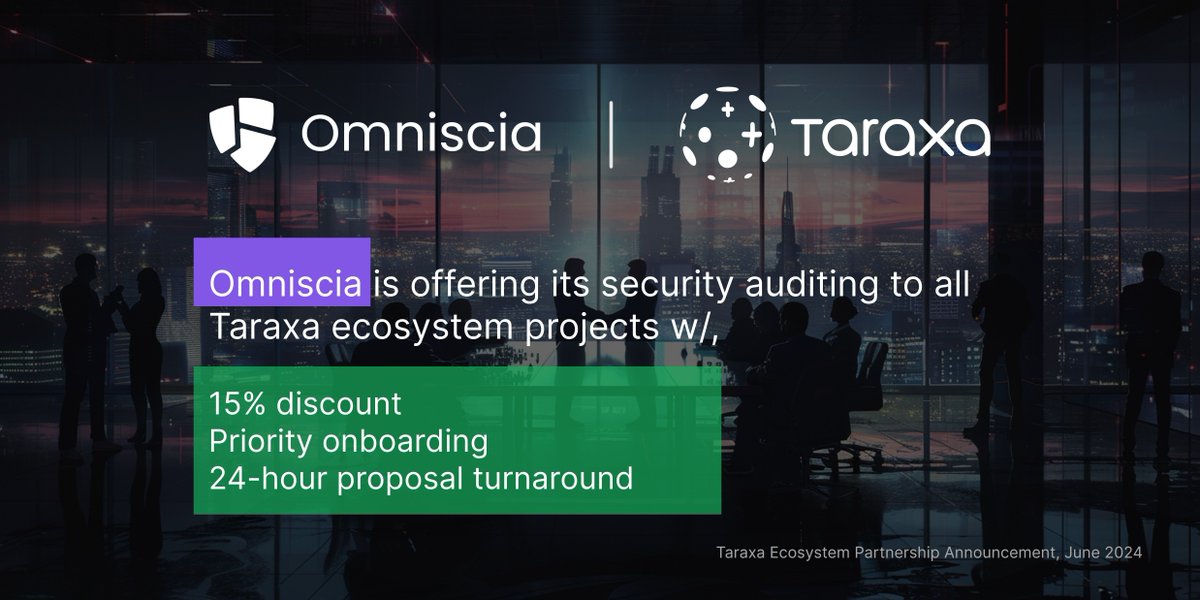
@Omniscia_sec is offering its security auditing to all Taraxa ecosystem projects w/,
🪙 15% discount
✈️ Priority onboarding
⚡ 24-hour proposal turnaround
Build on $TARA: taraxa.io/grant
4
17
361

9 Jan 2023
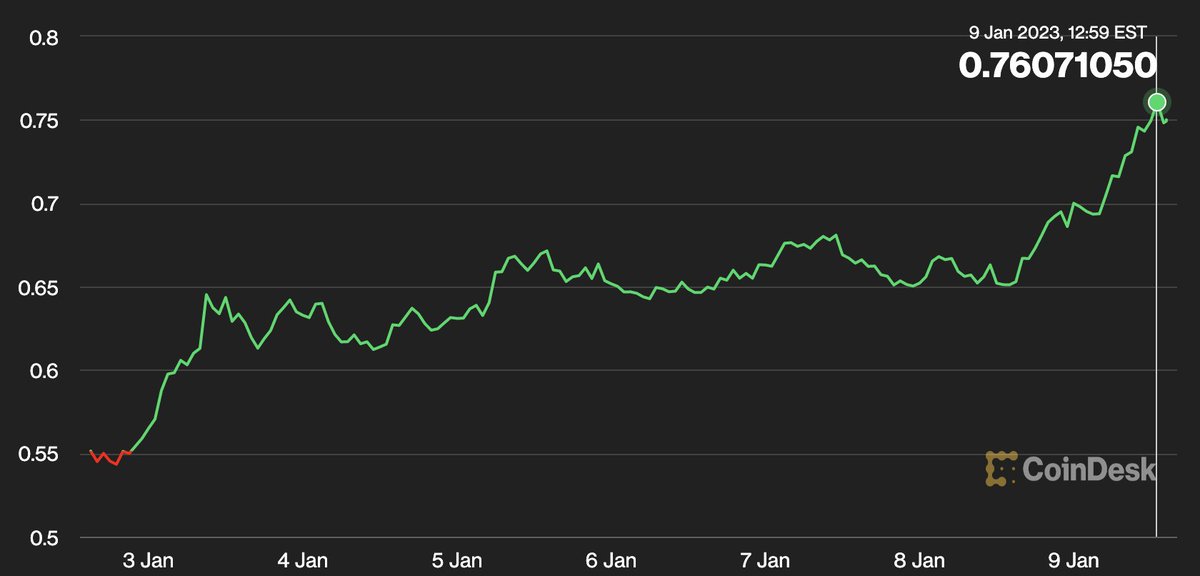
KAVA up 37% over the last week! LETS GO! 🔥
#hiring #hiringnow #kavalabs #kavatoken #web3 #crypto #cryptocurrency #blockchain #web3jobs #cryptojobs #protocolengineer #bullish #defi #Decentralization
7
332

Are you technically excellent, motivated and a proven Full Stack Javascript Engineer wanting to work on Web3 applications, NFT drops and metaverse projects?
recruitcrm.io/apply/16607817…
#rust #maslow #NFT #cryptography #blockchain #protocolengineer
1
1
Are you technically excellent, motivated and a proven Full Stack Javascript Engineer wanting to work on Web3 applications, NFT drops and metaverse projects?
recruitcrm.io/apply/16607817…
#rust #maslow #NFT #cryptography #blockchain #protocolengineer
1
1
Are you technically excellent, motivated and a proven Full Stack Javascript Engineer wanting to work on Web3 applications, NFT drops and metaverse projects?
recruitcrm.io/apply/16607817…
#rust #maslow #NFT #cryptography #blockchain #protocolengineer
1
2

12 May 2022
💼 Remote Job (🇬🇧):
⭐ Clearmatics is hiring a Protocol Engineer - Research, Blockchain
👉 found.dev/job/protocol-engin…
#Cryptography #Ethereum #OpenSource #ProtocolEngineer
2
2
12 May 2022
💼 Remote Job:
⭐ @ChainSafeth is hiring a Head of Protocol Engineering
👉 found.dev/job/head-of-protoc…
#OpenSource #ProtocolEngineer
2
2

We are hiring!
#ProtocolEngineer
Protocol Engineer
linkedin.com/posts/renata-mo…
1
6
22 Jan 2022
Job: Blockchain Protocol Researcher #MountainView #BlockchainEngineer #Cryptography #ProtocolEngineer found.dev/job/blockchain-pro…
1
1